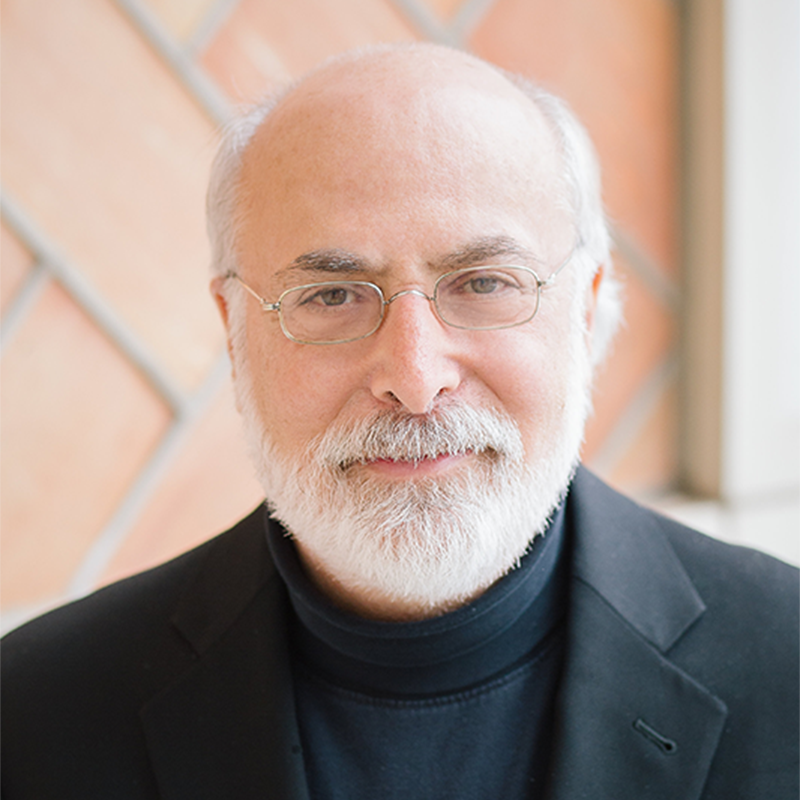
Alan Scheller-Wolf is the Richard M. Cyert Professor of Operations Management at Carnegie Mellon University's Tepper School of Business. His research focuses on stochastic processes applied to energy sustainability , supply chain management , renewable energy , and healthcare operations , including split liver transplantation and child welfare systems . He is affiliated with the Wilton E. Scott Institute for Energy Innovation. PhD in Operations Research (1996), Columbia University BS in Mathematics and Computational Science (1989), Stanford University His recent work emphasizes data-driven optimization , fairness in resource allocation , and algorithmic approaches for complex systems like server farms and quantum networks . Publications highlight applications in organ procurement , remanufacturing , and public service operations .
Jodi Forlizzi is the Geschke Director and a Professor of Human-Computer Interaction (HCI) in the School of Computer Science at Carnegie Mellon University, with a courtesy appointment in the School of Design. She is renowned for establishing design research as a legitimate form of research within HCI. Her work emphasizes bridging ethical AI development, robotics, healthcare technology, and workplace innovation. Her research focuses on educational games, AI-driven robotics/autonomous vehicles (AVs), and healthcare systems. She advocates for design approaches that prioritize ethical considerations, such as responsible AI governance, compassionate technology for workers, and inclusive systems for older adults. Her collaborations with Disney and General Motors highlight industry applications of her research. Key awards include membership in the ACM CHI Academy and recognition from Walter Reed Army Medical Center for her HRI contributions. Her work spans over 20 years, mentoring peers and students to integrate design research into mainstream HCI discourse. Jodi’s contributions to HCI include advancing methodologies for family-centered design, ethical AI frameworks, and user-centric evaluations of deployed systems. She addresses urgent societal challenges like algorithmic bias, workplace surveillance, and compassionate AI for labor well-being.
Phil Gibbons is a Professor in the Electrical & Computer Engineering and Computer Science Departments at Carnegie Mellon University. He holds a Ph.D. from UC Berkeley (1989) and has extensive industry experience at AT&T Bell Labs, Lucent Bell Labs, and Intel Research. His research focuses on parallel computing, distributed systems, databases, and machine learning, with a emphasis on algorithmic and systems-level innovations. He has led major initiatives like the Intel Science and Technology Center for Cloud Computing and contributed to projects such as IrisNet (a planetary-scale sensor network). Education : Ph.D. in Computer Science, University of California at Berkeley (1989) Research Interests : Gibbons' work spans big data analytics , high-performance computing , and cloud systems . He develops scalable algorithms and systems for emerging memory technologies, distributed ML, and robotics. Notable contributions include processing-in-memory (PIM) optimizations, pipeline parallelism for DNN training, and system architectures for robotic processors. Awards : IEEE Fellow (2014) ACM Fellow (2006) ACM Paris Kanellakis Theory and Practice Award (2019) Best Paper Award at NSDI 2006 Grants & Leadership : Co-PI of the $15M Intel STC for Cloud Computing (2011-2015) Editor-in-Chief of ACM Transactions on Parallel Computing (2012-2018) Leadership roles in conferences like SPAA, EuroSys, and MLSys Teams & Labs : Active in robotics computing (RobotPerf benchmark), distributed ML systems, and hardware-software co-design initiatives.
Professor Richard Stern holds joint appointments in Electrical and Computer Engineering, Computer Science, and Biomedical Engineering at Carnegie Mellon University. His research bridges auditory perception with speech technology, particularly in developing noise-robust speech recognition systems. His PNCC algorithm revolutionized feature extraction for speech recognition in noisy environments. Research emphases include: Auditory-inspired signal processing Robust automatic speech recognition Computational models of binaural hearing Music information retrieval Biomedical applications of audio analysis Recent work demonstrates growing interest in human-robot interaction and respiratory monitoring applications. Publications increasingly incorporate deep learning while maintaining foundations in auditory physiology. Honors include the IEEE Signal Processing Society 2019 Best Paper Award for PNCC research. Current projects investigate neural audio processing models and online learning for sound event detection.
Jonas August is a Project Scientist at the Robotics Institute of Carnegie Mellon University , focusing on geometry and uncertainty in computer vision and medical imaging. He employs probabilistic techniques like Markov processes and random fields to develop algorithms for medical image enhancement, including streak artifact removal in X-ray CT scans and vascular structure inference. Education: Ph.D., Yale University (2001) M.Phil., Yale University (1999) M.Sc., Yale University (1999) M.Eng., McGill University (1996) B.Eng., McGill University (1993) His research spans medical imaging , image regularization , and mathematical modeling , with applications in robotic perception and neural architecture. His work includes scalable regularized tomography algorithms and the development of DOC , a GNU/Linux cluster for medical imaging. He is supported by the National Science Foundation (Grant No. 0305719). August explores image statistics , curve inference , and object representation stability , contributing to contour fragment grouping and perceptual organization theories.
Seth Copen Goldstein is an Associate Professor in the Computer Science Department at Carnegie Mellon University's School of Computer Science. His research spans multiple interdisciplinary domains focusing on ensembles - large collections of interacting agents. He has made significant contributions to reconfigurable computing, molecular-scale devices, programmable matter, and more recently, the impact of technology on labor markets and alternative monetary systems. Education: PhD in Computer Science, University of California at Berkeley BS, Princeton University Goldstein's research agenda has evolved from reconfigurable computing to molecular-scale devices and programmable matter, and most recently to social technology and alternative monetary systems. His early work focused on compiling high-level programming languages directly into configurations for computing ensembles of gates. He then investigated molecular-scale circuits and programmable matter - ensembles of computing elements that can be programmed to change physical properties. Since returning from a startup, he has shifted focus to ensembles of people, studying technology's impact on labor markets and innovation, and developing social technologies to reduce poverty and inequality. His publication trends show a consistent focus on modular robotics, distributed systems, and programmable matter. The research spans theoretical foundations, hardware implementation, and programming languages for large-scale ensembles. Recent work emphasizes energy efficiency, distributed algorithms, and novel programming paradigms for heterogeneous systems. The interdisciplinary nature of his work connects computer science, electrical engineering, and social sciences. Research Leadership: Claytronics project - creating ensembles of cooperating submillimeter robots Development of Meld and LDP programming languages for ensemble systems Phoenix project - computing without processors Building on Local Trust (BoLT) initiative Goldstein has advised numerous PhD students who have gone on to positions at major technology companies including Microsoft Research, Sun Microsystems, and NEC Labs. His work has been supported by significant research grants focusing on modular robotics, programmable matter, and distributed computing systems. He has taught core computer science courses including Compiler Design, Introduction to Computer Systems, and Cloud Computing.
Bernhard Haeupler is a Professor at INSAIT (Institute for Computer Science, Artificial Intelligence and Technology) under Sofia University "St. Kliment Ohridski" since 2024. He is also a Post-Professor and Researcher at ETH Zurich 's Computer Science Department since 2020 and an Adjunct Professor at Carnegie Mellon University 's Computer Science Department since 2022. His roles span theoretical computer science, algorithm design, and distributed/parallel systems. Research Interests : Haeupler focuses on algorithms for combinatorial optimization, distributed and parallel computing, coding theory, graph/network algorithms, and information theory. His work bridges theoretical foundations with practical applications in network resilience, synchronization, and quantum/parallel optimization. Article Trends : His 15 most recent articles (2023-2025) emphasize distributed algorithms (e.g., dynamic routing, fault-tolerant spanners), parallel computing (e.g., low-congestion shortcuts, near-linear work), and coding theory (e.g., synchronization strings, insertion-deletion codes). Topics include graph theory , network design , and quantum shortest paths . Scientific Awards : ERC Starting Grant (2020) Sloan Research Fellow (2019) NSF CAREER Award (2018) ACM-EATCS Doctoral Dissertation Award (2014) George Sprowls Award for MIT PhD Thesis Advising & Grants : Haeupler has advised eight PhD students, including Jason Li (CMU, now at Google Research Zurich) and Nicolas Resch (University of Amsterdam). He has secured multiple NSF grants for projects like Distributed Optimization Beyond Worst-Case Topologies and New Coding Techniques for Synchronization Errors .
Kanat Tangwongsan is a researcher and educator in computer science, with a PhD from Carnegie Mellon University and prior roles at IBM T.J. Watson Research Center. He has extensive experience in algorithm design, parallel computing, and self-adjusting computation, with publications in top-tier venues like DEBS, ICDE, SPAA, and TOCS. Education: PhD in Computer Science (Carnegie Mellon University), B.S. in Computer Science and Mathematics (Carnegie Mellon University) Research Interests: His work spans algorithms , parallel computing , streaming data structures , and self-adjusting programs , focusing on theoretical improvements and practical implementations for graph problems, convex hulls, and network design. Article Trends: His publications emphasize low-latency streaming , parallel SDD solvers , k-means clustering , and triangle enumeration , with applications in large-scale graph analysis, numerical systems, and cache-oblivious methods. Advising and Collaborations: He has collaborated with prominent researchers like Guy E. Blelloch, Martin Hirzel, and Anupam Gupta, contributing to open-source algorithm frameworks and educational materials.
Claudson Ferreira Bornstein is an Adjunct Professor at the Computer Science Department of the Federal University of Rio de Janeiro (UFRJ) . He holds a PhD in Computer Science from Carnegie Mellon University. His research and teaching focus on algorithms, data structures, and combinatorial mathematics. Research Interests include: Algorithm design and optimization Parallel computing techniques Graph theory and elimination orders Combinatorial mathematics Contact Information : Email: cfb@cos.ufrj.br Institutional addresses in COPPE Sistemas and Instituto de Matematica at UFRJ Phone: +55-21-290-8091 (UFRJ) and +55-21-712-1504 (home)
Todd C. Mowry is a Professor in the Computer Science Department at Carnegie Mellon University. His work focuses on computer systems design across multiple domains, including hardware architecture, compiler optimization, operating systems, and database performance. He explores techniques for parallel processing, memory management, and efficient execution of machine learning workloads.
Martin Prammer is a Post Doctoral Fellow at the Computer Science Department of Carnegie Mellon University. His research focuses on database systems, computer architecture, and data analytics acceleration through hardware-software co-design. Office: Gates and Hillman Centers, Room 9118 Email: mprammer@cmu.edu Dr. Prammer's work explores innovative approaches to database optimization, including: Algorithmic-hardware co-design for dense retrieval systems DRAM-PIM (Processing-in-Memory) integration for analytics acceleration Functional decomposition of storage formats Efficient integer encoding for skewed data processing His research has been applied to both theoretical advancements and practical implementations in SQLite optimization and mobile application testing. Current projects demonstrate strong connections between database engineering, computer architecture, and software systems research.
Jan Hoffmann is an Associate Professor in the Computer Science Department at Carnegie Mellon University. His research develops quantitative program analysis techniques to ensure software reliability, efficiency, and security. Key focus areas include resource-aware programming languages, probabilistic program verification, and scalable static analysis methods for modern computing environments. Dr. Hoffmann leads the Carnegie Mellon Resource Analysis Group, advising PhD students on projects spanning energy-aware computing, secure compilation, and probabilistic inference. His work bridges formal methods with practical system design, emphasizing compositional verification and automated reasoning. Recent publications advance CUDA kernel optimization, programmable Markov chain Monte Carlo methods, and robust resource bound synthesis. This research establishes foundations for predictable performance in concurrent systems and AI-driven applications.
Zhihao Jia is an Assistant Professor in the Computer Science Department at Carnegie Mellon University (CMU). He is affiliated with the CMU Catalyst Group and the Parallel Data Lab, focusing on advancing systems for machine learning, quantum computing, and large-scale data analytics. Previously, he was a research scientist at Facebook and earned his PhD from Stanford University (2020), advised by Alex Aiken and Matei Zaharia. His bachelor's degree is from Tsinghua University's Special Pilot CS Class under Andrew Yao. His research emphasizes accelerating deep learning computations on modern hardware and optimizing quantum circuits for intermediate-scale quantum devices. Notable contributions include speculative reasoning techniques, efficient LLM serving systems, and quantum circuit simulators. He teaches advanced courses such as 15418 and 15618 at CMU. Zhihao advises PhD students including Zhuoming Chen, Zikun Li, and Xinhao Cheng. His work bridges systems research with emerging applications, aiming to enhance computational efficiency and scalability. He collaborates on projects like Specexec, Helix, and Atlas, addressing challenges in distributed computing and quantum simulation.
Hongyang Zhang is a tenure-track Assistant Professor at the University of Waterloo's David R. Cheriton School of Computer Science and Faculty of Mathematics, affiliated with the Vector Institute for AI. His research bridges theoretical and applied aspects of machine learning, including world modeling, AI inference acceleration, and security. He leads the SafeAI Lab and holds memberships in the AI Institute and Cybersecurity and Privacy Institute. Dr. Zhang completed his Ph.D. at Carnegie Mellon University's Machine Learning Department and conducted postdoctoral research at Toyota Technological Institute at Chicago. His educational background includes a degree from Peking University. Research interests focus on: Developing generative world models for robotics and autonomous systems Creating efficient algorithms for accelerating LLM inference Building System-2 LLMs for enhanced reasoning Advancing AI security against adversarial threats Publications demonstrate strong focus on efficient AI systems and security, with recent work on EAGLE series acceleration techniques and The Matrix world generation framework dominating top conferences like ICML, NeurIPS, and CVPR. Awards and honors: 1st place in CVPR 2021 Security AI Challenger Multiple NeurIPS challenge wins in adversarial vision AAAI New Faculty Highlights awardee IEEE Senior Member Leads SafeAI Lab focusing on trustworthy AI systems and regularly serves as area chair for top machine learning conferences including NeurIPS, ICML, and ICLR.
Andreas Pfenning is an Assistant Professor in the Ray and Stephanie Lane Computational Biology Department at Carnegie Mellon University , affiliated with the Neuroscience Institute . His research focuses on computational and genomic approaches to understand how genome sequence influences neural cells, circuits, disease, and behavior. Key areas include Alzheimer’s disease, epigenetics of aging, and evolutionary mechanisms of vocal learning across species. Pfenning leads the Neurogenomics Laboratory , leveraging AI and machine learning to analyze genomic data from mammals, birds, and primates. Education: PhD in Computational Biology and Bioinformatics (Duke University), BS in Computer Science (Carnegie Mellon University, 2006). Postdoctoral training at MIT and Harvard Medical School with Dr. Manolis Kellis. Research Interests: Genetic and epigenetic mechanisms of neurological disorders Evolutionary genomics of vocal learning Single-cell transcriptomics in brain disorders Machine learning for genomic analysis Notable Projects: Developing tools like TACIT to identify conserved regulatory elements Collaborations on the Zoonomia Project and CIRCUITS Alzheimer’s initiative Epigenetic basis of aging and neurodegeneration Awards & Funding: NSF CAREER Award (2021) Okawa Foundation Research Grant (2016) NIH BRAIN Initiative Grant ($6.8M, 2022) Cure Alzheimer’s Fund Collaboration (2017) Lab & Students: Mentors students like Daniel Schaffer (Phi Beta Kappa), Ruby Redlich (Goldwater Scholar), and BaDoi Phan (NIH NIDA Fellow). Active in training undergraduates through programs like SURF and CMU’s Computational Biology Undergraduate Program.