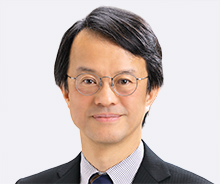
Dr. Tsuyoshi Okubo is a Researcher at the Department of Physics, College of Science, University of Tokyo. His work focuses on quantum computing and theoretical physics applications. Research Interests: Quantum algorithms and computer architectures Tensor network methods for quantum field theory Quantum-enhanced ground state preparation Statistical mechanics in neural networks Prominent Research Trends: Recent publications highlight his work across four key areas: Developing quantum computer architectures with separated memory and processing units Applying tensor renormalization group techniques to lattice QCD simulations Advancing non-variational quantum algorithms for physical systems Exploring absorbing phase transitions in deep learning contexts
Asei Tezuka is an Associate Professor at Waseda University's School of Fundamental Science and Engineering, specifically within the Department of Applied Mechanics and Aerospace Engineering. His academic journey began with a Ph.D. from The University of Tokyo, followed by research positions at both Waseda University and The University of Tokyo's Graduate School of Engineering from 2003 onward. Currently, he holds concurrent positions at the Waseda Research Institute for Science and Engineering (2024-2026) and is affiliated with the Global Education Center. Dr. Tezuka's research spans multiple areas within aerospace engineering, with primary focus on aerodynamics, computational fluid dynamics, flow instability, micro air vehicles, and flight management. His work bridges theoretical analysis with practical applications, particularly in low Reynolds number flows relevant to micro-aircraft and space exploration. He has developed innovative measurement techniques, including laser displacement sensor methods for pressure distribution measurement, and has contributed significantly to understanding laminar separation bubbles and flow control mechanisms. His research output shows a clear progression from fundamental fluid dynamics studies toward more applied aerospace problems. Early work focused on global stability analysis of various geometries (cylinders, spheres, spheroids), while more recent publications address practical challenges in flight management, Mars entry vehicle dynamics, and optimization of cruise altitude selection using real-world data. A consistent theme throughout his career is the investigation of flow separation phenomena and methods to control or optimize these flows for improved aerodynamic performance. Dr. Tezuka actively contributes to multiple research projects funded by organizations including the Japan Society for the Promotion of Science and the Ministry of Land, Infrastructure, Transport and Tourism. His current work includes studies on hypersonic vehicles, air traffic management systems, and plasma actuator applications for flow control. His teaching portfolio at Waseda University encompasses core aerospace engineering subjects including Fluid Mechanics, Airplane Flight Mechanics, and Advanced Aerodynamics, demonstrating his commitment to educating the next generation of aerospace engineers.
Shunsuke Horii is an Associate Professor at the Center for Data Science, Waseda University. His research spans information theory, coding theory, statistical learning theory, and data science applications. He actively collaborates with industry through initiatives like the Waseda Data Science Consortium. Education: Ph.D. in Science and Engineering from Waseda University (2009), Master's from Waseda University Graduate School of Science and Engineering (2004). Research Focus: Addresses causal effect estimation in data science using Bayesian decision theory, sparse modeling, and optimization techniques like ADMM and variational inference. Develops efficient algorithms for multiuser communication, matrix completion, and privacy-preserving distributed computing. Teaching: Instructs courses on statistics literacy, data science, and programming with Python/R across multiple academic quarters. Grants: Leads projects funded by Japan Society for the Promotion of Science, including causal inference frameworks, product recommendation systems, and business analytics. Publications: 21 papers with 61 Scopus citations, focusing on LP decoding, Bayesian hierarchical models, and statistical causal analysis.
Kazunori Ueda is a Professor at Waseda University's Faculty of Science and Engineering, with a career spanning over three decades in logic/constraint programming, hybrid systems, and concurrency. He has held visiting positions at the Egypt-Japan University of Science and Technology and part-time roles at the University of Tokyo. His research bridges theoretical advancements and practical implementations, focusing on languages like HydLa and LMNtal for hybrid and concurrent system modeling. Research Interests: Logic and Constraint Programming Hybrid Systems Modeling Concurrency and Parallelism Programming Language Design and Implementation Article Trends: Recent works emphasize symbolic simulation of hybrid systems, graph rewriting optimization, and distributed storage reliability. His work integrates interval arithmetic, constraint hierarchies, and formal verification techniques. Scientific Awards: Fellow, Japan Society for Software Science and Technology (2016) Fellow, Information Processing Society of Japan (2015) Basic Research Award, Japan Society for Software Science and Technology (2011) Multiple Best Paper and Encouragement Awards (1985–2010)
Prof. Rage Uday Kiran is an Associate Professor at the University of Aizu in Aizu wakamatsu, Fukushima, Japan, with additional visiting researcher appointments at the University of Tokyo and the National Institute of Information and Communications Technology (NICT) in Tokyo. He holds a PhD in Computer Science from the International Institute of Information Technology, Hyderabad, and has published over 50 articles in top-tier venues including EDBT, SSDBM, PAKDD, and DASFAA. Education PhD in Computer Science - IIIT-Hyderabad, India (2005-2011) MS in IT Agriculture - DA-IICT, India (2003-2005) B.Tech in Agriculture Engineering - Acharya N. G. Ranga Agricultural Engineering College, India (1999-2003) Research Focus Dr. Kiran specializes in developing novel data mining models and high-performance algorithms for temporal, spatiotemporal, and transactional databases. His primary research explores pattern mining techniques for rare item discovery, parallel computation optimizations, and real-world applications in air pollution analysis, traffic congestion prediction, agricultural ICT systems, and recommender systems. His recent work focuses on utility-based pattern discovery in spatiotemporal contexts and periodic pattern detection in temporal databases, emphasizing scalability and efficiency for large-scale datasets. Professional Experience Project Assistant Professor - University of Tokyo (2015-2020) Researcher - NICT Tokyo (2015-2020) Post Doctoral Researcher - University of Tokyo (2012-2015) Technical Contributions Dr. Kiran maintains public datasets for pattern mining research and develops open-source tools including the PAttern MIning Python Kit (PAMI-PyKit). His technical expertise spans C/C++/Java, database systems (MySQL/PostgreSQL), web technologies, and cloud platforms (Azure/AWS).
Yves Lepage is a Professor at Waseda University's Faculty of Science and Engineering, specifically within the Graduate School of Information, Production, and Systems. He maintains an active research laboratory (lepage-lab.ips.waseda.ac.jp) and teaches courses including Example-based machine translation/NLP, Natural language processing, and Master's/Doctoral thesis supervision for the 2025 academic year. His research focuses on the application of analogical reasoning to natural language processing problems, particularly machine translation. Lepage's work spans formal analogy between strings, sentence-level analogies, morphological analysis, and multilingual systems. His research interests include machine translation, analogy, multilingual alignment, multilingual large language models, and foreign language aids. He has made significant contributions to understanding analogical density in corpora and developing methods to leverage analogies for translation, especially in low-resource scenarios. His publication record shows consistent output through 2024, with research evolving from foundational work on proportional analogy to sophisticated applications with neural networks. Recent work explores masked prompt learning for analogies, fuzzy analogies for translation, and organizing lexica into analogical grids for morphological generation across languages. Waseda University Teaching Award (Spring semester 2016) Lepage has successfully led multiple research projects funded by the Japan Society for the Promotion of Science, including "Theoretically founded algorithms for the automatic production of analogy tests in NLP" (2021-2024) and "Self-explainable and fast-to-train example-based machine translation using neural networks" (2018-2021). His work has involved international collaboration, including a 2023-2024 research period at the University of Montreal. He serves as Concurrent Researcher at the Waseda Research Institute for Science and Engineering (2024-2026) and has been active in professional organizations including the Information Processing Society of Japan and the Japanese Natural Language Processing Association.
Professor Hironori Kasahara serves as Professor in the Department of Computer Science and Engineering at Waseda University's Faculty of Science and Engineering. He currently directs the Advanced Multicore Processor Research Institute and has held significant leadership positions including Senior Executive Vice President for Research Promotion (2020-2022) and IEEE Computer Society President (2018). His research focuses on parallel processing systems, parallelizing compilers, multicore processor architecture, and green computing technologies . Professor Kasahara has pioneered advancements in compiler technology for high-performance computing systems and has been instrumental in developing energy-efficient computing solutions. His work bridges theoretical computer science with practical industrial applications, particularly in real-time control systems. Professor Kasahara has received numerous prestigious awards recognizing his contributions to computing, including IEEE Life Fellow status (2023), the SCAT President Grand Award (2021), and the Spirit of the IEEE Computer Society Award (2019). He has served on influential committees including the Japan Prize Selection Committee and the Frances E. Allen Medal Committee. IEEE Life Fellow (2023) SCAT President Grand Award (2021) Information Processing Society of Japan Contribution Award (2020) Spirit of the IEEE Computer Society Award (2019) IEEE Fellow (2017) His academic leadership extends to international collaborations, having served as General Co-Chair for ISCA 2025 and contributed to global computing initiatives through the World Economic Forum. Professor Kasahara maintains an active research program with 118 published papers (Scopus) and an h-index of 31 (Google Scholar), demonstrating sustained impact in computer architecture and parallel systems research.
NAKAZATO, Hidenori is a Professor at the Waseda University, School of Fundamental Science and Engineering , specializing in Computer Science . His research focuses on Information Centric Networking (ICN) , Distributed Systems , and Communication Quality optimization. Education: Ph.D. and MS in Computer Science from University of Illinois (1993) Professional Memberships: IPSJ, IEICE, ACM, IEEE His work explores advanced networking paradigms like Named Data Networking (NDN) , IoT virtualization via platforms such as VirIoT , and edge cloud computing for multimedia workflows. Key contributions include optimized cache replacement algorithms and service function chaining frameworks to enhance resource utilization and reduce latency. His scientific awards include: Fellow , Institute of Electronics, Information and Communication Engineers (2018) Chairman's Award , IEICE Communication Systems Committee (2013) NAKAZATO's publications (94 papers, h-index 10) address topics like blockchain performance , NDN mobility support , and energy-efficient computing . His research projects involve collaborations with international teams on smart city applications and container orchestration using Kubernetes.
TSUMURA Tomoaki is a Professor at the Department of Information Engineering, Graduate School of Engineering, Nagoya Institute of Technology. With a Doctor of Informatics from Kyoto University (2004), he has established himself as a leading researcher in computer architecture, parallel processing, and high-performance computing. His academic career spans from research assistant positions at Kyoto and Toyohashi Universities to his current professorship at Nagoya Institute of Technology. Graduated from Faculty of Engineering, Kyoto University (1996) Master of Engineering, Graduate School of Engineering, Kyoto University (1998) Doctor of Informatics, Graduate School of Information and Communication, Kyoto University (2004) Professor TSUMURA's research focuses on parallel processing systems, high-performance computing architectures, and innovative memory systems. His work bridges theoretical computer science with practical implementations, particularly in transactional memory systems, auto-memoization processors, and GPU computing. His research group has made significant contributions to shared memory parallel computing platforms that balance productivity and performance, with recent work extending to approximate computing applications and energy-efficient processor designs. His publication record shows a consistent output of high-impact research, with numerous papers presented at prestigious venues like xSIG, IEEE conferences, and IPSJ journals. The research trends indicate a strong focus on practical computing systems that address real-world challenges in parallelism, memory management, and energy efficiency. Recent work has particularly emphasized GPU computing, transactional memory systems, and precision optimization in numerical computing. Computer Science Field Achievement Award (IPSJ, 2019) Activity Contribution Award (IEICE, 2017) Multiple Best Paper/Research Awards from IEEE, ICNC, and xSIG conferences 1st Place in Championship Branch Prediction (CBP 2025) Professor TSUMURA has successfully secured substantial research funding, including multiple JSPS Grant-in-Aid projects spanning from 2006 to the present. His current major project "Software cache and distributed time management for shared memory massively parallel computing platform" (2025-2029) continues his long-standing research trajectory. He actively advises numerous graduate students, with many appearing as first authors on publications where he serves as corresponding author. His leadership extends to committee memberships including Chair of the IPSJ System Architecture Research Group and Editor-in-Chief of the IPSJ Journal of Computing Systems. Through his laboratory (tsumulab.org), Professor TSUMURA leads a research team focused on next-generation computing systems, with particular emphasis on practical implementations of theoretical concepts in computer architecture. The lab maintains strong industry and academic collaborations, evidenced by joint research projects and participation in international competitions like Championship Branch Prediction.
Hiroshi Matsuo is a Professor in the Department of Information Engineering at Nagoya Institute of Technology's Faculty of Engineering, with additional affiliations in the Graduate School of Engineering (Network Program) and Information Technology Center. His research focuses on distributed systems, network architecture, and operating systems with practical applications in cloud infrastructure. Education: Doctor of Engineering, Nagoya Institute of Technology (1989) Master of Engineering, Nagoya Institute of Technology Bachelor of Engineering, Nagoya Institute of Technology (1983) Matsuo's research centers on performance optimization in virtualized environments, particularly addressing bottlenecks in network I/O, distributed databases, and cloud-native applications. His work bridges theoretical informatics with practical system implementations, emphasizing real-world scalability and efficiency in high-throughput computing environments. Key contributions include novel caching mechanisms, transaction processing acceleration, and resource contention solutions for virtual network functions. Recent publications demonstrate consistent focus on network function virtualization and distributed systems, with increasing emphasis on hardware-aware optimizations and transparent proxy architectures. His team's work shows strong progression from foundational operating system research toward cloud-native infrastructure solutions, maintaining relevance in both academic and industrial contexts. Awards: IEEE NFV-SDN 2018 Best Paper Award 12th IEICE Communications Society Paper Award (2017) 2022 IEICE Information and Communication Management Research Award 1st International Conference on Networking and Computing Best Paper Award (2010) JAWS2010 Excellent Paper Award Matsuo has supervised numerous graduate students evident through co-authorship patterns in publications, particularly in network systems and distributed computing. His research has been supported by institutional projects on distributed processing frameworks, though specific grant details aren't publicly documented. He maintains active industry collaborations through his work on Microsoft Defender integration and enterprise networking solutions. His laboratory within Nagoya Institute of Technology's Network Field focuses on practical systems research, combining DPDK-based implementations with theoretical performance modeling. Current work emphasizes cache optimization for virtualized network functions and transaction processing acceleration in distributed databases, maintaining strong ties to industry partners through the Information Technology Center.
Hiroshi Suito is a full Professor and Principal Investigator at Tohoku University's Advanced Institute for Materials Research (AIMR), leading the Suito Hiroshi Laboratory at the Katahira Campus. His research bridges mathematical sciences with clinical medicine and materials science through advanced computational modeling. He directs the Mathematics Collaboration Group and serves as the Tohoku University liaison for the Fujitsu x Tohoku University Discovery Intelligence Co-Creation Laboratory. Professor Suito's research focuses on mathematical modeling of complex systems, particularly in cardiovascular biomechanics and materials science. His work develops novel numerical simulation techniques for fluid-structure interaction problems, with applications ranging from blood flow dynamics in patient-specific aortic models to environmental fluid dynamics. He has pioneered approaches connecting mathematical models with clinical diagnostics, especially in understanding aortic pathological mechanisms. His research integrates traditional numerical methods with emerging machine learning techniques to address challenges in medical imaging and diagnostics. His publication portfolio reveals a strong emphasis on cardiovascular modeling, with recent work focusing on blood flow simulation, arterial geometry analysis, and computational approaches to clinical diagnostics. The research demonstrates consistent integration of mathematical rigor with practical medical applications, particularly in understanding the relationship between vascular geometry and hemodynamics. His team has developed specialized computational tools for patient-specific modeling that have contributed to both theoretical advances and potential clinical applications. Scientific Awards: Minister of Education, Culture, Sports, Science and Technology Award for Science and Technology (2019) for research into the elucidation of aortic pathological mechanisms using mathematics Mimura Prize for Mathematical Science Research Professor Suito has received substantial research funding as Principal Investigator for multiple major projects, including the JST-Moonshot Research and Development Program (since 2020), MEXT projects on nanoparticle process-structure correlation (since 2022), and several JST-CREST and JST-PRESTO projects dating back to 2007. His laboratory actively trains PhD candidates and technical assistants in computational mathematics and its applications. He has established strong interdisciplinary collaborations across Tohoku University, including with the School of Medicine, and maintains international partnerships with institutions including Waseda University, University of Tokyo, University of Electronic Science and Technology of China, and University College London. The Suito Hiroshi Laboratory serves as a hub for mathematical science collaboration, working closely with the Mathematical Science Open Innovation Center established at Tohoku University in December 2019. The laboratory participates in international programs such as the G-RIPS Sendai internship program and maintains active involvement in both theoretical developments and practical applications of mathematical modeling in medicine and materials science.
Makoto Iwasaki is a Professor at the Nagoya Institute of Technology , Department of Electrical and Mechanical Engineering. He holds prestigious fellowships including IEEE Fellow (2015) and IEEJ Fellow (2021), and serves as Vice President (International and Global Activities) since 2024. Ph.D. in Electrical and Computer Engineering (Nagoya Institute of Technology, 1991) Professional memberships: IEEE Fellow, IEEJ Fellow, Science Council of Japan Member His research interests focus on intelligent motion control systems, with key contributions to: High-speed, high-precision positioning methodologies Nonlinear friction compensation Equivalent-input-disturbance approaches Robust control for mechatronic devices Soft computing applications in motion control Modeling and control of harmonic drive systems Recent publications emphasize advanced control strategies for industrial robots, autonomous vehicles, and collaborative systems, particularly addressing environmental adaptability, disturbance rejection, and nonlinear dynamics. His work integrates mechatronics with AI techniques for precision applications. Scientific awards include: 2025 IEEE Japan Best Paper Award 2024 IEEJ Technical Achievement Award 2022 AAIA Fellowship 2022 IEEE/IES Senior AdCom Honor He has secured significant grants from the Japan Society for the Promotion of Science (JSPS) for projects on: High-speed industrial robot control (Grant-in-Aid for Scientific Research A) Collaborative robot safety/precision (Grant-in-Aid for Scientific Research B) Harmonic drive positioning systems (JSPS C Grant) As an educator, he teaches Advanced Motion Control and Electrical Circuit Fundamentals , and leads the NIT Iwasaki Laboratory in mechatronics research.
Daisaku Yokoyama is an Assistant Professor at the Institute of Industrial Science, University of Tokyo, where he works in Department 3 of the Kitsuregawa-Toyoda Laboratory. His research focuses on parallel and distributed processing, combinatorial search, game tree search, and other search processes. He is also involved in the development of "Gekisashi," a computer shogi (Japanese chess) player. His academic background includes: March 1998: Graduated from the Department of Electronic and Information Engineering, Faculty of Engineering, The University of Tokyo March 2000: Completed Master's course in Information Engineering at the University of Tokyo 2002.3: Graduated from the Doctoral Program in Information Engineering, Graduate School of Engineering, The University of Tokyo September 2006: Obtained a PhD in Science from the Graduate School of Frontier Sciences, University of Tokyo Daisaku Yokoyama's research interests primarily center around parallel and distributed computing systems, with a particular focus on combinatorial search algorithms and game tree search techniques. His work bridges theoretical computer science with practical applications, especially in the domain of computer shogi where he has developed "Gekisashi." Beyond game AI, his research has expanded into big data analytics, particularly in transportation systems where he analyzes passenger flows in metro networks and driver behavior using vehicle recorder data. His work demonstrates a consistent thread of applying parallel processing techniques to solve computationally intensive problems across various domains. Yokoyama's publication record shows a clear evolution from foundational work in parallel combinatorial optimization (PopKern library) to more applied research in computer shogi and eventually to big data applications in transportation systems. His early work established frameworks for parallel search algorithms, while more recent publications demonstrate applications of these techniques to real-world problems involving massive datasets from metro systems and vehicle recorders. His research consistently emphasizes the importance of domain-specific knowledge in optimizing parallel algorithms. His notable scientific achievements include: DBSJ Best Paper Award 2014 for "Application and Evaluation of a Bayesian-Based Monte Carlo Tree Search Algorithm to Shogi" Game Programming Workshop Excellent Paper Award (awarded twice) Throughout his career, Yokoyama has been actively involved in academic service, serving on editorial boards, program committees, and as an organizer for numerous conferences and workshops related to programming, parallel computing, and game AI. His work on the Gekisashi shogi engine represents a long-term research project that has evolved from basic search algorithms to sophisticated AI systems, demonstrating both theoretical rigor and practical implementation skills. He is part of the Kitsuregawa-Toyoda Laboratory at the Institute of Industrial Science, University of Tokyo, which focuses on advanced computing systems, database technologies, and large-scale data processing. The laboratory provides a collaborative environment for research spanning theoretical computer science to real-world applications in transportation analytics and game AI.
Nilson Kunioshi is Professor at Waseda University’s School of Creative Science and Engineering, holding a Dr. Eng. from Kyoto University. His work integrates combustion chemistry, materials chemistry, and science-education research, with 32 Scopus papers and an h-index of 8. He leads projects on CVD reaction kinetics, English-medium instruction, and corpus-based pedagogical tools. Education: 1992 – Dr. Eng., Graduate School of Engineering, Kyoto University (Industrial Chemistry) 1985 – B.Eng., University of São Paulo, Faculty of Engineering (Chemical Engineering) Research Interests: Kunioshi’s group applies quantum chemical calculations and kinetic modeling to silicon CVD processes, elucidating pressure-dependent rate coefficients, surface reaction mechanisms, and chlorine elimination pathways. Parallel work in education employs large-scale corpora (OnCAL, JECPRESE) to reveal cultural differences in Japanese vs. American STEM lectures and to support non-native English instructors in EMI contexts. Publication Trends: Recent articles shift from fundamental combustion/PAH studies toward CVD kinetics and English for STEM education, reflecting dual foci on materials chemistry and pedagogical innovation. Grants & Projects: JSPS KAKENHI (B) 2019-2022: “Elucidation of the role of language in science instruction through English and Japanese” JSPS KAKENHI (C) 2021-2024: “Designing novel bone-inducing molecules by an experimental-computational approach” JSPS KAKENHI (B) 2012-2016: Development of OnCAL corpus for EMI support Labs & Teams: He heads a computational-reaction group within the Faculty of Science and Engineering, collaborates with the Yamaguchi and Fuwa laboratories on surface chemistry, and co-leads international corpus projects with partners at Stanford and MIT.
Ryuichiro Akaho is a tenure-track Assistant Professor in the Faculty of Science and Engineering, School of Advanced Science and Engineering at Waseda University, Japan. He earned his B.S., M.S., and Ph.D. in physics from the same university and is internationally recognized for developing general-relativistic Boltzmann neutrino transport codes applied to core-collapse supernovae and neutron-star cooling. Education: Ph.D. in Science, Waseda University, 2021–2024 M.S. in Advanced Science and Engineering, Waseda University, 2019–2021 B.S. in Advanced Science and Engineering (Physics), Waseda University, 2015–2019 Research Interests: Akaho’s theoretical work centers on neutrino radiation hydrodynamics in extreme astrophysical environments. He investigates how neutrinos drive supernova explosions, how flavor oscillations modify neutrino spectra, and how fallback accretion affects late-time neutrino emission from protoneutron stars. His simulations incorporate full general relativity, multidimensional transport, and state-of-the-art nuclear physics inputs. His recent studies reveal the universality of collisional flavor instabilities and quantify the detectability of supernova neutrinos by experiments such as Super-Kamiokande. These results bridge nuclear physics, high-energy astrophysics, and multimessenger astronomy. Awards & Honors: Young Scientist Presentation Award, Asia Nuclear Physics Association, 2025 HPCI Achievement Award (高エネルギー天体現象中の量子運動論的ニュートリノ輸送シミュレーション), RIST, 2024 Grants & Projects: PI, JSPS Grant-in-Aid for Early-Career Scientists, “The fate of massive stars explored by the first principle calculations in general relativity with nuclear physics,” 2024–2029 Co-I (completed), JSPS grant on black-hole formation and Boltzmann neutrino transport, 2023–2024 Teaching & Service: Since 2024 he has taught “Science and Engineering Experiment 1A” and “Physics Exercise B” to undergraduates at Waseda. He holds leadership roles in the Astronomical Society of Japan, Japan Physical Society, and two national astrophysical consortia (理論天文学宇宙物理学懇談会 and 宇宙核物理連絡協議会).