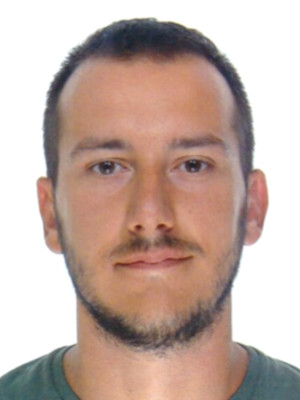
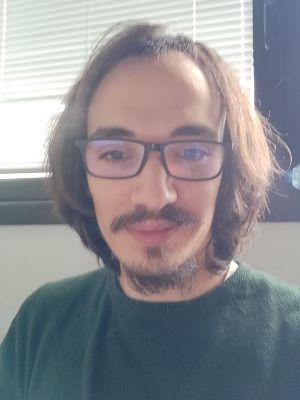
Professor Phil Trinder is a Professor of Computing Science at the University of Glasgow's School of Computing Science. He leads the Glasgow Parallelism Group (GPG) and is a member of the Glasgow Systems Section (GLASS). His research focuses on parallel and distributed programming models, functional programming, and scalable systems. Education: DPhil (Doctor of Philosophy) from the University of Oxford. Research Interests: Design and implementation of high-level distributed/parallel programming models, computational algebra applications, and collaboration with industry (Ericsson, Microsoft, etc.). Publications span over 78 works, emphasizing parallel algorithms, distributed systems, and functional programming frameworks like Erlang. Recent work explores tierless IoT architectures and reliability in distributed platforms. Grants/Projects: Principal Investigator on 12 major projects, including EU funding and EPSRC grants. Notable contributions to SD Erlang and SymGrid-Par frameworks. Labs/Teams: Glasgow Parallelism Group (GPG), GLASS section, and involvement in the Scottish Programming Languages Seminar (SPLS).
Prof. Stefano Lorenzi is a Professor in the Department of Nuclear Engineering at the University of Pavia, specializing in advanced nuclear systems. His core research focuses on thermal-fluid dynamics, molten salt reactors (MSRs), small modular reactors (SMRs), and computational methods for reactor safety and economics. He leads projects like TANDEM and ELSMOR, addressing SMR integration into hybrid energy systems and European licensing frameworks. His work includes multiphysics modeling of MSR fission products, stability analysis of natural circulation loops, and neutronics simulations using OpenFOAM and Monte Carlo methods. Key contributions span reactor dynamics, control systems, and validation of open-source nuclear codes. Prof. Lorenzi's recent studies emphasize SMR economics, safety features of in-core bubbling systems, and hybrid data assimilation for reactor analysis. He collaborates with institutions like LENA (Laboratory of Energy Engineering) and contributes to international projects such as SAMOSAFER and the MYRRHA test facility.
Prof. Antonio Cammi is a distinguished academic focusing on advanced nuclear technologies and thermal-fluid systems. His research integrates computational modeling, experimental validation, and innovative engineering solutions for fusion energy systems, molten salt reactors, and high-performance thermal management. Key areas include gyrotron design for plasma heating, remote maintenance systems for fusion facilities, and reactor safety through multiphysics analysis. He actively contributes to international projects like JUNO (neutrino detection), IFMIF-DONES (fusion materials testing), and EU-DEMO (demonstration fusion reactor). His work bridges fundamental physics with applied engineering, addressing challenges in reactor core dynamics, fuel cycle optimization, and computational efficiency. Notable methodologies include reduced order modeling (ROM), data assimilation techniques, and hybrid simulation approaches. Cammi collaborates with institutions like ENEA (Italian National Agency for New Technologies), ITER, and the University of Pavia (TRIGA reactor). Research interests span fusion plasma physics, advanced reactor materials, neutron radiation effects, and sustainable nuclear energy economics. His team develops novel tools for reactor safety assessment, including digital twins and real-time monitoring systems. Current projects emphasize high-flux testing infrastructure, passive safety systems, and modular reactor designs for next-generation energy systems.
Josie Esteban Rodriguez Condia is a Fixed-term Assistant Professor in the Department of Control and Computer Engineering (DAUIN) at Politecnico di Torino. She is a member of the CARS@PoliTO Interdepartmental Center - Center for Automotive Research and Sustainable Mobility and serves as an invited member of both the College of Electronic, Telecommunications, and Physics Engineering and the College of Computer, Film, and Mechatronics Engineering. Her research focuses on computer architecture reliability, particularly in GPU and AI accelerator systems. Key areas include functional testing, general purpose graphics processing units (GPGPUs), hardware accelerators, hardware architecture, and parallel processing. Her work addresses critical challenges in reliability assessment of AI-based automotive systems, self-test libraries for tensor cores, and hardening techniques for neural networks on GPUs. Her recent publications demonstrate a strong trend toward reliability engineering for AI hardware, with particular emphasis on automotive applications and GPU-based neural network implementations. The research spans fault injection methodologies, error modeling, and architectural solutions to enhance system resilience against soft errors and permanent faults. Dr. Rodriguez Condia actively supervises PhD students including Gustavo Vilar De Farias, Giuseppe Esposito, and Robert Alexander Limas Sierra, all working on reliability evaluation and enhancement of neural networks. She is a member of the PNRR Research Group for the National Center for HPC, Big Data and Quantum Computing (2022-2025). She teaches multiple courses including GPU Programming and High Performance Computing for both Computer Engineering and Quantum Engineering programs. Her editorial work includes serving as Guest Editor for APPLIED SCIENCES in 2024.
Emanuele Dri is a PhD student in Quantum Computing at Politecnico di Torino, Italy, under the Department of Automatic Control and Computer Science (DAUIN). He also serves as an external teacher and teaching assistant, collaborating on courses in Computer Science and Quantum Engineering. His research focuses on quantum algorithms for financial applications, reliability of quantum circuits, and bridging academic research with industry needs. Education: M.Sc. in Data Science and Engineering from Politecnico di Torino (2021), with a thesis on Machine Learning for text classification. Research interests include quantum computing, data science, computer vision, AI, parallel systems, and financial applications. He has contributed to projects on quantum fault tolerance, algorithm optimization, and financial modeling with quantum circuits. Awards include a 2023 Teaching Quality Award (95.5% satisfaction) and 2024 Quality Awards. His teaching roles span courses in Computer Science and Quantum Computing modules for engineering programs. Publications highlight advancements in quantum finance, error propagation in quantum neural networks, and transpilation effects on quantum circuit reliability. Collaborations with institutions like Intesa Sanpaolo reflect his industry-oriented research.
Leonardo Giannantoni is a PhD Student in Control and Computer Engineering at the Polytechnic University of Turin (2021-2024) and a current Research Engineer at the same institution. His work focuses on bio-inspired and AI-driven algorithms for modeling, simulating, and optimizing complex systems, with applications in synthetic biology , structural biology , and healthcare technology . Education PhD in Control and Computer Engineering (2024, Polytechnic University of Turin) MSc in Computer Engineering (2016, Polytechnic University of Turin) BSc in Computer Engineering (2014, Polytechnic University of Turin) Giannantoni's research spans multiple domains, including reinforcement learning for genetic networks , co-simulation in biofabrication , and virtual reality rehabilitation systems for Parkinson's disease. His work integrates machine learning with biological modeling , leveraging parallel computing and software engineering principles. Recent publications highlight his expertise in AI-driven structural biology , synthetic oscillatory networks , and privacy tools like tracker blockers. His Biology System Description Language (BiSDL) provides a framework for multicellular synthetic biological systems design. Scientific Contributions Member of the Focus Group of Researchers (2023-) Giannantoni has served as a Teaching Assistant for courses on Systems Programming and Algorithms , and contributed to open-source projects like nwn-petrisim (Petri Nets simulator) and microgp4 (evolutionary computing toolkit). His work bridges academic research and practical software development for complex systems.
Jemima M. Tabeart is an Assistant Professor in the Computational Science group at TU Eindhoven, within the Centre for Analysis, Scientific Computing and Applications. Her research focuses on large-scale numerical linear algebra, data assimilation, and covariance matrices. She also engages in scientific outreach and crafting. Prior roles include a Hooke Fellowship at the University of Oxford and a PDRA position at the University of Edinburgh. Education: PhD in Mathematics from the University of Reading (2019), MRes in Mathematics of Planet Earth from Imperial College London and Reading (2016), MMath from the University of Bath (2015) with a study year at Université Grenoble Alpes. Research interests span numerical linear algebra applications, preconditioning techniques, and variational data assimilation. She co-organizes the 2025 CWI research semester and the 4TU.AMI initiative bridging numerical analysis and machine learning. Her recent work includes advancements in saddle point preconditioners and model reduction techniques for Bayesian inference. Teaching responsibilities at TU Eindhoven include courses on linear algebra and differential equations. She actively supervises Bachelor/Master projects and has one PhD student. Awards and grants include funding from the INI Network Support for Mathematical Sciences. Professional activities include blogging about sustainable travel and co-organizing the Communications in Numerical Linear Algebra series, with talks available on YouTube.
Michele Martone is a Researcher at the High Performance Systems Division of the Leibniz Supercomputing Centre (LRZ) in Garching, Germany. His work focuses on High Performance Computing (HPC) , sparse matrix computations , and code restructuring techniques , with a strong emphasis on OpenMP/MPI parallelization and semantic patching using the Coccinelle tool. Research Interests : HPC, automated code restructuring, sparse matrix optimization, semantic patching, and free/open source software (FLOSS) development. Key Tools : Author of the librsb library for sparse matrix operations, SparseRSB for Octave, PyRSB for Python integration, and the FIM image viewer. Publications : His recent work includes semantic patching for HPC refactorings, Coccinelle-based tooling, and performance optimization of sparse linear algebra libraries. Teaching : Delivers trainings and talks on Coccinelle, OpenMP/MPI, and FLOSS at events like HIPS25 , FOSDEM , and deRSE conferences. Advocacy : Strongly promotes free software, transparency in science, and public access to code developed with taxpayer funding.
Dr. Daniel Casini is an Assistant Professor at the Department of Information Engineering and Computer Science, Sant'Anna School of Advanced Studies. His academic journey includes a PhD (2016–2019) and postdoctoral research (2019–2021) in Real-Time Systems. He specializes in real-time scheduling algorithms, edge computing, and embedded system predictability. His work focuses on optimizing latency, resource allocation, and security in cyber-physical systems. Education: PhD in Computer Science, Sant'Anna School of Advanced Studies (2016–2019) Postdoctoral Researcher in Real-Time Systems (2019–2021) Research Interests: Real-Time Scheduling (Partitioned/EDF/Gang Scheduling) Edge Computing and Predictable Virtualization Middleware Optimization (DDS/ROS 2) Hardware-Software Co-Design for Cyber-Physical Systems Security-Temporal Trade-offs in Critical Systems Key Contributions: Developed MATERIAL framework for edge real-time applications on QNX RTOS Pioneered analysis of QNX IPC predictability and Linux kernel noise Designed latency-optimized thread chains for DDS middleware Awards: IEEE TCCPS Early-Career Award 2023 Labs/Teams: Active contributor to the SPHERE project, developing heterogeneous multi-SoC architectures for next-gen cyber-physical systems.
Gianluca D’Amico is a Postdoctoral Researcher (since January 2024) and previously completed a Ph.D. (October 2020 – June 2024). His work focuses on developing blockchain-based auction systems, machine learning applications, natural language processing tools, and embedded systems projects. He contributed to smart contract design for English and Vickrey auction mechanisms, emphasizing secure bidding phases and decentralized transaction management. Research interests include: Machine Learning: Character recognition on Raspberry Pi devices Blockchain Technology: Auction dApp development using Solidity and Truffle Natural Language Processing: Ontology-driven wiki description tools Parallel Computing: Optimized watermarking solutions for image streams
Letterio Galletta is an Assistant Professor of Computer Science at IMT School for Advanced Studies Lucca, within the SySMA research unit. Previously, he held a postdoctoral researcher position at the University of Pisa's Department of Computer Science and earned his Ph.D. in Computer Science from the University of Pisa in 2014. His research focuses on language-based security, leveraging programming languages, compilers, and formal verification to address security challenges in adaptive software, IoT, firewalls, and blockchain technologies. Key research areas include secure compilation, access control policy analysis, smart contract formal models, and static analysis techniques. His work bridges theoretical foundations with practical applications, such as securing satellite communication systems (IRIS2) and enhancing firewall policy enforcement. Publications highlight contributions to blockchain transaction parallelism, IoT security metrics, and formal methods for SELinux configurations. He actively contributes to tools like FWS (Firewall Synthesizer) and VeriOSS for bug bounty protocols. His research emphasizes interdisciplinary approaches, combining cybersecurity with distributed systems and embedded computing.
Claudio Antares Mezzina is an Associate Professor in the Department of Pure and Applied Sciences at the University of Urbino Carlo Bo, specializing in theoretical computer science with research focus areas in reversible computation, distributed systems, and formal methods. Research Focus: His work centers on developing formal models for concurrent and distributed systems, particularly exploring reversible computational frameworks, Petri net applications in biochemical systems, and operational semantics for process algebras. Teaching: Mezzina teaches advanced courses including Distributed Applications and Cloud Computing, Software Engineering and Architecture, and Distributed Systems, with materials often available in both Italian and English.
Lucas Omar Muller is an Associate Professor in the Department of Mathematics at the University of Trento. His expertise spans Biomedical Engineering, Cardiovascular Mathematics, Numerical Analysis, and High-Performance Computing. He holds an office at Via Sommarive, 14 - 38123 Povo, and can be reached via tel. 0461 285222. His teaching responsibilities include courses such as Analisi numerica I/II , Biomedical Applications of Mathematics , and Computational Haemodynamics . He also teaches Fisiologia applicata al letto del paziente and Strumenti informatici per la matematica . Research interests focus on mathematical modeling in biomedical contexts, numerical methods for PDEs, and computational techniques for parallel systems. While no specific publications are listed here, his work likely intersects with cardiovascular modeling, neural network applications, and high-performance computing frameworks. No scientific awards, grants, or advised students are explicitly mentioned in the provided data.
Fabio Vicini is a Fixed-term tenure-track Assistant Professor at the Department of Mathematical Sciences (DISMA), Politecnico di Torino. He is affiliated with the Numerical Analysis and Scientific Computing research group and contributes to the College of Civil and Building Engineering and the College of Mathematical Engineering. His work bridges theoretical numerical methods and high-performance computing applications. Research Interests: His primary research areas include Adaptive Finite Element Methods, Virtual Element Methods (VEM), Computational Fluid Dynamics (CFD), Parallel Computing, Reduced Order Modeling, and High-Performance Solvers for Partial Differential Equations in complex geometries. His work emphasizes algorithmic robustness, efficiency, and scalability in scientific simulations. Recent Publication Trends: His latest articles (2024–2025) focus on advancing the Virtual Element Method—particularly in 3D adaptive settings, stabilization-free error bounds, mesh optimization, and performance on poorly shaped elements. Additional work involves nonlinear optimization for material simulation and extended finite elements for coupled 3D–1D problems, reflecting a strong trend in numerical analysis and computational mathematics. Scientific Awards: Communicating Research to the Citizens (Politecnico di Torino, 01-07-2025) Effective Communication with Businesses (Politecnico di Torino, 01-07-2025) Advising and Teaching: He supervises two PhD students—Lorenzo Neva and Karol Lizeth Cascavita Mellado—in the Mathematical Sciences program. He teaches core courses such as High-Performance Scientific Computing I & II, Model Order Reduction and Machine Learning, and Programming and Scientific Computing across multiple engineering programs including Aerospace, Automotive, and Mathematical Engineering. Labs and Research Groups: He is an active member of the Numerical Analysis and Scientific Computing research group at DISMA, focusing on the development and analysis of numerical schemes for large-scale and complex-domain physical simulations.
Luciano Tarricone is a Full Professor of Electromagnetic Fields in the Department of Innovation Engineering at the University of Salento, Italy. He teaches core courses such as Electromagnetic Fields for the Bachelor's in Information Engineering and Applied Electromagnetics for the Master's in Communication Engineering and Electronic Technologies. His office is located at the Ecotekne Center, Pal. O, Lecce-Monteroni. He has been actively involved in academic and research activities at the university since 2001. His research focuses on the interaction between electromagnetic fields and biological systems, numerical dosimetry using parallel FDTD methods, innovative radiopropagation modeling, optimization of radio base station networks, CAD of antennas and microwave circuits, and supercomputing applications in electromagnetics. He coordinates the Electromagnetic Fields research group and has led multiple industrial and fundamental research projects. His expertise spans both theoretical and applied aspects of electromagnetics, with strong interdisciplinary connections to biomedical engineering and telecommunications. The recent publications and teaching materials reflect a consistent focus on bioelectromagnetics, EM safety, wireless technologies (including RFID and IoT), radar systems, and computational methods. His work integrates theoretical modeling, numerical simulation, and practical applications in health, telecommunications, and environmental monitoring. Full Professor of Electromagnetic Fields (ING-INF/02) Chair of Electromagnetic Fields Coordinator, Electromagnetic Fields Research Group Member of various academic committees at department and faculty levels Luciano Tarricone has not received any explicitly mentioned scientific awards in the provided text. However, his leadership in research projects and extensive teaching responsibilities indicate significant academic recognition. He advises students through project-based learning in his Applied Electromagnetics course, where students develop and present practical projects. Although specific grant details are not listed, he has coordinated several basic and industrial research projects. His research group is active in multiple domains, particularly bioEM interaction, human-antenna dosimetry, and computational electromagnetics, with potential collaborations in biomedical and telecommunications sectors.