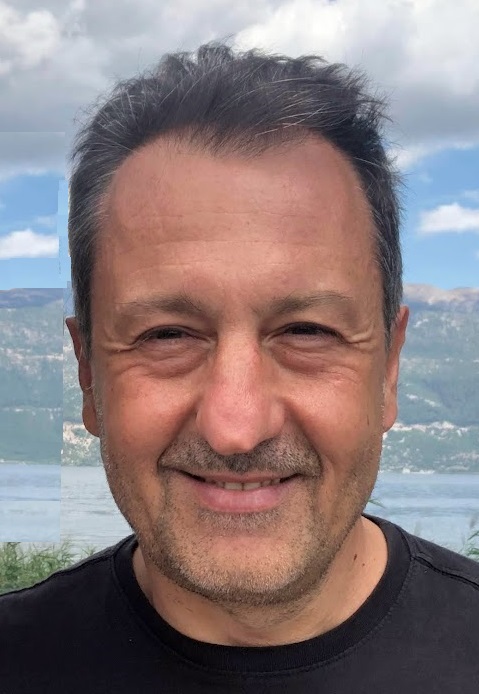
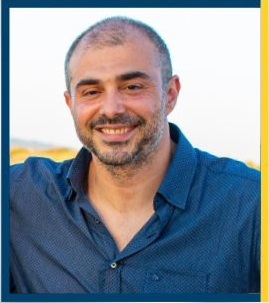
Kostas Magoutis is Professor and Chair of the Computer Science Department at the University of Crete and collaborating researcher with FORTH-ICS. His research focuses on distributed systems, scalable data processing, IoT, and cloud computing, with projects including GreenInCities for urban regeneration and STREAMSTORE for stateful stream processing systems. Research interests include: Distributed computer systems architecture Elastic stream processing platforms Quantum-enhanced computing applications Multi-cloud application lifecycle management Recent publications demonstrate strong focus on federated data systems, quantum computing applications, and IoT-enhanced infrastructure, with consistent output in high-impact conferences and journals. Awards and distinctions: Multiple best paper awards from USENIX conferences Grand Challenge Audience Award at DEBS 2022 Marie Curie Fellowship and IBM Research awards Advises over 20 PhD and MSc students in distributed systems research. Leads multiple EU-funded projects and serves on program committees for top conferences including SOSP, EuroSys, and IEEE BigData. Directs research groups in distributed systems and cloud computing at FORTH-ICS.
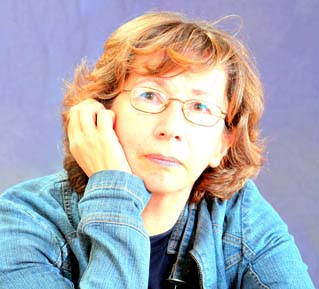
Professor Foto N. Afrati is a Distinguished Faculty Member at the National Technical University of Athens, specifically within the School of Electrical and Computing Engineering and the Division of Communication, Electronic and Information Engineering. She has held this position since 1993, following previous academic ranks at the same university as Associate Professor (1989-1993), Assistant Professor (1985-1989), Lecturer (1982-1985), and Research Fellow (1980-1982). She completed her PhD in Electrical Engineering at Imperial College of the University of London in March 1980, with a dissertation focused on Error Correcting Codes by Algorithms. Her academic journey also included a Diploma from Imperial College (March 1980) and an earlier Diploma in Electrical and Mechanical Engineering from the National Technical University of Athens (June 1976). Professor Afrati's research interests span several critical areas in computer science: Parallel and distributed computation Processing of very large data (including MapReduce) Data and web mining Database Systems Information integration Query optimization Computation and complexity of algorithms Approximation algorithms Her most recent publications demonstrate expertise in MapReduce environments, query optimization with views, and data exchange frameworks. These works are published in prestigious venues like EDBT, VLDB, PODS, and ICDT, with specific focus areas including adaptive sampling techniques, data source integrity, and algorithm complexity in database environments. Professor Afrati has received significant recognition in her field, including Fellow of the Association for Computing Machinery (ACM) Best Paper Award at the International Conference on Database Theory (ICDT) 2009 She has advised numerous PhD students throughout her career, including Theodoros Mitakos, Ezz Hattab, Nikos Kiourtis, and Angelos Vasilakopoulos. Her current PhD students include Victor Kyritsis and Nikos Stassinopoulos. Professor Afrati maintains strong professional networks through her various visiting positions at institutions such as Google, Stanford University, IBM Research Center, University of Helsinki, University of Paris, DIMACS, and others. She has served as associate editor and reviewer for major academic journals and conferences including IEEE TKDE, ACM Transactions of Database Systems (TODS), Journal of ACM (JACM), and Theoretical Computer Science (TCS). Her extensive work in research projects spans both national and international initiatives, with funding from sources including the European Union's Thalis project, ESPRIT working groups, HCM networks, and Greek General Secretariat of Research and Technology grants.
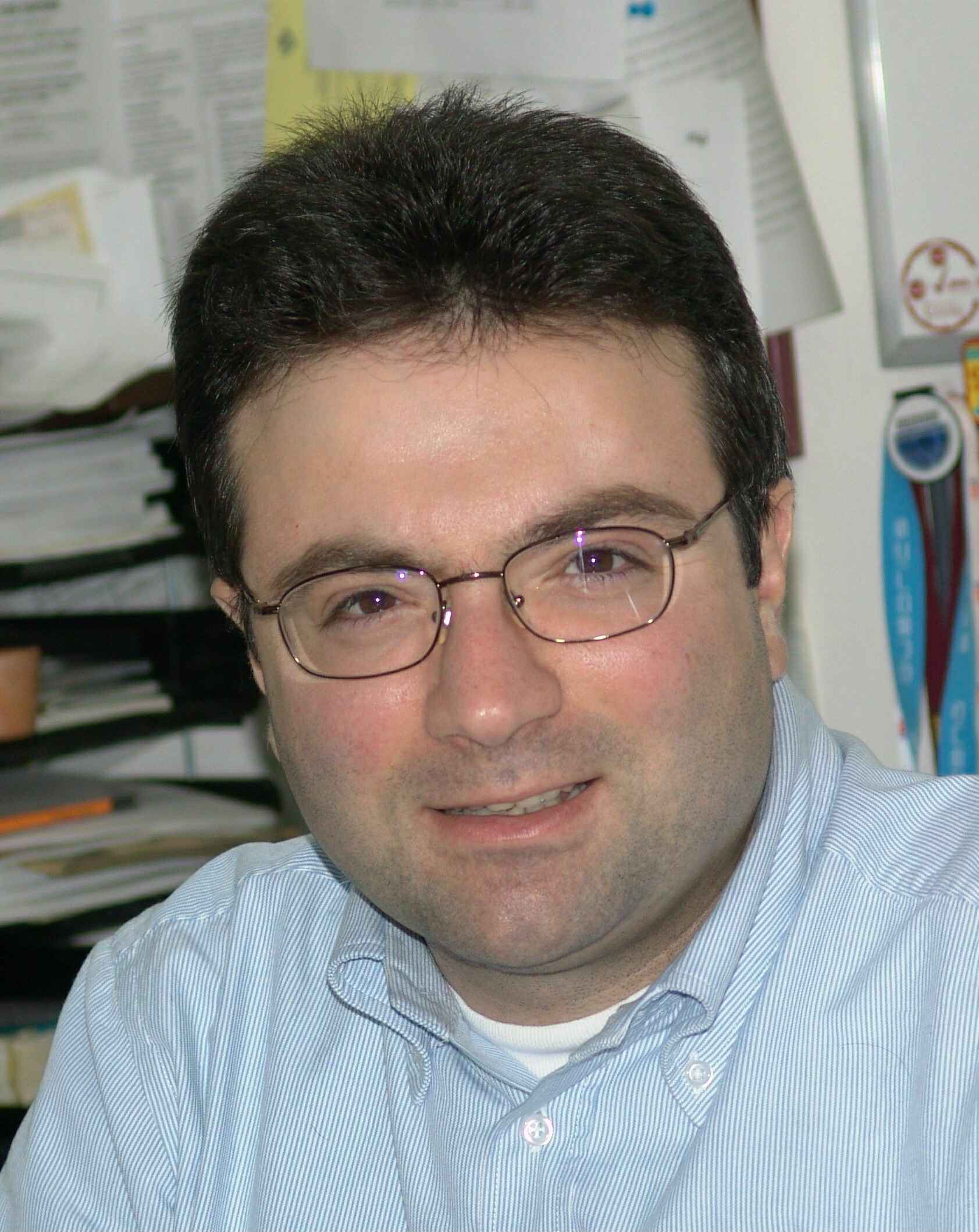
Nectarios Koziris is a Professor at the Department of Computer Science , National Technical University of Athens (NTUA) , and former Dean of the School of Electrical and Computer Engineering . His research focuses on Parallel and Distributed Systems , Computer Architecture , and Cloud Computing . Key Research Themes: Compiler-OS-Architecture Interaction, Datacenter Hyperconvergence, Sparse Matrix Optimization, Quantum Computing, FPGA Virtualization Leadership: Founder of ~okeanos (Europe's largest public Cloud IaaS), Co-founder of GFOSS , Member of IEEE Computer Society Greece, Advisor to Arrikto Inc. His work has led to over 180 publications with 5800+ citations (h-index 33) , including two Best Paper Awards (IPDPS 2001, CCGRID 2013) and Intel Recognition (2015). He has supervised 12 PhD students and participated in 15+ EU projects as coordinator or consortium partner. Scientific Leadership: Program Co-Chair for Europar 2012 , Organizer for IPDPS , ICPP , SC conferences, and active member in Cloud Computing Expert Groups for the European Commission.
Gérard Berry (born December 25, 1948) is a distinguished French computer scientist currently serving as Professor at the Collège de France, holding the permanent chair Algorithmes, machines et langages (Algorithms, Machines, and Languages) since 2012. He previously held the Informatique et sciences numériques chair (2009-2010) and the Technological Innovation Liliane Bettencourt chair (2007-2008) at the same institution. Before joining Collège de France full-time, he served as Director of Research at INRIA Sophia Antipolis (2009-2012) and at École des Mines de Paris (1977-2001). His research spans over 30 years in three main fields: lambda calculus and functional programming, parallel and real-time programming languages, and design automation for synchronous digital circuits. He is particularly renowned for developing the Esterel programming language. His work bridges theoretical computer science with practical industrial applications. Berry's research has evolved to include current work in Hop and HipHop for Web programming, formal verification of compilers, and languages for computer music. His publications demonstrate consistent contributions to programming language theory, formal methods, and their applications in hardware and software systems. Gold Medal of CNRS (2014) Chevalier de l'Ordre de la Légion d'Honneur (2012) Member of French Academy of Sciences (2002) Member of Academia Europaea (1993) Monpetit Prize of Académie des sciences (1990) Berry has advised 17 PhD students and reviewed numerous theses. His industrial experience includes serving as Chief Scientist Officer of Esterel Technologies (2000-2009), where he directed the implementation of the Esterel v7 compiler. He has also held significant leadership roles including President of the Scientific Council of IRCAM and membership on the Scientific Council of the National Education. His teaching at Collège de France has covered topics ranging from the foundations of computation to the societal impact of digital technology, with courses including The Informatics of Time and Events and Proving Programs: Why? When? How? His laboratory work has focused on developing practical applications of theoretical computer science concepts.
Alvin Cheung is an Associate Professor in the Computer Science Division at UC Berkeley's EECS department. He is affiliated with the Data Systems and Foundations group, Programming Systems group, Sky Lab, and SLICE Lab, and serves as a faculty affiliate at the Berkeley Institute for Data Science. He advises the Data Science Discovery Program and provides technical guidance to industry partners. His research spans data management, programming languages, and scalable software systems, with emphasis on helping users process large datasets efficiently. Key innovations include verified lifting (applying formal methods and ML to infer program properties) and systems for optimizing database-backed applications and geospatial analytics. Recent work explores LLM-driven code optimization and transpilation techniques. His publications (2023-2025) show strong trends in ML-enhanced systems, verified compilation, and data management tools. Articles frequently integrate formal methods, program synthesis, and hardware-aware optimizations across domains like databases, distributed computing, and HCI. Scientific Awards: ACSIC Rock Star Award (2025) Dahl-Nygaard Junior Prize (2024) VLDB Early Career Research Contribution Award (2023) IEEE TCDE Rising Star Award (2020) Sloan Fellowship (2019) NSF CAREER Award (2017) 20+ additional honors Advising & Grants: He mentors PhD/MS students (e.g., Lily Liu at OpenAI, Chenglong Wang at Microsoft Research). Research is funded by: NSF DOE ONR ARO Intel Notable grants include ONR Young Investigator Award and ARO Early Career Program Award. Labs & Teams: Leads projects in Berkeley's Data Systems/Programming Systems groups and collaborates with Sky Lab/SLICE Lab. Manages labs focused on verified compilation (e.g., Tenspiler) and data infrastructure (e.g., Spatialyze).
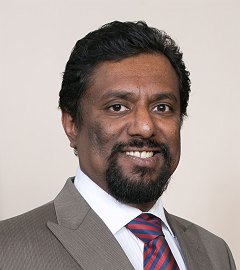
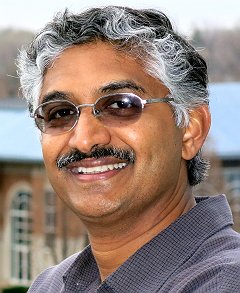
Professor Saman Amarasinghe is a faculty member in the Department of Electrical Engineering and Computer Science at the Massachusetts Institute of Technology (MIT), where he leads the Commit compiler research group at MIT's Computer Science and Artificial Intelligence Laboratory (CSAIL). His research focuses on programming languages and compilers that maximize application performance on modern computing platforms, with a particular emphasis on high-performance domain-specific languages. Professor Amarasinghe received his bachelor's degree in electrical engineering and computer science from Cornell University in 1988, followed by master's and PhD degrees in electrical engineering from Stanford University in 1990 and 1997, respectively. He joined the MIT faculty as an assistant professor in 1997 and has since become a world leader in his field. Professor Amarasinghe's research interests span programming languages, compiler design, and high-performance computing, with a particular focus on domain-specific languages. His group has developed numerous influential languages and compilers including Halide, TACO, Simit, StreamIt, StreamJIT, PetaBricks, MILK, Cimple, and GraphIt, which deliver unprecedented performance for application domains such as image processing, stream computations, and graph analytics. He has also pioneered the application of machine learning for compiler optimizations, from Meta optimization in 2003 to the OpenTuner autotuner framework. Professor Amarasinghe's publication history reveals a consistent research trajectory toward creating specialized language and compiler solutions that address performance challenges in specific domains while hiding complexity from application developers. His recent work focuses heavily on sparse computing, tensor algebra, graph processing, and the integration of machine learning techniques into compiler technology, demonstrating his ability to identify and address emerging computational challenges. ACM Fellow (2019) As an educator, Professor Amarasinghe has developed the popular Performance Engineering of Software Systems (6.172) class with Professor Charles Leiserson and created innovative project-based courses including the Open Source Software Project Lab, the Open Source Entrepreneurship Lab, and the Bring Your Own Software Project Lab. He also serves as the faculty director of MIT Global Startup Labs, which has helped create more than 20 startups across 17 countries. His research has translated into practical applications through startups like Determina, Inc. (acquired by VMware), demonstrating the real-world impact of his academic work. Professor Amarasinghe co-led the Raw architecture project with Professor Anant Agarwal, which did pioneering work on scalable multicores. His entrepreneurial activities include founding Determina, Inc. based on computer security research from his MIT lab and co-founding Lanka Internet Services, Ltd., the first Internet Service Provider in Sri Lanka, showcasing his ability to bridge academic research with commercial applications.
David I. August is a Professor at Princeton University specializing in programming languages and compiler systems. His research bridges theoretical compiler techniques with practical systems implementation, focusing on memory safety, speculative execution, and compiler optimization. His primary research interests include Compiler Design , Rust Programming Language safety mechanisms , and LLVM infrastructure extensions . His work emphasizes practical implementations that enhance both performance and security in modern programming systems. Recent publications demonstrate consistent contributions to memory profiling frameworks (PROMPT), Rust safety enhancements, and speculative dependence analysis. His research shows strong focus on making low-level systems programming safer without sacrificing performance. August serves regularly on program committees for major conferences including PLDI and CGO, indicating his standing in the programming languages research community. He has mentored students in compiler construction and programming language design, with research projects often involving practical implementations integrated into production-quality compiler frameworks.
Professor Manolis Koubarakis is a faculty member at the Department of Informatics and Telecommunications, National and Kapodistrian University of Athens. His research focuses on geospatial data science, knowledge graphs, entity resolution, and AI applications in Earth observation. He leads projects like ExtremeEarth and Plato, advancing semantic data cube systems and geospatial question answering engines. His work bridges AI and geospatial technologies, with contributions to frameworks like pyJedAI and Strabo 2 for managing big geospatial data. Research Interests include: Geospatial Question Answering Systems Entity Resolution and Entity Linking Ontology-Based Data Access (OBDA) Knowledge Graph Construction and Applications Earth Observation Data Analytics AI for Geoinformatics Notable Projects: ExtremeEarth: Combines Copernicus satellite data with machine learning for environmental analytics. Plato: Semantic data cube system enabling advanced querying of multidimensional datasets. GeoQA2: A geospatial question answering engine evaluated on large benchmarks. JedAI Family: Tools for scalable entity resolution in structured/semi-structured data. His publications span 20+ years, with recent emphasis on: AI-driven Earth observation systems Geospatial RDF benchmarking 3D geospatial interlinking Large language models for legal and health content delivery
Paschalis Antonis is a Professor at the Department of Informatics and Telecommunications, National and Kapodistrian University of Athens. His research focuses on hardware architectures for space systems, embedded systems, and image compression standards such as CCSDS. He specializes in FPGA implementations, radiation-hardened electronics, and biomarker development for immunogenic responses to cancer therapies. Research Interests: High-performance FPGA-based hardware accelerators Space-grade embedded systems and data compression CCSDS standard implementations for aerospace applications Molecular biomarkers for immunotherapy response prediction Recent Trends: His work emphasizes resilient systems against radiation effects (e.g., SEUs in FPGAs), high-throughput image compression cores for space missions, and interdisciplinary research linking computational hardware with medical diagnostics via prothymosin α analysis. Grants & Labs: Leads the ASPIICS coronagraph project for ESA's Proba-3 mission, involving advanced optical instrumentation and formation flying systems. Collaborates on COTS FPGA utilization in extreme environments.
Nikos Giatrakos is an Assistant Professor at the School of Electronic & Computer Engineering, Technical University of Crete, and a core member of the Software Technology and Network Applications Lab (SoftNet) . His work bridges Big Data systems, IoT, and advanced analytics, with a focus on real-time processing and scalable architectures. Previously, he served as a postdoctoral researcher at the same laboratory. Education PhD in Computer Science, University of Piraeus (2012) Postgraduate Diploma in Information Systems, Athens University of Economics and Business (2008) BSc in Computer Science, University of Piraeus (2006) Research Focus : Nikos specializes in software architectures for Big Data streaming, including Distributed Big Data Processing , Federated Machine Learning , Cloud-to-Edge Data Management , and Approximate Query Processing . His work has also advanced Complex Event Processing and Outlier Detection in decentralized environments. Scientific Contributions : His research has led to the DAG* workflow optimizer for IoT, the SuBiTO framework for real-time neural learning, and the INFORE approach for cross-platform analytics. He received the Best System Demonstration Award at ACM CIKM 2020 for INforE. Academic Leadership : Nikos teaches Object-Oriented Programming, Data Science, and Distributed Systems. He has supervised numerous European and national grants as Principal Investigator and served on program committees for top-tier conferences like SIGMOD, VLDB, and DEBS.
Nick Bassiliades is a Professor at the School of Informatics , Aristotle University of Thessaloniki , Greece. His academic roles include serving as President of the Digital Governance Committee and the Digital Transformation of Greek Universities Committee, as well as Director of the Web, Data, and Knowledge Engineering Sector. Education: B.Sc. in Physics, Aristotle University of Thessaloniki (1991) M.Sc. in Applied Artificial Intelligence, University of Aberdeen (1992) Ph.D. in Parallel Knowledge Base Systems, Aristotle University of Thessaloniki (1998) His research focuses on Semantic Web , Ontologies , Knowledge Graphs , and applications in Artificial Intelligence , eGovernment , and Intelligent Agents . Recent publications emphasize ontological frameworks for requirements engineering, explainable AI, and electric vehicle knowledge graphs. He actively contributes to scientific communities as a Senior Member of IEEE and ACM , and serves as Co-Editor-in-Chief for the International Journal of Artificial Intelligence in Business and Management . His work involves collaborations with the Intelligent Systems laboratory and projects like XR4DRAMA for disaster management.
Vassilis P. Plagianakos is an Associate Professor at the Department of Computer Science and Biomedical Informatics, University of Thessaly, Greece. He has held visiting academic roles at the University of the Aegean, University of Patras, and University of Central Greece. He currently serves as the Department Head and Director of the postgraduate program Informatics and Computational Biomedicine in the School of Sciences. His research focuses on machine learning, neural networks, bioinformatics, and parallel computing with applications in healthcare and education. Education : Bachelor’s in Mathematics (1996), University of Patras Ph.D. in Mathematics (2003), University of Patras Research Interests : Plagianakos explores neural networks, evolutionary algorithms, and machine learning applications in bioinformatics, medical diagnosis, and educational technology. His work bridges computational methods with real-world challenges in healthcare (e.g., precision medicine) and STEM education (e.g., flipped classrooms, AI integration). Recent Trends in Publications : Recent work emphasizes predictive precision medicine using big data, blockchain scalability solutions, and AI ethics in automated content detection. He has pioneered methods like the HCER hierarchical clustering-ensemble regressor and developed tools for analyzing single-cell RNA sequencing data. Professional Activities : Member of IEEE Neural Networks Society, IEEE BBTC, and former Board Member of the Hellenic AI Society. Active in collaborative projects like CrowdHEALTH for policy-driven health data analytics.
Sofia Kyratzi is an Assistant Professor of Geometric Modeling and Computer-Aided Design at the University of the Aegean's Department of Product and Systems Design Engineering. She holds a PhD (2007) in Computer Graphics and Geometric Modeling from the same university, an MSc in Medical Informatics (2002) from Aristotle University of Thessaloniki, and a BSc in Mathematics (2000) from Aristotle University. Roles: Teaches courses like Computer Graphics, Computer-Aided Design, and related graduate topics. Research Focus: Parametric modeling, sketch-to-solid algorithms, design intent recognition, and Industry 4.0 integration in manufacturing. Her work includes developing algorithms for reconstructing 3D models from sketches, leveraging cloud computing for CAD applications, and optimizing footwear design via biomechanical modeling. Key contributions span over 15 peer-reviewed publications in journals like Computer-Aided Design and conferences addressing geometric modeling challenges. She collaborates on projects exploring Industry 4.0 technologies for SMEs, emphasizing cloud-based CAD tools and parallel computing optimizations. Her research bridges theoretical geometric principles with practical industrial applications.
Nikolaos Papaspyrou is a Professor at the School of Electrical and Computer Engineering of the National Technical University of Athens (NTUA) and a member of the Software Engineering Laboratory . His research focuses on the theory and implementation of programming languages, including semantics, type systems, compilers, static analysis, and formal verification. Since October 2021, he has been on leave from NTUA, working as a Software Engineer for Google in the memory management team for the V8 JavaScript and WebAssembly engine. He previously served as Director of the Division of Computer Science (2017-2019) and was on sabbatical with Google's compiler group in Munich (2015-2016). His work includes the RELEASE project (EU FP7 STREP) for reliable large-scale server software and uncertainty handling in distributed databases (European Social Fund). Ph.D. and Diploma in Electrical and Computer Engineering from NTUA M.Sc. in Computer Science from Cornell University His research interests span programming languages , software engineering , and formal verification , with recent publications on coinductive proofs in Liquid Haskell, concurrency semantics, and quantum compilation. He has supervised over 50 diploma projects and mentored numerous students now at institutions like MIT, Princeton, and UC Berkeley. Awards include conference organizing and program committee roles, though no formal scientific prizes are listed.
Vikram S. Adve is a Professor in the Department of Computer Science at the University of Illinois at Urbana-Champaign. He co-founded and co-leads the Center for Digital Agriculture and directs the USDA-funded AIFARMS Institute , focusing on AI applications in sustainable agriculture. His research bridges compilers, parallel systems, and AI to address challenges in edge computing and digital farming. Research interests span compiler technologies (LLVM, HPVM), parallel programming models , software reliability , and AI-driven agriculture . Key projects include: CropWizard : Generative AI for agricultural decision-making. HPVM/ApproxHPVM : Compiler IR for edge devices. Hydride/MISAAL : Automated retargetable compiler construction. Recent publications (2018-2025) emphasize compiler optimizations, approximate computing, binary analysis, and AI for systems. Trends show convergence of compiler techniques , heterogeneous computing , and AI applications in agriculture and edge devices. Adve actively recruits students for projects funded by USDA, Intel, Amazon, and Illinois DPI. He leads the HPVM compiler team and digital agriculture initiatives , integrating cross-disciplinary research across CS, engineering, and agronomy.