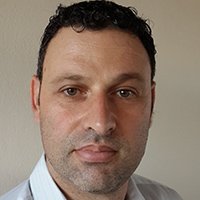
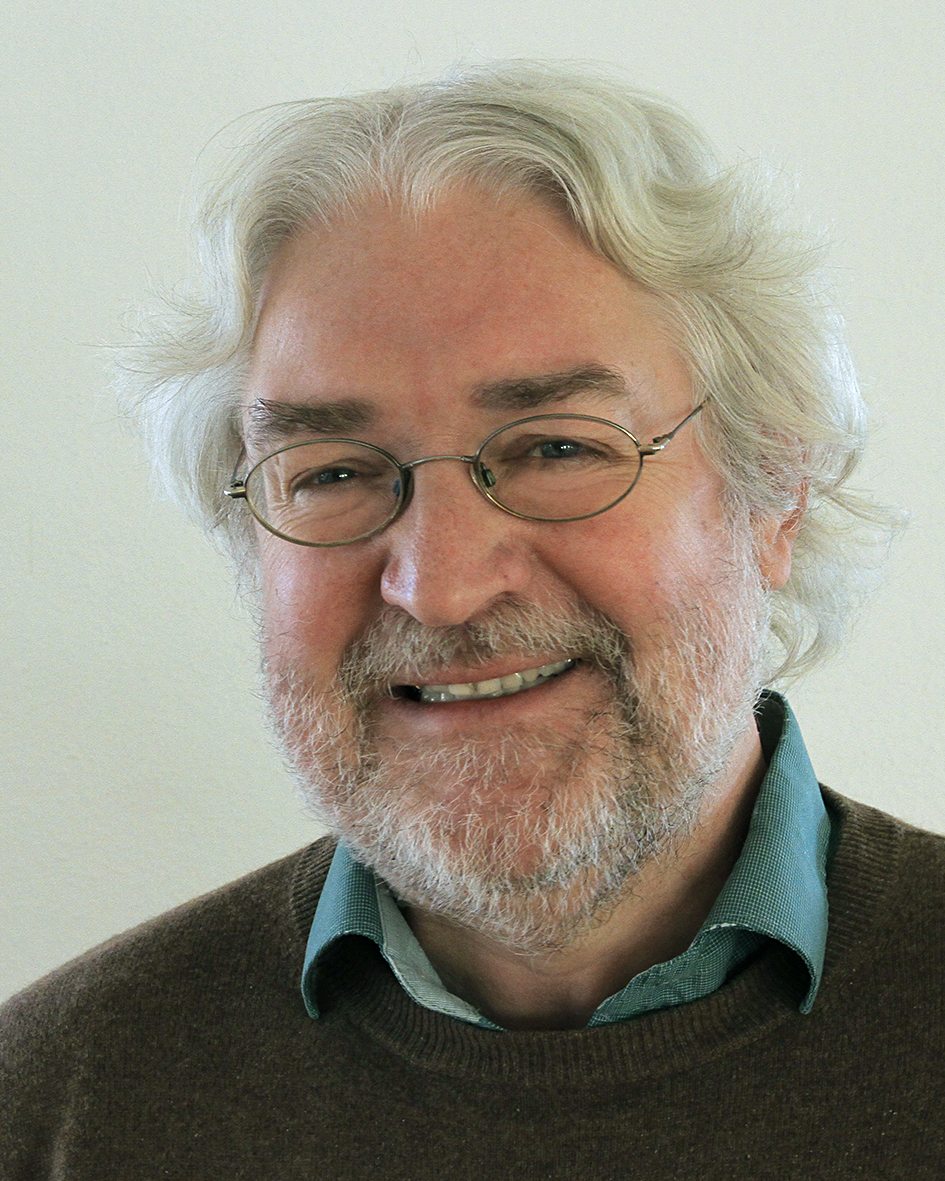
Prof. Runyi Yu is a faculty member in the Department of Electrical and Electronic Engineering at Eastern Mediterranean University (EMU). He holds a Professor rank and oversees research in signal processing, control systems, and machine learning. His office is located at EE 206, and he can be reached via email . Education: PhD in Electrical and Electronics Engineering, Beijing University (1985–1988) MS in Electrical and Electronics Engineering, Beijing University (1982–1985) BS in Electrical and Electronics Engineering, Shanxi University (1978–1982) Research Interests: Prof. Yu specializes in signal processing algorithms, wavelet transforms, control system design, and the application of machine learning to non-stationary time series forecasting. His work bridges theoretical advancements with practical implementations, such as parallel computing optimizations (e.g., OpenCL) and robust H-infinity control strategies. Advising & Grants: Supervised 13 completed theses (PhD and MS) and one ongoing PhD. Notable projects include multidimensional data recovery via iterative regularization and optimal filter bank design for dual-tree complex wavelet transforms.
George Papadopoulos is a Professor of Informatics at the University of Cyprus. He holds a Ph.D. from the University of East Anglia (1989) and has held academic and research roles at institutions including NCSR Demokritos, Aristotle University of Thessaloniki, and the University of East Anglia. His research focuses on Component-Based Systems, Parallel/Distributed Systems, and Cooperative Information Systems. He leads the Software Engineering and Internet Technologies (SEIT) Laboratory and has contributed to EU-funded projects like SciChallenge and AsTeRICS. Key contributions include development of adaptive middleware architectures, context-aware systems, and educational platforms such as the DIGICOMPASS training course. His work spans academic-service integration, assistive technologies for accessibility, and AI applications in healthcare and dementia care. Over 150 peer-reviewed publications reflect his expertise in software engineering, ubiquitous computing, and e-learning systems. Current roles include editorial board memberships for journals like Computing and IEEE Transactions on Education . Active in professional service through EU projects, he emphasizes interdisciplinary collaboration across computing, education, and healthcare domains.
Petros Aristidou is an Assistant Professor in Sustainable Power Systems at the Cyprus University of Technology (CUT), where he directs the Sustainable Power Systems Lab. His academic journey includes a PhD in Engineering Sciences from the University of Liège (2015) and a Diploma in Electrical & Computer Engineering from the National Technical University of Athens (2010). Previously, he held positions as Lecturer at the University of Leeds and Postdoctoral Researcher at ETH Zurich. His research focuses on three primary areas: power and energy system informatics, control of hybrid dynamical systems, and modeling/simulation of large-scale power systems. He specializes in addressing challenges related to low-inertia power systems, renewable integration, and grid stability. Award trends show consistent recognition from IEEE societies, with honors spanning best paper awards (TPWRS, ISGT-Europe), technical report awards, and scholarships. His publications demonstrate a progression from fundamental simulation methods toward applied solutions for renewable integration and grid resilience. TPWRS Best Paper Award (2021) IEEE PES ISGT-Europe Best Paper (2021) IEEE PES PowerTech High Quality Paper (2021) IEEE SEST Best Paper (2020) IEEE Outstanding Technical Report (2018) He leads multiple grants including the Horizon Europe MSCA ITN project Dependable Energy Systems (PI) and industrial collaborations on power system simulation methods. As lab director, he oversees research on power system dynamics and control, participating in international working groups addressing low-inertia system challenges.
Demetris Zeinalipour is a Professor of Computer Science at the University of Cyprus, where he founded and directs the Data Management Systems Laboratory (DMSL). He holds a Ph.D. (2005) and M.Sc. (2003) in Computer Science and Engineering from the University of California - Riverside, CA, USA and a B.Sc. in Computer Science from the University of Cyprus (2000). His career includes research positions at Akamai Technologies, University of Athens (as a Marie-Curie Fellow), University of Pittsburgh, and the Max Planck Institute for Informatics (as a Humboldt Fellow). He is an ACM Distinguished Speaker (2017-2020), a Senior Member of ACM and IEEE, and serves on the editorial boards of ACM Transactions on Spatial Algorithms and Systems and Distributed and Parallel Databases. His primary research spans Data Management in Computer Systems and Networks, with expertise in Mobile, Sensor and Spatio-Temporal Data Management; Big Data Management in Parallel and Distributed Architectures; Network, Blockchain and Telco Data Management; Crowd, Web 2.0 and Indoor Data Management; Data Privacy Management; Data Management for Sustainability; and AI and Data Management. His work bridges theoretical foundations with practical applications, resulting in numerous systems including Anyplace Indoor Information Service, ChatUCY, GreenCap, EcoCharge, and Triabase. His research has evolved from early work in sensor networks to current focus on sustainable computing applications addressing climate change challenges. Professor Zeinalipour's publication record shows a strong trajectory toward sustainability-focused data management, with recent work on energy management for smart homes, electric vehicle charging, and solar self-consumption. His research integrates multiple disciplines including spatial databases, mobile computing, IoT systems, and blockchain technologies, with increasing emphasis on addressing real-world environmental challenges through computing solutions. Scientific Recognition IEEE ICDE'24 Outstanding Reviewer Award IEEE MDM'21 Best App Paper Award IEEE MDM'18 Best of MDM Award and Best Demo Award Humboldt Fellow (2016) ACM Distinguished Speaker (2017-2020) ACM and IEEE Senior Member status He has advised numerous PhD students and postdocs, many of whom have established successful careers in both academia and industry. His laboratory maintains strong industry connections and contributes to open-source development. Professor Zeinalipour is deeply committed to addressing real-world challenges through computing research, with recent work focusing on climate change mitigation and sustainable energy management solutions.
Chryssis Georgiou is a Professor and Chair of the Department of Computer Science at the University of Cyprus , where he leads the Research Laboratory for Foundations of Computing Systems and Theoretical Computer Science . He holds a Ph.D. and M.Sc. in Computer Science from the University of Connecticut and a B.Sc. in Mathematics from the University of Cyprus. Ph.D. in Computer Science (2003), University of Connecticut M.Sc. in Computer Science (2002), University of Connecticut B.Sc. in Mathematics (1998), University of Cyprus His research focuses on the Theory and Practice of Fault-Tolerant Distributed and Parallel Computing , with emphasis on algorithms, complexity, and blockchain systems. He has published over 115 refereed articles and co-authored two books on distributed computing. Recent work includes Byzantine-tolerant consensus, dynamic storage for large objects, and blockchain resilience frameworks. His 15 most recent publications span topics in Byzantine Fault Tolerance , Atomic Shared Memory , WSN Optimization , and Distributed Ledger Formalization , with applications in IoT networks, cryptocurrency systems, and GPU-inspired shared memory models. Advising and Projects include coordination of the MA(R)S project (Cyprus Research Foundation), e4Pain (machine learning for pain coping), ESS-BFT (self-stabilizing blockchain infrastructure), and participation in the CoronaSurveys system for pandemic data collection. He has served as project coordinator for the ONISILIOS-funded ESS-BFT and as academic supervisor for industry-linked PhD programs. Labs and Teams include the Research Laboratory for Foundations of Computing Systems at the University of Cyprus, with collaborations across Europe and North America. He chairs the 2026 SIROCCO conference and contributes to editorial boards and program committees for top-tier distributed computing venues.
Vicky Papadopoulou Lesta is an Associate Professor in the Department of Computer Science and Engineering at the European University Cyprus, where she holds a full-time position. Previously, she served as a Post-Doctorate Researcher at the University of Cyprus (2004-2008) and as a Visiting Lecturer at both the University of Patras (2003-2004) and the University of Cyprus (2007-2008). Her educational background includes a PhD (2003), Master's degree (2001), and Bachelor Diploma (1998), all in Computer Engineering and Informatics from the University of Patras, Greece. Dr. Papadopoulou Lesta's research spans the Theory of Algorithms and Complexity with focus on Computational Complexity, Graph Theory, Algorithms, Approximation and Combinatorial Algorithms, Parallel Algorithms, Algorithmic Game Theory, and Distributed Systems. Her work has significant applications in Facility Allocation problems, Topological Network Control, Frequency Assignment, and Wireless Sensor Networks. Her publications appear in prestigious journals including Algorithmica, Theoretical Computer Science, and Computer Networks. Her research has been supported by European Union and Cypriot state-funded projects. Chair of Organizing Committee for 2nd International Symposium on Algorithmic Game Theory (2009) Co-editor of Springer LNCS proceedings for SAGT 2009 Scientific Program Committee member for ICALP 2015 Regular reviewer for Theoretical Computer Science journal She has contributed significantly to network security validation, nonfunctional requirements validation, and cooperative user network interactions, applying game theoretic approaches to solve complex computational problems in wireless networks and security systems.
Panayiotis Yiannis Vrionis is a computational scientist at the Computation-based Science & Technology Research Center (CaSToRC) of The Cyprus Institute. He holds a diploma in Mechanical Engineering from the National Technical University of Athens (NTUA) and a Ph.D. in Mechanical Engineering from NTUA, where his doctoral research focused on developing shape and topology optimization tools using the Adjoint and Cut-cell methods in fluid mechanics. His current research emphasizes computational methods applied to wetting hydrodynamics and fluid dynamics, with a particular interest in multiphase flows and high-performance computing environments. His work integrates advanced numerical techniques such as Cut-cell and Adjoint methods to address challenges in fluid mechanics, including cavitating flows and turbulent flow optimization. His academic background includes expertise in fluid dynamics simulation, numerical methods for solving Euler and Navier-Stokes equations, and parallel computing. Vrionis' contributions span theoretical advancements and practical applications, from optimizing engineering designs to studying condensation dynamics on heterogeneous surfaces. His publications reflect a consistent focus on computational methodologies and their deployment in multiprocessor systems. No scientific awards or advised students are explicitly mentioned in the provided information.
Gulshen Sakhatova serves as Assistant Professor in the Department of Turkish and Middle Eastern Studies at the University of Cyprus, with prior academic appointments spanning eight institutions across Germany, Greece, and Turkmenistan. Her international career includes professorships at Georg-August University Göttingen (2017-2020), Aristotle University Thessaloniki (2015), and multiple German universities, alongside repeated visiting positions at the University of Cyprus since 2007. Her academic foundation includes an MA in Philology (German, English and World Literature) from Magtymguly Turkmen State University and a PhD in Turkology/Linguistics from Friedrich Wilhelm University Bonn (2004). This dual expertise enables sophisticated cross-linguistic analysis between Germanic and Turkic language families. Sakhatova's research centers on the structural intricacies of Turkic languages, particularly verb systems and modality phenomena in Turkish, Turkmen, and Cypriot Turkish variants. She investigates linguistic contact effects in multilingual environments, Turkmen's status as a 'degraded' Turkic language, and pedagogical challenges in teaching Turkish to Greek speakers. Her work bridges theoretical linguistics with practical language acquisition frameworks, emphasizing semantic-pragmatic interfaces and historical development pathways. Current research demonstrates strong productivity with 15+ publications since 2021, primarily in specialized linguistics journals and the Societas Uralo-Altaica series. Her output reveals consistent focus on modality systems (35%), dialectology (25%), and language pedagogy (20%), with growing emphasis on Greek-Turkish language contact phenomena through her two active research projects. She currently leads two major funded initiatives: 'A Manual for Language Instructors of Turkish to Greek L1 Learners' (2023-2025) and 'Teaching/Learning Turkish as SL/FL in Greek language classrooms' (2024-2025). These projects address critical gaps in pedagogical resources for Greek-speaking Turkish learners, examining interference patterns and developing context-specific teaching methodologies. Her international collaborations span institutions in Germany, Greece, Russia, and Turkey through co-authored publications and scholarly networks. Students benefit from engagement with active fieldwork projects, corpus development for endangered Turkic varieties, and participation in international academic exchanges. Her supervision emphasizes empirical research in Turkic linguistics with applications to language preservation and pedagogy, particularly relevant for scholars interested in Mediterranean language contact zones.
Savvas Chatzichristofis is a Professor of Artificial Intelligence and Head of the Department of Computer Science at Neapolis University Paphos (NUP). He also serves as Vice-Rector of Research and Innovation, overseeing strategic R&D initiatives. His research focuses on AI, computer vision, robotics, and their applications in education, urban systems, and autonomous systems. Education: Holds a Diploma (M.Eng.) and Ph.D. in Computer Vision from Democritus University of Thrace. Previously served as a special scientist, visiting lecturer, and researcher at multiple institutions. Research Interests: AI-driven educational technologies Robotics in pedagogy and industry Autonomous systems (UAVs/AUVs) Blockchain for sustainability monitoring Machine learning optimization Notable Projects: NOPTILUS: Autonomous underwater/air vehicle navigation sfly: Swarm robotics for mapping EU-funded projects on smart cities and green bonds Publications span AI ethics, UAV efficiency, educational robotics, and blockchain frameworks, with over 50 peer-reviewed articles since 2011.
Prof. OMAR SALAMEH ABDALLAH RAMADAN is a Professor in the Department of Computer Engineering at Eastern Mediterranean University (EMU) , affiliated with the Faculty of Engineering . He holds a PhD in Electrical Engineering from EMU (1999), following an MS (1994) and BS (1992) in the same field from EMU. Research Interests : His work focuses on Electromagnetic Wave Modeling , Parallel Computing Algorithms , Multimedia Search Engine Optimization , Signal Processing Techniques , and Mobile Positioning Systems . His research emphasizes computational efficiency and hardware-oriented solutions in engineering problems. Awards : He has received the EMU Publication Citation Award in 2020 and 2017, recognizing his scholarly contributions. Advising : He has supervised multiple PhD and MS theses, including: Efficient Techniques for Improving Multimedia Search Engines (2015, PhD) Efficient Parallel Algorithm for Modeling Open Region Finite Difference Time Domain (2008, PhD) A Hardware-Oriented Hybrid TDOA/AOA Mobile Positioning Estimation Scheme (2015, MS) His academic contributions span theoretical and applied domains in computer and electrical engineering.
Professor Georgiou Chrysis holds the position of Professor and Department Chair at the Department of Informatics, University of Cyprus. His academic background includes a Bachelor of Mathematics (1998) from the University of Cyprus, followed by an M.Sc. (2002) and Ph.D. (2003) in Computer Science and Engineering from the University of Connecticut, USA. He has authored over 115 articles in leading journals and conferences, co-authored two books on Distributed Cooperative Computing, and contributed to the 2021 book on Blockchain Systems. Research Focus: Algorithms, Distributed Systems, Fault Tolerance, and Machine Learning. Professional Service: Served on Technical Committees for EATCS DISC, ACM PODC, and multiple conference roles (e.g., General Chair of PODC 2015). Editorial Role: Editor of Information Processing Letters (2018–2023). His work is funded by the University of Cyprus, Research and Innovation Foundation, and the European Commission.
Μάριος Μαυρονικόλας is a Professor at the Department of Computer Science, University of Cyprus. He holds a PhD in Computer Science from Harvard University (1992) and a Diploma in Electrical Engineering from the National Technical University of Athens (Summa cum Laude, 1985). He has held visiting positions at the University of Paderborn (Guest Professor, 2006–2007), University of Connecticut (Assistant Professor, 1999), and University of Crete (Visiting Assistant Professor, 1992–1993). Research Interests: His work focuses on theoretical foundations of computer science, including Game Theory, Distributed and Parallel Computing, Networking, and Internet-related algorithms. He has authored over 100 publications in top-tier conferences and journals. Professional Activities: He currently serves at the University of Cyprus and has held academic roles in Germany, USA, and Greece. His expertise bridges algorithmic theory with practical applications in networked systems.
Dr. Andreas Aristidou is an Associate Professor at the Department of Computer Science, University of Cyprus, and a Senior Research Fellow at CYENS Centre of Excellence. He leads the Graphics & Extended Reality Lab and specializes in character animation, motion capture, and digital heritage. His research integrates machine learning, generative AI, and VR/AR technologies to preserve cultural heritage and advance interactive virtual environments. Educations: PhD in Signal Processing and Communications (University of Cambridge, 2007–2010) MSc in Mobile and Personal Communications (King's College London, with honors) BSc in Informatics and Telecommunications (National and Kapodistrian University of Athens) Research Interests: Focus on character animation analysis/synthesis, motion capture techniques, cultural heritage digitization, and applications of Conformal Geometric Algebra. His work bridges computer graphics with tangible/intangible cultural preservation. Key Projects: Lead Principal Investigator for Horizon Europe-funded HAMLET (2024–2027) to democratize generative AI for cultural industries. Principal Investigator for PREMIERE (2022–2025), enhancing performing arts with AI/XR. Developed the Virtual Dance Museum and 3D Reptiles Database for cultural and ecological documentation. Awards & Grants: Received ΔΙΔΑΚΤΩΡ Fellowship (2012–2014) and NVIDIA GPU Grant (2017). Secured over €8M in funding from Horizon Europe, ERASMUS+, and Cyprus Seeds. Best Paper Award at Eurographics Workshop on Graphics and Cultural Heritage (2014). Editorial & Community Roles: Editorial board member of The Visual Computer and Heritage journals; active in SIGGRAPH, Eurographics, and ACM-SCA program committees. Served in Cyprus’s Parallel Parliament for research policy (2020–2021).
Panayi Petros is a Lecturer at the Department of Computer Science, University of Cyprus. He earned his Ph.D. from the University of Glamorgan, UK, in 2000, focusing on radiowave propagation and antennas. Education: HND in Electrical Engineering, Higher Technical Institute of Cyprus, 1995 B.Eng. in Electronics and Communication Engineering (First Class Honors), University of South Wales, 1997 M.Sc. in Computer Science, University of Cyprus, 2002 Research Interests: Panayi's research spans Computer Architecture , Compilers , and Parallel Processing using GPUs . His earlier work in radiowave propagation and antenna design reflects a multidisciplinary background. Scientific Awards: Cyprus Scholarship Foundation scholarship University of South Wales scholarship
Karl Jansen is a researcher at DESY Zeuthen, Germany, where he leads the Center for Quantum Technologies and Applications (CQTA) and contributes to the NIC research group 'Elementary Particle Physics'. His work spans computational sciences, quantum computing, lattice field theory, and theoretical biology, with a focus on interdisciplinary approaches integrating physics and AI in drug design. Affiliated institutions: DESY Zeuthen, NIC (Research Center Jülich) Research areas: Quantum technologies, computational physics, molecular simulations, and epigenetic drug development Recent publications emphasize machine learning applications in drug discovery, epigenetic inhibition mechanisms, and advanced computational modeling techniques. His leadership in quantum technologies highlights DESY's commitment to cutting-edge research infrastructure. Personal interests include diving (documented across global locations like Australia, Taiwan, and Cyprus) and music, reflecting a multidisciplinary engagement beyond formal academic roles.