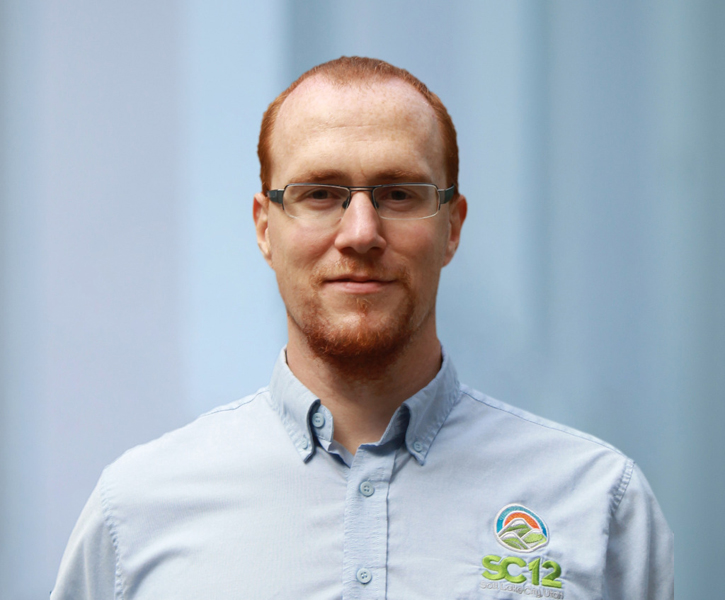
Marc Pollefeys is a Full Professor of Computer Science at ETH Zurich and Director of the Microsoft Mixed Reality and AI Zurich Lab. He has held roles such as Visiting Professor at Stanford University (2007) and Assistant/Associate Professor at UNC-Chapel Hill (2002–2009). His research focuses on 3D computer vision, robotics, machine learning, and augmented reality. Education: PhD in Computer Science from KU Leuven (1999), followed by postdoctoral research there until 2002. He transitioned to academic roles at UNC-Chapel Hill before joining ETH Zurich in 2007. Research interests include 3D reconstruction, visual localization, SLAM, and applications in archaeology, urban modeling, and robotics. Notable projects include real-time 3D scanning, city-scale reconstruction, and autonomous vision-based drones. Key awards include ACM Fellow (2022), IEEE Fellow (2012), and ERC Starting Grant (2008). He advises numerous PhD students and collaborates with institutions like Google and Microsoft. Labs and teams: Leads the Computer Vision and Geometry (CVG) lab at ETH Zurich and directs the Microsoft Mixed Reality and AI Lab. His work bridges academia and industry, focusing on perception for mixed reality and autonomous systems.
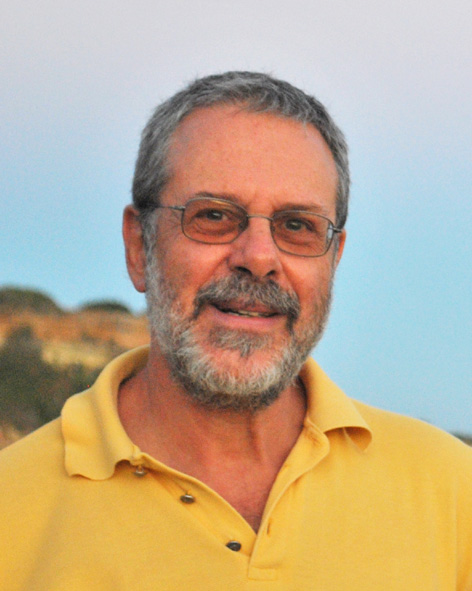
Manolis G.H. Katevenis is a Professor at the Department of Computer Science, University of Crete, and Deputy Director and Head of the Computer Architecture and VLSI Systems (CARV) Laboratory at the Institute of Computer Science (ICS), Foundation for Research & Technology - Hellas (FORTH). He co-founded the European Research Center on Computer Architecture (EuReCCA) and is a founding partner of the European Network of Excellence on High-Performance and Embedded Architecture and Compilation (HiPEAC). PhD in Computer Science from University of California, Berkeley (1983) Co-founder of EuReCCA (2011) Contributed to RISC architecture (1980-1983), interconnection networks (1985-2011), and parallel computing (1993-2010) His research spans Scalable Multicore Systems , Interconnection Network Architecture , Packet Switch Design , Computer Architecture , and VLSI Systems . He has made foundational contributions to per-flow queueing, backpressure mechanisms, and wormhole IP over ATM, with applications in internet routers, data centers, and supercomputers. His publications focus on high-radix crossbar switches, flow control algorithms, and explicit interprocessor communication. Notable scientific awards include: ACM Doctoral Dissertation Award (1984) David J. Sakrison Memorial Prize (1983) IBM PhD Fellowship (1981-1983) Greek State Fellowship (1973-1978) He has supervised 40 graduate theses and participated in 22 R&D projects totaling €9M, including HiPEAC (coordinator of interconnection networks), SARC (FPGA prototype design), and ENCORE (cache-optimized remote DMA). His work has received over 2000 citations, with an h-index of 23.
Sylvain Lefebvre is a permanent researcher at INRIA (Institut National de Recherche en Informatique et en Automatique) in France, where he leads the MFX research team since 2018. Previously, he was part of the ALICE group at INRIA Nancy (2009-2018) and the REVES team in Sophia Antipolis (2006-2009). His career includes a postdoctoral position at Microsoft Research Seattle (2005) following his PhD at INRIA Rhones-Alpes under Fabrice Neyret. His educational background includes a PhD in Computer Graphics from Université Joseph Fourier (Grenoble) in 2005, preceded by a Master in Computer Graphics from INP Grenoble in 2001. His habilitation thesis focused on Runtime Texture Synthesis. Lefebvre's research centers on simplifying content creation for highly detailed patterns, structures, and shapes with applications spanning Computer Graphics to additive manufacturing. He develops fast, controllable by-example synthesis approaches that generate content while enforcing user-specified constraints. His work addresses computational challenges through novel data structures and algorithms optimized for GPUs and FPGAs, including his Silice programming language. The ERC-funded ShapeForge project (2012-2017) advanced shape generation for 3D printing, leading to the IceSL software for digital modeling and fabrication. Analysis of his 15 most recent publications reveals a strong focus on additive manufacturing optimization, with recurring themes in structural integrity, material efficiency, and geometric algorithms. His work bridges computer graphics theory with practical fabrication constraints, particularly in microstructure design, slicing techniques, and mechanical metamaterials. The interdisciplinary nature spans computer science, materials engineering, and robotics. EUROGRAPHICS Young Researcher Award (2010) ERC Starting Grant for ShapeForge project (2012) Lefebvre has advised over 25 PhD students and interns including Marco Freire, Thibault Tricard, and Jimmy Etienne. His ShapeForge project received significant ERC funding, supporting research in computational fabrication. He serves on numerous program committees including SIGGRAPH, Eurographics, and SIGGRAPH Asia, reflecting his leadership in the computer graphics community. As leader of the MFX team since 2018, Lefebvre directs research in computational fabrication, focusing on IceSL software development for 3D printing workflows. The team integrates computer graphics techniques with manufacturing constraints, developing tools that simplify complex object design and fabrication while addressing real-world challenges in material usage and structural integrity.
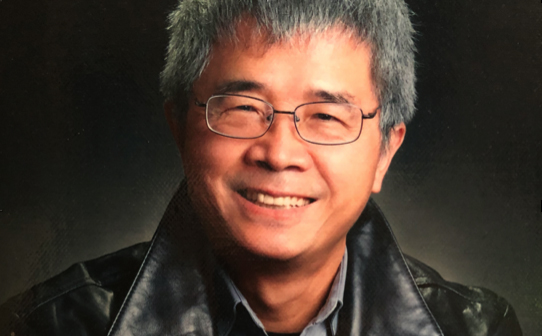
Xiaotie Deng is a distinguished academic and Chair Professor at Peking University (since 2018), with prior roles at Shanghai Jiao Tong University (2013–2017), the University of Liverpool (2010–2013), and City University of Hong Kong (1997–2013). His research focuses on algorithmic game theory, internet economics, and parallel computing. He holds prestigious fellowships including ACM Fellow (2008) and IEEE Fellow (2019). Deng has led significant grants, including a RMB 5M project on algorithmic game theory at Peking University (2018–2020) and NNSFC-funded research on market competitiveness and fairness (2018–2020). Education: PhD in Computer Science from Stanford University (1989), MSc from Chinese Academy of Sciences (1984), BSc from Tsinghua University (1982). Research interests span computational game theory, equilibrium analysis, and blockchain applications. Notable contributions include foundational work on Nash equilibrium complexity and mechanism design for resource allocation. He has advised numerous PhD students and serves on editorial boards of top journals like SIAM Journal on Computing and IEEE Transactions on Cloud Computing. Key awards: ACM and IEEE Fellowships, JSPS Invitation Fellowships (2005, 1996), and NSERC International Fellowship (1991). Active in conference organizing, including PC chairs for WINE 2020 and SAGT 2018. Consultancy includes work with Cryptape, Ant Financial, and Microsoft Research Asia, reflecting his industry engagement in algorithmic solutions and blockchain technologies.
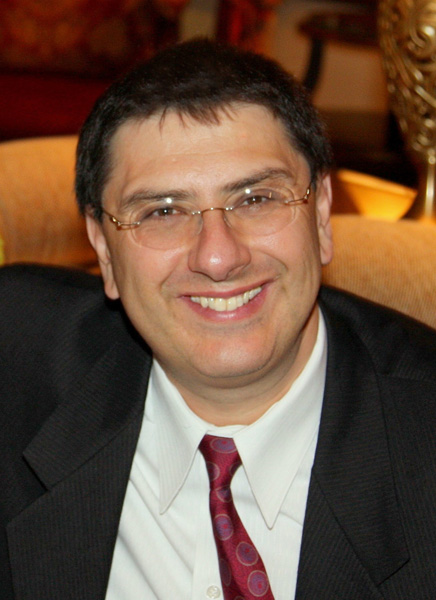
Ivan Viola is an Associate Professor at the Institute of Computer Graphics and Algorithms, part of the Faculty of Informatics at TU Wien, Austria. He holds a leave of absence until December 2024 while also being affiliated with King Abdullah University of Science and Technology (KAUST) as an Associate Professor funded by the Vienna Research Groups program. His research focuses on visualization techniques in medicine, biological sciences, and earth sciences, with a specialty in illustrative visualization and DNA-nanotechnology applications. Viola has contributed over 100 scientific works and serves as a reviewer and panelist for major conferences in computer graphics and visualization. Education: M.Sc. (2002) and Ph.D. (2005) in Computer Graphics from TU Wien. Postdoctoral research at the University of Bergen (2006-2011), where he became Full Professor before returning to TU Wien. Research Interests: Whole-cell visualization Molecular modeling Interactive 3D environments Biomedical visualization Data-driven colormap techniques Awards: IEEE VIS 2017 Best Paper Honorable Mention, 'Best Overall Concept' for CellView, and multiple visualization awards. Active in EuroVis and IEEE VIS organizing roles. Grants & Supervision: Leads the Visualization Group at TU Wien, supervising student projects and master’s theses. Involved in grants like the Vienna Research Groups program. Labs/Teams: Visualization Group at TU Wien, collaborating on projects like CellView and Molecumentary.
Radu-Aurel Prodan is a full Professor in the Department of Computer Science at the University of Innsbruck, Austria. He is actively involved in teaching and research, with office hours from Monday to Friday, 09:00–13:00. His work is centered within the academic and technical framework of one of Austria's leading computer science departments. His research interests span key areas in modern computing systems, including distributed computing, parallel computing, workflow scheduling, high-performance computing, cloud computing, and grid computing. These domains reflect his contributions to scalable and efficient computing infrastructures. The publications in his body of work demonstrate consistent engagement with challenges in system efficiency, resource management, and scientific workflows across distributed environments. Broad themes include optimization, performance modeling, and large-scale data processing in parallel systems. Scientific awards: No specific awards mentioned in the provided text. There is no available information on student advising, research grants, or leadership in specific labs or teams within the provided content. His professional activities appear to be anchored in the Department of Computer Science at the University of Innsbruck.
Anna Beer is a researcher in the Faculty of Computer Science, specializing in data mining and machine learning with a focus on density-based clustering, spectral clustering, and interactive clustering frameworks. She holds a BSc and MSc in computer science and maintains an ORCID profile (https://orcid.org/0000-0002-6890-997X) for her research contributions. Research Themes: Development of clustering algorithms (e.g., DISCO, Scar, LUCKe), fairness in density-based clustering (FairDen), and applications to molecular dynamics and climate research (DROPP). Collaborations: Works with colleagues like Ira Assent, Christian Plant, and Lars Krieger, with recent contributions to conferences like ICLR 2025. Activities: Presented research on density-connectivity distance at a 2023 oral contribution. Publications: 9 publications since 2019, including 3 in 2025 and 6 in 2024, covering topics from cluster evaluation to deep active learning strategies.
Rafail Ostrovsky is a Professor of Computer Science and Mathematics at UCLA , affiliated with the Center for Information and Computation Security at the Henry Samueli School of Engineering and Applied Science. He earned his Ph.D. in Computer Science from MIT in 1992 under Silvio Micali. Research Focus: His work spans cryptography, algorithms, and theoretical computer science, emphasizing secure multi-party computation, zero-knowledge proofs, oblivious RAM, and high-dimensional data analysis. Applications include privacy-preserving data mining, systems security, and quantum cryptography. Article Trends: Recent publications address concurrent security protocols, robust secret sharing via expander graphs, and efficient multi-party computation. Topics intersect computational complexity, cryptographic reductions, and practical security implementations. Awards: Recipient of the 2018 RSA Conference Excellence in Mathematics Award , 2017 IEEE Fellow , and multiple IEEE/ACM honors. Holds 14 U.S. patents and over 290 refereed papers. Advising: Supervised 27 Ph.D. students, many now professors at top institutions. Served on 40+ program committees, including FOCS 2011 Chair. Labs: Leads the CICS research center, fostering interdisciplinary work in information security and cryptographic systems.
Jürgen Teich is a Professor at the Department of Computer Science of Friedrich-Alexander University Erlangen-Nuremberg since 2003, holding the Chair for Hardware/Software Co-Design. He has held academic positions at ETH Zurich (Lecturer, 1995-1998), University of Paderborn (Full Professor in Computer Engineering, 1998-2002), and UC Berkeley (Postdoctoral Fellow, 1994). Current coordinator of DFG-funded Collaborative Research Center 89 'Invasive Computing' (2010-present) Former coordinator of DFG Priority Program 1148 'Reconfigurable Computing Systems' (2003-2009) Senior IEEE Member and author of two Springer textbooks on Co-Design (2007, 2010) Research Interests : Embedded systems and hardware/software co-design Massively parallel computing architectures Design automation and optimization techniques Reconfigurable computing systems Scientific Recognition : 5+ Best Paper Awards (2002-2010) HiPEAC Paper Awards at DAC and FCCM (2009-2010) Elected reviewer for DFG (2004-2008, 2007-2011) Prof. Teich supervises over 30 PhD students and participates in interdisciplinary DFG projects and industrial collaborations. He has served on multiple program committees of leading conferences in computer architecture and embedded systems.
Kurt Mehlhorn is a distinguished academic in computer science, affiliated with the Universität des Saarlandes and the Max-Planck-Institut für Informatik . He has served as Professor of Computer Science since 1975 and as Director of the Max Planck Institute since 1990. His work bridges theoretical and applied computer science, with a focus on algorithmic design and implementation. Born : 29 August 1949, Ingolstadt, Germany Education : TU München (1968–1971), Cornell University (1971–1974), PhD in Computer Science (1974) Mehlhorn’s research spans foundational and applied domains, including Data Structures , Graph Algorithms , Computational Geometry , and Software Libraries . His contributions to algorithm engineering and EU-funded projects like ALCOM and GALIA have advanced the field. He co-founded Algorithmic Solutions GmbH in 1995 to commercialize algorithmic tools. Notable scientific awards : Leibniz-Award (1986) Humboldt-Award (1989) ACM Paris Kanellakis Theory and Practice Award (2011) Academia Europaea Erasmus Medal (2014) His editorial leadership includes roles at Algorithmica , SIAM Journal of Computing , and ACM Transactions on Algorithms . He has held advisory positions at institutions like IST Austria , ETH Zürich , and Simons Foundation , while directing research clusters such as the Cluster of Excellence in Multimodal Computing and the Indo Max Planck Center .
Wilfried Gansterer is a Professor at the Faculty of Computer Science, University of Vienna, leading the Theory and Applications of Algorithms research group. His work focuses on numerical algorithms, distributed computing, and machine learning, with notable contributions to graph neural networks and fault-tolerant systems. Active in projects such as Algorithmic Data Science for Computational Drug Discovery (2020–2028) and REPEAL (Resilience vs. Performance in Numerical Linear Algebra, 2016–2020). Research Interests: Dr. Gansterer’s expertise spans graph neural networks, matrix compression, adversarial defense mechanisms, and high-performance computing. His work addresses challenges in efficient computation, resilience against node failures, and optimizing distributed systems. Projects : Algorithmic Data Science for Computational Drug Discovery (2020–2028) REPEAL: Resilience vs. Performance in Numerical Linear Algebra (2016–2020) Verteiltes Rechnen (Distributed Computing, 2007–2014) Awards : 2023 Best Paper Award for work on Crossfire: An Elastic Defense Framework for Graph Neural Networks. Labs/Teams : Directs the Theory and Applications of Algorithms group, focusing on algorithmic innovation in distributed and high-performance computing environments.
Antonio Plaza is a Full Professor at the University of Extremadura, Spain, and Head of the Hyperspectral Computing Laboratory. With over 600 publications, he is a leading expert in hyperspectral data processing and parallel computing of remote sensing data. He serves as IEEE Fellow and has received numerous accolades, including the 2019 Excellent Teaching Award and multiple Highly Cited Researcher recognitions. Research Interests : His work bridges Hyperspectral Image Analysis , Medical Imaging , and High-Performance Computing . Recent projects focus on 3D anatomical modeling, AI-driven surgical tools, and deep learning applications for aortic dissection segmentation. Scientific Awards : 2019 Highly Cited Researcher (Geosciences) 2015 IEEE Fellow 2019 Excellent Teaching Award 2018 Highly Cited Researcher (Cross-Field) 2002 Best PhD Dissertation, University of Extremadura Editorial Leadership : Served as Editor-in-Chief of IEEE Transactions on Geoscience and Remote Sensing (2013–2017) and held multiple committee roles in IEEE GRSS. His articles reflect a shift from remote sensing to medical imaging, with a focus on Aortic Dissection Segmentation , Skull Reconstruction , and AI-driven Medical Tools .
Dr. Jie Wu is the Laura H. Carnell Professor and serves as Director of the Center for Networked Computing at Temple University's Department of Computer and Information Sciences. He has held leadership roles including Chair of the department (2009-2016), Associate Vice Provost for International Affairs (2015-2017), and Director of International Affairs in the College of Science and Technology. Previously, he was a distinguished professor at Florida Atlantic University (1989-2009) and held NSF program director roles (2007-2009). Education: PhD in Computer Engineering, Florida Atlantic University (1989) MSc in Computer Science, Shanghai University of Science and Technology (1985) BSc in Computer Science, Shanghai University of Science and Technology (1982) Research focuses on mobile/wireless networks, cloud computing, distributed systems, and cybersecurity. He has led NSF-funded projects and pioneered protocols for ad hoc networks. His work integrates machine learning with network trust mechanisms. Awards highlight his contributions: AAAS/IEEE Fellowships, ACM Distinguished Membership, and multiple best paper recognitions. He chairs major conferences like IEEE MASS and ICDCS, and serves on editorial boards for IEEE Transactions on Mobile Computing and others. Professional service includes leadership roles in IEEE Technical Committees, CCF (Chinese Computer Federation), and organizing over 20 international conferences. His lab at Temple University drives innovations in networked systems and distributed computing.
Willy Zwaenepoel is a Professor and Dean of the Faculty of Engineering at the University of Sydney. He holds a B.S. from the University of Gent and M.S./Ph.D. from Stanford University. Previously, he served as Dean of the School of Computer and Communication Sciences at EPFL and was a faculty member at Rice University. His expertise spans operating systems, distributed systems, and high-performance computing. Education: B.S., University of Ghent, Belgium (1979) M.S., Stanford University (1980) Ph.D., Stanford University (1984) Research Interests: Dr. Zwaenepoel focuses on distributed systems, operating systems, and their applications in database replication, virtual machine performance, and software update mechanisms. His work includes foundational contributions to distributed shared memory (e.g., Treadmarks) and startups like iMimic Networking. Awards: ACM Fellow (2000) IEEE Fellow (1998) Fellow of the Australian Academy of Technical Sciences and Engineering (2020) Recipient of the IEEE Tsutomu Kanai Award (2007) Key Contributions: His research addresses challenges in distributed systems performance, such as latency reduction in key-value stores and efficient graph processing. Current projects explore I/O optimization in virtualized environments and causal consistency for geo-replicated systems. Students/Advising: Advises Ph.D. students and postdocs, including William in database replication. His mentorship led to the Rice University Teaching Award (2000).
Torsten Hoefler is a Full Professor of Computer Science at ETH Zurich, Switzerland, with an adjunct appointment in Electrical Engineering. He previously held roles at the National Center for Supercomputing Applications (University of Illinois at Urbana-Champaign) and Indiana University. Full Professor of Computer Science, ETH Zurich (2020–present) Adjunct Professor of Electrical Engineering, ETH Zurich (2020–present) Member at Large, ACM SIGHPC Executive Committee (2013–present) Leadership roles in the MPI Forum and Blue Waters project His research focuses on performance-centric system design , with emphasis on scalable networking, parallel programming models, and performance modeling. Key contributions include the Slim Fly network topology, Data-Centric Python framework, and innovations in parallel graph computations and RDMA-based systems. Recent publications span topics like LLM training networks , quantization geometry , chiplet interconnects , and AI-driven climate modeling , reflecting his interdisciplinary approach combining HPC, AI, and hardware-software co-design. ACM Gordon Bell Prize (2019) ERC Consolidator Grant (2020) IEEE TCSC Award for Excellence (2019) SIAM SIAG/SC Junior Scientist Prize (2012) Latsis Prize of ETH Zurich (2015) He has received multiple best paper awards at top conferences (SC10, SC13, SC14, SC19, IPDPS'15, HPDC'15, OOPSLA'16) and contributed to MPI-3 standardization.