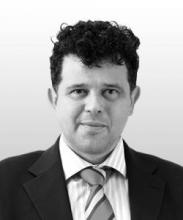
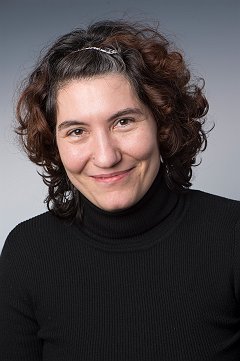
John Regehr is a Professor in the School of Computing at the University of Utah. His research focuses on compilers, formal verification, software testing, and embedded systems. He has contributed to tools like Alive2, YARPGen, and ARMor, which address compiler correctness, fuzz testing, and secure isolation. His work emphasizes uncovering compiler bugs, optimizing low-level code, and ensuring system reliability. Key collaborations include Eric Eide, Yang Chen, and Nuno P. Lopes. His articles span compiler verification, fuzzing techniques, and embedded system safety, reflecting a strong commitment to both academic rigor and practical impact. Research interests include compiler optimization validation, undefined behavior analysis, and program synthesis. His work on peephole optimizations and formal methods has influenced LLVM and industry practices. He also explores scheduling algorithms for real-time systems and memory safety in constrained environments like TinyOS. Notable contributions include foundational papers on compiler bug detection (e.g., 'Finding and understanding bugs in C compilers') and tools like Minotaur for SIMD optimization. His lab's work often bridges theory and practice, with applications in security, performance, and embedded software reliability.
Dr. Ying Yang is an Assistant Professor in the Department of Chemistry, College of Science, University of Nevada, Reno. She also serves as the Principal Investigator for the MARC Nevada program. Her laboratory, the Yang Research Group, focuses on the molecular design of next-generation polymeric materials that combine dynamic chemistries with hierarchical architectures to achieve unprecedented functionalities and sustainability. Education Postdoctoral Scholar, 2016–2019, Clemson University (advisor: Prof. Marek W. Urban) Ph.D., Materials Science and Engineering, 2016, Clemson University (advisor: Prof. Marek W. Urban) B.S., Chemistry, 2010, Nankai University Research Interests The Yang laboratory operates at the intersection of synthetic chemistry, polymer chemistry, and soft materials science . Inspired by natural systems, the group designs macromolecules that integrate reversible covalent bonds, dynamic non-covalent interactions, and multi-level hierarchical ordering . These features enable on-demand modulation of mechanical and chemical properties, leading to self-healing, shape-shifting, re-processability, and mechano-responsiveness . A parallel thrust centers on sustainable polymer synthesis , leveraging fundamental organic chemistry to create recyclable and environmentally benign alternatives to petroleum-based plastics. Publication Landscape From 2013 to 2025, Dr. Yang has authored more than 30 peer-reviewed articles spanning self-healing polymers, responsive nanomaterials, mechanochemistry, and circular-economy plastics . Her work consistently appears in top-tier journals such as Science, Chem, Angewandte Chemie International Edition, Advanced Materials, and Progress in Polymer Science . A clear trend is the translation of fundamental concepts—such as entropy-driven ring-opening polymerization—into practical material platforms for 3D printing, tissue engineering, and recyclable packaging. Scientific Awards & Honors NSF CAREER Award (2022) Nevada Women in STEM Featured Scientist (2023) Gene and Carla Lemay Scholar Awards (multiple students) Best Poster Prize – International Symposium of Stimuli-Responsive Materials (2022, 2024) Three Minutes Thesis Competition Winner – UNR (2024) Discovery Award – College of Science Undergraduate Poster Symposium (2023) Excellence in Teaching Awards – UNR (2021, 2022) TA of the Year – UNR (2022) Nevada Undergraduate Research Awards (2021) Gene Wong Memorial Endowment Award (2020) Nevada Undergraduate Research Opportunity Program (UROP) Scholarship (2019–2020) Current & Completed Funding National Science Foundation – CHE Materials SusNet (2023) NSF CAREER Award (2022) U.S. Department of Energy – Geothermal Polymer Foams (collaborative, 2022) University start-up funds and internal grants Laboratory & Team The Yang Research Group currently comprises three graduate students, one postdoctoral researcher, and several undergraduates working in a newly renovated laboratory in the Chemistry Building at UNR. The lab is equipped for modern organic and polymer synthesis, advanced spectroscopic characterization, and 3D-printing fabrication. Collaborative ties extend to the Desert Research Institute, Pacific Northwest National Laboratory, and multiple institutions nationwide.
Marek Kopel is an Assistant Professor at the Department of Applied Informatics, Faculty of Information and Communication Technology, Wrocław University of Science and Technology. He has held this position since 2011 and has been affiliated with the university since 2001. His teaching focuses on video games, information retrieval, and databases. Ph.D. in Computer Science Kopel's research spans game development, artificial intelligence, virtual reality, and music technology. He explores the intersection of games and AI, including real-time music adaptation in gameplay and VR interaction methods. His work also addresses procedural generation, optimization algorithms, and accessibility in educational materials. His publications highlight trends in VR immersion, game AI, and music industry analysis, often leveraging machine learning and semantic web technologies. He contributes to the organization of international conferences like ACIIDS and ICCCI. Kopel actively engages in interdisciplinary collaborations, notably through the InforMusic science club. He integrates his passion for music into research, playing instruments in university bands (WITelsi) and testing student-created games.
Marjan Gushev is a Professor at the University Sts. Cyril and Methodius , specifically affiliated with the Faculty of Information Sciences and Computer Engineering . He holds a Ph.D. in Computer Science from the University of Ljubljana (1992), preceded by an M.Sc. (1989) and undergraduate degree (1985) with outstanding success from his alma mater. Research focuses: Parallel Processing, Internet Technologies, E-Business, Mobile/Wireless Applications, Computer Architecture Publications: 51 international journal articles, 91 conference proceedings His scholarly work spans parallel processing algorithms , e-government systems , and mobile computing , with recent articles exploring n-tier e-deposit architecture , multimedia messaging frameworks , and student-focused e-commerce models . These publications emphasize distributed systems , wireless communication , and transaction security . As an academic leader, he has mentored 10 M.Sc. and 5 Ph.D. candidates, directed 17 international projects, and founded Innovation —a company delivering IT solutions for government and business. He established Macedonia's Wireless Applications Lab , New Innovative Technologies Lab , and serves as director of Cisco Academy , Microsoft Academy , and Pearson Vue Testing Centre .
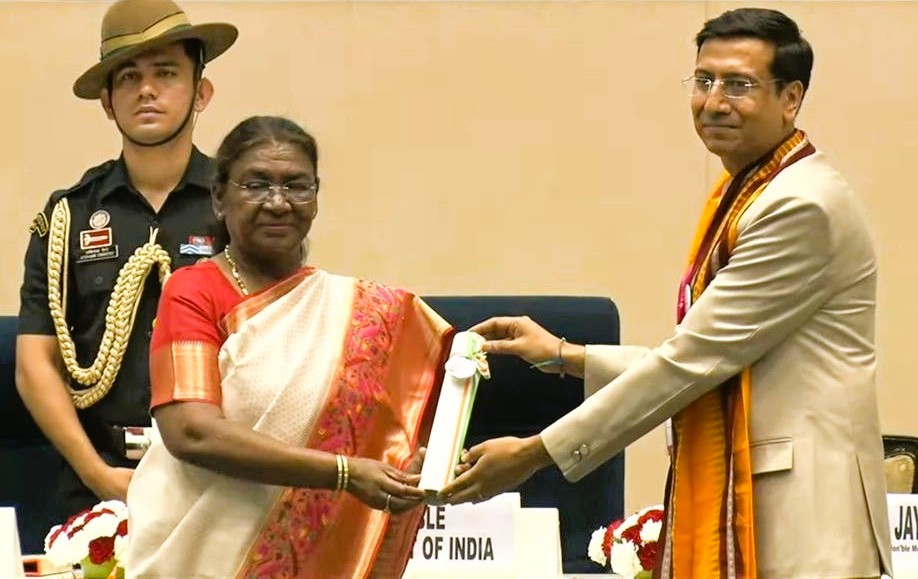
Prof. Kapil Ahuja is a Full Professor in the Department of Computer Science & Engineering at the Indian Institute of Technology Indore (IIT Indore), where he heads the Mathematics of Data Science and Simulation (MODSS) research lab. After completing dual Master's degrees and a Ph.D. from Virginia Tech (USA) followed by postdoctoral work at the Max Planck Institute in Germany, he has held visiting positions at UT Austin, IMT Atlantique, Sandia National Labs, TU Dresden, and TU Braunschweig. His administrative roles include founding Dean of International Affairs and former Head of Computer Science & Engineering at IIT Indore. Education: Ph.D. in Mathematics, Virginia Tech (2011) M.S. in Mathematics, Virginia Tech (2009) M.S. in Computer Science, Virginia Tech (2007) B.Tech. in Mechanical Engineering, IIT (BHU) Varanasi (2001) Research Focus: Prof. Ahuja's work bridges theoretical advances with real-world applications, emphasizing machine learning algorithms for plant/cancer studies, game-theoretic poverty reduction models, exascale climate modeling solvers, and drone trajectory optimization. His interdisciplinary approach integrates numerical linear algebra with network science to solve complex systems problems across healthcare, agriculture, and climate science, supported by 4.85 Crores INR in external funding. Publication Trends: Recent work demonstrates growing emphasis on AI-driven optimization for physical systems (drones, climate models) and biomedical applications (cancer classification). His publications increasingly feature cross-disciplinary collaborations between computer science, biology, and economics, with notable contributions in explainable AI for healthcare and resource allocation algorithms for social networks. Scientific Recognition: National Teacher's Award (2024) from the President of India Five-time recipient of IIT Indore's Best Teacher Award (2013-2023) Best Poster Award at International Workshop on Game Theory & Networks (2019) Steeneck Graduate Research Fellowship (Virginia Tech, 2011) Multiple SIAM travel awards for international conferences Mentorship & Service: Prof. Ahuja has graduated 5 Ph.D. and 4 M.S. (Research) students while mentoring 75 B.Tech. projects. He serves as Associate Editor for Applied Intelligence Journal (Springer Nature) and Knowledge and Information Systems, organizes international conferences, and reviews for 35+ academic sources. His administrative leadership significantly expanded IIT Indore's global partnerships through the Research Park initiative. Research Infrastructure: The MODSS lab maintains active collaborations with Oak Ridge National Lab, Sandia National Labs, and European institutions. Current projects include AI-optimized drone swarms for agricultural monitoring and game-theoretic models for poverty intervention, utilizing high-performance computing resources for large-scale simulations.
Martha A. Kim is an Associate Professor in the Department of Computer Science at Columbia University's School of Engineering and Applied Science. She serves as a Member of the Data Science Institute, Center Co-Chair of the Center for Computing Systems for Data-Driven Science, and Chair of the Computer Engineering Program. Professor Kim's research focuses on computer architecture with particular emphasis on the hardware-software interface. Her work develops tools and designs that help computer systems operate efficiently and intuitively, including database accelerators for energy-efficient queries, techniques for optimizing parallel software to better utilize hardware resources, and improving the versatility of specialized hardware accelerators. She leads the ARCADE Lab where she conducts research in computer architecture, parallel programming, compilers, and low-power computing. Her publication record shows consistent output at top-tier conferences including ASPLOS, MICRO, MEMOCODE, ISLPED, DAC, DaMoN, CC, and CGO, with recent work spanning video transcoding in the cloud, pipelined dataflow circuits, thermal monitoring, and database acceleration. Professor Kim has received several prestigious awards: 2013 Rodriguez Family Award 2015 Edward and Carole Kim Faculty Involvement Award 2013 NSF CAREER award 2016 Anita Borg Early Career Award She currently advises three doctoral students (Martha Barker, Thomas Repetti, and Andrea Lottarini) and has previously graduated PhD students Melanie Kambadur (2016) and Lisa Wu (2014). Her research is supported by C-FAR, DARPA, Google, Intel, and NSF. Professor Kim teaches Fundamentals of Computer Systems, Computer Architecture, and Principles and Practice of Parallel Programming courses at Columbia University. The ARCADE Lab provides opportunities for students to work on cutting-edge research in hardware-software interface optimization, with applications in energy efficiency, database acceleration, and parallel computing systems.
Laura Dietz is a tenured Associate Professor in the Department of Computer Science at the University of New Hampshire, where she leads the TREMA lab. Her academic journey began with a PhD from the Max Planck Institute for Informatics in Saarbruecken, Germany (2011), followed by postdoctoral positions at the University of Massachusetts Amherst (2010-2015) and University of Mannheim (2015-2016). Her educational background includes PhD studies at both the Max Planck Institute for Informatics (2007-2011) under Prof. Gerhard Weikum and Prof. Tobias Scheffer, and earlier research at Humboldt University in Berlin. She has built a distinguished career bridging theoretical computer science with practical applications in information retrieval and machine learning. Dietz's research primarily focuses on the intersection of information retrieval, natural language processing, and knowledge graphs, with a parallel research initiative in watershed data science. She is particularly known for her work on entity-aspect linking, complex answer retrieval, and the vision of automatic Wikipedia construction. Her approach integrates fine-grained knowledge annotations with text understanding to create comprehensive information systems that go beyond traditional 10-blue-links search paradigms. In watershed data science, she applies similar machine learning techniques to environmental data streams, focusing on solute transport analysis during storm events. Her recent publications reveal a strong trend toward fine-grained semantic understanding, particularly in entity-oriented search tasks. She has pioneered methods for entity-aspect linking that significantly improve retrieval accuracy by capturing different contexts in which entities appear. Her work increasingly integrates knowledge graphs with neural architectures, showing sophisticated understanding of how to leverage both structured and unstructured information for better search experiences. Best paper award at JCDL 2018 for work on entity-aspect linking NSF CAREER Award (2019-2023) for "Utilizing Fine-grained Knowledge Annotations in Text Understanding and Retrieval" OSSI Award 2013 from UMass ICB3 for open-source hardware/software Dietz actively mentors PhD and Masters students through the TREMA lab, with current research focusing on entity ranking, topic extraction, conversational search, and watershed forecasting. Her grant portfolio includes the NSF CAREER award and funding from the Northeast Big Data Innovation Hub for forecasting salinity in rivers during storm events. She has also coordinated the TREC Complex Answer Retrieval track (2017-2019), creating important benchmarks for the IR community. The TREMA lab (Text Retrieval, Entity Modeling, and Applications) serves as the hub for Dietz's research activities, bringing together students and collaborators to work on cutting-edge problems in information access. The lab's work spans both theoretical contributions to information retrieval and practical applications in domains ranging from environmental science to scientific publication analysis.
Joan Oró is a researcher at the Blanquerna Department of Physical Activity and Sport Sciences and Sports Management within the Faculty of Psychology, Educational Sciences and Sports at Blanquerna - Ramon Llull University. His work focuses on speech synthesis, voice quality analysis, and environmental noise mapping, with a particular emphasis on computational modeling and acoustic sensor networks. Research Interests: Speech signal processing, finite element modeling of phonation, environmental noise monitoring, and machine learning applications in acoustic analysis. Projects: Key contributions to the DYNAMAP initiative for real-time road traffic noise mapping and the FEMVoQ project for 3D voice quality simulation. Publications: Recent work explores vocal tract-glottal source interactions, spectro-temporal noise analysis, and intelligent clustering architectures, spanning interdisciplinary applications in acoustics, signal processing, and urban planning.
Hamed Hamzeh serves as Lecturer in Data Science at the School of Computer Science and Engineering, University of Westminster, and is affiliated with the Centre for Parallel Computing. His academic credentials include a Ph.D. in Cloud Computing from Bournemouth University and an MSc in Data Science from Istanbul Sehir University, Turkey. Dr. Hamzeh's research centers on cloud-native resource management, computer networks, and multi-agent systems, with groundbreaking work on fairness in cloud resource allocation. He developed novel algorithms including H-FFMRA and MRFS that address multi-resource scheduling in heterogeneous environments. His expertise spans AWS, Kubernetes, Python, and optimization techniques, bridging theoretical cloud computing with industrial applications in orchestration and resource management. Analysis of his 11 publications (2017-2023) reveals an evolving research trajectory: beginning with network bandwidth allocation (2017), advancing to cloud resource fairness (2018-2021), and culminating in cloud-to-things continuum orchestration (2023). This progression demonstrates increasing system complexity while maintaining core focus on fairness metrics across distributed environments. Dr. Hamzeh actively contributes to the academic community as technical committee member for IEEE ICCCS and Distributed AI conferences, and as reviewer for Springer's Journal of Grid Computing and Journal of Supercomputing. His service reflects recognition within cloud computing research circles. Prospective students receive supervision in Cloud Computing, Artificial Intelligence, Machine Learning, Software Engineering, and Computer Networks. Current research opportunities emphasize practical implementation of resource allocation algorithms in cloud-native environments through the Centre for Parallel Computing.