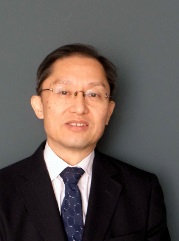
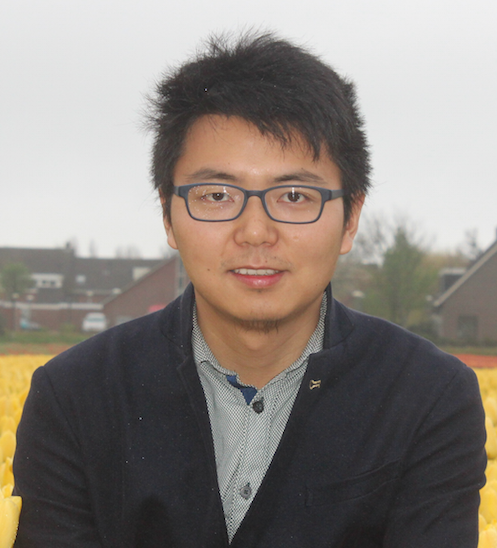
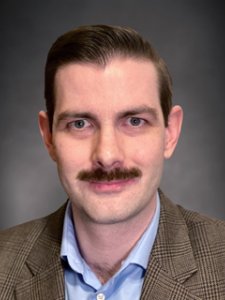
Martin Delacourt is a Lecturer at the University of Orléans, affiliated with the LIFO (Laboratoire d'informatique fondamentale d'Orléans). He earned his PhD on December 5, 2011, under the joint supervision of Bruno Durand and Victor Poupet at LIF Marseille. His research focuses on cellular automata, including directional dynamics, limit sets, and decidability of computational problems. PhD: University of Montpellier 2 (2011) ENS Lyon: Bachelor (2006), Master (2008) His research explores cellular automata through computational complexity, symbolic dynamics, and formal verification. Key themes include limit set characterization, defect dynamics, and algorithmic properties of number systems. He has published in conferences like AUTOMATA, MFCS, and CiE. Teaching responsibilities include courses in network engineering, computability, complexity theory, operating systems, and algorithm analysis at the University of Orléans. He has supervised work-study students in the MIAGE program since 2018.
Attila Gursoy is a Professor at the Department of Computer Engineering, College of Engineering, Koç University. He serves as the Dean of the College of Engineering and leads research in computational biology, bioinformatics, and high-performance computing. Education : PhD in Computer Science from University of Illinois (1994), MSc from Bilkent University (1988), BSc from Middle East Technical University (1986) His research focuses on protein-protein interactions , computational structural biology , and systems pharmacology , with applications in drug repurposing and inflammatory disease mechanisms . He has pioneered structural analysis of Ras signaling and developed tools like COSBI for computational systems biology. Recent publications highlight his work on viral protein mimicry , neurodegenerative pathways , and microbiome dynamics . His team maintains datasets like PPInterface and DiPPI for structural drug discovery. 2005 : Werner-von-Siemens Excellence Award
Ioannis Sourdis is a Full Professor at the Department of Computer Engineering, Chalmers University of Technology, Sweden. His research focuses on computer architecture, reconfigurable computing, network-on-chip (NoC) design, memory systems, and fault-tolerant embedded systems, with applications in biomedical informatics and hardware security. Current projects include EUMMSS (Efficient Uncore Mechanisms for Multicore Space Systems, funded by the Swedish National Space Board) and eProcessor (European Processor Ecosystem, funded by the European Commission). Past initiatives include the DeSyRe project (on-demand system reliability), ECOSCALE (exascale reconfigurable computing), and SHARCS (secure hardware-software architectures). His work spans NoC router design (e.g., FastTrackNoC, DDRNoC), memory compression (MemSZ, L2C), and biomedical security applications (heartbeat-based protocols). He has published extensively in venues like DATE, ICS, PACT, and IEEE Transactions on Networking. Key research areas: Chiplet-based systems , hybrid memory architectures , FPGA acceleration , and real-time stream aggregation .
Radu-Aurel Prodan is a full Professor in the Department of Computer Science at the University of Innsbruck, Austria. He is actively involved in teaching and research, with office hours from Monday to Friday, 09:00–13:00. His work is centered within the academic and technical framework of one of Austria's leading computer science departments. His research interests span key areas in modern computing systems, including distributed computing, parallel computing, workflow scheduling, high-performance computing, cloud computing, and grid computing. These domains reflect his contributions to scalable and efficient computing infrastructures. The publications in his body of work demonstrate consistent engagement with challenges in system efficiency, resource management, and scientific workflows across distributed environments. Broad themes include optimization, performance modeling, and large-scale data processing in parallel systems. Scientific awards: No specific awards mentioned in the provided text. There is no available information on student advising, research grants, or leadership in specific labs or teams within the provided content. His professional activities appear to be anchored in the Department of Computer Science at the University of Innsbruck.
Katsuro Inoue is a Professor at Ritsumeikan University within the College of Information Science and Engineering. He holds a Dr. degree of Engineering from Osaka University (1984) and specializes in Software Engineering with a focus on Program Analysis , Code Clone Detection , Software Ecosystem Analysis , and Process Modeling . His work includes developing systems like CCFinder for code clone analysis and SPARS for software component significance ranking. Research Interests Program Analysis: Code Clone Analysis, Origin and Evolution Analysis, Software Ecosystems, Bug Detection, Analysis Tools and Algorithms Program Reuse: Code Search Engines, Program Archives, Searching Mechanisms Software Process: Process Modeling, Process Centered Environments, Process-Based Metrics, Quality Standards Key Publications Code Clone Analysis (2021), Library Dependency Updates (2018), Code Clone Tracking in Open Source (2012), Distributed Code Clone Detection (2007), Software Component Significance Ranking (2005), Compiler Garbage Collection (1991), Code History Tracking (2012) Professional Activities Program Committee Member in over 20 conferences (ICSE, IWPSE, PROFES) Editorial Board Member for IEEE Transactions on Software Engineering Co-Chair of multiple workshops (IWSC, IWPSE) Reviewer for SEC Journal Teaching Course: System Architect Course Developed course materials for Compiler Design and Language Processing Created exam problems and optimization examples for language processing courses
Li Li is a Professor of Software Engineering at Beihang University , China. Previously, he served as an ARC DECRA Fellow and Senior Lecturer at Monash University , leading the SMart software Analysis and Trustworthy computing (SMAT) research lab at the Department of Software Systems and Cybersecurity. His academic journey includes a Ph.D. in Software Engineering from the University of Luxembourg (2016), supervised by IEEE Fellow Prof. Yves Le Traon and Dr. Jacques Klein. Research Interests Li's research focuses on Mobile Software Engineering (Mobile Security, Quality Assurance) and Intelligent Software Engineering (SE4AI, AI4SE). He applies static code analysis , dynamic program testing , and machine/deep learning to enhance software security and reliability. Key areas include Android API evolution, automated patch validation, and multi-language code analysis frameworks like Scalpel for Python. Scientific Recognition ARC DECRA Fellowship Rising SE Research Star Top-5 Most Impactful Early Career SE Researchers (2020, 2017) 5 Best/Distinguished Paper Awards across PLDI, WWW, ASE, MSR, and SANER Academic Contributions He has contributed to foundational Android analysis tools (e.g., AndroZoo++, DroidRA) and developed scalable systems for distributed program analysis (Seads). His work appears in top venues like ICSE, ESEC/FSE, ASE, ISSTA, POPL, and TSE.
Dave Bennett is a Professor in the Department of Geography at the University of Iowa, within the College of Liberal Arts and Sciences. His work bridges geographic information science, environmental policy, and complex systems theory, with a strong emphasis on interdisciplinary research. He is actively involved in teaching and mentoring graduate students, offering courses in GIS, field methods, and environmental applications. Research Interests: His research lies at the intersection of technology, policy, and science, focusing on geographic information science (GIScience) and environmental decision-making. He is particularly interested in human-environment interactions and how complex, nonlinear responses emerge from system interactions. Much of his work is framed within complexity theory and employs agent-based modeling, evolutionary algorithms, and cyberinfrastructure to study land use change, watershed management, and disaster response. Publication Trends: His most recent publications (2010–2016) demonstrate a consistent focus on agent-based modeling, parallel computing, land use dynamics, and socio-environmental systems. These works often integrate high-performance computing and service-oriented architectures to simulate complex spatial processes. Key themes include resilience, opinion diffusion, mobility, and provenance in geosimulation. Scientific Awards: No specific awards or fellowships are mentioned in the provided text. Advising and Grants: Dave Bennett has advised numerous PhD and Master’s students, including current advisees Patrick Bitterman, Haoyi Xiong, Shuang Xu, and James Madden. He has served as principal investigator or senior personnel on multiple major grants from the NSF, USDA, NIH, and NGA, totaling millions of dollars. Key projects include 'People, Water, and Climate,' 'Geoinformatics for Environmental and Energy Modeling and Prediction (GEEMaP),' and 'Understanding Water-Human Dynamics with Intelligent Digital Watersheds.' Labs and Teams: While no specific lab name is mentioned, his research is conducted within multidisciplinary teams and leverages cyberinfrastructure platforms at the University of Iowa. His work often involves collaboration with engineers, ecologists, and social scientists, particularly through NSF-funded interdisciplinary programs.
David K. Hall is an Assistant Professor in the Department of Aerospace Engineering at Pennsylvania State University, College of Engineering. His research focuses on advanced propulsion systems and aerodynamic integration for next-generation aircraft. He is actively involved in projects related to electric and hybrid-electric propulsion, boundary layer ingestion, and sustainable aviation technologies. Assistant Professor, Department of Aerospace Engineering, Penn State Researcher in Electrified Propulsion and Airframe Integration Contributor to NASA-affiliated research initiatives Dr. Hall's research interests center on improving aircraft efficiency and reducing environmental impact through innovative propulsion technologies. His work emphasizes boundary layer ingestion , distributed electric propulsion , and conceptual aircraft design optimization . He investigates how integrating propulsion systems with airframes can reduce fuel consumption and emissions, particularly in transport aircraft. The recent publications demonstrate a strong trend toward electrified and hybrid-electric aircraft systems, with a focus on mitigating flow distortion, optimizing fan-motor co-design, and assessing the environmental and economic viability of liquid hydrogen-fueled aircraft. His work bridges fundamental fluid dynamics with practical engineering applications in sustainable aviation. Dr. Hall has contributed to significant advancements in understanding the benefits and challenges of boundary layer ingestion, collaborating with leading researchers from MIT and NASA. While no formal scientific awards are listed, his publications in top-tier journals such as Journal of Turbomachinery and AIAA Journal reflect high research impact. He is likely involved in federally funded research projects, particularly through Penn State’s Vertical Lift Research Center of Excellence. He advises graduate students in aerospace research, particularly in propulsion and aerodynamics, though specific names are not listed. His lab or research group likely focuses on computational and experimental analysis of advanced propulsion concepts, possibly involving partnerships with industry and government agencies. Future work may explore cryogenic fuels, supersonic sustainable flight, and autonomy in electric aircraft.
Jonathan Freund is Professor of Mechanical Science and Engineering and Aerospace Engineering at the University of Illinois at Urbana-Champaign, holding the Donald Biggar Willett Professorship since 2016. He serves as Head of Aerospace Engineering (2020-present) and is Co-Director of the Center for Exascale-enabled Scramjet Design (CEESD). His academic journey began with all three degrees in Mechanical Engineering from Stanford University (B.S. 1991, M.S. 1992, Ph.D. 1998), followed by faculty positions at UCLA (1997-2001) before joining UIUC. Freund's research spans fluid mechanics with applications in biomedical systems, aeroacoustics, and materials science. His work focuses on computational modeling of cellular blood flow, jet noise control, plasma-coupled combustion, uncertainty quantification, and nanoscale material processing. He develops advanced simulation tools to investigate phenomena ranging from atomically thin liquid films to spacecraft propulsion systems. His laboratory leverages high-performance computing to solve complex multiphysics problems requiring exascale capabilities. Analysis of his recent publications reveals a strong emphasis on computational fluid dynamics applied to biological systems (35%), aeroacoustics and jet noise (25%), materials processing at nanoscale (20%), and uncertainty quantification methods (20%). His work consistently bridges fundamental fluid mechanics with practical engineering applications, particularly in medical technologies and advanced propulsion systems. Donald Biggar Willett Professor (2016-present) Kritzer Faculty Scholar (2011-2016) Fellow of the American Physical Society (2011) Campus Excellence in Faculty Mentoring Award (2017) APS DFD Gallery of Fluid Motion Winner (2000) Associate Fellow of AIAA (2012) Freund has advised numerous graduate students and received multiple teaching honors including the Engineering Council Award for Excellence in Advising (2008, 2012) and repeated recognition on the List of Excellent Teachers. His research has been supported by agencies including the Department of Energy's National Nuclear Security Administration. He leads the CEESD center which develops physics-faithful predictive simulations for scramjet design using advanced high-temperature composite materials.
Dr. Dima Alhadidi is an Associate Professor in the School of Computer Science at the University of Windsor. His research focuses on Cybersecurity, Data Privacy, Machine Learning, and their applications in Health Informatics, Cloud Computing, and Smart Grids. He holds a PhD in Computer Science and Software Engineering from Concordia University (2010). His research interests include secure federated learning frameworks, privacy-preserving techniques for genomic and health data, and adversarial machine learning defenses. Notable contributions include Trustformer (2025), secure aggregation methods in federated learning, and hybrid malware classification using deep learning. Recent work emphasizes mitigating membership inference attacks and developing privacy-preserving analytics for distributed systems. Dr. Alhadidi actively advises graduate students on topics like social network clustering (NICASN 2022) and federated learning security. No scientific awards are explicitly listed. His research spans theoretical frameworks (e.g., λ_AOP calculus) to applied systems in smart grids and healthcare informatics.
Inbar Fijalkow is a Full Professor at the National School of Electronics and Computer Science (ENSEA) within CY Cergy Paris University. She is a member of the ETIS Research Unit (UMR 8051), focusing on signal processing for wireless communications, optimization, and machine learning applications. Her research bridges theoretical advancements with practical implementation in emerging communication systems. Education & Career: PhD in Signal Processing from TelecomParisTech (1993) Postdoctoral Fellow at Cornell University (1994–1995) Professor at ENSEA since 1999 Former Head of ETIS Research Unit (2004–2013) Research Interests: Signal processing for wireless communications Optimization techniques in massive MIMO and NOMA systems Machine learning applications in communication systems Nonlinear effects mitigation in high-power amplifiers Community & Awards: Member of CoNRS Section 7 (National Committee for Scientific Research) Chevalier de l’Ordre National du Mérite (2015) Founder of the CY Alliance Women in Science Prize (2017) Recent Projects: Active in ANR-funded initiatives (e.g., EcoBioH2, AI4code) and EU projects (e.g., PERSEUS). Her work emphasizes sustainability and AI-driven communication systems. Teaching: Teaches signal processing and wireless communications at ENSEA. Supervises PhD students and master’s theses in communication systems and signal processing.
Farshad Moradi is a Professor at the Department of Electrical and Computer Engineering at Aarhus University, specializing in neuromorphic engineering, spintronics, and biomedical device design. His work focuses on integrating advanced materials and circuits for applications in neural interfaces, energy-efficient computing, and wireless biomedical systems. Research Interests include: Spintronic-based neuromorphic computing architectures Ultra-low power analog/mixed-signal integrated circuits Ultrasonically powered implantable medical devices Neural signal processing and seizure detection systems Wireless energy transfer and structural health monitoring Key Projects (2016-2026): SPICE: Spintronic-Photonic Integrated Circuit Platform PHOTON-NeuroCom: Photonic-assisted Neuromorphic Computing Neuro-Sense: Flexible bioinspired neuroprostheses CorroSense: Self-powered corrosion monitoring HERMES: Hybrid Enhanced Regenerative Medicine Systems Recent innovations include: Ultrasonically powered optogenetic implants Low-power neural amplifiers for deep-brain interfaces Spin-torque nano-oscillator-based neuromorphic hardware Energy harvesting systems for structural monitoring
Dr. Kenneth Kent is a Professor in the Department of Computer Science at the University of New Brunswick (UNB), where he has served for 14 years. He is the Director of the Information Technology Centre (ITC) and heads the Reconfigurable Computing Group. He also serves as Director of the IBM Centre for Advanced Studies - Atlantic and holds an Honorary Professorship at Hochschule Bonn-Rhein-Sieg. His research focuses on hardware/software co-design, reconfigurable computing, virtual machines, and embedded systems. Dr. Kent earned his PhD and Master of Science in Computer Science from the University of Victoria. His work has led to over 100 refereed publications and the supervision of 70+ graduate students. He co-founded WEnTech Solutions Inc., a software firm addressing waste-to-energy optimization. His awards include the IBM Faculty Fellow of the Year and Project of the Year (as Principal Investigator) for contributions to the J9 Java Virtual Machine. His articles span FPGA acceleration, compiler optimization, cloud storage security, and IoT intrusion detection. Recent work emphasizes energy-efficient Node.js systems and advancements in CAD tools like VTR 9 for FPGA architecture. Dr. Kent’s advising and grants include leading the IBM CAS Atlantic and directing industry-academia collaborations. He has pioneered technologies such as the Eclipse OpenJ9 JVM and the CephArmor storage interface, balancing academic research with commercial innovation. He leads the Reconfigurable Computing Group at UNB and collaborates with the Institute for Visual Computing in Germany. His research bridges theoretical computing and practical applications, with a focus on scalable systems and embedded technologies.
Jagath Samarabandu is a Professor in the Department of Electrical and Computer Engineering at Western University. He holds a Ph.D. and M.S. in Electrical Engineering from SUNY Buffalo, and a B.Sc. in Electronics and Telecommunication Engineering from the University of Moratuwa, Sri Lanka. His academic career spans since joining Western University in 2000, with prior post-doctoral experience at SUNY Buffalo and industry work at Life Imaging Systems Inc. Education: Ph.D. Electrical Engineering, SUNY Buffalo M.S. Electrical Engineering, SUNY Buffalo B.Sc (Eng) Electronics and Telecommunication, University of Moratuwa His research focuses on Artificial Intelligence, Machine Learning, Image Analysis, and Cyber Security , with applications in biomedical imaging, network intrusion detection, and civil infrastructure monitoring. He has supervised numerous graduate students working on topics ranging from chromosome analysis to smart grid security. Recent publications highlight his work in medical AI applications (auditory processing disorder diagnosis), industrial time-series analysis (using contrastive predictive coding), and network security frameworks (INSecS system development). He has contributed to 3D ultrasound segmentation, prostate motion compensation algorithms, and synthetic aperture radar systems. Key projects include NSERC-funded intelligent home monitoring systems for elderly care and low-cost synthetic aperture radar development for search-and-rescue applications.
Shawki M. Areibi is a Professor and Area Head of Engineering Systems and Computing in the School of Engineering at the University of Guelph. His research focuses on VLSI Physical Design Automation, Reconfigurable Computing Systems, and Hardware/Software Co-design for Embedded Systems. He leads efforts in developing advanced algorithms for CAD tools, FPGA design, and machine learning applications. His work addresses challenges in VLSI layout optimization, parallel processing, and embedded systems design. Affiliations: AI Affiliated Faculty, Area Heads, Computer Engineering, Engineering Systems and Computing Research. Research Interests: VLSI Circuit Layout, Reconfigurable Computing, Machine Learning, and FPGA-based Accelerators. His research integrates meta-heuristics like Genetic Algorithms and Tabu Search to solve complex optimization problems. He has contributed to hardware acceleration frameworks for machine learning algorithms and embedded systems, with applications in domains like signal processing and data mining. His recent work includes congestion-estimation models for modern FPGAs and analytic placement tools for ultra-scale architectures. Publications span VLSI design, reconfigurable computing, and machine learning, emphasizing algorithmic innovation and hardware-software co-design. His students have explored topics ranging from FPGA placement to domain adaptation in remote sensing. Grants and Advising: Advises graduate and undergraduate students on projects involving FPGA acceleration, machine learning, and embedded systems. His labs focus on developing next-generation CAD tools and hardware accelerators.