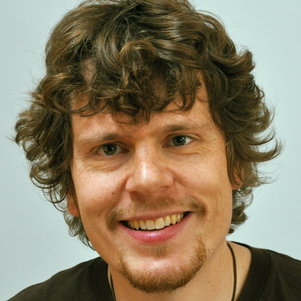
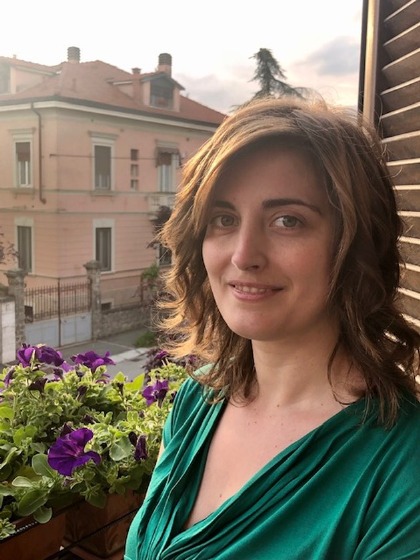
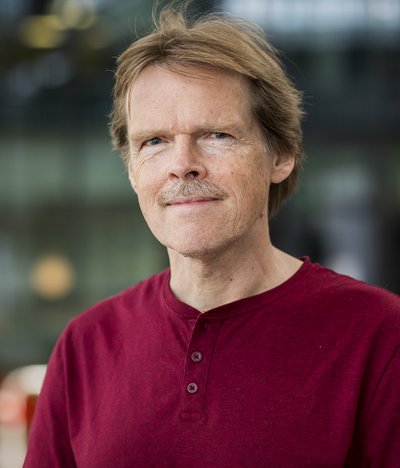
Francesc Verdugo Rojano is an Assistant Professor at the Faculty of Science (Computer Systems) at Vrije Universiteit Amsterdam, with additional affiliations at the Network Institute and Distributed Computer Systems. His research focuses on scientific computing, parallel algorithms, and numerical methods for partial differential equations, particularly leveraging finite element methods. He actively contributes to open-source software like Gridap, an extensible finite element toolbox in Julia. His work spans computational physics, structural engineering, and materials science, emphasizing scalable numerical techniques for complex systems. Notable research includes fusion technology simulations, hydroelastic analysis of floating structures, and optimization of surface-enhanced Raman spectroscopy substrates. Collaborations involve international teams and interdisciplinary applications. Teaching responsibilities include courses on parallel programming and large-scale parallel systems. His research outputs highlight contributions to unfitted finite element methods, geometric discretization, and computational mechanics, with a strong emphasis on practical software implementations.
Dr. Wesley Roozing is an Assistant Professor at the Robotics and Mechatronics (RaM) group and Robotics Centre of the University of Twente, Netherlands. He holds a PhD from the Italian Institute of Technology (2018) and was a visiting student at the Australian Centre for Field Robotics. His research focuses on compliant actuation, mechatronic co-design, energy-efficient systems, bio-inspired mechanisms, and control methodologies. He actively contributes to the robotics community through roles such as chair of the euRobotics Mechatronics Topic Group, associate editor for IROS and BioRob, and organizer of ICRA events. His work emphasizes high-performance robotics for applications like jumping, grasping, and athletic feats, with publications in top journals and conferences like IJRR, T-MECH, and ICRA. Education: PhD in Robotics, Italian Institute of Technology (2018) Visiting Student, Australian Centre for Field Robotics Research interests include advanced actuation systems, motor-gearing integration, and safety-critical control strategies. He leads national/international projects and teaches courses on energy-based modeling. His research bridges electric motor innovations with mechanical design to achieve dynamic robot capabilities. Notable awards include an honorable mention for the RA-L Best Paper Award (2021). His work contributes to UN Sustainable Development Goals related to Industry, Innovation, and Infrastructure (Goal 9) through advancements in energy-efficient robotics. Advising and Grants: Coordinates research projects, advises on robotics program development, and serves on examination boards. His grants fund collaborative efforts in mechatronics and robotics education. Labs/Teams: Part of the Robotics and Mechatronics group at University of Twente, contributing to the Robotics Centre’s interdisciplinary initiatives.
Sajid Mohamed is a guest researcher in the Electronic Systems group at the Department of Electrical Engineering, Eindhoven University of Technology. His work focuses on model-based design of image-based control systems tailored for resource-constrained domains like semiconductor manufacturing and automotive industries. PhD, M.Tech, and B.Tech degrees from TU/e, IIT Kharagpur, and NIT Calicut respectively His research combines expertise in Multiprocessor Systems , Deep Neural Networks , and Motion Control to address challenges in real-time performance and optimization. Key contributions include the IMOCO4.E reference framework and methodologies for vision-based DNN deployment on legacy hardware . Recent publications highlight advancements in Motion Control through multi-rate sensor fusion , DNN-driven visual perception , and predictable multi-core implementations . His work aligns with the UN Sustainable Development Goals, particularly in technological innovation for industrial efficiency. Best Paper Award at ECYPS (2019) Professionally, he serves as a Principal Software Engineer at ITEC B.V., integrating academic research with industry applications. Collaborations include projects like FitOptiVis and oCPS , emphasizing cyber-physical systems and edge computing.
Fredrik Jansson is a Researcher at Delft University of Technology, affiliated with the Faculty of Civil Engineering and Geosciences and the Geoscience and Remote Sensing department. He works on weather and climate simulations within the Ruisdael Observatory project, focusing on improving the Dutch Atmospheric Large-Eddy Simulation (DALES) model's performance and usability for high-resolution atmospheric studies. PhD in Physics from Åbo Akademi University (Finland) Develops DALES model for cloud and convection resolution Collaborates with the Netherlands eScience Center for computational optimization Research interests: pattern formation, cloud dynamics, cold pools, superparameterization His recent work examines how cold pools and trade cumulus self-aggregation influence Earth's radiation budget and climate systems. He explores symmetry in mesoscale circulations and the impact of environmental drivers on atmospheric boundary layer dynamics . Key projects include: Regional superparameterization of OpenIFS using DALES Cloud organization in radiative-convective equilibrium High-performance computing optimizations for climate models Fredrik also contributes to computational tools like Kilombo (Kilobot simulator) and VECMAtk for uncertainty quantification. His interdisciplinary work bridges atmospheric science, robotics, and DIY electronics.
Dr. Roel van den Broek is a PhD candidate and researcher in the Department of Computer Science at Utrecht University , focusing on algorithms and complexity within railway operations. His work bridges theoretical scheduling models with real-world transportation challenges. Current affiliation: Utrecht University Research group: Algorithms and Complexity Roel's research centers on stochastic scheduling and robustness measures in transportation systems. He has developed hybrid evolutionary algorithms and local search methods to optimize train unit shunting, personnel scheduling, and infrastructure capacity. Recent publications highlight his contributions to: Robustness metrics for parallel machine scheduling Computational approaches to railway yard capacity Integrated planning of train shunting and servicing His workday spans multiple locations, including the Buys Ballot Building and Dutch Railways (NS) offices, where he applies algorithms to large-scale logistical problems.
Dr. Robert (Rob) G. Belleman is a Lecturer and researcher in the Computational Science Lab at the Informatics Institute, Faculty of Science, University of Amsterdam. He concurrently serves as Director of the university-wide College of Informatics (CoI), manager of the Visualisation Lab at Science Park, and head of the Education Group, consolidating teaching, research, and infrastructure leadership roles. Education details are not disclosed in the supplied text. His research integrates large-scale scientific computing with immersive visualisation. Core themes encompass GPU-accelerated simulations—from gravitational N-body dynamics to flood modelling—interactive visual analytics for criminal and biological networks, 3-D morphological analysis of marine organisms, sign-language lexicon technologies, and in-silico oncology platforms that fuse multiscale cancer models with clinical IT workflows. Recent articles (2022-2024) emphasise interdisciplinary visual analytics: uncovering cocaine-trafficking scenarios, discriminating coral species via 3-D quantification, and constructing 3-D sign-language lexicons. Earlier work advanced GPU computing for astrophysics and MD simulations, hybrid socio-genetic network modelling of HIV spread, and grid-enabled oncosimulation for nephroblastoma therapy planning. No scientific awards are listed in the provided source. Belleman leads educational innovation through the College of Informatics and the Education Group, while infrastructural oversight of the Visualisation Lab supports numerous UvA research teams. No explicit grant amounts or named PhD advisees appear in the text. He heads the Visualisation Lab facility at Science Park and coordinates the Education Group within the Computational Science Lab, fostering cross-disciplinary collaboration among computer scientists, life scientists, and physicists.
J.M. Galjaard is a researcher affiliated with the School of Electrical Engineering, Mathematics and Computer Science at an unnamed institution, specializing in the Data-Intensive Systems department. His primary research areas include Federated Learning, Edge Computing, Neural Networks, and Data Science. Research interests derived from his publications and collaborations focus on: Federated Learning and Continual Learning paradigms Edge Computing optimization techniques Multi-DNN/Multi-Model inference scheduling Robustness in meta-learning under label noise Watermarking in Large Language Models Data privacy in distributed systems Article trends highlight consistent contributions to: Federated Learning frameworks (2024-2025) Edge Computing innovations (2020-2021) Meta-Learning and label noise mitigation (2023) Model optimization under resource constraints Collaborative research with international teams Active collaborations include researchers like B. Cox, L.Y. Chen, and R. Birke, with cross-facility projects dominating recent output.
Kuan-Hsun Chen is an Assistant Professor specializing in Computer Architecture Design for Embedded Systems Real-Time Systems Non-Volatile Memory (NVM) Optimization Machine Learning and Edge AI His research focuses on bridging hardware-software gaps in real-time embedded applications through innovative architectural solutions. Research highlights include: Decision Tree Optimization for Real-Time Inference Wear-Leveling Techniques in NVM Probabilistic Timing Guarantees GPU-Accelerated Graph Algorithms Security-Enhanced NVM Designs He explores theoretical foundations while emphasizing practical implementations in autonomous systems and cyber-physical platforms. Scientific achievements: Best Paper Award (2023) Outstanding Paper Award (2023) Outstanding Reviewer Award (2024) His work spans algorithm design, hardware-software co-optimization, and rigorous system validation through fault injection and simulation frameworks.
Dirk Beyer is a Full Professor and Head of Research Chair at the Department of Computer Science, Ludwig-Maximilians-Universität München (LMU Munich), where he leads the Software and Computational Systems Lab. His research focuses on developing models, algorithms, and tools for constructing and analyzing reliable software systems, with emphasis on software verification, model checking, and static analysis. Professor Beyer's research spans multiple critical areas in software engineering and formal methods. He has made significant contributions to software model checking through tools like CPAchecker and BLAST, structure analysis of large systems using CrocoPat and CCVisu, and formal verification of real-time systems with Rabbit. His work on interfaces for component-based design (Chic) has advanced modular software development approaches. Beyer has pioneered methodologies in benchmarking and reliable experimental evaluation through BenchExec, which has become a standard in tool competitions. Analysis of his recent publications reveals a strong focus on advancing software verification techniques, particularly in transferring knowledge between hardware and software verification domains, decomposing verification tasks for parallel processing, and improving the effectiveness of verification witnesses. His work consistently bridges theoretical foundations with practical tool implementations, with a growing emphasis on comparative evaluation and competition frameworks that drive the field forward. ACM SIGSOFT Distinguished Paper Award (FSE 2024) ACM SIGSOFT Best Artifact Award (FSE 2024) As a principal investigator of the DFG Research Training Group ConVeY, Beyer has secured significant funding for advancing verification techniques. He has played leadership roles in numerous software verification competitions including SV-COMP and Test-Comp, serving as PC Chair for major conferences like TACAS 2018 and VMCAI 2020. His service contributions extend to chairing ETAPS 2022 and organizing multiple workshops on CPAchecker. Professor Beyer leads the Software and Computational Systems Lab at LMU Munich, which has developed numerous influential verification tools including CPAchecker (configurable software verification), BenchExec (reliable benchmarking), and CCVisu (software structure visualization). The lab maintains active collaborations with research groups worldwide and contributes significantly to the international verification community through competitions, benchmarks, and open-source tool development.
Prof. A.D. Pimentel holds a full professorship at the Informatics Institute of the University of Amsterdam, leading the Parallel Computing Systems (PCS) group within the Systems and Networking Lab. His research focuses on multi-core and multi-processor systems, emphasizing performance, energy efficiency, dependability, and productivity in system design and runtime management. He earned his PhD and MSc in Computer Science from the University of Amsterdam in 1998 and 1993, respectively. Current roles: Chair of PCS group, Board member of Advanced School for Computing and Imaging (ASCI), and ICT Research Platform Nederland (IPN) Teaching: Courses on Multi-core Processor Systems, Embedded Software, and Architecture Research interests span edge AI, sustainable computing, and system-level modeling. Recent work includes innovations in energy-efficient scheduling, thermal management in 3D-stacked systems, and adaptive CNN inference at the edge. Over 25 years of contributions to embedded systems design space exploration and hardware/software co-design have been recognized through awards like the IEEE CEDA Outstanding Service Award (2025). Awards: IEEE DATE Fellow (2025), NWO Knowledge & Innovation Covenant grant lead Active in conference organization, serving as General Chair for Embedded Systems Week (2026) and Design Automation and Test in Europe (DATE 2024). Engages in cross-disciplinary projects like improved secure semiconductor evaluation (ISSE) and energy labeling for digital services.
Erika Covi is an Assistant Professor at the University of Groningen, affiliated with the Faculty of Science and Engineering and the Bio-inspired Circuits & Systems group within the Zernike Institute for Advanced Materials. Her research focuses on neuromorphic engineering, leveraging emerging materials like ferroelectric and memristive devices to design bio-inspired circuits and systems. Key areas include ferroelectric tunnel junctions (FTJs), spiking neurons, and neuromorphic edge computing. She collaborates on compact modeling for efficient circuit simulations and explores applications in energy-efficient neural networks. Her work integrates interdisciplinary approaches from materials science, electrical engineering, and computational neuroscience. Research interests span device physics of ferroelectric materials, analog neuromorphic hardware, and neuromorphic computing architectures. She has contributed to studies on coincidence detection in spiking neurons using ferroelectric polarization and tunable synaptic working memory with memristive devices. Current projects emphasize bridging device-level innovations with system-level neuromorphic applications, aiming to advance bio-inspired computing technologies.
Prof. D.H. Pleiter is a Professor in the Department of Computer Architecture at the Bernoulli Institute, part of the Faculty of Science and Engineering at the University of Groningen. His research focuses on computer architecture, high-performance computing, and memory systems optimization. He is actively involved in evaluating hardware and software co-design strategies for modern HPC systems, particularly using Arm-based processors. His recent work includes analyzing memory prefetching mechanisms in scientific applications, emphasizing performance evaluation and memory access patterns. He collaborates on topics such as HBM2, DDR5, and locality properties in high-bandwidth memory systems, using frameworks like Gem5 for simulation. No awards or grants are explicitly listed, but his research network includes international collaborations in HPC and memory technologies. He is affiliated with the Bernoulli Institute, contributing to its research in computer architecture and innovative systems design.
H. (Hans) Philippi is an Assistant Professor at Utrecht University, affiliated with the Department of Algorithmic Data Analysis under the Faculty of Science. His research focuses on database systems, bioinformatics, distributed systems, and algorithms. He can be reached at h.philippi@uu.nl and is located in Room BBL464 of the Buys Ballot building in Utrecht. Philippi's work spans multiple areas, including leveraging database technology for bioinformatics challenges like sequence alignment (e.g., BLAST emulation) and exploring distributed database architectures. His earlier research also involved object-oriented systems evaluation, reflecting a longstanding interest in software design and systems optimization. His publications highlight contributions to both theoretical and applied database systems, with a strong emphasis on algorithmic approaches to data analysis. No notable scientific awards have been mentioned in the records. Philippi has not listed any current or past advisees or grants in the provided information. His work is primarily conducted within the Algorithmic Data Analysis group, part of Utrecht University's broader AI & Data Science initiative.
Arris Tijsseling is an Associate Professor at Eindhoven University of Technology (TU/e), affiliated with the Department of Mathematics and Computer Science. His research focuses on fluid transients, computational fluid dynamics, and multiphase flow modeling with applications in pipeline systems. He has contributed to advanced numerical methods like smoothed particle hydrodynamics (SPH) and fluid-structure interaction (FSI) analysis. Notable work includes Lagrangian particle models for transient pipe flows and studies on manhole cover dynamics. His teaching responsibilities include courses on computational science and calculus. Key research themes involve transient flow analysis in pipelines with moving boundaries, cavitation effects in pumps, and structural responses under fluid-induced loads. His work bridges theoretical fluid dynamics with experimental validation, as seen in large-scale pipeline filling/emptying experiments. Collaborative efforts span international teams, addressing challenges in pipeline safety and computational efficiency. Publications highlight innovations in SPH for multiphase flows, hybrid numerical schemes for transient flows, and historical contributions to fluid mechanics. His research often emphasizes practical engineering applications, such as improving pump models and understanding wavefront behavior in fluid systems.
Fokke Dijkstra is a Researcher at the University of Groningen , specializing in Information Systems , Grid Computing , and Petabyte-scale Data Storage . His work focuses on enabling large-scale scientific research through infrastructure development. Key Collaborations: Astro-WISE, LOFAR (Low-Frequency Array) projects Research Themes: Long-term archiving, distributed computing, and grid technology for astrophysics Recent Activity: Contributed to a memorial article for Joop van Lenthe in 2022 Academic Output includes 15+ publications on scaling data systems for astronomy, with notable work on LOFAR and Astro-WISE infrastructure. His research bridges computational methods with astrophysical data challenges. Activities include participation in the BioSB 2020 conference, demonstrating his interdisciplinary engagement.