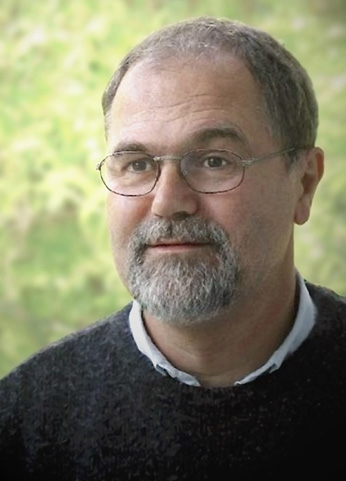
Ramachandran Vaidyanathan (Vaidy Vaidyanathan) is the Elaine T. and Donald C. Delaune Distinguished Professor in the School of Electrical Engineering and Computer Science at Louisiana State University (LSU). His research focuses on parallel and distributed computing, reconfigurable architectures, interconnection networks, and autonomous robot coordination. Developed the Reconfigurable Multiple Bus Machine (RMBM) model Authored the book Dynamic Reconfiguration: Architectures and Algorithms Holds multiple patents for optical networking and reconfigurable hardware Research Interests : Parallel and distributed algorithms Reconfigurable computing models Autonomous robot coordination Optical interconnection networks Scientific Awards : US Patent 6,332,050 US Patent 6,792,175 US Patent 8,862,854 US Patent 9,257,988 US Patent 10,282,347 Advising and Grants : Supervises students in reconfigurable computing and distributed systems. Collaborates with institutions on NSF-funded projects. Labs : Leads the Reconfigurable Computing Group at LSU.
Damir Isovic is an Associate Professor and Vice-Chancellor for Internationalization at Mälardalen University's Academy of Innovation, Design and Technology. Previously, he served as Dean of the School of Innovation, Design and Engineering. His roles include leadership in academic administration and participation in national boards. He holds a PhD and has extensive international teaching experience. Research focuses on real-time systems, embedded systems design, and scheduling algorithms. Notable contributions include seminal work in real-time scheduling recognized by the IEEE Technical Community on Real-Time Systems. He has organized major conferences and delivered keynotes globally. His publications emphasize hybrid scheduling approaches, real-time operating systems (RTOS), media processing in resource-constrained systems, and MPEG standards. Recent work integrates memetic algorithms with fuzzy controllers and explores multi-core scheduling fairness. His research bridges theoretical scheduling models with practical embedded system implementations. No scientific awards explicitly listed in the text. Advising activities include supervising PhD students, though specific names are not provided. Lab affiliations include the Division of Networked and Embedded Systems, where he develops frameworks like GENESIS for embedded system engineering. His work emphasizes cross-disciplinary collaboration and industry partnerships in education and technology development.
Pedro Galeano is an Associate Professor in the Department of Statistics at Universidad Carlos III de Madrid (UC3M) since 2009. He holds a PhD in Statistics (2004) under Prof. Daniel Peña, focusing on multiple time series. Previously, he served as Visiting Assistant Professor of Statistics and Econometrics at the University of Chicago’s Graduate School of Business and as a Postdoctoral Fellow at the Department of Statistics and Operations Research at Universidade de Santiago de Compostela. His research focuses on time series analysis, outlier detection, Bayesian inference in financial models, and functional data analysis with applications to missing data. He is an Associate Editor of the Journal of Time Series Analysis and advises the Heliyon journal. Key contributions include developing methodologies for detecting structural breaks, modeling systemic risk via copula approaches, and advancing robust statistical techniques for high-dimensional data. Active in academic leadership, Galeano co-organized the NICDA Workshop 2025 and has published extensively on topics like dynamic factor models, sequential parameter change detection, and functional data applications in energy markets. His work bridges theoretical statistics with practical applications in finance, economics, and environmental science.
Rafail Ostrovsky is a Professor of Computer Science and Mathematics at UCLA , affiliated with the Center for Information and Computation Security at the Henry Samueli School of Engineering and Applied Science. He earned his Ph.D. in Computer Science from MIT in 1992 under Silvio Micali. Research Focus: His work spans cryptography, algorithms, and theoretical computer science, emphasizing secure multi-party computation, zero-knowledge proofs, oblivious RAM, and high-dimensional data analysis. Applications include privacy-preserving data mining, systems security, and quantum cryptography. Article Trends: Recent publications address concurrent security protocols, robust secret sharing via expander graphs, and efficient multi-party computation. Topics intersect computational complexity, cryptographic reductions, and practical security implementations. Awards: Recipient of the 2018 RSA Conference Excellence in Mathematics Award , 2017 IEEE Fellow , and multiple IEEE/ACM honors. Holds 14 U.S. patents and over 290 refereed papers. Advising: Supervised 27 Ph.D. students, many now professors at top institutions. Served on 40+ program committees, including FOCS 2011 Chair. Labs: Leads the CICS research center, fostering interdisciplinary work in information security and cryptographic systems.
Professor Craig Wheeler is a distinguished academic in the School of Engineering at the University of Newcastle, specializing in Mechanical Engineering with a focus on bulk solids handling and belt conveyor technology. As Associate Director of the Centre for Bulk Solids and Particulate Technologies and Deputy Chairman for the Australian Society for Bulk Solid Handling, he has established the university as a global leader in fundamental and applied research within this field. Wheeler's research interests primarily center on reducing the energy intensity and environmental impact of ore and mineral transportation globally. His work develops novel theoretical approaches to model and optimize belt conveyor and bulk handling systems, with significant contributions in energy-efficient transportation, dust emission control, and innovative conveying technologies like the Rail Conveyor system. His research bridges fundamental computational techniques with practical industrial applications, addressing real-world challenges in bulk material handling. His extensive publication record demonstrates trends toward increasingly sophisticated modeling techniques, combining continuum mechanics, discrete element methods, and computational fluid dynamics to solve complex problems in bulk material flow and energy consumption. Recent work shows particular emphasis on large-diameter idler rollers for energy savings, rail-running conveyor systems, and advanced dust control methodologies. 2023 Engineers Australia - Australian Society for Bulk Solids Handling 2017 Significant Contributions to Engineers Australia's Warman Design and Build Competition (Weir Minerals) 2017 Australian Council of Engineering Deans National Award for Engineering Education Excellence 2016 Innovative Technology Award (Australian Bulk Handling) 2010 Rising Star Award (Newcastle Innovation, The University of Newcastle) 2009 Pro-Vice Chancellor's Award for Research Excellence 2006 Best Research and Development Project (Australian Bulk Handling Review) 2000 A.W. Roberts Award (Australian Society for Bulk Solids Handling) Professor Wheeler has successfully led numerous Linkage Projects with major companies including Rio Tinto, Veyance Technologies, and Laing O'Rourke, securing significant cash and in-kind contributions for research projects. His industrial consulting experience, built on a 10-year engineering career with BHP, provides valuable insights that bridge fundamental research with practical applications. He actively supervises research students and contributes to professional development courses both within Australia and internationally. As a key member of the Centre for Bulk Solids and Particulate Technologies in association with TUNRA Bulk Solids, Wheeler leads research teams focused on developing eco-friendly conveying solutions. His work has resulted in new licensed technologies, internationally recognized testing methods, design guidelines, and Australian Standards that have transformed industry practices worldwide.
Dr. Babar Jamil is a Lecturer in Electrical Engineering at the University of York's School of Physics, Engineering and Technology. His expertise spans robotics, sensors, control engineering, and mechanism design. He holds a Ph.D. from Hanyang University (South Korea) and conducted postdoctoral research at Sungkyunkwan University, where he also served as a Research Professor. His current research focuses on safe human-robot collaboration systems, novel control algorithms for robotic systems, and smart structures through sensor integration. Education: Ph.D. in Electrical and Electronic Engineering, Hanyang University, South Korea Postdoctoral Researcher, Sungkyunkwan University, South Korea Research Interests: Developing hybrid robotic manipulators combining soft and rigid actuation Designing proprioceptive sensors for extreme environments Advances in pneumatic artificial muscles and soft actuators Integration of machine learning in robotics control systems Publications: Recent work emphasizes soft robotics actuators, sensor design, and human-robot interface innovations. Key themes include energy-efficient actuation, sensorized robotic fingers, and pumpless pneumatic systems. Labs/Teams: Leads robotics research at York, focusing on collaborative robotics and sensor-actuator integration. Maintains an active research group through his UoY Robotics website .
Professor Anna Giacomini is a leading academic in Rock Mechanics and Civil Engineering at the University of Newcastle. She holds a PhD from the University of Parma, Italy, and has been at the University of Newcastle since 2005. Her roles include Director of the Priority Research Centre for Geotechnical Science and Engineering and Deputy President of the Academic Senate (Research). She specializes in rockfall hazard analysis, mine geotechnics, and numerical modeling of geomechanical systems. Her research focuses on improving safety in mining and civil environments, with over $7.5M in funding and 140+ publications. Key areas include rockfall trajectory analysis, energy absorption in safety barriers, and drapery systems. She has led 20 major projects through ACARP and pioneered low-cost photogrammetric monitoring systems for rock slopes. Professor Giacomini is also a co-founder of HunterWiSE, promoting women in STEM. She has received prestigious awards such as the 2022 NSW Premier’s Engineering Prize and the 2019 John Booker Medal. Her administrative roles include membership in the ARC College of Experts and leadership in gender equity initiatives. Her technical contributions span experimental and numerical rock mechanics, including advancements in discrete element modeling (DEM) and stochastic approaches for discontinuity shear strength prediction. She collaborates internationally with institutions like the Colorado School of Mines and the University of Bologna.
Jeff M Phillips is a Professor in the Kahlert School of Computing at the University of Utah, specializing in algorithms for big data analytics, computational geometry, and machine learning. He holds a BS in Computer Science and Mathematics from Rice University (2003) and a PhD in Computer Science from Duke University (2009). He serves as Director of the Utah Center for Data Science, Director of the Data Science Program in the Kahlert School of Computing, and Faculty Co-Director of the One U Data Science Hub. His research focuses on geometric data analysis, coresets, sketches, and handling uncertainty in data. Education: BS/BA (Rice University, 2003), PhD (Duke University, 2009) CI Postdoctoral Fellow at University of Utah (2009–2011) His research interests include algorithms for big data analytics, computational geometry, machine learning, spatial statistics, and AI. He has led NSF-funded projects on spatial data analysis, cosmic origins via AI, and reactive flow data modeling. Phillips has advised numerous PhD and master’s students, contributing to topics like trajectory classification and bias mitigation in word embeddings. His publications span computational geometry, data science, and machine learning. Notable work includes coresets for kernel density estimates, bias mitigation in language models, and scalable spatial scan statistics. Phillips is also active in academic service, serving as co-PC chair for SoCG 2024 and on program committees for major conferences like NeurIPS and ICML.
George Bosilca is a Research Professor at the University of Tennessee, Knoxville, affiliated with the Department of Electrical Engineering and Computer Science and the Innovative Computing Laboratory. He holds a PhD in Computer Science (University of Paris XI, 2004) and an MS in Math and Computer Science (University of Paris XI, 1999). His research focuses on distributed algorithms, parallel programming paradigms, performance modeling/optimization, and resilience in programming models. He contributes to exascale computing initiatives through projects like PaRSEC and Open MPI. Key research areas include task-based runtimes, MPI standardization for exascale systems, and fault-tolerant distributed computing. His work emphasizes scalable and portable constructs for high-performance applications. Bosilca is involved with the Innovative Computing Laboratory (ICL) and collaborates on projects like the EPEXA ecosystem and Argobots threading framework. Recent publications highlight advancements in asynchronous many-task systems, GPU-accelerated collective operations, and resilience strategies for HPC platforms. His contributions span theoretical frameworks and practical implementations, bridging algorithmic innovation with real-world HPC challenges.
Kurt Mehlhorn is a distinguished academic in computer science, affiliated with the Universität des Saarlandes and the Max-Planck-Institut für Informatik . He has served as Professor of Computer Science since 1975 and as Director of the Max Planck Institute since 1990. His work bridges theoretical and applied computer science, with a focus on algorithmic design and implementation. Born : 29 August 1949, Ingolstadt, Germany Education : TU München (1968–1971), Cornell University (1971–1974), PhD in Computer Science (1974) Mehlhorn’s research spans foundational and applied domains, including Data Structures , Graph Algorithms , Computational Geometry , and Software Libraries . His contributions to algorithm engineering and EU-funded projects like ALCOM and GALIA have advanced the field. He co-founded Algorithmic Solutions GmbH in 1995 to commercialize algorithmic tools. Notable scientific awards : Leibniz-Award (1986) Humboldt-Award (1989) ACM Paris Kanellakis Theory and Practice Award (2011) Academia Europaea Erasmus Medal (2014) His editorial leadership includes roles at Algorithmica , SIAM Journal of Computing , and ACM Transactions on Algorithms . He has held advisory positions at institutions like IST Austria , ETH Zürich , and Simons Foundation , while directing research clusters such as the Cluster of Excellence in Multimodal Computing and the Indo Max Planck Center .
Stephen Harrington is a researcher at Queensland University of Technology , affiliated with the Faculty of Creative Industries, Education and Social Justice and the School of Communication . His work bridges media studies , journalism , political communication , and digital culture , focusing on how entertainment , satire , and social media shape public knowledge and information dissemination. Research Interests : Media convergence and television in the digital age Dynamics of disinformation , conspiracy theories , and political communication Role of satire and unorthodox news forms in public engagement Notable Contributions : Analyzed social media usage during the COVID-19 pandemic (2025) Developed computational methods for studying problematic news-sharing on Facebook (2023) Co-authored QUT DMRC submissions to Senate inquiries on digital misinformation (2024) His recent 15 publications (2004–2025) span topics like media policy , platform accountability , and audience behavior across social media , TV news , and digital journalism . While specific scientific awards and students are not documented in the provided materials, his work consistently addresses the intersection of entertainment and information in contemporary media landscapes.
Mohamed Sarwat is an Associate Professor at Arizona State University specializing in databases , spatial data management , and recommender systems . His research focuses on GeoSpark —a cluster computing framework for spatial data—and its extensions like GeoSparkViz for visualization and GeoSparkSim for traffic simulation. Key Contributions: LARS* (Location-Aware Recommender System), Horton* (Graph Reachability), Sindbad (GeoSocial Platform), and Riso-Tree (Graph Database Indexing) Research Themes: Integration of spatial/temporal data with machine learning, efficient indexing for big geospatial datasets, and scalable frameworks for mobility data science His work spans collaborations with 23+ co-authors across institutions like University of Minnesota, University of Melbourne, and University of Salzburg. Current projects emphasize GeoTorchAI —a spatiotemporal deep learning system—and mobility data science infrastructure.
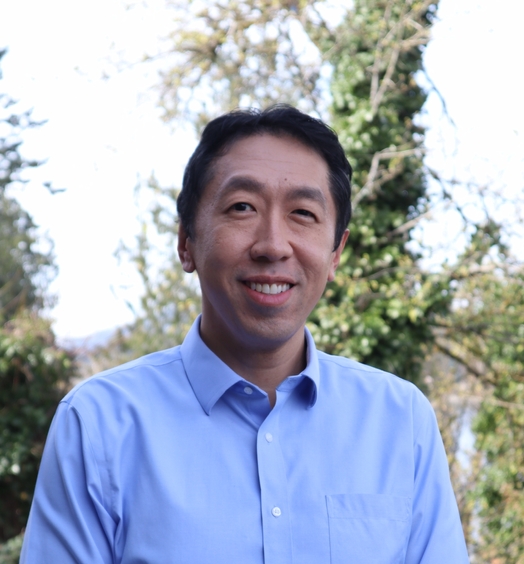
Andrew Ng is an Adjunct Professor at Stanford University's Computer Science Department and a globally recognized leader in AI. He is the Founder of DeepLearning.AI, Executive Chairman of LandingAI, General Partner at AI Fund, and Co-Founder of Coursera. His work has revolutionized machine learning and online education, with over 200 research papers in AI, robotics, and related fields. He was named to the 2023 Time100 AI list of most influential figures in AI. Ng's research focuses on machine learning, deep learning, reinforcement learning, and their applications in robotics and education. He pioneered the development of massive open online courses (MOOCs), notably through Stanford's early experiments in 2011 that attracted hundreds of thousands of learners. His contributions include foundational work in algorithms like Latent Dirichlet Allocation (LDA) for text analysis and advancements in spectral clustering and inverse reinforcement learning. His publications span topics from robotic hand design to scalable deep learning systems, emphasizing practical and scalable solutions. Ng's educational initiatives, such as the Machine Learning and Deep Learning Specializations, have educated millions worldwide. He advocates for accessible AI education and ethical AI development, emphasizing collaboration between academia and industry.
Marc Parizeau is a Professor at Université Laval, affiliated with the Faculty of Science and Engineering and the Department of Electrical and Computer Engineering. His office is located at PLT-1138-B, and he can be reached at (418) 656-2131 ext. 407912 or via email at marc.parizeau@gel.ulaval.ca. Academic Background: Ph.D., École Polytechnique de Montréal, 1992 M.Sc.A., École Polytechnique de Montréal, 1987 B.Eng., École Polytechnique de Montréal, 1984 His research focuses on Pattern Recognition, Evolutionary Computation, Neural Networks, 2D and 3D Computer Vision, and parallel and distributed systems . He integrates these areas to develop scalable computational models and tools for intelligent systems. His work bridges theoretical AI with practical software engineering for high-performance environments. His teaching includes courses such as Programmation parallèle et distribuée (GIF-4104) , Réseaux de neurones (GIF-21410) , and various algorithm and programming courses in Python and engineering. His recent publications reflect a strong trend in distributed evolutionary algorithms and concurrent programming frameworks, particularly using Python-based tools like DEAP and SCOOP, emphasizing scalability and real-world deployment. Scientific Leadership and Software Contributions: Director, Calcul Québec Creator, Distributed Evolutionary Algorithms in Python (DEAP) Creator, Scalable Concurrent Operations in Python (SCOOP) Contributor, Portable Agile Classes in C++ (PACC) Contributor, Open Beagle Marc Parizeau has supervised multiple collaborative projects and students, though specific names are not listed. He has secured research support through leadership roles and software development. His work is supported by institutional and provincial computing infrastructure initiatives. Conference Involvement: Organizing Committee, High Performance Computing Symposium (HPCS'08) International Workshop on Frontiers in Handwriting Recognition (IWFHR'02) International Conference on Pattern Recognition (ICPR'02) Vision Interface (VI'99) Conférence Internationale sur l'Écrit et le Document (CIFED'98) He leads the Computer Vision and Systems Laboratory at Université Laval, a research group focused on intelligent systems, machine learning, and high-performance computing applications in vision and optimization.
Helen Oleynikova is a Lecturer at the Department of Mechanical and Process Engineering at ETH Zürich, where she is part of the Autonomous Systems Lab. She works on the intersection of perception and planning, particularly for micro-aerial vehicles. Her research focuses on real-time onboard mapping, planning, and localization using visual-inertial systems and signed distance fields. Research Interests: Helen's work spans robotics, autonomous systems, and computer vision, with a focus on enabling safe and efficient navigation in complex environments. She specializes in visual-inertial odometry, SLAM, 3D mapping using signed distance fields, and real-time path planning for MAVs. Her projects often involve embedded systems and FPGA-based high-speed vision for obstacle avoidance. Publication Trends: Her recent publications (2023–2019) show a consistent focus on real-time, onboard algorithms for autonomous navigation. Key themes include signed distance function maps, collision-free motion generation, global localization, and efficient exploration. She frequently publishes in top-tier robotics conferences such as ICRA and IROS, and journals like IEEE RA-L and Journal of Field Robotics. Professional Experience: Senior Researcher, Autonomous Systems Lab, ETH Zürich Senior Software Engineer, Isaac 3D Perception, Nvidia Senior Scientist, Microsoft Mixed Reality and AI Lab, Zürich Software Engineer, Google (StreetView) Contributor, Willow Garage (ROS, TurtleBot Arm) Education: PhD in Robotics, ETH Zürich (2019) MSc in Robotics, ETH Zürich BSc in Robotics, Olin College of Engineering (2011) Advising and Grants: While no formal students are listed, she has collaborated extensively with researchers at ETH Zürich and industry labs. Her work has been supported through institutional affiliations and industry research roles. She has contributed to open-source robotics software, particularly in ROS-based systems for manipulation and navigation. Labs and Teams: Helen is a key member of the Mobile Manipulation team at the Autonomous Systems Lab at ETH Zürich. She has also been involved in projects at Nvidia, Microsoft, Google, and Willow Garage, focusing on real-world deployment of autonomous systems.