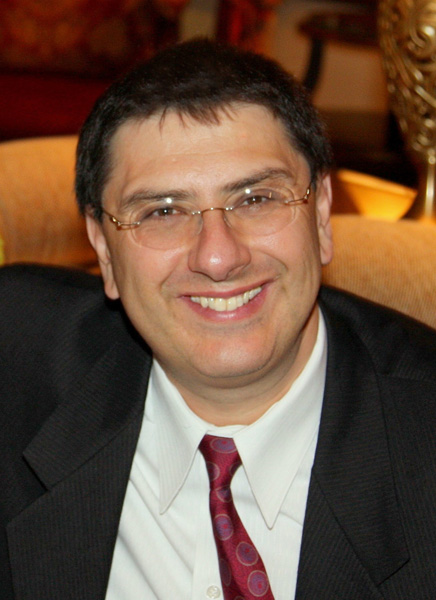
Setareh Behroozi is an Assistant Teaching Professor in the Department of Electrical and Computer Engineering at the University of Wisconsin–Madison. Her research focuses on energy-efficient computing, approximate hardware techniques, and hardware-software co-design for embedded systems and neural networks. She obtained her Ph.D. from the University of Wisconsin–Madison in 2022, an M.S. from Sharif University of Technology in 2015, and a B.S. from Iran University of Science and Technology in 2013. Her publications emphasize scalable solutions for energy-quality tradeoffs in computing systems, including approximate dividers, neural network accelerators, and sensing hardware. These works aim to optimize energy efficiency without compromising critical system performance. Recent trends in her research include virtualizing nonlinear operations in neural networks and scheduling iterative hardware units for efficiency. She has contributed to both academic and applied aspects of low-power computing and embedded systems design. Behroozi’s work bridges theoretical computer architecture with practical hardware implementations, addressing challenges in modern computing systems through innovative approximate computing techniques. She is actively involved in teaching and curriculum development within the Electrical and Computer Engineering department at UW-Madison.
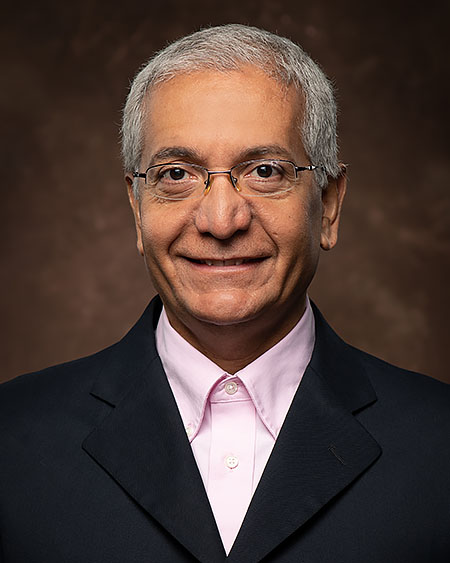
David Castañón is a Professor of Electrical and Computer Engineering (ECE) and Systems Engineering (SE) at Boston University. He holds a PhD from MIT (1976) and has held leadership roles including Department Chair of BU ECE (2010-2014) and President of the IEEE Control Systems Society (2008). His research focuses on stochastic control, optimization, game theory, and distributed computing, with applications in sensor management, inverse problems, and autonomous systems. Education: PhD, Massachusetts Institute of Technology (1976). Key affiliations include the Center for Information and Systems Engineering, the Rafik B. Hariri Institute for Computing, and the ALERT Department of Homeland Security Center of Excellence. He teaches courses such as EC702 Recursive Estimation and EC719 Statistical Learning Theory. Research interests span stochastic control, estimation theory, optimization algorithms, and multi-agent systems. Notable contributions include work on sensor management, cooperative operations, and inverse problem solutions for medical and security imaging. His work often integrates theoretical frameworks with practical applications in autonomous systems and distributed computing. Scientific achievements include IEEE Fellow status (2006), CSS Distinguished Member Award, and leadership roles in major conferences like the IEEE Conference on Decision and Control (2007 as General Chair). He has also served on the Air Force Advisory Board and the IEEE Society Review Committee. Grants and lab affiliations include the NSF Engineering Research Center for Subsurface Sensing (2001-2013) and the SENTRY DHS Center of Excellence (2021-present). His interdisciplinary collaborations bridge robotics, medical imaging, and security systems.
Vivienne Sze is a Professor at MIT's Department of Electrical Engineering and Computer Science (EECS), part of the School of Engineering. Her research focuses on energy-efficient computing systems for machine learning, computer vision, and video compression, with applications in autonomous systems, healthcare, and IoT. She leads projects integrating algorithmic innovations with hardware design to achieve low-power solutions for embedded and mobile devices. Her work has been recognized through prestigious awards, including the Primetime Engineering Emmy Award for co-developing the HEVC video compression standard and multiple faculty awards from tech giants like Google and Qualcomm. She co-authored the book *Efficient Processing of Deep Neural Networks*, emphasizing practical hardware-software co-design strategies. Research Interests: Energy-Efficient Machine Learning Accelerators Video Coding and Compression Standards Embedded Systems and Mobile Computing Processing-in-Memory (PIM) Architectures AI for Health Monitoring and Digital Health Sustainability in AI Infrastructure Publications highlight trends in: Optimizing DNNs for edge devices Innovations in entropy coding and CABAC Memory-efficient Gaussian-based algorithms Energy-aware design for photonic computing Awards include IEEE conference best paper awards and industry recognitions for her contributions to video coding and hardware acceleration. Her lab's collaborative efforts span academia and industry, aiming to bridge theoretical research with real-world deployable systems.
Edoardo Serra is an Associate Professor in the Department of Computer Science at Boise State University (BSU), a role he has held since July 2021. He previously served as an Assistant Professor at BSU from 2015 to 2021 and holds a joint appointment as a Senior Researcher at Pacific Northwest National Laboratory (PNNL) since June 2021. Since January 2023, he has co-directed the Computing Ph.D. Program at BSU and serves as General Chair of the 2024 ACM CIKM Conference. His academic journey includes a Ph.D. in Computer Science Engineering from the University of Calabria, Italy (2012), followed by postdoctoral positions at the University of Calabria and the University of Maryland. He also served as a Visiting Researcher at UCLA (2010–2011). His research focuses on AI/ML applications in cybersecurity, graph representation learning, generative AI, and robust AI systems. Notable projects include: NSF-funded cybersecurity curriculum integration Department of Defense-funded analysis of terrorist networks Idaho Department of Commerce precision agriculture initiatives Key research areas include graph neural networks, adversarial robustness, and ML-driven security solutions. His work has been recognized with awards such as Best Application Paper (2021) and Best Paper Award (2018). He actively contributes to professional service roles, including program chairs and editorial boards. Current projects emphasize AI ethics, generative models, and scalable graph algorithms. He advises on applied AI consulting for industry and government, focusing on model interpretability and cybersecurity implications.
Eric Gamess is an Associate Professor in the Department of Mathematical, Computing, and Information Sciences at Jacksonville State University (JSU), Alabama. He holds a Ph.D. in Computer Science from the Central University of Venezuela (2000), an M.Sc. in Industrial Computing from INSA Toulouse (1989), and an Engineering Degree in Automatics, Computer Science, and Electronics from the same institution (1989). His academic career spans roles at universities in South America and the U.S., including Universidad del Valle (Colombia) and the University of Puerto Rico. Dr. Gamess specializes in network performance evaluation, cybersecurity, vehicular networking, and IoT. He has authored over 80 publications, edited 27 conference proceedings, and directs the Venezuelan Journal of Computing. His leadership roles include Vice-President of the Venezuelan Society of Computing and steering committee member of the ACM Southeast Conference. At JSU, he leads the Center of Academic Excellence in Cyber Defense Education (CAE-CD) and coordinates the Master of Science in Computer Systems and Software Design (CSSD) program. His research emphasizes network simulation, IPv6, and embedded systems performance (e.g., Raspberry Pi). Recent work explores containerization technologies, MQTT resilience, and IoT protocol optimizations. He teaches courses ranging from programming fundamentals to advanced cybersecurity and networking.
Sheheeda Mariam Manakkadu is an Associate Professor in the Department of Computer Science at Southern Illinois University Carbondale. She teaches graduate courses in Data Structures, Object-Oriented Programming, Data Mining, Text Mining, and Cloud Architecture, along with undergraduate courses in Operating Systems and Data Analytics. Ph.D., Computer Engineering M.E., Biomedical Engineering Her research spans robotics, data analytics, and parallel computing. Key areas include adaptive control of robotic manipulators, big data processing via MapReduce, IoT resource allocation, and computational bioinformatics for protein networks. Recent publications focus on neuro-sliding mode control, cloud architecture, and scalable recommender systems. She actively participates in academic service as a committee member for graduate courses and the IEEE Erie Section. Her work integrates machine learning, optimization algorithms, and distributed systems across diverse domains.
Hong Wang is a Professor in the Department of Mathematics at the University of South Carolina, part of the McCausland College of Arts and Sciences. He specializes in numerical analysis and differential equations, with a focus on numerical methods for fractional and variable-order equations. His work addresses complex boundary conditions, optimal control, and scientific computing challenges in advection-diffusion systems. Education Ph.D. in Mathematics, University of Wyoming (1992) Research Interests His research emphasizes numerical approximation techniques for differential/integral equations, particularly fractional diffusion-wave equations, variable-order models, and stochastic systems. Key areas include finite element methods, spectral methods, and fast algorithms for solving high-dimensional and time-dependent problems. He explores applications in optimal control, viscoelasticity, and multi-scale modeling. Recent Work Trends Recent publications highlight advancements in fractional calculus applications, including variable-exponent diffusion, distributed-order equations, and stochastic fractional differential equations. His work often combines theoretical analysis with computational efficiency, addressing challenges like nonsmooth parameters and singular density functions. Grants and Advising No specific grants or advisees are listed, but his research collaborations span computational mathematics, applied physics, and engineering systems. Labs/Teams No dedicated lab or team is explicitly mentioned, though his research aligns with computational and applied mathematics groups at the University of South Carolina.
Matthew Hertz is a Teaching Professor in the Department of Computer Science and Engineering at the University at Buffalo's School of Engineering and Applied Sciences. His research focuses on computer science education, runtime systems, and dynamic memory management. Education: PhD, Computer Science, University of Massachusetts Amherst, 2006 MS, Computer Science, University of Massachusetts Amherst, 2001 BA, Computer Science, Carleton College, 1997 Research interests span computer science education and systems optimization. His educational research investigates learning factors in introductory programming courses, develops pedagogical tools like CloudCoder for programming exercises, and analyzes failure rates in CS1 courses. In systems research, he focuses on memory management innovations including garbage collection algorithms, adaptive resource allocation, and performance optimization in shared environments. Publications show dual focus: recent work emphasizes educational data analysis and programming pedagogy while earlier research concentrates on memory management efficiency and runtime systems. Trends include automated assessment tools and adaptive algorithms for resource-constrained environments. No scientific awards reported. No advising or grant information available. No labs or teams mentioned in available data.
Igor Jankovic is an Associate Professor in the Department of Civil, Structural and Environmental Engineering at the University at Buffalo's School of Engineering and Applied Sciences. His research focuses on groundwater flow and contaminant transport in heterogeneous aquifers, with particular emphasis on the impact of aquifer heterogeneity on solute movement and transport modeling. Education: PhD in Civil Engineering, University of Minnesota (1997) MS in Civil Engineering, University of Minnesota (1993) BS in Civil Engineering, University of Split, Croatia (1990) His work addresses critical issues in groundwater hydrology including: Advective transport mechanisms in heterogeneous media Breakthrough curve prediction and analysis Effective hydraulic conductivity modeling Upscaling of flow and transport parameters Application of the Analytic Element Method (AEM) for complex aquifer simulations Comparison of transport models (CTRW, MRMT) in heterogeneous environments Research trends in his publications reveal a focus on: Three-dimensional heterogeneous aquifer modeling Non-Fickian and anomalous transport behavior Impact of spatial variability on contaminant migration Development of numerical algorithms for large-scale groundwater simulations Validation of stochastic transport theories against field experiments (e.g., MADE and Borden aquifers) Interaction between physical and chemical heterogeneity in reactive transport
Ramachandran Vaidyanathan (Vaidy Vaidyanathan) is the Elaine T. and Donald C. Delaune Distinguished Professor in the School of Electrical Engineering and Computer Science at Louisiana State University (LSU). His research focuses on parallel and distributed computing, reconfigurable architectures, interconnection networks, and autonomous robot coordination. Developed the Reconfigurable Multiple Bus Machine (RMBM) model Authored the book Dynamic Reconfiguration: Architectures and Algorithms Holds multiple patents for optical networking and reconfigurable hardware Research Interests : Parallel and distributed algorithms Reconfigurable computing models Autonomous robot coordination Optical interconnection networks Scientific Awards : US Patent 6,332,050 US Patent 6,792,175 US Patent 8,862,854 US Patent 9,257,988 US Patent 10,282,347 Advising and Grants : Supervises students in reconfigurable computing and distributed systems. Collaborates with institutions on NSF-funded projects. Labs : Leads the Reconfigurable Computing Group at LSU.
Damir Isovic is an Associate Professor and Vice-Chancellor for Internationalization at Mälardalen University's Academy of Innovation, Design and Technology. Previously, he served as Dean of the School of Innovation, Design and Engineering. His roles include leadership in academic administration and participation in national boards. He holds a PhD and has extensive international teaching experience. Research focuses on real-time systems, embedded systems design, and scheduling algorithms. Notable contributions include seminal work in real-time scheduling recognized by the IEEE Technical Community on Real-Time Systems. He has organized major conferences and delivered keynotes globally. His publications emphasize hybrid scheduling approaches, real-time operating systems (RTOS), media processing in resource-constrained systems, and MPEG standards. Recent work integrates memetic algorithms with fuzzy controllers and explores multi-core scheduling fairness. His research bridges theoretical scheduling models with practical embedded system implementations. No scientific awards explicitly listed in the text. Advising activities include supervising PhD students, though specific names are not provided. Lab affiliations include the Division of Networked and Embedded Systems, where he develops frameworks like GENESIS for embedded system engineering. His work emphasizes cross-disciplinary collaboration and industry partnerships in education and technology development.
Pedro Galeano is an Associate Professor in the Department of Statistics at Universidad Carlos III de Madrid (UC3M) since 2009. He holds a PhD in Statistics (2004) under Prof. Daniel Peña, focusing on multiple time series. Previously, he served as Visiting Assistant Professor of Statistics and Econometrics at the University of Chicago’s Graduate School of Business and as a Postdoctoral Fellow at the Department of Statistics and Operations Research at Universidade de Santiago de Compostela. His research focuses on time series analysis, outlier detection, Bayesian inference in financial models, and functional data analysis with applications to missing data. He is an Associate Editor of the Journal of Time Series Analysis and advises the Heliyon journal. Key contributions include developing methodologies for detecting structural breaks, modeling systemic risk via copula approaches, and advancing robust statistical techniques for high-dimensional data. Active in academic leadership, Galeano co-organized the NICDA Workshop 2025 and has published extensively on topics like dynamic factor models, sequential parameter change detection, and functional data applications in energy markets. His work bridges theoretical statistics with practical applications in finance, economics, and environmental science.
Rafail Ostrovsky is a Professor of Computer Science and Mathematics at UCLA , affiliated with the Center for Information and Computation Security at the Henry Samueli School of Engineering and Applied Science. He earned his Ph.D. in Computer Science from MIT in 1992 under Silvio Micali. Research Focus: His work spans cryptography, algorithms, and theoretical computer science, emphasizing secure multi-party computation, zero-knowledge proofs, oblivious RAM, and high-dimensional data analysis. Applications include privacy-preserving data mining, systems security, and quantum cryptography. Article Trends: Recent publications address concurrent security protocols, robust secret sharing via expander graphs, and efficient multi-party computation. Topics intersect computational complexity, cryptographic reductions, and practical security implementations. Awards: Recipient of the 2018 RSA Conference Excellence in Mathematics Award , 2017 IEEE Fellow , and multiple IEEE/ACM honors. Holds 14 U.S. patents and over 290 refereed papers. Advising: Supervised 27 Ph.D. students, many now professors at top institutions. Served on 40+ program committees, including FOCS 2011 Chair. Labs: Leads the CICS research center, fostering interdisciplinary work in information security and cryptographic systems.
Professor Craig Wheeler is a distinguished academic in the School of Engineering at the University of Newcastle, specializing in Mechanical Engineering with a focus on bulk solids handling and belt conveyor technology. As Associate Director of the Centre for Bulk Solids and Particulate Technologies and Deputy Chairman for the Australian Society for Bulk Solid Handling, he has established the university as a global leader in fundamental and applied research within this field. Wheeler's research interests primarily center on reducing the energy intensity and environmental impact of ore and mineral transportation globally. His work develops novel theoretical approaches to model and optimize belt conveyor and bulk handling systems, with significant contributions in energy-efficient transportation, dust emission control, and innovative conveying technologies like the Rail Conveyor system. His research bridges fundamental computational techniques with practical industrial applications, addressing real-world challenges in bulk material handling. His extensive publication record demonstrates trends toward increasingly sophisticated modeling techniques, combining continuum mechanics, discrete element methods, and computational fluid dynamics to solve complex problems in bulk material flow and energy consumption. Recent work shows particular emphasis on large-diameter idler rollers for energy savings, rail-running conveyor systems, and advanced dust control methodologies. 2023 Engineers Australia - Australian Society for Bulk Solids Handling 2017 Significant Contributions to Engineers Australia's Warman Design and Build Competition (Weir Minerals) 2017 Australian Council of Engineering Deans National Award for Engineering Education Excellence 2016 Innovative Technology Award (Australian Bulk Handling) 2010 Rising Star Award (Newcastle Innovation, The University of Newcastle) 2009 Pro-Vice Chancellor's Award for Research Excellence 2006 Best Research and Development Project (Australian Bulk Handling Review) 2000 A.W. Roberts Award (Australian Society for Bulk Solids Handling) Professor Wheeler has successfully led numerous Linkage Projects with major companies including Rio Tinto, Veyance Technologies, and Laing O'Rourke, securing significant cash and in-kind contributions for research projects. His industrial consulting experience, built on a 10-year engineering career with BHP, provides valuable insights that bridge fundamental research with practical applications. He actively supervises research students and contributes to professional development courses both within Australia and internationally. As a key member of the Centre for Bulk Solids and Particulate Technologies in association with TUNRA Bulk Solids, Wheeler leads research teams focused on developing eco-friendly conveying solutions. His work has resulted in new licensed technologies, internationally recognized testing methods, design guidelines, and Australian Standards that have transformed industry practices worldwide.
Dr. Babar Jamil is a Lecturer in Electrical Engineering at the University of York's School of Physics, Engineering and Technology. His expertise spans robotics, sensors, control engineering, and mechanism design. He holds a Ph.D. from Hanyang University (South Korea) and conducted postdoctoral research at Sungkyunkwan University, where he also served as a Research Professor. His current research focuses on safe human-robot collaboration systems, novel control algorithms for robotic systems, and smart structures through sensor integration. Education: Ph.D. in Electrical and Electronic Engineering, Hanyang University, South Korea Postdoctoral Researcher, Sungkyunkwan University, South Korea Research Interests: Developing hybrid robotic manipulators combining soft and rigid actuation Designing proprioceptive sensors for extreme environments Advances in pneumatic artificial muscles and soft actuators Integration of machine learning in robotics control systems Publications: Recent work emphasizes soft robotics actuators, sensor design, and human-robot interface innovations. Key themes include energy-efficient actuation, sensorized robotic fingers, and pumpless pneumatic systems. Labs/Teams: Leads robotics research at York, focusing on collaborative robotics and sensor-actuator integration. Maintains an active research group through his UoY Robotics website .