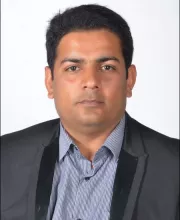
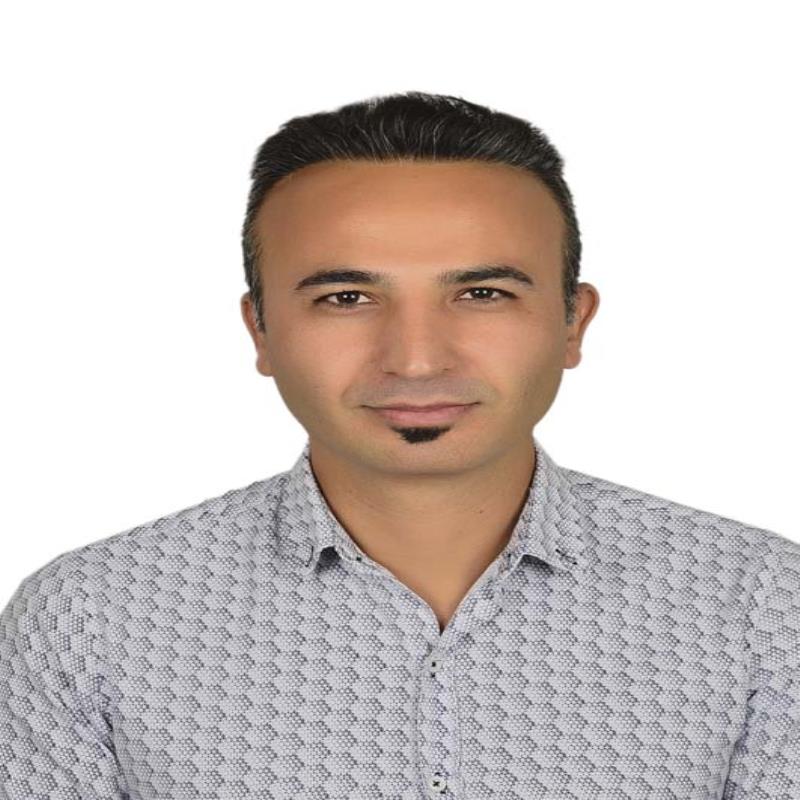
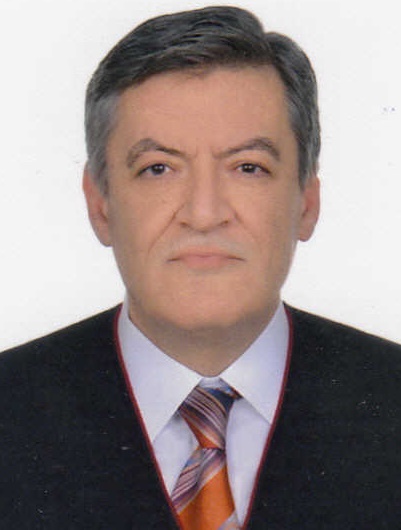
Dr. Akhlaque Ahmad is an Assistant Professor in Software Engineering at TED University's Faculty of Engineering. He earned his Ph.D. in Electronics and Telecommunications from Politecnico di Torino, Italy, with industry experience at STMicroelectronics Milano and contributions to EU FP7 REVERIE project on virtual tele-immersion systems. His research spans: High-performance computing architectures Parallel algorithms for graph processing GPU optimization techniques Intelligent systems design Professor Ahmad teaches courses including Database Systems, Artificial Intelligence, and Operating Systems. He actively promotes interdisciplinary connections between software engineering and liberal arts education.
Nevsan Şengil is a Professor at the Department of Space Engineering, Faculty of Aviation and Space Sciences, Turkish Air Force Academy. Her research focuses on solar energy systems for spacecraft, thermal engineering, and advanced computer vision techniques for satellite navigation. Current affiliation: Turkish Air Force Academy Past affiliations: Anadolu University, Koç University Her work includes developing high-efficiency solar cell concentrators for satellites and optimizing image segmentation algorithms using DBSCAN in star trackers. Key contributions involve thermal modeling of solar cells with radiation plates and computational methods like Monte Carlo simulations. Recent publications highlight her expertise in noise reduction for spacecraft imaging and high-temperature solar cell performance . While specific awards or grants are not listed, her research demonstrates significant advancements in aerospace energy and sensor systems.
Selim Temizer is an Assistant Professor of Computer Science and Engineering at Nazarbayev University's School of Engineering and Digital Sciences (SEDS). Previously, he worked at Middle East Technical University (METU) for seven years before joining Nazarbayev University in August 2019. He holds a PhD and MS in Computer Science from MIT (2011 and 2001), and a BS in Computer Engineering from METU (1999, summa cum laude). His research focuses on artificial intelligence, robotics, autonomous systems, and dynamic collision avoidance for unmanned vehicles. Recent interests include machine learning applications in agriculture and algorithmic trading. He has developed simulation systems, navigation models, and contributed to POMDP-based collision avoidance frameworks for UAVs. Key projects include work on MIT's CSAIL (formerly AI Lab) under Professors Leslie Pack Kaelbling and Tomás Lozano-Pérez. Notable publications address collision avoidance algorithms for aircraft and POMDP applications in autonomous systems. He is also a software developer with expertise in parallel rendering, meta-language design, and embedded systems. His academic journey includes pioneering roles among Turkish students admitted to MIT's EECS program and being one of few Turkish MIT CS PhD holders. He teaches courses like Algorithmic Trading and maintains a portfolio of hobby projects in network topology design and graphics systems.
Prof. ERDİ ATA BLEDA is a Professor in the Department of Physics at Marmara University, Faculty of Arts and Sciences . He earned his Ph.D. in Physics and Astronomy from Clemson University (2008) and has held academic positions at both Marmara University and Istanbul Arel University. His research spans atomic and molecular physics, computational quantum chemistry, high-order harmonic generation, and machine learning applications in materials science. Doctorate: Clemson University, Physics and Astronomy (2004–2008) Postgraduate: Clemson University (2002–2004) Undergraduate: Marmara University, Physics (1997–2001) His research interests include atomic and molecular interactions , quantum mechanical modeling , nonlinear optical processes , plasma spectroscopy , and machine learning in material properties prediction . He employs computational methods such as DFT, TDDFT, and kinetic Monte Carlo simulations to study molecular systems, confined atoms, and nanostructures. His recent work explores twisted bilayer graphene using machine learning and high-harmonic generation from endofullerenes. The most recent publications reflect a strong trend in computational materials discovery , atomic-scale simulation , and quantum phenomena in confined systems . His work integrates physics, chemistry, and computer science, often with applications in nanotechnology and astrophysics. Themes include dielectronic recombination in plasmas, hydrogen bonding in organic molecules, and electronic structure analysis of novel carbon systems. His scientific awards include: In recognition of passion and dedication to improving student learning with Pearson’s MasteringPhysics (2013) Second Place in Physics Mef National Project Competition (1997) He supervises several graduate and doctoral students, with recent theses on machine learning in 2D nanostructures and parallelization of Green’s function methods. He has led multiple TÜBİTAK-funded research projects integrating GPU computing and quantum modeling. He also serves as the Erasmus Program Institutional Coordinator and has held leadership roles in academic commissions. He has contributed to scientific software development and holds patents in interactive data management systems. He is actively involved in research laboratories and teams focusing on computational physics, quantum chemistry, and high-performance computing. His group collaborates internationally and presents regularly at major physics and quantum chemistry conferences.
Prof. Cuneyt Sert is a faculty member in the Department of Mechanical Engineering at Middle East Technical University (METU), where he teaches courses such as Fluid Mechanics, Numerical Methods, and Computational Fluid Dynamics (CFD). His academic rank is Professor, reflecting his extensive contributions to research and education. He actively supervises graduate students, including PhD candidate Burcu Ramazanlı, whose work on abdominal aortic aneurysm hemodynamics led to a 2024 publication in the Journal of Thermal Science and Technology. Prof. Sert's research focuses on CFD, fluid dynamics, and biomedical applications. His studies on hemodynamics, turbulence, and material response in aerospace systems have produced influential papers since 2000. He is known for developing innovative numerical methods, such as adaptive discontinuous Galerkin techniques and CUDA-based parallel CFD solvers. His work bridges engineering education and industry, with projects on cryocooler optimization, metro aerodynamics, and grid fin aerodynamics. In teaching, Prof. Sert is praised for his student-centered approach, detailed lecture notes, and rigorous assignments. He emphasizes practical skills like MATLAB and C programming, though some students note concerns about workload and attendance policies. His courses, such as ME 310 (Numerical Methods) and ME 485 (CFD), are recognized for their rigor and real-world relevance. Prof. Sert’s contributions extend to interdisciplinary collaborations, including biomedical acoustics and material science. He has pioneered GPU-accelerated CFD tools and contributed to the design of microchannel heat exchangers. Despite no explicit awards listed, his peer reviews highlight his dedication to fostering critical thinking and problem-solving in students, earning him recognition as one of METU’s most respected educators.
Zeki Yağız Bayraktaroğlu is an Associate Professor in the Department of Mechanical Engineering at Istanbul Technical University. His research focuses on advanced robotics control systems, including hybrid control approaches for manipulators, adaptive control mechanisms, and teleoperation systems. He has led projects such as the 'Augmented Reality Interface Design for Teleoperation of Industrial Robots' and 'Weapon Mount with Active Stabilizer.' Key research interests include snake-like robots, biologically inspired locomotion, and rehabilitation robotics. His work integrates mechanical design with advanced control algorithms, emphasizing experimental validation and real-world applications. He received the JMST Second Best Paper Award in 2021 for outstanding contributions to robotics research. His publications span topics like Stewart platform control, compliant teleoperation systems, and recursive adaptive algorithms.
Atilla Ergüzen is an Associate Professor at the Department of Computer Engineering, Faculty of Engineering and Natural Sciences, Kırıkkale University. He holds the title of Professor Doctor and currently serves as Head of the Department of Computer Engineering. His academic journey began in 1993 at Kırıkkale Vocational School, where he started as a lecturer. Education: B.Sc. in Computer Engineering from Middle East Technical University (1993), M.Sc. and Ph.D. in Mechanical Engineering from Kırıkkale University Professional Roles: Lecturer (1993–), Assistant Professor (2012–), Associate Professor (2019–), Deputy Director of Kırıkkale University Distance Education Center (2012–2024) His research focuses on algorithms , distributed file systems , parallel programming , and software engineering . He has led the development of over 50 medium/large-scale software projects for public and private institutions, including the Distance Education System that enabled Kırıkkale University to rapidly transition to online education during the pandemic. He has held leadership roles in academic administration and software innovation.
Mustafa Yasin Erten serves as a Lecturer in the Department of Electrical and Electronic Engineering at Kırıkkale University's Faculty of Engineering and Natural Sciences, focusing on critical intersections of power systems engineering, advanced materials, and artificial intelligence. His institutional role centers on electrical engineering with specialized contributions to energy sustainability and nanomaterial innovation. His research program spans three core domains: Energy Forecasting & Grid Management : Development of deep learning models for electricity load prediction in commercial buildings, solar/wind power forecasting, and demand response integration, addressing climate-resilient grid operations as evidenced by his 2025 California ISO study. Nanocomposite Materials : Investigation of copper/aluminum/titanium matrices reinforced with MWCNTs, GNPs, SiC, and ceramics to enhance thermal, electrical, and wear properties for electrical applications. Smart Systems Implementation : Design of IoT-enabled infrastructure including public transportation networks, smart homes, and robotic control systems using embedded devices and communication protocols. Analysis of his 2020-2025 publications reveals a strategic shift toward AI-driven energy solutions, with 60% of recent work applying machine learning to forecasting challenges, while maintaining parallel expertise in nanomaterial synthesis. His California ISO case study exemplifies growing emphasis on real-world climate-energy crisis responses. Scientific Awards: No awards documented in source materials Advising and Grants: Source documentation provides no details regarding graduate student mentorship, research grants, or funded projects. His publication record indicates independent and collaborative work without explicit funding acknowledgments in the provided excerpts. Labs and Teams: While institutional affiliation is clearly established, no specific laboratories, research centers, or team structures are mentioned in the available information. His work on embedded systems and nanocomposites suggests potential involvement with university-level engineering labs, though unconfirmed.
Furkan Kıraç is an Assistant Professor in the Computer Science Department at Özyeğin University, specializing in Computer Vision and Machine Learning . He previously served as a Part-Time Instructor at the same university (2012-2013) and as a Research Assistant at Boğaziçi University (2009-2013). Education: PhD in Computer Engineering, Boğaziçi University (2013) MS in Systems and Control Engineering, Boğaziçi University (2002) BS in Mechanical Engineering, Boğaziçi University (2000) His research focuses on real-time hand pose estimation , deep learning , and computer vision applications in industrial automation. Recent publications highlight his work on pedestrian tracking, spatio-temporal mapping, and image processing pipelines for test oracle automation. Notable achievements include founding two computer vision companies ( Proksima and Fortibase ) and receiving awards at SIU conferences (2004, 2005, 2012). He has contributed to projects funded by TÜBİTAK and the Scientific and Technical Research Council of Turkey. Scientific Awards: 3rd place in best demo award (SIU 2012) Best application paper award (SIU 2012) 3rd degree in Turkish National Science Competition (1994, 1995) Gold/Silver/Bronze medals in National Computer Science Olympiads
Hasan Sözer is a Professor at the Department of Computer Science , Ozyegin University , where he has worked since 2011. His research focuses on software engineering , particularly in software architecture recovery , fault tolerance , and distributed systems . Education: B.Sc. in Computer Engineering , Bilkent University (2002) M.Sc. in Computer Engineering , Bilkent University (2004) Ph.D. in Computer Science , University of Twente (2009) Research Interests include software architecture design , test automation , and self-adaptive systems . His work often combines genetic algorithms and heuristics for architecture recovery, with applications in blockchain security and embedded systems . Scientific Projects funded by the Scientific and Technological Research Council of Turkey include topics like automated web application testing , blockchain-based security solutions , and serverless function deployment . He collaborates with industry partners such as Turkcell Technology , Vestel , and Fibabanka . Students under his supervision include Hüseyin Yapıcı , who defended a thesis on evolutionary coupling metrics . He leads the Ozyegin University Software Research Lab (SRL) , which focuses on modular architecture recovery and test model refinement .
Atıl Kurt is an Assistant Professor at Alanya Aladdin Keykubat University's Rafet Kayış Faculty of Engineering, Department of Industrial Engineering. He has held academic positions at Turkish Aeronautical Association University, Ted University, Universiteit Twente, and Çankaya University between 2009 and 2021. Education: Doctorate in Industrial Engineering from Middle East Technical University (2018) Master's in Industrial Engineering from Çankaya University (2012) Bachelor's in Industrial Engineering from Çankaya University (2003) His research focuses on optimization , heuristic algorithms , and operations research , with applications in production planning, scheduling, supply chain management, and service systems. He has contributed to studies involving blood distribution systems and parallel machine scheduling. Atıl Kurt has served as Deputy Head of Department and taught courses in Industrial Engineering. While no specific publications or awards are listed in the provided text, his academic trajectory reflects expertise in mathematical modeling and industrial systems management.
Kayhan AYAR is an Assistant Professor at Sakarya University's Faculty of Computer and Information Sciences, Department of Computer Engineering. His expertise spans Virtual Reality, Information Security, Cryptology, and 3D Computer Graphics, with a focus on simulation-based educational technologies and haptic interaction systems. Doctorate: 2010–2020, Sakarya University (Thesis: 3D Image of MIG-MAG Welding Seam using Voxified Paraboloid) Master's: 2008–2010, Sakarya University (Thesis: DirectX-based 3D Game Engine Design) Bachelor's: 2000–2007, Sakarya University His research explores virtual welding simulators, voxelization techniques, and real-time haptic applications. Key publications include 15 recent articles (2010–2024) on topics like 3D modeling, neural networks in welding training, and VR-based security applications for energy infrastructure. He has contributed to international conferences and journals such as the Turkish Journal of Electrical Engineering and Computer Sciences and Journal of Materials Education . His work includes a 2014 patent for a virtual welding simulator and participation in TÜBİTAK-funded projects. Teaching responsibilities include courses in Game Programming, Data Structures, Computer Graphics, and Parallel/Distributed Systems, alongside advising graduation projects and specialization areas.
Professor Cesur Baransel is a faculty member in the Computer Engineering Department at Gaziantep University's Faculty of Engineering in Turkey. With expertise spanning computer science, machine learning, artificial intelligence, and image processing, he has established himself as a prominent researcher with contributions across multiple disciplines. Education: Doctorate (1990-1994): Department of Computing Science, University of Alberta, Canada Degree (1985-1988): Department of Computer Science Engineering (Computer Hardware), Hacettepe University, Turkey Licence (1981-1985): Department of Computer Science Engineering, Hacettepe University, Turkey Professor Baransel's research spans multiple domains with particular emphasis on parallel computing algorithms, network protocols, and more recently, applications of machine learning in bioinformatics and decision science. His early work focused on efficient routing algorithms and parallel matrix multiplication for high-performance computing architectures, especially torus networks. Over time, his research has expanded to include information-theoretic approaches in genetics, drug-target interaction prediction using autoencoders, and neutrosophic decision-making frameworks for drone selection. His publications demonstrate a remarkable evolution from fundamental computer architecture research to increasingly interdisciplinary applications across healthcare, finance, and industrial engineering. Professional Experience and Projects: Professor at Gaziantep University (2018-present) Extensive industry experience including positions at Saltus Yazılım, Likom PD, and Netaş from 1986-2009 Three major research projects completed: Optical Ore Sorting System, Computerized Jacquard Control System, and Mass Balancing Software for Cement Factories Author of five books and book chapters covering mathematical methods in engineering, parallel computing, and software architectures
Prof. Dr. Nezih Topaloğlu is an Associate Professor in the Department of Mechanical Engineering at Yeditepe University's Faculty of Engineering. He has progressed from Lecturer (2009) to Assistant Professor (2010) and Associate Professor (2017), maintaining active research and teaching roles through 2025. His educational background includes a B.Sc. in Electrical-Electronics Engineering from Bogazici University (2000-2004) and an Integrated Ph.D. in Mechanical Engineering from the University of Waterloo (2004-2009), where his thesis focused on uncooled microbolometers. Topaloğlu's research centers on mechanical vibrations, energy harvesting systems, MEMS, and mechatronics. He has pioneered innovations in piezoelectric vibration energy harvesters with movable tip masses, thermal conductance tuning for microbolometers, and nonlinear damping mechanisms. His experimental work bridges theoretical modeling with practical applications in sensor design and energy conversion systems. Analysis of his 10 most recent publications (2010-2025) reveals an evolution from core MEMS and vibration harvesting research (2010-2017) toward interdisciplinary applications including machine learning for maritime horizon detection (2022-2025). This shift demonstrates expanding expertise while maintaining foundational work in piezoelectric systems and vibration analysis. Scientific recognition includes: International Graduate Student Award (University of Waterloo, Turkey) Teaching Assistance Excellence Award (University of Waterloo, Canada) He has supervised six graduate students across master's and doctoral programs, focusing on vibration energy harvesters, solenoid actuators, and machine learning diagnostics. Research funding includes five TÜBİTAK projects, notably as Principal Investigator for the homogeneous stress distribution piezoelectric generator project (2017-2020) and ongoing nanosystems research (2021-). His work is supported by three patents covering vibration energy harvesters, power generation systems, and dishwasher mechanisms, reflecting practical applications of his vibration and MEMS research.
Lecturer Ahmet Ağaoğlu is affiliated with Yeditepe University, where he has served in the Faculty of Engineering and Architecture , Department of Mechanical Engineering , since 2016. He teaches undergraduate and graduate courses in mechanical engineering and computational methods. Education: PhD in Mechanical Engineering (2018), Yeditepe University Master's in Mechanical Engineering (2010), Yeditepe University BSc in Mechanical Engineering (2007), Yeditepe University Research interests include robotics, engineering optimization, and numerical analysis, with a focus on parallel manipulators and rehabilitation platforms for disabled individuals. His work spans computational modeling, precision micromachining, and practical applications in mechanical systems. Publications and projects highlight his expertise in workspace optimization algorithms (ASME 2010) and the design of a rehabilitation platform for mobility assistance (2011). Though limited in number, these outputs reflect interdisciplinary applications of mechanical engineering principles. Teaching duties encompass courses such as Engineering Project , Introduction to Mechanical Engineering , and Numerical Analysis , delivered in English across multiple academic terms since 2016.