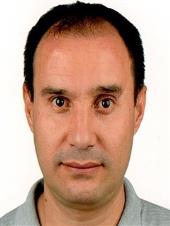
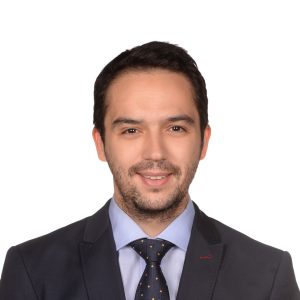
Muhammed Yasin Adıyaman serves as a Researcher at Istanbul Technical University's Department of Electronics and Communication Engineering, based at the Ayazağa Campus in Istanbul, Turkey. His research centers on Signal Processing and Analog-to-Digital Conversion with specialized focus on Radar Systems , particularly Synthetic Aperture Radar (SAR) applications. He develops advanced calibration techniques for time-interleaved ADC architectures, addressing critical challenges in timing mismatch correction across parallel channels through innovative reference channel designs and background calibration algorithms. His 2020 publication demonstrates significant contributions to high-speed data conversion methodologies, accumulating 7 Scopus citations that reflect its impact on ADC design for radar signal processing systems. His research activity is concentrated in electronics engineering with documented expertise in calibration systems and high-speed circuit design.
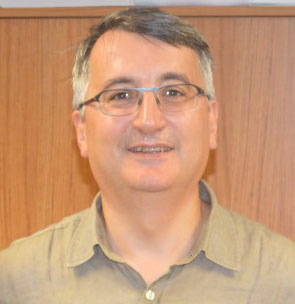
Prof. Müştak Erhan Yalçın is a Professor of Electronics and Telecommunications Engineering at Istanbul Technical University (ITU). He holds a Ph.D. from Katholieke Universiteit Leuven (2004) and degrees from ITU (1997, 1993). His research focuses on nonlinear circuits, chaos theory, cellular neural networks, and embedded systems. He has authored numerous publications in top-tier journals and conferences, with recent work emphasizing secure communication, GPS spoofing detection, and chaotic systems applications. He actively contributes to the academic community through editorial roles (e.g., Associate Editor of IEEE Transactions on Circuits and Systems-II) and organizing international conferences. Notable recognitions include elevation to IEEE Senior Member (2019) and inclusion in ITU's Career-Long Impact category (2024). Education: Ph.D. in Electronics Engineering, Katholieke Universiteit Leuven, 2004 M.Sc., Istanbul Technical University, 1997 B.Sc., Istanbul Technical University, 1993 Research Interests: Nonlinear Circuits and Chaos Theory Cellular Neural Networks and Wave Computing Embedded Systems and Hardware Security Chaotic Signal Processing and Cryptography Recent Projects: TÜBİTAK-funded project on active shield design (2021) Development of GPS spoofing detection methods (2024) Secure communication systems using chaotic oscillators Grants & Awards: IEEE Senior Member (2019) Associate Editor, IEEE Transactions on Circuits and Systems-II (2020–2021) Recipient of TÜBİTAK 1505 Collaboration Program (2021) Labs & Teams: Leading research on nonlinear systems and embedded security within ITU's Electronics and Telecommunications Engineering Department, collaborating with industry partners like Aselsan.
Assoc. Prof. Dr. Ahmet Sayar is an Associate Professor at the Department of Computer Engineering, Faculty of Engineering at Kocaeli University, Turkey. He holds an M.Sc. (2001) and Ph.D. (2009) in Computer Science from Syracuse and Indiana Universities, USA. His research focuses on Distributed Systems, Big Data, Data-Intensive Computing, Geographic Information Systems (GIS), and Exploratory Data Analysis (EDA). He has co-authored over 150 papers, 15 book chapters, and 1 book. Currently, he serves as Head of Student Affairs at Kocaeli University and as an associate editor for multiple journals. Education: M.Sc. in Computer Science, Syracuse University (2001) Ph.D. in Computer Science, Indiana University (2009) Research Interests: Parallel and Distributed Algorithms Big Data Analytics & Cloud Computing Machine Learning Applications (e.g., Image Processing, NLP) GIS and Remote Sensing Blockchain Technology for IoT and Logistics Recent Trends in Articles: His recent work emphasizes real-time data processing (e.g., video stream analytics), blockchain for supply chains, and AI-driven solutions for healthcare, transportation, and urban management. He explores ethical aspects of web scraping and low-code platforms for process automation. Advising & Grants: Advised 18 master’s/phd theses. Involved in TÜBİTAK projects and KOSGEB innovation programs. Member of editorial boards and national advisory committees. Labs/Teams: Leads university-level student affairs initiatives and collaborates on interdisciplinary projects involving distributed systems and big data frameworks.
Murat Okatan is an Associate Professor at Istanbul Technical University's Informatics Institute, Department of Computational Science and Engineering. He previously held academic positions at Cumhuriyet University in Electrical and Energy, Biomedical Engineering, and Mechatronics Engineering departments, and served in administrative roles including Department Chair, Head of Discipline, and Vice Dean. He received his PhD from Boston University and completed postdoctoral research at Ankara University and Boston University. PhD, Boston University MS, Syracuse University BS, Boğaziçi University (Dual Degree: Physics and Electrical-Electronics Engineering) His research lies at the intersection of computational neuroscience, neural signal processing, and biomedical engineering. He specializes in extracellular neural recordings, spike detection, brain-machine interfaces, and statistical modeling of neural data. His work includes developing automated thresholding techniques such as truncation thresholds for spike detection, analyzing subthreshold motor cortical activity, and modeling hippocampal place cells using Zernike polynomials. His recent publications focus on statistical significance testing in receptive field estimation and improving signal-to-noise ratio in neural recordings. His recent publications reveal a strong focus on statistical methods in neural data analysis, particularly in spike detection and receptive field modeling. He has developed and refined truncation threshold methods for more accurate action potential identification. His work bridges theoretical statistics with practical applications in brain-computer interfaces and neural decoding. He has also contributed to open-source tools, including Python code for parameter estimation in truncated distributions. YÖK Akademik Teşvik Ödeneği (2016, 2017) 2232 Postdoctoral Return Fellowship, TÜBİTAK (2011) Best Oral Presentation Award, 6th National Neuroscience Congress (2007) Best Oral Presentation Second Prize, 8th National Neuroscience Congress (2009) Presidential University Graduate Fellowship, Boston University (1997) High Honor Degree, Boğaziçi University (1995) Murat Okatan has supervised research projects funded by TÜBİTAK, the Turkish Higher Education Council, and international agencies including NIH, NSF, and ONR. He has served as a project executive and researcher in multiple scientific initiatives, including the Neuroscience and Neurotechnology Excellence Center (NÖROM). He has also acted as a guest editor for the Turkish Journal of Electrical Engineering and Computer Sciences . His lab focuses on developing computational tools for neural data analysis, with applications in brain-machine interfaces and neuroprosthetics. He is a member of several professional societies, including IEEE, IEEE Signal Processing Society, Society for Neuroscience (SFN), Brain Research Society (BAD), and Turkish Biophysics Society. His research group develops algorithms for real-time neural signal processing and contributes to national and international collaborative efforts in computational neuroscience.
Mehmet Sahin is a Professor in the Department of Aerospace Engineering at Istanbul Technical University (ITU), where he specializes in computational fluid dynamics (CFD) and numerical methods. His research focuses on advanced algorithms for fluid flow simulations, including the HEMLAB Algorithm, Arbitrary Lagrangian-Eulerian (ALE) methods, and anisotropic mesh adaptation. He leads projects funded by TUBITAK and BAP, addressing challenges in compressible flows, multiphase dynamics, and aerospace applications. Key research areas include numerical simulation of aerodynamic configurations (e.g., rotorcraft, high-lift systems), fluid-structure interaction (FSI), and parallel computing for large-scale problems. His work spans aerospace engineering, biomedical applications (e.g., cerebral aneurysm modeling), and fundamental fluid dynamics studies, such as flow around biological organisms like Drosophila. Sahin has developed open-source tools and collaborated on international standards like the AIAA and JAXA high-lift prediction benchmarks. Notable contributions include the HEMLAB Algorithm for CFD, advancements in mass-conserving ALE formulations for multiphase flows, and scalable parallel solvers. His projects emphasize algorithm robustness, high-fidelity simulation, and real-world applications in aviation and biomedical engineering.
Erhan KURT is a Lecturer at the Faculty of Engineering and Architecture , Kırşehir Ahi Evran University , since 2024. Previously, he worked as a Research Assistant at Nuh Naci Yazgan University from 2012 to 2024. PhD in Electrical and Electronics Engineering, Erciyes University (2023) MSc in Electronic Engineering, Erciyes University (2014) BSc in Electrical and Electronics Engineering, Erciyes University (2011) His research focuses on Electromagnetic Field Analysis , Microwave Engineering , and Artificial Intelligence Applications in antenna design. He has contributed to optimization algorithms for antenna array synthesis, sidelobe suppression, and pattern nulling. A review of his 15 most recent articles reveals trends in Antenna Array Optimization using bio-inspired algorithms (e.g., Ant Lion, Salp Swarm, Differential Evolution) and applications of AI in microwave engineering. Key subfields include Computational Electromagnetics , Beamforming , and Algorithmic Antenna Design . He has collaborated extensively with researchers such as Kerim Güney , Suad Başbuğ , and Mustafa Türkmen on interdisciplinary projects involving signal processing and antenna systems.
Semra Tunalı is a Professor at İzmir University of Economics' Faculty of Economics and Administrative Sciences, Department of Business Administration since 2010. She holds a Ph.D. in Computer Sciences from Ege University and has held academic positions at Ege University, Dokuz Eylül University, and as Visiting Fellow at GINTIC Institute of Manufacturing Technology, Northwestern University, and Loyola University. B.Sc. in Industrial Engineering, Ege University (1978) M.Sc. in Applied Statistics, Ege University (1980) MBA, University of Missouri (1985) Ph.D. in Computer Sciences, Ege University (1991) Her research focuses on production optimization, with emphasis on: Buffer allocation in unreliable production lines Capacitated lot sizing with setup carryover Scheduling flexible mixed-model assembly lines Hybrid metaheuristics for manufacturing systems Simulation optimization in industrial applications Combinatorial optimization in production planning Her recent publications (2010-2019) demonstrate expertise in applying heuristic algorithms like genetic algorithms and tabu search to complex production problems, particularly in lot sizing and assembly line optimization. Common themes include: Integration of simulation and analytical modeling Hybrid algorithm development for manufacturing systems Capacity planning improvements through optimization Reliability analysis in production line design
Mehmet Merkepçi serves as an Assistant Professor in the Department of Computer Engineering at Gaziantep University's Faculty of Engineering, Turkey. Holding a Doctorate in Electrical and Electronic Engineering (2017), he has maintained continuous academic affiliation with the university since 2007 through progressive roles from Research Assistant to his current position. Academic Background: Doctorate (2017): Gaziantep University, Institute of Science, Electrical and Electronic Engineering Master's (2009): Gaziantep University, Institute of Science, Electrical and Electronics Engineering Bachelor's (2000): Karadeniz Technical University, Faculty of Engineering, Electrical-Electronic Engineering Merkepçi's research demonstrates exceptional interdisciplinary breadth with core emphasis on Cryptography and Artificial Neural Networks . His recent work pioneers neutrosophic number theory applications in public key cryptography, significantly advancing RSA and El Gamal algorithms. Parallel research trajectories include biomedical signal processing using photoplethysmography for non-invasive monitoring systems, and textile engineering innovations in fabric porosity and air permeability analysis. This multifaceted approach bridges theoretical mathematics with practical engineering solutions across diverse domains. Publication analysis reveals 10 journal articles concentrated in 2022-2025, with cryptographic research constituting 60% of recent output. The remaining publications demonstrate sustained engagement in biomedical engineering (20%) and textile science (20%), indicating strategic diversification while maintaining cryptographic expertise as the research cornerstone. This distribution reflects deliberate specialization in security-critical applications alongside targeted explorations of neural network implementations in physical systems. Merkepçi teaches advanced courses including Security Engineering and Occupational Safety at graduate level, and foundational undergraduate instruction in Computer Programming, Database Management, and Engineering Mechanics. His administrative service includes Department Vice Chairman (2020-present) and former Department Head (2020-2024), demonstrating institutional leadership alongside research and teaching responsibilities.
Esin ÖZTÜRK IŞIK is an Associate Professor at Boğaziçi University's Biomedical Engineering Institute, where she also serves as the Director of the Computational Imaging Laboratory. She has held this position since September 2014, following her tenure as an Assistant Professor at Yeditepe University from December 2009 to September 2014. Prior to her academic appointments in Turkey, she completed her postdoctoral fellowship at the University of California, San Francisco, where she had also earned her Ph.D. through the Joint Graduate Program in Bioengineering between UC Berkeley and UCSF. Dr. ÖZTÜRK IŞIK's research primarily focuses on magnetic resonance imaging and spectroscopic imaging techniques, with particular emphasis on developing novel computational methods for MR image analysis. Her work spans multiple areas including parallel imaging theories, fast data acquisition methods, phosphorus MR spectroscopic imaging, and machine learning applications for disease characterization. She has made significant contributions to multimodality medical imaging for cancer diagnosis, treatment planning, and disease monitoring. Her research output shows a clear trend toward increasingly sophisticated computational methods applied to medical imaging problems, with recent publications focusing on compressed sensing techniques for accelerated phosphorus MRSI, machine learning approaches for tumor classification, and multi-parametric MRI analysis for cancer grading. The majority of her work centers on brain tumor imaging, with growing interest in prostate cancer applications as well. Bogazici University Academic Encouragement Award (2014) TUBITAK EU Project Submission Encouragement Award (2010) Educational Stipend Awards from ISMRM conferences (2004-2006) High Field Workshop Trainee Award (2007) UCSF Graduate Division Earle C. Anthony Travel Award (2006) UCB Graduate Division Conference Travel Grant (2006) Dr. ÖZTÜRK IŞIK has secured significant research funding including a TUBITAK 1001 Grant for 'Determination of Multimodality Magnetic Resonance Imaging Based Biomarkers for Mild Cognitive Impairment in Parkinson Disease' (2015-2018), a Bogazici BAP Grant for 'Investigation of the Human Brain Metabolism in-vivo in Chronic Liver Failure' (2015-2018), and a Marie Curie International Reintegration Grant for 'Phosphorus MR Spectroscopic Imaging of Brain Tumors at 3T' (2010-2014). She serves as an active reviewer for numerous prestigious journals including Magnetic Resonance in Medicine and Journal of Magnetic Resonance Imaging. As Director of the Computational Imaging Laboratory at Boğaziçi University, she leads a research team focused on developing advanced computational methods for medical image analysis. Her lab specializes in translating technical innovations into clinical applications, particularly in the areas of brain tumor characterization and cancer imaging. She also serves as the ERASMUS coordinator and Summer internship coordinator for the Biomedical Engineering Institute.
UTKU KOÇ serves as an Assistant Professor in the Department of Industrial Engineering within the Faculty of Engineering at MEF University, where he conducts research and teaching in industrial engineering disciplines. His research portfolio demonstrates significant expertise across multiple specialized domains in operations research and systems engineering. Primary focus areas include: Parallel and discrete optimization methodologies Supply chain management and scheduling systems Discrete-event simulation techniques Heuristic algorithm development Game-theoretic applications in decision-making Advanced data analytics for industrial systems This interdisciplinary research bridges theoretical optimization frameworks with practical industrial applications, particularly in complex supply chain environments and resource allocation challenges. The integration of game theory with data analytics reflects contemporary approaches to modeling competitive and cooperative industrial scenarios. Dr. KOÇ maintains an active research profile with ORCID identifier 0000-0001-6699-6195, though specific publication details and collaborative projects are not documented in the available institutional materials.
Prof. Ahmet Cosar is a faculty member in the Department of Computer Engineering at the Middle East Technical University (METU), Ankara, Turkey. He holds a PhD in Computer Science from the University of Minnesota (1996), an MS in Computer Engineering from Bilkent University (1988), and a BS in Computer Engineering from METU (1986). His research focuses on distributed database design, query optimization, evolutionary algorithms, computer networks, and cloud computing. He leads the Intelligent Data Analysis Group (IDAG) and teaches courses such as CENG 240, CMPE 275, and CENG 280. Education: PhD, Computer Science, University of Minnesota, 1996 MS, Computer Engineering, Bilkent University, 1988 BS, Computer Engineering, METU, 1986 Research Interests: Query optimization in distributed databases Evolutionary algorithms (e.g., genetic algorithms, particle swarm optimization) Cloud computing and data warehouse design Machine learning applications in cybersecurity Wireless sensor networks and data fusion Publications: Over 50 peer-reviewed articles in journals like Computers & Industrial Engineering and Neurocomputing , focusing on optimization algorithms, cloud resource allocation, and machine learning techniques. Recent work includes island-parallel metaheuristics for graph coloring and reinforcement learning for adaptive interventions. Advising & Grants: Supervised over 30 graduate students (PhD and MS) in areas like evolutionary algorithms, cloud databases, and sensor networks. Active in research grants related to distributed systems and big data. Labs/Teams: Leads the Intelligent Data Analysis Group (IDAG), collaborating on projects in optimization, machine learning, and cloud computing.
Şaziye Betül Özateş is an Assistant Professor at Boğaziçi University's Institute for Data Science and Artificial Intelligence, specializing in NLP and machine learning. She develops resources and models for Turkish and low-resource languages, including the BOUN Treebank and dependency parsers. Research focuses on dependency parsing for agglutinative languages, computational linguistics, and deep learning applications, with emphasis on Turkish morphology, code-switching parsing, and historical language processing. Recent projects address Ottoman Turkish NLP and calligraphy analysis. Publications demonstrate strong focus on Turkish language resources (40%), parsing algorithms (30%), historical text processing (20%), and code-switching NLP (10%). Recent works show increasing attention to Ottoman Turkish and Arabic script processing, with methods leveraging multilingual BERT and semi-supervised learning. Developed key resources: BOUN Treebank (Turkish syntactic corpus), PUD Treebank (multilingual parallel corpus), BOUN-Pars (LSTM-based Turkish parser), and semi-supervised parsers for code-switched languages. Supervises projects on neural network applications in NLP.
Erol Lale is a Lecturer in the Civil Engineering Department at Istanbul Technical University, specializing in Structural Mechanics, Reinforced Concrete Structures, and Numerical Modeling. He holds a PhD in Structural Engineering from the same institution, with prior academic roles including Research Assistant since 2005. His research focuses on advanced numerical techniques such as Lattice Discrete Particle Modeling (LDPM), Isogeometric Analysis, and High-Order Microplane Models to study concrete behavior under dynamic loading, size effects, and fracture mechanics. He has contributed to over 20 peer-reviewed publications, including works on reinforced concrete columns, damage localization algorithms, and multiscale analysis of geotechnical systems. Teaching responsibilities include courses like 'Reinforced Concrete II' and 'Prestressed Concrete' at the undergraduate level. His work integrates computational mechanics with experimental validation, addressing challenges in structural integrity and material failure under extreme conditions.
Kamer Kaya is an Associate Professor at the Faculty of Engineering and Natural Sciences, Sabancı University. He obtained his PhD in 2009 from the Department of Computer Science and Engineering at İhsan Doğramacı Bilkent University, focusing on Threshold Cryptography. His career spans research roles at CERFACS (France) and Ohio State University, where he worked in the HPC Lab and later as a Research Assistant Professor in the Dept. of Biomedical Informatics. Since 2014, he has been affiliated with Sabancı University and founded Dakik Software Technologies in 2018, focusing on R&D projects in blockchain, machine learning, and high-performance computing (HPC). He is actively involved in Sabancı University's Center of Excellence in Data Analytics and COMPUTE. PhD in Threshold Cryptography from Bilkent University (2009) Postdoctoral research at Ohio State University's HPC Lab Founder of Dakik Software Technologies (2018) His research interests include parallel algorithms , sparse data machine learning , graph algorithms , HPC hardware optimization , and cryptography . He collaborates on projects involving GPUs/IPUs for ML applications, blockchain interoperability, and digital twins for automation. As a team leader, he seeks students skilled in algorithms, data structures, and C/C++ programming.
Burak Gökgür is an Assistant Professor of Operations Management at the Business School of Sabancı University, located in Tuzla, İstanbul, Turkey. His research focuses on operations management, pricing strategies, production systems optimization, scheduling algorithms, constraint programming, and heuristic approaches. He holds a Ph.D. and has published extensively in journals like OR Spectrum, International Journal of Production Research, and European Journal of Operational Research. His work addresses complex operational challenges such as dynamic pricing mechanisms, inventory control in fluctuating environments, and optimization of manufacturing systems. Teaching includes courses like MGMT 201 (Introduction to Management) and OPIM 611 (Modeling in Operations Management). No scientific awards or grants are explicitly mentioned in the provided materials. He advises no listed students, and no lab affiliations are noted.