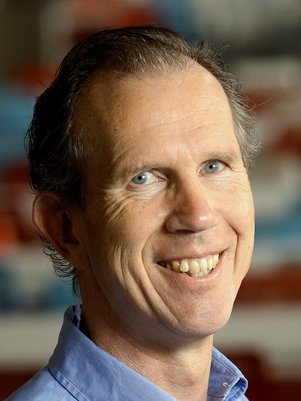
Jin-Kao Hao is a Professor of Computer Science at Université d'Angers , France, and a Senior Fellow of the Institut Universitaire de France . He specializes in computational methods for large-scale combinatorial optimization problems, with applications in computer science, artificial intelligence, and computational biology. Editorial Board Member: PeerJ Computer Science Research Affiliation: LERIA Laboratory , SFR MathSTIC Research Interests: His work spans algorithms, optimization theory, artificial intelligence, and computational biology. He develops advanced techniques for solving complex combinatorial problems, including parallel exact algorithms, dynamic thresholding, and metaheuristics. Publication Trends: Recent articles focus on feedback set problems, traveling salesman variants, gene-gene interactions, and scheduling. These align with his expertise in optimization, graph theory, and computational biology applications. Scientific Awards: Senior Fellow, Institut Universitaire de France Labs & Teams: Affiliated with the LERIA Laboratory at Université d'Angers and the SFR MathSTIC research federation.
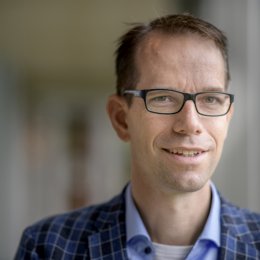
Prof. Jan Dirk Jansen (Delft University of Technology) specializes in systems and control theory applied to subsurface flow and geomechanics. His research spans induced seismicity , geothermal energy , reservoir simulation , and data assimilation . Current projects include co-leading the NWO-funded NEPTUNUS initiative on transient induced seismicity and previously researching seismicity mitigation in Dutch gas fields through the Science4Steer program. Expertise in numerical reservoir simulation History matching & model-order reduction Optimization of fluid injection/production He authored the textbook Nodal Analysis of Oil and Gas Production Systems , with significant contributions to closed-form geomechanical solutions and scalable numerical schemes . Contact: J.D.Jansen@tudelft.nl
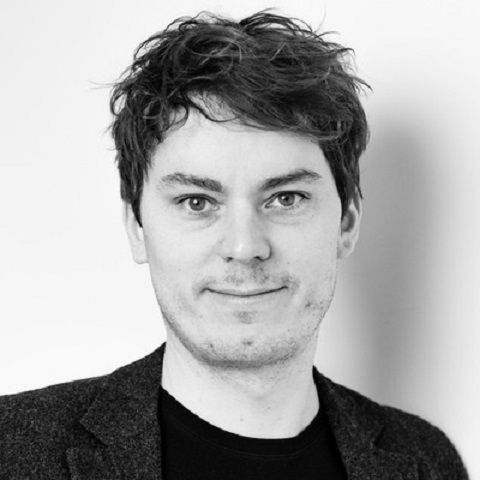
Jan Martijn van der Werf serves as Associate Professor in Process Science at Utrecht University's Faculty of Science, Department of Information and Computer Science. Since September 2022, he has held the position of Programme Director for the Bachelor Information Sciences, overseeing curriculum development and academic operations for both Business Informatics and Information Sciences programs. Education: Dual PhD in Computer Science from Eindhoven University of Technology and Humboldt Universität zu Berlin (Thesis: 'Compositional Design and Verification of Component-based Information Systems') Research Focus: Van der Werf's work centers on process mining and behavioral modeling in software architectures, with emphasis on the interplay between data and processes. His expertise spans Conceptual Modelling of Information Systems , Enterprise Architecture , and Service-Oriented Architecture , addressing challenges in process discovery, verification, and practical implementation within complex organizational contexts. Current research explores the human dimensions of process mining adoption and AI-driven event log extraction. Publication Trends: Recent work (2023-2024) reveals increasing focus on methodological rigor in process discovery, human factors in process mining initiatives, and formal verification techniques for Petri nets. His publications bridge theoretical foundations with practical applications, particularly in event log extraction using large language models and visualization of complex process chronologies from heterogeneous data sources. Academic Contributions: Van der Werf teaches core courses in Process Modelling and Software Architecture , actively participates in academic workshops (including the 2020 'Information System Modeling' workshop), and supervises graduate research. His Scopus profile indicates 77 research outputs and supervision of 3 students, reflecting sustained scholarly engagement in process science and information systems.
Martine Veldhuizen is an Assistant Professor at Utrecht University's Department of Languages, Literature and Communication within the Faculty of Humanities. Her work focuses on the historical dynamics of speech behavior, particularly through the lens of freedom of expression and privacy in both medieval and modern contexts. She leads the NWO-funded project Truth-tellers: The Mentality behind Subversive Speech Behavior and co-founded the Centre for Unusual Collaborations. Expertise in Middle Dutch language and culture Specializes in manuscripts/early prints Active in Institutions for Open Societies (IOS) initiatives Research Themes combine medieval cultural identity analysis with contemporary societal challenges. Her work examines: Free speech evolution from 1450-1750 Privacy concepts in historical and interdisciplinary frameworks Subversive female narratives in early printed works Intersectional approaches to modern societal issues Key scientific awards include: NWO Veni Grant (2016) Winter Fund Grant (2018) Internationalization Grant (2017) COST Grant participation (2018) She has taught courses on Corpora and Tools in Dutch Studies Media and Persuasion in Premodern Europe Freedom of Speech: Cultural and Legal Perspectives Current affiliations: Utrecht Young Academy chair (2020-2022) NIAS Law and Literature Seminar participant EWUU Alliance collaborator
Kubilay Atasu is an Associate Professor at Delft University of Technology, affiliated with the School of Electrical Engineering, Mathematics and Computer Science and the Data-Intensive Systems department. His research focuses on core areas of computer science and electrical engineering, particularly in data systems and high-performance computing.
Jeroen Voeten is a Full Professor in the Electronic Systems group of the Department of Electrical Engineering at Eindhoven University of Technology (TU/e). He also holds a position as a Research Fellow at the Embedded Systems Institute in Eindhoven and is a Senior Scientist and Scientific Advisor to TNO-ESI since 2017. Academic Background: MSc in Mathematics and Computing Science (1991, TU/e) PhD in Electrical Engineering (1997, TU/e) Voeten's research focuses on formal methodologies for hardware/software system specification, design, and implementation. His work spans computer architectures, embedded systems, performance modeling, and cyber-physical systems. He is currently leading the Carm 2G project with ASML to enhance model-based engineering environments for wafer scanner control systems. His recent publications emphasize advancements in global scheduling, fault-tolerant real-time systems, and hybrid performance modeling. These studies address critical areas like latency reduction, schedulability improvements, and data age analysis in multi-rate task chains. Scientific Awards: Best Paper Award, Forum on Specification and Design Languages (FDL 2005) Best Paper Award, Property-Preserving Synthesis for Unified Control and Data-Oriented Models (2005) Voeten has contributed to 87 conference reports, 13 academic reports, 11 book chapters, and 11 journal articles, reflecting his extensive involvement in both academic and industrial research. Labs and Collaborations: He is affiliated with the Model-Based Design Lab and the High Tech Systems Center at TU/e, collaborating with institutions like TNO-ESI and industry leaders such ASML. His work aligns with the UN Sustainable Development Goals (SDGs) through applications in embedded systems and high-tech manufacturing.
Aleida Braaksma is a Lecturer at the University of Twente, affiliated with the TechMed Centre and Mathematics of Operations Research department. Her work bridges Artificial Intelligence with Health and Well-being , focusing on optimizing healthcare systems through Operations Research methodologies. Key Affiliations: Digital Society Institute, TechMed Centre, Mathematics of Operations Research department Research Themes: Reinforcement Learning, Data Mining, Process Mining, and Queueing Theory applications in healthcare logistics Her recent publications highlight advancements in medical diagnostic scheduling , bed allocation , and adaptive clinical trial designs . She has pioneered dynamic robust optimization frameworks for time-sensitive pharmaceutical workflows and developed sampling-based methods for Gittins index approximation in stochastic environments. Scientific contributions include: Optimization of rheumatology outpatient clinics via patient classification algorithms Response-adaptive procedures in clinical trials using constrained Markov decision processes Real-time forecasting systems for pandemic-related hospital capacity planning Computerized decision support for nurse-to-patient assignment
Amirreza Yousefzadeh is an Assistant Professor specializing in computer architecture design for embedded systems. His research focuses on hardware acceleration for artificial intelligence, particularly in energy-efficient neuromorphic computing and edge AI applications. Research Interests Neuromorphic computing architectures Event-driven AI hardware Sparsity exploitation in neural networks Embedded vision systems Digital circuit design for AI Research Trends Recent work (2024-2025) demonstrates expertise in spiking neural networks (SNNs), activation sparsity, and hardware-software co-design for neuromorphic processors. Key areas include object detection, energy efficiency optimization, and digital implementations of synaptic delays. Technical Contributions Developed SENMap for multi-objective data-flow mapping Created SENSIM simulator for multi-core neuromorphic systems Investigated 3D stacking for memory-dominated architectures Explored temporal sparsity in event-based processing
Prof. Dr. Ir. Dannis Brouwer is a professor at the Faculty of Engineering Technology, University of Twente, leading the Precision Engineering group. His work focuses on flexure mechanisms with applications in ultra-precision machinery, robotics, orthoses, and flexible implants. He lectures Design Principles for Precision Mechanisms in Mechanical Engineering programs and has pioneered advancements in large-motion flexure joints. Education: MSc in Mechanical Engineering and Mechatronic Design (Eindhoven University of Technology, 1998-2001); PhD (University of Twente, 2007) Past Roles: Mechatronics System Designer at Philips (2001-2004); Senior Applied Research Engineer at Demcon (2007-2009) Brouwer’s research addresses the limitations of traditional bearings by optimizing flexure joints for high load capacity, large motion, and stiffness. His group developed topology synthesis methods and leverages additive manufacturing to enable geometric complexity at low cost. Applications span space mechanisms, cryogenic systems, and medical devices. His 15 most recent publications focus on flexure modeling, optimization, and applications in robotics and precision engineering. Key subfields include torsion reinforcement, underactuated grippers, and superelement formulations. Scientific Leadership: Associate Editor of Precision Engineering; Director-at-Large, American Society for Precision Engineering (2015-2017) Grants: 14 projects (total 5.5M€), supervising 11 PhD students, 7 PostDocs, and 2 EngD candidates Brouwer integrates education with industry through intensive Master’s courses and lectures at industrial academies. His work bridges theoretical advancements with practical implementations in mechatronic systems.
Dr. Gang Mei is an Associate Professor in Scientific Computing within the School of Engineering and Technology at China University of Geosciences (Beijing), where he has held academic positions since 2014. His career progression includes Postdoctoral Researcher (2014-2016), Lecturer (Oct-Dec 2016), and current Associate Professor (since Jan 2017). His research bridges computational science and engineering applications with significant editorial contributions to computer science literature. Education: Ph.D. in Computer Science, University of Freiburg, Germany (2014) Research Interests: Dr. Mei specializes in Numerical Simulation and Computational Modeling, GPU Computing, Machine Learning, and Data Mining, with strong applications in Network Science and Spatial Information Systems. His work integrates Distributed and Parallel Computing techniques for large-scale scientific simulations, particularly in geospatial modeling and network analysis. The research demonstrates consistent focus on computational efficiency through hardware acceleration and algorithmic optimization across diverse domains including satellite imagery processing, financial event detection, and medical image classification. Publication Trends: His editorial portfolio reveals strong interdisciplinary patterns connecting computer science fundamentals with domain-specific applications. Recent works emphasize GPU-accelerated methods for data-intensive problems (2020-2022), spatial-temporal modeling (2019-2020), and network science applications (2021). The publications consistently address computational scalability challenges while maintaining practical relevance across geospatial, financial, medical, and engineering contexts. Professional Recognition: As an IEEE Member, Dr. Mei serves on editorial boards for IEEE Access and PeerJ Computer Science, reflecting peer recognition in computational fields. His editorial contributions span 15+ publications demonstrating expertise in evaluating cutting-edge computer science research. Academic Service: Beyond editorial work, Dr. Mei's service includes advising on computational methodology across multiple disciplines. His role as Academic Editor demonstrates commitment to scholarly communication, particularly in bridging theoretical computer science with practical engineering applications. No grant funding details were specified in available materials.
Rainer Mühlhoff is Professor of Ethics of Artificial Intelligence at the University of Osnabrück's Institute of Cognitive Science, with additional affiliation at the Weizenbaum Institute for the Networked Society in Berlin. He leads the Ethics and Critical Theories of Artificial Intelligence research group, focusing on the societal implications of digital technologies through interdisciplinary collaboration between philosophy, media studies, and computer science. His research spans critical analysis of AI's ethical dimensions, including data protection frameworks, predictive privacy violations, and the relationship between algorithmic systems and authoritarian tendencies. Key thematic areas include: Power dynamics in datafication and AI governance Intersectional discrimination in automated decision-making Collective privacy as a structural concern Historical parallels between digital fascism and 20th-century authoritarianism Educational strategies for digital literacy and critical engagement Mühlhoff's recent publications analyze how predictive algorithms enable new forms of population management through insurance discrimination, hiring practices, and immigration control. His work advocates for reimagined regulatory frameworks that address AI's structural power imbalances rather than merely technical fixes. Current research initiatives include the DFG-funded project Predictive Knowledge is Power (2025) examining collective privacy frameworks, and development of school curricula through the Data Ethics Outreach Lab (DEOL) which translates academic research into educational materials for critical digital literacy. Professional activities include regular appearances at major conferences (Chaos Communication Congress, re:publica), media commentary (Deutschlandfunk, ARD), and public engagement through book launches and radio discussions addressing AI's societal impacts.