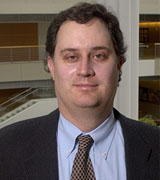
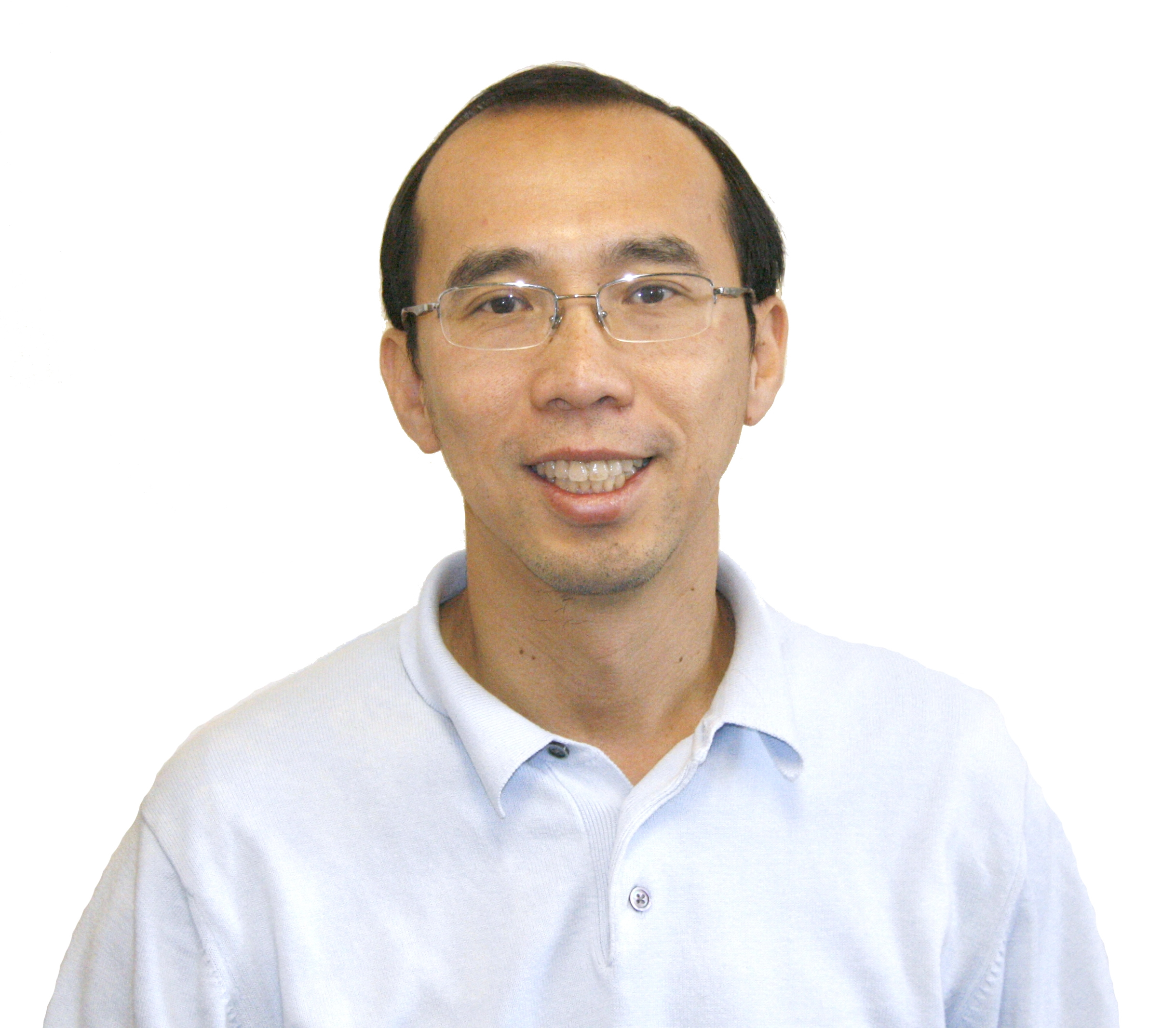
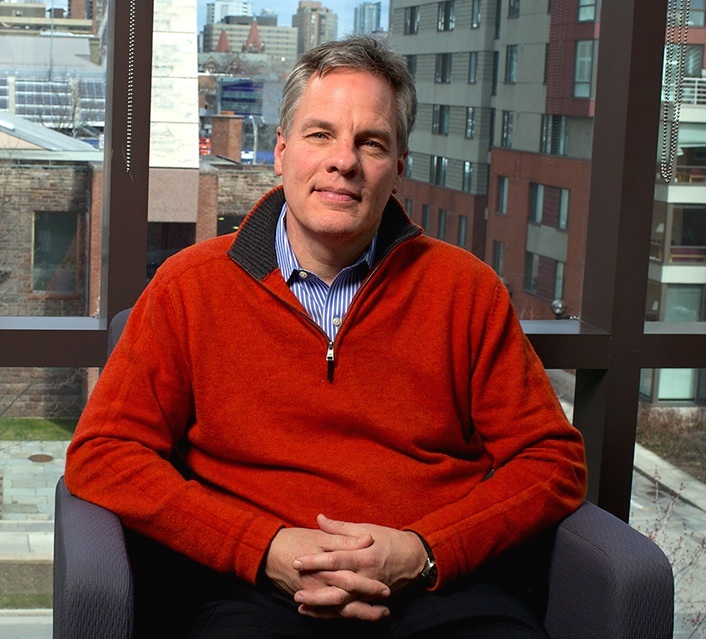
Tim Conley is Professor and Chair at the Department of Economics, University of Western Ontario. He holds a Ph.D. from the University of Chicago (1996). His research focuses on applied econometrics with emphasis on spatial dependence, cross-sectional analysis, and empirical industrial organization. His primary research interests include methodological development in econometrics, particularly around dependence modeling in cross-sectional data and spatial analysis techniques. He has made significant contributions to understanding technology adoption in developing economies and detection of collusion in market mechanisms. Professor Conley's publications demonstrate consistent focus on developing robust statistical methods for economic applications, with recent work emphasizing practical applications in policy evaluation and market analysis. His methodological innovations have been implemented in statistical software packages used by researchers worldwide.
Atsuko Tanaka is an Associate Professor in the Department of Economics at the University of Calgary. Her research focuses on labor markets, health economics, and public policy, particularly examining topics such as female labor supply, skill investment, and pension reforms. She holds a Ph.D. in Economics from the University of Wisconsin-Madison (2013), alongside advanced degrees from Cornell University and the University of Tokyo. Education Ph.D. Economics, University of Wisconsin-Madison (2013) M.S. Economics, University of Wisconsin-Madison (2010) M.S. Applied Economics and Management, Cornell University (2007) B.A. Agricultural Economics, University of Tokyo (2004) Research Interests Tanaka’s work explores how health shocks, financial constraints, and policy interventions influence labor market outcomes. She investigates topics such as post-educational skill accumulation via college loans, strategic medical treatment choices under reimbursement reforms, and the macroeconomic effects of pension system transitions. Her research combines rigorous econometric methods with real-world administrative data to inform evidence-based policy. Awards and Grants SSHRC Connection Grant (2022, co-PI: Apostolos Serletis) National Science Foundation Extreme Science Grant (2021) SSHRC Insight Development Grant (2016) Susan Jane Blake Kocin Award, University of Wisconsin-Madison (2011) Grants and Collaboration Her research has been supported by major grants, including SSHRC and NSF funding. She collaborates with scholars on projects like analyzing physician behavior under reimbursement reforms, auditing firm dynamics, and international aid allocation strategies. Her work bridges theoretical models with empirical evidence to address complex socio-economic challenges.
Tamara Munzner is a Professor of Computer Science at the University of British Columbia, with a confirmed email at tamara@cs.ubc.ca . Her research focuses on information visualization , visual analytics , and graph drawing , emphasizing practical design frameworks and theoretical foundations. Recent work explores visitor engagement with science museum exhibits large-scale data visualization challenges health informatics applications for chronic pain management advanced graph neural network visualization His publications in IEEE Transactions on Visualization and Computer Graphics and Eurographics conferences demonstrate her expertise in visual analytics. Scientific awards include the Best Panel Award at Euro Vis 2009 for her work on visualization education. Her research spans visualization design principles, dimensionality reduction techniques, and applications in genomic epidemiology and environmental sustainability.
Arthur Schafer is a Full Professor in the Department of Philosophy at the University of Manitoba's Faculty of Arts and Founding Director of the Centre for Professional and Applied Ethics. He serves as a National Research Associate of the Canadian Centre for Policy Alternatives and previously held roles as ethics consultant for the Winnipeg Regional Health Authority and Head of the Section of Bio-Medical Ethics in the Faculty of Medicine. His academic credentials include a BLitt in Philosophy from the University of Oxford (1967) and a BA Honours from the University of Manitoba. His distinguished career spans over five decades of ethical scholarship and public engagement. Professor Schafer specializes in professional and applied ethics with intensive focus on bioethics , research ethics , and biomedical conflicts of interest . His work critically examines medical assistance in dying , informed consent , clinical trial ethics , and human rights frameworks , establishing him as a leading voice in Canadian ethical discourse. His philosophical approach bridges theoretical rigor with practical policy applications across multiple professional domains. Analysis of his 13 most recent publications reveals enduring engagement with evolving ethical challenges, particularly the tension between institutional interests and professional integrity. His scholarship demonstrates consistent progression from foundational ethical theory toward contemporary policy applications, with recent work heavily concentrated on medical assistance in dying and pharmaceutical industry influence in healthcare systems. His scientific recognition includes: D. R. Campbell Outreach Award (1984) Olive Beatrice Stanton Award for Excellence in Teaching (1976) Canadian Commonwealth Scholarship (1964) Woodrow Wilson Fellowship (1964) Canada Council Fellow As an active supervisor for Master's and PhD students, Schafer extends his mentorship through ethics consulting for professional associations in Medicine, Engineering, Architecture, Nursing, and Pharmacy. His policy impact is evidenced by service on the Provincial-Territorial Expert Panel on Medical Assistance in Dying and two published reports for the Canadian Centre for Policy Alternatives. His extensive media contributions—including hundreds of CBC appearances and newspaper columns—demonstrate exceptional public scholarship. The Centre for Professional and Applied Ethics, which he founded, functions as a vital interdisciplinary hub connecting academic philosophy with real-world ethical challenges across healthcare, law, and public policy sectors, facilitating ongoing dialogue between scholars, practitioners, and community stakeholders.
Raouf Boutaba is a Professor at the University of Waterloo , serving as Director of the David R. Cheriton School of Computer Science since July 2020. He holds prestigious fellowships including FRSC , FIEEE , FIEC , and FCAE . 2024: Inaugural Rogers Chair in Network Automation 2024: Ontario Research Fund–Research Excellence (ORF–RE) $2M grant for next-gen mobile networks 2021: University Professor title, University of Waterloo Research Interests span network automation, resource management in wired/wireless networks, network function virtualization (NFV), software-defined networking (SDN), cloud computing, blockchain, future Internet architecture, and cybersecurity. His work focuses on zero-touch networks, 5G/B5G slicing, and AI-driven orchestration. Scientific Contributions include 15+ recent publications on topics like reinforcement learning for RAN slicing, encrypted traffic classification, quantum network optimization, and self-driving infrastructure. His projects 5G LEAP and 5G ELITE explore network isolation and Open RAN principles. 2024: IFIP/IEEE CNOM Test of Time Paper Award 2024: Graduate Supervision Excellence Award 2021: Kenneth C. Sevcik Outstanding Student Paper Award (advisor) Teaching includes co-developing the NSERC CREATE Network Softwarization program, offering courses like Network Softwarization: Principles and Foundations (Winter 2024) and Technologies and Enablers since 2018. He emphasizes hands-on training in SDN, NFV, Open RAN, and 5G. Students and Collaborations : Supervised PhD students such as Shihabur R. Chowdhury (2021), Nashid Shahriar (2020), and undergrad Leni Aniva (2022 Gov. Gen. Silver Medal ). His team includes researchers working on 5G, blockchain, and AI-driven network management. Professional Leadership : Organized Rogers TEP Workshops (2024-2025), delivered keynotes at IEEE Globecom, ColCom, and BalkanCom, and served on expert panels for AI orchestration and 5G cybersecurity at major symposia.
Trudo Lemmens is Professor and Scholl Chair in Health Law and Policy at the University of Toronto Faculty of Law. He holds cross-appointments at the Dalla Lana School of Public Health, the Temerty Faculty of Medicine, and the Joint Centre for Bioethics, reflecting his interdisciplinary expertise in health law, ethics, and policy. He has also held visiting positions at KU Leuven, Pontificia Universidad Javeriana, University of Otago, and Oxford, and was a member of the Institute for Advanced Study in Princeton. His research focuses on the legal, ethical, and governance challenges in healthcare and biomedical research. Key areas include medical assistance in dying, clinical trial transparency, pharmaceutical regulation, genetic data privacy, and conflict of interest. He has extensively analyzed how legal frameworks interact with ethical norms in contexts such as assisted human reproduction, end-of-life decisions, and public health emergencies. His work emphasizes human rights, equity, and the protection of vulnerable populations. His recent publications reveal a strong focus on the ethical and legal dimensions of medical assistance in dying, particularly regarding mental illness and advance requests. He has also published on vaccine mandates, pandemic triage ethics, and transparency in pharmaceutical data. His scholarship combines doctrinal legal analysis with empirical and policy insights, often addressing urgent public health debates. Fellowship, Royal Flemish Academy of Belgium for Science and the Arts (2006-2007) Membership, School of Social Science, Institute for Advanced Study, Princeton (2003-2004) Law Commission of Canada, Legal Dimensions Initiative Award (with Duff R. Waring) (2003) Graduate Student Paper Award, Association for Politics and the Life Sciences (1996) Doctoral Fellowship, Social Sciences and Humanities Research Council of Canada (1995-1997) Doctoral Fellowship, Fonds pour la formation de chercheurs et l'aide à la recherche du Québec (deferred) (1995-1998) Student Paper Award, Society for Health and Human Values (1995) Chief Justice R.A.E. Greenshields Memorial Scholarship for Graduate Studies in Law (1994) Trudo Lemmens has advised numerous national and international organizations, including the Pan American Health Organization (as a member of its Advisory Committee on Health Research), the World Health Organization, and the Council of Canadian Academies. He has served on expert panels examining access to health data and medical assistance in dying. His policy submissions to Canadian parliamentary committees have shaped national debates on end-of-life legislation. He has also contributed to inquiries into research ethics and institutional governance, including an independent inquiry into the University of Ottawa and its affiliated hospitals. He is actively engaged in public discourse, publishing op-eds in major media outlets and maintaining a presence on social media. His work bridges academia, policy, and public engagement, advocating for transparency, accountability, and ethical integrity in health systems and research.
David Green is a Professor at the Vancouver School of Economics , University of British Columbia, and an International Fellow at the Institute for Fiscal Studies in London. He holds a Ph.D. from Stanford University and has served as Chair of the BC Basic Income Panel . Research Focus : Labour economics, income inequality, wage distribution, and public policy. His work bridges macro-level employment trends with micro-level identification of causal effects. Key Contributions : Analysis of minimum wage impacts on job stability, immigrant economic integration, resource boom spillovers, and basic income policy evaluation. Article Trends include: Welfare reform and health outcomes (2022) Covid-19 occupational risks (2022) Resource boom wage spillovers (2019) Post-2000 skill demand reversal (2016) Minimum wage and job tenure dynamics (2013) Scientific Recognition : Harry Johnson Prize (2000, 1995) for best articles in the Canadian Journal of Economics. International Fellow, Institute for Fiscal Studies (London). Policy Engagement : Directed the 2017-2019 BC Basic Income Panel , producing evidence-based reports on poverty reduction and workforce participation. His empirical work frequently informs national policy debates on taxation, immigration, and social assistance.
Raymond T. Ng is a Professor of Computer Science at the University of British Columbia (UBC) and serves as Director of the Data Science Institute . In addition, he is the part-time Chief Informatics Officer at the PROOF Centre of Excellence for the Prevention of Organ Failures located at St Paul’s Hospital. Since 2016 he has held the prestigious Canada Research Chair in Data Science and Analytics. Education B.Sc. (Hons.) Computer Science, University of British Columbia, 1986 M.Math. Computer Science, University of Waterloo, 1988 Ph.D. Computer Science, University of Maryland, College Park, 1992 Research Interests Professor Ng’s research lies at the intersection of data mining , text mining , health informatics , sensor analytics , and databases . Over the past decade he has focused on two major domains: Genomics & Biomarker Discovery: Developing multi-omics biomarker panels for heart, lung and kidney transplant rejection and COPD exacerbations using transcriptomics, proteomics and metabolomics data. Natural Language Processing: Mining and summarizing conversational text such as emails, blogs and meeting transcripts to generate structured metadata and actionable insights. Scientific Awards Canada Research Chair in Data Science and Analytics (2016-2026) Best Paper Award, ACM SIGMOD 2004 Best Paper Award, ACM SIGKDD 2001 Selected among Best Papers of VLDB ’99 & ’98 Governor General’s Gold Medal, UBC (1986) Research Funding & Leadership Since joining UBC in 1992, Professor Ng has continuously secured major peer-reviewed funding from NSERC, CIHR, Genome Canada, CFI, MITACS and industry partners (Google, IBM, SAP). He leads or co-leads several large-scale initiatives: HEARTBiT multi-marker blood test for cardiac transplant rejection (CIHR 2018-2021) MERIDIAN ocean acoustic data infrastructure (CFI 2018-2021) Pan-Canadian Early Detection of Lung Cancer (Terry Fox 2018-2021) Business Intelligence Network (NSERC 2009-2014) Multiple Genome Canada programs on biomarker translation (2004-2018) Laboratories & Teams Professor Ng directs the Data Science Institute and works closely with the Natural Language Processing Research Group . At the PROOF Centre he heads a multidisciplinary team of statisticians, computer scientists and clinicians advancing computational biomarker pipelines from discovery to clinical implementation.
Andrew Rau-Chaplin is a Professor and Dean of the Faculty of Computer Science at Dalhousie University, where he leads the Risk Analytics Lab and contributes significantly to research in high performance computing, parallel algorithms, and risk analytics. He is affiliated with the Institute for Big Data Analytics and has a strong academic and administrative presence. Education: Postdoc - DIMCS (Princeton, Rutgers, Bell Labs) PhD - Carleton University (1993) MCS - Carleton University (1990) BCS - York University (1986) His research focuses on applying parallel and high performance computing to data-intensive domains such as data warehousing, OLAP, catastrophe modeling, and risk analytics. He emphasizes both algorithmic design and practical system implementation, with a strong grounding in experimental evaluation. His work spans theoretical studies and real-world applications in finance, bioinformatics, and geospatial systems. The 15 most recent publications reflect a consistent focus on parallel data processing, OLAP optimization, indexing techniques (e.g., Hilbert curves), and risk modeling. Key themes include scalable data cube computation, view selection, adaptive coding, and spatial analytics, demonstrating expertise in both algorithmic innovation and systems-level performance. He has served on numerous scientific committees and grant panels, including NSERC and Compute Canada, and has been a journal editor for JPDC and DMTCS. Dr. Rau-Chaplin has supervised a wide range of graduate students in areas including risk analytics, GPU computing, text analytics, and parallel algorithms. His lab has received funding for postdoctoral, graduate, and undergraduate research positions. He teaches courses such as Parallel Computing, Software Engineering, Data Structures, and Risk Analytics, and has developed software tools like LaHave, Clustal XP, and Digital Coliseum. His lab, the Risk Analytics Lab, focuses on integrating analytics, risk management, and HPC for challenges in catastrophe modeling and financial risk. The lab leverages technologies such as stochastic simulation, optimization, and spatial OLAP.
Cynthia Cruickshank is a Full Professor in Mechanical and Aerospace Engineering at Carleton University and currently serves as Associate Dean for Equity, Diversity, and Inclusion within the Faculty of Engineering and Design. She holds degrees including a B.Sc. and Ph.D. from Queen's University. Her research focuses on advanced building energy systems, high-performance buildings, and sustainable construction materials. Key areas include solar-assisted heat pumps, thermal energy storage (both sensible and latent), and solar absorption cooling. She leads the Centre for Advanced Building Envelope Research (CABER), dedicated to innovative building envelope technologies. Her recent work examines telework impacts on home energy use, smart thermostat data analysis, and the integration of bio-based phase change materials in construction. Over 150 peer-reviewed articles highlight her contributions to energy efficiency, renewable energy systems, and building retrofit strategies. Prof. Cruickshank's research teams collaborate on projects such as solar-driven adsorption systems, vacuum insulation panel retrofits, and policy implications of remote work. Her labs emphasize experimental validation of novel materials and systems through guarded hot box testing, hygrothermal modeling, and in-situ evaluations.
Umut Oguzoglu is a Professor of Economics at the University of Manitoba , with a longstanding affiliation as a Research Fellow at IZA . His research spans labour economics , health economics , economics of education , and applied microeconometric methods . PhD, Economics, University of Guelph MA, Economics, University of Guelph BA, Economics, Marmara University His methodological expertise includes panel data analysis , dynamic modeling , and instrumental variable techniques . Recent projects examine: Intergenerational health behavior transmission Physician relocation impacts on healthcare Sibling sex composition and STEM major choices COVID-19's effect on traffic accidents Gambling-community economic linkages Scientific awards include the 2020 Best Paper Prize from The Economic Record. He has supervised 3 PhD students, 13 MA/MSc students, and served on 16 thesis committees. Major grants include: SSHRC Partnership Grant (2020-2027) for poverty solutions CIHR grant (2020-2023) for lupus employment research Manitoba Gambling Research Program grant (2015)
Dr. Bon Woo Koo is an Assistant Professor at the School of Urban and Regional Planning , Toronto Metropolitan University. His expertise lies in geospatial urban analytics, walkability, and GIS applications, focusing on urban design for public health equity and innovative data science tools. He holds a PhD in City & Regional Planning from Georgia Institute of Technology, a Master’s in Landscape Architecture from Seoul National University, and a Bachelor’s in Interior Design from Kookmin University. Education: PhD in City and Regional Planning, Georgia Institute of Technology Master of Landscape Architecture, Seoul National University Bachelor of Interior Design, Kookmin University Research Interests: Dr. Koo investigates urban environments’ impact on health and well-being, equity in environmental amenities (e.g., tree canopies), and advanced GIS techniques. He develops automated audit methods for walkability and explores spatial modeling for urban sustainability. His work bridges data science with policy, contributing to CDC health surveillance and smart city initiatives. Publications: His research appears in journals like Landscape and Urban Planning , Environment and Behavior , and Health and Place , with a focus on walkability audits, urban tree equity, and audio-based pedestrian sensing. Recent work addresses post-pandemic mental health and broadband equity strategies. Professional Engagement: He has advised the CDC’s technical panel on leveraging big data for health policy, presented at conferences like the Association of Collegiate Schools of Planning, and collaborated with institutions like Universitas Gadjah Mada and the Atlanta Regional Commission.
Yushu Zhu is an Associate Professor at the School of Public Policy at Simon Fraser University. Her research focuses on housing stratification , urbanization , and social equity , with a particular emphasis on immigrant communities , low-income populations , and ethnic minorities . She teaches courses on housing policy, urban transformation, and research methods. PhD in Architecture from University of Illinois at Urbana-Champaign M.Sc. and B.Sc. (Hons) in Geography from Sun Yat-sen University, China Former roles at Asia Pacific Foundation of Canada, UBC, and Brown University Research Interests include urban sociology , community housing , and public policy . Recent work analyzes housing inequality in Canada (1981–2016), state-embedded gentrification in China, and neighborhood participation dynamics. Her publications appear in top journals like Urban Studies and Environment and Behavior . Scientific Awards include multiple SSHRC grants (Partnership, Insight, Partnership Engage) and a Lincoln Institute of Land Policy fellowship. She has contributed to policy reports and participated in expert panels on urban housing, pandemic impacts, and social integration.
Dr. Joshua M. Pearce is a Professor at Western University, holding appointments in the Department of Electrical & Computer Engineering and the Ivey Business School. He is the John M. Thompson Chair in Information Technology and Innovation at the Thompson Centre for Engineering Leadership & Innovation and a Fellow of the Canadian Academy of Engineering. His research focuses on open-source appropriate technology for sustainability and poverty reduction, spanning solar photovoltaics, 3D printing, distributed recycling, and policy analysis. Ph.D. in Materials Engineering from Pennsylvania State University Former Richard Witte Professor at Michigan Tech Editor-in-Chief of HardwareX Author of multiple open-source sustainability books His work integrates engineering, economics, and policy to solve global sustainability challenges. Recent projects include agrivoltaic systems, open-source medical devices, and climate-resilient food production frameworks. He leads the Free Appropriate Sustainability Technology (FAST) research group, which has produced over 200 open-access publications cited in top-tier journals like Renewable and Sustainable Energy Reviews (IF=16.3) and HardwareX (IF=2). Dr. Pearce's scientific contributions include: Fulbright-Aalto University Distinguished Chair Top 0.06% most cited scientist (Elsevier metrics) Leading open-source hardware certification frameworks Developing low-cost scientific instruments His research team includes cross-disciplinary collaborators from Mechanical Engineering, Environmental Science, and Policy Studies. The FAST group emphasizes practical open-source solutions for energy, water, and food security in both developed and low-resource contexts.
Loren Brandt is the Noranda Chair Professor of Economics at the University of Toronto, specializing in the Chinese economy. He holds a Research Fellowship at the Institute for the Study of Labor (IZA) in Bonn, Germany, and has conducted extensive household and enterprise survey work across China and Vietnam. His institutional affiliations reflect deep engagement with both academic research and policy-oriented economic analysis. Brandt's research spans economic development, economic history, and the Chinese economy, with current focus on entrepreneurship, firm dynamics, industrial policy, innovation, and structural change. His interdisciplinary approach integrates historical analysis with contemporary economic challenges, particularly examining government policy impacts on sectors like electricity and telecommunications. His work bridges theoretical economics with empirical fieldwork, emphasizing China's unique development trajectory. His publication record from 2000-2022 reveals consistent thematic focus on China's economic transformation, with evolving methodological sophistication. Early work centered on macroeconomic policy and historical divergence, while recent publications employ advanced panel data techniques to analyze firm-level productivity, trade impacts, and resource allocation. The research demonstrates increasing granularity in examining microeconomic foundations of China's growth, while maintaining historical perspective on long-term structural change. Awards and recognitions include: Visiting Professor, University of Oslo, 2017 Research Fellow, Institute for the Study of Labor (IZA), 2008 National Fellow, Hoover Institute, Stanford University, 1986 Brandt's scholarly leadership is evident through major edited volumes including China's Great Economic Transformation (Cambridge University Press, 2008) and Policy, Regulation, and Innovation in China's Electricity and Telecom Industries (2019), along with service as area editor for the Oxford University Press Encyclopedia of Economic History. His fieldwork initiatives in China and Vietnam represent significant contributions to empirical economic research infrastructure.