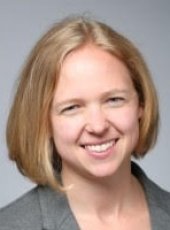
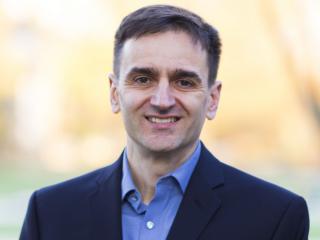
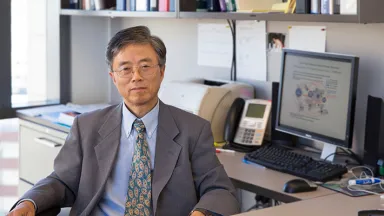
Ana Dyreson is an Assistant Professor in Mechanical and Aerospace Engineering at Michigan Technological University and Associate Research Director at the Center for Innovation in Sustainability & Resilience (CISR). She leads the Great Lakes Energy Group, focusing on climate change impacts on electric power systems , energy transitions in cold climates , and thermal power plant modeling . Her work bridges solar photovoltaic design , electricity grid operational modeling , and the energy-water nexus . Education : PhD in Mechanical Engineering, University of Wisconsin–Madison (2018) MS in Mechanical Engineering, Northern Arizona University (2014) BS in Engineering Mechanics, University of Wisconsin–Madison (2011) Research emphasizes climate-resilient energy systems , particularly solar energy in cold climates and grid-scale modeling . Her 2025-2022 publications investigate snow mitigation on PV panels , heat pump adoption , floating solar-hydropower hybrids , and climate stressor impacts on thermoelectric plants . She develops inclusive teaching methods and advises on renewable energy deployment through initiatives like the Tech Forward Initiative on Sustainability and Resilience . Her team collaborates on multisector dynamics and energy-water-climate research in the Great Lakes region.
Sandra Bellekom is a Lecturer-researcher at Hanze University of Applied Sciences, working within the Entrance – Center of Expertise Energy. Her work focuses on system integration in the energy transition, with particular expertise in renewable energy systems, solar power optimization, and smart grid technology. She contributes significantly to research projects related to sustainable energy solutions and environmental systems analysis. Education: Ph.D. in Electrical Engineering from Delft University of Technology (1993-1998) Master's degree in Energy and Environmental Sciences, cum laude, from University of Groningen (2002-2005) Basic Teaching Qualification (BKO) from University of Groningen (2010-2011) Master's degree in Electrical Engineering (ir), cum laude, from Delft University of Technology (1989-1993) Sandra Bellekom's research interests span the critical areas of energy transition and sustainable systems. Her work emphasizes practical applications of renewable energy technologies, particularly focusing on system integration challenges. She investigates how solar energy systems perform under real-world conditions, examining factors like panel contamination and cleaning effectiveness. Her research also extends to hydrogen energy systems, smart grid integration, and the economic optimization of renewable energy solutions. Through her work, she addresses key challenges in making the energy transition technically feasible and economically viable, with a strong focus on data-driven analysis and system modeling. Her recent publications (2019-2025) demonstrate a clear trend toward applied research in solar energy optimization and hydrogen systems. The research shows increasing focus on practical field studies examining how real-world factors like bird droppings, dust, and other contaminants affect solar panel performance. There's also a notable shift toward system-level analysis, particularly in hydrogen energy configuration and the integration of multiple renewable sources. Her work consistently bridges technical analysis with practical implementation considerations, making it highly relevant for industry applications. Sandra actively participates in multiple research projects including 'Effect of pollution and cleaning of solar parks,' 'Hydrogen Works,' and studies on sensible heat storage systems. Her collaborative approach is evident in her numerous co-authored publications across various energy domains. While specific mentoring relationships aren't detailed in the available information, her background includes supervising master's students during previous academic positions. Her research laboratory and team work primarily through the Entrance – Center of Expertise Energy, focusing on practical field studies and system modeling. Current projects involve monitoring solar parks across the Netherlands, developing hydrogen configuration tools, and optimizing energy storage solutions for buildings. The team employs a combination of field measurements, data analysis, and system modeling to address real-world energy challenges.
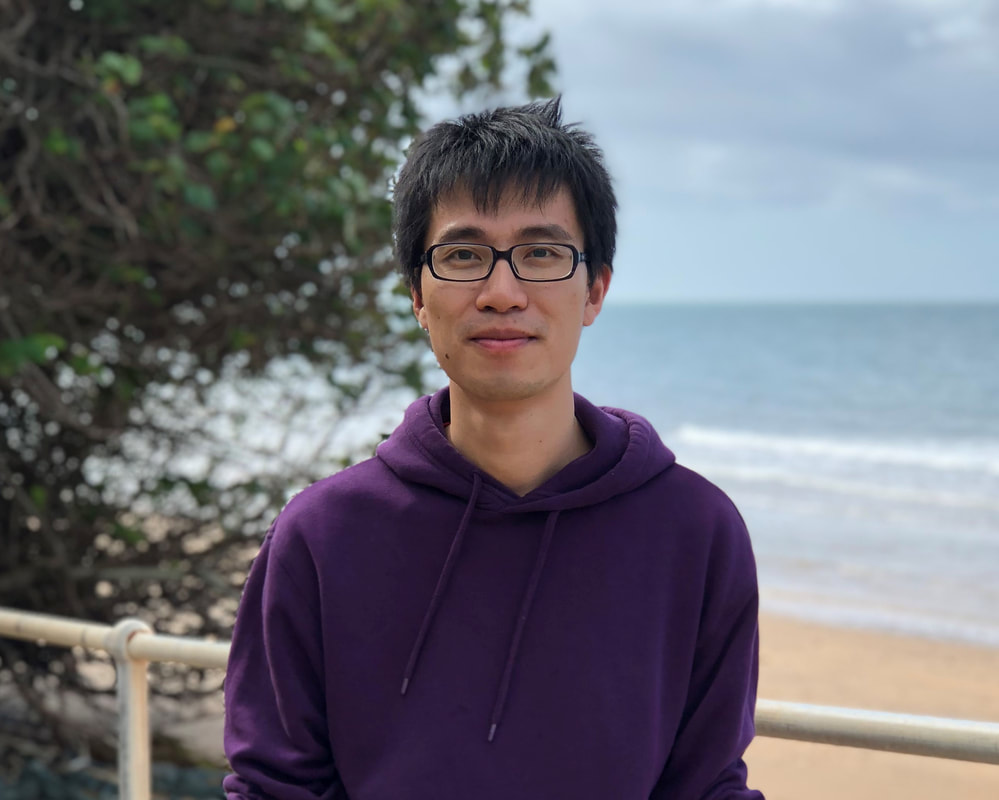
Dr Matthias Kramer is a Senior Lecturer at the UNSW Canberra , School of Engineering and Information Technology. He has previously worked at the University of Queensland and the University of Stuttgart. His research focuses on open-channel hydrodynamics with an emphasis on multiphase flows, hydraulic structures, and measurement instrumentation. Education: PhD from University of Stuttgart (2015) on 'Air demand of impulse turbines in counter pressure operation' His research interests include open-channel flow dynamics, multiphase flow analysis, and the development of innovative flow measurement technologies . He has extensively published on topics such as air-water flow properties , turbulent free-surface flows , and plastic pollution transport in fluvial systems. His recent publications demonstrate a focus on environmental engineering , with strong emphasis on fluid dynamics , instrumentation , and hydrological systems . These works include studies on air-water flow measurement , plastic transport modeling , and hydraulic structure design . Dr Kramer has received multiple scientific awards including: UNSW Rector Funded Visiting Fellowship Research Infrastructure Scheme (Combined open-channel/wave flume) Substantial merit-based startup grant (UNSW Canberra) Establishment award (UNSW Canberra) DFG research fellowship on 'Air-water mass transfer at hydraulic structures' He currently supervises PhD candidate Hanwen Cui (joint with Dr Stefan Felder) and Masters student Reilly Cox (UNSW Sydney). Dr Kramer is involved in hydro-environmental research infrastructure at UNSW and serves on the Editorial Panel of ICE Water Management .
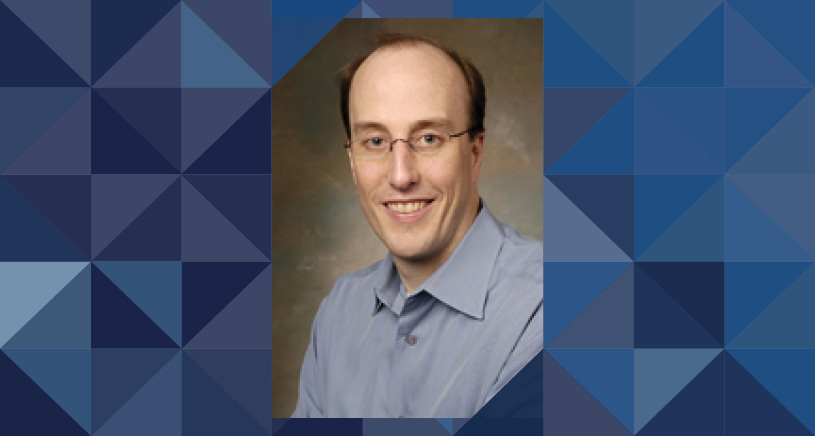
Benjamin Born is Professor of Macroeconomics at Frankfurt School of Finance & Management and will join the University of Bonn as Professor of Macroeconomics in September 2025. He serves as Research Director at the ifo Institute, is a Research Fellow at CEPR and CESifo, advises the European Commission's DG ECFIN, and serves on the European Parliament's Expert Group on Monetary Policy and the CEPR–EABCN Euro Area Business Cycle Dating Committee. His educational background includes a PhD in Economics (2011) from the University of Bonn, an MSc in Econometrics and Economics (2007) from the University of York, and a BA/MA in Economics (2006) from the University of Siegen. Professor Born's research focuses on business cycles, monetary and fiscal policy, heterogeneous agents, and empirical methods. His work bridges theoretical macroeconomic models with empirical evidence, often using survey data and innovative methodologies to understand expectation formation, policy transmission mechanisms, and the effects of economic uncertainty. He has made significant contributions to understanding how fiscal and monetary policies affect the economy under different conditions. His recent publications show a strong focus on heterogeneous agent models, policy evaluation during crises (particularly the COVID-19 pandemic), and the analysis of expectation formation processes. His work frequently combines theoretical modeling with empirical validation, using both traditional economic data and innovative sources like social media. A notable trend is his increasing focus on micro-founded macroeconomic models that account for distributional effects. He serves on the editorial boards of the Journal of Monetary Economics and the European Economic Review, reflecting his significant contributions to the field. Professor Born supervises theses in macroeconomics and applied econometrics. He teaches Macroeconomics II as a first-year PhD course at BGSE and has taught Macroeconomics and Econometrics at all levels. He is actively involved in organizing academic events including the BASEforHANK Winterschool, ifo Conferences, and the Konstanz Seminar on Monetary Theory and Monetary Policy. As Research Director at the ifo Institute, he leads research initiatives in macroeconomics and contributes to the institute's policy-relevant research agenda. His work at the ifo Institute involves close collaboration with other researchers on projects related to business cycle analysis, policy evaluation, and expectation formation.
Dr. Haishan Yuan is a Senior Lecturer in the School of Economics at the University of Queensland (UQ). He holds a Ph.D. in Economics from the University of Maryland, College Park (2014). His research focuses on political economy, development economics, applied microeconometrics, and public economics. He is affiliated with the Centre for Behavioural and Economic Science and the Tax and Transfer Policy Institute at the Australian National University. His work spans topics such as voting behavior, disaster policy, capital controls, and educational peer effects. Notable projects include analyzing daylight saving time’s energy impact and examining how parents respond to sugary drink regulations in childcare settings. He is actively involved in supervising doctoral candidates across diverse microeconomic topics. Recent publications include studies on early voting laws’ partisan effects and the economic implications of EU tariff waivers for disaster-stricken Pakistan. Dr. Yuan’s research emphasizes empirical strategies to address real-world policy questions, with an emphasis on cross-sectional and panel data methodologies.
Aedin Cassidy is a Professor at the Institute for Global Food Security within the School of Biological Sciences at Queen's University Belfast. She has been active in dietary polyphenol research since 1988, focusing on flavonoids' impact on cardiometabolic health , gut microbiome , and anthocyanin efficacy . Her work spans from mechanistic studies to large-scale population research, with 212 total research outputs and 1 supervised work documented. Current member, REF2021 sub-panel 3 Fellow of the American Heart Association (2017) Royal Society Wolfson Research Merit Award (2013) Collaborations with EU/North America institutions including Harvard TH Chan School of Public Health Her research highlights include flavonoid-disease risk associations (chronic kidney disease, cardiovascular conditions), microbiome metabolism studies , and planetary health diet analysis . Key methodologies involve cohort studies , intervention trials , and biochemical nomenclature standardization . Scientific awards include: Royal Society Wolfson Research Merit Award (2013) Fellow of the American Heart Association (2017) Fellow of Society for Biology Fellow of Royal Society of Chemistry She has published extensively on flavonoid health impacts, with recent 2025 studies covering chronic kidney disease prevention , planetary diet outcomes , and anthocyanin metabolism . Her work contributes to UN Sustainable Development Goals related to zero hunger and good health .
Randy J. Seeley is the Henry K. Ransom Endowed Professor of Surgery at the University of Michigan School of Medicine, with adjunct appointments in Internal Medicine and Nutritional Sciences. His research focuses on central nervous system regulation of energy balance, obesity, diabetes, and metabolic disease interventions. His scientific work explores how peripheral hormones interact with the CNS to control food intake, body weight, and fuel metabolism. Recent studies highlight innovative approaches including GLP-1 receptor agonists, bariatric surgery mechanisms, and gut-liver-brain axis interactions. Publications span top journals like Nature , Science , and Cell Metabolism , emphasizing translational research from animal models to human metabolic outcomes. Key themes include hormonal signaling, weight-loss maintenance, and metabolic inflammation. 2009 Outstanding Scientific Achievement Award (American Diabetes Association) 2022 AAAS Fellow Dr. Seeley has served on NIH review panels and the Science editorial board, advancing obesity and diabetes research through interdisciplinary collaborations.
Christian R. Proaño is a Professor of Economics at Otto-Friedrich-Universität Bamberg, specializing in Macroeconomics and International Finance. He previously served as an Assistant Professor at The New School for Social Research (2010–2015) and as a Research Economist at the Institute for Macroeconomics and Economic Research (IMK) in Germany (2008–2010). His academic journey includes a PhD in Economics from Bielefeld University (2008) and studies at the Catholic University of Ecuador (PUCE). Education: PhD in Economics (Bielefeld University, 2008) Current Roles: Professor at Bamberg University, Vice-Chairman of Keynes Gesellschaft, Research Fellow at CAMA Research Focus: Behavioral macroeconomics, income distribution, financial cycles, and macroeconomic stability Proaño’s research integrates behavioral economics into macroeconomic frameworks, analyzing how heterogeneous expectations and psychological factors influence financial markets, monetary policy, and business cycles. His work on non-linear macroeconometrics and climate change economics explores systemic risks and policy design for sustainable growth. His recent publications highlight trends in financial cycle analysis, behavioral political economy, and inequality dynamics. Notable collaborations include studies on income inequality’s macroeconomic effects and agent-based modeling of financial stability. Scientific Awards: Research Fellow, Centre for Applied Macroeconomic Analysis (CAMA) Fellow, Euro Area Business Cycle Network (EABCN) Proaño supervises external doctoral candidates and contributes to academic governance via roles in the German Network for New Economic Dynamics (GENED) and the Computational and Financial Econometrics (CFE) Network.
William Pan is the Elizabeth Brooks Reid and Whitelaw Reid Professor of Population Studies and Global Environmental Health at Duke University, holding joint appointments at the Duke Global Health Institute (DGHI) and the Nicholas School of Environment. He also serves as Adjunct Professor in the Department of International Health at Johns Hopkins Bloomberg School of Public Health. With over 20 years of experience, Pan leads large, multi-institutional research teams focused on human-environment dynamics affecting health in low- and middle-income countries, primarily in Latin America's Amazon region. His research spans several critical areas: mercury and chemical exposures from artisanal gold mining; forecasting vector-borne disease risks using climate, land use, and surveillance data; migration's role in infectious disease transmission; lead exposure among hunters; and nature-based solutions for agroforestry, climate resilience, and disease mitigation. Pan received his DrPH from UNC-Chapel Hill with a focus on biostatistics, demography, and spatial analysis, and holds an MPH from Emory University. Pan's laboratory has produced significant research on malaria forecasting systems now adopted by two countries, mercury pollution impacts in gold mining communities, and environmental health in the Amazon. His team has secured major grants from NIH, NASA, and Conservation International for projects including ELIMINAR-Malaria and satellite-informed malaria early warning systems. NASA: Developing an Early Warning System for Malaria Risk in the Amazon Amarakaeri Reserve: Impacts on Human Health and the Environment from Resource Extraction Mercury Pollution & the Madre de Dios watershed research Pan has mentored numerous doctoral students, post-doctoral fellows, and master's students who have gone on to positions at institutions including Johns Hopkins University, CDC, and various public health organizations. His work bridges academic research with practical applications, serving on expert panels including the MINAMATA Effectiveness Evaluation Panel and Technical Advisory Group for the Tripartite One Health initiative.
Philip Bardin is an Adjunct Professor of Respiratory Medicine at Monash University and Director of Lung & Sleep Medicine at Monash Health. He holds roles as Co-Editor-in-Chief of Respirology and has led major research projects in COPD and asthma therapies. His work addresses obstructive lung diseases, viral exacerbations, and vocal cord dysfunction in respiratory conditions. Education: PhD (University of Southampton, 1994), FRACP (Royal Australasian College of Physicians), FCPSA (Colleges of Medicine of South Africa) Research focuses on COPD, asthma, laryngeal dysfunction, and immunology. He has secured NH&MRC funding and chaired national grant review panels. Recent studies explore biologic therapies, patient outcomes, and novel diagnostic approaches for respiratory conditions. Notable projects include clinical trials for Fexlamose, CHF6001 DPI, and anti-fibrotic drug models. Over 190 publications span articles, reviews, and commentaries on respiratory medicine advancements.
Professor Guido Kuersteiner is a leading academic in the Department of Economics at the University of Maryland . Holding a PhD from Yale University (1997), he has previously taught at prestigious institutions including MIT, Boston University, UC Davis, and Georgetown University. His research spans theoretical and applied econometrics , with focus areas in GMM estimation, spatial models, causal inference, and bias correction techniques.
Bang Nam Jeon is a Professor in the Department of Economics at Drexel University's LeBow College of Business. His research focuses on international economics, financial economics, global banking, and Asian economies, with a strong emphasis on macroprudential policy, bank risk, and financial stability in emerging markets. He has published extensively in top-tier journals and presented at numerous international conferences. His research interests include: International and comparative banking Financial regulation and macroprudential policy Monetary policy transmission Financial contagion and systemic risk Economic uncertainty and financial stability Foreign direct investment and trade linkages in Asia His recent publications show a consistent focus on the interplay between macroeconomic conditions, regulatory frameworks, and bank risk behavior, particularly in China and other emerging Asian economies. He frequently employs empirical and panel data methods to analyze bank-level data. His work contributes significantly to understanding financial stability in developing economies amid global shocks such as the 2008 crisis and the COVID-19 pandemic. Scientific awards and honors include: Fulbright U.S. Scholar Award (2020) Service and Appreciation Awards from the Korea-America Economic Association Peter G. Stercho Memorial Research and Service Award (2005) Excellence in Teaching Award (2003) University Research Scholar Award (1990–1991) The Henry M. Oliver Memorial Award (1987) Jeon has advised numerous researchers and co-authored extensively with scholars like Ji Wu, Minghua Chen, and Qiaoling Kang. He has received research funding and institutional support, evidenced by his visiting positions and co-directorship of executive training programs. He has held leadership roles including President of the Korea-America Economic Association (2013) and has served on advisory boards for journals such as Journal of Economic Integration and Panoeconomicus . He has also been a visiting scholar at institutions in Hong Kong, Korea, China, and Romania, indicating strong international collaboration. He is actively involved in research dissemination through working papers, conference presentations, and editorial roles, including Guest Editor for the International Finance Review . His research program is well-established, continuously funded, and highly productive, with publications extending into 2025.
Rachel Ong ViforJ is a John Curtin Distinguished Professor at Curtin University's School of Accounting, Economics and Finance, within the Faculty of Business and Law. She holds leadership roles including Managing Editor of Australian Economic Papers , Vice-Chair of the Asia-Pacific Network for Housing Research, and roles in national councils such as the National Housing Supply and Affordability Council. Her research focuses on housing economics, population ageing, and wellbeing outcomes, with expertise in housing policy evaluation and intergenerational housing dynamics. Affiliations: Bankwest Curtin Economics Centre (Deputy Director), Centre for Research in Applied Economics (Deputy Director). Roles: Former acting Head of the Department of Economics and acting Deputy Pro-Vice Chancellor of the Faculty of Business and Law. Her research interests include housing affordability, intergenerational equity, and the link between housing and wellbeing. Recent work explores precarious housing conditions, generational housing wealth divides, and policy interventions to address housing stress. Awards: 2018 Young Economist Award (Economic Society of Australia), 2019 Mike Berry Award for Excellence in Housing Research, 2021 Business, Society and Communities Award (Curtin University). Her grants include ARC Discovery projects on housing wealth dynamics and AHURI-funded research on shared equity programs. She has advised on housing policy for government bodies and contributed to high-impact policy reports. Teaching and Mentorship: Taught economics and property studies at undergraduate/postgraduate levels; supervised Honours, Masters, and PhD students. Labs/Teams: Active in interdisciplinary teams at Bankwest Curtin Economics Centre and the National Economic Panel.
Daniel Gutknecht, Ph.D., is a Professor in the Department of Economic Policy & Quantitative Methods (EQ) at the Faculty of Economics, Goethe University Frankfurt am Main. His academic work spans econometrics, applied microeconomics, and quantitative methods, with a focus on causal inference and time series analysis. Econometrics Methodology Quantile Regression Panel Data Analysis Nonlinear Models Recent research contributions include advanced econometric techniques such as staggered adoption DiD designs, sparsity tests for high-dimensional regressions, and intercept estimation in nonlinear selection models. His publications address critical challenges in quantile forecast optimality, nowcasting monotonicity, and heaped duration data modeling, reflecting interdisciplinary applications in public health and macroeconomic policy. Current teaching includes Advanced Econometrics 1 and Fundamentals of Econometrics for the Winter semester 2025/26. Contact details: Office RuW 3.211, Theodor-W.-Adorno-Platz 4, Frankfurt am Main; email: gutknecht@wiwi.uni-frankfurt.de .
Professor Chengqing Wu is a distinguished academic in the School of Civil and Environmental Engineering at the University of Technology, Sydney (UTS). He serves as Professor of Structural Engineering with a research focus on blast-induced phenomena and advanced concrete technologies. His expertise spans structural response to blast loading, mitigation of blast effects, and the development of ultra-high performance concrete systems. Professor at University of Technology, Sydney Former Chair of Australian Chapter of International Association of Protective Structures (2013-2017) Associate Editor of ASCE Journal of Performance of Constructed Facilities Editorial Board Member of International Journal of Protective Structures Professor Wu's research interests center on structural engineering with emphasis on blast resistance, ultra-high performance concrete, geopolymer concrete, and structural response to extreme loading conditions. His work bridges theoretical analysis with practical applications, particularly in protective structures and extreme environment construction. His research group has made significant contributions to understanding material behavior under blast, impact, and extreme thermal conditions, with applications ranging from terrestrial infrastructure to potential lunar construction. Analysis of Professor Wu's recent publications reveals a strong focus on advanced concrete technologies for extreme environments. His research spans 3D-printed concrete, lunar and Martian construction materials, cryogenic performance of concrete, and blast-resistant structural systems. A notable trend is the increasing application of computational methods and machine learning techniques to predict structural response to explosions, alongside traditional experimental approaches. His work demonstrates a progression from fundamental material characterization to complex structural system analysis, with growing emphasis on sustainable construction and extraterrestrial applications. Author/co-author of over 200 international journal papers Editor of four conference proceedings Editor of two ASCE special issues Editor of two International Journal of Protective Structures special issues Professor Wu has successfully attracted over 4 million dollars in research funding from diverse sources including the Australian Research Council (ARC), Defence Science and Technology Organization (DSTO), and industry partners. His current projects include Eco-friendly Ultra-High Performance Rubberised Concrete, Decarbonised Infrastructure, Structural protective design on large capacity flywheel energy storage system, and Gas Explosion Resistance of Non-Cement Based High Performance Concrete. He actively supervises undergraduate honors students, coursework master's students, and research higher degree candidates, with several scholarships available for prospective postgraduates and research associates. Professor Wu leads research in protective infrastructure technology through the Joint Research Centre for Protective Infrastructure Technology and Environmental Green Bioprocess with Tianjin Chenjian University. His team operates the National Drop Weight Impact Testing Facility and contributes to the National Facility for Physical Blast Simulation. Current research directions include sustainable concrete technologies for extreme environments, blast-resistant structural systems, and innovative applications of concrete in space exploration contexts.