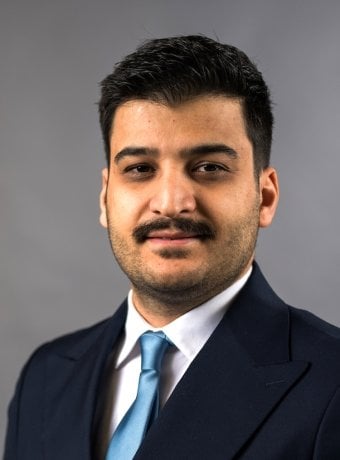
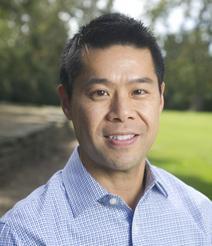
Dr. Abdolmajid Erfani is an Assistant Professor in the Department of Civil, Environmental, and Geospatial Engineering at Michigan Technological University. He holds a PhD in Civil Engineering from the University of Maryland, College Park (2023), an MSc in Construction Engineering and Management from the University of Tehran (2019), and a BSc in Civil Engineering from the same university (2017). His research focuses on construction economics, smart construction technologies, data-driven infrastructure management, workforce development, and AI applications in project delivery. Dr. Erfani leads studies on workforce equity in transportation and construction industries, leveraging big data and natural language processing. He has published over 30 peer-reviewed papers and received prestigious ASCE awards including the 2024 Arthur M. Wellington Prize and Thomas Fitch Rowland Prize. He serves on the editorial board of the ASCE Journal of Management in Engineering. His recent grants include a National Cooperative Highway Research Program project (PI, 2024–2027) on price adjustment clauses for construction risk sharing and a Minnesota DOT-funded initiative (PI, 2025–2027) on leveraging transportation investments for economic equity. He also co-leads a Federal Railway Administration project (Co-PI, 2025–2028) aimed at promoting railroading careers. Research interests span equity analysis, AI modeling, and predictive analytics for infrastructure resilience. He integrates LinkedIn data and machine learning to study gender disparities in career progression, achieving groundbreaking insights in leadership dynamics within construction sectors.
Dr. Justina Jose is an Assistant Professor at the School of Public Affairs, San Diego State University (SDSU), part of the College of Professional Studies and Fine Arts. Her work focuses on public financial management, particularly public debt management and infrastructure financing. She holds a PhD in Public Policy from Georgia State University, an M.Sc. in Economics from Symbiosis International University (India), and a BA in Economics from Stella Maris College (India). Dr. Jose's research examines tools states use to oversee local government finances and their impact on fiscal outcomes. She has studied water-sewer infrastructure financing and climate-resilient projects, collaborating with Atlanta and Georgia policymakers. Her work appears in journals like Journal of Public Budgeting, Accounting and Financial Management and Environment and Urbanization Asia . She actively participates in conferences such as the Association for Budgeting and Financial Management (ABFM) and APPAM. Her research trends emphasize fiscal policy in crises, intergovernmental debt oversight, and infrastructure funding. She has analyzed municipal debt markets, broadband deployment impacts, and pandemic responses in India. Dr. Jose’s projects bridge academic research with practical policy advice, aiming to enhance fiscal accountability and sustainable development.
Ales Popovic is a Full Professor of Information Systems at NEOMA Business School, France. He holds a PhD in Management and Information Systems. His research focuses on the value of information systems (IS) in organizations, digitalization, AI, behavioral and organizational issues in IS, and IT in inter-organizational relationships. He has published widely in journals like Journal of the Association for Information Systems and Technological Forecasting and Social Change . Dr. Popovic’s research explores topics such as fake news engagement on social media, blockchain adoption in real estate, and the impact of digital platforms on traditional media. He serves on editorial boards for journals including International Journal of Information Management and Industrial Management & Data Systems . His work bridges theoretical and practical aspects of IS, emphasizing business value creation and ethical considerations in AI. Key contributions include studies on digital transformation, crisis management technologies, and the role of privacy in technology adoption. His research frequently addresses contemporary challenges like misinformation dynamics, gig worker burnout, and healthcare AI applications.
Prof. Andreas Farnleitner is a Professor at TU Wien, affiliated with the Environmental Microbiology and Molecular Diagnostics Research Group. His research focuses on microbial water quality, molecular diagnostics, and environmental microbiology. Key areas include PCR-based methods for fecal pollution tracking, antimicrobial resistance in aquatic environments, and climate change impacts on waterborne pathogens. He has contributed to advancements in DNA aptamer technology for rapid water quality monitoring and employs machine learning for predictive modeling in hydrology. His work spans collaborations across Europe, addressing One Health challenges and wastewater-based epidemiology. Recent projects include studies on Vibrio cholerae in Austrian bathing waters and the biostability of drinking water resources. Prof. Farnleitner leads interdisciplinary initiatives to improve water safety and environmental management. Publications highlight his expertise in microbial source tracking, climate change effects on infection risks, and antibiotic resistance patterns. His team develops innovative diagnostic tools and models for environmental monitoring, with applications in both academic and applied settings. Current projects emphasize the integration of molecular biology and engineering to address global water quality challenges.
Kevin Gary is an Associate Professor in the School of Computing and Augmented Intelligence (SCAI) within the Ira A. Fulton Schools of Engineering at Arizona State University (ASU). He joined ASU in 2004 after prior industry experience and faculty work at the Catholic University of America. His research focuses on software agility, open source software, and applications in healthcare and e-learning. He has contributed to mHealth platforms addressing pediatric chronic conditions and adaptive e-learning systems. Education: Ph.D. in Computer Science from Arizona State University (1999). Research Interests: Software Architecture, Agile Methods, Open Source Software, Healthcare Informatics, and Educational Technology. His recent work explores agile impact on regression testing and lean metrics in open source software. He has developed mobile health apps for asthma, epilepsy, and anxiety, leveraging agile principles and AI. Teaching & Innovation: Created the Software Enterprise program, an industry-aligned pedagogy integrated into ASU’s software engineering curriculum. This initiative earned the President’s Award for Innovation in 2011. He has taught courses in software engineering, web applications, and secure software systems. Grants & Projects: Led projects funded by NSF, industry partners (e.g., UNICON, GEORGETOWN UNIV MED CTR), and foundations (Children’s National Medical). Notable projects include the Image-Guided Surgical Toolkit and the ATIC-funded Software Enterprise pedagogy model. Service: Reviewed for journals/conferences, served as Associate Chair of computing programs, and contributed to professional organizations (IEEE, ACM, ASEE).
Yu Liu is an Associate Professor of Public Health Sciences at the University of Rochester Medical Center (URMC). He holds a PhD in Epidemiology from Vanderbilt University, an MPH from George Washington University, and a BSc in Pharmaceutical Sciences from South China Agricultural University. His research focuses on leveraging advanced quantitative methods and implementation science to design HIV prevention interventions targeting marginalized populations, particularly LGBTQ+ communities and Black populations. Key areas include PrEP utilization, stigma reduction, and addressing social determinants of health through nurse-led programs and AI-enhanced tools. Dr. Liu has served as PI/Co-I on multiple NIH-funded studies, with over 60 peer-reviewed publications in journals like AIDS Care , PloS One , and Journal of Acquired Immune Deficiency Syndromes . His work emphasizes interdisciplinary collaboration with academic, clinical, and community organizations, including the CDC and Department of Health. Teaching responsibilities include advanced epidemiology courses (PM416, PM451, PM510) and directing the Master of Epidemiology Thesis Workshop. He prioritizes mentorship of students from diverse backgrounds, fostering academic competence and inclusive research environments.
Dr. Mathieu Mercadier is an Assistant Professor of Business Analytics at Dublin City University Business School, Ireland. He serves as Programme Chair for the MSc and Graduate Diploma in Business Analytics. His research focuses on Business Analytics, Machine Learning, Financial Risk Management, and Sustainable Finance. Education: PhD in Economics from Université de Limoges, France, specializing in Machine Learning applied to Banking and Finance. He has ten years of industry experience as a Market Finance Consultant. Research interests include applying Machine Learning to banking risk, sustainable finance, and quantitative finance. His work spans statistical modeling for financial stability, algorithmic risk assessment, and ESG fund evaluation. Key trends in his articles involve quantum-enhanced machine learning for stock forecasting, systemic risk measurement, and pandemic impact analysis. No scientific awards listed. Advising and grants: No formal grants or student advisees mentioned. Active in curriculum development for business analytics programs. Engaged in international conferences and seminars. Labs/Teams: Not explicitly stated in provided data.
Emily Callander is a Professor of Women’s Health Economics at the Monash Centre for Health Research and Implementation, Monash University, and Head of Discipline in Health Services Management at the University of Technology Sydney (UTS). She leads the Women’s Economics and Value Based Care research program and holds leadership roles in national health policy, including as Vice President of Women's Healthcare Australasia and member of the Pharmaceutical Benefits Advisory Committee Economics Subcommittee. BA in Economics and Policy, Griffith University PhD in Health Economics, University of Sydney Postdoctoral training at NHMRC Clinical Trials Centre and Charles Perkins Centre, University of Sydney Her research focuses on maternal and women's health, utilizing linked administrative data, economic evaluation, and modelled analysis to influence health policy and delivery. Her work spans efficient staffing models, rural health access, national maternity initiatives (e.g., Safer Baby Bundle, Normal Birth Strategy), and cost analyses for global maternal health programs supported by the Gates Foundation. Her recent publications reflect a strong trend in health economic evaluations of maternity care models, medication use in pregnancy, digital health implementation, and preterm birth prevention. These works emphasize real-world applicability, equity, and cost-effectiveness, aligning with her mission to embed economic evidence into health systems. She has been supported by prestigious NHMRC awards, including a Doctoral Scholarship, Early Career Fellowship, and Career Development Fellowship. Her scientific contributions are recognized through active research projects and expert media commentary on maternity care policy. NHMRC Doctoral Scholarship NHMRC Early Career Fellowship NHMRC Career Development Fellowship Emily Callander advises on multiple national and international research projects, often as Chief or Associate Investigator, and collaborates with institutions such as Coventry University. She is actively accepting PhD students and contributes to policy through advisory roles in government and non-profit organizations. Her research is supported by grants from NHMRC, government departments, and international foundations. She leads the Women’s Economics and Value Based Care program at Monash and is a key member of the Transforming Maternity Care Collaborative. Her work is embedded in real-world health systems, partnering with consumers, providers, and policymakers to improve women’s health outcomes globally.
Stephen G. Ryan is the Vincent C. Ross Professor of Accounting at the Leonard N. Stern School of Business, New York University. He has been a faculty member at Stern since 1990 and is actively engaged in teaching and research in accounting, financial reporting, and valuation. His work focuses on financial institutions, financial instruments, and regulatory standards. Research Interests: Accounting Measurement Accounting-Based Valuation and Risk Assessment Financial Reporting by Financial Institutions Financial Instruments Disclosure Empirical Studies in Banking and Debt Contracting His recent publications reflect a strong focus on regulatory accounting standards (e.g., CECL, FAS 166/167), transparency in financial reporting, and the economic consequences of accounting policy. These works appear in top-tier journals such as The Accounting Review , Journal of Accounting Research , and Management Science , demonstrating sustained scholarly impact. Awards & Appointments: American Accounting Association Financial Accounting and Reporting Section Best Paper Prize (2011) The Accounting Review Emerald Management Reviews Citation of Excellence (2009) Accounting Horizons Co-winner Best Paper Prize (2006, 2004) Professor Ryan has held significant editorial roles, including Editor of the Review of Accounting Studies (2006–2011) and Guest Editor for the Journal of Accounting Research (2015–2018). He has served on advisory councils for the Financial Accounting Standards Board and the Federal Reserve Bank of New York. He teaches undergraduate, MBA, MS, and PhD courses, including a doctoral seminar on banking and debt contracting, indicating active student mentorship. He is affiliated with major regulatory bodies such as FASB, IASB, PCAOB, SEC, and standards like IFRS and GAAP. His expertise spans accounting, finance, IPOs, and real estate/housing sectors.
Dr. Kevin Gee is a Professor in the School of Education at the University of California, Davis, specializing in the School Organization & Educational Policy emphasis area. He serves as Director of the School Policy, Research, and Action (SPARC) Center and is a Faculty Research Affiliate with the Center for Poverty & Inequality Research. As a 2020-25 Chancellor's Fellow, Dr. Gee leads research initiatives focused on vulnerable youth populations and educational policy impacts. His work bridges education, public health, and social welfare systems to address structural inequities affecting children's development and academic success. Dr. Gee's educational background includes: Ed.D., Harvard Graduate School of Education, Quantitative Policy Analysis in Education (2010) Ed.M., Harvard Graduate School of Education, International Education Policy (2006) M.P.I.A., University of California, San Diego, Pacific & International Affairs (cum laude, 2004) B.A., University of California, Berkeley, City & Regional Planning (magna cum laude, 1994) Dr. Gee's research centers on the critical intersection between health and education systems, examining how schooling can influence children's well-being. He investigates policies addressing adverse childhood experiences including bullying, food insecurity, abuse, and neglect. His work employs rigorous quantitative methods including Hierarchical Linear Modeling, longitudinal analysis, and experimental/quasi-experimental designs. Dr. Gee focuses particularly on vulnerable populations such as children with disabilities, Asian American and Pacific Islander youth, and those involved in the child welfare system, seeking data-driven solutions to educational inequities. Analysis of Dr. Gee's recent publications reveals a strong focus on educational equity, with particular attention to vulnerable student populations. His work spans school absenteeism patterns, bullying and hate speech against AAPI youth, food insecurity impacts, and health-related educational outcomes. The research demonstrates increasing interdisciplinary collaboration, particularly with public health researchers, and shows a growing emphasis on pandemic-related educational disruptions and their disproportionate impacts on marginalized communities. Dr. Gee's notable scientific awards include: National Academy of Education (NAEd)/Spencer Postdoctoral Fellowship (2015) Foundation for Child Development (FCD) Young Scholars Program Award (2014-2017) UC Davis Hellman Fellowship (2015-2016) Chancellor's Fellowship (2020-2021) Outstanding Faculty Award, Asian Pacific American UC-Systemwide Alliance (2023) Distinguished Visiting Scholar, Advanced Research Collaborative, CUNY (2022) Dr. Gee serves as Principal Investigator for multiple significant grants, including the Heising-Simons Foundation project on districtwide family engagement strategies and chronic absenteeism (2024-2026), and the UC Davis SEED funding for research on how Asian American and Pacific Islander youth confront bullying. He also serves as Co-Investigator on the AAPI Data Grant examining school climate influences on bullying experiences. His grant portfolio demonstrates strong interdisciplinary collaboration, particularly between education and public health researchers, with a consistent focus on generating actionable insights for educational policymakers and practitioners. As Director of the School Policy, Research, and Action (SPARC) Center at UC Davis, Dr. Gee leads a research team focused on generating data-informed insights about underserved and overlooked youth in educational policy. The center's work specifically supports Asian American and Pacific Islander youth who have experienced bullying, children with chronic absenteeism, and child welfare-involved youth who have experienced maltreatment. The SPARC Center collaborates with various California school districts and state agencies to translate research into practical policy recommendations and implementation strategies.
Amy Mullens is a Professor at the School of Psychology and Wellbeing , University of Southern Queensland. She serves as Research Theme Leader for Health Equity at the Centre for Health Research (CHR) and contributes to the Institute for Resilient Regions (IRR). Her work focuses on vulnerable communities , with emphasis on sexual health/HIV , diabetes , COPD , substance use , and health behavior change . Education : BA (St Catherine), MSc (North Dakota SU), PhD (QUT). She is a Fellow of the Australian Psychological Society with Clinical and Health Psychology Endorsements . Her research spans public health , gender studies , and clinical psychology , particularly transgender health , health equity , and social determinants of health . Recent work includes STI/HIV risk modeling , prison health interventions , and LGBTQIA+ mental health . Key scientific awards include: Fellow, Australian Psychological Society Clinical Psychology Endorsement Health Psychology Endorsement Accredited Supervisor (STAP) She supervises doctoral and masters students in areas like transgender incarceration , STI prevention , and health equity . Industry affiliations include clinical credentialed work with West Moreton Health Service , membership in Australasian Society of Behavioural Medicine , and advocacy through Sexual Health Society Queensland .
Robin Barbara Bateman Lennox is a Clinical Assistant Professor in Family Medicine at McMaster University , with a focus on substance use disorders , harm reduction , and public health . Her work bridges clinical practice and population-level research, particularly examining the intersection of addiction medicine, marginalized communities, and infectious disease management. Key Research Areas : Substance use during pregnancy, harm reduction policy, hospital interventions for drug-using populations, and infectious disease management in vulnerable groups. Notable Contributions : Studies on cannabis use in pregnancy, safer supply programs during pandemics, and surgical equity for injection drug users. Her recent publications (2021–2024) emphasize addiction medicine , infectious diseases , and social determinants of health , with subfields including overdose prevention, peer support systems, and pandemic planning for homeless populations. While no explicit awards or student mentorship details are listed, her work has garnered significant media attention and policy citations.
Prof. Dr. Robert Risse is an esteemed academic and practitioner in tax law, currently serving at the Institute for Austrian and International Tax Law at Vienna University of Economics and Business since 2020. Previously, he held the position of Corporate Vice President Tax & Trade at Henkel AG & Co KGaA from 2000 to 2020, where he was globally responsible for taxation and customs. He also holds the title of Honorary Professor for Tax Compliance and Applied Tax Planning at the Institute for Business Taxation, University of Leipzig. His extensive career bridges academic excellence with practical corporate tax leadership. Education 2017: Chairman of the Board of Directors for the Transfer Pricing Center of the Institute for International and Austrian Tax Law, Vienna University of Economics and Business 2014: Doctoral Thesis "Tax Compliance und Tax Risk Management: Eine rechtsvergleichende Analyse und Umsetzung in einem internationalen Konzern" at University of Freiburg 1986-1989: Second State Examination in Law, University of Bonn 1983-1986: First State Examination in Law, University of Bonn 1979-1982: Diplom Finanzwirt FH in Financial Sciences, University of Applied Sciences for Finances North Rhine-Westphalia Research Interests Prof. Risse's research focuses on the intersection of tax compliance, digitalization, and international tax systems. His work explores how digital technologies can transform tax compliance processes, particularly in multinational corporations. He has pioneered research on Tax Compliance Systems, Transfer Pricing in the digital age, and the integration of tax risk management with corporate governance frameworks. His expertise spans international tax law, corporate taxation, and the practical implementation of tax strategies in global business environments. His recent work emphasizes the practical implementation of digital tax systems, with particular attention to blockchain applications, AI in tax compliance, and the integration of tax processes with broader business systems. He has developed frameworks for assessing tax risk in multinational corporations and has contributed significantly to the understanding of transfer pricing in the context of digital business models. Publication Trends Prof. Risse's recent publications reveal a strong focus on digital transformation in tax systems, with increasing attention to practical implementation challenges. His work consistently bridges theoretical tax principles with real-world corporate applications, particularly in multinational contexts. The emergence of topics like AI in tax administration, blockchain applications, and digital compliance systems reflects his forward-looking approach. His research shows a clear trajectory from traditional tax compliance toward integrated digital tax ecosystems that address both regulatory requirements and business efficiency needs. Professional Engagement President of Gesprächskreis Rhein-Ruhr, Internationales Steuerecht e.V./International Fiscal Association (IFA) West Member of DIHK Finanz- und Steuerausschuss, Berlin Member of Düsseldorfer Vereinigung für Steuerrecht e.V Member of Fachinstitut der Steuerberater e.V., Düsseldorf Member of Institut Finanzen und Steuern, Berlin Teaching and Advisory Roles Prof. Risse has extensive teaching experience across multiple institutions including University of Leipzig, Vienna University of Economics and Business, University of Freiburg, University of Cologne, and WHU – Otto Beisheim School of Management. He has supervised doctoral students through the "Doktorandenseminar zur Betriebswirtschaftlichen Steuerlehre" at University of Leipzig. His teaching focuses on international taxation, corporate tax law, and the practical application of tax planning in multinational corporations.
Dr. Jesus Barreal Pernas serves as Assistant Professor in the Department of Quantitative Economics at the Faculty of Economic and Business Sciences, University of Santiago de Compostela. His research bridges environmental policy, tourism economics, and educational innovation with significant regional impact in Galicia and broader European relevance. His academic foundation includes a 2015 PhD from the University of Santiago de Compostela with thesis "Wildfires in Galicia: causality, forest policy and risk in forest management" supervised by Dra. Maria L. Loureiro. This environmental economics work established his expertise in spatial analysis of forest systems. Barreal Pernas' research program demonstrates three converging trajectories: First, environmental economics focusing on wildfire patterns and forest policy in Galicia using spatial econometrics. Second, tourism economics examining sustainable financing mechanisms (particularly green tax willingness), international tourist segmentation, and PDO region development. Third, educational innovation through gamification techniques for teaching statistics in economics and tourism degrees. His recent publications reveal increasing emphasis on gender perspectives in financial inclusion and pandemic-related economic impacts. Analysis of his 2023-2025 publications shows methodological sophistication in spatial modeling and survey-based behavioral research, with strong policy relevance for Galician regional authorities and European tourism sectors. Key thematic clusters include sustainable tourism financing (12% of recent output), educational technology applications (18%), wildfire management (8%), and gender economics (7%). No scientific awards are documented in the provided materials, though his collaborative network spans multiple European institutions as evidenced by co-authorship patterns. His advisory role appears focused on thesis supervision within USC's economics programs, with research projects frequently addressing practical challenges in Galician tourism and environmental management. Current initiatives suggest expansion into post-pandemic tourism recovery and advanced gamification frameworks for quantitative education.
Modhurima Dey Amin is an Assistant Professor at Texas Tech University's Department of Agricultural and Applied Economics within the College of Agricultural Sciences & Natural Resources. Her work bridges econometric methodologies with contemporary issues in food and agricultural markets, emphasizing precision agriculture, energy economics, and industrial organization. PhD in Economics (Econometrics & Quantitative Economics) – Washington State University MSc in Statistics – Washington State University MSc in Applied Financial Economics – Illinois State University BSc in Economics – University of Dhaka, Bangladesh Dr. Amin's research explores: Food safety in retail environments and equitable access to nutritious food Market structures of specialty crops, particularly apple varieties Structural change detection in high-dimensional datasets using statistical methods Machine learning applications in agricultural and environmental economics Key trends in her publications include: Machine learning for causal inference and predictive modeling in agricultural economics Food retail dynamics, including store closures and consumer behavior Environmental economics and sustainable agricultural practices Precision agriculture and technology-driven farm management Her teaching focuses on: Econometrics Agribusiness Finance Corporate Finance Economic theory and policy analysis Contact: modhurima.amin@ttu.edu | Personal Website