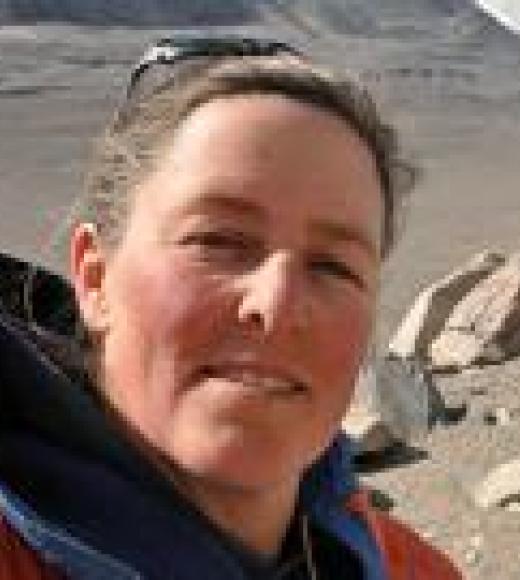
Dawn Y. Sumner is a Professor in the Department of Earth and Planetary Sciences at the University of California, Davis. Her research focuses on geobiology, paleobiology, and planetary science, particularly reconstructing ancient environments on Earth and Mars. She is a key member of NASA’s Mars Science Laboratory team, contributing to the Curiosity rover’s exploration of Gale Crater on Mars. Sumner’s work integrates field studies, lab analyses, and interdisciplinary approaches to understand microbial life’s role in shaping Earth’s history and potential habitability on other planets. Education: Ph.D., Massachusetts Institute of Technology (1995). Research interests include microbialite formation, Antarctic lake ecosystems, and the evolution of oxygenic photosynthesis. She investigates modern microbial communities in ice-covered lakes (e.g., Lake Vanda) to understand ancient environments and their biosignatures. Her scientific awards include the California Academy of Sciences Academy Fellow (2020) and Geological Society of America Fellow (2014). Sumner emphasizes inclusive education and supports student success in STEM through feminist research practices. Labs/Teams: W.M. Keck Center for Active Visualization in the Earth Sciences (KeckCAVES), Antarctic Lake Research Group.
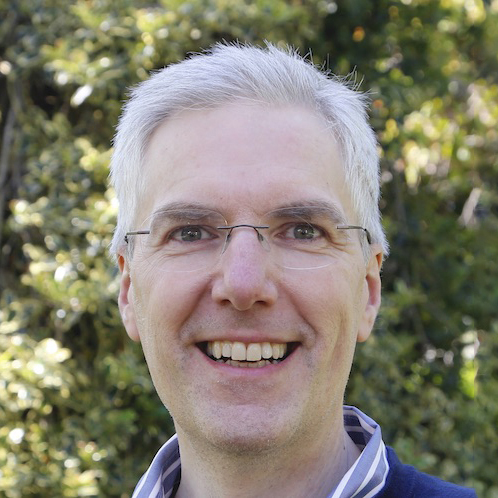
Gregg M. Garfin is a Professor and Specialist in Climate, Natural Resources, and Policy at the University of Arizona’s School of Natural Resources and the Environment, and Deputy Director for Science Translation and Outreach at the Arizona Institute for Resilience. He holds a Ph.D. in Geosciences from the University of Arizona (2003), an M.S. in Geology and Geography from the University of Massachusetts (1997), and a B.S. in Geology and Geography from the same institution (1993). His work bridges science and societal decision-making, focusing on climate adaptation, drought management, and climate services. He directs the Water, Society, and Policy M.S. Program and has led interdisciplinary projects on climate resilience, including contributions to the Fourth National Climate Assessment. Roles: Professor, Deputy Director, Program Director Affiliations: Arizona Institute for Resilience, School of Natural Resources and the Environment Research Interests His research emphasizes climate adaptation strategies, climate policy, and the co-production of knowledge between scientists and decision-makers. Key areas include: Climate impacts on water resources and ecosystems Extreme heat and drought resilience in urban and border communities Climate change communication and education Awards & Recognition Garfin has received multiple accolades, including AAAS Fellowship (2020), University of Arizona Service Awards (2020, 2015), and the Global Initiative for Academic Networks (GIAN) Visiting Fellowship (2018). His work has been featured in peer-reviewed journals and media outlets, emphasizing actionable science for climate resilience. Grants & Contributions He has led federal and transnational projects, including binational climate resilience initiatives in the U.S.-Mexico border region and flood risk assessments in Seoul, South Korea. His work integrates participatory governance approaches to enhance community preparedness.
Massachusetts Institute of TechnologyUnited States
Raffaele Ferrari is the Cecil & Ida Green Professor of Oceanography and Co-Director of the MIT Lorenz Center within the Department of Earth, Atmospheric, and Planetary Sciences (EAPS). He holds a BS/MS from Università di Torino and a PhD from Politecnico di Torino and Scripps Institution of Oceanography. His research focuses on ocean dynamics, climate modeling, and paleoclimatology, with emphasis on turbulence, carbon cycling, and climate system interactions. Key projects include the Climate Modeling Alliance (CliMA) and the Bottom Boundary Layer observational program. He has been recognized with awards such as the Harald Sverdrup Lecture (2022) and the Nicholas P. Fofonoff Award (2007). His work integrates high-resolution modeling, observational data, and theoretical frameworks to advance climate science. Education: BS/MS (Università di Torino), PhD (Politecnico di Torino/Scripps) Affiliations: MIT Lorenz Center, CliMA collaboration (Caltech/JPL), MIT-WHOI Joint Program Research spans ocean turbulence, paleoclimate dynamics (e.g., Last Glacial Maximum, Eocene), and climate model development using AI/ML. He advises numerous students across these themes, contributing to breakthroughs in submesoscale dynamics and ocean energetics.
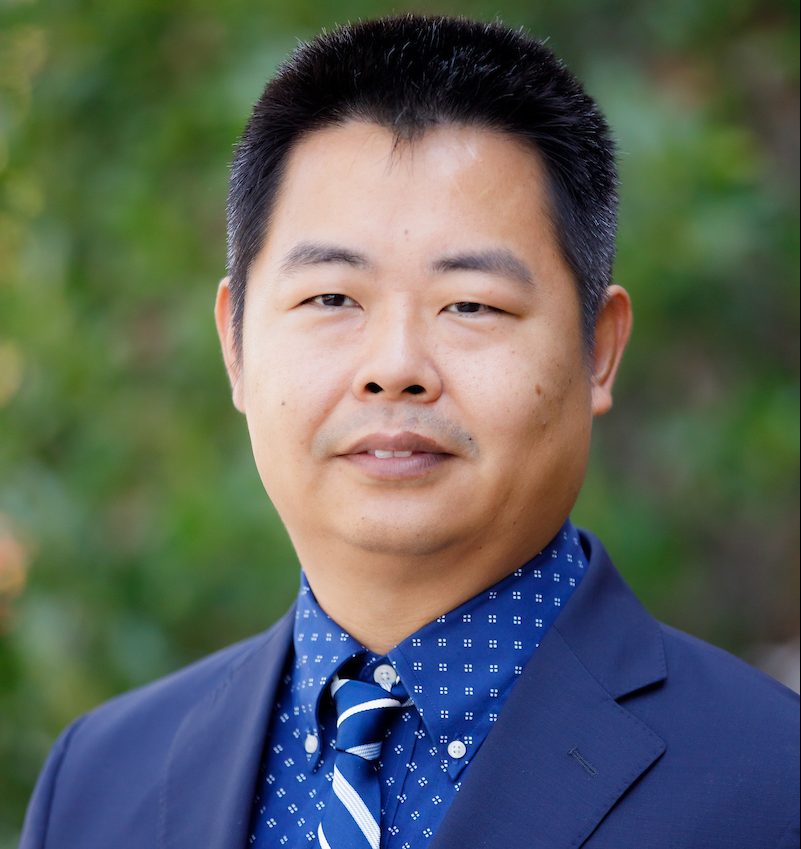
Dr. Jiaqi Gong serves as Associate Professor in Computer Science and Adjunct Associate Professor in Mechanical Engineering at The University of Alabama's College of Engineering, while directing the Alabama Center for the Advancement of Artificial Intelligence. His academic foundation includes: B.S. in Engineering, China University of Geoscience (2004) Ph.D. in Engineering, Huazhong University of Science and Technology (2010) Dr. Gong's research pioneers human-AI convergence through cyber-physical systems and smart health technologies, developing mobile/wearable platforms to enhance human perceptual, cognitive, and physical capabilities. His work spans artificial intelligence, machine learning, computer vision, and IoT with applications in healthcare, environmental monitoring, and education. The Sensor-Accelerated Intelligent Learning (SAIL) laboratory he founded drives innovation in behavior change interventions, human movement modeling, and educational data mining. Recent publications reveal strong interdisciplinary trends: healthcare AI dominates with medication adherence prediction and surgical classification systems, while environmental applications feature flood-risk communication and drought analysis. His work increasingly integrates generative AI and LLMs across domains, demonstrating methodological innovation in federated learning, knowledge graphs, and explainable storytelling frameworks. Notable recognitions include: Best Student Paper Award, IEEE/ACM Connected Health Conference (2022) Best Student Paper Award, Body Sensor Networks Conference (2019) Data Challenge Win, IEEE Biomedical Health Informatics (2018) Best Paper Award, Body Area Networks Conference (2014) Best Demonstration Award, IEEE Wireless Health Conference (2014) Dr. Gong leads significant funded projects including a $2M CDC/NIOSH grant for first responder safety and $3M NSF funding for hydrologic research. As SAIL laboratory director, he mentors students in developing clinically deployed technologies for multiple sclerosis, dementia, and mental health. Future work focuses on scaling AI applications in chronic disease management and climate resilience through the Alabama AI Center. The SAIL laboratory (founded 2017) operates as a multidisciplinary hub developing wearable/mobile systems for health applications, with active collaborations across medical clinics and engineering departments for real-world deployment of behavior change interventions and movement analysis tools.
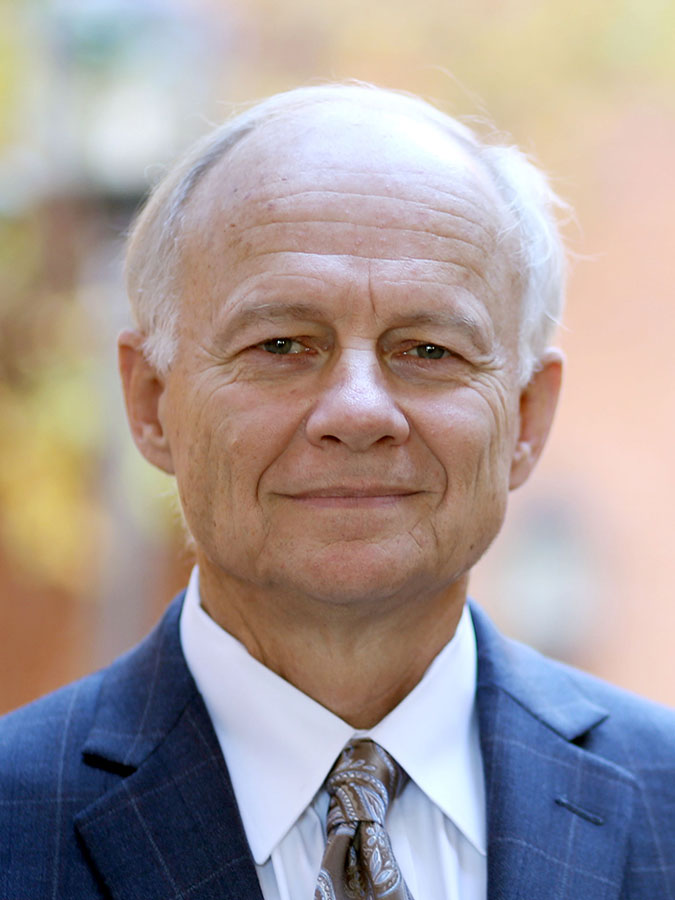
Dr. Lee Nordt is a Professor and Dean of the College of Arts & Sciences at Baylor University. He holds a Ph.D. from Texas A&M University. His research focuses on Biogeosciences, Paleoclimatology, and Geoarcheology, with expertise in Paleoclimate, Pedology/Paleopedology, Quantitative Geomorphology/Quaternary environments, and Hydrologic/Surface Processes. Education: Ph.D., Texas A&M University Research Interests: - Biogeosciences and Paleoclimatology - Geoarcheological analysis of Quaternary environments - Pedological studies linking ancient and modern soils - Quantitative geomorphology and hydrologic processes Office: Baylor Sciences Building, Room E.421 Contact: (254) 710-3362
Lorenzo M. Polvani is the Maurice Ewing and J. Lamar Worzel Professor of Geophysics at Columbia University, with dual appointments in the Department of Applied Physics and Applied Mathematics and the Department of Earth and Environmental Sciences. He has taught at Columbia for over 30 years and received multiple teaching awards. PhD in Physical Oceanography, MIT/Woods Hole Joint Program (1988) MSc and BSc in Physics, McGill University His research spans Atmospheric Science , Climate Modeling , and Arctic Studies , focusing on geophysical fluid dynamics, radiative forcing, and climate sensitivity. Recent work examines nonlinear climate responses to CO2 variations, Arctic amplification mechanisms, and volcanic aerosol impacts. Scientific publications reveal trends in radiative forcing , Arctic sea ice dynamics , stratospheric ozone effects , and climate feedback interactions . Key tools include the ClimKern Python package for radiative feedback analysis. Notable research includes: Nonlinear precipitation responses to volcanic eruptions High CO2 forcing effects on North Atlantic Oscillation Cloud feedbacks reducing hydrological sensitivity Arctic amplification through radiative-advective equilibrium Stratospheric ozone impacts on tropical climate patterns
Gifford H. Miller is a Professor at the University of Colorado Boulder and serves as the Director of the Center for Geochemical Analysis of the Global Environment (GAGE) . His research focuses on reconstructing Earth's climate system using Quaternary records, with expertise in amino acid geochronology and cosmogenic exposure dating. Specializes in Arctic climate history, ice sheet dynamics, and human impacts on ecosystems Active in teaching courses on global change, Quaternary dating methods, and Holocene nonlinearities His recent work explores Holocene climate variability through lake sediments in Iceland and Baffin Island, integrating biomarkers and ancient DNA. Awards include the 2021 University of Colorado Distinguished Professor title and fellowships from AGU and GSA. 2021: Distinguished Professor, University of Colorado System 2018: Distinguished Career Award, American Quaternary Association 2009: Elected Fellow, American Geophysical Union
Irina Marinov is an Associate Professor in the Department of Earth and Environmental Sciences at the University of Pennsylvania. She specializes in climate science, focusing on the critical role of oceans in global climate dynamics and carbon cycling. Her research integrates Earth system models and satellite data to study phenomena such as Southern Ocean convection, phytoplankton ecology, and the impact of climate change on oceanic processes. Marinov’s research spans biogeochemical cycles, marine ecology, and climate modeling, with a particular emphasis on Southern Ocean dynamics. She explores teleconnections between tropical atmospheric systems and Southern Ocean processes, polynya variability, and the use of satellite data to understand phytoplankton biomass and carbon distribution. Her recent publications (2024-2025) highlight the Southern Ocean’s influence on multidecadal climate variability, nonlinear CO2 dynamics, and the development of the GLOBAL CLIMATE SECURITY ATLAS. These works bridge climate modeling, satellite remote sensing, and policy applications. Scientific Awards: Undergraduate Research Mentorship award First woman to be tenured in the Earth and Environmental Sciences Department at Penn
Peter Wilf is a Professor in the Department of Geosciences at Pennsylvania State University's College of Earth & Mineral Sciences. His research focuses on fossil plants as indicators of past climates, biodiversity, and environmental disturbances from the latest Cretaceous through middle Eocene (~67-45 million years ago). Wilf leads significant research projects including the Origins of Southeast Asian Rainforests from Paleobotany and Machine Learning and the Patagonia Paleofloras Project. His research interests span paleobotany, paleoclimatology, plant-insect interactions, and biogeography, with emphasis on how deep-time data illuminate modern ecosystems and their responses to anthropogenic change. Wilf's work primarily focuses on the latest Cretaceous through middle Eocene, examining global disturbances including warming and cooling events, the end-Cretaceous mass extinction, and recovery periods. His research has significant implications for understanding climate change, biodiversity conservation, and ecosystem dynamics. Wilf's extensive publication record demonstrates consistent high-impact research across paleobotany, with recent work focusing on Southeast Asian rainforests, Patagonian paleofloras, and the connections between Gondwanan landmasses. His research integrates fieldwork in Patagonia and Southeast Asia with advanced analytical techniques, including machine learning applications for fossil leaf identification. Fellow, American Association for the Advancement of Science (AAAS) 2022 Wilson Award for Excellence in Research, Penn State College of Earth & Mineral Sciences 2022 Fellow, Paleontological Society 2017 Fellow, Geological Society of America 2016 Paul F. Robertson Research Breakthrough of the Year Award, Penn State College of Earth & Mineral Sciences 2016 George W. Atherton Award for Excellence in Teaching, Pennsylvania State University 2013 Wilf maintains an active research program with numerous NSF-funded projects and international collaborations. He leads a productive lab group conducting extensive fieldwork in Patagonia, Argentina, and Southeast Asia. His research has transformed understanding of Southern Hemisphere floras, the role of Patagonia in plant evolution, and connections between ancient and modern ecosystems across continents. Wilf's laboratory serves as a hub for paleobotanical research, bringing together students, postdocs, and international collaborators to study fossil plant collections from around the world. The lab integrates traditional paleobotanical methods with cutting-edge technologies including machine learning for fossil identification and advanced imaging techniques for detailed morphological analysis.
Dr. John Warren Huntley is an Associate Professor in the Department of Geological Sciences at the University of Missouri. His research examines the fossil record of biotic interactions including parasitism, predation, and competition, with additional focus on conservation paleobiology and morphological disparity evolution. Dr. Huntley investigates host-parasite dynamics in marine bivalves, human impacts on mollusk populations, and Phanerozoic predation patterns. His work integrates stratigraphic paleobiology with ecological and evolutionary analyses to reconstruct historical ecosystem dynamics. His recent publications demonstrate expertise in paleoparasitology, taphonomy, and conservation paleobiology, applying novel analytical methods to questions about parasite-host coevolution, preservation biases, and extinction events. This research provides critical insights into long-term ecological patterns and biological responses to environmental change. Dr. Huntley has received significant recognition including an NSF CAREER Award and Humboldt Research Fellowship, and he co-edited the comprehensive volumes 'The Evolution and Fossil Record of Parasitism'.
Peter Huybers is a Professor of Earth and Planetary Sciences and Environmental Science and Engineering at Harvard University , where he investigates the climate system and its societal implications, including interactions between volcanism and glaciation , extreme temperature predictability , and climate change impacts on food production . Research interests span climate change attribution , paleoclimate reconstruction , drought dynamics , crop yield modeling , and earth system feedbacks . His work often integrates art-historical analysis with climate science, as seen in studies of 19th-century air pollution through Turner and Monet paintings . Scientific awards include funding from Harvard Data Science Initiative (2023) for projects on climate change and food supply volatility Amazon Web Services (2023) grant His 20+ peer-reviewed articles since 2020 focus on climate proxies , hydrological modeling , solar forcing , and agricultural-climate interactions , with recent work in Nature , PNAS , and Science Advances . Advising : Mentored 10+ PhD students including Parker Liautaud , Duo Chan , and Marena Lin , while leading research teams with current members like Greta Berendes and Caro Park . Former staff include Jon Proctor and Lucas Vargas Zeppetello , the latter now at UC Berkeley (2024).
Mark Abbott is a Professor at the University of Pittsburgh, specializing in paleoclimatology and environmental science. He holds a PhD from the University of Minnesota (1997) and conducted postdoctoral research at the University of Massachusetts. His research integrates stratigraphy, geochemistry, and isotopic analysis to study climate change impacts on human societies and environmental systems. Abbott leads projects recovering lake sediment cores to document Holocene climate variability, focusing on annual-resolution records for temperature and drought reconstructions. He has authored over 50 peer-reviewed articles, with recent work emphasizing monsoon dynamics, Arctic mercury deposition, and tropical Andean glacial retreat. His fieldwork spans North America, South America, and Asia, including collaborative projects in Alaska, Peru, and India. Education: PhD in Geology (Minnesota, 1997), MS (Colorado, 1991), BA in Biology (Colorado, 1987) Postdoctoral Training: Climate System Research Center (UMass) Research interests include reconstructing past environmental changes via lacustrine archives, with emphasis on human-environment interactions. His lab analyzes stable isotopes, organic biomarkers, and sedimentology to address critical climate questions. Recent studies highlight climate-vegetation-fire linkages in the Pacific Northwest and Holocene lake-level changes in Canada/Yunnan. Recent articles focus on decadal-to-millennial climate shifts in mountain regions, Arctic permafrost dynamics, and anthropogenic impacts on lake ecosystems. Abbott’s work is supported by grants from NOAA and the NSF, with field sites in the Canadian Rockies, Himalayas, and Alaskan Arctic.
Freya Morris is a Visiting Assistant Professor in the Department of Geosciences at Hamilton College, appointed in 2025. Previously, she served as a Visiting Assistant Professor at Whitman College during the 2023-2024 academic year following her Ph.D. defense in summer 2023, and took a gap year for solo global travel. Her research integrates field-based sedimentology and structural geology to reconstruct paleoenvironments and basin evolution, focusing on climate-tectonics interactions and life's evolution through Earth history. Dr. Morris holds a Ph.D. and M.S. from the California Institute of Technology and a B.S. from Lafayette College. She employs geochemical methods and glacial isostatic adjustment modeling to support lithostratigraphic correlations and sea-level history reconstructions during deglaciation events. Her recent publications examine Ediacaran cap carbonates in Namibia and Marinoan Snowball Earth deglaciation dynamics, advancing understanding of ancient climate systems and extreme climate change records. These works demonstrate interdisciplinary approaches combining field geology with quantitative modeling. Scientific Awards: National Science Foundation Graduate Research Fellowship (2017-2022) Supported by the NSF Graduate Research Fellowship during doctoral studies, Dr. Morris now develops her research program at Hamilton College while mentoring undergraduate students in geoscience through field-based courses like Principles of Geoscience: Our Interconnected Earth.
Eric Roberts is a Professor of Geology and Geological Engineering and Director of the Potential Gas Agency at the Colorado School of Mines. His research focuses on basin analysis, energy exploration, and sedimentary geology with specializations in Mesozoic-Cenozoic basins of Gondwana and North America. He leads projects in U-Pb geochronology, critical minerals exploration, and paleoenvironmental reconstruction through vertebrate paleontology and stratigraphy studies. Roberts' work integrates advanced geochronological techniques with field-based analyses to address questions in paleobiology, resource exploration, and earth system dynamics. Key research themes include: Geochronology of sedimentary and volcanic deposits Paleoclimate reconstruction using paleosols Stratigraphic frameworks for dinosaur fossil records Resource potential of helium/hydrogen reserves Antarctic and African vertebrate paleontology His exploration of hominin burial practices in the Rising Star Cave System has provided critical insights into early human behavior. Roberts' interdisciplinary approach bridges geological, biological, and environmental sciences to advance understanding of Earth's history and resource management strategies.
Dr. Julie Fosdick is an Associate Professor in the Department of Earth Sciences at the University of Connecticut. She directs the Basin Analysis and Helium Thermochronology Laboratory and serves as Undergraduate Research Coordinator. Her educational background includes: PhD and MS in Geological & Environmental Sciences (Stanford University) BS in Geological Sciences (UC Santa Barbara, high honors) She completed an NSF Earth Science Postdoctoral Fellowship at the University of Arizona. Fosdick's research reconstructs: mountain-building and erosion processes through: Detrital thermochronology of orogenic systems Sedimentary basin analysis Tectonic-sedimentation interactions Paleotopography evolution Her NSF CAREER Award supports studies of sediment recycling in Argentina's Sierras Pampeanas. Current investigations examine: Post-glacial landscape evolution in Arctic Canada Andean hinterland tectonic development San Andreas Fault dynamics through Neogene deposits Greenland paleoclimate from subglacial sediments Her lab employs multi-method geochronology and thermal history modeling. Fieldwork spans global locations including: Argentine Andes Alaskan Range Greenland ice sheet California fault systems She maintains active collaborations across geoscience disciplines.