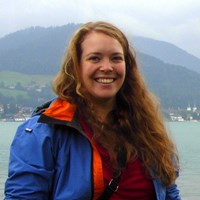
Dr. Marisa Storm is a researcher at Utrecht University , affiliated with the College of Geosciences . Her work focuses on Marine Palynology and Palaeoceanography , with expertise spanning Geology , Stratigraphy , and Organic Geochemistry . Expertise Areas: Geosciences and Earth Sciences Marine Palynology (study of organic-walled microfossils in marine environments) Palaeoceanography (ocean history and processes) Organic Geochemistry Geology and Stratigraphy
Dr. Michael Kaminski serves as an Honorary Senior Research Fellow in the Department of Earth Sciences at University College London. His academic career spans several decades with significant contributions to micropaleontology, particularly in the study of foraminifera. His research bridges geological time scales with modern environmental analysis, focusing on both fossil and living specimens across diverse marine environments worldwide. His educational background includes: B.A. in Geology from Rutgers University (1979) M.Sc. in Slavic Studies from Rutgers University (1979) M.Sc. in Geology from Jagiellonian University (1981) Ph.D. in Oceanography from the WHOI/MIT Joint Program (1987) Dr. Kaminski's research centers on the taxonomy, evolution, and paleoenvironmental applications of benthic foraminifera. His work encompasses biostratigraphy, paleoceanography, and paleoclimatology with particular emphasis on high-latitude regions and the Tethyan realm. Recent research demonstrates growing focus on the Arabian Gulf's extreme environments and how foraminifera respond to climate stressors. His studies integrate morphological analysis with geochemical and ecological approaches to understand both ancient and modern marine systems. Analysis of his recent publications reveals strong thematic continuity in foraminiferal research with increasing attention to climate change impacts on marine microfossil communities. His work spans taxonomic descriptions of new species, biostratigraphic applications, and environmental studies in challenging settings like hypersaline and high-temperature environments. The geographic scope covers the Arabian Gulf, Indonesian seas, Antarctic regions, and deep-sea environments globally. Dr. Kaminski has made significant contributions to the field through his extensive publication record spanning multiple decades, with recent work showing continued productivity and relevance to contemporary environmental challenges. His research bridges fundamental taxonomy with applied paleoenvironmental analysis. His teaching interests include Geosciences Report, Biodiversity and Macroevolutionary Patterns, Earth and Planetary System Science, Palaeoceanography, and palaeoclimatology, though specific teaching responsibilities are not detailed in the available materials.
Professor Jason Hilton is a leading palaeobotanist and evolutionary plant biologist at the University of Birmingham, serving as Head of the School of Geography, Earth and Environmental Sciences. He holds a PhD from Cardiff University and has been a faculty member since 2003, progressing from Lecturer to Professor. His research focuses on palaeobotany, palaeoclimates, and Geobiology, with particular expertise in seed plant evolution, mass extinctions, and Large Igneous Provinces' environmental impacts. Education: BSc (University of Sheffield); PhD (Cardiff University). Teaching roles include leading modules on field skills, Earth resources, and Earth Systems, while contributing to palaeoecology, independent research projects, and professional placements. His research explores fossil floras from China, sedimentary systems, and plant evolution, with over 14 recent publications analyzing Devonian, Permian, and Triassic periods. Notable awards include the President’s Award, Geological Society of London (2000). Research trends emphasize interdisciplinary studies linking palaeobotanical data with climatic and geological processes, including volcanic impacts and environmental crises. Advising and grants are central to his role, though specific grants are unspecified. He actively participates in fieldwork and fossil collection, contributing to global understanding of ancient ecosystems.
Dr. Vasile Ersek is a palaeoclimatologist and geochemist at Northumbria University , specializing in past climate changes and human-environment interactions. His research spans cave and karst science, atmospheric processes, paleoclimatology, palaeoceanography, and peat geochemistry, with a focus on applying geochemical methods to cave formations, water, and peat deposits to understand current and future climate dynamics. Education: PhD, Oregon State University, USA MSc, Mississippi State University, USA BSc, Babes-Bolyai University, Romania Research Themes: Dr. Ersek’s work connects with interdisciplinary research at Northumbria, particularly in science & technology and environmental sustainability. His studies on speleothems, monsoon systems, and historical climate events inform modern climate modeling and human-environment interactions. Advising: He supervises postgraduate researchers including Jiaojiao Yue (Lake Van sediments), Lucy Carruthers (Maldives resources), Dimitra Skoulikari (Crete climate), and Chloe Snowling (Vietnam climate). Professional Roles: Editorial work for Scientific Reports (2022) and recognition as a Fellow of the Higher Education Academy (FHEA) since 2016.
Dr Marissa Betts is a Senior Lecturer in Earth Sciences at the University of New England (UNE), Australia, specialising in early Cambrian palaeontology and stratigraphy. She is a geologist and invertebrate palaeontologist renowned for integrating shelly fossil biostratigraphy with chemostratigraphy and geochronology to date and correlate lower Cambrian successions across South Australia, Antarctica, China, Mongolia and Canada. Education & Qualifications: PhD (topic and institution inferred as UNE; exact title not stated) Research Interests: Her work centres on the early Cambrian (ca. 538–509 Ma) radiation of complex skeletons, employing both traditional palaeontological description and cutting-edge multiproxy chronostratigraphy. Key themes include: Early Cambrian chronostratigraphy & timescale refinement Shelly fossil biostratigraphy and biozonation Carbon isotope chemostratigraphy for global correlation Bradoriid arthropod palaeobiology, functional morphology and systematics Carbonate sedimentology and microbial-metazoan buildups Acid-leaching methodologies for small carbonaceous fossils Field areas span the Flinders Ranges, Stansbury & Arrowie basins, Transantarctic Mountains, Mongolian Bayan Gol, and Chinese Three Gorges, yielding data critical to palaeogeographic reconstructions of East Gondwana. Publication Trends: Betts’ 2024-25 output reveals intensive focus on integrating high-precision U-Pb ID-TIMS dates with biostratigraphic and chemostratigraphic signals to resolve the Cambrian Series 2–Miaolingian boundary, particularly in South Australian basins. Additional papers explore brachiopod and bradoriid evolution, extinction events (e.g., Sinsk event), and novel shell microstructures, signalling a dual emphasis on high-resolution chronostratigraphy and evolutionary palaeoecology. Scientific Awards & Recognition: Superstar of STEM, Science & Technology Australia (2021-2022) NSW Young Tall Poppy Award (2021) A.H. Voisey Medal, Geological Society of Australia (2021) Australian Research Council DECRA Fellow (2022) Teaching & Supervision: She coordinates GEOL120 Dynamic Earth and GEOL202 Introductory Palaeontology, teaches into GEOL110 Blue Planet and GEOL311 Palaeontology & Stratigraphy, and supervises a vibrant team of Honours and HDR students. Together with Drs Tim Chapman and Luke Milan she co-founded LithoLabUNE , a multidisciplinary geoscience research and teaching hub connecting on-campus and online geoscience students. Outreach & Impact: Committed to diversity in STEM, Betts volunteers as a STEM Coach for Curious Minds Australia and hosts the Sci-Flicks science-film events and podcast in Armidale. She wrote, directed and produced the short film ROLA [STONE] linking geology, landscape and culture.
Dr. Alexander Brasier is a Senior Lecturer in Geology at the University of Aberdeen (since 2018) and previously held roles as Lecturer (2014–2018) and postdoc researcher at institutions including VU University Amsterdam (2012–2014). He holds a PhD from the University of East Anglia (2003–2007) and a BSc from the University of Edinburgh (1999–2003). His research focuses on geochemical and petrographic analysis of carbonates to understand Earth’s climate, biosphere-tectonic interactions, and astrobiological processes. He leads the Aberdeen Centre for Electron Microscopy (ACeMAC) and serves as Chief Editor of Sedimentology (2021–2024). His work spans palaeoclimatic reconstruction, microfossil preservation, and diagenetic studies in non-marine carbonates. Notable contributions include investigations on Ediacaran soft-bodied organism preservation, carbonate formation in extreme environments (e.g., Mono Lake, Italy travertines), and the impact of plant evolution on continental crust composition. He has been recognized with awards such as the 2020 Sun Shu Prize (International Association of Sedimentologists), and student-voted ‘Most Inspiring Lecturer’ (2018–2019). Teaching responsibilities include courses on planetary geology, astrobiology, and applied sedimentology. Collaborations involve institutions worldwide, focusing on carbonate systems, astrobiological signatures, and diagenetic processes.
Mark Chapman is Associate Professor in the School of Environmental Sciences and Geosciences member at University of East Anglia. His research reconstructs ocean-climate interactions using microfossil records and geochemical proxies. Research focuses on: North Atlantic circulation dynamics Volcanic marker horizons for stratigraphic correlation Southern Ocean frontal systems Diatom responses to climate change His publications establish tephrostratigraphic frameworks for paleoclimate studies and analyze physical controls on oceanic fronts, with techniques combining micropaleontology, isotope geochemistry, and statistical modeling.
Prof Bridget Wade is a Professor of Micropalaeontology at University College London's Department of Earth Sciences. She leads a research group studying Cenozoic palaeoceanography, focusing on planktonic foraminifera to reconstruct climate variables like temperature, pH, and ice volume. Her work spans field expeditions in Europe, Africa, and the Caribbean, including contributions to Ocean Drilling Program Legs and IODP Expeditions. She chairs the Paleogene Planktonic Foraminifera Working Group and co-authored the Atlas of Oligocene Planktonic Foraminifera . Research Highlights: Climate change studies using microfossil chemistry Biostratigraphic refinement and calibration Evolutionary responses to climatic events Awards & Honors: Fellow of the Geological Society of America (2021) Geological Society Bigsby Medal (2020) Charles Schuchert Award (2013) NSF CAREER Award (2009) Grants & Collaborations: NERC-funded projects on Oligocene icehouse dynamics and biostratigraphy International Ocean Discovery Program collaborations Labs/Teams: Active in the UCL Micropalaeontology Research Group, leveraging interdisciplinary tools like Mikrotax for taxonomic analysis.
Andrew Clarke is Professor in the School of Environmental Sciences at University of East Anglia, specializing in polar ecosystems and evolutionary physiology. His interdisciplinary research examines biological responses to climate change across timescales. Key research areas: Physiological limits of Antarctic organisms Dinosaur energetics and extinction mechanisms Biogeochemical cycling in polar oceans Microbial controls on atmospheric chemistry His publications demonstrate expertise in reconstructing past climate-biology interactions, with recent work establishing temperature thresholds for terrestrial life and analyzing marine export fluxes in Antarctic ecosystems.
Dr. Andy Fraass is an Assistant Professor in Earth and Ocean Sciences at the University of Victoria's Faculty of Science. His research program investigates how marine plankton respond to environmental changes using microfossil records, with particular focus on paleoceanographic proxies and evolutionary patterns. As Principal Investigator of the UVic Micropaleontology Lab, he leads NSF-funded projects including eODP (extending Ocean Drilling Pursuits). Education: Ph.D in Geosciences, University Massachusetts - Amherst (2015) M.Sc. in Geology, University of Wisconsin - Madison (2009) B.S. in Zoology & Geology, University of Wisconsin - Madison (2007) Research combines paleobiological approaches with geochemical proxy development to understand pelagic ecosystem vulnerabilities to climate change, especially regarding carbonate compensation depth fluctuations and biological pump efficiency. Publication trends show consistent focus on microfossil response to biotic/abiotic stressors across geological timescales, particularly during major transitions like the Oligocene-Miocene boundary and Cretaceous-Paleogene extinction. Awards: Cushman Foundation Student Travel Award (2015) Teaching Assistant of the Year Award (2010) Current graduate students investigate size responses to astronomical forcing and nutrient cycles. Lab maintains active field programs in the Caribbean and Pacific.
Dr Anna Joy Drury is a Royal Society Dorothy Hodgkin Fellow at the University of Leicester's School of Geography, Geology and the Environment. Her research focuses on Cenozoic climate evolution, integrating palaeoceanography, geochemistry, and stratigraphy with advanced techniques like XRF core scanning and stable isotope analysis. She has contributed to IODP Expeditions 363 and 378, advancing understanding of deep-sea sediment records. Her work emphasizes high-resolution multi-proxy analyses and astrochronology, supported by innovations such as the Code for Ocean Drilling Data (CODD) and the Earthsequencing Image Database. These tools enhance data visualization and accessibility for ocean drilling archives. Key Research Areas: Marine geology, Cenozoic climate dynamics, sedimentological analysis. Awards: Royal Society Dorothy Hodgkin Fellowship (recognizing early-career researchers). Dr Drury collaborates on international projects, leveraging cutting-edge technologies to decode Earth's climate history through marine sediments.
Professor Jeremy Lloyd is a distinguished academic in the Department of Geography at Durham University, specializing in Quaternary environmental reconstruction with particular focus on palaeoceanography and sea-level changes. His research has significant implications for understanding past climate dynamics and their relationship to current and future environmental changes. His primary research interests encompass three interconnected areas: the interaction between palaeoceanography and ice sheet dynamics, relative sea-level changes and coastal evolution, and the reconstruction of Asian Monsoon climate. Dr. Lloyd's work on ice-ocean interactions has concentrated on Greenland margins and the Antarctic Peninsula, investigating the timing and nature of deglaciation and the link between ocean circulation and ice stream dynamics. His sea-level research spans multiple geographic regions including the UK, Iceland, and Mexico, providing critical data for testing glacio-hydro-isostatic models. His monsoon research focuses on developing new proxies from the Pearl River Estuary to reconstruct Southeast Asian Monsoon variations. Analysis of his recent publications (2023-2025) reveals a strong interdisciplinary approach combining multiple proxy methods including foraminifera, diatoms, and geochemical analyses. His work spans diverse geographic regions from Scotland and Greenland to Antarctica and the Pearl River Estuary, demonstrating the global relevance of his research. The publications showcase methodological innovations in sea-level reconstruction, ice-ocean interactions, and paleoclimate proxy development, often involving large international collaborations. Professor Lloyd actively supervises graduate students including Jennifer Taylor, Raphael Kahlenberg, and Sirui Huang. His research involves extensive collaborations with scientists from institutions across Denmark, Germany, Poland, Hong Kong, and the United States, reflecting the international nature of his work. Notable collaborators include Dr. Antoon Kuijpers (Geological Survey of Denmark and Greenland), Dr. Matthias Moros (Baltic Sea Research Institute), Dr. Andrzej Witkowski (University of Szczecin), and Professors Colm Ó Cofaigh and Antony Long at Durham University. His laboratory work involves multi-proxy paleoenvironmental reconstruction, with particular expertise in foraminiferal analysis, geochemical fingerprinting, and sea-level indicator development. Fieldwork spans Arctic regions including Greenland and Svalbard, as well as coastal sites in the UK, Iceland, and China, supporting his diverse research interests in ice-sheet dynamics, sea-level change, and monsoon systems.
Dr. Teuntje Hollaar is a researcher in the Department of Marine palynology & palaeoceanography at Utrecht University. Her work focuses on understanding ancient climate systems and vegetation responses to environmental changes during the Jurassic and Triassic periods.
Dr. Douwe van der Meer serves as a Researcher in the Department of Earth Sciences within the Faculty of Geosciences at Utrecht University, specializing in marine palynology and palaeoceanography with interdisciplinary expertise spanning geological and climatic sciences. His core research domains include: Marine Palynology (microfossil analysis for environmental reconstruction) Palaeoceanography (historical ocean conditions and circulation) Earth Sciences (integrated geological systems) Geodynamics (tectonic processes and Earth's evolution) Paleogeography (historical land-sea configurations) Plate Tectonics (continental drift and boundary interactions) Paleoclimate (long-term climate patterns and drivers) No scientific awards, student advisement records, or laboratory affiliations are documented in the source materials. His professional activity appears focused on research within Utrecht University's geoscientific framework without indication of teaching responsibilities or external academic appointments.
Dr Marlise Colling Cassel is Chair of Organic Biogeochemistry in Geo-Systems at RWTH Aachen University, Germany, and member of the Geological Institute / Chair of Geology and Sedimentary Systems. Located at Lochnerstraße 4-20, 52056 Aachen, she leads a group investigating sedimentary basins, claystone diagenesis and organic geochemistry across scales. Education While specific degrees are not listed in the provided text, her Chair-level appointment implies doctoral and post-doctoral training in geosciences. Research Interests Organic biogeochemistry: molecular and isotopic characterisation of organic matter in sedimentary rocks. Claystone diagenesis & burial history: understanding physical and chemical evolution of fine-grained rocks under increasing temperature and pressure. Basin modelling & petroleum systems: integrating seismic, well and geochemical data to predict hydrocarbon generation, migration and overpressure development. Seismic stratigraphy & attributes: advanced 3-D seismic interpretation for volcanic rifted margins and submarine fans. South Atlantic margin evolution: tectono-sedimentary response to break-up volcanism, palaeoclimate and ocean circulation changes. Geo-storage applications: assessing claystones for nuclear waste repositories and CO₂ storage. Publication Trends Between 2018 and 2025, Dr Cassel has published extensively on the interplay of tectonics, volcanism and sedimentation along the Pelotas margin (South Atlantic), on cyclo- and chemostratigraphy of the Permian Irati Formation (Paraná Basin), and on diagenetic controls on claystone physical properties. A clear methodological trajectory emerges: integration of high-resolution geochronology, seismic attribute analysis, numerical basin modelling and organic geochemistry to solve problems spanning hydrocarbon exploration to nuclear-waste disposal. Scientific Awards No specific awards are listed in the provided text. Advising & Grants While no explicit student lists or funded grant numbers are given, the presence of research assistants and the breadth of recent publications indicate an active supervisory and grant portfolio within RWTH Aachen’s geoscience programmes. Laboratories & Teams Dr Cassel heads the Chair of Organic Biogeochemistry in Geo-Systems, working closely with the Chair of Geology and Sedimentary Systems and supervising research assistants located in both the EMR (Energy & Mineral Resources) building and the historic Mining building at RWTH Aachen.