Dr. Siqi Ma is an Associate Professor in the Department of Management at the University of Akron College of Business. She holds a PhD from the University of Arkansas and has been actively involved in teaching and research since 2017. Education: PhD in Supply Chain Management from University of Arkansas, MS and BS from Hebei University of Technology Her research focuses on Behavioral Operations Management , examining psychological factors in supply chain dynamics, gender impacts on collaboration, and uncertainty management in retail logistics. She has contributed to key areas like Supplier Dependence Asymmetry , Inventory Control , and Collocation Strategies . Dr. Ma has published in top journals including Production and Operations Management and Journal of Purchasing and Supply Management . Her work bridges theoretical insights with practical applications in supply chain sourcing and logistics. Awards: 2018 Chan Hahn Best Paper Award She serves on the Graduate Admission Committee and Female Faculty Mentorship Committee, and has reviewed for journals like International Journal of Physical Distribution and Logistics Management . Her teaching includes Supply Chain Operations Strategy , Supply Chain Sourcing , and Principles of Supply Chain and Operations Management .
Raphael Wittkowski is a Professor of Theory of Active Soft Matter at RWTH Aachen University and the DWI – Leibniz Institute for Interactive Materials. He leads a research group focused on theoretical and computational physics of active systems, with strong affiliations in the Department of Physics at RWTH Aachen. Educational Background: Bachelor of Science in Mathematics, Heinrich Heine University Düsseldorf (2009) Bachelor of Science in Physics, Heinrich Heine University Düsseldorf (2009) Master of Science in Physics, Heinrich Heine University Düsseldorf (2010) PhD in Physics, Heinrich Heine University Düsseldorf (2012) Research Interests: His work spans active soft matter, acoustofluidics, microfluidics, microrobotics, programmable and intelligent materials, 3D bioprinting, and theoretical modeling. He investigates systems driven by sound or light, develops simulation software (AcoDyn), and explores applications in medicine and engineering. His research integrates statistical physics, field theory, and artificial intelligence concepts in material design. Publication Trends: Recent publications emphasize field theories for active matter, computational modeling of active Brownian particles, intelligent materials, and biomedical applications of microrobots. His work frequently appears in high-impact journals such as Science Advances , Nature Communications , and Physical Review Letters , reflecting a strong focus on theoretical innovation and interdisciplinary applications. Scientific Contributions: Development of AcoDyn, a Rust-based software for acoustofluidic and microfluidic simulations Leadership in major research projects including Sonocraft and CRC 1459 B01 Heisenberg Grant recipient for research in active soft matter and statistical physics Advising and Grants: He advises PhD students such as Adrian Paskert and leads a dynamic research group. He has secured competitive funding, including a Heisenberg Grant, and is involved in collaborative, interdisciplinary projects that bridge physics, engineering, and medicine. Research Groups and Projects: He leads the Theory of Active Soft Matter group at RWTH Aachen. Key projects include Sonocraft (ultrasound-based 3D bioprinting), CRC 1459 B01 (intelligent light-driven microsystems), and foundational work on active matter theory and simulation frameworks.
Eugene Gladyshev is the Head of the Fungal Epigenomics Group in the Department of Mycology at the Institut Pasteur, Paris. He leads a research team focused on understanding fundamental epigenetic and genetic mechanisms in fungi, particularly using the model organism Neurospora crassa . His work bridges molecular genetics, epigenetics, and chromatin biology to uncover how DNA homology is recognized and how genome defense systems function. Institut Pasteur, Department of Mycology, Fungal Epigenomics Group Education: Master's degree, Yale University PhD, Harvard University (supervised by Prof. Matthew Meselson) Postdoctoral Fellow, Harvard University (Helen Hay Whitney Foundation fellow, lab of Prof. Nancy Kleckner) Research Interests: Eugene Gladyshev's research is centered on epigenetic regulation and genome integrity in fungi. He investigates how cells recognize repetitive DNA sequences and initiate silencing through mechanisms like Repeat-Induced Point Mutation (RIP) and Meiotic Silencing by Unpaired DNA (MSUD). His work reveals recombination-independent pathways for homologous DNA recognition, involving direct double-stranded DNA interactions and heterochromatin assembly. He also studies the role of chromatin structure, histone modifications (e.g., H3K9me3), and DNA methyltransferases (DIM-2, DIM-5) in these processes. His lab explores how perturbed chromatin can trigger de novo gene silencing and how such mechanisms may be conserved across eukaryotes, including humans. Publication Trends: His recent publications (2016–2024) show a consistent focus on DNA homology recognition, epigenetic silencing, and chromatin dynamics. The articles highlight recombination-independent mechanisms, structural aspects of DNA pairing, and the interplay between chromatin remodeling and gene regulation. Key themes include the role of supercoiling, quadruplex structures, and sequence periodicity in DNA interactions, as well as the development of molecular tools for studying epigenetic phenomena in Neurospora . Scientific Awards: No specific awards are mentioned in the provided texts. Advising and Grants: Dr. Gladyshev mentors postdoctoral researchers, visiting scientists, and master’s students in his group. His research is supported through institutional funding and collaborative projects, including participation in the LabEx IBEID (Integrative Biology of Emerging Infectious Diseases) transversal project, which focuses on emerging pathogens and host-pathogen interactions. Labs and Teams: He leads the Fungal Epigenomics Group at the Institut Pasteur, which includes members such as Florian Carlier (Post-doc), Alexey Mazur (Visiting Scientist), Thomas Badet (Visiting Scientist), Jeanne Contal (Master Student), and Elisabeth Gutierrez (Administrative Staff). The lab collaborates with other research groups, notably the laboratory of Tom Hammond, to investigate shared mechanisms in meiotic silencing and DNA recognition.
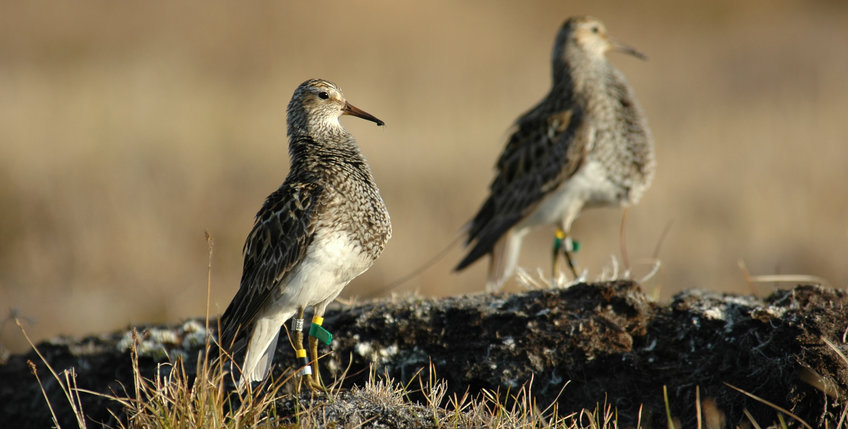
Professor Bart Kempenaers serves as Director of the Department of Ornithology at the Max Planck Institute for Biological Intelligence in Seewiesen, Germany. Formerly known as the Department of Behavioural Ecology and Evolutionary Genetics (renamed in July 2023), this department conducts cutting-edge research in avian behavioural ecology. Kempenaers also holds the position of Honorary Professor in Behavioural Ecology at Ludwig-Maximilian University of Munich, a title he has held since 2004. His leadership guides a highly international research team focused on understanding how sexual selection drives biodiversity in bird species worldwide. Professor Kempenaers' academic foundation was established in Belgium where he was born in 1967. His formal education includes: Biology studies at the Universities of Limburg and Antwerp (completed 1989) PhD at the University of Antwerp (completed 1994) As a leading behavioural ecologist and ornithologist, Kempenaers' research centers on sexual selection and the evolution of avian mating behavior. His work investigates mate selection mechanisms, divorce patterns in bird pairs, and the prevalence and implications of extra-pair copulations. He coordinates field studies on arctic-breeding shorebirds with diverse mating systems, employing technology-assisted behavioral observations on large populations of free-living birds. His department maintains a comprehensive database linking life-history traits of approximately 10,000 bird species with environmental and ecological data, enabling large-scale comparative analyses of evolutionary patterns. Their research combines field observations, captive studies, and advanced statistical methods to understand how sexual selection shapes behavioral and life-history traits. Analysis of Kempenaers' recent publications reveals a strong interdisciplinary focus spanning behavioural ecology, evolutionary biology, and conservation science. His research consistently examines breeding site fidelity, sexual selection mechanisms, extra-pair paternity, and the ecological factors influencing avian coloration and behavior. Methodologically, his work incorporates innovative approaches including accelerometry, machine learning, and comparative analyses across diverse bird species. A significant portion of his research investigates shorebirds, particularly species with alternative reproductive tactics, while other studies explore urban adaptation, vocal communication, and host-microbiome interactions. Professor Kempenaers leads a highly international department that investigates how sexual selection acts as a driver of biodiversity. The department's work is characterized by technology-assisted behavioral observations on large numbers of individuals in free-living populations, complemented by captive studies and advanced statistical approaches. They maintain an extensive database linking life-history traits of the world's bird species with environmental data, enabling large-scale comparative analyses of evolutionary patterns. The department's research spans multiple continents, with field studies conducted in Europe, North America, and other regions where their study species breed.
Wendy Queen is a Professor at École Polytechnique Fédérale de Lausanne (EPFL) in Switzerland, where she leads research in materials science with a focus on metal-organic frameworks (MOFs) for environmental applications. Her work addresses critical global challenges related to clean water access and carbon management, building on her early aspiration to 'change the world' as mentioned in a 2020 Galactic Chloé Show interview. Dr. Queen's research focuses on developing advanced materials for environmental remediation: Metal-organic frameworks for water purification and heavy metal removal Materials for carbon capture and CO 2 reduction technologies Sustainable approaches to resource recovery from waste streams Advanced characterization of porous materials Analysis of her recent publications (2024-2025) reveals strong emphasis on practical applications of MOFs, particularly for removing chromium, arsenic, and other heavy metals from water. She has made significant contributions to CO 2 capture and conversion technologies, developing materials that transform carbon dioxide into valuable products. Her work increasingly incorporates sustainable design principles, focusing on materials synthesized from recyclable resources and methods for e-waste recycling. Dr. Queen has served as a Guest Editor for scholarly publications and her research has been published in numerous high-impact journals. Her work on testing protocols for materials characterization demonstrates her commitment to methodological rigor in the field. While specific details about her advising activities aren't provided in the available information, Dr. Queen's extensive publication record suggests she leads a research group mentoring graduate students and postdoctoral researchers. Her work likely involves collaborations with industry partners and government agencies focused on environmental technologies. Dr. Queen's laboratory specializes in the synthesis, modification, and characterization of metal-organic frameworks for environmental applications. Her team employs advanced techniques including X-ray diffraction, mass spectrometry, and various analytical methods to understand and improve materials for water purification and carbon management systems.
Alan McGaughey is a Professor in the Department of Mechanical Engineering at Carnegie Mellon University's College of Engineering. He leads the Nanoscale Transport Phenomena Laboratory, where his research bridges mechanical engineering, materials science, physics, and chemistry to study atomic-level transport of mass, momentum, and energy. His work emphasizes phonon, photon, electron, and fluid particle dynamics using advanced simulation techniques. Bachelor of Engineering, McMaster University (1998) Master of Applied Science, University of Toronto (2000) Ph.D., University of Michigan (2004) Post-doctoral training, University of Florida Alan McGaughey's research interests center on nanoscale thermal transport , with applications in energy technologies , materials for energy efficiency , and multiscale modeling . His lab develops molecular- and meso-scale simulation methods, including molecular dynamics, lattice dynamics, density functional theory, and Boltzmann transport equation modeling. Key research areas include thermal transport in nanostructures and interfaces, hybrid organic-inorganic materials, electrocaloric cooling, and liquid-vapor phase change. The team also applies machine learning to accelerate materials discovery and property prediction. The recent publications (2023–2025) reflect a strong focus on thermal conductivity prediction in diverse systems—from polymers and 2D materials to disordered crystals and thin films. The work integrates first-principles simulations , uncertainty quantification , and machine learning to uncover fundamental mechanisms of phonon transport and interfacial heat transfer. A recurring theme is the role of structural disorder —static, dynamic, or rotational—in modulating thermal properties. Air Force Office of Scientific Research Young Investigator Program (2009) Benjamin Richard Teare Teaching Award (2014) National Academy of Engineering’s Frontiers of Engineering Education Symposium (2015) Professor of the Year by MechE seniors (2012, 2015, 2017) 2019 & 2024 College of Engineering Faculty Awards 2021 Viskanta Fellowship, Purdue University McGaughey has advised numerous Ph.D. and Master’s students, many of whom have gone on to impactful research careers. His group has secured funding from agencies such as the Department of Defense and the Department of Energy, including Scott Institute seed grants for energy research. He collaborates extensively with experimentalists, including Jonathan Malen, Reeja Jayan, Chris Wilmer, and others, ensuring strong theory-experiment integration. He is also involved in educational innovation and was named faculty chair-elect for the College of Engineering. The Nanoscale Transport Phenomena Laboratory is a vibrant research group that combines computational modeling with interdisciplinary collaboration to advance fundamental understanding and enable next-generation thermal materials and devices.
Scientia Professor Rose Amal is a leading academic at the University of New South Wales (UNSW), affiliated with the School of Chemical Engineering and the Particle and Catalysis Group. She serves as Co-Director of the ARC Training Centre for the Global Hydrogen Economy. Her research focuses on photocatalysis, functional nanomaterials, and solar energy conversion, with contributions to water purification, CO2 reduction, and renewable hydrogen production. Amal holds a Ph.D. and B.E. (Hons. 1) in Chemical Engineering from UNSW (1991 and 1988, respectively). She has secured over $50M in research funding, including ARC Laureate Fellowships and industry grants. Her work spans 500+ publications, yielding 38,390 citations and an H-index of 102 (Jan 2023). Her research interests include designing catalysts for solar energy conversion, engineering systems for solar-driven processes, and advancing renewable energy technologies. Notable achievements include pioneering work in photocatalytic water splitting and CO2-to-syngas conversion. Amal has mentored over 75 PhD students, 20 Masters students, and 200 Honours students. Her awards include the James Cook Medal (2021), NSW Scientist of the Year (2019), and Companion of the Order of Australia (2018). She is a Fellow of the Australian Academy of Science and Technology.
Olle Björneholm is a Professor at Uppsala University's Department of Physics and Astronomy, leading research in the Chemical and Bio-Molecular Physics program under the Division for X-ray Photon Science. His work focuses on the electronic and geometric structure of liquids, clusters, and nanoparticles, utilizing synchrotron radiation-based spectroscopic techniques to study ultra-fast dynamics, radiation damage, nanoscience, and environmental molecular phenomena. Research Leadership: Director of the Uppsala University Center for Photon Science, Chair of the MAX IV University Reference Group, and Chair of the VR RÅG-C advisory group. Research Themes: His studies explore X-ray-induced dynamics in aqueous solutions, interfacial chemistry of organic and inorganic ions, solvation shells, radiation damage mechanisms, and electronic structures of nanoscale systems. Recent articles highlight pH-dependent surface composition, heavy-atom radiosensitizers, and intermolecular Coulombic decay. Collaborative Impact: Active in international collaborations, particularly in synchrotron-based experiments and space science instrument development (e.g., RPWI for JUICE mission).
Prof. Dr. Martin Beneke holds the Chair of Theoretical Elementary Particle Physics at the Technical University of Munich (TUM) , affiliated with the TUM School of Natural Sciences and Department of Physics. He is a leading expert in theoretical particle physics and cosmology. Academic Appointments : TUM (2012–Present), RWTH Aachen University (1999–2012), CERN (1996–1999) Education : PhD in Physics (TUM, 1993), studies at Konstanz, Cambridge (UK), and Heidelberg His research interests span theoretical elementary particle physics, focusing on: Phenomenology of high-energy collider collisions Higher-order perturbation theory and renormalons Effective field theory applications Heavy quark physics (bottom/top) and CP violation Dark matter and cosmology, including cosmic background radiation polarization His key publications demonstrate expertise in precision QCD calculations, B meson decays, and effective field theory techniques, with applications to Standard Model extensions and collider phenomenology. Scientific recognition includes: DFG Gottfried Wilhelm Leibniz Prize (2008) Humboldt Foundation Feodor Lynen Fellowship (1995) Max Planck Society Otto Hahn Medal (1994) He teaches courses like Theoretical Physics 2 (Electrodynamics), advanced seminars on precision calculations, and supervises weekly arXiv paper discussions with colleagues.
Lluis Ametller Congost is a faculty member at the Universitat Politècnica de Catalunya (UPC), affiliated with the School of Engineering of Barcelona Est (EEBE) under the Department of Physics. His research spans particle physics, quantum chromodynamics, and condensed matter physics, with a focus on lepton flavor phenomena, 2D material characterization, and theoretical models beyond the Standard Model. His recent work includes Optoelectronic characterization of graphene-based heterostructures (2023) Lepton flavor-changing Higgs decays in T-parity models (2017) QCD resonance analysis and low-energy data interpretation (2014) He has contributed to experimental and theoretical studies in high-energy physics and materials science, often collaborating with Pedro Talavera and Francisco del Aguila. Academic output includes 26 indexed journal articles, 6 competitive R+D+i projects, and 5 conference presentations. Email: lluis.ametller@upc.edu | ORCID: 0000-0002-2756-8216
Professor Igor Zelenko is a faculty member at Texas A&M University, specializing in differential geometry, control theory, and sub-Riemannian geometry. His research focuses on geometric structures such as CR manifolds, nonholonomic systems, and symplectic geometry. His work often involves analyzing invariants, symmetries, and geometric properties of distributions and metrics. He has contributed to topics like Jacobi equations, Weyl-type theorems, and the geometry of vector fields in Lagrange Grassmannians. Research Interests: His primary areas of research include differential geometry, sub-Riemannian geometry, control theory, and the study of geometric structures on manifolds. He explores concepts such as CR structures, nonholonomic constraints, and the interplay between algebraic invariants and geometric configurations. Publications: Zelenko’s work spans over three decades, with a focus on geometric analysis, including studies on symmetries of distributions, projective rigidity, and applications of algebraic methods to geometric problems. His articles address topics such as the geometry of rank 2 distributions, Weyl’s theorems, and the canonical forms of geometric objects. Awards: No specific scientific awards are mentioned in the provided text. Advising & Grants: While no explicit details on academic advising or grants are provided, his extensive publication record indicates active involvement in research mentorship and potential grant-funded projects. Labs/Teams: No specific labs or collaborative teams are listed, though his work suggests participation in geometric analysis and control systems research groups.
Professor Muammer Altan Çakır is a Full Professor at the Department of Physics Engineering, Istanbul Technical University. His primary affiliation is with the CMS experiment at CERN, focusing on high-energy physics and particle physics research. He has held significant roles in collaborative projects involving international teams analyzing proton-proton collisions and heavy ion collisions. Research Interests: Proton-proton collisions, Higgs boson physics, top quark dynamics, lepton physics, and detector development for CMS. Key Projects: Includes studies on big data processing for CMS experiment visualization, scalable distributed computing platforms, and new physics searches using deep learning. He has been awarded multiple research fellowships and performance awards, notably the Landes Baden-Württemberg Doctoral Fellowship and LPC Guest Visiting Faculty roles.
Professor Mehmet Cem Güçlü is affiliated with the Department of Physics Engineering at Istanbul Technical University. His research focuses on high-energy nuclear physics, particularly electron-positron pair production mechanisms in heavy-ion collisions, relativistic heavy-ion dynamics, and lepton pair production in ultraperipheral collisions. He has contributed to projects like the 2023 BAP-funded study on electromagnetic multi-pair production at high energies. Expertise includes pair production physics, lepton dynamics, and relativistic collisions Active in international collaborations through CERN/LHC-related studies Supervisor of 5 ongoing theses (as per Scopus profile) Key research areas involve analyzing transverse momentum distributions in hadronic collisions and studying multi-pair production via multiple scattering effects. His work bridges theoretical predictions with experimental data from modern colliders.
Ivan B. Penkov is an Adjunct Professor of Mathematics at Constructor University Bremen, Germany, with a distinguished career in Lie theory, representation theory, and algebraic geometry. He earned his Master's degree from Moscow State University (1982) and Ph.D. from Steklov Mathematical Institute (1987). His academic journey includes tenured professorships at the University of California at Riverside (1991-2004) and a long-standing professorship at Jacobs University Bremen (2004-2023), followed by his current adjunct role. Education: Master in Mathematics, Moscow State University (1982) Candidate of Physical and Mathematical Sciences (PhD), Steklov Mathematical Institute (1987) Penkov's research focuses on representations of finite and infinite-dimensional Lie algebras and superalgebras, generalized Harish-Chandra modules, geometry of supermanifolds, and homogeneous ind-spaces. His work bridges pure mathematics with mathematical physics, emphasizing infinite-dimensional structures and their applications. Recent publications highlight advancements in bounded weight modules for Lie superalgebras at infinity, topological tensor representations, and automorphism groups of ind-varieties of generalized flags. These works reflect his deep engagement with categorification, geometric methods, and infinite-dimensional algebraic structures. Scientific awards and grants include multiple NSF and DFG grants, a Volkswagen Foundation grant, and the Batsheva de Rothschild Fellowship (2023). He has coorganized significant conferences and programs, such as the California Lie Theory Program and the German-Israeli workshop on symplectic geometry and representation theory. Penkov's advisees include PhD and MSc students like Aleksandr Fadeev, Elitza Hristova, Siarhei Markouski, and Todor Milev, many of whom have contributed to Lie theory and algebraic geometry. He has also mentored postdocs and collaborated with institutions worldwide, including Yale University, UC Berkeley, and the Max Planck Institute of Mathematics in Bonn.
Wallace Marshall is a Professor at the University of California San Francisco (UCSF), focusing on cell biology, biophysics, and regenerative medicine. His research explores the physical principles governing cellular structures and processes, including flagellar length control, centriole orientation, and regeneration in single-celled organisms like Stentor and Spirostomum . He has secured multiple NIH grants (e.g., R35GM130327, T32EB009383) as Principal Investigator, investigating design principles of cellular control circuits and whole-cell imaging standardization. Education: BE in Electrical Engineering and BS in Biochemistry from Stony Brook University; PhD in Biochemistry from UCSF; Postdoc in Cell Biology at Yale University His work bridges physics and biology, examining cellular cognition, mitochondrial networks, and bioelectrical control of motility. Recent studies highlight the role of microtubule cytoskeletons in mRNA regionalization and the application of mathematical models to understand organelle dynamics. Publications demonstrate interdisciplinary approaches combining genetics, biochemistry, and computational biology. Scientific Awards: Eta Kappa Nu Electrical Engineering Honor Society (1990) Howard Hughes Medical Institute Predoctoral Fellowship (1991-1996) Helen Hay Whitney Foundation Fellowship (1997-2000) Leukemia & Lymphoma Society Special Fellowship (2000-2003) Searle Scholar Award (2005-2008) Dean's Recognition for Excellence in Teaching (2007, 2008) Keck Foundation Distinguished Young Scholar in Medical Research (2007) Herbert Boyer Junior Faculty Endowed Chair (2009) Marshall's research spans the intersection of physical sciences and biology, using model systems like Chlamydomonas and Stentor to uncover fundamental mechanisms in cellular organization, regeneration, and non-neural behavior.