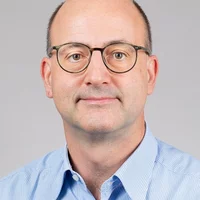
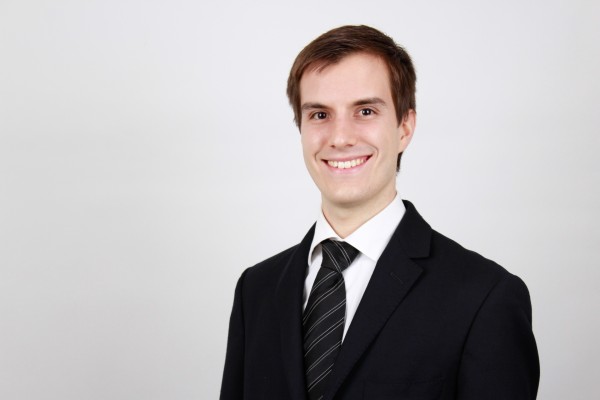
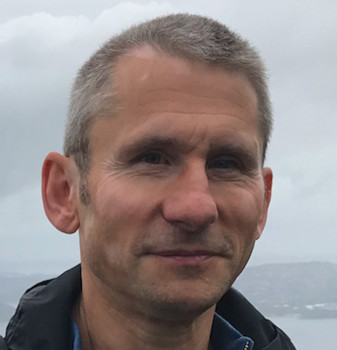
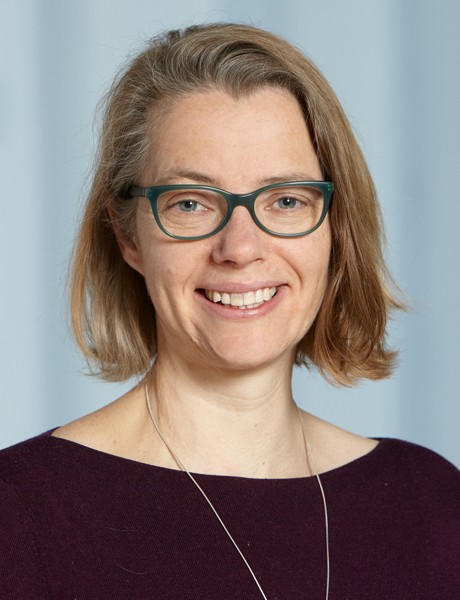
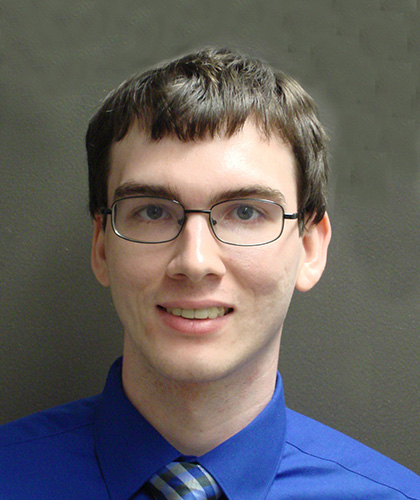
Natalya Zheltukhina is Lecturer in Mathematics at Bilkent University's Department of Mathematics. Her research examines asymptotic zero distributions of power series sections and tails, multiple positivity in sequences, and classification of Darboux integrable systems. Her work in complex analysis investigates properties of entire functions through coefficient patterns and zero distributions. Recent publications develop discretization methods for integrable systems while preserving key structural properties. Zheltukhina teaches undergraduate mathematics courses including calculus, discrete mathematics, and linear algebra. She provides extensive course materials including problem sets and lecture notes accessible through department websites.
Roles: Group Leader at the Paul Scherrer Institute (PSI), Switzerland; Member of the Board of the PhD Programme in Chemical and Materials Sciences at the University of Torino, Italy. Education: PhD in Technical Chemistry (ETH Zurich, 2002); Laurea in Chimica Industriale (University of Milan, 1997). Research Interests: Focus on heterogeneous catalysis, environmental catalysis, and advanced spectroscopic methods (e.g., in situ/operando techniques). Specializes in catalyst design for energy conversion, CO₂ methanation, and NOx reduction. Articles Trends: Recent work emphasizes catalyst mechanisms for N₂O decomposition, methanol-to-olefins processes, and operando studies of Pd and Pt nanoparticles. Organizations: Co-organized Operando VII (2023), guest editor for Catalysis Today , and contributor to conferences on catalysis and spectroscopy. Labs: Leads the Applied Catalysis and Spectroscopy group at PSI’s Center for Energy and Environmental Sciences.
Diana Piankova is a Lecturer at the Department of Mechanical and Process Engineering at ETH Zürich. Her research focuses on structural dynamics in CO 2 capture/conversion processes, employing environmental scanning electron microscopy (ESEM) and in situ transmission electron microscopy (TEM). She holds a Ph.D. from the Max Planck Institute of Colloids and Interfaces, where she specialized in electron microscopy and short-range order analysis of materials, supervised by Dr. Nadezda Tarakina and Prof. Dr. Markus Antonietti. Education: Bachelor's degree in Materials Science (2019) from Ural Federal University, Russia Ph.D. in Materials Science (2023) from Max Planck Institute of Colloids and Interfaces Research Interests: Diana's work bridges advanced microscopy techniques with materials science, particularly in energy-related applications. She investigates photocatalytic materials, nanocarbon synthesis, and structural evolution under reaction conditions. Her methodologies include electron pair distribution function (ePDF) analysis and in situ TEM, enabling real-time observation of material dynamics. Publications: Her recent work emphasizes carbon nitride modifications, MXene catalysis, and radiation-induced crystal formation. These studies underscore her expertise in linking structural characterization with functional material design. Labs/Teams: Diana is affiliated with the LESE group at ETH Zürich, contributing to interdisciplinary projects on sustainable energy materials.
Michael Lipnowski is an Assistant Professor in the Department of Mathematics at Ohio State University. His research focuses on number theory, representation theory, automorphic forms, algebraic geometry, and differential geometry. He earned his Ph.D. under Akshay Venkatesh and has contributed to areas such as spectral gaps, hyperbolic manifolds, and arithmetic statistics. His work bridges pure mathematics disciplines with applications in geometric topology and mathematical physics. Research interests include the interplay between analytic and algebraic methods in number theory, spectral properties of geometric spaces, and the study of modular forms and their representations. Recent projects involve Seiberg-Witten equations on hyperbolic 3-manifolds, Cohen-Lenstra heuristics for class groups, and eigenvalue distributions in geometric contexts. His publications explore topics like monopole Floer homology, counting problems in moduli spaces, and torsion invariants under base change. Lipnowski collaborates actively with researchers such as Henri Darmon, Francesco Lin, and Jacob Tsimerman. His expository writings and computational tools further demonstrate his engagement with both theoretical and applied aspects of mathematics.
Shwai He is a PhD student and Affiliate Assistant Professor at the University of Maryland, advised by Ang Li. Their research focuses on advancing AI systems through innovative approaches in large language models (LLMs), fairness in machine learning, and efficient neural network architectures. Key areas include multi-agent systems, causal modeling for bias mitigation, and optimization techniques for mixture-of-experts models. Research interests span artificial intelligence, machine learning, and natural language processing with emphasis on practical applications like healthcare diagnostics and social pairing systems. Notable work includes developing GNWT-based multi-agent digital twins for social platforms and improving LLM transparency through token analysis. Publications highlight contributions to counterfactual fairness, dynamic-depth transformers, and parameter-efficient methods. Current efforts explore computational efficiency in vision-language models and bio-inspired antibody prediction systems. No scientific awards have been mentioned. Advising and grants: Currently a PhD student under Ang Li's supervision. Research involves collaborations across computer science and bioinformatics domains.
Krzysztof Poźniak is a Professor at the Institute of Electronic Systems within the Faculty of Electronics and Information Technology at Warsaw University of Technology. He holds a PhD and DSc (habilitation), specializing in experimental high energy physics with a focus on collider-based particle physics. His research is deeply integrated with the CMS Experiment at CERN's Large Hadron Collider (LHC), contributing to studies of Higgs boson properties, heavy ion collisions, and searches for beyond the Standard Model physics. University: Warsaw University of Technology Faculty: Faculty of Electronics and Information Technology Department: Institute of Electronic Systems Research interests include: Higgs boson self-coupling and production mechanisms Jet substructure and quark/gluon discrimination Heavy flavor physics in proton-proton and heavy ion collisions Detector development for high-luminosity LHC conditions Electroweak precision measurements Prominent recent work focuses on: Analysis of ttH production in b-bbar decay channels Studies of bottom quark energy loss in Pb-Pb collisions Searches for fractionally charged particles Measurement of WW and WZ cross sections at 13.6 TeV His group collaborates extensively with the CMS Collaboration, contributing to detector upgrades and data analysis frameworks. Over 740 documented publications reflect his leadership in experimental particle physics, with a particular emphasis on precision measurements and new physics searches.
Johanna Genest Nešlehová is a Professor at the Institute for Statistics and Mathematics at Vienna University of Economics and Business. She previously served as Assistant Professor at McGill University (2009-2020) and holds a PhD in Mathematics from Carl von Ossietzky University of Oldenburg. Her research spans statistics, probability theory, and financial mathematics with focus areas including multivariate analysis, dependence modeling, copulas, and statistical methods for financial applications. She serves as editor for the Canadian Journal of Statistics and Statistics and Risk Modeling. Research publications demonstrate focus on multivariate statistical methods, dependence modeling, and applications in financial mathematics. Recent work includes stochastic decomposition methods, causal inference techniques, and rank-based estimation. Carrie M. Derick Award for Graduate Supervision and Teaching CRM-SSC Prize
Prof. Toyoko Orimoto is a Professor of Physics at Northeastern University's College of Science, specializing in experimental particle physics. She leads research at the CMS Experiment at CERN's Large Hadron Collider (LHC), focusing on Higgs boson physics, beyond the Standard Model (BSM) searches, and detector development. Her work includes studies of Higgs boson interactions, dark matter signatures, and the CMS electromagnetic calorimeter upgrade. Prof. Orimoto also advocates for diversity, equity, and inclusion in science. Education: PhD in Physics from UC Berkeley (2006), followed by postdoctoral roles at Caltech (2006-2009) and CERN (2009-2012). She has been at Northeastern since 2012. Research interests span experimental particle physics, including Higgs boson decay mechanisms, BSM physics (supersymmetry, extra dimensions), and future colliders like the muon collider. Her group contributes to CMS detector improvements, such as the MIP timing layer and electromagnetic calorimeter readout electronics. Notable achievements include co-winning the 2025 Breakthrough Prize in Fundamental Physics for LHC research and organizing the 2024 Large Hadron Collider Physics Conference at Northeastern. Her work bridges cutting-edge physics with detector technology and accelerator R&D.
Geoffrey P. Jones is a Professor of Marine Biology in the College of Science and Engineering at James Cook University, Australia. His research focuses on coral reef ecology, marine conservation, and fisheries management, with particular expertise in larval dispersal, marine protected areas, and the dynamics of coral reef fish populations. He has established himself as a leading researcher in understanding how marine reserves function and contribute to fisheries sustainability. Dr. Jones's research interests center on the ecological processes that govern coral reef fish populations and communities. His work examines the complex relationships between habitat structure, species interactions, and environmental factors that influence fish distribution, abundance, and behavior. He has made significant contributions to understanding larval dispersal patterns, connectivity among reef populations, and the effectiveness of marine protected area networks. His research combines field studies, genetic analyses, and modeling approaches to address fundamental questions in marine ecology and conservation. Analysis of his recent publications reveals a strong focus on the ecological dynamics of coral reef systems, particularly examining how physical and biological factors shape fish communities. His work spans multiple scales from microhabitat selection to regional patterns across the Great Barrier Reef. A recurring theme is the investigation of how marine reserves function as conservation tools and their role in sustaining fisheries. His research often incorporates innovative approaches including genetic parentage analysis to track larval dispersal and advanced spatial modeling techniques. Dr. Jones has been instrumental in advancing our understanding of coral reef fish ecology through extensive fieldwork on the Great Barrier Reef and other Indo-Pacific locations. His research program has contributed significantly to marine conservation policy, particularly regarding the design and implementation of effective marine protected area networks. He has supervised numerous graduate students and collaborated with researchers worldwide, establishing himself as a central figure in coral reef science.
Sam Wilken is a Research Fellow in the Saleh Group at the Department of BioEngineering, University of California, Santa Barbara (UCSB). His work focuses on biomolecular condensates, phase-separated systems, and soft matter physics. He investigates the dynamics of DNA-based liquids, nucleation mechanisms in biomolecular systems, and the interplay between electrostatic interactions and base-pairing in phase separation processes. His research bridges biophysics, materials science, and statistical mechanics. Key areas of exploration include spatial organization of DNA condensates, hyperuniformity in phase-separated systems, and the engineering of DNA droplet properties through surface modifications. Wilken's studies often employ mesoscale self-organization principles and advanced characterization techniques to understand how biological and synthetic systems achieve functional spatial organization. His recent work reveals trends in studying both equilibrium (e.g., nucleation dynamics) and non-equilibrium (e.g., jamming transitions) phenomena in biomolecular and colloidal systems. While no awards are explicitly mentioned, his publications indicate sustained contributions to understanding phase behavior in complex fluids and biological systems. He collaborates within the Saleh Group to advance applications in reconfigurable materials and evolutionary computation-optimized systems.
Oral Buyukozturk is the George Macomber Professor in Construction Management at MIT's Department of Civil and Environmental Engineering, part of the School of Engineering. His research focuses on sustainable infrastructure, energy-efficient materials (e.g., novel cement-based composites), and advanced structural health monitoring techniques. He holds a Ph.D. from Cornell University and has pioneered studies on multiscale concrete mechanics and smart sensing systems for civil infrastructure. Key awards include Fellowships from the American Society of Civil Engineers (ASCE) and Scotland’s National Academy of Science and Letters. His teaching spans courses like Mechanics and Design of Concrete Structures and Colossal Failures in Engineering . His lab, the Laboratory for Infrastructure Science and Sustainability (LISS), develops innovative solutions for low-carbon construction and resilient built environments. Notable contributions include using smartphone videos for vibration measurements, Bayesian methods for damage detection, and neutron/X-ray techniques to study cement hydration. His work on irradiated recycled plastic as a sustainable concrete additive has received international media attention.
Professor Maurice Elphick chairs Animal Physiology and Neuroscience at Queen Mary University of London's School of Biological and Behavioural Sciences, with affiliations across multiple research centres including Evolutionary and Functional Genomics. His research reconstructs neuropeptide evolution using echinoderm models to bridge protostome-vertebrate knowledge gaps. Elphick's investigations reveal conserved neuroendocrine mechanisms underlying physiological processes like spawning control and tissue regeneration. Current BBSRC-funded research (£576,040) identifies 'missing links' in neuropeptide evolution through comparative genomics and functional characterization across deuterostomes. Technical innovations include a £390,834 confocal microscopy facility enabling dynamic studies of complex biological systems. Recent publications demonstrate expanding focus on neuropeptide roles in echinoderm development, reproductive physiology, and regenerative processes. Elphick's laboratory examines neural control of mutable collagenous tissue—a unique echinoderm adaptation enabling rapid body wall stiffening. This research holds biomedical relevance for understanding regenerative mechanisms and designing smart materials. His group also investigates peptide hormone regulation of spawning in starfish, supported by Leverhulme Trust funding. Teaching encompasses neuroscience, comparative physiology, and practical biology. Professor Elphick mentors graduate researchers studying neuropeptide diversity and function in echinoderm model systems. His research group maintains international collaborations and contributes to genomic resources for evolutionary developmental biology.
Kirsten Bomblies serves as Full Professor in the Department of Biology at ETH Zurich, where she concurrently holds the position of Deputy Head of the Institute of Molecular Plant Biology. Her research program addresses fundamental questions in evolutionary genetics through the lens of polyploid adaptation in plants, with primary focus on Arabidopsis arenosa as a model system for understanding genome duplication consequences. Her research interests concentrate on the molecular mechanisms enabling meiotic stability in polyploids, investigating how plants overcome the initial infertility barrier following whole-genome duplication. Key areas include chromosome pairing dynamics, crossover interference evolution, and the genetic basis of adaptive traits like drought tolerance emerging as by-products of polyploidy. Her work integrates cytological, genomic, and population genetic approaches to dissect how natural selection shapes meiotic machinery in response to genome duplication events, with particular attention to temperature-responsive recombination plasticity and protein stability adaptations. Analysis of her publication trajectory reveals consistent thematic focus on polyploid meiosis stabilization since 2012, with recent work expanding into 3D genome organization, chromatin accessibility changes in nascent polyploids, and the role of cohesin variants in adaptive evolution. Her research demonstrates how polyploid systems evolve solutions to universal challenges of multivalent chromosome pairing, with implications for understanding evolutionary innovation following genome duplication events across eukaryotes.
John Weeks is a Distinguished University Professor at the University of Maryland, affiliated with the Institute for Physical Science & Technology. His research focuses on theoretical and computational studies of solvation phenomena, interfacial chemistry, and non-equilibrium systems. Key areas include molecular field theory, ion solvation dynamics, hydrophobic effects, and surface electromigration. He investigates long-range forces in aqueous systems, the structural and thermodynamic properties of liquids at interfaces, and the development of advanced simulation methods for complex fluids. His work bridges statistical mechanics, condensed matter physics, and chemical theory to explain molecular-scale phenomena in both equilibrium and non-equilibrium settings. Recent contributions address crystal nucleation mechanisms, the role of distant boundaries in charged particle solvation, and the application of local molecular field theory to ionic systems. His research has implications for understanding biological solvation, materials science, and environmental chemistry. Notable trends in his publications include: (1) advancing multiscale models for long-range interactions in confined systems, (2) analyzing hydrophobic effects through molecular-scale structural changes in water, and (3) developing efficient computational frameworks for simulating Coulombic systems. While no specific awards or grants are listed here, his extensive publication record reflects sustained leadership in theoretical chemistry and materials science. He has advised numerous researchers through collaborative projects at the Institute for Physical Science & Technology.
Richard Brewster is an Assistant Research Professor at the University of Maryland's Institute for Research in Electronics & Applied Physics. He holds a Ph.D. in Physics from the University of Maryland, Baltimore County (2019) and has been affiliated with the University of Maryland since 2019, collaborating with Professor Yanne Chembo. His research focuses on quantum information, quantum communications, and quantum optics, particularly addressing decoherence in quantum states and fiber-based quantum network simulation frameworks. Education Ph.D. in Physics, University of Maryland, Baltimore County (2019) Research Interests Brewster investigates quantum optical systems, emphasizing the development of robust quantum networks and mitigation of decoherence effects. His work includes modeling nonidealities in fiber-based quantum systems and exploring noiseless amplification techniques to preserve entanglement quality. His methodologies span analytical modeling, numerical simulations, and experimental frameworks for quantum communication protocols. Research Trends His publications (2017–2025) highlight advancements in Bell inequality violation quantification, polarization entanglement degradation analysis, and noiseless attenuation strategies. Recent work emphasizes automated methodologies for entanglement quality estimation and generalized delta function applications in quasi-probability distributions. Awards & Recognition No specific awards mentioned in the provided text. Advising & Grants Brewster collaborates actively with senior faculty (e.g., Yanne Chembo) but no formal advisee list is provided. His research is likely supported by grants focused on quantum communication and photonics. Labs & Teams He is affiliated with the Photonic Systems Laboratory for Aerospace and Communication Engineering , focusing on applied quantum optics and aerospace communication technologies.