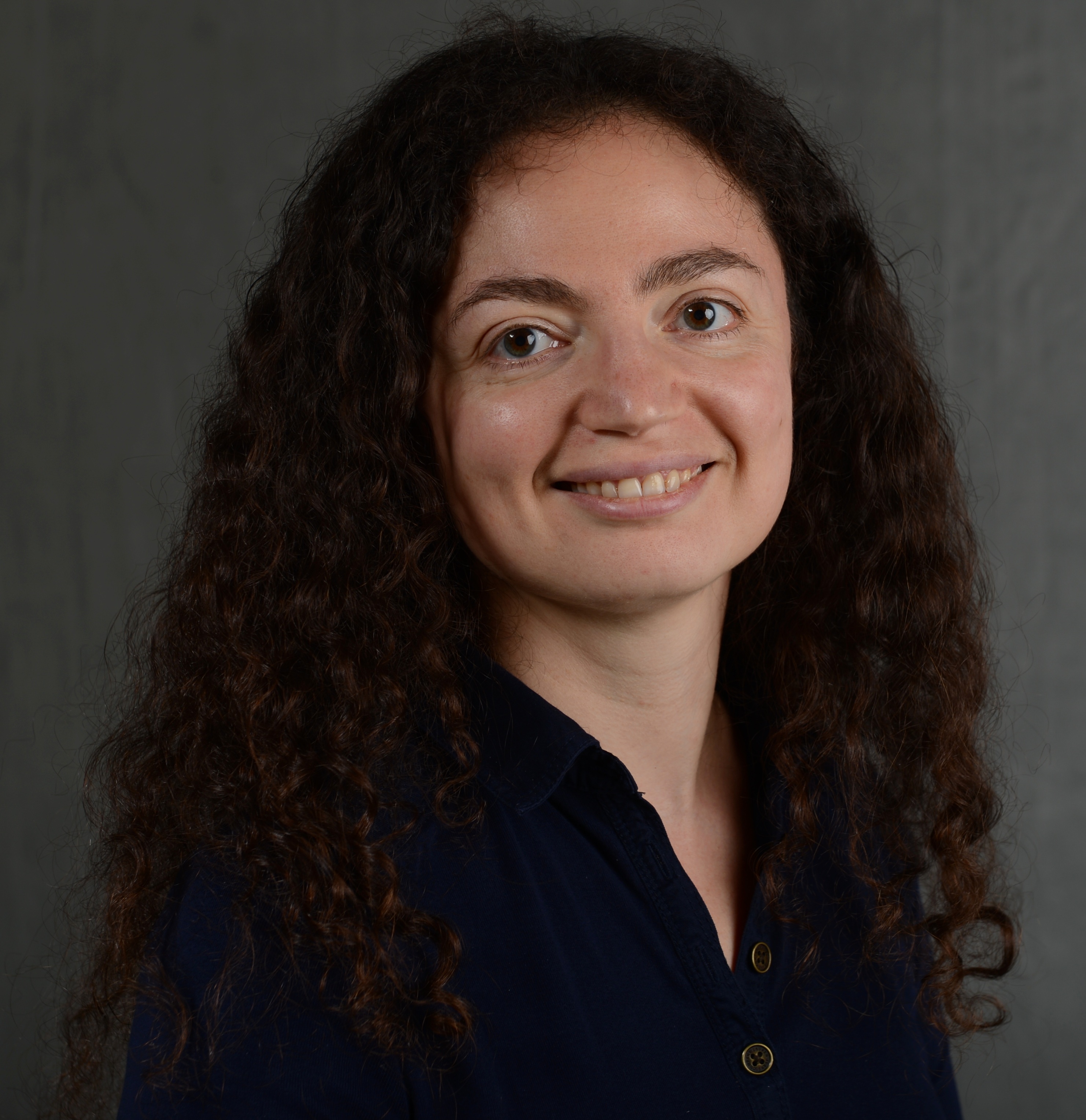
Julia Chuzhoy is the Manuel Blum Professor at the Toyota Technological Institute at Chicago (TTIC) and holds a part-time Professor appointment in the Department of Computer Science at the University of Chicago . She completed her Ph.D. at the Technion under the supervision of Seffi Naor , followed by postdoctoral positions at MIT , University of Pennsylvania , and the Institute for Advanced Study . She also served as a Weizmann Institute Weston Visiting Professor in 2018-2019. Her research in theoretical computer science focuses on graph-related optimization problems , including approximation algorithms, dynamic algorithms, fast graph algorithms, and hardness of approximation. She has received major funding through NSF grants (CCF-1318242, CCF-1616584, CCF-2006464, CCF-2402283) and the NSF HDR TRIPODS award (2216899). Her recent publications highlight advancements in approximation algorithms (e.g., maximum bipartite matching), dynamic graph algorithms (e.g., decremental shortest paths), and structural graph theory (e.g., excluded grid theorem). These works span both algorithmic improvements and theoretical lower bounds. Scientific recognition includes NSF Career Award (2013) Alfred P. Sloan Research Fellowship (2011) She has advised numerous TTIC and University of Chicago Ph.D. students, including Rachit Nimavat , Zihan Tan , and Parinya Chalermsook (now faculty at Aalto University ).
Fabio Furini is an Associate Professor at the Department of Computer Science, Automatics, and Management (DIAG) at Sapienza University of Rome since September 2021. Prior to this position, he served as a CNR researcher at IASI-CNR in Rome (2020-2021), Maître de Conférences at Université Paris-Dauphine, France (2013-2019), postdoctoral researcher at Université Paris-13, France (2012-2013), and research fellow at the University of Bologna (2011-2012). His educational background includes a Ph.D. in Control Engineering and Operations Research from the University of Bologna in 2011. He further obtained the Habilitation à Diriger des Recherches (HDR) in France in 2017 and the National Scientific Qualification for Full Professor in Operations Research in Italy in 2019. Fabio Furini conducts theoretical and methodological research on Combinatorial Optimization and Operations Research. His primary focus is on developing exact algorithms based on decomposition and reformulation techniques for integer linear programming problems. His research spans various applications including network optimization, graph theory, and combinatorial problems such as the maximum clique problem, bin packing problem, and vertex separator problem. His work often bridges theoretical developments with practical applications in transportation, logistics, and network security. His recent publications demonstrate a strong focus on exact algorithms for combinatorial optimization problems, particularly in network interdiction, bin packing with temporal constraints, and graph-based problems. His work consistently combines integer programming techniques with combinatorial search methods to develop novel formulations and efficient solution approaches that advance the state-of-the-art in these domains. Among his notable scientific awards are the Prime d'encadrement doctoral et de recherche (PEDR), which he received annually from 2014 to 2020, recognizing him among the top 15% of researchers in the French university system. He also holds the prestigious Habilitation à Diriger des Recherches from France (2017) and the National Scientific Qualification for Full Professor in Operations Research from Italy (2019). Fabio Furini has been actively involved in supervising PhD students and has served as principal investigator for numerous national and international research projects. His extensive network includes over 60 co-authors across European and American universities. He is also a member of the editorial boards for three prestigious international journals: Omega, Annals of Operations Research, and Discrete Applied Mathematics. His research activities include collaborations with various institutions across Europe and the United States, including Imperial College London and the University of Colorado. These collaborations have resulted in a robust research program focused on advancing the theoretical foundations and practical applications of combinatorial optimization.
Remco M. Dijkman serves as Full Professor in Information Systems at Eindhoven University of Technology (TU/e), chairing the Information Systems group within the Industrial Engineering and Innovation Sciences school. He additionally holds a Full Professor position at EAISI High Tech Systems and acts as research director for high-tech supply chains at the European Supply Chain Forum—a network of over 50 multinational companies. His research centers on Business Process Management with emphasis on data-driven optimization of business processes. His academic background includes both PhD and Master's degrees in Computer Science from the University of Twente. Publications span Information Systems, Computers in Industry, and Transactions on Software Engineering and Methodology, with over 100 papers and service on the editorial board of Information Systems. He has held visiting positions at New York University, Hasso Plattner Institute, IBM Zurich Research Lab, Humboldt-University Berlin, and Queensland University of Technology. Dijkman's research interests focus on detecting, diagnosing, and predicting optimal execution scenarios in business processes, developing mathematical models for quantitative process analysis , and resource assignment optimization . These are primarily applied in transportation logistics and high-tech supply chains, where he investigates data-driven predictions for transport order assignment and supply chain planning. His work bridges artificial intelligence with practical business applications. Recent publications (2024-2025) reveal concentrated efforts in deep reinforcement learning for resource allocation, process pattern discovery, and software library development (GymPN, SimPN). Key trends include predictive process monitoring for healthcare applications, event data enrichment frameworks, and uncertainty handling in logistics planning—demonstrating strong interdisciplinary integration. Scientific recognition includes: Best Demo Award (2019) Best Reviewer Award (2016) Test of Time Award (2019) He has supervised 150 students, including Lotte Vugs who received the Dow Chemical Best OML Master Thesis Award in 2020. Grant leadership spans eight projects: NXTGEN Smart Industry (2023-2030), CollChain (2023-2029), CERTIF-AI (2020-2025), FENIX (2019-2023), and DynaPlex (2021-2024), focusing on digital twins, federated networks, and AI-driven supply chain solutions. Dijkman directs the Information Systems group at TU/e and leads the European Supply Chain Forum's high-tech supply chain research. His work integrates with semiconductor manufacturing and transportation logistics through collaborations with industry partners, while his 2023 invited talks at Technical University of Munich and Humboldt University Berlin highlight his international engagement.
Matthew Jenssen is a Reader in Probability at King's College London and a UKRI Future Leaders Fellow. He holds a BA and MMath from the University of Cambridge (2012–2013) and a PhD from the London School of Economics (supervised by Jozef Skokan and Julia Boettcher). His research focuses on the intersection of combinatorics, statistical physics, and theoretical computer science, particularly on large-scale structure formation in systems with local interactions. Notable contributions include advancements in sphere packing, Ramsey numbers, and random matrix theory. Jenssen has held postdoctoral positions at the University of Oxford and the University of Birmingham before joining King’s in 2023. His research group at King’s explores discrete probability, extremal combinatorics, and algorithms, with applications to statistical physics and high-dimensional geometry. Key achievements include a groundbreaking improvement on sphere packing lower bounds and resolving extremal questions in graph theory. Jenssen’s work often bridges combinatorial theory with computational methods, yielding impactful results in probabilistic combinatorics. Scientific awards include the UKRI Future Leaders Fellowship (2020). His grants include a 2023–2026 project on statistical physics methods in combinatorics and geometry. Jenssen collaborates widely, with notable co-authors including Will Perkins, Jozef Skokan, and Felix Joos. He is actively involved in the Probability Group at King’s and contributes to international conferences and arXiv publications.
Sangwoo Kim is a Tenure Track Assistant Professor at the Swiss Federal Institute of Technology Lausanne (EPFL) in the Institute of Mechanical Engineering. He leads the Mechanics of Soft and Biological Matter Laboratory (MESOBIO), focusing on the interplay between mechanics, physics, and biology in living systems. His research spans soft matter physics, developmental biology, and mechanical engineering. 2023–Present: Tenure Track Assistant Professor, EPFL School of Engineering Postdoctoral Fellow, UC Santa Barbara Mechanical Engineering Ph.D. in Theoretical and Applied Mechanics, University of Illinois at Urbana-Champaign Kim’s research investigates fundamental properties of biological and soft materials, including: Tissue morphogenesis and embryonic development Mechanical behavior of amorphous and active matter Non-equilibrium dynamics in cellular systems Phase transitions in biological tissues Stress and osmotic pressure quantification His recent publications reveal a focus on: Biological jamming and fluidization Zebrafish axis elongation mechanics Energy landscapes of cellular matter Active matter modeling Statistical mechanics of soft materials Developmental force transmission Kim supervises PhD students and teaches courses in structural mechanics at EPFL, emphasizing problem-solving in engineering design.
Jonathan Pakianathan is a Professor of Mathematics at the University of Rochester's School of Arts & Sciences, Department of Mathematics. He holds a PhD from Princeton University (1997) and a BS in Mathematics and Physics from Caltech (1992). His research focuses on algebraic topology, cohomology of groups and Lie algebras, geometric combinatorics, and finite fields. He has held leadership roles, including Director of Graduate Studies (2014–2020) and Director of Undergraduate Studies (2003–2010). Notable awards include the Goergen Award for Excellence in Teaching (2014) and the Sloan Foundation Doctoral Dissertation Fellowship (1996). His research explores applications of topology and algebra in discrete geometry, often collaborating with Alex Iosevich and students. Recent work addresses topics like Fuglede's conjecture over finite fields, geometric configurations, and probabilistic methods in combinatorics. His articles frequently intersect harmonic analysis, group theory, and number theory, reflecting interdisciplinary strengths. Education : PhD, Princeton University, 1997 BS in Mathematics and Physics, Caltech, 1992 Awards : Goergen Award for Excellence in Undergraduate Teaching, 2014 Sloan Foundation Doctoral Dissertation Fellowship, 1996 H. J. Ryser Scholarship, 1991 Grants include an NSA Mathematical Sciences Grant (2016–2017, $110,000 total) with A. Iosevich. He advises numerous PhD students, many of whom now hold academic or research positions. His teaching spans undergraduate to graduate courses, including algebra, topology, and financial mathematics. Research groups and collaborations extend to geometric combinatorics, algebraic topology, and applications in physics and data science. Ongoing projects explore topological methods in discrete geometry and probabilistic structures over finite fields.
Ignacio Castillo is a Professor and Associate Dean of Business (Graduate Academic Programs) at the Lazaridis School of Business and Economics, Wilfrid Laurier University. His expertise spans facility location optimization, supply chain management, and sustainable operations. He holds a leadership role in graduate academic programming and teaches courses in operations and statistics. Research focuses on optimizing facility layouts, material handling systems, and closed-loop supply chains. He has developed frameworks for multi-objective facility design and advanced packing optimization algorithms. His work bridges theoretical models with real-world applications in manufacturing and retail sectors. Publications emphasize nonlinear optimization techniques, packing problems, and supply chain coordination strategies. Recent work explores irregular object configurations and retail category space optimization. His textbooks include Business Statistics for Contemporary Decision Making and Operations Management , emphasizing practical decision-making tools. Office: LH4001M | Languages: English, Spanish
Prof. Dr. Georg Hein is a Professor in the Department of Mathematics at the University of Duisburg-Essen, Campus Essen. His office is located at WSC-O-3.58, Thea-Leymann-Str. 9, 45117 Essen, with office hours held every Tuesday from 2-3 PM and by appointment. He serves as Director of the Research Group Hein, focusing on Algebraic Geometry. His research centers on Algebraic Geometry with specific expertise in vector bundles, moduli spaces, elliptic surfaces, and sheaf theory. Hein's work demonstrates deep engagement with stability conditions, Fourier-Mukai transforms, and geometric invariant theory. His publications reveal a consistent focus on foundational structures in algebraic geometry, particularly through the lens of vector bundles on curves and surfaces. Analysis of his 15 most recent publications (2017-2007) shows a strong thematic continuity in moduli space theory and vector bundle classification. His work bridges abstract algebraic constructions with computational approaches, as evidenced by algorithmic developments for elliptic surfaces and lattice-theoretic investigations. The publications collectively emphasize stability criteria across diverse geometric contexts. Hein actively supervises PhD students including Asbjørn Michelsen, with former advisees Quyet Thang Truong and Dr. Dario Weißmann. He contributes to academic outreach through the Essen Math Circle for students, organizing weekly sessions for grades 5-13 covering advanced mathematical topics beyond standard curricula. His teaching portfolio includes courses such as Mathematische Miniaturen and Topologie .
Sonia Vanier is a Professor in the Department of Computer Science at École Polytechnique, where she holds multiple leadership positions: Head of the 'Trusted and Responsible AI' Chair (X/Crédit Agricole), Head of the 'Optimization and AI for Mobility' Chair (X/SNCF), Head of 3A, and Scientific Manager of Industrial Relations for both the Department and the Computer Science Laboratory (LIX). She coordinates the GdT OR (Network Optimization) working group and leads the REST (Energy, Services and Transport Networks) research axis of the CNRS GDROD, while serving on its scientific council. Her research develops decision support tools for complex industrial problems through hybrid approaches combining Artificial Intelligence and Operations Research , with focus areas including Network Optimization, ethical AI systems, sustainable computing, and trustworthy AI frameworks. Her work bridges theoretical foundations with applications in telecommunications, transportation, and cybersecurity. Publications demonstrate strong emphasis on optimization techniques (branch-and-price, cutting planes) applied to wireless networks, AI safety, and security challenges. Recent works explore LLM memorization, signomial programming, and multi-commodity flow problems, showing consistent integration of OR with machine learning for industrial-scale problems. Awards: Research Award and Innovation Award, Telecom Valley Association ALOES Orange Innovation Project She leads major industrial-academic partnerships through the Crédit Agricole and SNCF chairs, managing research grants focused on responsible AI deployment and mobility optimization. As Scientific Manager of Industrial Relations, she oversees industry collaborations for LIX laboratory. Affiliated with the Computer Science Laboratory (LIX), she directs the 3A research group and contributes to national initiatives through CNRS GDROD, coordinating research in network optimization and sustainable systems.
Ross J. Kang is a Canadian mathematician currently serving as an Associate Professor at the Korteweg–de Vries Institute for Mathematics within the Faculty of Science at the University of Amsterdam since 2022. He is an active member of the Discrete Mathematics and Quantum Information group and the NETWORKS consortium. Previously, he held positions as Assistant/Associate Professor at Radboud University Nijmegen (2014-2022), Assistant Professor at Utrecht University (2013), and Researcher at Centrum Wiskunde & Informatica (2012-2013). His academic journey includes postdoctoral positions at Durham University (2010-2012) and McGill University (2008-2010), where he was advised by Bruce Reed and Louigi Addario-Berry. DPhil in Mathematics, University of Oxford (2008) - Thesis: 'Improper colourings of graphs', advised by Colin McDiarmid BSc (Hons) in Mathematics and Computer Science, University of Victoria (2003) - Governor General's Silver Academic Medal recipient Ross J. Kang's research focuses on probabilistic and extremal combinatorics, random discrete structures, graph coloring, geometric graphs, and algorithms. His work bridges theoretical mathematics with practical applications, exploring fundamental questions in discrete mathematics. He has made significant contributions to understanding graph coloring problems, particularly in the contexts of list coloring, distance coloring, and strong coloring. His research often employs probabilistic methods to establish bounds and structural properties in graph theory. Kang's work on the hard-core model, local occupancy method, and triangle-free graphs has advanced our understanding of the interplay between local constraints and global structure in discrete systems. Analysis of his recent publications reveals a strong emphasis on graph coloring problems, particularly list coloring variants and their extensions. His work frequently explores the relationship between graph structure (such as degree constraints, girth, or forbidden subgraphs) and coloring properties. A notable trend is his development and application of the local occupancy method to establish improved bounds for chromatic numbers in various graph classes. His research also demonstrates a consistent interest in extremal problems, seeking optimal configurations under specific constraints, particularly in the context of triangle-free graphs and geometric representations. NWO Open Competition M-1 grant entitled 'Asymptotic triangle-free structure (3Free)', 2022-2026 NWO Vidi grant entitled 'On the edge: theory and techniques at the frontiers of edge-colouring', 2017-2023 NWO Veni grant entitled 'Generalised colouring for random graph models', 2012-2015 Van Gogh travel grants (2020-2021 with Marthe Bonamy; 2016-2017 with Louis Esperet) Governor General's Silver Academic Medal (2003) Ross J. Kang has successfully supervised multiple PhD students including Eoin Hurley (defending May 2025), Stijn Cambie (defended April 2022), and François Pirot (winner of 2020 prix Charles Delorme). His research is supported by significant grants from the Netherlands Organisation for Scientific Research (NWO), including the prestigious Open Competition M-1 grant. Kang is actively involved in the academic community through his editorial role at Combinatorial Theory, co-organization of conferences like the Dutch Days of Combinatorics, and leadership in initiatives such as Innovations in Graph Theory, a diamond open access journal he helped launch in August 2023. As a member of the Discrete Mathematics and Quantum Information group at the University of Amsterdam and the NETWORKS consortium, Kang collaborates with researchers across various institutions. He has established strong international connections through his Van Gogh travel grants and participation in collaborative projects like the Sparse (Graphs) Coalition sessions. His research group focuses on theoretical aspects of discrete mathematics with connections to quantum information science, and he maintains active collaborations with researchers across Europe and North America.
Michael Benzaquen is a CNRS Research Scientist and accredited research director (HDR) based at École Polytechnique, where he founded and currently holds the Chair of Econophysics & Complex Systems. He is affiliated with LadHyX (UMR CNRS 7646), a research laboratory focused on hydrodynamics and complex systems at the intersection of physics, economics, and social sciences. Dr. Benzaquen's research spans multiple interdisciplinary fields, with primary interests in: Statistical physics of complex systems Hydrodynamics at interfaces Econophysics and quantitative finance Socio-physics and behavioral modeling Applications of physics to economics and social sciences Physical approaches to market microstructure and price formation His work demonstrates a unique methodology applying physical principles to understand complex phenomena in financial markets, social dynamics, and ecological systems. Dr. Benzaquen has made significant contributions to understanding market impact, price formation, and the statistical properties of economic systems from a physics perspective, while also maintaining strong research in fundamental fluid dynamics and interfacial phenomena. Analysis of Dr. Benzaquen's extensive publication record reveals a consistent trend toward interdisciplinary integration, with recent work increasingly bridging statistical physics, econophysics, and complex systems theory to address real-world problems. His publications span from fundamental research on ship wakes, liquid crystals, and thin films to applied studies in quantitative finance, ecological economics, and social dynamics, demonstrating remarkable breadth while maintaining methodological coherence through statistical physics approaches. As an accredited research director (HDR), Dr. Benzaquen supervises PhD students and postdoctoral researchers, leading an active research group focused on econophysics and complex systems. His group maintains strong collaborations across disciplines and regularly publishes in high-impact journals spanning physics, finance, and interdisciplinary sciences. The group's work is supported by various research funding sources enabling ambitious projects at the intersection of physics and social sciences. Dr. Benzaquen's laboratory at LadHyX brings together researchers from diverse backgrounds including physics, mathematics, economics, and computer science to tackle complex problems using quantitative approaches. His research has practical applications in financial market regulation, ecological conservation, and materials science, reflecting the real-world impact of his interdisciplinary methodology.
Sidharth Jaggi is a Professor at the School of Mathematics, University of Bristol, with over 19 years of experience in Information and Data Sciences through the lens of Information Theory. His work emphasizes fundamental performance limits and algorithm design for systems under adversarial threats. Education: B.Tech, M.Phil, PhD Research interests focus on adversarial communication, information-theoretic security, coding theory, and sparse data estimation. He leads the CAN-DO-IT team (Codes, Algorithms, Networks – Design and Optimization for Information Theory), integrating theoretical tools into practical applications like secure distributed computing and robust data storage. Recent publications highlight advancements in adversarial channels , group testing , and privacy-preserving coding . Trends include covert communication under spectral constraints, causal feedback benefits, and efficient algorithms for high-dimensional problems. Current projects include "Information Theory for Interactive Distributed AI" (2024–2029), exploring interactive systems under adversarial constraints.
Elena Grigorescu is an Adjunct Associate Professor in the Department of Computer Science at Purdue University, where she has been a faculty member since Fall 2012. Her research program spans theoretical computer science with a focus on foundational algorithmic challenges in large-scale data processing and computational limits, maintaining strong connections to cryptography, communications, and optimization applications. Her educational background includes a PhD from the Massachusetts Institute of Technology (MIT), establishing her expertise in rigorous theoretical frameworks. Professor Grigorescu's research emphasizes designing algorithms that operate in sublinear time or space for massive datasets, analyzing complexity of error-correcting codes and lattices, and exploring information-theoretical computation limits. Current investigations integrate differential privacy with learning-augmented techniques to solve online optimization problems, network design challenges, and data stream processing bottlenecks. Her work bridges abstract theory with practical implementations in cryptographic systems and quantum computing paradigms, demonstrating consistent innovation in algorithmic foundations. Analysis of her recent publications (2022-2025) reveals a dominant focus on sublinear-time algorithms, particularly at the intersection with differential privacy and machine learning augmentation. Key contributions include novel spanner constructions for network design, privacy-preserving clustering frameworks, and breakthroughs in trace reconstruction and coding theory. A pronounced trend shows increasing integration of learning-based predictions to enhance classical online algorithms for packing/covering problems while maintaining theoretical guarantees, alongside sustained contributions to error-correcting code analysis and graph-theoretic foundations. No specific scientific awards or major fellowships were documented in the provided materials, though her publication record in premier venues like STOC, FOCS, and APPROX/RANDOM indicates significant peer recognition. Professor Grigorescu actively mentors graduate students in theoretical computer science research, guiding investigations in sublinear algorithms, complexity theory, and coding theory. Her collaborative projects involve interdisciplinary teams across institutions, focusing on cryptographic applications and quantum information theory, though specific grant details were not included in the source texts. Ongoing work suggests expansion into quantum algorithm design and privacy-preserving machine learning frameworks. While dedicated laboratory facilities were not specified, her research operates within Purdue's theoretical computer science group, leveraging university-wide computational resources and fostering collaborations through conference participation and workshop organization.
Alan Lindsay is an Associate Professor in the Department of Applied and Computational Mathematics and Statistics (ACMS) at the University of Notre Dame, within the College of Science. He holds a Ph.D. from the University of British Columbia (2010) and a B.S. from the University of Edinburgh (2005). His research focuses on computational and analytical methods for partial differential equations (PDEs) modeling physical and biological systems, including Micro-Electromechanical Systems (MEMS), mathematical ecology, imaging, and inverse problems. His email is a.lindsay@nd.edu, and he is based in Crowley Hall. Education: Ph.D., Applied Mathematics, University of British Columbia, 2010 B.S., Mathematics, University of Edinburgh, 2005 Research Interests: Applied Partial Differential Equations Numerical Methods for PDEs Mathematical Biology and Biophysics Scientific Computing and Simulation MEMS and Micro-Electromechanical Systems Mathematical Modeling of Biological Processes Recent Research Trends: Lindsay’s work emphasizes computational techniques like boundary integral methods, kinetic Monte Carlo simulations, and bifurcation analysis to study diffusion processes, first passage times, and pattern formation in biological and physical systems. His studies bridge theoretical analysis and practical applications, such as optimizing T cell antigen recognition and modeling moth mating strategies. Grants & Advising: While no students are listed, his research is supported by grants in computational mathematics and biological modeling. His work often involves interdisciplinary collaborations with biologists and engineers. Labs/Teams: His research is conducted within the ACMS department, leveraging Notre Dame’s computational infrastructure.
Richard M. Rosenfeld is a Professor of Otolaryngology at SUNY Downstate Health Sciences University , Brooklyn, NY. He served as Department Chair and Residency Program Director for 13 years and is recognized globally as the #1 expert in tympanostomy tubes and #2 expert in otitis media (Expertscape.com). His expertise spans evidence-based medicine , guideline methodology , lifestyle medicine , and pediatric middle ear problems . Education : Hamilton College (undergraduate), University at Buffalo (MD), SUNY Oswego (MBA), University of Pittsburgh (MPH) Clinical Practice : 185 Montague Street, Brooklyn, NY 11201 Languages : Spanish, Russian Research Interests focus on systematic reviews , pediatric otolaryngology , chronic rhinosinusitis , and plant-forward nutrition . His work bridges ENT surgery with public health and guideline development . Recent Publications include guidelines on tympanostomy tubes , ankyloglossia , and opioid prescribing , with articles in The Lancet , NEJM , and Frontiers in Nutrition . Research trends emphasize quality improvement , non-opioid pain management , and lifestyle interventions . Scientific Awards : Five Distinguished Service Awards from AAO-HNS Legend in Otolaryngology, AAO-HNS Hall of Distinction Castle Connolly Top Doctor (1999–2023) New York Magazine Top Doctor (2002–22) Advising & Grants : No specific students or grants listed, but his leadership roles include Past Editor-in-Chief of Otolaryngology Head and Neck Surgery Journal and founder of the International Society for Otitis Media . Labs & Teams : Not explicitly mentioned, but his clinical work at SUNY Downstate integrates guideline development and quality improvement initiatives in otolaryngology.