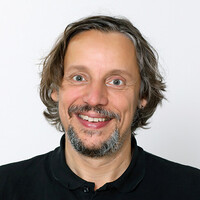
Tim Clausen serves as Senior Group Leader at the Research Institute of Molecular Pathology (IMP) in Vienna, leading his research group continuously since 2002 (promoted to Senior Group Leader in 2009). Previously, he established his independent research program as Group Leader at the Max-Planck-Institute of Biochemistry (1999-2002). His educational background includes: PhD from Technical University Munich (1997) Postdoctoral research at Max-Planck-Institute of Biochemistry Dr. Clausen's research centers on molecular mechanisms of protein quality control , with three interconnected pillars: Bacterial stress response : Discovery of phospho-arginine (pArg) as a degradation tag analogous to ubiquitin, mediated by McsB kinase and ClpCP protease Muscle protein assembly : UNC-45 chaperone's dual role in myosin folding and stress-induced degradation Targeted protein degradation : Structural and mechanistic studies of giant E3/E4 ubiquitin ligases (UBR4, Huwe1) These investigations reveal fundamental principles of cellular protein homeostasis with implications for infectious disease and myopathies. Analysis of recent publications (2016-2025) shows consistent focus on structural mechanisms of degradation pathways, evolving from bacterial pArg signaling to eukaryotic ubiquitin systems. Key breakthroughs include establishing the pArg-ClpCP pathway as a simplified bacterial analog of ubiquitin-proteasome systems and developing BacPROTACs for targeted bacterial protein degradation. Current funding includes: ERC Advanced Grant MUSCLE-QC FWF grants: ELLIPSE, PROTAC, bacPROTAC2, MYOSYN Paul G Allen Foundation PRO-Watch Dr. Clausen actively mentors students through the Vienna BioCenter PhD Program (application deadlines March 1/September 1) and welcomes direct inquiries from master students/postdocs. The lab operates within IMP's collaborative environment featuring state-of-the-art core facilities and strong industry partnerships. Research directions increasingly emphasize translational applications of protein degradation mechanisms for therapeutic development.