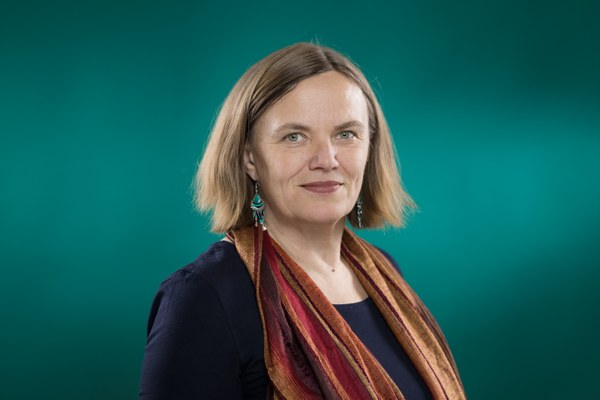
Fabio Nobile is a Full Professor at the École Polytechnique Fédérale de Lausanne (EPFL) in the School of Basic Sciences (SB), Department of Mathematics (MATH), holding the CADMOS Chair in Scientific Computing and Uncertainty Quantification. He leads the CSQI (Chair of Scientific Computing and Uncertainty Quantification) group. His work focuses on numerical methods for partial differential equations (PDEs), uncertainty quantification, stochastic modeling, and computational fluid dynamics. He is involved in collaborative projects involving fluid-structure interaction, cardiac electro-mechanics, and energy systems. Professor Nobile has extensive teaching experience, including courses on advanced analysis, stochastic simulation, and numerical integration of stochastic differential equations. He supervises numerous PhD students and has contributed to over 200 peer-reviewed publications, covering topics such as low-rank approximation methods, multilevel Monte Carlo techniques, and optimal control under uncertainty. His research emphasizes interdisciplinary applications, including biomedical engineering (e.g., personalized cardiac simulations) and renewable energy (e.g., probabilistic load forecasting). He collaborates with industries and academic institutions globally, advancing computational methodologies for engineering and scientific challenges.
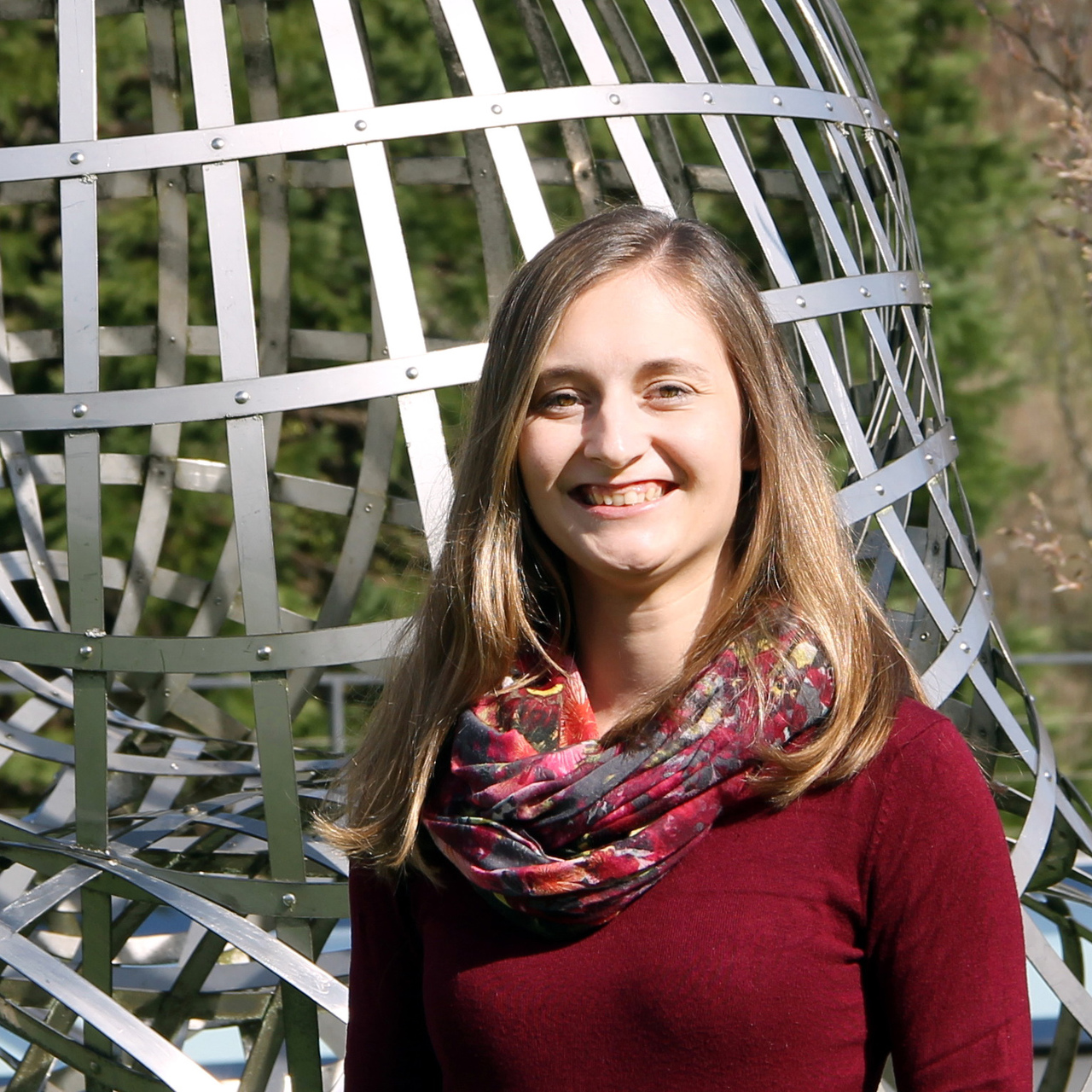
Stefano Scialo' is an Associate Professor in the Department of Mathematical Sciences "G.L. Lagrange" (DISMA) at the Polytechnic University of Turin. He is also a member of the Interdepartmental Center Ec-L - Energy Center Lab and serves as the contact person for the Bachelor's Degree Program in Mathematics for Engineering (L3). His academic journey began with a Master’s in Aerospace Engineering (2007), followed by a PhD in Mathematics for Engineering (2014), both from the same institution. After his PhD, he held postdoctoral and Assistant Professor positions at DISMA before being promoted to Associate Professor. Education: PhD in Mathematics for Engineering, Politecnico di Torino, 2014 Master in Aerospace Engineering, Politecnico di Torino, 2007 His research focuses on advanced numerical methods for partial differential equations, particularly in the context of complex multiscale and multiphysics systems. Key areas include the Virtual Element Method (VEM), domain decomposition techniques based on PDE-constrained optimization, and the simulation of flows in fractured porous media. He has made significant contributions to 3D-1D coupled problems, with applications in geosciences and biomedical modeling such as tumor-induced angiogenesis. His methodological work emphasizes robustness, scalability, and applicability to non-conforming and polygonal meshes, enabling high-performance computing solutions. The trend in his recent publications reveals a strong emphasis on developing and analyzing mixed virtual element methods, optimization-based coupling strategies, and their applications to engineering and biological systems. His work bridges theoretical numerical analysis with practical implementations in fluid dynamics and subsurface flow. Scientific Contributions: Principal Investigator of the FREYA project (2023–2026) on hybrid numerical approaches for fault reactivation. Coordinator of the INdAM-GNCS research project (2018–2019). Member of the research group "Numerical Analysis and Scientific Computing" at DISMA. Stefano Scialo' actively supervises doctoral students, including Matteo Trombini in the PhD program in Mathematical Sciences. He teaches a range of courses such as Advanced Scientific Programming in MATLAB, Numerical Methods and Scientific Computing, and specialized topics on Virtual Element Methods. He also contributes to curriculum development and academic governance through roles in doctoral colleges and degree program committees, including those for Mathematical, Mechanical, Aerospace, and Automotive Engineering. Laboratories and Research Groups: Member, Interdepartmental Center Ec-L - Energy Center Lab Research Group: Numerical Analysis and Scientific Computing (DISMA)
Martin Schmidt is a Full Professor (W3) for Nonlinear Optimization at the Department of Mathematics, Trier University, since 2019. He has held leadership roles in research training groups and international committees, focusing on mathematical modeling and optimization of energy systems, gas networks, and market equilibria. His work bridges mixed-integer nonlinear optimization , bilevel optimization , and robust methods with applications to real-world energy challenges. Education: PhD in Mathematics (2013), Diplom in Mathematics (2008), both from Leibniz University Hannover. Editorial Roles: Editorial Board member of Journal of Optimization Theory and Applications and Optimization Letters , Associate Editor for OR Spectrum and EURO Journal on Computational Optimization . His research integrates complex physical systems (e.g., gas transmission networks) with game-theoretic models to analyze energy markets. Recent publications emphasize robust optimization , decomposition techniques , and machine learning integration in bilevel frameworks. Awards highlight his contributions to gas market feasibility , linear bilevel optimization , and practical applications in energy systems. Collaborations span institutions like Universidad Zaragoza, Sapienza University, and Forschungszentrum Jülich.
Andrea Walther is a Professor of Mathematical Optimization at the Humboldt University of Berlin, holding a position within the Faculty of Mathematics and Natural Sciences. She leads the Mathematical Optimization research group at the Institute of Mathematics, focusing on algorithmic differentiation, nonlinear optimization, and applied mathematics. Her academic journey includes a Diploma in Business Mathematics (1996, University of Bayreuth), a PhD (1999, TU Dresden), and habilitation (2008, TU Dresden). She has held roles such as Junior Professor at TU Dresden (2007–2008) and Professor at the University of Paderborn (2009–2019) before joining Humboldt in 2019 as a MATH+ Professor. Education : 1991–1996: Studies in Business Mathematics, University of Bayreuth 1996: Diploma in Business Mathematics, University of Bayreuth 1999: PhD in Mathematics, TU Dresden 2008: Habilitation, TU Dresden Her research interests center on optimization methods, particularly algorithmic differentiation (e.g., ADOL-C software), nonsmooth optimization, and applications in engineering and machine learning. She leads initiatives like the Cluster of Excellence MATH+ and contributes to projects such as the Transregio 154. Key Projects: Co-PI of DFG Project 'Mixed-integer non-smooth optimization for gas market problems' (2020–2022) Principal Investigator in MATH+ Projects (EF3-7, AA2-7) Co-developer of ADOL-C, a widely used tool for algorithmic differentiation Notable awards include being a SIAM Fellow. Her work bridges theoretical advancements and practical applications, with contributions to energy sector optimization, inverse problems, and computational frameworks for solving complex systems.
Oliver G. Ernst is a Professor of Numerical Analysis at Technische Universität Chemnitz . His research focuses on Numerical Analysis , Uncertainty Quantification , and Inverse Problems , with applications in Thermo-Hydro-Mechanical (THM) processes , Electromagnetics , and Stochastic Partial Differential Equations . He is associated with the Numerical Analysis group at TU Chemnitz. Key Research Areas : Efficient numerical methods for PDEs Krylov subspace techniques Stochastic finite element methods Multi-physics modeling Geoscientific applications Recent Publications (2025-2010): THM simulations under uncertainty Neural network PDE solvers Bayesian inversion frameworks Rational Krylov algorithms Deflated restarting strategies Collaborations : TU Bergakademie Freiberg University of Manchester Technical University of Munich University of Maryland University of Geneva Software Development : Contributor to OpenGeoSys platform Developer of FEMALY MATLAB library Academic Recognition : h-index 32, i10-index 66, with over 4423 citations since 2020.
Smajil Halilovic is a Researcher at the Chair of Renewable and Sustainable Energy Systems at the Technical University of Munich . His work focuses on energy systems modeling and optimization, particularly for geothermal and renewable energy integration. Current projects include Geo.KW , a coupled hydrothermal and infrastructure model for urban-scale geothermal use Research emphasizes optimization techniques for groundwater heat pump systems Key contributions in PDE-constrained optimization and thermal resource assessment Halilovic has published extensively in Renewable Energy and Energy Conversion and Management , with recent work on spatial optimization of geothermal systems and urban heat planning. His collaborations with Prof. Thomas Hamacher and Kai Zosseder highlight his role in advancing sustainable energy infrastructure. He teaches Mathematical Modeling of Complex Systems in the Energy Field and contributes to interdisciplinary projects like the Interdisciplinary project internship: Concept development of a renewable energy system in a developing country . His publications demonstrate expertise in geothermal integration, optimization algorithms, and urban energy modeling.
Silke Glas is a Postdoctoral Researcher at the Institute of Numerical Mathematics, Ulm University, a position she has held since July 2018. Previously, she served as a Research Assistant at the same institute from April 2016 to July 2018 and at the Chair of Energy Trading and Finance, University of Duisburg-Essen (2012-2016), funded by the German Research Foundation's Priority Programme 1324. Her research visits include the Institut Henri-Poincaré in Paris and SISSA in Trieste. Her educational background features: Diploma in Mathematics and Economics from Ulm University (2006-2012), thesis on "Reduced Basis Method for Variational Inequalities" Master of Mathematics from the University of South Florida (2009-2010) Dr. Glas specializes in model reduction for nonlinear problems, with core expertise in reduced basis methods applied to variational inequalities, wave equations, Hamilton-Jacobi-Bellman equations, and space-time formulations. Her work bridges theoretical numerical analysis with practical applications in energy markets, particularly intraday electricity trading. She has developed novel approaches for noncoercive and parabolic systems, addressing challenges in error estimation and computational efficiency. Her publication trajectory reveals evolving sophistication in handling time-dependent nonlinear systems, with increasing emphasis on financial applications. Early work focused on theoretical foundations of variational inequalities, while recent publications integrate model reduction with optimal control for energy trading problems, demonstrating cross-disciplinary impact. Scientific recognition includes: No formal awards documented in source material Research funding has been secured through the German Research Foundation's Priority Programme 1324. No student advising activities are mentioned, though her collaborative work involves prominent researchers like K. Urban and Anthony T. Patera. Her primary research environment at Ulm University's Institute of Numerical Mathematics supports her focus on computational mathematics and real-world applications.
Prof. Dr. Arnd Rösch is a faculty member at the University of Duisburg-Essen within the Faculty of Mathematics . His research focuses on Nonlinear Optimization , Optimal Control , and Inverse Problems , particularly in the context of partial differential equations and finite element methods. Research areas: Optimal control, inverse problems, nonlinear optimization Key collaborations: Roland Griesse, Thomas Apel, Boris Vexler, Kunibert Siebert Projects: FWF-funded SSC/SQP for mixed-constrained control, DFG Priority Programme 1253 (PDE optimization) Contact: arnd.roesch@uni-due.de
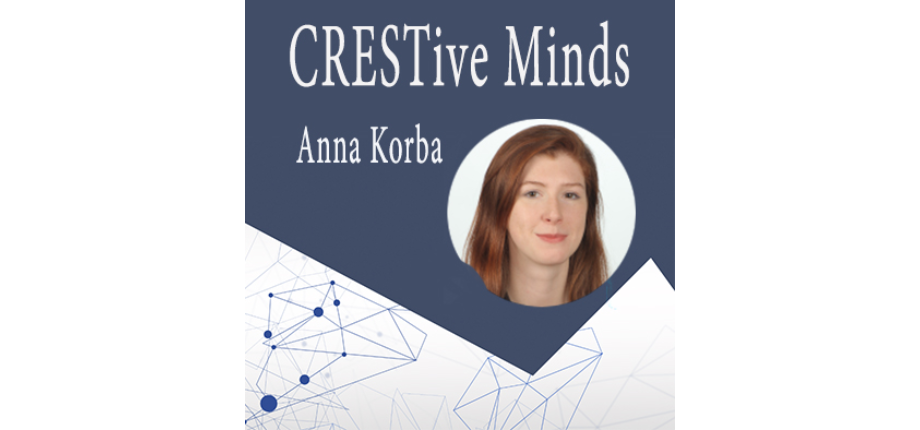
Anna Korba is an Assistant Professor at CREST-ENSAE Paris within the Statistics Department. She holds an ENSAE Engineering degree in Data Science and a Master's in Mathematics, Vision & Learning (MVA) from ENSAE Paris. Her career includes a Ph.D. in Machine Learning at Télécom ParisTech, followed by a postdoctoral position at UCL's Gatsby Unit. Her research focuses on sampling techniques, Bayesian inference, optimal transport, and generative modeling, with recent work on constrained sampling and fairness integration. She contributes to collaborative efforts at the intersection of machine learning, dynamical systems, and PDEs. Notably, she co-presented tutorials on Wasserstein gradient flows at ICML 2022. Her work addresses unsolved challenges in sampling efficiency and fairness constraints. She is actively involved in CREST research initiatives and academic mentorship.
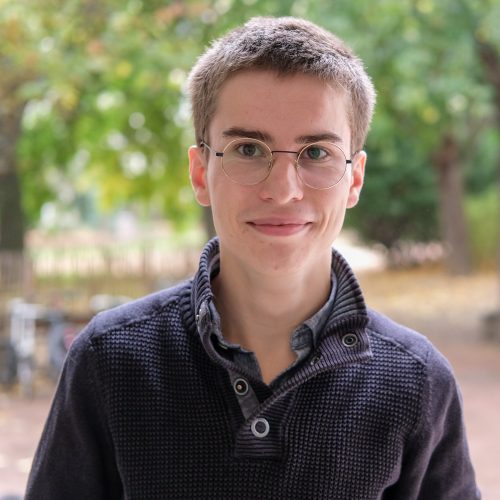
Louis-Pierre Chaintron is a Research Fellow at the École Normale Supérieure de Paris (ENS-PSL), affiliated with the Department of Mathematics and Applications (ENS DMA). His work bridges probability theory, stochastic processes, and applied mathematics, with a focus on constrained measure-valued dynamics, stability analysis, and approximation methods. PhD supervised by Julien Reygner (CERMICS) and Philippe Moireau (Inria M3DISIM) from 2022–2024 Member of the Probability and Statistics research team at ENS DMA Teaching roles include assistant for PDE courses and organizer of applied mathematics workshops Research Interests : His research explores connections between mean-field theory , large deviations , and viscosity solutions for Hamilton-Jacobi equations. He investigates filtering theory in dynamic systems, optimal transport frameworks, and Schrödinger bridge problems for high-dimensional systems. Applications span diffusion models in machine learning, muscle contraction modeling , and non-linear estimation under constraints. Recent Publications analyze convergence rates in stochastic control, stability of Gibbs principles, and jump-diffusion formalisms for biological systems. His work often combines calculus of variations , stochastic control , and viscosity solutions to address stability and approximation challenges. Contact : Email: lchaintron@dma.ens.fr Office: Bureau C11, Espace Cartan, 45 Rue d'Ulm, Paris
Hamdullah Yuecel is a Professor at the Max Planck Institute for Dynamics of Complex Technical Systems in Magdeburg, Germany, where he leads the research group 'Computational Methods in Systems and Control Theory'. His work focuses on developing advanced computational techniques for complex technical systems. Research Focus: His primary research interests include numerical methods for partial differential equations with specific expertise in: PDE-constrained optimization techniques Discontinuous Galerkin formulations Adaptive mesh refinement methodologies
Pau Batlle Franch is a Research Fellow in the Computing and Mathematical Sciences Department at California Institute of Technology (Caltech), working with Professor Houman Owhadi. He holds a PhD from Caltech (June 2025) and was a research affiliate at NASA Jet Propulsion Laboratory (JPL). His research focuses on the intersection of statistics and applied mathematics, including frequentist confidence intervals in inverse problems, game-theoretical uncertainty quantification, and Gaussian processes. He has applied his work to domains like remote sensing, biology, earthquake prediction, and telecommunications engineering. Education : PhD in Computing and Mathematical Sciences (Caltech, 2025); Double undergraduate degree in Mathematics and Engineering Physics from Universitat Politècnica de Catalunya (CFIS program); Research visitor at NYU's Center for Data Science. His research interests include optimization-based statistical methods, Gaussian process frameworks for scientific computing, and uncertainty quantification in physical systems. Notable contributions include resolving the Burrus conjecture and developing computational hypergraph discovery techniques applied to NASA JPL projects. His work bridges theory and application, addressing challenges in ill-posed inverse problems and robust statistical inference. Recent activities include presenting at SIAM conferences and workshops on inverse problems in Earth science. His Gaussian process methods have been published in journals like PNAS and SIMODS, with applications ranging from PDE solving to RNA classification. Collaborations include JPL and the Groningen seismic study. Grants & Collaborations : Ongoing work with NASA JPL on lunar rover control and computational graph discovery; Seismic modeling in the Groningen gas field with epistemic/aleatoric uncertainty frameworks. He maintains an active GitHub profile showcasing projects in machine learning and scientific computing, including repositories like DarwinProjectAnalytics and emb4class .
Basca Jadamba is a Professor in the School of Mathematics and Statistics at the Rochester Institute of Technology (RIT), part of the College of Science. She serves as Associate Head of the Applied and Computational Mathematics program. Her research focuses on inverse problems, stochastic optimization, partial differential equations, numerical analysis, finite element methods, and mathematical modeling. She has advised undergraduate and graduate students in research and teaches courses at both levels. Jadamba holds a BS from the National University of Mongolia, an MS from the University of Kaiserslautern (Germany), and a Ph.D. from the University of Erlangen-Nuremberg (Germany). Her academic journey includes joining RIT’s School of Mathematics and Statistics in 2008. She is actively involved in academic leadership, including serving as the faculty advisor for RIT’s Student Chapter of the Association for Women in Mathematics. Her research contributions span theoretical and numerical methods for inverse problems, with applications in elasticity imaging and parameter identification in stochastic systems. She has co-authored books and peer-reviewed articles on topics such as uncertainty quantification in variational inequalities, optimization formulations for inverse problems, and numerical methods for partial differential equations. Jadamba’s work emphasizes bridging mathematical theory with practical applications, particularly in engineering and environmental science. Her recent publications highlight advancements in stochastic approximation methods, convex optimization frameworks, and the role of Inf-Sup conditions in inverse problems. She has explored applications ranging from tumor localization in elasticity imaging to congestion network analysis with random data. Her teaching portfolio includes courses like Multivariable Calculus, Mathematical Modeling, and Applied Inverse Problems, reflecting her expertise in both foundational and advanced mathematical topics.
Domenico Mucci is an Associate Professor at the Department of Mathematics, University of Parma. His research focuses on calculus of variations, geometric analysis, and partial differential equations with applications to material science and continuum mechanics. Key areas of investigation include energy relaxation in constrained mappings, geometric curvatures of irregular curves, and fracture mechanics in elastic materials. Education details are not explicitly provided, but his extensive publication record indicates advanced expertise in mathematical analysis and applied mathematics. His work often involves collaborations with leading researchers such as P.M. Mariano and L. Nicolodi, addressing topics like BV spaces, Sobolev maps, and the mathematical foundations of non-smooth geometric structures. Research interests prominently feature relaxed energies in constrained systems , nonlinear elasticity models , and geometric singularities . Recent articles explore generalized Varga materials, minimal hyperfurfaces, and crack nucleation in shells. His contributions bridge pure mathematical analysis with applied mechanics, addressing problems in materials science and engineering. No scientific awards are explicitly mentioned, but his prolific publication history (64 papers listed) reflects sustained academic impact. Ongoing work includes studies on fractional Sobolev spaces, weak curvatures, and variational problems in high-dimensional settings. Collaborations often involve theoretical frameworks for continuum kinematics and incompatible strain decompositions.
Prof. Jonas Hirsch is a Professor specializing in Calculus of Variations at the University of Leipzig. His office is located at Neues Augusteum, Augustusplatz 10, Room A 323, Leipzig. He focuses on advanced mathematical research areas including geometric measure theory, partial differential equations, and functional analysis. His research explores complex geometric and analytical problems, such as minimizing clusters, perimeter density, and rectifiability of measures under PDE constraints. Recent work includes studies on bounded mean curvature submanifolds and elliptic energy functionals. No scientific awards are explicitly listed in the provided information. His professional contacts include a work telephone (+49 341 97 - 32142) and fax (+49 341 97 - 32197). His ORCID identifier is 0000-0003-2962-5963.