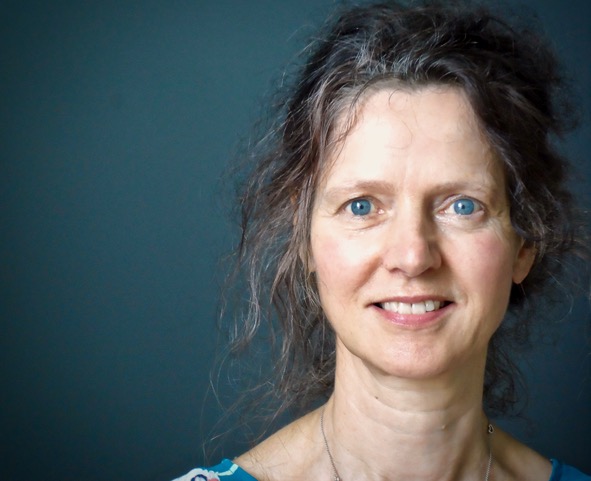
Barbara Kaltenbacher is a Professor at the Institute of Mathematics, University of Klagenfurt. She serves as Deputy Head of the Institute and is actively involved in academic governance through roles in curricular commissions for Information Technology and Mathematics. Her research focuses on nonlinear acoustics , inverse problems , and partial differential equations , particularly in modeling wave propagation and parameter identification. Her work spans theoretical and applied domains, including Acoustic nonlinearity parameter tomography Fractional regularization techniques Optimization of imaging and ultrasound models Well-posedness of nonlinear PDEs Her recent publications address advanced mathematical challenges in nonlinear acoustics and inverse problems, with applications in medical imaging and materials science. She contributes to academic leadership through committee memberships and maintains active research collaborations across disciplines.
Prof. Dr. Irwin Yousept is a Full Professor of Mathematics at Universität Duisburg-Essen, leading the research group AG Optimal Control of Partial Differential Equations. His work focuses on the mathematical analysis and numerical solutions of electromagnetic problems, particularly in superconductivity and inverse problems. He holds a PhD from TU Berlin (2008) and has held academic positions at TU Darmstadt and TU Berlin. His research includes PDE-constrained optimization, numerical analysis, and applications in high-temperature superconductivity and electromagnetic shielding. Affiliations: Universität Duisburg-Essen, Fakultät für Mathematik Education: Diplom (2005), PhD (2008) in Mathematics from TU Berlin Research interests span Maxwell's equations, numerical methods for PDEs, and optimal control, with applications in superconductivity, electromagnetic shielding, and induction heating. He has authored over 40 publications and received awards including the Richard-von-Mises-Preis GAMM (2014). Current grants include DFG-funded projects on inverse problems and superconductivity.
Prof. Karl Kunisch is the Scientific Director at RICAM (Johann Radon Institute for Computational and Applied Mathematics) and a Full Professor of Mathematics at the University of Graz, Austria. He has held academic positions worldwide, including visiting roles at Brown University, INRIA, and Technical University Berlin. His research focuses on Optimization and Optimal Control, Partial Differential Equations (PDEs), Inverse Problems, and their applications in mathematical imaging, medicine, and computational science. Education: 1975: Diploma Degree, Technical University of Graz, Austria 1975: Master Degree, Northwestern University, Evanston, Illinois, USA 1978: Ph.D. Degree, Technical University of Graz 1980: Habilitation, Technical University of Graz Research Interests: Prof. Kunisch’s work spans theoretical and applied aspects of optimal control, including stabilization of PDEs, infinite horizon control problems, and feedback design. He explores numerical methods for PDE-constrained optimization and their applications in medical imaging, cardiac electrophysiology, and machine learning. His projects also address shape optimization and mathematical models for fluid dynamics and quantum systems. Publications Trends: His recent articles emphasize feedback stabilization for nonlinear systems, sparse control approaches, and the intersection of optimal control with machine learning. Key themes include robust algorithms for uncertainty handling, efficient numerical methods for high-dimensional problems, and applications in biomedical engineering. Awards: Pro Scientia-Scholarship (1974–1977) Research Award of Theodor-Körner-Fonds (1979) Fulbright Travel Scholarship (1979/80, 1985) Max Kade Scholarship (1982–83) Japanese Society for the Promotion of Science Fellowship (1990) Christian Doppler Laboratory Fellowship (1992) Advising & Grants: Prof. Kunisch leads the Optimization and Optimal Control research group at RICAM and has directed projects on mathematical data science and inverse problems. His work involves collaborations with institutions globally and has been supported by grants from NASA, the European Union, and national funding bodies. He has advised numerous researchers, though specific student names are not listed here. Labs/Teams: Group Leader of the Group "Optimization and Optimal Control" at RICAM since 2004, contributing to interdisciplinary research in computational mathematics and its applications.
Karl Kunisch is a Professor at the Department of Mathematics and Scientific Computing at the University of Graz and serves as Scientific Director of the Radon Institute of the Austrian Academy of Sciences in Linz. With a distinguished career spanning several decades, he has established himself as a leading researcher in optimization and control theory. Prof. Kunisch completed his PhD and Habilitation at the Technical University of Graz in 1978 and 1980, respectively. His academic journey includes significant positions at Brown University's Lefschetz Center for Dynamical Systems, INRIA Rocquencourt, Universite Paris Dauphine, and he previously served as a professor of numerical mathematics at the Technical University of Berlin. Research Interests: Prof. Kunisch's research focuses on optimization and optimal control, inverse problems and mathematical imaging, numerical analysis and applications, with current emphasis on life sciences applications. His specific areas include Optimal Control of Partial Differential Equations, Nonsmooth Optimization in Function Spaces, and Applications of Optimization and Control in the Life Sciences. His work bridges theoretical mathematics with practical applications across various scientific domains. His recent publications demonstrate a continued focus on advancing the theoretical foundations of optimal control while developing practical numerical methods. Key trends include work on infinite horizon control problems, feedback stabilization techniques, applications to PDE-constrained optimization, and the integration of machine learning approaches with traditional control theory. His research group actively explores connections between theoretical developments and applications in the life sciences. Scientific Recognition: W.T. and Idalia Reid Prize 2021 SIAM Fellow (2017) European Research Council Advanced Grant (2015) Alwin Walther Medaille (2008) SIAM Outstanding Paper Prize (2006) Prof. Kunisch has made substantial contributions to the mathematical community through his editorial work, serving as editor for prestigious journals including SIAM Journal on Control and Optimization, SIAM Journal on Numerical Analysis, and the Journal of the European Mathematical Society. He leads the Research Group on Optimization and Optimal Control at the Johann Radon Institute for Computational and Applied Mathematics (RICAM) and is involved in the ERC-Project OCLOC "From Open to Closed Loop Control".
Ahmed M. Attia is a computational mathematician at the Mathematics and Computer Science Division, Argonne National Laboratory, Lemont, IL, USA. He is also a member of the Laboratory for Applied Mathematics and Numerical Software (LANS) at Argonne. Previously, he was a postdoctoral researcher at Argonne and a research fellow at SAMSI, with affiliation to the Department of Mathematics at North Carolina State University. Education: Ph.D. in Computer Science and Applications, Virginia Tech, 2016 M.S. in Statistics and Computer Science, Mansoura University, 2008 B.S. in Mathematics, Statistics and Computer Science, Mansoura University, 2004 His research spans computational science and engineering, focusing on data assimilation, uncertainty quantification, optimal experimental design, PDE-constrained optimization, Bayesian inference, and high-performance computing . He integrates machine learning and statistical methods into scientific computing frameworks. His work enables robust and scalable solutions for inverse problems in complex physical systems. The primary trend in his recent publications centers on the development of PyOED, an open-source framework that unifies variational and Bayesian data assimilation with optimal experimental design, featuring novel optimization and machine learning solvers. This work bridges applied mathematics, computational science, and software engineering. Scientific Awards: No awards explicitly mentioned. Advising and Grants: Ahmed has mentored and collaborated with researchers such as Abhijit Chowdhary and Shady E. Ahmed on the PyOED project. His research is supported by the U.S. Department of Energy (DOE), particularly through the Office of Science and the Advanced Scientific Computing Research (ASCR) program. Labs and Teams: He is an active member of the Laboratory for Applied Mathematics and Numerical Software (LANS) at Argonne National Laboratory, contributing to national efforts in applied mathematics and scientific computing.
Prof. Boris Vexler, born in 1977 in Moscow, Russia, is a Professor of Optimal Control at the TUM Department of Mathematics under the TUM School of Computation, Information and Technology . He has served as Dean of Studies since 2015 and as speaker of the International Research Training Group IGDK 1754 since 2012. Education: Diploma (2000) and Ph.D. (2004) in Mathematics from the University of Heidelberg; Habilitation (2008) from the University of Graz. His research focuses on numerical analysis of partial differential equations (PDEs) , particularly finite element methods for optimal control problems governed by parabolic, elliptic, and hyperbolic PDEs. Key contributions include error estimates , adaptive discretization , and handling state constraints and measure-valued controls . Recent publications emphasize transient Stokes equations , Navier-Stokes control , and sparsity-constrained optimization . His work often integrates scientific computing and uncertainty quantification . Scientific Awards: Award for best supervisor of the elite degree program TopMath (2018) Finalist, ECCOMAS Prize for best dissertation (2005) Leslie Fox Prize in Numerical Analysis, 2nd place (2004)
Prof. Sara Merino Aceituno is a Professor at the Faculty of Mathematics, University of Vienna, leading research in kinetic theory and its applications to biology, medicine, and social sciences. She holds roles as Vice-Dean of the Faculty and Head of the Institute of Mathematics. Her work bridges mathematical models with experimental data, focusing on emergent phenomena in collective dynamics, opinion formation, and cell behavior. She teaches advanced courses on kinetic theory, biomathematics, and mathematical strategies for learning. Her contributions include modeling cell delamination, nematic alignment, and swarm dynamics through PDEs and probabilistic methods. Collaborations with experimentalists drive her interdisciplinary research. She actively engages in education, advising, and public outreach, including a video series explaining mathematical patterns in nature. Her research emphasizes understanding macroscopic patterns arising from microscopic interactions in complex systems. Education: Holds a PhD in Mathematics, with expertise in kinetic theory and applied partial differential equations. Teaching and leadership roles reflect her commitment to academic excellence and student support. Her work integrates experimental and computational models to study clonal dynamics in tissues and mechanical constraints in epithelial layers. She has authored over 20 papers on topics ranging from active matter to opinion formation networks, contributing to both theoretical advancements and practical applications in biology and social sciences. Research focuses on deriving hydrodynamic and continuum models from particle systems, analyzing stability and bifurcations in collective behavior. Grants and collaborations include the Vienna Biocenter PhD Program and experimental groups in cell biology. Her lab explores how environmental factors influence particle swarms and how mechanical forces shape cell cycles in pseudostratified epithelia.
Efthymios N. Karatzas serves as an Assistant Professor in the Department of Mathematics at Aristotle University of Thessaloniki, Faculty of Sciences, within the Computer Science and Numerical Analysis Section. He maintains an active research profile in computational mathematics with strong institutional affiliations including collaborations with SISSA mathLab and FORTH Institute of Applied and Computational Mathematics. His academic credentials include: PhD in Mathematics, National Technical University of Athens (2015) Master's in Applied Mathematical Sciences – Computational Mathematics, NTUA (2009) Master's in Applied Mathematics, University of Patras (2001) Bachelor's in Mathematics (Computational Mathematics), University of Patras (1999) Dr. Karatzas' research program centers on advanced numerical techniques for partial differential equations , with pioneering work in reduced order modeling , embedded boundary methods , and optimal control systems . His expertise spans computational fluid dynamics, uncertainty quantification, and biomechanical applications, characterized by methodological innovation in handling geometrically complex domains through cut finite element approaches and shifted boundary formulations. Analysis of his 15 most recent publications reveals a cohesive research trajectory focused on developing efficient numerical frameworks for parametrized PDE systems. His work consistently bridges theoretical rigor with practical implementation, particularly in advancing reduced basis methods for fluid-structure interaction and biological modeling, demonstrating significant contributions to computational mathematics through high-impact journal publications. No major scientific awards are documented in the available sources. Dr. Karatzas demonstrates research leadership through project management roles including Scientific Manager for the ELIDEK project at NTUA (2019-2021) and Project Manager for the European Social Fund HEaD initiative at SISSA (2017-2019). His grant administration experience encompasses coordinating interdisciplinary teams and securing external funding for computational mathematics research. He maintains active collaborations with the SISSA mathLab in Trieste (particularly with Prof. Gianluigi Rozza's group) and the FORTH Institute in Crete, participating in international workshops including the Reduced Order Methods in CFD Summer School (2019) and SIAM UQ conferences. His research network spans computational mathematics groups across Europe with emphasis on advancing numerical methodologies for real-world engineering and biological applications.
Sara van de Geer is a Full Professor at the Seminar for Statistics within the Department of Mathematics at ETH Zürich since 2005. She previously held academic positions at the University of Leiden, Université Paul Sabatier (Toulouse), and others. She earned a Master's (1982) and Ph.D. (1987) in Mathematics from Leiden University. Her research focuses on high-dimensional statistics, empirical processes, and mathematical foundations of machine learning. Van de Geer has received prestigious recognitions including the Van Wijngaarden Award (2016), Knight in the Order of Orange-Nassau (2015), and membership in Leopoldina (2013). She served as President of the Bernoulli Society (2015–2017) and Chair of the Seminar for Statistics at ETH Zürich. Her contributions include landmark works on statistical learning theory and high-dimensional inference, with key publications in top journals like Annals of Statistics and SIAM/ASA Journal on Uncertainty Quantification. Her academic leadership includes organizing Saint Flour Lectures, Wald Lectures (2016), and delivering plenary lectures globally. Her research bridges theoretical statistics with applied methodologies, emphasizing rigorous mathematical frameworks for modern data analysis challenges.
Camilla Fiorini is an Associate Professor at the National Conservatory of Arts and Crafts (CNAM) in Paris, where she conducts research at the Mathematical and Numerical Modeling Laboratory (M2N). She serves as Principal Investigator for the ANR-funded SPARCL project (2025-2029) focusing on structure-preserving reduced order models for conservation laws. Her academic background includes a PhD in Applied Mathematics from the University of Versailles and both MSc/BSc degrees in Mathematical Engineering from Politecnico di Milano. Her research centers on computational fluid dynamics, numerical analysis of PDEs, and sensitivity methods, with specific applications in uncertainty quantification and reduced order modeling. Current projects develop novel approaches for conservation laws that maintain structural properties while improving computational efficiency and reliability. Fiorini's publication record demonstrates consistent focus on sensitivity analysis techniques for complex fluid systems, shock-capturing methods, and uncertainty propagation in hyperbolic PDEs. She received the SMAI-GAMNI PhD Award 2019 (French ECCOMAS Award) for her doctoral dissertation on sensitivity analysis for nonlinear hyperbolic systems. As Principal Investigator of the SPARCL project, she leads a team developing new reduced basis construction techniques for conservation laws. Fiorini actively advises graduate researchers including PhD students Nathalie Nouaime (2021-2024) and Nicolas Lepage (2022-present), plus multiple Master's candidates. Her research group collaborates with institutions including Inria, Sorbonne University, ONERA, and CEA. Current projects include ANR JCJC-funded SPARCL and ANR AHEAD initiatives. She leads the SPARCL research group at M2N laboratory, collaborating with researchers including Alessia Del Grosso, Iraj Mortazavi, and Taraneh Sayadi on reduced order modeling techniques. The team focuses on developing computationally efficient ROMs that preserve physical structures in conservation laws.
Volker Mehrmann is a full professor at the Technical University of Berlin in the Institute of Mathematics , Faculty II - Mathematics and Natural Sciences. He has held academic positions at Chemnitz University of Technology and RWTH Aachen University . His roles include leadership in research centers: Spokesperson for the DFG Research Center Matheon (2008-2016), President of the European Mathematical Society (2017-2022), and committee member of the Cluster of Excellence MATH+. PhD: Bielefeld University (1982) Habilitation: Bielefeld University (1987) His research interests span Numerical Linear Algebra , Differential-Algebraic Equations (DAEs) , Control Theory , and Industrial Mathematics . Recent work focuses on port-Hamiltonian systems and model order reduction for multi-physics applications. Key scientific contributions include: ERC Advanced Grant (2011-2016) on multi-physics systems Hans Schneider Prize (2019) SIAM Fellow (2011) and AMS Fellow (2022) He serves as editor-in-chief of Linear Algebra and Its Applications and contributes to numerous editorial boards. His leadership roles include presidency in the European Mathematical Society and GAMM .
Siamak Ravanbakhsh is an Associate Professor at McGill University's School of Computer Science and a Canada CIFAR AI Chair at Mila. His research focuses on machine learning, particularly representation learning with an emphasis on geometry, symmetry, and probabilistic inference. He has held academic positions at the University of British Columbia and was a postdoctoral fellow at Carnegie Mellon University. Education: B.Sc. in Computer Science, Sharif University of Technology M.Sc. and Ph.D. in Computer Science, University of Alberta (supervised by Russ Greiner) Postdoctoral Fellowship at Carnegie Mellon University (with Barnabás Póczos and Jeff Schneider) His research interests span geometric deep learning, equivariant networks, reinforcement learning, and AI for scientific applications. Notable contributions include work on symmetry-aware models, diffusion processes, and equivariant representation learning. Publications highlight advancements in causal abstraction, diffusion-based anomaly detection, and equivariant architectures for crystals and hierarchical structures. His work often bridges theory and application, emphasizing symmetry principles. Advising & Grants: Supervised over 20 graduate students and postdocs, including recent PhD graduates Daniel Levy and Mehran Shakerinava Active in mentoring M.Sc. and internship students He contributes to academic leadership roles at Mila and McGill, fostering interdisciplinary collaborations in AI research.
Dominik Huber is a Ph.D. candidate and researcher at the Technical University of Munich , affiliated with the Chair of Computer Architecture & Parallel Systems . His work focuses on Dynamic Resource Management in High-Performance Computing (HPC) , with expertise in Parallel & Distributed Programming Models and Hardware-aware programming . He has actively contributed to teaching courses like Parallel Programming Systems and Advanced Computer Architecture . His research emphasizes adaptive resource allocation in hybrid HPC clusters, leveraging technologies such as MPI Sessions , PMIx , and frameworks like LAIK and XBraid . Recent projects include the DynRes software suite for dynamic resource management and collaborations on quantum-HPC integration. Huber has advised students on topics ranging from Dynamic Resource Management in Charm++ to CI Systems for HPC Software , and his publications address challenges in malleability, scheduling, and power-constrained environments. Current affiliations include participation in the SEANERGYS (EuroHPC) and PlasmaPEPS projects.
Dr. Grey Ballard is an Associate Professor in the Department of Computer Science at Wake Forest University . He earned a B.S. in Math and Computer Science (2006), M.A. in Math (2008) from Wake Forest, and PhD in Computer Science (2013) from the University of California, Berkeley. He was a Truman Fellow at Sandia National Laboratories before joining Wake Forest. Research Focus: Ballard develops communication-optimal algorithms for high-performance computing , particularly in tensor decompositions , symmetric matrix computations , and nonnegative matrix factorization . His work combines numerical linear algebra with parallel algorithm design to reduce data movement costs in distributed systems. Publications demonstrate expertise in communication lower bounds , randomized tensor rounding , and visualization tools for parallel algorithms. He has contributed software packages such as TuckerMPI , GentenMPI , and PLANC for large-scale data compression and clustering. Scientific Awards: Wake Forest Excellence in Research Award NSF CAREER Award SIAM Linear Algebra Prize Three Conference Best Paper Awards (SPAA, IPDPS, ICDM) C.V. Ramamoorthy Distinguished Research Award (UC Berkeley) ACM Doctoral Dissertation Award – Honorable Mention Teaching: Courses include Introduction to Computer Science , Numerical Linear Algebra , and Parallel Algorithms . He has developed educational tools using the Thread-Safe Graphics Library to visualize parallel dynamic programming and collective communication.
Joscha Gedicke is a Professor at the Institute for Numerical Simulation (University of Bonn), specializing in Numerical Analysis , Finite Element Methods , and Scientific Computing . His research focuses on adaptive algorithms, error estimation, and computational methods for partial differential equations (PDEs) and optimal control problems. Contact: gedicke@ins.uni-bonn.de | +49 228 73-69835 Teaching: Lectures on Hybrid High-Order Methods (V5E1), Adaptive Finite Element Methods (S4E1), and Discontinuous Galerkin Methods (V5E5). Research Trends: Gedicke's work spans Numerical Methods for PDEs , Adaptive Finite Element Analysis , Mixed and Discontinuous Galerkin Formulations , and Error Estimation . His recent publications emphasize Virtual Element Methods and Robust Discretizations for magnetostatic and optimal control problems. Collaborative Networks: He collaborates with researchers in computational mathematics, including institutions like TU Munich, University of Milano-Bicocca, and the University of Bonn's research seminar on Mathematics of Computation .