Anand V Natarajan is the ITT Career Development Professor in Computer Technology and Assistant Professor in the Department of Electrical Engineering and Computer Science (EECS) at MIT, with affiliation to the Computer Science and Artificial Intelligence Laboratory (CSAIL). He holds a PhD in Physics from MIT (2018), advised by Aram Harrow, and previously served as a postdoc at Caltech's Institute for Quantum Information and Matter. His research focuses on theoretical quantum information, emphasizing quantum complexity theory (e.g., MIP* and QMA(2) classes), nonlocality (Bell inequalities, nonlocal games), and semidefinite programming hierarchies. He teaches courses such as Quantum Cryptography, Quantum Systems Engineering, and Introduction to Algorithms at MIT. Notable contributions include resolving the MIP* = RE problem and the FOCS 2019 Best Paper Award for NEEXP ⊆ MIP*. He advises PhD students in quantum computing topics and collaborates extensively on quantum verification protocols and entanglement testing.
André Bardow is a Full Professor at the Department of Mechanical and Process Engineering, ETH Zürich. His research focuses on energy systems optimization, life cycle assessment, computer-aided molecular design, and CO2 capture/utilization. Professor (ETH Zürich, 2020–present) Head of Institute of Technical Thermodynamics (RWTH Aachen University, 2010–2020) Visiting Professor (University of California, Santa Barbara, 2015/16) Part-time Director (Forschungszentrum Jülich, 2017–2022) Associate Professor (TU Delft, 2007–2010) Research Interests: His work spans energy and process systems engineering, with emphasis on sustainable technologies. Key areas include: Computer-aided molecular and process design Machine learning for chemical engineering Carbon capture and utilization (CCU) Life cycle assessment (LCA) of industrial processes Thermo-economic modeling of energy systems Multiphase equilibrium analysis Publication Trends: Recent articles focus on integrating machine learning with process design, optimizing CO2 capture in steel production, and advancing electrochemical cooling technologies. Subfields include sustainable plastics, ORC working fluids, and solvent mixture design. Scientific Awards: Fellow of the Royal Chemical Society Recent Innovative Contribution Award (EFCE, 2019) PSE Model-Based Innovation Prize (2018) Covestro Science Award (first recipient) Arnold-Eucken-Award (VDI-GVC) Highly Cited Researcher (Clarivate, 2024) Advising and Grants: Professor Bardow mentors students in process optimization and leads projects like Systemic expansion of territorial CIRCULAR Ecosystems for end-of-life FOAM (Grant 101036854, EC).
Henry Corrigan-Gibbs is an Assistant Professor in the Department of Electrical Engineering and Computer Science at the Massachusetts Institute of Technology (MIT), where he is a member of the Computer Science and Artificial Intelligence Laboratory (CSAIL). His research focuses on computer security, cryptography, and systems design, with a particular emphasis on privacy-preserving technologies. Corrigan-Gibbs earned his PhD in Computer Science from Stanford University, where his dissertation Protecting Privacy by Splitting Trust introduced the Prio system—a scalable solution for computing aggregate statistics while preserving user privacy. This work has been deployed in Mozilla's Firefox browser, representing the largest-ever application of probabilistically checkable proofs (PCPs). His research combines theoretical innovations with practical implementations to address real-world privacy challenges, particularly in scenarios requiring robust statistical analysis of user populations without exposing individual data. The Prio system exemplifies this approach by enabling encrypted contributions to statistics with efficient zero-knowledge verification. Scientific Awards: 2020 ACM Doctoral Dissertation Award Honorable Mention
Venkatesan Guruswami is a Chancellor's Professor in the Department of EECS and a Senior Scientist at the Simons Institute for the Theory of Computing at UC Berkeley . He also holds a Professor position in the Department of Mathematics . His academic journey began with a B.Tech in Computer Science from the Indian Institute of Technology, Madras (1997) , followed by a Ph.D. in Computer Science from the Massachusetts Institute of Technology (2001) . After a Miller Research Fellowship at UC Berkeley (2001–02), he held faculty roles at the University of Washington and Carnegie Mellon University before returning to UC Berkeley in January 2022. Education : B.Tech, IIT Madras (1997) Ph.D., MIT (2001) Professional Affiliations : Chancellor's Professor, UC Berkeley (EECS) Senior Scientist & Interim Director, Simons Institute Professor, UC Berkeley (Mathematics) Guruswami's research spans multiple domains within Theoretical Computer Science , focusing on Error-Correcting Codes , Approximation Algorithms , Randomness in Computing , Probabilistically Checkable Proofs , and Computational Complexity . His groundbreaking work in List Decoding has enabled codes with minimal redundancy for correcting worst-case errors, while recent advancements include Polar Codes , Deletion-Correcting Codes , and Constraint Satisfaction Problems . He has also contributed to Quantum Coding Theory , Locally Recoverable Codes , and Approximation Hardness in various computational contexts. His publications reflect a deep engagement with interdisciplinary topics. Key trends include: Quantum Information Theory : Quantum LDPC codes, transversal gates, and quantum storage. Algebraic Coding : Reed-Solomon codes, AG codes, and polynomial-based constructions. Computational Complexity : Hardness of approximation, CSPs, and parameterized intractability. Data Transmission : Polar codes, deletion channels, and feedback mechanisms. Algorithmic Techniques : Spectral methods, semirandom models, and Lasserre hierarchy applications. Guruswami has received numerous accolades, including the Simons Investigator Award , Presburger Award , Packard Fellowship , Sloan Research Fellowship , ACM Doctoral Dissertation Award , and the IEEE Information Theory Society Paper Award . He is an ACM Fellow (2017) and IEEE Fellow (2019) , with recent honors like the Guggenheim Fellowship (2023) and AMS Fellow (2023) . As an advisor, he has mentored over 25 PhD and postdoctoral researchers , including Atri Rudra , Prasad Raghavendra , and Peter Manohar , whose work has won awards like the Edmund M. Clarke Doctoral Dissertation Award and CRA Outstanding Undergraduate Researcher Award . His research is supported by grants from the National Science Foundation , Packard Foundation , and Sloan Foundation . He also serves as Editor-in-Chief of the Journal of the ACM and holds leadership roles in IEEE and arXiv moderation. Guruswami is actively involved in Simons Institute programs and co-organized workshops on Coded Computation and Information Theory . His work bridges theoretical advancements with practical applications in Cloud Storage , Quantum Computing , and Group Testing , including pandemic-era contributions like AC-DC: Amplification Curve Diagnostics for SARS-CoV-2 .
Dr. Maja Matis is a Group Leader at the University of Muenster's Center for Molecular Biology of Inflammation (ZMBE) within the Institute of Cell Biology. Her research focuses on understanding the mechanical role of microtubules in tissue morphogenesis, particularly how microtubule-generated forces contribute to tissue remodeling through coordinated cellular behaviors. She leads the Matis Lab, which employs advanced microscopy techniques and genetic approaches to study cytoskeletal mechanics in developmental contexts. Key research areas include the structural regulation of microtubules, mechanics-driven cell shape changes, and integration of forces at adherens junctions. Her interdisciplinary projects combine biophysics, developmental biology, and quantitative imaging to unravel mechanisms underlying collective cell behavior during tissue formation. Notable contributions include studies on microtubule compression dynamics in epithelial tissues and the role of PCP signaling in patterning microtubule networks. She collaborates with institutions like the Cells in Motion Cluster of Excellence and has mentored multiple PhD/MD students. Her work is published in high-impact journals such as Nat. Commun. and Nat. Cell Biol.
José Alvarado is an Assistant Professor of Physics at the University of Texas at Austin, affiliated with the College of Natural Sciences. His research focuses on biophysics, soft matter, and active matter, particularly exploring mechanical design principles in biological systems. He investigates topics such as planar cell polarity (PCP), actomyosin networks, and morphogenetic processes. Alvarado’s work integrates experimental and theoretical approaches, often involving collaborations with centers like the Center for Nonlinear Dynamics and Texas Robotics. His studies address questions about how biological systems achieve mechanical efficiency and how active matter principles apply to biological actuation and control. Key themes in his research include the nonlinear mechanics of actomyosin gels, the role of PCP in tissue shaping during convergent extension, and the design of biomimetic actuators for robotics. He has also contributed to understanding fluid dynamics in microscale systems, such as hairy surfaces and colloidal liquid crystals.
Kai Leonhard is an Adjunct Professor at the Chair of Technical Thermodynamics , RWTH Aachen University. His research focuses on computational chemistry, thermodynamics, and molecular modeling, particularly in solvent design and reactive chemical processes. Department: Chair of Technical Thermodynamics Email: kai.leonhard@ltt.rwth-aachen.de Prof. Leonhard's work integrates quantum chemistry with computer-aided molecular and process design (CAMD/CAPD), emphasizing solvation thermodynamics, reaction kinetics, and machine learning applications. His projects span biofuel combustion, microgel synthesis, and sustainable solvent development. Recent publications highlight advancements in COSMO-RS-based solvent screening, reaction network exploration via ChemTraYzer-TAD, and multi-fidelity modeling for partition coefficients. He employs machine learning to enhance predictive thermodynamic models and optimize chemical processes.
Anand Natarajan is an Assistant Professor at the Massachusetts Institute of Technology (MIT), affiliated with the Theory of Computation research group. His work focuses on quantum computing, complexity theory, and theoretical computer science, particularly exploring quantum verification, nonlocal games, and the intersection of quantum information with computational complexity. He is a key contributor to foundational results like the MIP*=RE theorem, which resolved longstanding questions in quantum complexity theory. Research Interests: Quantum Verification and Cryptography Quantum Complexity Classes (QMA, MIP*) Nonlocal Games and Tsirelson's Theorem Quantum Error-Correcting Codes Oracle Separations in Complexity Theory Recent Work Trends: His publications from 2020-2024 emphasize advancing our understanding of quantum advantage, noise resilience in quantum protocols, and bridging quantum computing with classical complexity theory. Notable contributions include resolving the quantum PCP conjecture via game-theoretic frameworks and analyzing the computational limits of interactive proof systems involving entangled provers. Lab/Team Affiliation: Core member of MIT's Theory of Computation group under Vinod Vaikuntanathan, collaborating on algorithms, security, and programming languages research.
Jonathan Bootle is a cryptography researcher in the Foundational Cryptography group at IBM Research – Zurich , specializing in efficient zero-knowledge proofs. He holds a PhD from University College London and a Mathematics degree from Clare College, University of Cambridge . Education : PhD (UCL), Mathematics (Part III, Cambridge) His research focuses on zero-knowledge proofs , lattice-based cryptography , and error-correcting codes , with applications in post-quantum security. Recent work includes formal verification of protocols, elastic SNARKs, and generalized key exchange mechanisms. Key publication trends: 2024: Formal verification of sumcheck protocol 2023: Lattice-based credentials and succinct arguments 2022: Gemini SNARKs and DualDory linkable signatures He teaches the 2024 ETH Zurich course on Zero-Knowledge Proofs , covering sigma protocols, Fiat-Shamir transformations, and polynomial commitments. Labs/Teams: Foundational Cryptography group, IBM Security Department Collaborations with UC Berkeley (Alessandro Chiesa) and UCL (Jens Groth)
Irit Dinur is a professor at the Weizmann Institute of Science , specializing in theoretical computer science and combinatorics. She works in the Department of Applied Mathematics and Computer Science, focusing on probabilistically checkable proofs (PCPs), hardness of approximation, and high-dimensional expanders (HDX). Organizer of the Winter School on Expansion in Groups, Combinatorics, and Complexity (2025) at Weizmann Institute Co-organizer of the ICTS Workshop on HDX and Codes (Bangalore, April 2025) Teaching a summer course on Robust Computation: From Local to Global (2025) Her research bridges theoretical computer science and mathematics, with recent work exploring: Interactive proof systems and their applications to undecidability Connections between high-dimensional expanders and quantum LDPC codes Advances in PCP theory and their implications for computational complexity Sparse graph counting techniques in additive combinatorics She has been instrumental in organizing educational initiatives that explore cutting-edge topics like: Expansion properties in Cayley graphs Coboundary expansion in coset complexes Applications of finite free probability to expander graphs
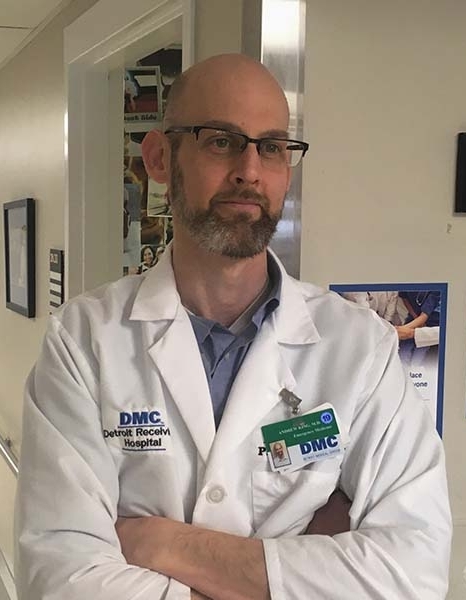
Andrew King is an Assistant Professor at Wayne State University School of Medicine and serves as Medical Toxicology Fellowship Director at Children’s Hospital of Michigan. He holds concurrent appointments as Medical Director of the Michigan Poison & Drug Information Center and Attending Physician at Sinai Grace Hospital, Detroit Receiving Hospital, and Children’s Hospital of Michigan. His clinical practice spans emergency medicine and toxicology. Education: M.D. from Washington University in St. Louis (2004-2008) B.A. from Northwestern University (2000-2004) Emergency Medicine Residency (Chief Resident) at University of Pittsburgh (2008-2011) Medical Toxicology Fellowship at University of Pittsburgh (2011-2013) Research Focus: Dr. King specializes in clinical toxicology with emphasis on poison control, envenomations, organophosphate poisoning, and cardiotoxicology. His work integrates emergency medicine protocols with toxicological interventions for substance overdoses, metabolic toxicities, and environmental exposures. Publication Trends: His 15 most recent articles (2012-2016) predominantly address toxicology case management, including innovative treatments for envenomations, antidotal therapies for poisonings, and diagnostic challenges in drug overdoses. Recurring themes include organophosphate/carbamate toxicity, sympathomimetic syndromes, and metal/chemical exposures. Awards & Honors: Distinguished Teacher of the Year (Sinai Grace/DRH Residency Programs, 2015) MTF Medical Toxicology Practice Award (2013) Resident Clinician of the Year (Pittsburgh, 2011) Alpha Omega Alpha Honor Society (2008) Professional Leadership: As Fellowship Director, he oversees toxicology training programs and advises medical fellows. He chairs committees for the American College of Medical Toxicologists (ACMT) and reviews manuscripts for multiple peer-reviewed journals including Journal of Medical Toxicology . Laboratories & Teams: Directs clinical operations at Michigan Poison & Drug Information Center, coordinating toxicology consultations and research collaborations across Detroit Medical Center hospitals.
Johan Håstad is a Full Professor in the Department of Computer Science at the Royal Institute of Technology (KTH), Sweden, since 1992. Previously, he held academic positions at KTH and the Massachusetts Institute of Technology (MIT) as a Postdoctoral Fellow (1986-1987). His work lies at the intersection of theoretical computer science and mathematics, with foundational contributions to computational complexity theory, cryptography, and approximation algorithms. Ph.D. in Mathematics from MIT (1986) Member of the Royal Swedish Academy of Sciences (2001) Knuth Prize laureate (2018) for breakthroughs in optimization, cryptography, parallel computing, and complexity theory Research Focus: Johan Håstad's research has fundamentally shaped computational complexity theory, particularly in understanding the limits of efficient computation and approximation. His work on probabilistically checkable proofs (PCPs) and hardness of approximation has had a profound impact on theoretical computer science, influencing areas like cryptography and parallel computing. He is known for developing Håstad's switching lemma and establishing strong inapproximability results for NP-hard problems. Scientific Recognition: ACM Doctoral Dissertation Award (1986) Gödel Prize (1994, 2011) Chester Carlson Research Prize (1990) Göran Gustafsson Prize (1999) Knuth Prize (2018)
Samantha E. Hansen is a Professor in the Department of Geological Sciences within the College of Arts and Sciences at the University of Alabama. She maintains an active research program focusing on fundamental geodynamic processes and accepts MS/PhD advisees. Her research employs earthquake seismology, active tectonics, and seismic data analysis to investigate Earth structure and processes across diverse geographic locations including Antarctica, Africa, and other global regions. Dr. Hansen's primary research interests center on advancing understanding of fundamental geodynamic processes such as volcanism, mountain building, continental rifting, and craton formation. Her work particularly emphasizes earthquake seismology, active tectonics, and deep Earth structure, with significant contributions to the study of ultra-low velocity zones along the core-mantle boundary. She has conducted extensive field research in diverse locations including Hawaii, Costa Rica, Saudi Arabia, Africa, Greece, Greenland, and Antarctica. Her recent publications demonstrate a strong focus on Antarctic geophysics, mantle structure, and core-mantle boundary phenomena. The publication trends reveal consistent contributions to high-impact journals in geophysics and Earth sciences, with particular emphasis on seismic imaging techniques, mantle heterogeneity, and geodynamic modeling. Her work often involves large collaborative research teams and international scientific partnerships. As an educator, Dr. Hansen teaches several courses including GEO 101: The Dynamic Earth, GEO 369: Introduction to Geophysics, GEO 407/507: Seismology, GEO 435/535/635: Honors and Graduate Seminar in Geology, and GEO 542: Geodynamics. She has advised numerous graduate students through completion of their degrees, with recent graduates including Hesam Saeidi (Ph.D., August 2025), Kayode Agboola (M.S., August 2023), and Ashish Kumar (M.S., June 2021).
Chad Johnson, PhD, is an Assistant Professor in the Department of Pharmaceutical Sciences at the University of Maryland School of Pharmacy, where he also serves as Director of the Graduate Studies in Medical Cannabis program. His research integrates medicinal chemistry and pharmacology to develop novel therapeutics for central nervous system disorders. PhD, Medicinal Chemistry/Pharmacology – University of Maryland, Baltimore MS, Medicinal Chemistry/Pharmacology – University of Maryland, Baltimore MA, Organic Chemistry/Biochemistry – Johns Hopkins University BS, Chemistry – University of Virginia Dr. Johnson's research focuses on the design and synthesis of fast-acting antidepressants targeting muscarinic receptors, the evaluation of abuse potential in novel psychoactive substances (particularly PCP and ketamine analogs), and exploring psychedelics for treating substance use disorders. His work bridges synthetic organic chemistry with neuropharmacological assessment in preclinical models. His recent publications reflect a strong trajectory in CNS drug discovery, particularly antimuscarinic antidepressants with reduced cognitive side effects, and expanding into cancer chemotherapeutics through DNA repair enzyme targeting. The work demonstrates interdisciplinary collaboration across medicinal chemistry, behavioral pharmacology, and translational neuroscience. Dr. Johnson holds active research grants from the NIH (R01-MH107499-03) and FDA (3U01FD005946-08S6), supporting his preclinical studies on antimuscarinic antidepressants and evaluation of home drug disposal products. He mentors in the graduate program he directs and collaborates with experts in pharmacology and medicinal chemistry. His laboratory is based at 20 N Pine Street, Baltimore, MD, with research facilities in N706. He is not currently recruiting postdoctoral researchers.
Daniel Wichs is an Associate Professor at the Khoury College of Computer Science , Northeastern University , and Senior Scientist at NTT Research . His work focuses on Cryptography , particularly in computing on encrypted data, lattice-based cryptography, and information-theoretic security. Education: PhD in Computer Science (NYU, 2011), BS/MS in Mathematics and Computer Science (Stanford, 2005). His research spans Cryptography , with emphasis on theoretical foundations , program obfuscation , and secure computation . Recent work explores computationally bounded error correction , succinct arguments , and RAM-based cryptographic systems . He has received the Alfred P. Sloan Foundation Fellowship (2018), NSF CAREER Award (2018), and IBM Josef Raviv Fellowship (2011-2013). His students include Manu Kondapaneni , LaKyah Tyner (co-advised), and Ethan Mook , many of whom now hold academic positions. He leads the Cryptography and Privacy Group at Northeastern and has organized major conferences like the Simons Summer Program in Cryptography (2025). His teaching includes advanced courses on Foundations of Cryptography and Theory of Computation .