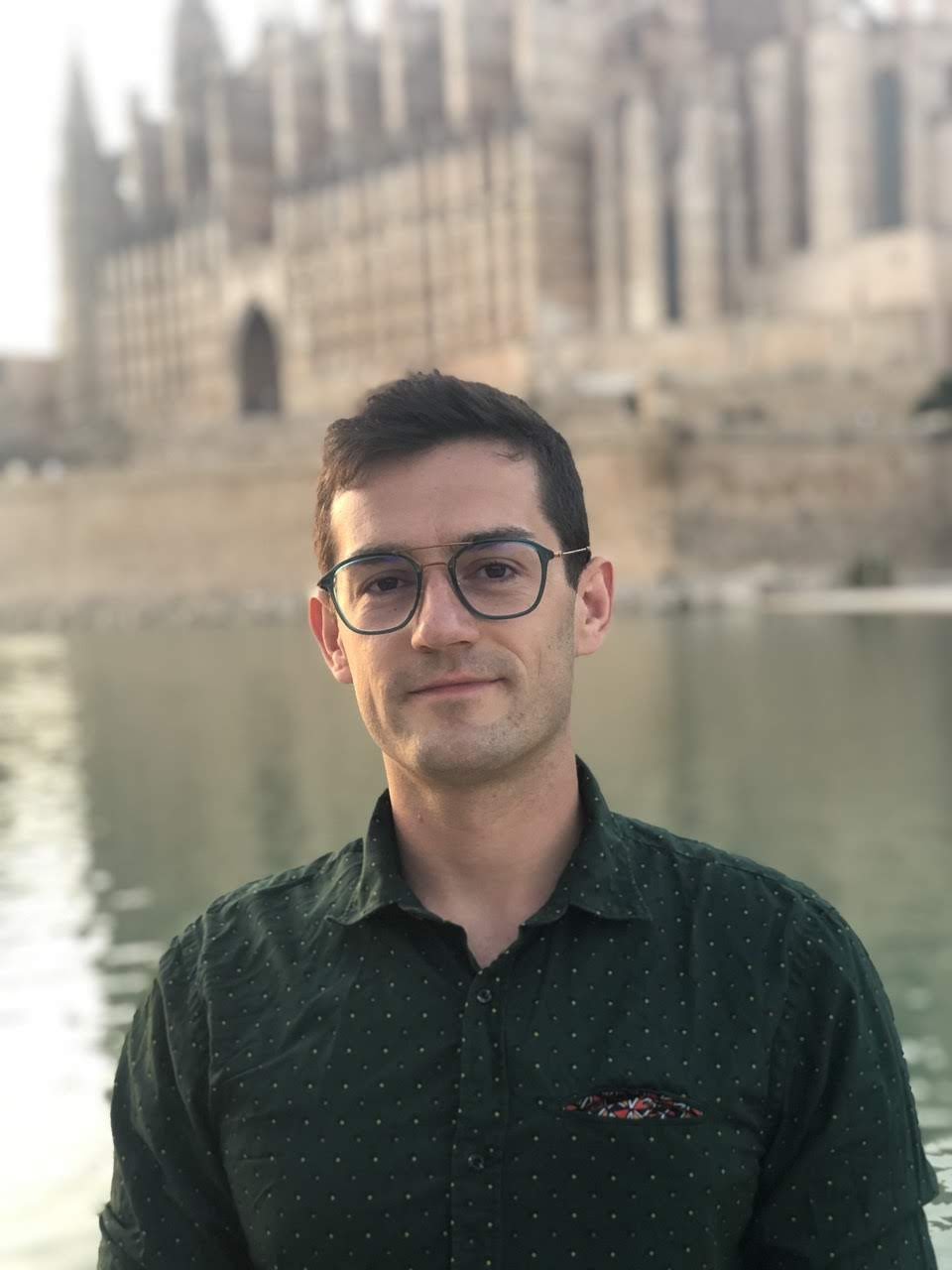
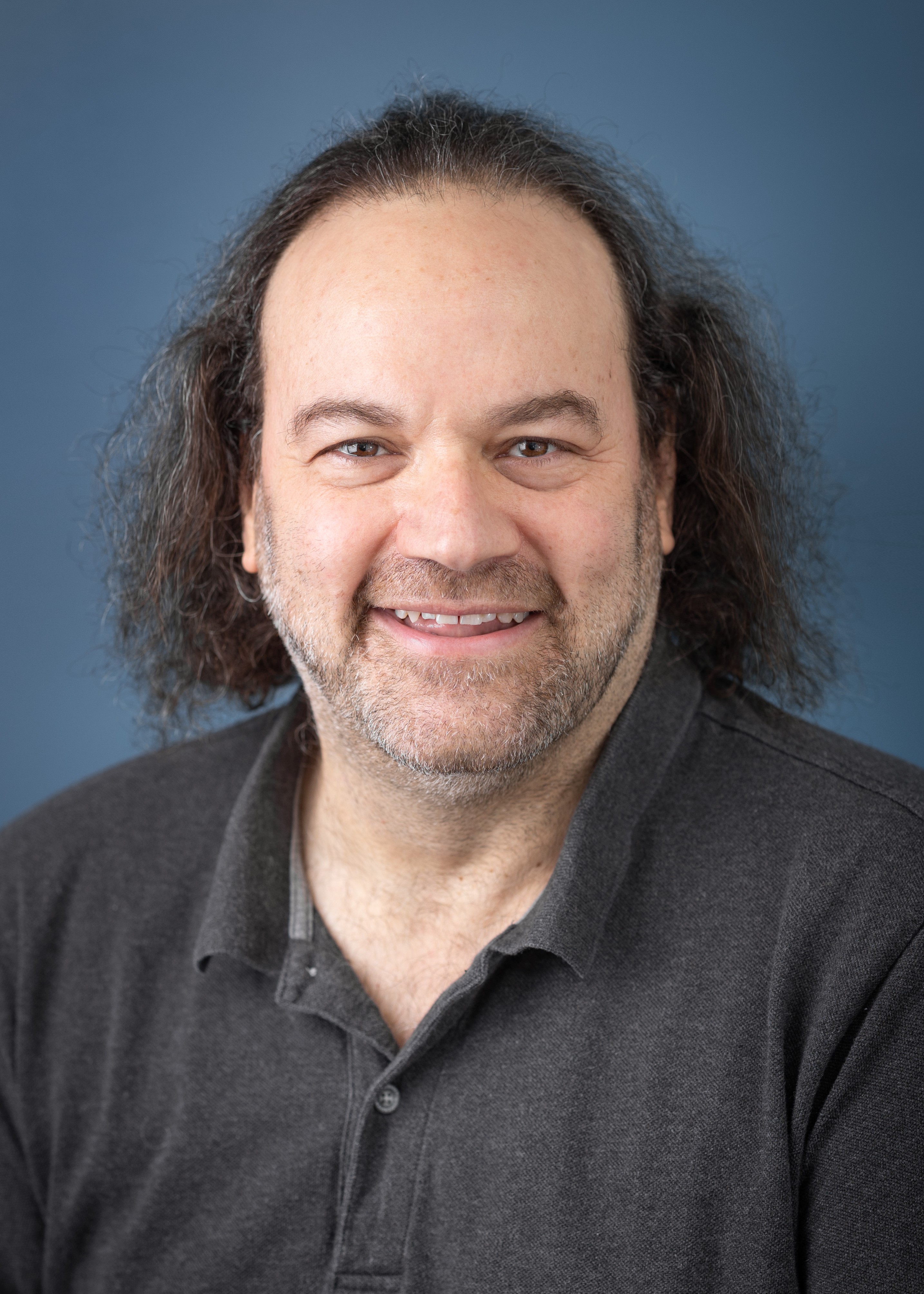
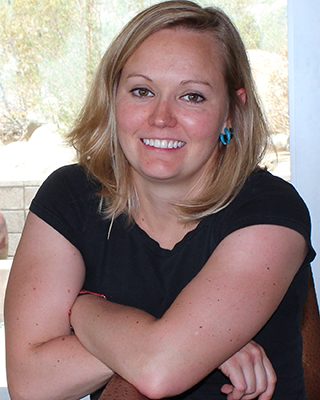
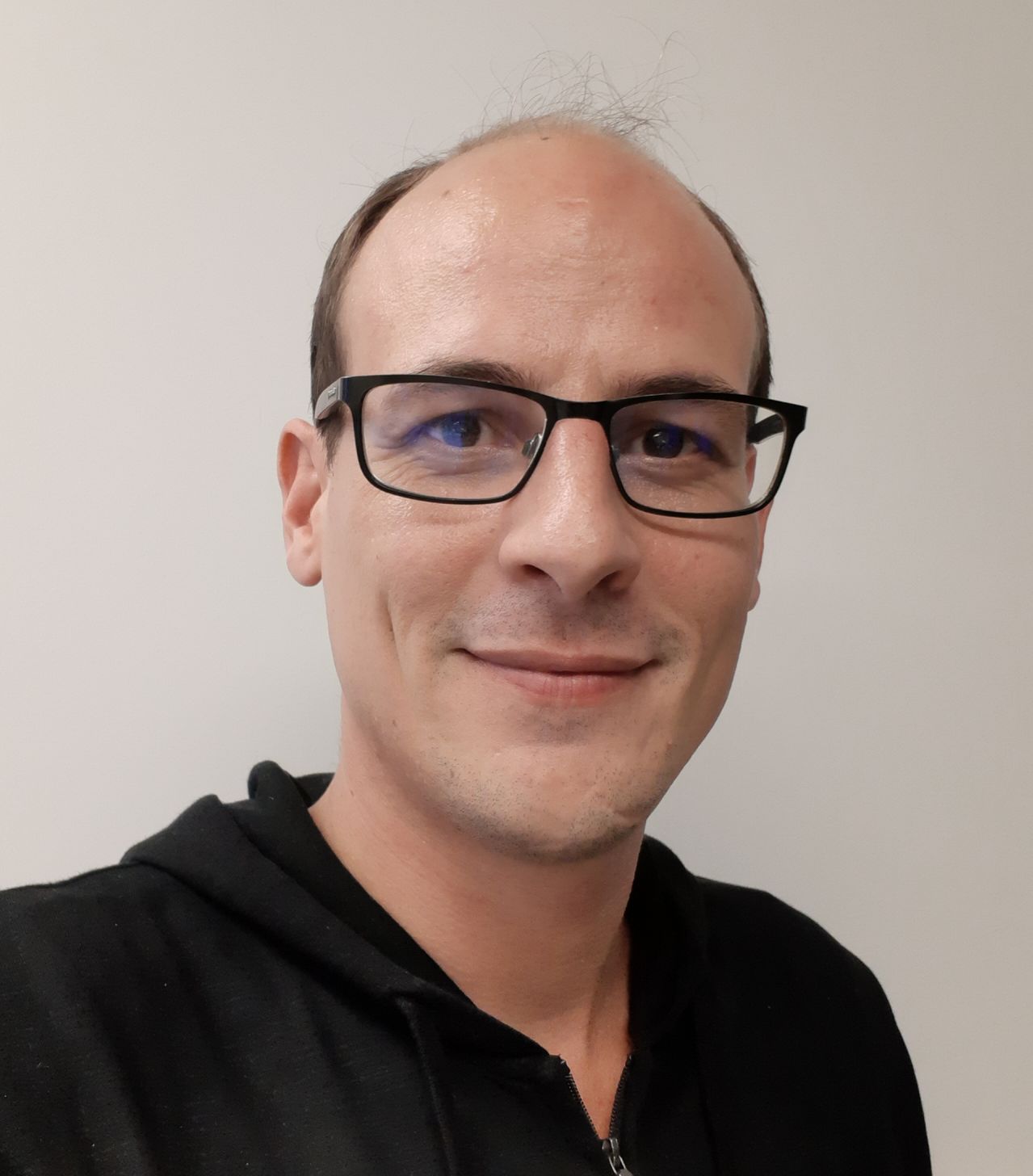
Andreas Bjerregaard Jeppesen is a Research Fellow at the Department of Computer Science, University of Copenhagen, specializing in Machine Learning. His work bridges theoretical and applied research across diverse domains including quantum computing, biomedical informatics, environmental monitoring, and AI ethics. The Machine Learning section at DIKU explores foundational algorithms and their applications in Medical data analysis Remote sensing Biological modeling Sustainable AI Information retrieval . Andreas contributes to interdisciplinary projects like the SCIENCE AI Centre, leveraging the department's compute cluster for intensive simulations. His recent publications highlight trends in Quantum-inspired neural architectures Generative models for protein sequences Energy-aware AI development Neurological applications of ML Climate-conscious computing . Collaborations span computational biology, quantum chemistry, and federated learning for precision medicine.
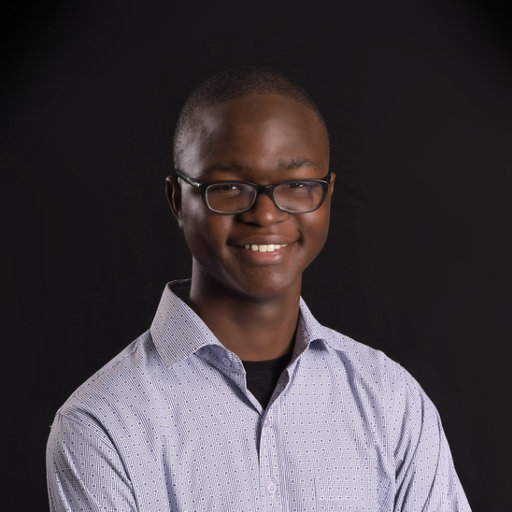
Victor Akinwande is a doctoral researcher at Carnegie Mellon University's Computer Science Department under advisor J. Zico Kolter. His research focuses on robust machine learning systems, causal inference for global health applications, and advancing vision-language models through generative modeling techniques. He holds an MSc in Information Technology (CMU, 2016–2018) and a BSc in Computer Science from the University of Ilorin (2011–2015). His work spans key areas including adversarial robustness, generalization bounds for prompt-based learning, and causal effect estimation in public health. Notable contributions include HyperCLIP (2024), AcceleratedLiNGAM (2024), and foundational work on subset scanning for anomaly detection in health data (2020–2022). Victor has been recognized with an Outstanding Paper Award (ICLR 2024 workshop) and a Distinguished Paper Award Nomination (AMIA 2022). His research bridges theoretical machine learning advancements with practical applications in global health systems and AI safety.
Dr. John Garrett is an Associate Professor in the Departments of Radiology, Medical Physics, and Biostatistics and Medical Informatics at the University of Wisconsin-Madison School of Medicine and Public Health. As Director of Imaging Informatics for Radiology, he oversees informatics projects, clinical data access, and computational infrastructure for imaging research. He holds a PhD from UW-Madison (2017) and specializes in applying deep learning and federated learning to medical imaging, particularly in abdominal CT screening and multi-site frameworks. His work emphasizes secure, large-scale computational solutions in healthcare, with collaborations across departments and UW Health. Dr. Garrett also contributes to initiatives like the Machine Learning for Medical Imaging (ML4MI) program and the Opportunistic Screening Consortium in Abdominal Radiology (OSCAR). Research Focus: His research spans federated learning, clinical evaluation of AI tools, and leveraging machine learning for opportunistic screening. He explores x-ray/CT physics and high-performance computing to advance imaging diagnostics. Awards: Finalist for the 2024 WARF Innovation Awards with Perry Pickhardt. Recognized for contributions to AI integration in radiology and PACS automation. Labs/Teams: Engaged with the ML4MI initiative and cross-departmental collaborations in biomedical engineering, medical physics, and Biostatistics.
Clémentine Prieur is a Professor at the University of Grenoble Alpes, affiliated with the Jean Kuntzmann Laboratory (LJK - CNRS / Inria / UGA - Grenoble INP-UGA) and the Inria AIRSEA Project Team. She holds significant leadership positions including Head of the Applied Mathematics specialty at the MSTII Doctoral School, Vice-President of the French Statistical Society, and President of the SAMO (Sensitivity Analysis of Model Output) board. Her educational background includes a Master's degree, teaching qualification, and mathematics thesis. She pursued her academic career after expressing interest in mathematics as early as sixth grade, eventually specializing in probability and statistics after initially being drawn to abstract mathematics. Prieur's research focuses on uncertainty quantification, sensitivity analysis, model and dimension reduction, robust inversion, multivariate risk analysis, and nonparametric estimation for dependent processes. Her work bridges theoretical mathematics with practical applications in climatology, health, energy, and environmental science. She has developed numerous methodologies for analyzing complex systems and extracting meaningful information from data. Her publications demonstrate consistent contributions to uncertainty quantification and sensitivity analysis, with recent work spanning epidemic modeling, climate science, renewable energy systems, and machine learning. Her research shows increasing interdisciplinary applications while maintaining strong mathematical foundations, particularly in developing computational methods for high-dimensional problems. Vice-President of the French Statistical Society President of SAMO (Sensitivity Analysis of Model Output) board Local coordinator of MATH-AmSud project SMILE Coordinator of Inria associate team UNQUESTIONABLE Member of CNRS thematic networks for Uncertainty Quantification and Earth and Energies Prieur actively supervises doctoral students and postdocs, guiding them from master's internships through thesis completion. Her research is supported through multiple national and international projects including CIROQUO (Research and Industry Consortium), MIAI chair BALTEEC, and various CNRS networks. She frequently travels internationally for research collaborations, with recent visits to institutions in Uruguay, Italy, and Chile. She leads the Inria AIRSEA project team and participates in several research groups focusing on uncertainty quantification, including the CNRS thematic network Quantification of Uncertainties RT2172 and the thematic network Earth and Energies RT2166. Her work with CIROQUO connects academic research with industrial applications in uncertainty quantification for expensive data.
Dr. Jason Oakley is currently the Head of the School of Dental, Health and Care Professions at the University of Portsmouth , serving in the Faculty of Science and Health . He has a long-standing academic career, transitioning from clinical radiography to educational leadership after completing his PhD in 2010 on factors affecting medical image interpretation in higher education. PhD in Medical Imaging Perception (University of Portsmouth, 2010) MSc in Medical Imaging (University of Portsmouth) Introductory Certificate to Teaching and Learning in Higher Education (City University, London) His research spans Health Informatics , Medical Imaging , and Radiography Education , with a focus on Leadership in Higher Education , Effective Learning Support , and Student Outcome Measures . His publications highlight trends in Digital Imaging , Diagnostic Technology , and Clinical Education Models . Dr. Oakley has contributed to professional development through projects like the Centre for Healthcare Modelling and Informatics and roles such as External Promotion and Liaison Lead (2012) and Associate Dean (Students) (2015). He actively supervises PhD students and engages in interdisciplinary collaborations.
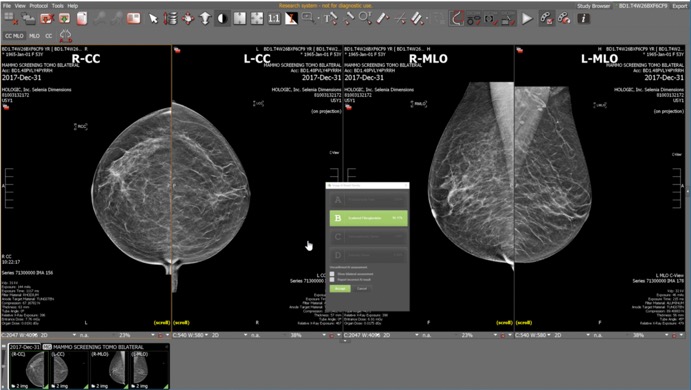
MingDe Lin is an Adjunct Associate Professor in Radiology & Biomedical Imaging at the Yale School of Medicine and Director of Clinical Research (North America) at Visage Imaging. His work focuses on AI-driven diagnostic solutions, clinical-industry partnerships, and interventional oncology. Key roles include managing research collaborations with top hospitals and leading projects like the FDA-cleared breast density classifier (Visage Breast Density) and the qEASL tool for liver cancer assessment. Education: PhD in Biomedical Engineering from Duke University (2008), BS from Rensselaer Polytechnic Institute (2001). Research interests span AI in radiology, medical imaging automation, and oncology treatment optimization. Notable achievements include 3 NIH R01 grants, FDA approvals for AI tools, and leadership at the Yale Interventional Oncology Research Lab. Awards include election to Tau Beta Pi's national board (2020) and multiple regulatory approvals for medical devices. Current efforts include multi-institutional AI research for PET imaging and advancing TACE therapies for liver cancer.
Martin Gjoreski is an Ambizione Fellow funded by the Swiss National Science Foundation (SNSF) and holds the position of Researcher at the Faculty of Informatics, Università della Svizzera italiana (USI) in Switzerland. He also serves as a lecturer, teaching courses like Mobile and Wearable Computing during the 2024/25 academic year. His research focuses on Artificial Intelligence, particularly machine learning, federated learning, and explainable AI (XAI), applied to wearable computing, affective computing, and digital healthcare. Education: PhD in Computer Science (2016-20) from the Jožef Stefan International Postgraduate School, Slovenia. Thesis: 'A fusion of classical and deep machine learning for mobile health and behavior monitoring with wearable sensors.' Notable achievements include the 'Jožef Stefan golden emblem' for an outstanding PhD thesis and inclusion in the 'top 2% scientists in the world' (2021). Research Interests: AI-driven healthcare solutions Federated learning for privacy preservation Explainable AI in pervasive systems Wearable sensor data fusion Grants: Leading the 'XAI-PAC' project (SNSF, 2024-2028) and contributing to 'SmartCHANGE' (Horizon Europe, 2024-2028) and 'TRUST-ME' (SNSF, 2024-2027). These focus on AI-based health monitoring and privacy-aware solutions. Labs/Teams: Member of the People-Centered Computing Lab at USI, led by Professors Marc Langheinrich and Silvia Santini. Collaborates on projects involving smart glasses, affective computing datasets, and federated learning frameworks.
Leslie Valiant is the T. Jefferson Coolidge Professor in Computer Science and Applied Mathematics at Harvard University's School of Engineering and Applied Sciences. His career spans institutions including Carnegie-Mellon, Leeds, Edinburgh, and Oxford Universities, with roles from Lecturer to Visiting Research Fellow. Ph.D. in Computer Science (Warwick, 1974) Diploma in Computing Science (Imperial College, 1971) B.A. in Mathematics (King's College, Cambridge, 1970) His research bridges computer science with biology, focusing on computational complexity , machine learning , evolutionary algorithms , and computational neuroscience . He has pioneered theories in PAC (Probably Approximately Correct) learning , holographic algorithms , and neural circuit modeling . His work connects parallel computing to brain function and evolvability to machine learning. Recent publications (2018-2008) emphasize holographic algorithms , neural computation , and evolvability . Trends include integrating biological principles into algorithm design and neuroscience into cognitive models . Scientific Awards and Honors: Guggenheim Fellowship (1985-1986) Nevanlinna Prize (1986) Knuth Prize (1997) EATCS Award (2008) ACM Turing Award (2010) Fellowships in Royal Society, AAAS, ACM, and AAAI Multiple honorary degrees and appointments Valiant has authored books like Circuits of the Mind and Probably Approximately Correct , holding three US patents on parallel computing . His work on knowledge infusion and neural architectures has influenced both AI and theoretical neuroscience.
Zheng-Hua Tan is a Full Professor of Machine Learning and Speech Processing at the Department of Electronic Systems, Aalborg University, Denmark. His research focuses on advanced signal processing techniques, including speech enhancement, audio representation learning, and applications in hearing aid technology. He leads the Artificial Intelligence and Sound group and has authored over 284 publications. His work spans machine learning, state-space models, and deep learning applications in audio-visual speech processing. Notable contributions include pioneering methods for noise-robust keyword spotting, diffusion-based speech enhancement, and adversarial attack defense in ASR systems. He also explores cross-modal audio captioning and generative models. His research extends to 6G radio sensing and energy optimization in CubeSats. Tan holds an ORCID identifier (0000-0001-6856-8928) and maintains active collaborations through international conferences like ICASSP and INTERSPEECH. His lab develops practical solutions for real-world audio challenges, including hearing assistance systems and low-latency voice activity detection. He supervised 15+ PhD students and has secured multiple grants for projects in AI-driven audio innovation. Current work emphasizes self-supervised learning, PAC-Bayesian theory for dynamical systems, and bi-level optimization in pretraining frameworks.
Ashutosh Trivedi is an Associate Professor of Computer Science at the University of Colorado Boulder, where he leads research in the Programming Languages and Verification (CUPLV) group. His work focuses on making AI systems more trustworthy through the application of formal methods, particularly in safety-critical applications like medical devices and legal software. Trivedi's research interests span Safety in AI, Reinforcement Learning, Formal Methods, Software Fairness, and Software Accountability. He uses mathematical precision from formal methods to address the challenges of AI systems that learn from data rather than following fixed rules. His approach involves using formal languages, automata, and logic to turn vague natural-language instructions into clear specifications, enabling collaborative programming with AI that is explainable and reliable. His recent publications reveal a strong trend toward bridging formal verification techniques with reinforcement learning, particularly in safety-critical domains. His work frequently appears in top venues including AAAI, CAV, ICSE, and NeurIPS, with a focus on making AI systems behave safely, fairly, and responsibly even as they learn and adapt. Distinguished Paper Award at CAV for Regular Reinforcement Learning (2024) Senior Member of the ACM (2024) Royal Society Wolfson Visiting Fellowship (2024) NeuS 2025 Disruptive Idea Award NeuS'25 paper accepted for oral presentation Trivedi actively mentors PhD students, with recent graduates including Shadi Tasdighi Kalat (2025), Mateo Perez (2025), John Komp (2024), Vishnu Murali (2024), and Taylor Dohmen (2024). His students' theses focus on formal languages for reinforcement learning, safety verification, and principled AI system design. He leads the Programming Languages and Verification (CUPLV) research group at the University of Colorado Boulder, which develops formal techniques to verify and improve the reliability of programming languages and software systems, with particular emphasis on AI safety and accountability.
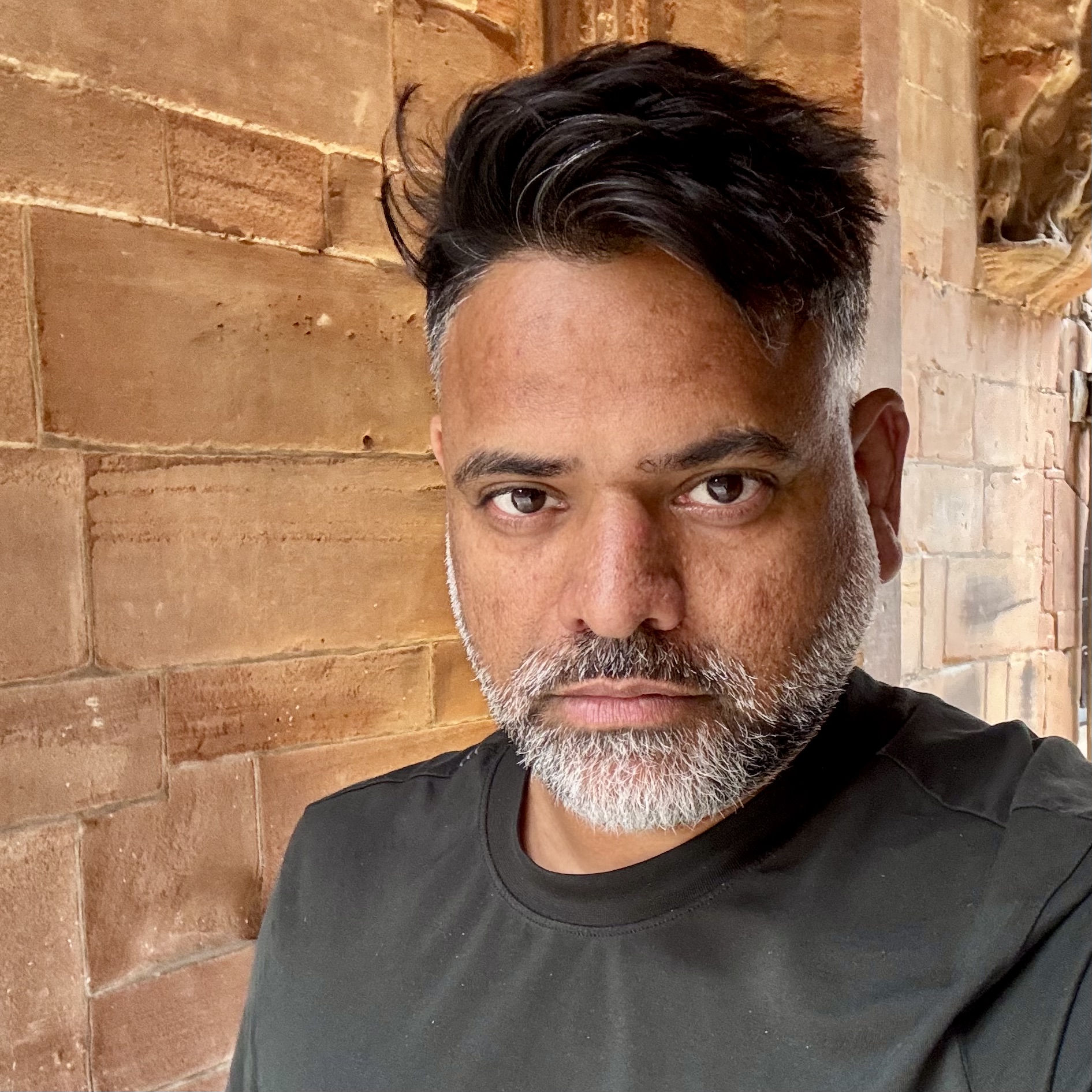
Jeffrey S. Rosenthal is a Professor in the Department of Statistical Sciences at the University of Toronto, Faculty of Arts and Science. He holds a PhD in Mathematics from Harvard University and a BSc from the University of Toronto. PhD, Mathematics, Harvard University BSc, University of Toronto His research centers on probability theory , stochastic processes , and statistical computation , with a particular focus on Markov chain Monte Carlo (MCMC) algorithms . His work spans theoretical foundations and practical applications, including random walks on groups and interdisciplinary modeling. He is also known for his public engagement in statistics through bestselling books and media appearances. The recent publications reflect a sustained focus on the theoretical underpinnings and convergence properties of MCMC methods, including adaptive and non-reversible algorithms. His work also extends into data science applications, such as analyzing streaks in online chess and the long-term impact of the COVID-19 pandemic on mortality. The keywords span probability, statistics, computational mathematics, and machine learning, indicating a blend of theoretical rigor and applied relevance. Scientific Awards and Honors: CRM-SSC Prize in Statistics COPSS Presidents' Award SSC Gold Medal Fellow of the Royal Society of Canada Fellow of the Institute of Mathematical Statistics Alumnus of Influence, University College Pierre Robillard Award SSC Student Research Presentation Award Savage Award Finalist Academic Supervision and Grants: Professor Rosenthal has supervised a large and diverse group of students, including numerous PhD candidates, MSc students, and post-doctoral fellows, many of whom have gone on to successful academic careers. His research is supported by ongoing publications and collaborations, indicating active grant funding and a vibrant research program. He maintains a well-documented research team and provides extensive resources for students and collaborators. Research Teams and Labs: He leads an active research group in probability and computational statistics, with a documented team of current and past post-doctoral fellows, PhD students, and research assistants. The group maintains a collaborative environment, as evidenced by joint publications and team photos, and focuses on advanced topics in MCMC theory and applications.
Lillian J. Ratliff is an Associate Professor in the Department of Electrical and Computer Engineering at the University of Washington, with adjunct appointments in the Paul G. Allen School of Computer Science & Engineering and the Department of Aeronautics and Astronautics. Her research bridges theoretical foundations with practical applications in intelligent systems, focusing on strategic decision-making in complex environments. Dr. Ratliff earned her PhD in Electrical Engineering and Computer Sciences from UC Berkeley in 2015. She completed dual Bachelor of Science degrees in Electrical Engineering and Mathematics from the University of Nevada, Las Vegas (UNLV) in 2008, followed by a Master of Science in Electrical Engineering from UNLV in 2010. Her research expertise spans the intersection of game theory , economics , optimization , machine learning , and control theory . She develops theoretical frameworks for decision-making in intelligent systems with learning-enabled components and strategic agents. Her work addresses fundamental questions about convergence properties of learning algorithms in game-theoretic settings, equilibrium analysis in complex multi-agent systems, and the development of efficient algorithms for strategic decision-making. Her theoretical contributions have significant practical implications for understanding strategic interactions in systems ranging from transportation networks to human-AI collaboration. Dr. Ratliff's recent publications reveal a strong focus on matrix games, Stackelberg games, and performative prediction, with applications spanning from human-computer interaction to multi-agent reinforcement learning. Her work demonstrates increasing sophistication in handling decision-dependent distributions and analyzing convergence properties of learning dynamics in complex strategic environments. Her scientific achievements have been recognized with prestigious awards including: NSF Graduate Research Fellowship (2009) NSF CISE Research Initiation Initiative award (2017) NSF CAREER award (2019) ONR Young Investigator award (2020) UW College of Engineering Junior Faculty Award (2021) Dhanani Endowed Faculty Fellowship (2020) Invited speaker at the National Academy of Engineering China-America Frontiers of Engineering Symposium (2019) Dr. Ratliff leads a research program funded by multiple National Science Foundation grants (CNS-1736582, CNS-1836819, CNS-1931718, CNS-1907907, CNS-1844729, CNS-1952011, CNS-1634136, CNS-1646912, CNS-1656873) and the Office of Naval Research Young Investigator Program. Her research group investigates theoretical foundations for strategic decision-making with applications to intelligent transportation systems, human-machine interaction, and multi-agent reinforcement learning. Her work is organized around theoretical foundations for decision-making in strategic environments, with applications to intelligent transportation systems, human-AI collaboration, and network congestion management. She maintains active collaborations across disciplines, including with researchers in computer science, aeronautics, control theory, and economics, demonstrating the interdisciplinary nature of her research program.
Karsten Ulrik Niss is a part-time lecturer at Aalborg University's Faculty of Medicine, specifically within the Department of Health Science and Technology and the Danish Centre for Health Informatics. His work focuses on healthcare IT systems, organizational development, and telemedicine implementation. Research Interests: Telehealth systems, EHR integration, medical imaging informatics, organizational change in healthcare Key Expertise: Stakeholder analysis, clinical workflow optimization, medical IT evaluation His research explores the intersection of technology and human factors in healthcare settings, particularly through network analysis of telehomecare systems and bottom-up organizational development approaches. Recent publications examine video consultations for specialized treatments and systemic impacts of PACS/RIS implementations. Notable contributions include the MIEMIS framework for medical information system evaluation and studies on EHR implementation challenges. His work spans both theoretical modeling and practical case studies across multiple medical domains.
Guillaume Rabusseau is an Associate Professor at Mila and the Department of Computer Science and Operations Research (DIRO) at Université de Montréal , holding a Canada CIFAR AI Chair since 2019. His research spans machine learning, theoretical computer science, and multilinear algebra. Education : PhD in Computer Science (2016) from Aix-Marseille Université , MSc in Fundamental Computer Science from AMU, BSc in Computer Science (distance learning) from AMU. Research Interests : Tensor methods for machine learning, spectral learning algorithms, connections between weighted automata, tensor networks, and RNNs, low-rank regression, and nonlinear computational models on structured data. Publication Trends : Recent work focuses on tensor train decomposition, temporal graph benchmarks, quantum-inspired ML, spectral regularization, and formal methods for sequence modeling. Collaborative papers address dynamic graphs, foundational models for molecular learning, and high-order pooling in GNNs. Scientific Awards : Canada CIFAR AI Chair (2019–present, renewed) Advising : Supervises PhD students like Maude Lizaire and Pascal Tikeng Notsawo, and MSc students such as Soroush Omranpour. Past advisees include Andy Huang (now at Oxford) and Tianyu Li (Samsung).
Professor Mathias Trabs is a faculty member at the Karlsruhe Institute of Technology (KIT), where he has been serving as a Professor since 2021. He is affiliated with the Department of Mathematics, specifically within the Institute of Stochastics. Previously, he held positions as Heisenberg professor at Universität Hamburg (2021) and Assistant professor at Universität Hamburg (2016-2021). His research spans several key areas in modern statistics and probability theory. Professor Trabs specializes in Nonparametric and high-dimensional Statistics, Statistics for stochastic processes, Statistical inverse problems, Statistical Learning, and Stochastic (partial) differential equations. His work bridges theoretical statistics with practical applications in physics, machine learning, and high-energy experiments. Analysis of his recent publications reveals a strong focus on the intersection of statistical theory and machine learning, particularly in generative models, neural networks, and high-dimensional data analysis. His work also demonstrates significant contributions to the mathematical foundations of stochastic processes and their applications in physical sciences. Professor Trabs has supervised numerous doctoral students including Lea Kunkel, Thea Engler, Jan Rabe, Sebastian Bieringer, Maximilian F. Steffen, and Florian Hildebrandt. His research has been supported by various projects including the Data Science in Hamburg - Helmholtz Graduate School for the Structure of Matter (DASHH), DFG project TR 1349/3-1 on high-dimensional statistics, and the LD-SODA research project. He is actively involved in academic leadership, serving as Deputy speaker of the KIT Center MathSEE (Mathematics in Sciences, Engineering, and Economics), and as a member of the steering boards of both the DMV-Fachgruppe Stochastik (Probability and Statistics Group of the German Mathematical Society) and the KIT Graduate School Computational and Data Science (KCDS).