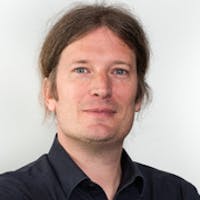
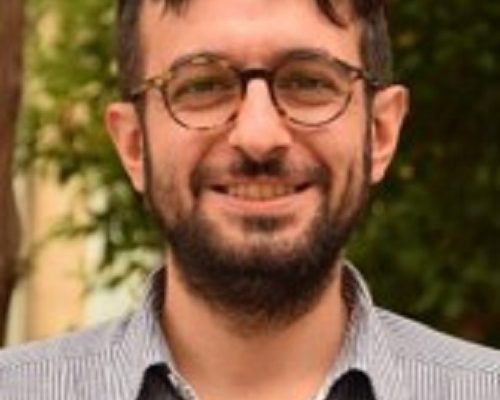
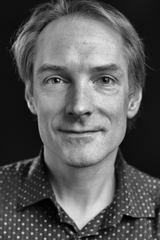
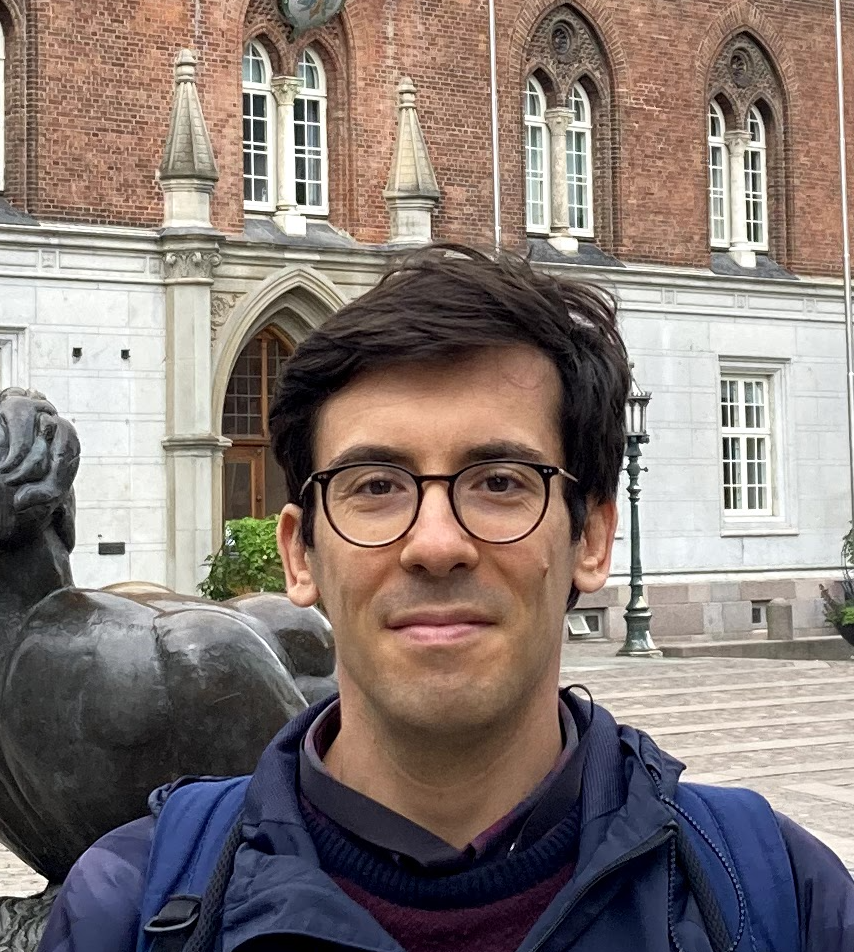
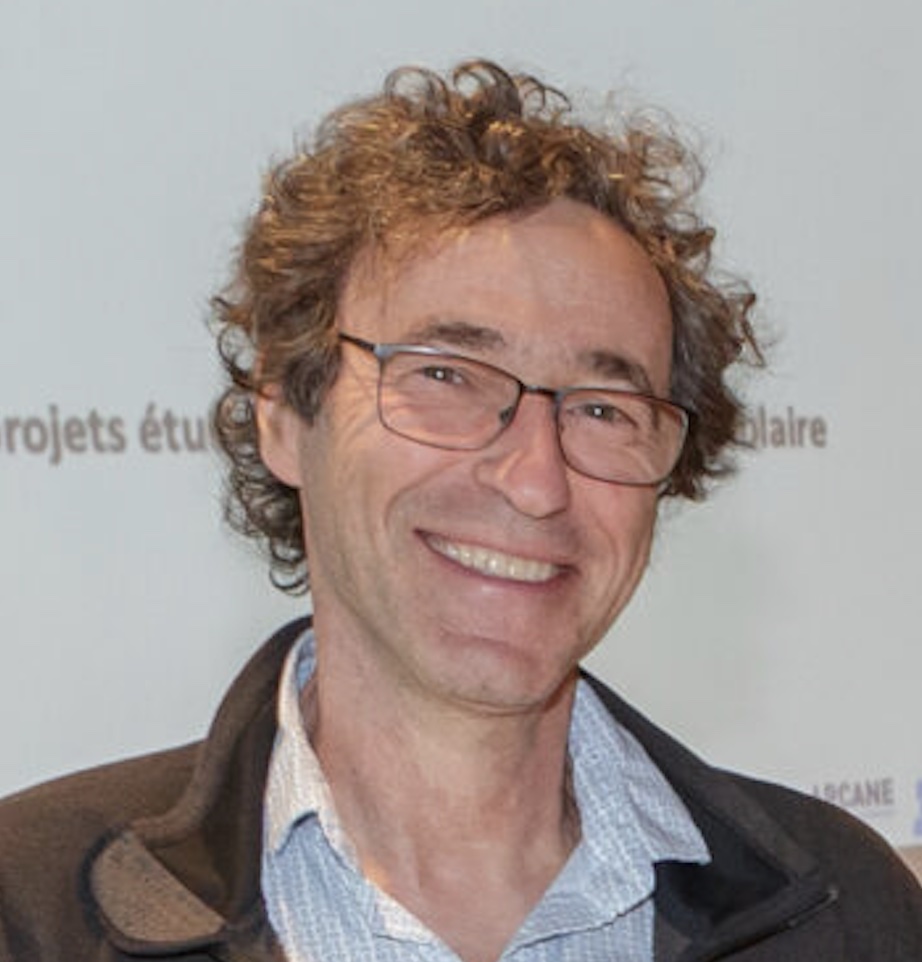
Maxim Raginsky is a Professor at the University of Illinois at Urbana-Champaign, holding appointments in the Department of Electrical and Computer Engineering, Coordinated Science Laboratory, and a courtesy appointment in Computer Science. His work bridges probability, stochastic processes, control theory, machine learning, optimization, and information theory , focusing on modeling, learning, and simulation of nonlinear dynamical systems with applications to advanced electronics, autonomy, and artificial intelligence. Research Interests Nonlinear dynamical systems in machine learning and control Statistical machine learning theory Information-theoretic methods in learning Stochastic control and filtering Scientific Contributions Co-author of foundational monographs on concentration inequalities and generalization bounds Recipient of the NSF CAREER Award (2013) , IEEE Fellow (2025) , and Roberto Tempo Best CDC Paper Award (2024) Editorial roles in Foundations and Trends in Machine Learning , Journal of Machine Learning Research , and SIAM Journal on Mathematics of Data Science Academic Leadership Advising 15+ graduate students and postdocs including Joshua Hanson, Belinda Tzen, and Tanya Veeravalli Teaching core graduate courses: Control of Stochastic Systems , Statistical Learning Theory , Optimization by Vector Space Methods
Pierre ALQUIER is a Professor at ESSEC Business School (Singapore) since 2023, specializing in statistical learning and machine learning. Previously, he held professorships at ENSAE Paris (2014–2019) and the University of Dublin (2012–2014). He earned his PhD in Mathematical Statistics from Pierre and Marie Curie University in 2006, with a focus on advanced statistical methodologies. His research centers on Bayesian methods, PAC-Bayes bounds, high-dimensional data analysis, and robust estimation, with applications in quantum computing and time series. He has authored over 60 peer-reviewed articles, including influential works on kernel mean embeddings and meta-learning. Alquier has received the 2019 Best Paper Award at the Asian Conference on Machine Learning. He actively contributes to academic leadership, serving as an associate editor for leading journals like the Journal of Machine Learning Research and organizing international workshops. His educational contributions include co-supervising multiple doctoral theses on topics like robust Bayesian inference and non-negative matrix factorization. Education: PhD in Mathematical Statistics (2006), Pierre and Marie Curie University MSc in Probability Theory and Statistics (2003), Pierre and Marie Curie University Diploma in Statistician-Economist (2003), ENSAE Research Focus: Machine learning theory, PAC-Bayes bounds, Bayesian computation, high-dimensional statistics, quantum tomography, and time series forecasting. Grants & Activities: Member of key academic societies (IMS, SFdS), reviewer for top conferences (NeurIPS, ICML), and organizer of workshops on approximate Bayesian inference and high-dimensional data analysis. His recent work emphasizes robust regression, meta-learning, and the theoretical foundations of deep learning, often addressing challenges in dependent data and model misspecification. He has developed R packages like regMMD for robust statistical estimation.
Amauri Holanda De Souza Junior is a Postdoctoral Researcher affiliated with the Department of Computer Science , focusing on Probabilistic Machine Learning . His work bridges theoretical advancements with practical applications in graph-based models. Active research areas include Graph Neural Networks , Persistent Homology , and Simulation-based Inference . His recent publications highlight innovations in: Topological data analysis for graph representations Robust statistical methods under model misspecification Scalable Bayesian inference frameworks Equivariant architectures for graph learning
Ronald Ortner is a Professor and Chair of Information Technology, leading research in reinforcement learning, Markov decision processes, and computational learning theory. His work emphasizes theoretical foundations and practical applications in autonomous systems and optimization. He has published extensively since 2004, with notable contributions to bandit algorithms, regret analysis, and exploration strategies in dynamic environments. Research Focus: Reinforcement Learning, Markov Processes, Optimization Key Contributions: Regret bounds in MDPs, adaptive algorithms, transfer learning quantification Ortner engages in academic activities such as conference presentations and peer reviews, focusing on advancing algorithmic approaches in AI and machine learning. His research spans interdisciplinary areas including robotics, energy systems, and probabilistic modeling.
Christian Igel is a Professor at the Department of Computer Science (DIKU) and Director of the SCIENCE AI Centre at the University of Copenhagen. His academic journey includes a Computer Science degree from the Technical University of Dortmund, a Doctoral degree from Bielefeld University, and a Habilitation degree from Ruhr-University Bochum. He has held academic positions since 2003, including a W1 Professorship at Ruhr-University Bochum before joining DIKU in 2010 as a Professor with Special Duties in Machine Learning and becoming a Full Professor in 2014. Research Interests: Deep learning, kernel methods, evolutionary optimization, reinforcement learning, PAC-Bayesian analysis, and ML applications for sustainability. Affiliations: SCIENCE AI Centre (Director), European Lab for Learning and Intelligent Systems (ELLIS Fellow). Editorial Roles: Editor of KI – Künstliche Intelligenz , Associate Editor of Evolutionary Computation Journal and Artificial Intelligence Journal . Education: Technical University of Dortmund (Computer Science), Bielefeld University (Doctorate), Ruhr-University Bochum (Habilitation).
Hamish Flynn is a Researcher in the Department of Engineering Artificial Intelligence and Machine Learning. His work focuses on developing advanced algorithms for sequential decision-making systems, with a strong emphasis on theoretical guarantees and practical implementations. His research interests span several core areas of machine learning: Bandit algorithms (contextual, linear, and multi-armed variants) PAC-Bayesian theory and applications Reinforcement learning systems Online optimization under uncertainty Statistical learning theory Flynn's recent publications (2022-2025) demonstrate consistent focus on improving sequential learning methods. Key research themes include: non-iid noise modeling in bandits, confidence bound optimization for sequential regression, sparse nonparametric methods, and hardware-efficient machine learning implementations. His work frequently combines theoretical frameworks (PAC-Bayes, martingale theory) with practical applications in reinforcement learning and adaptive systems. No scientific awards, students advised, grant activities, or lab affiliations are mentioned in the available information.
Emma Brunskill is an Assistant Professor in the Department of Computer Science at Carnegie Mellon University, with affiliations in Machine Learning. Her research advances interactive machine learning to enhance human potential, focusing on education and health applications. Academic Rank: Assistant Professor Current University: Carnegie Mellon University Future Position: Will join Stanford University's CS Department in March 2017 Her work spans theoretical reinforcement learning, self-optimizing tutoring systems, and scalable solutions for education and healthcare. She leads a lab testing AI-driven pedagogy in classrooms. Her 15 most recent publications (2015-2016) focus on reinforcement learning theory, Bayesian clustering, contextual bandits, POMDP planning, and educational AI. Keywords include Machine Learning, Human-Computer Interaction, and Computational Sustainability. Scientific Awards: Best paper award RLDM (2015) Office of Naval Research Young Investigator Award (2015) NSF CAREER award (2014) Best paper nominee CHI (2014) Best paper nominee EDM (2013) Microsoft Research Faculty Fellow (2012) Best paper nominee EDM (2012) She mentors multiple PhD and Masters students and co-led NSF BIGDATA grant Machine Learning Optimization for Education with Zoran Popovic. Her teaching includes Real Life Reinforcement Learning (Fall 2015) and course organization at CMU.
Nicolas Chopin is a Professor of Data Sciences at ENSAE, Institut Polytechnique de Paris. He joined ENSAE in 2006 after serving as a lecturer at the University of Bristol (2003-2006). He holds a PhD from Université Paris VI (2003) and an HDR (habilitation) earned in 2010. His research centers on Bayesian computation methodologies, including: Sequential Monte Carlo (particle filters) Markov chain Monte Carlo Variational inference Probabilistic Machine Learning He develops computational frameworks for complex statistical inference problems. Analysis of his recent publications (2022-2025) reveals strong emphasis on: Monte Carlo innovations (e.g., waste-free SMC, quasi-Monte Carlo), scalable Bayesian modeling, debiasing techniques for sequential inference, and applications in optimization/bandit problems. Theoretical rigor combined with computational efficiency is a consistent theme. Awards: Savage Award for Best Doctoral Dissertation in Bayesian Statistics (2002)
George Deligiannidis is a Professor of Statistics and Director of the MSc in Statistical Science at the University of Oxford's Department of Statistics. He is also a Hugh Price Fellow in Statistics at Jesus College. His academic journey includes degrees from the University of Warwick (MMath), Heriot-Watt University/Edinburgh (MSc in Financial Mathematics), and a PhD from the University of Nottingham. He has held roles at the University of Leicester and King's College London before returning to Oxford in 2017 as Associate Professor, promoted to full Professor in 2024. His research focuses on probability theory, statistical methodology, and their applications in computational statistics and machine learning. Key interests include Monte Carlo methods (especially MCMC), random walks, optimal transport, and diffusion models. Notable recent work explores the theoretical foundations of diffusion models under manifold hypotheses, generalization bounds in machine learning, and convergence analysis of sampling algorithms. Deligiannidis has authored influential papers in top conferences (NeurIPS, ICML, COLT) and journals (Annals of Statistics, JRSSB). He is actively involved in teaching, including Advanced Simulation Methods and Modern Statistical Theory. His work bridges theoretical probability with practical computational challenges, contributing to both methodological advances and foundational understanding in statistical inference.
Peter Grünwald is a Full Professor of Statistical Learning at Leiden University's Mathematical Institute and heads the Machine Learning group at CWI (Centrum Wiskunde & Informatica) in Amsterdam. He serves as President of the Association for Computational Learning and has held editorial roles at Foundations and Trends in Machine Learning. His research bridges machine learning theory and statistical methodology. Research Interests Safe Learning: Ensuring robustness in statistical inference and machine learning Safe Probability: Developing probability frameworks for partial domain modeling Replicability Crisis Mitigation: Addressing statistical misinterpretations in applied sciences Learning Bounds: Quantifying data requirements for reliable conclusions MDL Principle: Advancing Minimum Description Length methodology PAC-Bayesian Methods: Bridging frequentist and Bayesian paradigms Scientific Awards Van Dantzig Prize (2010) - Highest Dutch award in statistics IMS Fellow - Recognition from the Institute of Mathematical Statistics Grants NWO TOP-1 Grant (2016) NWO VICI Grant (2010) NWO VIDI Grant (2005)
Melih Kandemir is an Associate Professor of Machine Learning at the University of Southern Denmark, Department of Mathematics and Computer Science. He earned his PhD in 2013 from Aalto University under Prof. Samuel Kaski, followed by postdoctoral work at Heidelberg University (with Prof. Fred Hamprecht) and an assistant professorship at Ozyegin University, Turkey. Prior to joining SDU, he led research at Bosch Center for Artificial Intelligence. Education: PhD (Aalto University, 2013), Postdoc (Heidelberg University). Previous Roles: Assistant Professor (Ozyegin University), Research Group Leader (Bosch CAI). His research focuses on Bayesian inference, stochastic process modeling with deep neural networks, and applications to reinforcement learning and continual learning. He leads the SDU Adaptive Intelligence (ADIN) Lab and is an ELLIS Member, reflecting his standing as a top European AI researcher. His work addresses critical challenges in uncertainty quantification, exploration strategies, and theoretically grounded algorithms for decision-making systems. Recent publications highlight expertise in model-based reinforcement learning (e.g., MOMBO for offline RL), PAC-Bayesian bandits, evidential learning for robust classification, and neural stochastic differential equations. His scientific awards include a Best Paper Award (2017) and ELLIS Membership. He also explores interdisciplinary applications of natural sciences to sustainable technology development.
Mario Marchand is a retired Professor in the Department of Computer Science and Software Engineering at Université Laval, Canada. His research focuses on machine learning theory, explainable AI, and computational biology. He has contributed to foundational work in PAC-Bayesian analysis, generalization bounds, and kernel methods. Marchand is affiliated with the Computer Vision and Systems Laboratory and the GRAAL research group. Though no longer supervising graduate students, his recent work addresses challenges in algorithmic stability, meta-learning, and feature attribution consensus. His publications span topics from neural network optimization to applications in bioinformatics and drug discovery. Research Interests: Machine Learning Theory, Explainable AI, Bioinformatics, Kernel Methods, Domain Adaptation, and Statistical Learning. Key Contributions: PAC-Bayesian risk bounds, decision tree analysis, and algorithms for mixture models. His work bridges theoretical guarantees and practical applications in healthcare and computational biology. Professional Activities: Taught courses including IFT-7002 (Foundations of Machine Learning) and contributed to international conferences. His methods are used in biomarker discovery and peptide design for drug development. Recent trends in his articles emphasize explainable AI (XAI) and resolving feature attribution disagreements, alongside foundational studies on generalization in meta-learning and multi-source domain adaptation. His collaborative projects include predicting molecular properties and advancing neural network stability.
David McAllester is a Professor at the Toyota Technological Institute at Chicago (TTIC) and holds a part-time Professor position at the University of Chicago's Department of Computer Science. He earned his B.S., M.S., and Ph.D. from MIT (1978, 1979, 1987). His research spans Artificial Intelligence, Machine Learning, and Theoretical Computer Science , with notable contributions to automated theorem proving (Ontic system), reinforcement learning, probabilistic programming, and computer vision. He is a Fellow of AAAI (since 1997) and has received multiple test-of-time awards for seminal papers in AI planning, constraint solving, and computer vision. Key Contributions: Developed the Ontic verification system for mathematical proofs. Pioneered conspiracy numbers in game tree search (influenced Deep Blue). Co-authored foundational work on policy gradient methods in reinforcement learning. Advanced PAC-Bayesian learning theory and co-training methods. Teaching: Teaches TTIC31230 (Fundamentals of Deep Learning), emphasizing mathematical rigor and research skills in computer vision, NLP, and reinforcement learning. Labs/Teams: Co-founded TTIC's research initiatives in AI and machine learning. Collaborates with industry and academia on foundational AI challenges. Awards: AAAI Fellow (1997) Test-of-Time Awards (AAAI, ICLP, CVPR)
Andres Masegosa is an Associate Professor at the Department of Computer Science, Aalborg University (AAU), within The Technical Faculty of IT and Design. He is actively involved in the DarkScience project (2022–present), focusing on metagenomic binning and microbial dark matter analysis. His research interests span Bayesian networks, machine learning, probabilistic graphical models, and educational methodologies in computer science instruction. Key research contributions include advancements in PAC-Bayes theory, genome representation learning, and cold posterior effects in Bayesian models. He has published extensively in top venues like Advances in Neural Information Processing Systems and Transactions on Machine Learning Research. His work often bridges theoretical contributions with practical applications in genomics and education. Masegosa leads the development of tools like InferPy for probabilistic modeling and has contributed to open-source projects such as the AMIDST toolbox. His educational research explores learning styles and active learning strategies, emphasizing live coding and programming exercises. Collaborations include interdisciplinary projects with microbiologists and data scientists, reflecting his expertise in computational methods for complex biological systems. His research portfolio demonstrates a strong focus on scalable probabilistic methods and their real-world applications.
Jaouad Mourtada is an Assistant Professor in the Department of Statistics at ENSAE Paris, a founding member of the Institut Polytechnique de Paris, and a permanent member of CREST (Center for Research in Economics and Statistics). Since September 2020 he has held this faculty position, after completing a post-doctoral fellowship at the University of Genoa and earning his PhD from École Polytechnique. Education PhD in Statistics, École Polytechnique (2016–2019) MSc in Mathematics, "Probability and Random Models", Université Pierre et Marie Curie (2016) MSc in Mathematics, "Fundamental Mathematics", Université Pierre et Marie Curie (2015) BSc in Mathematics, Université Pierre et Marie Curie & École Normale Supérieure (2013) Student at École Normale Supérieure (2012–2016) Research Interests Mourtada’s work lies at the intersection of statistics and learning theory, with a focus on understanding the fundamental complexity of prediction and estimation tasks. His interests span: High-dimensional statistics and minimax theory Statistical learning theory and generalization bounds Online learning, regret minimization, and expert aggregation Density estimation and robust statistics Random forests, kernel methods, and convex optimization Research Output Trends Across more than fifteen recent publications, Mourtada has systematically advanced the understanding of statistical and computational limits in learning. His contributions range from exact minimax analyses of linear least squares and novel robust regression guarantees to refined PAC-Bayesian bounds for aggregation and sharp asymptotics for ridge regression. A recurrent theme is the development of estimators that achieve optimal or near-optimal rates while remaining computationally tractable and adaptive to unknown parameters. Scientific Awards & Recognition While the provided materials do not list specific awards, his sustained publication record in top venues such as Annals of Statistics , Journal of Machine Learning Research , Journal of the European Mathematical Society , and leading ML conferences (NeurIPS, COLT, AISTATS) attests to significant peer recognition. Teaching & Mentoring Mourtada has extensive teaching experience at both undergraduate and graduate levels, covering probability, statistics, and machine learning. Courses delivered include: Statistical Learning Theory (M2 Data Science, École polytechnique & ENSAE) Probability Theory (ENSAE) Python for Probability, Statistics, and Machine Learning (École polytechnique) Optimization for Data Science (M2 Data Science, École polytechnique) Laboratories & Collaborations He is affiliated with CREST/ENSAE and has previously collaborated with the Laboratory for Computational and Statistical Learning at the University of Genoa, the Center for Applied Mathematics (CMAP) at École Polytechnique, and maintains ongoing research ties with international scholars in statistical learning and optimization.