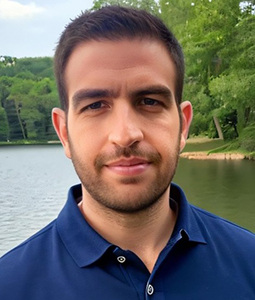
Didrik Lundberg is a Researcher at the Department of Theoretical Computer Science within the School of Electrical Engineering and Computer Science at Royal Institute of Technology . His work focuses on system security and formal methods , particularly in mechanized reasoning for the P4 programming language. Key research areas include formal verification , network security , and program logic , as evidenced by his publications on HOL4P4 , symbolic execution , and unstructured program logics . He has presented at international conferences such as SEFM 2020 , OOPSLA 2024 , and VSTTE 2024 . His peer-reviewed articles and conference contributions span topics like P4 semantics, data plane verification, and Hoare-style logic for unstructured programs. He also authored a master's thesis titled Provably Sound and Secure Automatic Proving and Generation of Verification Conditions (2018).
Dr. Israat Haque is an Associate Professor in the Faculty of Computer Science at Dalhousie University, Halifax, where she leads the Programmable and Intelligent Networking (PINet) research group. She also holds an adjunct professorship in the Department of Computing Science at the University of Alberta. PhD in Computer Science, University of Alberta NSERC Postdoctoral Fellow, University of California, Riverside MSc in Computer Science, Concordia University Her research focuses on developing high-performance, secure, and dependable distributed and emerging networking systems, with key interests in Software-Defined Networking (SDN), Cyber-physical Systems (CPS), Internet of Things (IoT), 5G/6G technologies, and AI/ML applications in networking. She applies data-driven approaches to solve real-world problems in network programmability, stream processing, and edge/cloud computing. The 15 most recent publications highlight a strong trend in in-network computing, IoT security, AI-driven network reliability, and stream processing. Her work spans from theoretical surveys to practical system implementations, often leveraging programmable data planes (P4), machine learning, and hardware acceleration to address challenges in performance, security, and fairness in distributed systems. Dr. Haque has received numerous prestigious recognitions: IEEE/ACM N2Women Rising Star Award (2021) ACM FAccT Best Paper Award (2023) IEEE WICE Outstanding Mentoring Award (2025) University of Alberta Alumni Honour Award (2024) Digital Nova Scotia Thinking Forward Award (2022) Intel Fast Forward Initiative Winner (2022) President’s Research Excellence Award, Dalhousie (2021) She actively mentors PhD and MSc students and leads externally funded research projects, including a Canada First Research Excellence Fund (CFREF)-supported initiative on Securing Smart Environments. She has served on editorial boards of IEEE Transactions on Vehicular Technology and IEEE Communications Magazine, and on program committees of top conferences such as IEEE ICNP, IEEE NetSoft, and ACM SIGCOMM. Her lab, PINet, fosters innovation in networking systems and produces high-impact research with real-world applicability. Dr. Haque leads the PINet research group, which includes current PhD and MSc students working on cutting-edge topics like post-quantum cryptography, network programmability for security, and large ML model security. The group collaborates with institutions such as the University of Alberta, Laval University, and Concordia, and has strong industry ties with Intel, Meta, Amazon, and Facebook.
Antoine Beugnard is a Professor in the Computer Science Department at IMT Atlantique. He received his PhD in Computer Science from the University of Rennes 1 (1993) and accreditation to supervise research in 2005. His career spans academia and industry, including roles at ENST-Bretagne, Telecom Bretagne (now IMT Atlantique), and Michael Jackson France. Education: PhD in Computer Science (University of Rennes 1, 1993), Accreditation to Supervise Research (2005) Affiliation: IMT Atlantique, Lab-STICC (UMR 6285), P4S team Beugnard's research focuses on software modeling, particularly digital twins, model federation (via Openflexo/FML), and late-binding semantics in heterogeneous object-oriented languages. He explores interoperability challenges in multi-language systems and advocates for unified semantics to improve component compatibility. Key trends in his publications include model-driven engineering, digital twin architectures, and formal modeling notations. His work bridges theoretical foundations with industrial applications, notably in telecom systems for Orange and multi-level modeling frameworks. Advising and grants highlight his mentorship of 10+ PhD candidates and leadership in projects like Openflexo. He actively contributes to academic discussions on modeling methodologies and software development processes.
Siegfried Rouvrais is an Associate Professor and Research Scientist at IMT Atlantique, part of the Institute Mines-Télécom, and a CNRS research fellow at Lab-STICC. He specializes in engineering education and software systems research, focusing on curriculum design, decision-making skills in VUCA contexts, and enterprise architecture. His affiliations include IMT Atlantique (Brest, France), CNRS, and international collaborations like the CDIO initiative. Education: PhD in Software Architecture and Distributed Systems Modeling from University of Rennes/IRISA (2002) Research Interests: Engineering Education Systems (curriculum transformation, accreditation frameworks, project-based learning) and Software Systems (non-functional properties, service composition, model-driven engineering). His work integrates educational and technical domains to enhance program quality and student readiness for volatile environments. Recent Articles Highlight: Analysis of curriculum resilience in VUCA contexts, design of expedition learning models, and frameworks for higher education systems. His publications emphasize interdisciplinary methods, quality assurance, and global educational collaboration. Awards: Best Paper Award (MOPAS 2011), Emerging Innovative Course Prize (2021). Grants & Projects: Coordinator of DECART (€400k), HOOD (ongoing), DAHOY (€395k), and others. Advised over 50 student projects, with roles in program evaluations (e.g., French Engineering Accreditation Commission). Labs/Teams: Member of Lab-STICC’s P4S team (Safe & Secure Systems) and former leadership in PASS and ACS2 research groups.
Minseok Kwon is a Professor and Associate Chair in the Department of Computer Science at Rochester Institute of Technology (RIT), part of the Golisano College of Computing and Information Sciences. He holds a Ph.D. and M.S. from Purdue University and a B.S. from Seoul National University. His research focuses on network systems and protocols (including programmable networks, P4 software testing, SDN, and in-network security) as well as machine learning systems (especially workload prediction). He is a member of the RIT Center for Cybersecurity. Professional Contributions Technical committee member for Computer Communications Journal and multiple IEEE conference program committees (e.g., HPCC 2021, ICC 2021-2021). Publicity Chair for ICNP 2008 and NPSec 2005. Research Highlights Recent work emphasizes programmable data planes for green data centers, security in wireless server networks, and efficient packet processing using P4. Notable projects include P4Kube (in-network Kubernetes load balancing) and CuVPP (filter-based routing optimization). His publications span topics from network latency measurement tutorials to cutting-edge SDN implementations. Awards & Recognition Recipient of the Best Paper Award at IEEE Cluster 2020 for CuVPP . Teaching & Advising Current courses include CSCI-261 (Algorithms), CSCI-788 (MS Project), and supervising graduate co-op placements. His advising focuses on advanced network systems and cloud computing.
Young Lee is a Senior Lecturer in Computing at Macquarie University, affiliated with the School of Computing and three research centers: Data Horizons Research Centre, Future Communications Research Centre, and Smart Green Cities Research Centre. His research focuses on edge computing, blockchain technology, fog computing, and resource scheduling in distributed systems, with a strong emphasis on applications in IoT, healthcare, and sustainability. He has led or contributed to over 150 research outputs since 2005, including influential works on edge-based video analytics, blockchain frameworks, and cloud-edge resource optimization. Dr. Lee's projects include 'Extreme-Scale Computing for Big Data Analytics' (2016–present) and 'Synergising the Power of the Cloud with the Power of the Crowd' (2016–present), demonstrating expertise in scalable computing and cloud-crowd integration. His work bridges theoretical advancements in scheduling algorithms with practical implementations in energy-efficient data centers and mobile edge environments. Research interests span edge computing architectures, blockchain oracles, and fog caching strategies, with recent contributions to carbon-conscious travel systems and malware detection frameworks. His interdisciplinary approach addresses challenges in resource allocation, network security, and distributed system efficiency.
Kristine Santus Schonder is an Associate Professor at the University of Pittsburgh School of Pharmacy , Department of Pharmacy and Therapeutics. She holds a BS in Pharmacy (1994) and PharmD (1996) from Duquesne University, followed by residencies at West Virginia University Hospital (1997) and the University of Pittsburgh (1998). She joined the University of Pittsburgh faculty in 2000. Education: BS Pharmacy, Duquesne University, 1994 PharmD, Duquesne University, 1996 Pharmacy Practice Residency, West Virginia University Hospital, 1997 Specialty Residency in Ambulatory Care, University of Pittsburgh, 1998 Her clinical expertise focuses on solid organ transplant medicine , with specialties in nephrology and immunology . She developed best-practice models for medication management in transplant candidates and pioneered clinical pharmacy services in transitions-of-care units. She actively optimizes drug regimens for transplant recipients and collaborates with interprofessional transplant teams. Awards: Preceptor of the Year (2002, 2023) Faculty Member of the Year (2005) Cohen Teacher of the Year (2008, 2010, 2017) Dr. Schonder teaches in the PharmD curriculum, emphasizing nephrology and immunology , and develops technology-enhanced teaching strategies. She leads a P4 student rotation program and serves as Residency Program Director for the PGY2 Solid Organ Transplant Pharmacy Residency at UPMC Presbyterian Hospital.
Prof. Georg Carle is a full Professor in Network Architectures and Network Services at the Technical University of Munich (TUM), affiliated with the TUM School of Computation, Information and Technology. He leads research in Internet technology, focusing on future network architectures, security, and real-time communication. Prior roles include positions at the University of Tübingen and Fraunhofer Institute for Open Communication Systems (FOKUS). Education: Electrical Engineering diploma from University of Stuttgart (1992), Master of Science in Digital Systems (Brunel University, London), and PhD in Telematics from University of Karlsruhe (1996). He held scholarships in complex systems and European Union-funded research at Institut Eurécom. Research Interests: Prof. Carle's work spans network security, sensor networks, autonomous systems, and future Internet protocols. His group develops tools like MoonGen (packet generator) and pos (experiment workflow system). Recent focus includes QUIC protocol analysis, network slicing, and reproducible experimentation frameworks. Key Contributions: Award-winning research includes Applied Networking Research Prizes (2017-2018), Best Paper Awards in IMC/PAM, and innovations in network measurement, security, and programmable data planes. His lab explores cutting-edge topics like post-quantum cryptography, low-latency networking, and 6G automation. Recognition: Honors include ACM SIGCOMM Community Contribution Award, IRTF ANRP, and multiple conference best paper accolades. He advises on network infrastructure for industrial IoT, automotive systems, and secure multiparty computation.
Marta Fort Masdevall is a Lecturer in the Department of Computer Science, Applied Mathematics and Statistics at the University of Girona. She is affiliated with the Graphics and Image Laboratory Research Group (GILAB) and specializes in computational geometry with applications in service localization and spatial/spatio-temporal data analysis. She has participated in five R&D projects funded through public calls and teaches programming subjects. Her research focuses on Computational geometry algorithms Geospatial data processing Temporal data modeling Location-based service optimization She collaborates with the Institute of Computing and Applications and can be reached at Building P4, Office 236 (Girona) or via phone at +34 9338 (internal) / +34 618361888 (external).
Seifeddine Fathalli is a PhD student and Researcher in the Internet Architecture department at the Max Planck Institute for Informatics. His work focuses on software-defined networking (SDN), network congestion control, and data plane development. He has contributed to seminal studies on BBRv3 and P4 programming frameworks. Fathalli holds a Master’s in Computer Engineering from the Technical University of Berlin (TU Berlin) and a Dipl.-Ing. in IT Networks and Telecommunications from INSAT, Tunis. Research Interests : - Software-Defined Networking (SDN) and P4 programmability - Network congestion control mechanisms (e.g., BBRv3) - Network security and verification in SDN environments - Public internet performance optimization Teaching : - Tutored Hot Topics in Data Networks (Winter 2020) and Data Networks (Summer 2020) at TU Berlin. Professional Experience : - Working student roles at TU Berlin (Network Verification in SDN), Charité University Medicine Berlin (IT/data management), and United Digital Group (IT Administrator). - Professional certifications: CCNA, P4 training (Barefoot Academy). Key Projects : - Co-designed P4Consist for SDN consistency (IEEE JSAC 2020) - Analyzed BBRv3 deployment implications in public internet (ANRW 2024)
Tatjana Wingarz is a Research Associate and PhD student in the IT-Security and Security Management (ISS) research group at the University of Hamburg's Department of Computer Science (MIN). She holds a Master's degree in IT-Security from Ruhr-University Bochum (2020) and a Bachelor's in Media Communication and Computer Science from Rhine-Waal University of Applied Sciences (2017). Her research focuses on Secure Machine Learning and Privacy-preserving Data Processing , addressing challenges in data integrity, cryptographic protocols, and network security. Recent publications highlight contributions to QUIC-aware load balancing, privacy-preserving data sharing, and edge computing middleware. Team & Collaborations: She collaborates closely with Prof. Mathias Fischer and colleagues like Dr. Heiko Bornholdt, Liliana Kistenmacher, and Kevin Röbert. Her work spans interdisciplinary projects in network security, functional encryption, and educational innovation in computer science pedagogy. Contact: tatjana.wingarz@uni-hamburg.de | Office F 624
Nicolai Kröger is a researcher at the Chair of Communication Networks (Prof. Kellerer) at the Technical University of Munich (TUM). He holds an M.Sc. in Electrical and Computer Engineering from TUM, where his thesis focused on P4 switch performance modeling using queuing theory. His current research centers on 6G networks for critical telemedicine applications, particularly within the 6G-Life project, emphasizing end-to-end communication for medical robotics and surgical systems. He contributes to projects like the 6G Future Lab Bavaria and collaborates with the MITI group at Rechts der Isar Hospital to develop medical testbeds requiring high availability and low latency. Kröger also supervises student theses on 5G/6G security, network optimization, and in-network computing. His technical expertise spans programmable networks (P4), SDN, and performance analysis of network devices. He serves as a supervisor for student projects and internships, including implementations of medical testbeds and security analyses of cellular broadcast messages. His work bridges academic research with practical applications, aiming to advance communication networks for healthcare and future 6G systems.
Dr. Bhargavi Goswami is a lecturer at the School of Computer Science, Queensland University of Technology (QUT), with over 14 years of teaching experience in higher education. Her expertise spans communication networks, network security, and software-defined networks (SDN), where she integrates cutting-edge research into postgraduate teaching. Previously, she served as Assistant Professor and Head of Department (HOD) at CHRIST University and Garden City College in India. Education: PhD in Computer Science from QUT; professional certifications including CCNA and CCNP from Cisco. Dr. Goswami's research focuses on communication networks and network security, with a particular emphasis on Smart Grid Communication Networks, Software Defined Networks (SDN), Cryptography, Cybersecurity, Mathematical Modeling, and Congestion Control in Data Networks. Her current work explores the intersection of Quantum Computing, Machine Learning, and Network Programming to enhance communication security and efficiency. Her 15 most recent publications highlight trends in Smart Grid , SDN , and network security . Key subfields include latency optimization , load balancing , handoff methods , Wi-Fi Mininet , and Beacon controller scalability . Dr. Goswami has led multiple funded research projects, including work on low-latency communication for Smart Grids and P4-based network policies in SDN. She holds two patents and has authored monographs in her field. Her technical certifications and industry engagement underscore her practical contributions to communication systems and network security. She emphasizes ethical technology development and societal impact in her research and teaching.
Sukyoung Ryu is a Professor in the Department of Computer Science at KAIST's College of Computing, South Korea. Her research centers on programming languages and program analysis, with significant contributions to WebAssembly, JavaScript semantics, and language specification. She leads the Programming Languages Research Group (PLRG) at KAIST. Her research spans multiple critical areas including executable specification engineering, static analysis techniques, and language interoperability. Recent work focuses on WebAssembly conformance testing, C-to-Rust translation, and bridging real-world implementations with formal semantics. Her group develops practical tools like SpecTec for mechanized language specifications and JISET for JavaScript semantics extraction. Analysis of her 15 most recent publications reveals strong trends in executable specifications (7 papers), WebAssembly tooling (5 papers), and language translation (4 papers). Key methodological approaches include record-replay debugging, filtered-simulation for binary lifting, and algebraic data type transformations for memory safety. Ryu actively contributes to the programming languages community through leadership roles including Steering Committee Chair for APLAS, Program Co-Chair for SPLASH/OOPSLA, and committee positions at POPL, PLDI, and ICFP. She frequently organizes workshops on real-world language specification (RPLS) and presents keynotes on programming language research for social good. Her mentoring activities include co-chairing New Faculty Symposia and participating in RTFM panels on faculty mentoring. She advises students through KAIST's programs and supervises research in the PLRG lab, which focuses on building practical language tools with formal foundations. Current projects emphasize WebAssembly standardization, secure language interoperability, and specification-based testing frameworks.
Elie Kfoury is Assistant Professor of Integrated Information Technology specializing in programmable network infrastructures. His research develops P4-based solutions for high-speed networks, cybersecurity, and blockchain integration. Research Leadership: Co-author of High-Speed Networks: A Tutorial used nationally for Science DMZ deployments. Innovator in programmable switch applications for TCP optimization and intrusion detection. Awards: Breakthrough Scholar (2023), Best Paper ICCNP 2018