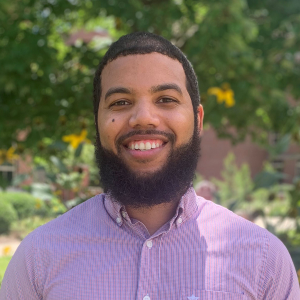
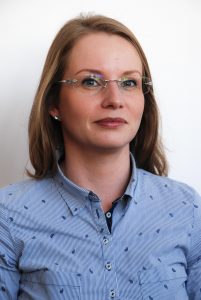
Isaac Petersen is an Associate Professor in the Department of Psychological and Brain Sciences at the University of Iowa. He is affiliated with the Developmental Psychopathology Lab and contributes to multiple training areas including Clinical Science, Individualized Graduate Training Track, Cognition, and Behavioral and Cognitive Neuroscience. His research focuses on Clinical child psychology Developmental psychopathology Externalizing behavior problems Self-regulation School readiness Developmental cognitive neuroscience The trends in his recent publications emphasize methodological innovation for studying psychopathology development (e.g., heterotypic continuity, developmental scaling), neurophysiological markers (ERP components like N2/P3), and interdisciplinary approaches bridging psychology with cognitive neuroscience. Dr. Petersen actively mentors students and has contributed to training resources like the Principles of psychological assessment: With applied examples in R (2024) and the petersenlab R software package (2025).
Marcin Koculak is affiliated with the Jagiellonian University under the Faculty of Philosophy and Department of Cognitive Science . His research focuses on consciousness studies , ERP correlates , neural activity , and metacognition , with a strong emphasis on visual and auditory perception , transcranial magnetic stimulation (TMS) , and AI applications in cognitive assessment . His publications span consciousness theories , resting-state brain activity , and dementia biomarkers . Key trends in his work include exploring the relationship between motor responses and confidence , individual differences in perception , and complexity in consciousness . Notably, he integrates machine learning for predictive modeling in aging populations. No scientific awards or email addresses were explicitly mentioned in the provided texts. His research is associated with ERP analysis , sensorimotor integration , and neuroimaging , but no formal students or advising history is listed.
Keanan Joyner serves as an Assistant Professor in the Department of Psychology at the University of California, Berkeley, where he directs the Clinical Research on Externalizing and Addiction Mechanisms (C.R.E.A.M.) Lab. His research program investigates the etiology of alcohol and substance use disorders through neuroscientific and behavioral approaches, with particular emphasis on cognitive-affective processes that contribute to the emergence of addiction. Dr. Joyner's research spans three interconnected domains: (1) understanding dispositional trait liabilities for addiction, particularly the interplay between disinhibition and reward sensitivity; (2) bridging between- and within-subject mechanisms of risk using ambulatory assessment techniques; and (3) evaluating and improving the generalizability of addiction models to minoritized and socioeconomically-disadvantaged populations. His work employs diverse methodologies including EEG/ERPs, ecological momentary assessment (EMA), behavioral genetic analyses, and advanced statistical modeling approaches to examine disturbances in cognitive-affective processes across time. Analysis of Dr. Joyner's recent publications reveals a sophisticated methodological approach focused on parsing complex relationships between neural markers and behavioral outcomes in addiction. His work demonstrates increasing attention to diversity and equity in clinical psychophysiology research, with publications addressing racial biases in neuroscience methods and the applicability of psychopathology models to underrepresented populations. A consistent theme across his research is the application of hierarchical taxonomies of psychopathology (HiTOP) to better understand the dimensional structure of externalizing behaviors. Principal Investigator: Clinical Research on Externalizing and Addiction Mechanisms (C.R.E.A.M.) Lab Secondary Advisor: Maria Martin Lopez (PhD candidate in Cognition) Dr. Joyner's laboratory includes graduate students and research staff working on various aspects of externalizing and addiction mechanisms. Current lab members include Maria Martin Lopez (Cognitive Science), Nick Nguyen (Clinical Science), Rishika Shah (Clinical Science PhD student), Geremy Lowe (History of Health Sciences), Danielle Jones (Research Engineer), and Geetika Kapoor (Postbaccalaureate Researcher). The lab's recent work includes projects on improving EEG data collection techniques for Black participants and exploring the semantic network of alcohol and cannabis-related language.
Catherine L. Reed is the McElwee Family Professor of Psychology and George R. Roberts Fellow at Claremont McKenna College, where she leads the Reed Cognitive Neuroscience Lab in the Department of Psychological Science. Her research integrates EEG and behavioral methods to investigate how aging affects cognition and how bodily states influence attention, perception, and emotional processing within peripersonal space. Education B.A. in Psychology from the University of Michigan, Ann Arbor Ph.D. in Psychology from the University of California, Santa Barbara Research Focus Dr. Reed's work centers on embodied cognition , examining how body position, movement, and multisensory integration shape cognitive processes. Her research spans aging-related neural changes , autism-spectrum neural correlates , and social-emotional processing , with methodological expertise in EEG microstate analysis, sensorimotor rhythms, and pupillometry. She investigates how tools extend peripersonal space and modulate attentional allocation. Publication Trends Her 2021-2025 publications reveal sustained focus on individual differences in cognitive control, with increasing integration of pupillary responses and microstate analysis. Key themes include aging effects on ERP components (P3/N400), autism-spectrum variations in mu rhythm, and the dissociation of perceptual/motor correlates in emotional processing. Recent work emphasizes methodological innovation in EEG signal decomposition and ecological validity. Scientific Recognition McElwee Family Professor of Psychology George R. Roberts Fellow Fellow, Association for Psychological Science Fellow, Western Psychological Association Fellow, Psychonomic Society Research Leadership Dr. Reed directs the NSF-funded PURSUE project (2016-2026; $1.5M) developing open-access cognitive electrophysiology curricula. Her lab trains undergraduates in EEG methodology, with students contributing to publications in top journals. Current grants include NSF SBE awards on emotional action simulation and aging studies. She serves as faculty advisor for the Claremont Neurosciences Program and W.M. Keck Science Department. Lab Infrastructure The Reed Cognitive Neuroscience Lab houses high-density EEG systems acquired through NSF MRI grants. It serves as the hub for the PURSUE consortium (pursue.richmond.edu), which produces open educational resources including lab simulations, animations, and instructional videos. The lab maintains active collaborations with the Keck Science Department and Claremont Colleges consortium for cross-institutional research.
Angus MacDonald is a Professor at the University of Minnesota , specializing in Cognitive Neuroscience and Psychopathology . He leads the Translational Research in Cognitive and Affective Mechanisms (TRiCAM) Laboratory , focusing on the neural and genetic bases of psychosis, schizophrenia, and mood disorders. His work integrates fMRI , EEG , and behavioral genetics to explore cognitive and affective processes. Primary appointment: University of Minnesota, Department of Psychology Research focus: Psychosis, Schizophrenia, Reinforcement Learning, Computational Psychiatry His methodologies include magnetic resonance imaging , experimental psychology , and computational modeling to address psychometric challenges in clinical research. Recent work examines neural mechanisms of suspiciousness , reversal learning impairments , and transdiagnostic cognitive markers across mental illnesses. The TRiCAM Lab also offers mentored undergraduate opportunities through the REP Projects initiative. Scientific recognition includes the Distinguished McKnight University Professor award. His research contributes to understanding the neurocomputational basis of decision-making , context processing deficits , and methodological innovations in neuroimaging for clinical populations.
Sina Hübener is a researcher affiliated with the Universitätsklinikum Hamburg-Eppendorf (UKE) within the Zentrum für Molekulare Neurobiologie (ZMNH) . He is part of the FOR2625 ProBone research consortium focusing on cellular biology of rare diseases, specifically leading the project component P3 (Hübner/Khundadze). His work contributes to understanding rare bone diseases and molecular mechanisms in cellular pathology. His research is embedded within the National Center for Bone Diseases , collaborating on projects related to osteogenesis and rare genetic disorders. While no specific awards or publications are listed in the provided text, his involvement in国家级 research initiatives indicates active engagement in translational medical research.
Professor Dr. Peter Huber is a faculty member at the Johannes Gutenberg University Mainz, serving as a Professor in the Department of Law within the Faculty of Law and Economics. His academic focus includes Private International Law, Investment Arbitration, and legal education. He leads the Chair of Prof. Dr. Huber, overseeing a team of legal advisors, researchers, and student assistants. Notably, he supervises the University of Mainz's participation in prestigious moot court competitions, such as the FDI Arbitration Moot Court, where his teams have achieved top rankings, including 4th place globally in 2015. His contributions to legal education include organizing programs like the Mainz Mini Course Program (MMP), which prepares students for international legal challenges. Professor Huber’s research and professional activities center on enhancing legal education and advocacy skills. He mentors students through moot court participation, fostering their expertise in international investment law and dispute resolution. His team includes legal advisors such as Dr. Lino Bernard and Malika Boussihmad, as well as student coaches like Sarah Sophie Fait and Rebecca Schöpsdau. The secretariat under his chair provides administrative support, maintaining contact via ls-huber@uni-mainz.de. His involvement in competitions like the FDI Moot highlights his commitment to practical legal training and international collaboration. The 2015 team’s success underscores his effective mentorship and the rigorous preparation he facilitates. While his scholarly articles span cognitive science and psychology (potentially across disciplines or misattributed), his primary academic contribution lies in legal education and arbitration advocacy.
Dr. Opriș Ocsana Ileana is an established researcher (R3) at the National Institute for Research and Development of Isotopic and Molecular Technologies (INCDTIM) in Cluj-Napoca, Romania. She works within the Department of Advanced Materials, Energy and Technologies, focusing on environmental chemistry, pollutant removal, and bioactive compounds from plant materials. Her expertise spans chromatography, nanomaterial synthesis, and the analysis of organic pollutants in environmental and plant systems. MSc in Applied Electrochemistry (2008, Babeș-Bolyai University, Cluj-Napoca, Romania) PhD in Environmental Science (2013, Babeș-Bolyai University, Cluj-Napoca, Romania) Her research investigates the impact of pollutants on plants, the development of nanomaterials for wastewater decontamination, and the optimization of extraction methods for bioactive compounds. Recent projects include: DIME (2024-2027): Developing superabsorbent materials for water treatment and drought mitigation. PN-III-P3-3.1-PM-RO-MD-2016-0133 (2016-2020): Replacing synthetic food additives with natural bioactive components. PN-III-P1-1.1-PD-2016-0484 (2018-2020): Studying effects of nonsteroidal anti-inflammatory drugs on plant physiology. She also contributes to methodological guides for antibiotic resistance monitoring and peer-review activities for international programs.
Catarina Alexandra Alves Botelho is a PhD Student and Researcher at the Faculty of Psychology and Education, affiliated with the Human Environment Interaction Lab (HEI-LAB). Her research focuses on decision-making processes, event-related potentials (ERP), attentional bias in anxiety, and neuroeconomic models of risk and uncertainty. Key Research Areas : Decision-Making Neuroscience, Threat-Related Attentional Bias, ERP Correlates of Anxiety, Systematic Review Methodology Her recent work synthesizes neuroimaging findings on threat processing (2023) and deconstructs uncertainty in decision-making (2023), with applications in clinical psychology and cognitive neuroscience. She collaborates on projects like HiTOP-SR (psychological assessment) and UncertainDM (neuroeconomic approaches to decision-making).
Abigail Noyce is an assistant research professor at the Carnegie Mellon Neuroscience Institute , affiliated with the Department of Psychology . She investigates cognitive mechanisms underlying perception, attention, and memory using EEG and fMRI neuroimaging techniques, focusing on how the brain exploits predictability and sensory specialization. Her research spans auditory and visual cognition , examining dual-task interference, working memory organization, and multisensory integration. Current work explores how task demands interact with sensory processing limitations and individual neural architectures. Recent publications emphasize auditory attention (2024), functional cortical mapping (2023), and predictive coding (2022). Her 2025 study on spatial selection dynamics reveals novel mechanisms in attentional control systems. Dr. Noyce's methodological expertise includes EEG signal decoding, fMRI connectivity analysis, and connectome fingerprinting techniques for individual prediction models. Contact: abigail.noyce@cmu.edu
Professor Robert Barry is a distinguished academic in the School of Psychology at the University of Wollongong, Faculty of the Arts, Social Sciences and Humanities, where he has held a Professor position since 2020. His research career spans several decades with significant contributions to psychophysiology and cognitive neuroscience. Barry's research focuses on four major interconnected themes: the Orienting Reflex using his Preliminary Process Theory, electrophysiology of Attention-Deficit/Hyperactivity Disorder (ADHD), arousal and activation mechanisms, and brain dynamics. His work bridges theoretical psychophysiology with clinical applications, particularly in ADHD assessment and treatment. He has developed electrodermal skin conductance level as a gold standard measure of arousal and linked it to EEG alpha activity. His recent publications (2023-2025) reveal a strong focus on mindfulness meditation effects on EEG, sex differences in neural oscillations, and the relationship between prestimulus brain states and cognitive processing. Barry has made important contributions to understanding adaptive phase changes in brain activity and how the brain organizes ongoing activity to optimize stimulus processing. Professor Barry has supervised numerous PhD and Master's students over his career, with current supervision including projects on menstrual cycle effects on EEG, cardiac responses during music listening, and mindfulness effects on neural oscillations. He has collaborated extensively with colleagues including Clarke and Johnstone, who were his former students and are now Associate Professors. His research has been supported by multiple grants, including ARC Discovery Projects and internal University of Wollongong funding. Notable projects include investigations into electrophysiological assessment in ADHD, brain processing of musical patterns, and the effects of interstimulus interval on orienting reflex measures.
Dr. Gabriela Castillo-Parra is an Assistant Professor at Universidad Camilo José Cela (UCJC) with cross-appointment at Complutense University of Madrid. Her institutional affiliations include: Assistant Professor at Universidad Camilo José Cela (accredited by Community of Madrid since 2011) Professor in Master's program in Clinical Neuropsychology at Complutense University of Madrid Doctoral committee member at National Autonomous University of Mexico and University of Guadalajara Her academic credentials feature: PhD in Psychology (Behavioral Neuroscience), UNAM (2005) Master's in Psychobiology, UNAM (2001) Bachelor's in Psychology, UNAM (1997) Master's in Clinical Neuropsychology, Complutense University of Madrid (2010) Dr. Castillo-Parra's research program centers on neuropsychology and psychophysiology with emphasis on executive functions, emotional regulation, and language-emotion interactions. Her methodological expertise in EEG and event-related potentials enables investigation of neural correlates in both clinical populations (alcohol dependence, fibromyalgia, congenital disorders) and fundamental cognitive processes. Recent publications reveal strong thematic consistency across addiction neuroscience, chronic pain mechanisms, and emotional processing. She maintains active professional engagement through: Board membership in Latin American Association of Neuropsychology (ALAN) Membership in Official College of Psychologists (Madrid) Technical-administrative role for Neuropsicología, Neuropsiquiatría y Neurociencias journal Her teaching integrates clinical neuropsychology with cutting-edge electrophysiological methods across multiple graduate programs, preparing students for both research and clinical practice in cognitive neuroscience.
Eligiusz Wronka is a Professor at the Jagiellonian University , serving as Deputy Director of the Institute of Psychology for Teaching and Head of the Department of Psychophysiology. Based in the Faculty of Philosophy, his work bridges psychophysiology and cognitive neuroscience. Primary research areas: Psychophysiology , Emotional Processing , Attention Mechanisms , and ERP Studies . Current affiliations: Jagiellonian University (Faculty of Philosophy, Institute of Psychology, Department of Psychophysiology). Wronka's publications reveal a focus on neural correlates of attention, emotional expression processing, and cognitive conflict monitoring. His work frequently employs ERP , LORETA , and behavioral paradigms to explore interactions between affective states and cognitive control. Contact: eligiusz.wronka@uj.edu.pl
Sandra Carvalho is an Assistant Professor of Neuropsychology at the Department of Education and Psychology, University of Aveiro, where she serves as Director of the Psychology Course and Coordinator of the Translational Neuropsychology Laboratory. Her work integrates clinical practice with cutting-edge research in neuromodulation and neuroimaging to address complex psychiatric and neurological conditions. Her research program focuses on non-invasive brain stimulation techniques including transcranial direct current stimulation (tDCS) and transcranial magnetic stimulation (TMS), combined with EEG and fMRI methodologies. She investigates neuronal and behavioral correlates of clinical responses across diverse conditions such as neuropathic pain, obsessive-compulsive spectrum disorders, major depression, Tourette’s syndrome, and post-stroke cognitive rehabilitation. This work spans basic neuroscience, translational applications, and clinical trial implementation. Analysis of her recent publications reveals a strategic emphasis on personalized neuromodulation protocols, with growing attention to brain connectivity mapping through neuroimaging. Key trends include optimizing tDCS parameters for depression treatment, developing combined tDCS-cognitive therapy approaches, and expanding applications to language rehabilitation in aphasia and autonomic regulation in emotion processing. Dr. Carvalho leads the Translational Neuropsychology Laboratory, which operates at the intersection of neuroscience, psychology, and clinical medicine. The laboratory prioritizes rapid translation of mechanistic findings into practical clinical interventions, particularly through evidence-based neuromodulation frameworks for treatment-resistant psychiatric and neurological conditions.