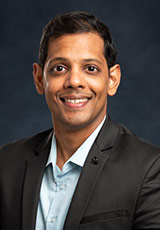
Shivam Saxena is an Assistant Professor in the Department of Electrical and Computer Engineering at the University of New Brunswick, located in Head Hall D65, Fredericton. His research focuses on smart grid technologies, including distributed energy resource integration, blockchain applications for energy trading, electric vehicle-grid interactions, and resilient microgrid design. This work addresses decarbonization challenges through technological and market innovations. Publications demonstrate a strong emphasis on real-world implementation, with field-tested solutions for V2X integration, blockchain-based transactive energy, and distributed control systems. Recent work explores novel applications in agricultural energy management and trust mechanisms for decentralized systems.
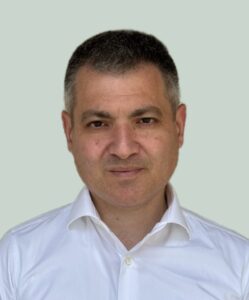
Paolo Trunfio is a Professor of Computer Engineering at the University of Calabria, Italy, and co-founder of DtoK Lab S.r.l., an academic spin-off focused on data analysis and distributed systems. He holds a Ph.D. and is affiliated with the DIMES Department, specializing in big data, cloud computing, and high-performance computing (HPC). His research emphasizes scalable data analysis frameworks, edge-cloud continuum solutions, and machine learning applications for social media and disaster monitoring. Trunfio serves as an Associate Editor for ACM Computing Surveys and Journal of Big Data , and is on the editorial boards of several journals including Future Generation Computer Systems . He has authored four influential books, including Programming Big Data Applications (2024) and Data Analysis in the Cloud (2015). His work spans distributed systems, IoT-based smart objects, and exascale computing. Notable projects include the EU-funded eFlows4HPC and ASPIDE initiatives, which focus on HPC workflows and exascale programming models. Trunfio’s publications (over 200 papers) address topics like social media analytics, energy-efficient P2P networks, and parallel data mining. He leads research in urgent computing for disaster response, edge-cloud integration for urban mobility, and AI-driven data analysis. His contributions to cloud frameworks (e.g., JS4Cloud, ParSoDA) and HPC libraries (e.g., DCEx) highlight his expertise in bridging theory and practice in distributed computing ecosystems.
Marc Sánchez Artigas is an Associate Professor at Rovira i Virgili University, Department of Computer Engineering and Mathematics. He holds a PhD from Pompeu Fabra University (2009) and conducted postdoctoral research at EPFL (Switzerland). His research focuses on distributed computing, cloud storage systems, and serverless architectures. He leads the CloudLab research group and coordinates major EU projects like Horizon Europe's CloudSkin and H2020's IOStack. Education: PhD in Computer Science (2009), Pompeu Fabra University MSc in Computer Engineering (2004), Universitat Rovira i Virgili BSc in Computer Engineering (2002), Universitat Rovira i Virgili Research Interests: Distributed systems, cloud computing, software-defined storage, serverless computing, and privacy-preserving storage solutions. His work emphasizes scalable architectures, data management in heterogeneous environments, and optimizing cloud storage efficiency through novel algorithms and frameworks. Awards: Best Paper (IEEE LCN 2007), Best Dataset (ACM IMC 2015), Serra-Hunter Excellence Professorship, and multiple grants from EU and Spanish funding bodies. Grants & Projects: Coordinated over €5 million in projects including H2020 CloudButton (serverless analytics), FP7 CloudSpaces (personal clouds), and national initiatives like Software-Defined Edge Clouds. Active in coordinating IPCEI-CIS for cloud infrastructure. Teaching: Courses on distributed systems, parallel architectures, and cloud computing. Taught at Universitat Rovira i Virgili and Universitat Oberta de Catalunya.
Petar Jandrić is Professor of Informatics at Zagreb University of Applied Sciences, Croatia, and holds visiting professor positions at University of Wolverhampton and Bath Spa University in the UK. He also serves as Visiting Associate Professor at University of Zagreb's Faculty of Humanities and Social Science. With a background spanning physics, education, and information science, Jandrić's research focuses on the post-disciplinary intersections between technologies, pedagogies, and society. His scholarly work centers on critical pedagogy and information and communication technologies, with particular emphasis on epistemology and multi-, inter-, trans-, and anti-disciplinary approaches. Jandrić has authored or edited numerous influential books including Mobility, Data, and Learner Agency in Networked Learning (2020), Postdigital Dialogues on Critical Pedagogy, Liberation Theology and Information Technology (2020), and Constructing Postdigital Research: Method and Emancipation (2023). He is Editor-in-Chief of the Postdigital Science and Education journal, book series, and encyclopedia, establishing himself as a leading figure in this emerging field. His recent publications demonstrate a consistent focus on postdigital theory, methodology, and applications across diverse contexts from education to theology to political economy. Jandrić's work often takes the form of dialogues with prominent scholars across disciplines, reflecting his commitment to collaborative knowledge production. His editorial and research leadership has helped establish postdigital studies as a significant academic field, with particular attention to the implications of digital technologies for knowledge production, education, and social justice. Jandrić maintains strong connections to Croatian academic contexts while operating at the forefront of international scholarly discourse.
Vallari Chandna is a Professor of Management and Associate Dean at the Austin E. Cofrin School of Business, University of Wisconsin-Green Bay. She holds a Ph.D. in Organizational Theory (2016) and MBA (2011) from the University of North Texas, along with a BA.LL.B. (Honors) from RSTMN University, India (2007). Her research focuses on strategy, entrepreneurship, and sustainability, with particular interests in digital entrepreneurship, temporary organizations, cybersecurity, degrowth, and inter-organizational relationships. Education: Ph.D. in Organizational Theory, University of North Texas (2016) MBA in Organizational Behavior and Human Resources, University of North Texas (2011) BA.LL.B. (Honors) from RSTMN University, India (2007) Her research has appeared in journals like Journal of Business Research , Technovation , and Business Horizons . She explores topics such as crowdfunding equity, digital ecosystems, and sustainable enterprise frameworks. Vallari actively collaborates with students on research, including co-authoring book chapters and conference papers. Her 2023-2025 publications examine: Gender disparities in crowdfunding Strategic control in organizations Value co-creation in platform ventures Regulatory compliance for crowdfunding Cybersecurity challenges for startups Temporal organization frameworks Notable award: Current Young Professionals of Green Bay Future 15 (2023) for professional and community impact. She contributes to academic governance as former Chair of the Marketing & Management Department (2019-2022), former Chair of the MS-Management program (2019-2022), and active participant in university committees including Faculty Senate. Vallari serves as Associate Editor for the International Journal of Project Management and Productivity Assessment and sits on editorial boards for journals on sustainable entrepreneurship and strategic decision sciences.
Prof. Hermann Hellwagner is a Full Professor at the Department of Information Technology, University of Klagenfurt. He has held roles such as Vice President (Natural and Technical Sciences) at the Austrian Science Fund (FWF) and Vice Dean of the Faculty of Technical Sciences. His research focuses on multimedia communication, network engineering, and future internet architectures. Notable projects include work on adaptive streaming, edge computing, and drone networks. He holds a Ph.D. in Systolic Architectures from the University of Linz (1988). Research interests span distributed multimedia systems, information-centric networking (ICN), and optimizing video streaming quality-of-experience (QoE). Recent work emphasizes edge computing solutions for low-latency streaming and dynamic codec adaptation. His contributions include frameworks like ALPHAS and MEDUSA for bitrate optimization, and studies on point cloud streaming in augmented reality. Publications (2021–2025) highlight advancements in edge-assisted streaming, hybrid P2P-CDN architectures, and transcoding techniques. His work often bridges theoretical models with real-world implementations, addressing challenges in latency, cost, and device adaptability. Current projects involve 6DoF video streaming and multi-robot system optimization. Labs/Teams: Part of the Institute of Information Technology (ITEC), Klagenfurt. Collaborates on EU-funded projects and industry partnerships in 5G edge computing and drone networks. Active in standards groups for HTTP adaptive streaming protocols.
Dr Jiao Ji serves as Lecturer in Finance and Programme Director of Accounting, Governance, and Financial Management at the University of Sheffield Management School, where she actively contributes to the Accounting and Financial Management division and Centre for Research into Accounting and Finance in Context (CRAFiC). Her academic credentials include: BSc. in Accounting (CPA) from Southwestern University of Finance and Economics MSc. in Economics and Finance from Durham University Ph.D. in Finance and Accounting from University of Sheffield Specializing in empirical corporate finance and governance, Dr. Ji employs advanced big data analytics and textual analysis to investigate corporate risk, misconduct, and disclosure practices. Her research extends into banking, financial innovations, ESG/CSR initiatives, and behavioral finance, with particular emphasis on extracting insights from corporate disclosures and social media content through machine learning methodologies. Her publication record (2018-2025) reveals consistent focus on governance-risk relationships using innovative quantitative approaches. Recent work applies double machine learning to healthcare diversity studies, examines shareholder structures in stock crash risk, and investigates legal enforcement in fintech credit across international contexts. China-based evidence features prominently in her corporate governance research. Professional recognition includes: Fellow of the Higher Education Academy (FHEA) Dr. Ji currently supervises three PhD candidates researching P2P lending dynamics, CEO organizational identification, and boardroom education impacts, while previously guiding research on bank CSR and governance. Her externally funded projects address critical industry issues: Exploring the Link Between Toxic Culture in Banks and Misconduct: Machine Learning Approach (British Academy/Leverhulme, 2023, £9,070) Enhancing Sustainable Supply Chain Management with Big Data Analytics (The Grantham Centre, 2024, £8,500) As an active member of CRAFiC, she collaborates on interdisciplinary finance research while serving as Associate Editor for Qualitative Research in Financial Markets and Committee Member for BAFA's Corporate Governance Special Interest Group.
George Exarchakos is an Assistant Professor in the Department of Electrical Engineering at Eindhoven University of Technology (TU/e), affiliated with the EAISI High Tech Systems and the Center for Wireless Technology. His research focuses on P2P computing, data mining, machine learning, network optimization, and swarm intelligence. He holds an MSc in Advanced Computing from Imperial College London and a PhD in P2P Computing from the University of Surrey (2008). Prior to his current role, he conducted postdoctoral research on autonomous networks at TU/e before becoming an Assistant Professor in 2011. Key projects include HiCONNECTS: Heterogeneous Integration for Connectivity and Sustainability (2023–2025) and RHIADA: Reliable Hybrid Intra Aircraft Datanetwork Architectures (2021–2025). His work contributes to UN Sustainable Development Goals related to innovation and infrastructure (Goal 9). Research interests span predictive networks, gossip protocols, overlay networks, and network complexity. Notable publications include studies on beyond-5G networks, avionics communication protocols, and edge computing resource management.
Bettina Kemme is a Professor in the School of Computer Science at McGill University, Montreal, Canada. She leads the Distributed Information Systems Lab (DISL) and specializes in large-scale data management, distributed systems, and cloud computing. Her academic roles include teaching COMP 512 (Distributed Systems) and COMP 421 (Database Systems). Education: Diplom (M.Sc. equivalent) in Computer Science, Friedrich-Alexander University, Erlangen, Germany (1996) PhD in Computer Science, Swiss Federal Institute of Technology (ETH), Zurich, Switzerland (2000) Research Interests: Distributed systems, cloud-native data management, in-database analytics (AIDA project), monitoring-as-a-service frameworks, and scalable pub/sub systems for online games. Current projects focus on integrating machine learning with databases, cloud performance monitoring using SDN, and sustainable data systems for data science. Lab & Collaborations: Leads the Distributed Information Systems Lab (DISL) with active projects in distributed databases, cloud computing, and game systems. Collaborates on EU-Canada initiatives like the SustainSys program for sustainable data infrastructure. Advising: Supervises PhD and M.Sc. students in topics like monitoring frameworks (Mona ElSaadawy), in-database ML (Winnie He), and distributed systems (Maximilian Schiedermeier). Alumni include over 50 researchers from PhD candidates to undergraduate researchers.
FANG Xin is a Full-time Faculty Member and Associate Professor of Operations Management at the Singapore Management University (SMU), affiliated with the Lee Kong Chian School of Business . He also serves as Director of PhD Programmes and MPA Research Fellow since 2023. Ph.D. in Operations Management (2014), Carnegie Mellon University B.S. in Information Systems (2008), Fudan University Research Interests: Corporate Social Responsibility in Supply Chains Digital Economy and E-Commerce Platforms Co-opetition and Network Stability Sustainable Operations and Urban Logistics Consumer Behavior and Decision Theory Selected Publications (2013-2025): Focus on supply chain ethics, game theory applications, and digital platform strategies. Notable themes include anti-counterfeiting, CSR dynamics, urban delivery solutions, and transshipment network formation. Scientific Awards: M&SOM Meritorious Service Award (2024) Lee Kong Chian Fellowship (2020) William Larimer Mellon Fellowship (2008-2014) Multiple Dean's Teaching Honor List recognitions (2019-2024) MPA Fellowships in Maritime Business (2021, 2024) Leadership Roles: Program Director, PhD in Business (2023-Present) Program Coordinator, PhD in Business (Operations Management) (2020-2023)
Dr. Aliyu Abubakar is a Lecturer in Computer Science at Teesside University's Department of Computing & Games. He holds a PhD in Computer Science from the University of Bradford (2023), an M.Sc. in Cyber Security (2015), and a B.Sc. in Computer Science from Gombe State University (2012). Prior to his current role, he was a Postdoctoral Research Associate at the University of Liverpool (2022–2024). His research focuses on deep learning applications in medical imaging, cybersecurity, and pattern recognition. He is a member of the Nigeria Computer Society (NCS) and the Cyber Security Experts Association of Nigeria (CSEAN). Education: B.Sc. Computer Science, Gombe State University (2008–2012) M.Sc. Cyber Security, University of Bradford (2014–2015) Ph.D. Computer Science, University of Bradford (2018–2022) Research Interests: Abubakar’s work spans medical image analysis (e.g., burns assessment, kidney transplantation viability, malaria detection), cybersecurity (deepfake detection, P2P network security), and electrical engineering (partial discharge analysis). His deep learning models address challenges in healthcare diagnostics and industrial safety. Recent studies include human deception detection via facial image comparison and automated liver viability assessment using pre-trained neural networks. Key Trends in Publications: His 2020–2024 articles emphasize cross-disciplinary applications of deep learning, particularly in healthcare and electrical systems. Collaborations span institutions like the University of Liverpool and NHS clinical partners, reflecting his commitment to translational research. Awards & Grants: While no specific awards are listed, his high citation counts (e.g., 32 citations for malaria detection work) highlight impactful contributions. Grants and funding details are not disclosed in the provided texts. Labs & Teams: Active collaborations with multidisciplinary teams in medical imaging and cybersecurity, as evidenced by co-authored papers with clinicians and electrical engineers.
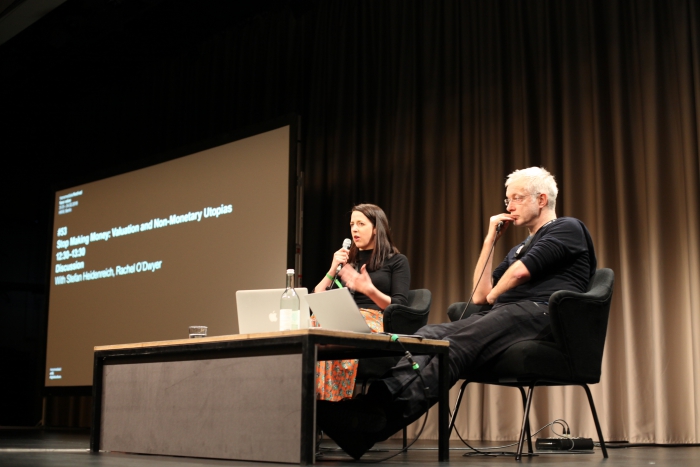
Rachel O’Dwyer is a Lecturer in Digital Cultures at the School of Visual Culture, National College of Art and Design (NCAD), Dublin. She holds a PhD from Trinity College Dublin (2014), an M.Phil. in Music and Media Technologies (2009), a B.A. Honours in Fine Art (Digital Media) from IADT Dun Laoghaire (2006), and a City & Guilds Diploma in Sound Engineering (2007). Her research explores the intersection of digital cultures and cultural economies, focusing on how digital networks transform ownership, value, and production of art, knowledge, and information. She critiques neoliberal logics in blockchain and algorithmic systems, advocating for a return to commons-based models. Education: PhD, Trinity College Dublin (2014): Spectre of the Commons: A Political Economy of Radio Spectrum M.Phil., Trinity College Dublin (2009): Music and Media Technologies B.A. Honours, IADT Dun Laoghaire (2006): Fine Art (Digital Media) City & Guilds Diploma, Sound Engineering (2007) Research Interests: Rachel’s work interrogates money, algorithms, AI, and their implications for cultural production and resistance. She investigates the role of blockchain in crypto-art, freeports, and art markets, while also examining how IoT and 5G reshape payments and surveillance. Her critical lens extends to the political economy of communications, digital value systems, and tactical media strategies like Openhere and D.A.T.A. Scientific Awards: 2018: Fulbright Scholar Award (Blockchain & Art) 2018: RIA Charlemont Scholar Award 2014: SFI Public Engagement Grant 2010-2014: Science Gallery Seed Funding Advising & Grants: Rachel has coordinated modules in the history of creative industries and designed MOOCs on technology and society. She organized the Openhere festival (2012, 2014), Data Politics conferences (2016), and Quantified Self events (2011). Her current book project with MIT Press examines radio spectrum ownership. Labs & Teams: She is a core member of the P2P Foundation’s academic research network and coordinates the Orthogonal Methods Group (OMG) at Trinity College Dublin. She advises the DECODE EU project on data sovereignty and contributes to ADAPT’s Ethics and Privacy Working Group.
Dr. Heiko Bornholdt is a Researcher in the Computer Networks group at the Department of Informatics, University of Hamburg. He is affiliated with the Faculty of Mathematics, Informatics, and Natural Sciences. His research focuses on distributed communication middleware, overlay networking, and edge computing. He holds a doctoral degree and has been with the university since 2016. Position: Research Associate / Postdoc Office: Room F-622, Vogt-Kölln-Str. 30 Contact: heiko.bornholdt@uni-hamburg.de | +49 40 42883-2332 Research Interests Dr. Bornholdt’s work emphasizes distributed systems , particularly in the context of smart cities and IoT. Key areas include: Overlay networks for edge computing Decentralized privacy-preserving systems Efficient data discovery in IoT Latency-aware network protocols Publications Overview His recent work spans 20+ publications, with significant contributions to: Edge computing middleware (e.g., software-defined overlay networks) Secure communication in untrusted environments Smart urban data spaces Awards & Grants No specific awards mentioned, but active in funded projects including the EU-GDPR compliant blockchain research. Labs & Teams Part of the Computer Networks Team led by Prof. Mathias Fischer, collaborating with researchers like Kevin Röbert and Jeetesh Gupta.
Felix Urs Erich Freitag is an Associate Professor in the Department of Computer Architecture at the Barcelona School of Informatics (FIB), Universitat Politècnica de Catalunya (UPC). He is a key member of the CNDS - Computer Networks and Distributed Systems research group, where he actively contributes to projects in cloud computing, peer-to-peer systems, and IoT networking. His primary research interests include Cloud Computing , Peer-to-Peer (P2P) Systems , Internet of Things (IoT) , LoRa Mesh Networks , Federated Learning , Edge Computing , and Blockchain for IoT . His work spans from fundamental networking protocols to applied research on decentralized systems and sustainable digital technologies. He has also contributed to educational innovation through open project-based learning methodologies. Dr. Freitag's recent publications highlight a strong focus on integrating AI with low-power IoT networks, particularly using LoRa technology for federated learning and secure, decentralized identity solutions. His work demonstrates a clear trend towards enabling intelligent, trustworthy, and resource-efficient distributed systems at the network edge. Scientific Awards: 1er Premi UPC de Ciència Oberta 2024 He has been involved in significant research and innovation projects, including European H2020 and Horizon Europe initiatives, often in collaboration with colleagues like Leandro Navarro and Roque Meseguer. His research is supported by competitive grants focused on digital, industry, and space technologies. He also contributes to educational innovation projects and has supervised student theses, fostering a collaborative research environment within the UPC. His work is associated with the development of experimental testbeds and software libraries for LoRa mesh networks and federated learning, indicating a hands-on approach to building and validating distributed systems.
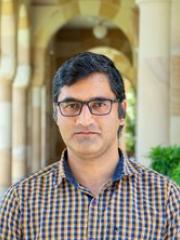
Associate Professor Rahul Sharma is affiliated with the School of Electrical Engineering and Computer Science at The University of Queensland (UQ), within the Faculty of Engineering, Architecture and Information Technology. His primary research focuses on control systems applications, particularly in solar farm fault detection, grid-connected inverter control, and demand side management. His work emphasizes system modeling, control development, and model-based fault diagnosis, with significant industrial relevance in renewable energy and smart grid technologies. Research Interests: - Solar farm fault detection and diagnosis via control theory to identify underperforming panels. - Advanced control methods for grid-connected inverters to enhance power quality and stability. - Demand side management through novel control algorithms for distributed energy resources. His experimental work includes field trials at Gatton Solar Farm and collaborations with industry partners. Articles Trends: Recent publications emphasize network-aware control of distributed energy resources, dynamic operating envelopes for demand response, and smart grid optimization. Key themes include low-voltage distribution networks, prosumer P2P trading, and fault diagnosis in power systems. Advising & Labs: He supervises prospective PhD students in control systems and renewable energy. Experimental setups at UQ and field trials at Gatton Solar Farm support his research on fault detection and grid systems.