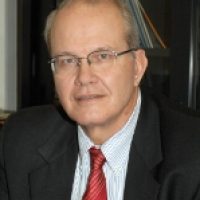
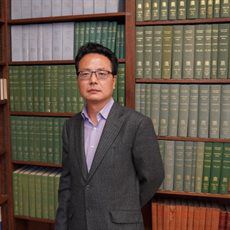
Lasse Niemi is an Associate Professor in the Department of Accounting at Aalto University. He leads the Audit Research Group, which focuses on four key research teams: the value of auditing, social networks in auditing and corporate governance, digitalization in auditing, and the impact of auditors' cognitive abilities on audit quality. His work bridges traditional accounting practices with modern technological and social dynamics. Research Pillars: Voluntary Audit Demand Network Analysis in Auditing Digital Transformation Audit Quality Determinants Scientific Recognition: BEST PAPER AWARD EARNet Symposium 2001 Recent publications explore intersections of gender dynamics in auditing careers, digitalization expertise impacts on fees, and climate risk disclosures. His email is lasse.niemi@aalto.fi .
Tore Ellingsen is a Professor holding the Ragnar Söderberg Professorship at the Stockholm School of Economics and an Adjunct Professor at the Norwegian School of Economics . His work bridges Behavioral Game Theory , Institutional Economics , and Organizational Economics , focusing on social norms, bargaining, and economic behavior. His research explores strategic communication , gender dynamics , and contract theory . Key contributions include analyzing social framing effects , bargaining inefficiencies , and institutional design in economic systems. Recent articles address social duties , market governance , and business cycle modeling . Scientific Awards: Ragnar Söderberg Professorship
Andrea Pawliczek serves as an Assistant Professor of Accounting at the Leeds School of Business, University of Colorado Boulder. She holds the KPMG Faculty Fellowship position and maintains her office in Koelbel 402F. Her academic work focuses on the critical intersection of financial reporting, corporate governance, and executive compensation practices within the modern regulatory environment. Professor Pawliczek's research interests center on executive compensation structures, corporate governance mechanisms, financial reporting quality, and the growing importance of ESG (Environmental, Social, and Governance) factors in corporate decision-making. Her work examines how regulatory frameworks like the SEC's clawback provisions impact corporate behavior, how shareholder voting influences executive pay practices, and how voluntary disclosure affects market competition and corporate transparency. She has made significant contributions to understanding the relationship between common ownership structures and corporate disclosure practices, as well as the evolving role of institutional investors in shaping corporate governance. Her publication record demonstrates a consistent focus on the evolving landscape of corporate reporting and governance. Recent research analyzes the SEC's clawback mandate, ESG integration in compensation practices, and the influence of major institutional investors like BlackRock. Her work shows a clear trajectory toward examining how regulatory changes and market pressures shape corporate disclosure practices and executive compensation decisions, with increasing attention to ESG considerations in recent years. Professor Pawliczek actively contributes to the academic community through her research and teaching at the Leeds School of Business. Her work bridges theoretical accounting research with practical implications for corporate executives, board members, and regulatory bodies seeking to understand the complex relationships between compensation structures, governance practices, and corporate performance.
Elisabeth de Fontenay serves as the Karl W. Leo Distinguished Professor of Law at Duke University School of Law, where she researches corporate law and finance with emphasis on less-regulated financial markets. Her work examines the decline of public companies, rise of private capital, and private equity's role in debt markets and corporate governance. She has testified before Congress and presented at the U.S. Securities and Exchange Commission. Education: B.A. in Economics, summa cum laude and Phi Beta Kappa, Princeton University (two-time All-American rugby player) J.D., magna cum laude, Harvard Law School Professor de Fontenay's research bridges corporate law, finance, and regulatory frameworks, focusing on market behavior in unregulated spaces. Her scholarship analyzes contractual complexity in debt agreements, value creation by transactional lawyers, and the public/private market equilibrium. She employs interdisciplinary methods combining legal doctrine with financial market analysis to address evolving regulatory challenges. Her recent publications (2023-2025) reveal a concentrated focus on private market dynamics, debt market regulation, and governance structures in non-public entities. Key trends include examining regulatory arbitrage between public and private markets, contractual innovations in private equity, and judicial responses to complex debt disputes. Her work increasingly addresses systemic implications of declining public listings and the expansion of private capital. Professional Affiliations: Member, American Law Institute (ALI) Associate Reporter, ALI’s Restatement of the Law of Corporate Governance Research Member, European Corporate Governance Institute (ECGI) Board of Directors, American Law and Economics Association Prior to academia, Professor de Fontenay practiced corporate law at Ropes & Gray specializing in mergers and acquisitions, debt financing, and private investment funds. She maintains active engagement with policymakers through congressional testimony and SEC presentations, translating academic research into practical regulatory insights while teaching courses including Business Associations, Corporate Finance, and Private Equity and Hedge Funds.
Jonathan Cullen is Professor of Sustainable Engineering at the University of Cambridge and President of Fitzwilliam College, specializing in resource efficiency and decarbonization through top-down analysis of industrial material and energy systems. His work bridges academic research with industry applications across energy-intensive sectors. Education: Bachelor's in Chemical and Process Engineering, University of Canterbury, New Zealand MPhil in Engineering for Sustainable Development, University of Cambridge PhD in Engineering Fundamentals of Energy Efficiency, University of Cambridge His research develops metrics for quantifying energy and material consequences of production systems, focusing on circular economy implementation, minimum energy requirements, and zero-carbon transition pathways. Key applications target cement, steel, plastics, and petrochemicals where he pioneers methods like exergetic analysis and material flow accounting to expose carbon lock-ins and circularity opportunities. Recent publications reveal three dominant trends: (1) Frameworks for theoretical minimum energy requirements across industrial processes, (2) Geopolitical analysis of critical mineral flows and ownership structures, and (3) Circular economy metrics for plastics and construction materials. These consistently employ system-scale modeling validated through industry partnerships. Research Funding: Lead: C-THRU ($4M, VKRF) - carbon clarity in petrochemical supply chains Co-I: UK FIRES (£5.2M, EPSRC) - industrial decarbonization program Co-I: CirPlas (£1.25M, UKRI) - plastic waste elimination 7+ projects (EPSRC, Innovate UK, Horizon 2020) Academic Leadership: Teaching: Energy Systems and Policy (MPhil in Energy Technologies) Undergraduate supervision in Materials/Mathematics Graduate Tutor at Fitzwilliam College IPCC AR6 Lead Author (Industry Chapter) He directs the Resource Efficiency Collective, which develops open-source tools like Mat-dp for material demand projections and Starter Data Kits for energy planning. Current work focuses on scaling circular business models for construction retrofitting and quantifying geopolitical risks in critical mineral supply chains.
Edyta Bojanowska serves as Professor of Slavic Languages and Literatures at Yale University with an affiliated appointment in the Department of History. Her academic career bridges literary scholarship and historical analysis, focusing on imperial and postcolonial frameworks within Russian and Central European contexts. Bojanowska earned her Ph.D. in Slavic Languages and Literature from Harvard University and completed her undergraduate studies at Barnard College with a dual major in English and Russian. Her educational trajectory established the foundation for her interdisciplinary approach to Slavic studies. Her research program critically examines 19th-century Russian literature through the lenses of empire, nationalism, and globalization. Key interests include settler colonial dynamics, spatial theory, travel writing, and the interplay between ideology and literary form. She has pioneered methodologies connecting Russian cultural production to global imperial histories, particularly through her award-winning work on Goncharov's The Frigate Pallada and Gogol's Ukrainian-Russian identity negotiations. Bojanowska's publication record reveals consistent engagement with colonial paradigms in Russian literature, evolving from early studies of Gogol and Pushkin toward broader imperial frameworks. Her recent scholarship demonstrates increasing focus on racial discourse, indigenous land rights, and the spatial dimensions of empire, culminating in the Ab Imperio Award-winning analysis of Tolstoy's Bashkir estate. The thematic continuity across her work establishes her as a leading voice in post-Soviet imperial historiography. National Humanities Center Fellowship (Spring 2025) Ab Imperio Award for Best Study in New Imperial History (2022) Guggenheim Fellowship (2020-2021) AATSEEL Best Book in Literary Scholarship (2019) MLA Scaglione Prize for Best Book in Slavic Studies (2007-2008) Bojanowska actively shapes her field through editorial leadership on Ab Imperio and the PMLA Advisory Committee. Her teaching portfolio reflects her research expertise, featuring undergraduate seminars on War and Peace and Russian short fiction alongside graduate courses on spatial theory and imperial culture. Current leave status for Spring and Fall 2025 accommodates her National Humanities Center residency while maintaining her position as a central figure in Slavic literary studies.
Roine Vestman is a Professor of Economics at Stockholm University and a visiting researcher at the Swedish House of Finance. He serves as the director for CeMoF and is a Research Fellow at CEPR. Additionally, he holds significant advisory positions including board member at AP7 (Sjunde AP-fonden), scientific advisor to the Swedish Debt Office (Riksgälden), and has previously advised the Swedish FSA (Finansinspektionen) and government inquiries on macroprudential policy. Vestman's educational background includes: Ph.D. in Economics from New York University, USA M.Sc. degree from Stockholm School of Economics Professor Vestman's research focuses on household finance, examining how individuals make consumption, savings, and housing decisions and how these choices impact the broader economy. His work specifically investigates pension plan design, the functioning of mutual fund industries, and household debt dynamics. His research combines theoretical models with empirical analysis of detailed Swedish data to provide insights into financial behavior and policy implications. Vestman has made significant contributions to understanding how default options in pension systems can be optimized to improve outcomes for passive investors. His recent publications demonstrate a strong focus on household financial decision-making, with particular attention to pension systems, housing markets, and investment behavior. Vestman's work often employs sophisticated empirical methods using detailed administrative data from Sweden, allowing for nuanced analysis of household financial behavior. A recurring theme across his publications is the examination of how financial institutions and policies affect individual economic outcomes, with implications for designing better financial products and regulatory frameworks. Through his advisory roles at AP7, the Swedish Debt Office, and previous engagements with Sveriges Riksbank and Finansinspektionen, Vestman actively translates his research into practical policy recommendations. His work on default pension fund allocation has particularly influenced discussions about how to improve retirement savings systems through personalized approaches that consider individual financial circumstances beyond just age.
Professor Katsuyuki Kubo serves as a faculty member at Waseda University's Faculty of Commerce, School of Commerce. Holding a Ph.D. in Industrial Relations from the London School of Economics, he has been affiliated with Waseda University since 2003, following his position as Lecturer at Hitotsubashi University's Institute of Economic Research from 2000 to 2003. His academic career demonstrates consistent focus on Japanese corporate governance structures and their economic implications. Professor Kubo's research interests center on Corporate Governance, Ownership Structure, Board of Directors, Executive Compensation, and Employment Relations. His scholarly work examines how corporate governance mechanisms affect firm performance, employee welfare, and broader economic outcomes in Japan and East Asia. He has conducted extensive empirical analyses on the relationship between board composition and employment practices, executive compensation structures, and the impact of foreign ownership on Japanese firms. His publication record reveals a clear trajectory of increasingly sophisticated research on corporate governance. Early work focused on basic relationships between executive compensation and firm performance, while more recent research examines nuanced aspects including female representation on corporate boards, decent work policies, and the impact of sovereign wealth funds. His studies often employ rigorous quantitative methods using large datasets of Japanese listed companies, contributing significantly to our understanding of the unique characteristics of Japanese corporate governance. Professor Kubo has led multiple significant research projects funded by the Japan Society for the Promotion of Science, including 'Corporate Governance Reforms and their Consequences' (2019-2024) and 'The impact of board composition on employment' (2020-2023). His work bridges theoretical frameworks with practical implications for corporate governance reform in Japan. He teaches courses including Managerial Economics, Corporate Governance and M&A, and Data Science and Business Research at both graduate and undergraduate levels. His educational contributions extend to authoring textbooks such as 'Statistics and Data Analysis for Business Administration' (2021), demonstrating his commitment to developing analytical skills among business students.
Linda Steiner is a Professor at the Philip Merrill College of Journalism, University of Maryland. Her work focuses on feminist journalism, media ethics, and gender studies within journalism. She has contributed extensively to understanding gender dynamics in newsrooms, online harassment, and the evolution of feminist media practices. Steiner is also affiliated with the Academy for Women’s Health, Gender, and Sexuality Studies at the University of Maryland. Her research spans topics such as feminist ethics in reporting, the representation of women in media, and the impact of digital platforms on journalism. Key themes include the intersection of gender with media labor conditions, the role of journalism in social movements, and critiques of mainstream media narratives on global conflicts and social issues. Steiner’s recent articles highlight her engagement with contemporary issues like #MeToo in academia, the challenges faced by women journalists, and the ethical dimensions of covering crises such as the Kobe Bryant obituaries and nuclear policy debates. She has also explored the historical use of media by feminist movements and the evolving nature of journalistic work amid global economic precarity. While her profile emphasizes research and teaching, she is involved in initiatives promoting ethical journalism and gender equity. Her work bridges theoretical frameworks with practical challenges in the media industry, offering critical insights into how journalism can better serve marginalized voices.
Dr. Isabel D. W. Rechberg is an Associate Professor of Management at the Anderson College of Business and Computing, Regis University. She holds a Ph.D. in Management from the University of Kent, UK, a Postgraduate Certificate in Higher Education, and advanced degrees in Labor Law and Business Management from institutions in Australia and Belgium. Her research focuses on Knowledge Management, Organizational Learning, Emotional Intelligence, and Employee Engagement, emphasizing individual-centric approaches. She has published extensively in journals like the Journal of Knowledge Management and European Management Review, and co-authored chapters in Palgrave and Kogan Page publications. Recognized with awards including the 2021 Easter Academy of Management Best Conceptual Paper, her work bridges theory and practice, addressing ethical dimensions and human elements in organizational dynamics. Education: Ph.D. in Management, University of Kent, UK (2014) Postgraduate Certificate in Higher Education, University of Kent (2011) M.A. in Labor Law and Relations, University of Sydney (2008) B.A. in Business and Human Resources Management, Vesalius College (2006) Research Interests: Dr. Rechberg’s scholarship explores how mindfulness, emotional intelligence, and ethical frameworks enhance workplace relationships and organizational learning. Her work critiques traditional knowledge management paradigms, advocating for individual agency and fairness in knowledge ownership. Recent studies include the role of self-determination theory in knowledge sharing and cross-cultural challenges in global initiatives like the Belt and Road. Teaching & Service: She teaches graduate and undergraduate courses in Management, Leadership, and Organizational Behavior. At Regis, she serves on the Academic Council and previously held roles at CUNY, including College Council membership and curriculum development. Her industry experience includes coaching accreditation and roles in recruitment and human resources. Awards: 2021 Easter Academy of Management Best Conceptual Paper Award 2021 PSC-CUNY Grant 2020 Top-Downloaded Paper Recognition in Knowledge and Process Management 2011 British Academy of Management Best Full Paper Award Advising & Grants: Supervised honor students on topics like ethical leadership, gender inequality in HR systems, and corporate social responsibility. Secured grants including the 2021 PSC-CUNY award. Active in peer review for leading management journals and conferences.
Stephen Rowe serves as an Associate Professor in the Accounting Department at the Walton College of Business, University of Arkansas. With extensive industry experience including nine years at KPMG culminating as Audit Manager, he maintains an active CPA license in Washington State while teaching intermediate accounting at graduate and undergraduate levels. His scholarly work focuses on auditing and financial reporting, published in premier journals including The Accounting Review and Review of Accounting Studies . Rowe holds a PhD from the University of Illinois at Urbana-Champaign, a Master's degree from Loyola University Chicago, and a Bachelor's degree from Covenant College. His educational journey bridges rigorous academic training with practical industry experience, informing his teaching approach that emphasizes conceptual understanding through real-world case studies. Research interests span auditing quality, financial reporting practices, and capital market interactions. Recent investigations examine index fund ownership effects, auditor switching dynamics, and media influence on audit markets. His methodological toolkit combines traditional econometric analysis with machine learning techniques, particularly evident in predictive models for auditor behavior. Rowe's work consistently addresses regulatory concerns while exploring market-driven phenomena in accounting ecosystems. Analysis of his publication trajectory reveals increasing focus on market-based audit quality indicators, with growing emphasis on passive investing impacts and regulatory compliance mechanisms. The 2021-2025 period shows heightened attention to technological disruption (machine learning applications) and non-traditional monitoring forces (media scrutiny, index fund activism) within audit markets. Professional recognition includes multiple teaching awards and extensive litigation support consulting engagements. Rowe leverages his expertise as a founding member and CFO of White River Capital Advisors LLC (2020-present), providing expert witness services that connect academic research with real-world accounting disputes. His industry background enables practical translation of complex accounting concepts for diverse audiences. Rowe maintains active engagement with professional practice through ongoing litigation consulting since 2016 and continuous CPA licensure. His balanced commitment to academic rigor and professional relevance exemplifies the practitioner-scholar model, with research directly addressing contemporary challenges in financial reporting and auditing ecosystems.
Yanglan Zu serves as a Lecturer in Accounting within the College of Business, Government and Law at Flinders University, bringing expertise from her PhD studies at the University of Technology Sydney. Her academic profile is anchored in interdisciplinary research bridging accounting principles with contemporary business challenges. Her educational foundation includes: PhD in Accounting, University of Technology Sydney Undergraduate Honours degree (institution unspecified) Research interests center on corporate sustainability and innovation , with growing emphasis on data analytics applications in accounting. Her work demonstrates consistent alignment with UN Sustainable Development Goals, particularly through investigations into climate change impacts on corporate behavior and FinTech's labor market effects. Current projects explore the intersection of environmental pressures, digital transformation, and governance structures. Recent publications reveal strong thematic cohesion around sustainable business practices, with notable emphasis on climate-related corporate responses and digital finance implications. The 2024-2025 research grant from AFAANZ supports ongoing work in these priority areas. Award highlights: 2024 EFMA Corporate Finance Best Paper Award for governance research 2024 UTS Vice-Chancellor's Learning and Teaching Citation 2024-2025 AFAANZ Research Grant funding As an educator, she coordinates advanced FinTech courses (BUSN8010 and BUSN1023) with a student-centered philosophy emphasizing analytical thinking and practical technology applications. Her teaching methodology actively incorporates digital tools to foster inclusive learning environments, reflecting her research interests in technological disruption.
George Vasilakopoulos is a Professor in the Department of Digital Systems at the University of Piraeus , where he also serves as Vice-Chancellor for Academic Affairs and Personnel. By law, he is President of the Quality Assurance Unit (MODIP) and the Employment and Career Structure (DASTA) of the university, overseeing the development of modern information systems. He earned his PhD from the University of London and has held leadership roles including Department President, Director of Postgraduate Programs, and Scientific Director of the Digital Health Services Laboratory. PhD: University of London Current Roles: Vice-Chancellor, Department of Digital Systems Professor Labs: Digital Health Services Laboratory His research focuses on Health Informatics , Cloud Computing , and Medical Data Security , with key contributions to: Emergency healthcare process automation Privacy-preserving personal health record systems Context-aware authorization models Cloud-based medical service frameworks Machine learning in clinical data analysis Interoperable health information systems The trends in his 15 most recent articles (2010-2015) reveal a consistent emphasis on integrating cloud infrastructure , semantic technologies , and mobile platforms to enhance emergency care, chronic disease management, and patient data security. His work bridges biomedical engineering , software architecture , and public health policy . He has held advisory roles for the Minister of Health on IT issues, served on hospital boards, and contributed to national committees for healthcare technology standards. His professional activities include project evaluation for Greek and European research programs and authoring three books on health informatics.
Michael Simpson is a Senior Lecturer at the School of Geography & Sustainable Development, University of St Andrews. He holds a PhD in Geography from the University of British Columbia and contributes to the UN Sustainable Development Goals (SDGs) through his research on settler colonialism, racial capitalism, and environmental justice. Expertise in political ecology, urban geography, and decolonization Recipient of the Royal Society of Edinburgh Early Career Researcher Fellowship Awarded Early Career Researcher Prizes from Political Geography and Urban Geography journals Projects focus on decarbonization and Indigenous climate testimony His recent publications analyze the interplay of fossil fuel infrastructure, colonial spatial politics, and decolonial climate justice movements. Collaborative works with Rueben George (Tsleil-Waututh Nation) emphasize Indigenous sovereignty in environmental resistance. Simpson's research spans topics like climate crisis, energy policy, and the Anthropocene's colonial underpinn'tions.
Professor Chengang Wang is Chair in International Business and Director of Research at the Department of Strategy and International Business, Birmingham Business School, University of Birmingham. He previously held academic positions at the University of Bradford, University of Surrey, and the University of Manchester, with over 17 years of service at Bradford where he served as Head of Research Centre and Director of PhD Programme. PhD in Economics, Aston University, 2003 Postgraduate Certificate in Higher Education Practice, University of Bradford, 2006 His research centers on the intersection of international business and innovation , particularly examining how firm internationalization influences innovation, knowledge spillovers, and green technology adoption. His recent work investigates eco-innovation in emerging markets, the role of digital economy policies, and institutional effects on innovation performance. He frequently studies Chinese and BRICS firms, focusing on outward FDI, intellectual property, and technology transfer. The analysis of his recent publications reveals a strong trend toward sustainability-driven innovation , with increasing emphasis on green innovation, environmental regulation, and digital policy impacts. His work combines international business theory with innovation economics, often using empirical methods to study real-world firm behavior in emerging economies. Key themes include knowledge spillovers from MNCs, the role of IPR regimes, and the interplay between institutional environments and firm strategy. His scientific recognition includes: Fellow of the Higher Education Academy (FHEA) He has contributed to major research projects funded by the UK’s DFID and China’s Natural Science Foundation and Ministry of Science and Technology. He has served on the editorial boards of Management and Organization Review and International Business Review . His teaching includes International Business Strategy, Business Economics, and Research Methods. Professor Wang leads research in his department and mentors PhD students in international business and innovation. He has published in top journals including Journal of International Business Studies , Research Policy , and Technological Forecasting and Social Change . He is actively involved in scholarly communities and contributes to advancing knowledge on international business dynamics in emerging economies, particularly China. His departmental leadership as Director of Research underscores his influence in shaping research strategy and academic excellence.