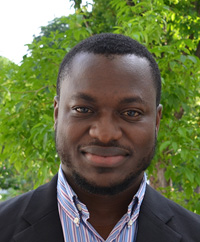
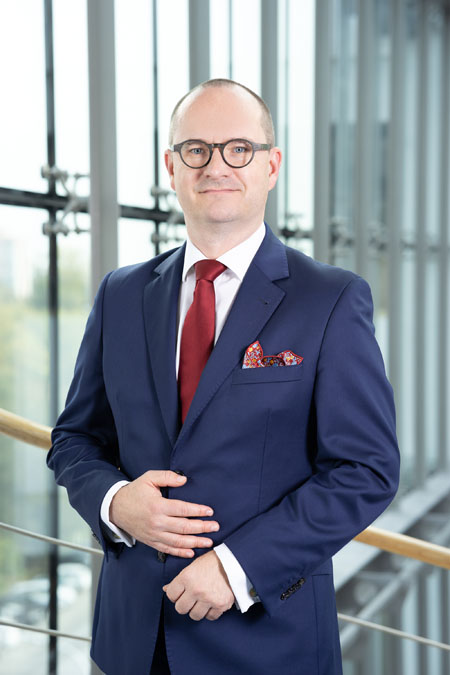
Marcel Garz is an Associate Professor at Jönköping International Business School, part of Jönköping University in Sweden. His research bridges economics, communication studies, and political science, focusing on digital technologies' impact on media, politics, and human behavior. He specializes in causal inference methods and computational tools like deep learning and computer vision. Current projects include leading the Global Social Media Experiment (a Nordic cross-cultural study on social media effects) and organizing the Data Methods Initiative (a seminar series promoting computational methods in social science). He co-founded the Economics of Media Bias Workshop and collaborates with institutions like the Swedish Competition Authority on media quality research. Research interests emphasize algorithmic curation's societal effects, media bias, and public policy. His work spans topics like news quality under market competition, pandemic behavior modulation via media, and tax enforcement through data transparency. Key contributions include frameworks on unethical marketing manipulation, signaling theory in crowdfunding, and the role of media coverage in electoral outcomes. He has published widely in journals like Journal of Communication , Political Behavior , and Journal of Economic Behavior & Organization . Funding: A three-year grant from the Swedish Competition Authority (2023–2025) supports research on media competition and news quality.
Grantley Taylor is a Professor at the School of Accounting, Economics and Finance, Curtin University, within the Faculty of Business and Law. He holds a portfolio role in the Office of the Provost. His research focuses on taxation, corporate governance, financial instruments, and corporate social responsibility, with specialized interests in corporate tax avoidance and extractive industries. Taylor has extensive industry experience, having previously worked in major mining firms and the Australian Taxation Office before joining academia. His teaching areas include financial accounting, governance, auditing, and social/environmental accounting. Research highlights include studies on corporate tax strategies, capital market dynamics, and sustainability reporting. Taylor’s recent publications explore AI’s impact on stock markets, carbon emissions governance, and debt cost factors in corporate leadership structures. His work spans global contexts such as Australia, the U.S., China, and the GCC. He advises on honors and HDR projects in taxation, CSR, and capital markets. Collaborations include studies on audit pricing, whistleblower governance, and multinational corporate finance practices. Taylor’s contributions extend to policy submissions on financial services and control premium analyses.
Dr. June Cao is a Senior Lecturer in the School of Accounting, Economics and Finance at Curtin University, within the Faculty of Business and Law. She holds a PhD and is a CPA Australia member, Chartered Accountant (CA ANZ), and Fellow of the Higher Education Academy (FHEA). Her research focuses on carbon accounting, sustainability reporting, ESG/CSR, and green innovation, employing advanced methodologies to address global sustainability challenges. She has been recognized with prestigious awards such as the FBL Research Output of the Year Award (2024) and multiple teaching excellence awards for her SDGs-embedded pedagogy. Her editorial roles include serving on the Editorial Advisory Board of the Journal of Accounting Literature , Lead Guest Editor of the Pacific Accounting Review , and Associate Editor of the Accounting Research Journal . Her research interests span new institutional accounting, carbon emissions regulation, integrated reporting, and big data analytics. Notable contributions include studies on low-carbon city initiatives, green supply chain management, and the impact of environmental policies on corporate behavior. She actively contributes to professional bodies like the AFAANZ Technical Committee and CPA Australia, and her teaching innovations have achieved 100% pass rates for students in CPA exams. Editorial Roles: Journal of Accounting Literature, Pacific Accounting Review, Accounting Research Journal Memberships: AFAANZ, CPA Australia, Chartered Accountants Australia and New Zealand, Higher Education Academy Key Research Themes: Carbon Accounting, Sustainability Reporting, Green Innovation, ESG, Big Data in Accounting Dr. Cao’s work bridges academia and industry, emphasizing transformative pedagogy and global sustainability. She has secured significant recognition for her research and teaching, reflecting her dual commitment to scholarly excellence and educational innovation.
Dr. Joye Khoo is a Senior Lecturer at the School of Accounting, Economics and Finance, Curtin University, and serves in the Office of the Provost. Her research focuses on corporate finance and managerial decision-making, with key themes in organization capital, debt maturity, trade credit, and corporate governance. She holds a Ph.D. in Finance and contributes to top-tier journals such as Journal of Banking and Finance and Financial Review . Her work explores how executives' behaviors, market conditions, and institutional factors shape corporate financial strategies. Notable areas include the impact of skilled labor risk on trade credit policies and the role of managerial ability in debt maturity decisions. She teaches 'Introduction to Finance Principles' and actively collaborates with researchers globally. Dr. Khoo’s publications consistently address contemporary financial challenges, emphasizing practical insights for policymakers and industry leaders. Her recent work highlights the beneficial effects of common ownership in banking sectors and the hidden costs of organizational capital in trade credit dynamics. While no formal awards are listed, her extensive publication record underscores her scholarly impact. She has advised on several research grants and maintains active involvement in academic networks through her ORCID and Google Scholar profiles.
Professor Emmanuel Adegbite is a visiting Professor of Governance and Management at James Cook University's Singapore campus. His research focuses on corporate governance, corporate social responsibility (CSR), and corporate finance, with a particular emphasis on emerging and developing economies. He holds a PhD from CASS Business School, University of London, and has earned prestigious awards such as the 2020 Social Issues in Management Best Paper Award and the 2016 International Business Review Best Journal Paper Award. His work has secured over $1 million SGD in collaborative funding. Education: PhD in Business, CASS Business School, City, University of London MSc in Business, University of Birmingham BSc in Business, Olabisi Onanbanjo University, Nigeria Research Interests: Strategies for corporate governance Board performance evaluation CSR as a governance framework Sustainability practices Africapitalism Awards and Recognition: 2020 Conference of the Africa Academy of Management 2017 Academy of Management Annual Meeting Nominee 2016 Celebrated Nigerian in Education Award (UK) 2014 Durham University Excellence in Research Award Grants and Collaborations: Secured close to £500,000 in collaborative funding for research projects. Editorial Roles: Associate Editor of Business Ethics: A European Review and editorial board member of Corporate Governance: The International Journal of Business in Society .
Alexander S. Kritikos is a Professor of Industrial and Institutional Economics at the University of Potsdam and a key figure at DIW Berlin (German Institute for Economic Research), where he serves as a member of the Executive Board and Head of the Entrepreneurship Research Group. He is also a Research Fellow at IZA (Institute for the Study of Labor) in Bonn and IAB (Institute for Employment Research) in Nuremberg, underscoring his broad institutional affiliations in economic research. Professor, University of Potsdam – Faculty of Economics and Social Sciences Member, Executive Board, DIW Berlin Head, Entrepreneurship Research Group, DIW Berlin Research Fellow, IZA Bonn Research Fellow, IAB Nuremberg He earned his Diplom-Volkswirt in Economics from the University of Munich (1989), completed postgraduate studies at the Free University of Berlin (1990–1993), received his doctorate from Humboldt University of Berlin (1996), and completed his habilitation at the European University Viadrina (2003). His research centers on entrepreneurship, self-employment, innovation, labor economics, and institutional economics. He investigates how non-cognitive skills influence entrepreneurial behavior, the gender pay gap in female-owned firms, the mental health of the self-employed during crises, and the productivity of micro-firms. His work often combines empirical analysis with policy relevance, especially in the context of German and European economic conditions. His recent publications (2023–2025) reflect a strong focus on contemporary economic challenges: the impact of the pandemic on entrepreneurs, bureaucratic barriers in Germany, gender and wages, and structural reforms in Greece. These works span top journals like Entrepreneurship Theory and Practice , Journal of Business Venturing , and Research Policy , as well as policy-oriented outlets such as DIW Weekly Report and public commentaries. The recurring themes include entrepreneurial resilience, regulatory reform, innovation policy, and labor market dynamics. His scientific recognition includes research fellowships from the German Marshall Fund and TMR, as well as ongoing affiliations with leading economic research institutes. He has served on committees of the Verein für Socialpolitik and has been co-editor of Small Business Economics since 2010. Kritikos actively advises on public policy, contributing opinion pieces to major media outlets such as Süddeutsche Zeitung , Handelsblatt , Die Zeit , Frankfurter Allgemeine Zeitung , and international platforms like Harvard Business Review . He has led significant research projects, including evaluations of German entrepreneurship support programs and studies on innovation in SMEs. His work is deeply embedded in both academic and policy-making communities, with frequent lectures and public engagements on industrial transformation, productivity, and labor market challenges. He is involved in collaborative research networks and contributes to the Graduate Center at DIW Berlin, mentoring young economists. His leadership in the Entrepreneurship Research Group fosters interdisciplinary work on firm creation, growth, and economic impact. There is no indication of retirement or part-time status; he remains a central, active figure in German economic research.
Eun Sun Godwin is a Senior Lecturer in International Business at the University of Wolverhampton Business School , part of the Faculty of Arts, Business, and Social Sciences. With a PhD in International Business, MSc in International Development, and Bachelor's degree in Business & Economics, her research bridges business and society through interdisciplinary approaches. Key Research Areas: Digitalisation (SHAPE perspective), Sustainability & EDI (Equality, Diversity, and Inclusion), and Work in Creative Industries. Notable Grants: Lord Paul Fellowship (2023-24), InterAct Hub funding for inclusive manufacturing, and Creative PEC grants for cultural sector research. Her work spans FDI policy analysis, sustainable business practices, and digital inclusion in manufacturing. She mentors through the Council for At-Risk Academics (CARA) and advises Commonwealth Scholarship Commission. Awards include Senior Fellowship of Higher Education Academy and membership in the Foundation Future Leaders 2023 cohort.
Dr. Gerhard Weiß is a researcher at the Institute of Forest, Environmental and Natural Resource Policy (BOKU Vienna) since 1999. His work focuses on social innovation in forestry, governance of forest ecosystem services, and policy frameworks for rural development across Europe, particularly in Central Eastern Europe and the Balkans. Education : Master's Degree (1993), Doctorate (1999) Research Interests : Social innovation systems in forestry Forest ownership transitions and institutional frameworks Governance of ecosystem services Policy design for rural sustainability Innovation adoption in small-scale forestry Scientific Awards : Klimaschutzpreis der Österreichischen Hagelversicherung (2003) Key Contributions : Collaborative research on social farming in Austria, carbon-efficient wood construction (ECO2-Project), and cross-European analyses of forest ownership dynamics. He has delivered over 50 lectures in 13 countries, emphasizing stakeholder engagement and policy coherence.
Paulo Alves is a researcher affiliated with Universidade Lusófona , with a focus on finance and economics. His academic background includes a PhD in Finance, a Master's in Financial Risk Management, and a Bachelor's in Economics. He has contributed extensively to international journals on topics such as corporate finance, investment management, and financial economics. PhD in Finance Master's in Financial Risk Management Bachelor's in Economics Alves’ research interests center on corporate finance , particularly capital structure determinants, executive compensation, and institutional influences on financial decision-making. He has explored international stock market overreactions, abnormal retained earnings, and mutual fund fee structures, often drawing on cross-country comparisons and regulatory environments. His publications span over two decades, with a strong emphasis on financial asymmetries , market dynamics, and corporate governance. Key trends in his work include the interplay between legal frameworks and corporate financial strategies, as well as empirical studies on investor behavior and risk assessment in small markets like Portugal.
Alexandra Figueira is a researcher at CICANT and holds academic roles at Universidade Lusófona, serving as Director of the Master's program in Communication, Marketing and Digital Media and Deputy Director of the Bachelor's in Communication Sciences. She has taught Journalism, Strategic Communication, and Research Methodologies since 2021 and has over 25 years of experience in media industries. PhD in Communication Sciences (University of Minho) Postgraduate studies in Brand Creation and Management (IPAM), Economics for Journalists (University of Porto), and Company Analysis Certifications in Investigative Reporting, Social Entrepreneurship, and AI for Education Her research focuses on Communication Sciences , Digital Media , and Journalism Ethics , with a particular interest in algorithmic influence , media transparency , and digital activism for education . Recent publications explore topics like AI integration in higher education, social capital in digital networks, and ethical challenges in contemporary journalism. She has received three notable awards: two recognitions from the ANMP Journalism and Local Power Award (1st place for a collective piece and an honorable mention for an individual report) and the António Sérgio Cooperation and Solidarity Award for doctoral research. Figueira actively participates in international conferences and serves on academic examination panels.
Pier Luigi Marchini is a Full Professor in Accounting at the Department of Economic and Business Sciences, University of Parma. He also serves as Visiting Professor at Seton Hill University (USA) and holds the presidency of the Economic and Management Course at his home institution. PhD and graduate from University of Parma Member of Italian Academy of Business Economics and Management (AIDEA), Italian Academy of Accounting History (SISR), and Italian Society of Accounting and Business Economics Educators (SIDREA) His research spans financial accounting, corporate governance, and sustainability reporting with specific focus on earnings management , related party transactions , and corruption prevention . Recent work explores big data applications in accounting and governance of football industry entities . Marchini teaches Enterprise Governance and Sustainability , Fraud Management , and International Accounting at both undergraduate and graduate levels. His work appears in journals such as Journal of Corporate Governance and International Journal of Accounting .
Ajab Khan is a Senior Lecturer in Accountancy and Finance at Solent University, affiliated with the Business and Law Research Group. His work focuses on corporate governance, financial risk, and board diversity's impact on firm performance. He has published extensively on topics such as dividend policy, liquidity-credit risk nexus, and sustainability performance in emerging markets like India, Turkey, and Pakistan. Research Interests: Corporate Governance Mechanisms Board Diversity and Firm Outcomes Financial Risk Correlation (Credit/Liquidity) Sustainability Performance Metrics Emerging Market Financial Institutions Recent Research Trends: His publications from 2022-2025 emphasize interlocking directorships, demographic diversity's role in dividend policies, and sustainability-linked governance practices. Earlier work (2016-2018) explored post-financial crisis capital structures and microfinance viability in Pakistan. Awards: No scientific awards explicitly mentioned in provided texts. Grants/Advising: No student advisees or grant details found in available information. Labs/Teams: Not specified in provided data. Affiliated with Business and Law Research Group at Solent University.
Annalisa TONETTO is an Assistant Professor at SKEMA Business School (Lille, France), holding a PhD in Finance from EDHEC Business School (2022). She previously served as a Post-Doctoral Research Associate at the University of Cambridge (2022–2024). Her research focuses on Empirical Corporate Finance, Board Dynamics, Institutional Ownership Structures, Natural Capital Valuation, Biodiversity Impact Assessments, and Network-Based Analysis in Financial Systems. Education: PhD in Finance, EDHEC Business School, France (2022) Research Interests: Dr. TONETTO investigates how corporate governance frameworks interact with environmental and institutional stakeholders. Her work bridges traditional corporate finance with modern sustainability metrics, particularly in biodiversity and natural capital contexts. She employs advanced network analytics to dissect ownership patterns and boardroom influence dynamics. Professional Background: 2024–Present: Assistant Professor, SKEMA Business School (Lille) 2022–2024: Post-Doctoral Research Associate, University of Cambridge (UK) Awards/Grants: No specific honors or grants listed in the provided text. Labs/Teams: Affiliated with SKEMA's Transformation research center and the Finance & Accounting Insights on Risk and Regulation initiative.
Niels Westergård-Nielsen is a Professor in the Department of Accounting at Copenhagen Business School. His research focuses on corporate governance, leadership dynamics, labor economics, and economic policy. He frequently engages with media and public discourse on topics like CEO succession, gender diversity in leadership, and organizational behavior. His work contributes to UN Sustainable Development Goals related to reduced inequalities and decent work. Key research themes include executive decision-making, board diversity, employee ownership models, and the impact of leadership training on organizational performance. Recent articles explore trends such as challenges in appointing new bank directors, declining entrepreneurship rates, and the causal effects of leadership strategies. His media contributions address pressing issues like workforce retention policies and university leadership selection criteria. Westergård-Nielsen has no listed scientific awards but maintains active collaboration networks in Denmark and internationally. His research spans over 58 publications, with a focus on empirical analysis of Danish economic data and policy implications.
Prof. Szymon Mazurek holds a professorship at the Department of International Economic Relations at Wrocław University of Economics, where he also serves as Director of the Asia-Pacific Research Center. His academic roles include lecturing on international economic relations, digital economy, international e-commerce, and network business models. He has held visiting professorships at Seikei University, Kanagawa University, Takasaki City University of Economics (Japan), Budapest College of Communication and Business (Hungary), and Silesian University in Opava (Czech Republic). Research interests focus on two-sided markets, network economics, platform ecosystems, crowdsourcing/crowdfunding dynamics, and cluster policy effectiveness. His work integrates theoretical frameworks with empirical analysis of Asia-Pacific regional integration processes and global value chain dynamics. Key publications address platform economy evolution, network markets' competitive strategies, and the application of cluster policy evaluation models. He co-leads an NSC-funded research project investigating Asian cluster models' applicability to Poland's economic context. Business involvement includes co-ownership of an online advertising agency for over 10 years.