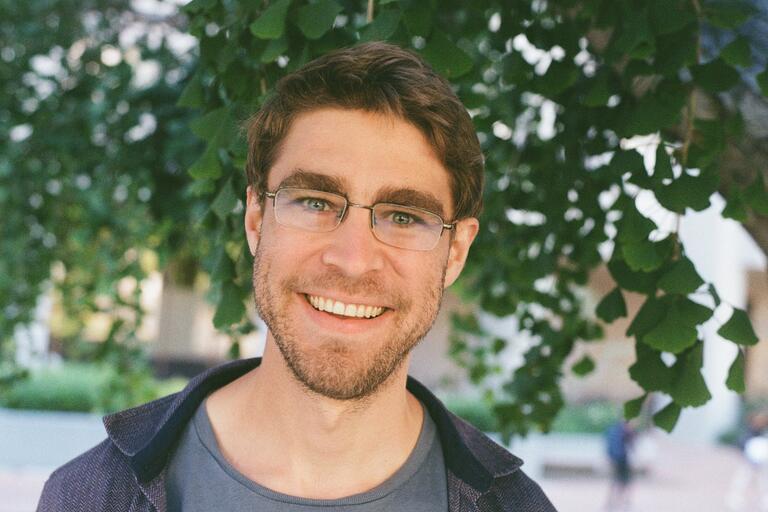
Bryon Aragam is an Associate Professor and Topel Faculty Scholar at the Booth School of Business , University of Chicago . His work bridges causality , statistical machine learning , and probabilistic modeling , with applications in AI systems like ChatGPT and DALL-E. Key research themes include: Causal Structure Learning : Extracting latent causal graphs from multimodal data using nonparametric methods. Deep Generative Models : Analyzing overparametrization and variational inference for representation learning. Latent Variable Discovery : Using Markov boundaries and convex subset lattices to uncover hidden dependencies. Algorithm Design : Developing scalable methods like DAGMA for DAG learning and theoretical guarantees for GES/PC algorithms. His paper trends reveal a focus on nonparametric statistics , graphical models , and neural network theory , with recent work on transformer memory dynamics and identifiability in deep latent models . Papers frequently appear in top venues like NeurIPS , JMLR , and AOS , emphasizing theoretical rigor and practical validation.
Raffaella Burioni is a Full Professor of Theoretical Physics in the Department of Mathematics, Physics and Computer Science at the University of Parma. She serves as Chair of the Non-Linear and Statistical Physics Division of the European Physical Society (EPS) and co-founded the Italian Society of Statistical Physics (SIFS), where she holds the position of Vice President. Her academic leadership includes directing the Ph.D. School in Physics and previously managing quality assurance for the Master's program in Physics (2017-2023). Her educational background includes an MS in Physics with distinction from the 2nd University of Rome and a PhD in Theoretical Physics from the University of Rome 'La Sapienza'. Postdoctoral experience spans the Theoretical Physics Laboratory of the École Normale Supérieure in Paris, the University of Milan, and the National Institute for the Physics of Matter (INFM). Prof. Burioni's research centers on equilibrium and non-equilibrium statistical physics, with deep expertise in graph theory, complex networks, random walks, and stochastic processes. She pioneers interdisciplinary applications to biological systems, neuroscience, and machine learning. Her work on rare events and anomalous diffusion has established fundamental principles like the 'single big jump' mechanism in transport phenomena. Recent investigations bridge statistical physics with neural network theory, examining kernel renormalization and feature learning in deep architectures. Analysis of her 15 most recent publications (2022-2025) reveals three dominant trends: (1) Theoretical advances in rare event statistics for jump processes and extreme value theory, (2) Network-based epidemic modeling incorporating adaptive temporal dynamics and simplicial structures, and (3) Machine learning physics connecting neural network theory to statistical mechanics through Bayesian effective actions and kernel methods. Her work consistently demonstrates how statistical physics principles solve complex problems across disciplines. Her scientific accolades include: Two-time recipient of the Enrico Persico Prize from the Accademia Nazionale dei Lincei Fellow of the Institute for Scientific Interchange (ISI) since 2014 American Physical Society Outstanding Referee (2018) Fellow of the European Centre for Living Technology (2020) As Director of the Ph.D. School in Physics, she mentors doctoral candidates while serving on editorial boards for Physical Review E, JSTAT, and Journal of Physics A. Her research is supported by international collaborations with institutions including the Kavli Institute for Theoretical Physics, Max Planck Institute, and Ben-Gurion University, evidenced by frequent keynote invitations at major conferences like StatPhys, ECCS, and APS March Meetings. Prof. Burioni leads collaborative research networks through her EPS division chairmanship and SIFS leadership, fostering cross-institutional projects on statistical physics applications. Her campus-based studies leverage Wi-Fi data from Parma University to model pedestrian dynamics and epidemic spreading in real-world constrained environments.
Pietro Rotondo is an Assistant Professor (Ricercatore a tempo determinato) at the University of Parma , Italy, within the Department of Mathematical, Physical and Computer Sciences . He is actively involved in lecturing the course Principles of Physics to first-year students of the Earth Sciences bachelor programme for the academic years 2023/2024 and 2024/2025. Education & Academic Background: While explicit educational history is not detailed in the text, his faculty rank and research output indicate advanced training in theoretical physics and statistical mechanics, likely culminating in a PhD. Research Interests: Statistical mechanics of deep learning and artificial neural networks Bayesian inference in high-dimensional, disordered systems Phase transitions and replica methods in complex systems Quantum many-body physics and cavity quantum electrodynamics Renormalization group approaches to finite-width neural networks His interdisciplinary work bridges rigorous physics techniques with modern machine-learning challenges, aiming to uncover universal laws governing learning and generalization in artificial systems. Recent Publication Trends: Over the past five years, Rotondo has concentrated on developing analytical frameworks that describe how deep neural networks learn and generalize, particularly beyond the infinite-width limit. Recurring themes include Bayesian effective actions, kernel renormalization, and the statistical mechanics of structured data. Scientific Awards & Honors: No specific awards are mentioned in the provided text. Supervision & Funding: The text does not list current PhD or Master’s students, nor does it detail specific grants or funded projects. Laboratories & Teams: No named laboratories, centers, or research groups are explicitly cited in the scraped material.
Guido Montufar is a Full Professor in the Departments of Mathematics and Statistics & Data Science at UCLA since 2024, and Research Group Leader at the Max Planck Institute for Mathematics in the Sciences since 2018. Previously, he served as Associate Professor at UCLA (2022-2024) and Assistant Professor (2017-2022). His academic journey includes postdoctoral positions at MPI MIS and Pennsylvania State University, following his PhD at MPI MIS/Leipzig University. Montufar's research spans deep learning theory, mathematical machine learning, graphical models, information geometry, and algebraic statistics. His work investigates the geometric and combinatorial properties of neural networks, optimization landscapes, and theoretical foundations of deep learning. He has made significant contributions to understanding the expressive power of neural architectures, implicit regularization, and the geometry of loss surfaces. His recent publications (2023-2025) demonstrate a strong focus on theoretical aspects of deep learning, with particular attention to neural network geometry, optimization properties, and mathematical frameworks for understanding learning phenomena. His work often bridges abstract mathematical concepts with practical deep learning challenges, examining topics like low-rank gradient structures, linear regions in ReLU networks, and topological aspects of message-passing architectures. ERC Starting Grant: Deep Learning Theory 2018-2023 DFG SPP 2298 Theoretical Foundations of Deep Learning NSF CAREER: Neural Networks in the Practical Regime 2022 Sloan Research Fellowship NSF Collaborative Research: RI: Medium: MoDL DARPA AIQ: Constraints for Provable Extrapolation Montufar actively advises PhD students, with a current cohort including Hao Duan, Kedar Karhadkar, and Shuang Liang. His Mathematical Machine Learning Group fosters collaboration between UCLA and MPI MIS, providing students with access to both American and European research networks. The group focuses on rigorous mathematical approaches to understanding modern machine learning systems, with emphasis on geometric and information-theoretic perspectives. Leading the Mathematical Machine Learning Group at MPI MIS and maintaining an active research program at UCLA, Montufar has established himself as a leading figure in theoretical machine learning. His dual appointments facilitate international collaboration and provide unique opportunities for students to engage with both West Coast academic networks and European research institutions.
Nicolas Flammarion is a tenure-track Assistant Professor in Computer Science at the École Polytechnique Fédérale de Lausanne (EPFL). He holds positions in multiple departments including the Theory in Machine Learning (TML) lab under the School of Computer and Communication Sciences (IC). His roles include teaching and doctoral program leadership across disciplines like Communication Systems and Computer Science. Education: PhD in 2017 from École Normale Supérieure (Paris), advised by Alexandre d’Aspremont and Francis Bach. Postdoctoral fellowship at UC Berkeley under Michael I. Jordan. Research focuses on machine learning theory, optimization, and statistical methods. Key areas include adversarial robustness, algorithmic generalization, and optimization dynamics. Notable contributions include work on SGD/GD comparisons, adversarial benchmarking (RobustBench), and safety in AI systems. Awards include the 2018 Fondation Mathématique Jacques Hadamard PhD Prize, 2021 NeurIPS Outstanding Paper Award, and 2024 Trust & Safety Google Research Award. Supervises PhD students in topics like algorithm design and machine learning theory. Labs/Teams: Leads TML lab and contributes to EPFL's doctoral programs in Informatics and Communication Sciences. Active in curriculum development for advanced machine learning topics.
Kosio Beshkov is a Postdoctoral Fellow in Condensed Matter Physics at the University of Oslo, specializing in the intersection of topological data analysis and machine learning. His research focuses on theoretical frameworks for understanding neural network representations and biological neural systems. His primary research interests include: Theory of deep neural networks in overparametrized regimes Topological data analysis of neural manifolds De novo protein design using evolutionary algorithms and geometric modeling Connections between network representations and topological spaces Recent publications demonstrate strong trends in computational neuroscience, with 7 papers from 2021-2025 spanning journals like PLoS Computational Biology and iScience. His work consistently applies polyhedral geometry, quotient spaces, and homology to neural representation problems, while expanding into protein language models and gene therapy applications. Current technical approaches combine: Topological data analysis for high-dimensional neural data Geometric deep learning for robust representations Biophysically-detailed neuron modeling Protein structure-geometry relationships
Michael J. Lindsey is an Assistant Professor in the Department of Mathematics at the University of California, Berkeley, and a Faculty Scientist at Lawrence Berkeley National Laboratory. His research focuses on computational methods driven by Numerical Linear Algebra , Optimization , and Randomization , particularly for High-Dimensional Scientific Computing in quantum many-body problems and applied probability. University : UC Berkeley (Assistant Professor since 2022) Lab Affiliation : Mathematics Group at Lawrence Berkeley National Laboratory Email : lindsey@berkeley.edu His work includes Semidefinite Relaxation for quantum and classical problems, Monte Carlo Sampling techniques, and Tensor Networks for high-dimensional functions. He has pioneered Variational Embedding theory with guaranteed energy bounds and scalable solvers for quantum systems. Recent publications span Quantum Chemistry , Machine Learning , and High-Dimensional Probability , with applications to Electronic Structure , Molecular Dynamics , and Optimal Transport . He received the 2024 Hellman Fellowship and the 2019 SIAM Student Paper Prize . Teaching includes graduate and undergraduate courses in numerical analysis and applied mathematics at UC Berkeley and New York University. He also organizes the HDSC Seminar on high-dimensional scientific computing.