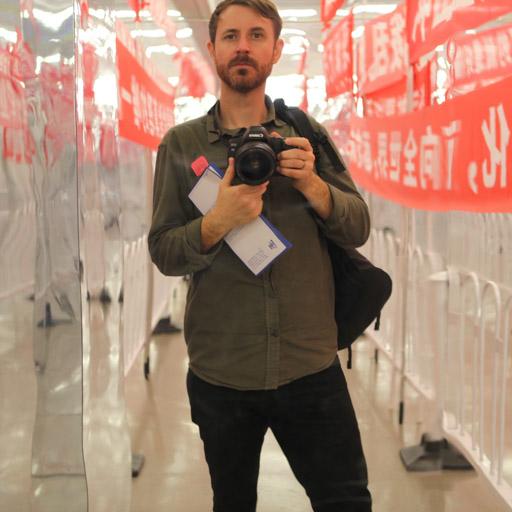
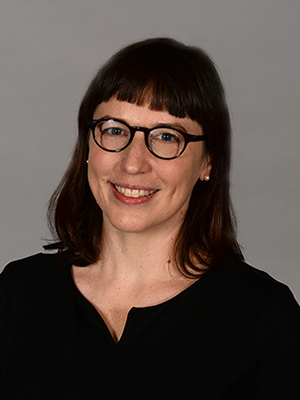
Joshua Neves is an Associate Professor at Concordia University , affiliated with the Global Emergent Media (GEM) Lab as its Director. His research spans global and digital media, cultural and political theory, China/Asia studies, and media urbanism, focusing on themes like (over)development, digital ethnography, and informal media networks. Research Keywords: global media, digital culture, cultural theory, political theory, China, Asia, video, television, piracy, urbanism Teaching: Courses include Cinemas of Under/Overdevelopment , Technology and Intimacy , and Media Genealogies of the Digital . His scientific awards include the Canada Research Chair , highlighting his leadership in media studies. Publications such as Technopharmacology (2022) and Underglobalization (2020) reflect his interdisciplinary approach, merging media theory with political and cultural critique. Neves’ recent article trends explore optimization ideologies, pandemic platforms, and the intersection of convenience with inequality. His work bridges media studies with postcolonial theory, emphasizing the geopolitical implications of digital cultures.
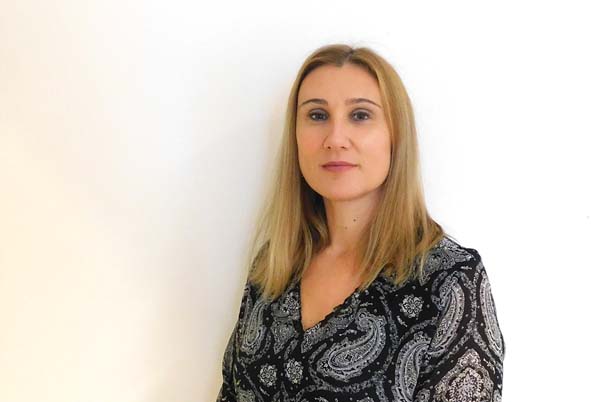
Barbara Puh is an Associate Professor at the University of Dubrovnik, specializing in tourism management and consumer behavior. Her research focuses on tourism impacts on communities, destination image formation, sustainable tourism practices, and market segmentation strategies in rural and urban contexts. Her work emphasizes Croatia as a primary case study, particularly in Dubrovnik and rural regions. Key contributions include analyzing overtourism challenges, consumer attitudes toward mobile tourism apps, and generational differences in loyalty and purchasing behavior. She also investigates the interplay between tourism development and local residents' quality of life, advocating for balanced policies that preserve cultural heritage and environmental sustainability. Her articles highlight trends in cognitive neuroscience approaches to tourism behavior, segmentation of tourist and resident populations, and the adaptation of retail environments to consumer preferences. Barbara’s research bridges theoretical frameworks with practical insights for destination management and policy-making.
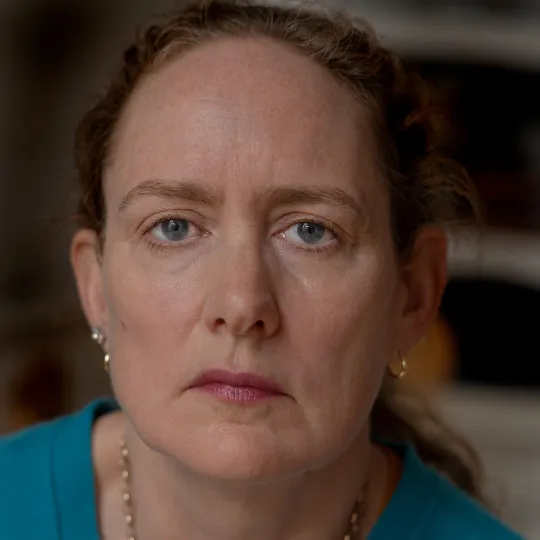
Ileana M. Porras is a Senior Lecturer at the School of Law, University of Miami, where she contributes to legal scholarship with a focus on international law, environmental justice, and sustainable development. Her academic work bridges legal theory, political economy, and ethical frameworks, particularly in the context of global environmental challenges. Her research explores the historical and doctrinal foundations of international law, especially the role of commerce and the commodification of nature. She critically examines how early legal thinkers like Francisco de Vitoria, Alberico Gentili, and Hugo Grotius embedded religious and moral narratives into the law of nations, shaping modern economic and environmental governance. Her work also investigates the role of cities in international law, advocating for sustainable urban development while cautioning against privatization and inequitable governance. The themes across her recent publications reveal a consistent engagement with ecological ethics, as seen in her analysis of Pope Francis’ Laudato Si’ , and a deep critique of international law’s complicity in environmental degradation. Her scholarship calls for an integral ecology that unites moral, legal, and social responses to the climate crisis. Her scientific contributions include peer-reviewed journal articles, book chapters, and panel presentations, but no formal awards are mentioned in the available text. While no direct mention of student advising or research grants is provided, her extensive publication record suggests active mentorship and scholarly leadership. She has participated in significant academic panels and contributed to critical discussions on the multipolar evolution of international law. She is affiliated with the University of Miami’s School of Law and has not been associated with any specific research labs or teams in the provided material.
Joshua Neves is an Associate Professor of Cinema at Concordia University, Canada Research Chair, and Director of the Global Emergent Media (GEM) Lab. He previously taught at Brown University and was a Mellon Postdoctoral Fellow at the Jackman Humanities Institute, University of Toronto. His research focuses on global and digital media, particularly in China/Asia, cultural and political theory, media urbanism, and digital ethnography. He holds a PhD in Film and Media Studies from UC Santa Barbara. His academic work spans edited volumes such as Asian Video Cultures (2017) and Underglobalization: Beijing’s Media Urbanism (2020). Current projects explore media and the fourth industrial revolution, video/art in internet television, and technological intimacy. Research interests include overdevelopment, piracy, and the intersections of media with postcolonial and postsocialist networks. He teaches courses like 'Cinemas of Under/Overdevelopment' and 'Technology and Intimacy.' Office hours are Wednesdays 1–3pm (Winter 2025).
Dr Clare Carolin is a Senior Lecturer in Art and Public Engagement, and Director of Educational Partnerships at King’s College London’s Department of Culture, Media & Creative Industries. She holds a DPhil from the University of Oxford and prior roles include Hayward Exhibitions Curator and co-director of Curating Contemporary Art at the Royal College of Art. Her work focuses on intersections between art, militarized conflict, and colonialism, with notable projects like 'Spectres of Modernism' and 'Open Plan: Communities in Contemporary Art.' She has collaborated globally with institutions like Tate, MCAD Manila, and the Alytus Biennale. Her upcoming monograph examines the Imperial War Museum’s artistic records committee. She teaches across curatorial practice and art history, emphasizing interdisciplinary approaches to contemporary art’s socio-political dimensions. Research interests include counterinsurgency’s visual impact, state violence, and interracial solidarity tactics. Her curatorial work critiques urban overdevelopment and military strategies. She has published widely on art history, curatorial theory, and colonial visual culture, with peer-reviewed contributions to MIRAJ and conference presentations at the Association of Critical Heritage Studies. She supervises PhD students exploring art’s relationship with conflict, colonialism, and globalisation.
Enrico Berkes is the Pausch Endowed Assistant Professor of Economics at the University of Maryland, Baltimore County (UMBC). He holds a Ph.D. in Economics from Northwestern University (2018). His research focuses on the economics of innovation, urban development, and applied microeconomic analysis. Key themes include technological diffusion, the impact of historical institutions like Carnegie Libraries on innovation, and the socioeconomic effects of pandemics on knowledge production. He has published in top journals such as the American Economic Journal: Applied Economics, Review of Economics and Statistics, and Nature. Notable works include analyzing the 1918 flu pandemic's effects on innovation and uncovering gender disparities in scientific authorship credits. His methodological contributions include the Census Place Project, advancing geolocation techniques for historical place names. Berkes' work bridges historical analysis with modern economic challenges, emphasizing policy-relevant insights for urban planning and innovation ecosystems. His interdisciplinary approach addresses topics ranging from knowledge access equity to the spatial dynamics of technological advancement.
Johanna Conterio is an Associate Professor in the Department of Archaeology, Conservation, and History at the University of Oslo’s Faculty of Humanities. Her research centers on environmental and medical history in the Soviet Union and modern Russia, with a focus on the Black Sea region and transnational contexts. Her educational background includes a PhD and MA in History from Harvard University and a BA in Comparative Literature from Yale University. Prior to joining the University of Oslo, she served as a Lecturer in International and European History at Flinders University, Australia, and as a postdoctoral research fellow at Birkbeck College, University of London. Conterio’s research explores the intersections of environment and health, nature protection, urban planning, and maritime environments in the Soviet context. She applies frameworks from the environmental humanities, particularly the 'post-Pasteurian' turn, to challenge assumptions about the decline of environmental medicine in the 20th century. Her work reveals a distinct socialist model of natural healing that integrated ecological understanding into medical practice, architecture, and urban landscapes. Her recent publications span topics such as bactericidal lamps in Soviet medicine, citrus acclimatization, urban greening, and the Sovietization of the Black Sea coast. These works reflect a sustained engagement with how scientific knowledge, environmental management, and public health were co-constructed in socialist states. Her research often highlights transnational scientific networks and the adaptation of foreign technologies. Alexander von Humboldt Foundation Research Fellowship for Experienced Researchers (2022–2024) Fellow, Rachel Carson Center for Environment and Society, Munich (2020–2021) Title VIII Summer Research Scholar, Kennan Institute (2019) Kathleen Fitzpatrick Visiting Fellow, University of Sydney (2017) Dumbarton Oaks Dissertation Completion Fellowship (2013–2014) Foreign Language and Area Studies Fellowship (2011–2012) Fulbright-Hays Doctoral Dissertation Research Abroad Award (2010–2011) Conterio has secured multiple grants for research and conference organization, including funding from the Wellcome Trust, the Society for the Social History of Medicine, and UiO: Life Sciences. She has advised or mentored no formally listed students to date. Since January 2024, she leads the Multispecies Landscapes Lab, a sub-project of the Oslo Center of Environmental Humanities, fostering interdisciplinary collaboration on ecological and historical questions. She also contributes to academic discourse through curated forums in journals like Kritika and edited volumes on health and disease in Eurasian history.