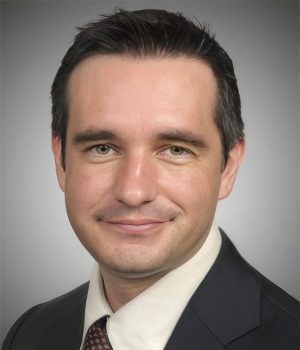
Douglas C. Ligor is a Professor of Policy Analysis at the RAND School of Public Policy and Director of the Management, Technology, and Capabilities Program at RAND's Homeland Security Research Division. He holds dual roles as a Senior Behavioral Scientist and academic researcher, specializing in homeland/national security law, immigration policy, space governance, and international legal frameworks. Education: J.D. from University of Connecticut School of Law (2000s) and B.S. in Economics from U.S. Military Academy at West Point (1990s). Prior to RAND, he served in federal legal roles including Deputy Chief Counsel at USCIS and Assistant District Counsel at DOJ/ICE. Research focuses on border security, asylum processing, outer space regulation, and federal-state-local coordination. His work frequently addresses intersections between statutory compliance and operational realities in domains like immigration enforcement and space traffic management. Notable contributions include policy analyses on Title 42 immigration restrictions, ISIS prisoner management in Syria, and frameworks for international space traffic governance. He regularly engages in public commentary through podcasts and op-eds on topics like U.S. border policy and emerging space law challenges.
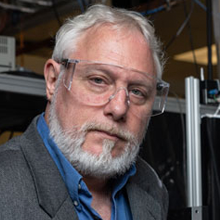
Professor LIU Kaijun is a distinguished space plasma physicist currently serving as Professor and Deputy Head of Department at Southern University of Science and Technology (SUSTech) in Shenzhen, China. He previously held academic positions at Auburn University in Alabama, USA, where he was promoted from Assistant Professor (2012) to tenured Associate Professor (2017). His career includes significant research experience at Los Alamos National Laboratory and the Finnish Meteorological Institute following completion of his doctoral studies. 2007: Ph.D. in Space Plasma Physics, Cornell University 2002: M.S. in Space Physics, Peking University 1999: B.S. in Space Physics, Peking University Professor Liu specializes in theoretical and computational space plasma physics, with particular expertise in plasma instabilities and wave-particle interactions in Earth's radiation belts. His work also encompasses pickup ion dynamics in the heliosphere and solar wind-planet interactions. His research employs advanced computational techniques including particle-in-cell simulations and linear stability analysis to understand fundamental plasma processes. Analysis of Professor Liu's publication record from 2015-2018 reveals a consistent focus on electromagnetic wave phenomena in space plasmas, particularly examining Bernstein instabilities, Alfvén-cyclotron waves, and magnetosonic waves. His work demonstrates strong interdisciplinary connections between theoretical plasma physics, computational modeling, and spacecraft observations, with significant contributions to understanding radiation belt dynamics and heliospheric plasma processes. National-level Leading Talent (2019) Professor Liu has established a robust research program with extensive collaborations across international institutions including Los Alamos National Laboratory, NASA missions, and various universities. His work has been supported by research grants enabling advanced computational studies of space plasma phenomena. He advises graduate students in space physics and leads research projects investigating fundamental plasma processes relevant to space weather prediction and heliospheric physics. Professor Liu directs a computational plasma physics research group at SUSTech's Department of Earth and Space Sciences, utilizing high-performance computing resources to simulate complex plasma phenomena in Earth's magnetosphere and the heliosphere. His team collaborates with observational space physics groups to validate theoretical models against spacecraft measurements from missions including Van Allen Probes and THEMIS.
Dr. Yucong Wang is a Lecturer at the School of Law and Justice, University of Newcastle, specializing in international law with a focus on foreign investment law, space law, and the Law of the Sea. Her research addresses regulatory tensions between state sovereignty and private investment rights, emphasizing sustainable development and public interest in areas like environmental protection and human rights. She holds a Doctor of Law from Kyushu University and has taught at the University of Wollongong before joining Newcastle in 2023. Education: LLB (China University of Political Science and Law, 2011), LLM (Leiden University, 2012), LLM (Kyushu University, 2015), LLD (Kyushu University, 2018) Teaching: Course coordinator for Contracts I (2023–2025) Her research explores topics such as indirect expropriation in investment treaties, maritime boundary disputes, and legal frameworks for space resource governance. Recent work includes analysis of China’s territorial claims in the Gulf of Tonkin and the role of social workers in safeguarding elderly welfare in civil litigation. She co-leads projects on space law and lunar mining governance, supported by grants including a CSIRO pre-seed funding (2025) and internal university grants (2024). Grants: $23,500 total funding across four grants focusing on space policy, human rights, and legal education Supervision: Currently co-supervising two PhD candidates on flag state responsibility and lunar mining governance Dr. Wang contributes to interdisciplinary teams addressing global legal challenges, including the United Nations Sustainable Development Goals, through her work on environmental law, outer space regulations, and equitable investment frameworks.
Thomas Cheney is an Assistant Professor in the Law Department at Northumbria University. His research focuses on space law, environmental policy, and the intersection of legal frameworks with space resource utilization. He explores topics such as the Outer Space Treaty, space debris management, and the socio-economic dimensions of extraterrestrial activities. His work emphasizes critical legal analysis of space governance, particularly regarding environmental sustainability and equitable resource allocation. Key contributions include studies on the Common Heritage of Mankind principle and legal challenges in asteroid mining. Cheney's publications address barriers to orbital debris cleanup, economic models for space industries, and environmental justice in extraterrestrial activities. His research is published in journals like Environment and History and Space Policy . He has collaborated on interdisciplinary projects examining legal, economic, and political aspects of space exploration. No scientific awards are explicitly mentioned, but his work has been cited in policy discussions and peer-reviewed journals.
Dr. Anna Marie Brennan is a Senior Lecturer at the University of Waikato's Te Piringa Faculty of Law and a Research Associate at the New Zealand Institute for Security and Crime Science. She holds a PhD from University College Cork (UCC) and has held academic positions at institutions including the University of Liverpool, UCC, and visiting roles at Harvard University and the University of Cambridge. Her research focuses on international criminal law, outer space law, human rights law, and counter-terrorism law. From 2019–2024, she served on the Executive Leadership Team of Te Piringa, including as Acting Dean in 2023 and Convenor of Research. She is currently the New Zealand Chair of the AI and Space Law Society, advocating for ethical space development. Education: BCLGA (Hons) in Law and Irish (UCC) LL.B. (Hons) (UCC) LL.M. (First Class Honours) (UCC) PhD in Law (UCC) Research Interests: Her work addresses gaps in international criminal law regarding non-state armed groups, human rights in outer space activities, and AI integration in space governance. Recent projects include examining UN human rights frameworks for space corporations and analyzing deficiencies in prosecuting collective entities for war crimes. Awards: 2024 Borrin Foundation Women Leaders in Law Fellowship 2019 Thomson Reuters Prize for Research Excellence 2012–2014 Government of Ireland Postgraduate Scholarship Teaching & Supervision: She teaches courses on International Criminal Law, Space Law, and Dispute Resolution at the University of Waikato. She actively supervises PhD students in outer space law and international criminal law, with capacity for three new students annually.
Dr. Stacey Henderson serves as Associate Professor at Flinders University's College of Business, Government and Law, where she leads the Defence, Security & Space research theme within the Jeff Bleich Centre for Democracy and Disruptive Technologies. Her institutional affiliations include the Australian Centre for Space Governance (founding member), International Institute of Space Law, and Australian and New Zealand Society of International Law (council member 2020-2025). Her research focuses on the protective capacity of international law, with specialized expertise in space governance, disarmament, and atrocity prevention. Key areas include commercial space activities, grey zone operations in space/cyber domains, information warfare, sustained human presence in space, and the Responsibility to Protect (R2P) framework. Her current Office of National Intelligence-funded project examines chemical/biological agent use against non-human targets. Recent scholarly output demonstrates strong thematic concentration in space law evolution (2023-2024), with 10 publications addressing critical infrastructure protection, sustainable resource utilization, and corporate accountability in space. Concurrent work explores disinformation threats to democracy and legal education reform. Her research directly supports UN Sustainable Development Goals through contributions to peace, justice, and institutional development. Vice Chancellor's Early Career Researcher Award (2024) Director, Space Law Council of Australia and New Zealand (2022-2024) Steering Committee Member, Australian Centre for Space Governance Henderson actively contributes to national security policy through media engagements on arms control, space law, and information operations. Her Jeff Bleich Centre leadership role connects academic research with defense and security applications. Current projects include developing frameworks for space as critical infrastructure and analyzing disinformation impacts on democratic processes.
Prof. Alla Pozdnakova is a Professor at the Scandinavian Institute of Maritime Law, University of Oslo. She serves as Vice-Dean for International Relations and Co-editor of the Oslo Law Review. Her academic interests span International Law, Law of the Sea, Space Law, and EU/EEA Law, with a focus on global commons governance, including oceans and outer space sustainability. Her research explores legal frameworks for ocean governance, space law innovations, and Arctic legal challenges. She co-edited a 2023 special issue on Outer Space Law for the Oslo Law Review and authored works on IMO contributions to maritime governance, ship recycling regulations, and high seas treaty implications. Teaching includes EU/EEA Law, LLM programs in Maritime Law, Public International Law (Arctic/Arctic), and Space Law. She advises on Norway’s Space Law development and participates in expert committees on space policy and northern areas research. Her recent publications (2023–2025) address environmental rule of law for oceans, criminal jurisdiction in space, and equitable maritime legal orders. Research groups affiliated include Labour Law Group, Markets/Innovations/Competition (MIK), and International Law Sustainability initiatives.
Dr. Christopher Bennett is an Associate Professor in the Department of Physics at the University of Central Florida (UCF), within the College of Sciences. He leads the UCF Astrochemistry Laboratory, focusing on experimental and theoretical studies of molecular processes in space and planetary environments. His research integrates astrochemistry, planetary science, and analytical chemistry to understand the origins of life and extraterrestrial chemistry. Education: Ph.D. in Physical Chemistry from the University of Hawai’i at Mānoa (2009). Postdoctoral roles at NASA Astrobiology Institute (2009-2012) and Georgia Tech (2012-2016). Joined UCF in 2016 as Assistant Professor, promoted to Associate Professor thereafter. Research interests span astrochemistry, planetary science, and instrumentation development. Key areas include: Development of novel spectroscopic techniques (e.g., photothermal spectroscopy, Raman spectroscopy). Study of interstellar ice chemistry, radiation effects on planetary surfaces, and prebiotic molecule formation. Space weathering processes on airless bodies (e.g., asteroids, Mercury, the Moon). Instrumentation for planetary missions (e.g., Europa Lander, Uranus Orbiter). Scientific awards include Fellowships from the American Chemical Society, American Geophysical Union, Meteoritic Society, and Planetary Society, alongside a Gordon Research Conference Travel Award (2010). Grants and collaborations: Principal investigator or co-investigator on multi-million-dollar projects, including NASA’s Solar System Exploration Virtual Institutes (CLASS and REVEALS), the Center for Chemical Evolution (Georgia Tech), and mission proposals for the Europa Lander and Uranus Orbiter. He has authored over 100 peer-reviewed articles on astrochemistry and planetary science. Labs/Teams: Director of the UCF Astrochemistry Laboratory, which explores planetary material analysis, instrument development, and astrobiological questions. Current recruitment focuses on postdoctoral research in novel spectroscopic instrumentation (NASA PICASSO-funded).
Manuel Iori is a Full Professor at the Department of Engineering Sciences and Methods, University of Modena and Reggio Emilia (UNIMORE), Italy. His primary research focuses on operational research, optimization methods, and logistics systems. He specializes in vehicle routing problems, scheduling algorithms, and decision support systems with applications in industrial automation, healthcare, and service industries. Iori is actively involved in teaching advanced optimization courses for engineering students, emphasizing practical applications in data-driven decision-making and simulation. Research Interests: His work addresses complex optimization challenges such as multi-trip vehicle routing with time windows, scheduling under resource constraints, and tool switching in manufacturing systems. He integrates machine learning and metaheuristics to develop innovative solutions for logistics, production planning, and healthcare operations. Collaborations with industry partners (e.g., pharmaceutical distributors, printing companies) ensure practical relevance of his research. Teaching: Iori teaches courses like Optimization Methods for Data-Driven Engineering Processes , Models for Logistics and Production Optimization , and Methods and Algorithms for Optimization in Digital Industries . These courses combine theoretical foundations with hands-on labs using tools like Python, Xpress, and Anylogic. Key Contributions: He developed decision support systems for multi-trip routing in pharmaceutical distribution and supplier selection in facility management. His research on satellite scheduling and attended home delivery systems advances both theoretical and applied domains. As a member of CIRRELT (Canada), he collaborates on logistics optimization projects. Professional Activities: Iori’s work is reflected in over 80 peer-reviewed publications and contributions to conferences. He advises graduate students on optimization challenges and serves as a reviewer for top journals in operations research.
Thomas Orlando is a Regents' Professor in the School of Chemistry and Biochemistry at the Georgia Institute of Technology, where he leads the Orlando Research Group. His work focuses on electron- and photon-stimulated interface and surface processes with applications spanning planetary science, environmental chemistry, and biophysics. He maintains laboratory facilities in the Molecular Science and Engineering Building (MoSE G209C) and collaborates extensively with researchers across Georgia Tech and other institutions. His educational background includes a B.S. from Southampton College, a Ph.D. from State University of New York-Stony Brook, and postdoctoral work at Sandia National Labs and the Institut fur Physikalische Chemie. He was also a NATO Collaborative Research Fellow and Visiting Professor at CNR/University of Rome, La Sapienza from 1997-2000. Professor Orlando's research explores three primary areas: Electron- and Photon-stimulated Interface and Surface Processes, Environmental Chemistry and Planetary Surface Science, and Biophysical Chemistry. His group utilizes state-of-the-art ultra-high vacuum surface science systems with UV-laser sources and low-energy electron beams to study reactions on various substrates. They investigate water-related processes in terrestrial and planetary environments, DNA damage mechanisms, and develop new analytical techniques for mass spectrometry imaging. The group's work spans from fundamental molecular physics to applied areas relevant to atmospheric chemistry, catalysis, and human spaceflight. His recent publications reveal a strong focus on lunar and planetary surface chemistry, particularly water formation and detection on airless bodies like the Moon and Mercury. The research combines experimental surface science with theoretical modeling to understand radiation-induced processes, space weathering effects, and volatile formation mechanisms. Key themes include electron-stimulated desorption, photon-induced reactions, and the role of water in planetary environments. Fellow of the American Physical Society Fellow of the American Association for the Advancement of Science NIH Young Investigator Award (1998) NATO Collaborative Research Fellowship Associate Editor, Journal of Geophysical Research-Planets Professor Orlando has mentored numerous graduate students and postdoctoral researchers who have gone on to successful careers in academia and industry. His research has been supported by multiple grants from NASA, NSF, NIH, and other agencies focused on planetary science, radiation chemistry, and analytical instrumentation development. The Orlando Group maintains state-of-the-art facilities for ultra-high vacuum surface science, microplasma development, and advanced mass spectrometry. The Orlando Research Group operates within Georgia Tech's Electron- and Photon-Induced Chemistry on Surfaces (EPICS) laboratory, which features multiple ultrahigh vacuum systems equipped with electron and photon sources, mass spectrometers, and laser detection systems. The group collaborates with researchers at Argonne National Laboratory's Advanced Photon Source and maintains partnerships with planetary scientists studying data from missions to Mercury, the Moon, and outer solar system objects.
Ali Bramson is an Assistant Professor in the Department of Earth, Atmospheric, and Planetary Sciences at Purdue University. Her research focuses on quantitative geomorphology of planetary surfaces, particularly ice and volatile processes on Mars, the Moon, and other solar system bodies. She utilizes spacecraft remote sensing, theoretical modeling, and field studies to understand planetary surface evolution. Bramson's work impacts in situ resource utilization for Mars exploration and future robotic missions. Education: Ph.D., Planetary Sciences with Geosciences minor (University of Arizona, 2018) M.S., Planetary Sciences with Geosciences minor (University of Arizona, 2015) B.S., Physics and Astronomy-Physics with Computer Science minor (University of Wisconsin-Madison, 2011) Research Interests: Bramson studies ice dynamics, volatile transport, and surface processes on Mars, the Moon, and icy moons. Her work combines remote sensing (e.g., radar, imaging) with laboratory experiments and fieldwork at terrestrial analog sites. Key topics include Martian mid-latitude ice stability, lunar hydration mechanisms, and cryovolcanism on outer solar system satellites. She explores questions like: How do polar ice caps evolve? What drives ice mass balance on Mars? How can planetary ice deposits support future exploration? Awards: Forward Under 40 Awardee (Wisconsin Alumni Association, 2019) Gerard P. Kuiper Memorial Award (2018) Lunar and Planetary Institute Career Development Award (2017) Advising & Grants: Bramson mentors graduate and undergraduate researchers in planetary science. Her group actively secures funding for Mars and lunar exploration studies, including NASA grants and collaborations with space agencies. Recent projects include ice mapping for Mars missions and lunar hydration studies using Mini-RF radar data. Labs/Teams: She collaborates with the Geodata Science Initiative and Purdue's Planetary Science group. Her research group (Bramson Research Group) emphasizes interdisciplinary approaches to planetary surface science and advocates for inclusive scientific environments.
Ilia Murtazashvili is a Professor at the School of Public & International Affairs (SP&IA), University of Pittsburgh. His research focuses on political economy, property rights, and governance challenges in developing countries, drawing insights from historical examples like the American frontier. He examines how institutional frameworks affect economic development and political stability, particularly in contexts like Afghanistan and Indigenous communities. His work spans spectrum governance, blockchain applications in public administration, and the political economy of resource management. Notable publications include Land, the State, and War: Property Institutions and Political Order in Afghanistan (2021) and Toward a Political Economy of the Commons (forthcoming). He also investigates modern issues like pandemic governance, cryptoaltruism in nonprofits, and spectrum rights in outer space. Research Interests: Political Economy, Property Rights, Commons Governance, Governance of Technology, Public Choice, Austrian Economics Recent Projects: Blockchain for crisis management, Indigenous spectrum sovereignty, and institutional analysis of spectrum sharing Affiliations: SP&IA, University of Pittsburgh Dr. Murtazashvili’s interdisciplinary approach combines institutional economics with policy analysis, addressing global challenges such as spectrum management, pandemic responses, and decentralized governance models. His work emphasizes polycentric systems and self-governance mechanisms to improve institutional resilience and equity.
Elena Cirkovic is a Researcher at Aarhus University's Faculty of Art and Design, specializing in cosmolegal frameworks and space governance. Her work integrates legal, environmental, and artistic perspectives to address planetary boundaries and ethical challenges in space exploration. Key affiliations include consultancy roles with UNGA/78 and the International Astronautical Congress. Research interests focus on outer space law, cosmolegal systems, and the intersection of environmental ethics with space policy. Notable contributions include proposing Earth-outer space system design frameworks and analyzing gaps in space traffic management authorization processes. Her publications span 2006-2025, emphasizing sustainable space exploration, weaponization regulations, and indigenous rights in orbital domains. Awards include the AIAA ASCEND Space Traffic Management Diverse Dozen (2021) and SSHRC funding (2007). Professional activities include organizing international conferences, peer reviewing for Acta Astronautica, and advising on indigenous peoples' rights in space law. Current projects involve UN-led space governance initiatives and corporate social responsibility frameworks for extraterrestrial operations.
Thomas W. Hazlett is the H.H. Macaulay Endowed Professor of Economics at Clemson University's Wilbur O. and Ann Powers College of Business. He directs the Information Economy Project and has held previous academic positions at UC Davis, Columbia University, Wharton School, and George Mason University School of Law. Education: Ph.D. in Economics from UCLA Role: Former Chief Economist of the Federal Communications Commission Research focuses on Law and Economics, Internet and Media economics, and Radio Spectrum allocation. He analyzes telecommunications markets, regulatory frameworks, and antitrust policies, with particular emphasis on wireless technology evolution and broadband competition. Recent publications examine spectrum management in outer space, TikTok regulation impacts, T-Mobile/Sprint merger effects, and broadband subsidies' educational impacts. His work spans telecom history, market competition analysis, and digital policy evaluation. Scientific contributions include: Testimony to Congress and regulatory agencies Advisory roles on spectrum policy Editorial commentary in Wall Street Journal , New York Times , and The Economist Authored The Political Spectrum (2017), analyzing wireless technology regulation from Herbert Hoover to smartphones. His research has appeared in top journals including Journal of Law & Economics , Rand Journal of Economics , and Yale Journal on Regulation .
Melissa de Zwart is a Professor of Space Law and Governance at the University of Adelaide’s School of Architecture and Civil Engineering, part of the Faculty of Sciences, Engineering and Technology. She serves as Deputy Director and Chief Investigator of the ARC Centre of Excellence in Plants for Space and is affiliated with the Andy Thomas Centre for Space Resources. Previously, she was Dean of Law at the University of Adelaide (2017–2021) and held academic roles at Monash University and UNISA. Her research focuses on commercial and military uses of outer space, international space law, internet regulation, and surveillance. Education: PhD from Monash University LLM from the University of Melbourne BA (Hons) and LLB (Hons) from the University of Melbourne Grad Cert in Higher Education (Monash University) Grad Cert in Higher Education (Online Learning) (University of Adelaide) Research Interests: Melissa’s work spans space law, including sustainability of outer space resources, commercial and military applications, and international frameworks. She also explores internet law, particularly social media regulation, disinformation, privacy, and platform governance. Her research emphasizes interdisciplinary approaches to address emerging challenges in technology and governance. Grants and Funding: ARC Centre of Excellence in Plants for Space Copyright Agency Research Fellowship (2016) Copyright Society Research Grant (2014) Awards and Memberships: Fellow of the Australian Academy of Law Member of the International Institute of Space Law Editorial Board Member of Alternative Law Journal , Legalities , and Media & Arts Law Review Professional Activities: Melissa has contributed to the Australian space industry through roles like Deputy Director of the Space Industry Association of Australia and participation in the 2025 International Astronautical Congress bid. She has also served on the Commonwealth Attorney-General's Classification Review Board (2009–2014).