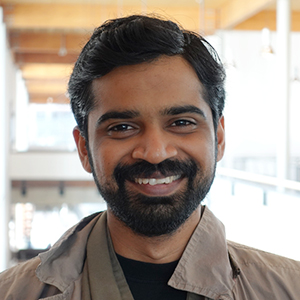
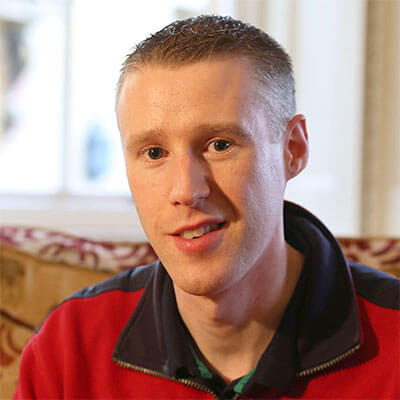
Ulrich Dettweiler is Professor in the Department of Sports Science and Physical Education at the University of Agder and CEO of the Cognitive and Behavioral Neuroscience Lab at the University of Stavanger. His transdisciplinary research examines outdoor education's effects on learning processes, stress physiology, and motivational behavior. He leads the ROPE research group and Wild Growth project. Key research areas: Physiological and cognitive impacts of outdoor learning Bayesian methodologies in educational research Inclusive education through nature-based experiences His work informs national policies on education outside the classroom (uteskole).
Emilie Skoglys is a PhD Research Fellow at the Department of Sports Science and Physical Education, University of Agder (UiA), where she commenced her research fellowship in fall 2024. She teaches student teachers in physical education, outdoor activities, and gymnastics within the sports year program. Her academic background includes a master's degree in physical education from the Norwegian University of Science and Technology (NTNU) and Oslo Metropolitan University (OsloMet), with prior experience as a primary school teacher in Oslo, Kristiansand, and Spain. Skoglys' research centers on Outdoor Education and Nature-Based Learning , specifically investigating how nature-based outdoor education improves quality of life for neurodivergent students and how teachers implement these methods. Her interests span Public Health , Life Skills Education , Neurodiversity in Education , and Holistic Health , emphasizing practical integration of nature into school environments for holistic student development. Her recent publications (2023-2024) reveal a focused trajectory on outdoor learning and public health education, highlighting strategies to enhance student mastery and life skills through nature-based approaches in everyday school contexts. She actively contributes to the ROPE (Research in Outdoor and Physical Education) research group and the "Wild Growth" project, developing educational materials for public health and life skills while advancing her doctoral research under UiA's research fellowship.
Yun Yi is an Associate Professor at the School of Architecture and the Center for East Asian and Pacific Studies at the University of Illinois at Urbana-Champaign. Their research focuses on computational methods for building performance, energy efficiency, and sustainable design, with expertise in computational fluid dynamics (CFD), daylight modeling, and machine learning applications in architecture. Key areas of interest include optimizing natural ventilation, energy systems, and climate-responsive building design. Yun Yi has contributed over 50 peer-reviewed publications, including work on HVAC runtime analysis using smart thermostats (2025), CFD-Pix2Pix integration for airflow prediction (2024), and advanced daylight models with cGAN (2023). Their research bridges computational tools with practical architectural challenges, emphasizing interdisciplinary approaches. Recognitions include the Sejong Outstanding Scholarly Book Award (2015). They have held editorial roles and delivered invited talks on topics like 'Building Performance Driven Design' (2014) and 'Computational Fluid Dynamics in Architecture.' Activities include membership in the Korean-American Scientists and Engineers Association and editorial work for the Journal of the Korea Institute of Ecological Architecture and Environment .
Annika Tillander is an Associate Professor at Linköping University, affiliated with the Division of Statistics and Machine Learning (STIMA) within the Department of Computer and Information Science (IDA). Her research focuses on public health, environmental health, and statistical methodologies, with a particular emphasis on workplace well-being and sustainable lifestyles. She has contributed to studies on physical activity promotion in office settings, high-dimensional statistical models, and environmental impacts of outdoor workspaces. Her academic background includes expertise in data science and epidemiology, reflected in her interdisciplinary publications. She collaborates widely, as evidenced by her co-authored papers in journals like Frontiers in Public Health and International Journal of Environmental Research and Public Health . Dr. Tillander is part of the STIMA division, which emphasizes modern data analysis and hosts the master's program in Statistics and Machine Learning. No specific scientific awards are noted in the provided texts, though her work demonstrates significant contributions to public health research.
Christopher Schlottmann is a Clinical Professor, Associate Chair, Director of Undergraduate Studies, and Global Curriculum Coordinator in the Department of Environmental Studies at New York University. His research focuses on ethical intersections of food systems, animal welfare, and environmental sustainability. He has authored influential books including Food, Animals and Environment: An Ethical Approach (2018) and edited volumes such as Environment and Society: A Reader (2017). Schlottmann’s work bridges philosophy, policy, and pedagogy, emphasizing the need to center animals in environmental discourse. His academic roles include overseeing NYU’s Environmental Studies and Animal Studies undergraduate programs, coordinating global curriculum initiatives, and teaching courses that integrate ethical analysis with practical environmental challenges. Schlottmann’s research explores topics like climate change education, conservation ethics, and the moral responsibilities of environmental policy. His publications span environmental ethics, education theory, and socio-ecological systems analysis. Schlottmann advocates for interdisciplinary approaches to creating a more equitable and sustainable world, leveraging his dual roles as scholar and academic administrator to foster innovative educational programs.
Robert Vranich serves as a Senior Lecturer in the Faculty of Kinesiology, Sport, and Recreation at the University of Alberta, holding the position of GTA Principal Instructor for Academic Programs. He teaches undergraduate courses focused on experiential outdoor learning and critical sociological analysis of sport and leisure systems. His research concentrates on outdoor environmental education methodologies and the sociology of sport/leisure, examining power structures including colonialism, consumer culture, globalization, and neo-liberalism. His work bridges theoretical frameworks with practical outdoor instruction techniques, emphasizing collaborative group dynamics in environmental contexts. Dr. Vranich currently instructs KIN 205: Introduction to Outdoor Environmental Education (Fall 2025), blending lecture and lab components to prepare students for outdoor teaching environments, and KRLS 304: Advanced Sociology of Sport and Leisure (Winter 2026), which critically analyzes social processes shaping bodily experiences in sport and leisure. His courses require specialized instructional support fees reflecting field-based components. No information is available regarding scientific awards, grant funding, or academic advising activities. Laboratory affiliations and research teams are not documented in current institutional materials.
Kath McLachlan is an Honorary Senior Research Fellow at Macquarie University's School of Natural Sciences. Her work focuses on transformative educational practices, sustainability integration in curricula, and wellbeing-enhancing environments. She has contributed to over 45 research outputs since 2008, with notable publications in Higher Education Research and Development and Routledge series. Her research interests span reflective practice methodologies, creativity in learning ecosystems, and the intersection of public spaces with educational outcomes. Key projects include 'Highly Accomplished Teachers in Education for Sustainability' (2019) and 'Designing a model for Metro Train Sydney commuter wellbeing' (2018-2019). McLachlan co-led the award-winning 'Programs that Enhance Learning' initiative (2014) and actively engages in community-building activities like Harmony Day events. Her work bridges theoretical frameworks with practical applications in urban sustainability, workplace learning, and intercultural education. Recent research explores how green campus spaces impact student well-being and how public transport journeys can become sites for mindfulness practices. She collaborates internationally on projects addressing creativity distractions and third-space learning paradigms.
Marjan Zadnik is an Adjunct Associate Professor in the Department of Physics at the University of Western Australia's School of Physics, Maths and Computing. Their research focuses on modernizing science education through Einsteinian curriculum development, particularly in K-10 settings. Zadnik has pioneered initiatives like the Einstein-First program, emphasizing early exposure to relativity and quantum physics concepts. Their work includes teacher upskilling programs, curriculum design validation, and assessment of student conceptual understanding through mixed-method approaches. Collaborative efforts involve institutions like the Gravity Discovery Centre and utilize facilities such as the Zadko Telescope for educational outreach. Over 46 publications highlight contributions to astronomy education, STEM pedagogy innovation, and remote laboratory learning efficacy.
Dr. Nicole van den Bogerd is an Assistant Professor at the Vrije Universiteit Amsterdam , affiliated with the Faculty of Behavioural and Movement Sciences and the APH - Health Behaviors & Chronic Diseases department. Her work focuses on how built and nature-rich environments influence health and well-being, particularly for children and students. She specializes in environmental interventions, systematic reviews, and qualitative research methods. Education: While specific academic qualifications aren’t detailed here, her roles and publications suggest advanced training in psychology, public health, and environmental studies. Research Interests: Nicole’s research spans prevention of mental/physical health issues, health behavior promotion, environment-behavior interactions, and supportive environment design. She has expertise in evaluating green schoolyards, nature-based interventions in healthcare, and the psychological benefits of natural spaces. Her recent work emphasizes child development through nature play and the design of restorative educational environments. Grants & Projects: Principal Investigator for Groen voor zorg: toepassingen voor patiënt en zorgprofessional (2025). Co-researcher on Groene Schoolpleinen Monitor (2025). Recipient of Erasmus+ student traineeship grant (2018) and multiple grants supporting green environment research. Awards & Recognition: Contributed to the Dream Green: A vision for sustainable healthy futures in Amsterdam initiative (2024). Awarded Health Behaviours and Chronic Diseases travel grant (2018). Teaching & Engagement: Teaches Prevention of Mental Health Problems and Scientific Writing and Presenting (CDP) courses (2024–2025). Serves as a board member for Stichting Vrienden van de Botanische Tuin Zuidas since 2017. Labs & Collaborations: Her work involves interdisciplinary collaborations, including projects with the European Centre for Environment and Human Health (Exeter, UK). She actively reviews for journals like Journal of Environmental Psychology .
Jonas Forsmark is a Lecturer at Linköping University's Department of Behavioural Sciences and Learning (IBL), affiliated with the Division of Education and Adult Learning (PVL). His work focuses on pedagogical approaches in outdoor education and adult learning, with particular emphasis on experiential learning environments. He contributes to Sweden's only Folk High School Teacher Training program and engages in research addressing societal challenges through behavioral sciences and learning theory. His research interests center on outdoor education methodologies, leadership in experiential learning contexts, and the theoretical frameworks guiding adult education. Collaborations include the Forum for outdoor education and interdisciplinary projects with vocational training institutions. Recent publications explore pedagogical perspectives in outdoor settings and innovative teaching strategies beyond traditional classrooms. As part of LIU’s prominent adult learning division, Forsmark’s work bridges educational theory and practical implementation in non-traditional learning spaces. His contributions help shape curricula for adult learners and educators working in outdoor and vocational contexts.
Dr. Ajay Shankar is a Post-Doc Research Fellow in the Department of Computer Science and Technology at the University of Cambridge. His primary research focuses on control, planning, and automation for robotic systems and teams, with a strong emphasis on multi-robot systems, autonomous control, and machine learning applications in robotics. He is affiliated with the Mobile Systems, Robotics and Automation research theme within the department. His work integrates robotics, machine learning, and systems engineering to address challenges in multi-agent coordination, trajectory optimization, and real-time control. Key projects include the development of the Cambridge RoboMaster platform and studies on dynamics-aware trajectory planning using diffusion models. He also explores downwash modeling for multirotor flight in dense environments and heterogeneous multi-robot reinforcement learning frameworks. Dr. Shankar's contributions span academic conferences and journals, with recent publications focusing on aerial robotics, autonomous systems, and multi-agent learning. His research has practical applications in environmental monitoring (e.g., UAS profiling during LAPSE-RATE campaigns) and agile robotics systems design. Department: Computer Science and Technology University: University of Cambridge Affiliations: Cambridge Ring Initiative, Accelerate Programme for Scientific Discovery
Mel McCree is a Senior Lecturer in Early Childhood Studies at Bath Spa University, School of Education. She specializes in eco-social justice, outdoor play, and forest school pedagogy, with a focus on environment-society relationships. Her research investigates how children and families engage as citizens in addressing ecological and social challenges, particularly through participatory and improvisational approaches. Education includes a PhD in Education (University of Gloucestershire, 2014), MA Creative Writing (Bath Spa University, 2006–07), and postgraduate qualifications in music therapy and community music. Professional memberships include the Common World Childhoods Research Collective, Natural England Strategic Research Network, and Forest School Association Research SIG. Research interests center on forest school principles, eco-pedagogy, and the role of adults in supporting play. Notable works include analyses of forest school training impacts, eco-social identities, and the interplay between improvisation and environmental education. Key themes in her publications include outdoor learning outcomes, emotional wellbeing, and systemic challenges in environmental education. Her awards include Fellowships from the Royal Society for the Arts (RSA) and the Royal Geographical Society (RGS UK). She advises on outdoor setting development and practitioner training, emphasizing participatory methodologies and community-based responses to climate change. Mel leads research initiatives like the Wild Wiltshire project and collaborates internationally on childhood-nature assemblages. She co-founded a permaculture cooperative and engages in arts-based evaluation for health and wellbeing programs.
Dr. James Jeffers is a Senior Lecturer in Human Geography at Bath Spa University, serving as Programme Leader for the BSc Geography degree and Research Lead for the Climate, Hazards and Environmental Change cluster in the School of Sciences. His work focuses on hazards, climate adaptation, urban environments, and wildfire/flood dynamics. He holds a PhD from Rutgers University and multiple degrees from the National University of Ireland (Galway). Professional qualifications include Fellowship of the Higher Education Academy and the Royal Geographical Society. Jeffers' research explores historical and contemporary disaster management challenges, with projects in Ireland, India, and Spain. Notable contributions include the HiFlo-DAT flood database for the Indian Himalayas and analyses of flood defense disputes in Cork. He teaches modules on climate change, water resources, and fieldwork methodologies, leading a Spain-based fieldtrip. His academic outputs span over two decades, addressing disaster policy, environmental knowledge systems, and adaptation barriers. He has peer-reviewed for 20+ journals and co-edited a special issue on hazards in context. External roles include serving as an examiner for Dublin City University's Climate and Environmental Sustainability program.
Arthur Kelly is the PGCE Primary Programme Leader at the University of Chester, part of the Faculty of Arts, Humanities and Social Sciences. He holds a Senior Research Fellow status under the UK Professional Standards Framework and is a Senior Fellow of the Higher Education Academy. His expertise focuses on primary geography education (ages 3-11), teaching at levels 4–7, and collaborating with partnership schools to support student placements. He has been on the editorial board of the Primary Geography journal for 20 years, promoting best practices in geographic pedagogy. Research interests include sustainability in teacher education through his role in TEESnet (Teacher Education for Equality and Sustainability), emphasizing equity beyond Qualified Teacher Status (QTS). He has presented nationally on topics like collaborative learning in geography and adaptive teaching during crises (e.g., lockdowns). His publications emphasize practical strategies for primary educators, curriculum design, and environmental education integration. Awards: Senior Fellow of the Higher Education Academy (2022), Mental Health First Aid Trained (2022). Grants/Projects: Involved in the Sustainability and Environment Research and Knowledge Exchange Institute. Labs/Teams: Editorial Board of Primary Geography , TEESnet Board Member.
Heather Prince is a Professor of Outdoor and Environmental Education at the University of Cumbria's Institute of Science and Environment. She leads the Outdoor Learning theme in the Learning, Education and Development (LED) research centre, focusing on curriculum innovation and pedagogical practices. As a Principal Fellow of the Higher Education Academy (PFHEA), she specializes in enhancing student experiences through active and experiential learning, particularly in nature and place-based contexts. Her research spans outdoor education’s role in formal schooling, sustainability, and inclusivity, with notable contributions to understanding menstruation’s impact on participation in adventurous activities. She supervises PhD students and advises on strategic educational developments, including the Cumbria Curriculum framework. Her work bridges theory and practice, emphasizing environmental stewardship and equitable access to outdoor learning opportunities. Publications include works on sail training, nature-based curricula, and the intersection of AI with outdoor education. Awards include her PFHEA distinction. She collaborates internationally, serving on editorial boards and advisory groups for organizations like the Ocean Youth Trust North and Cumbria County Council.

.jpeg)