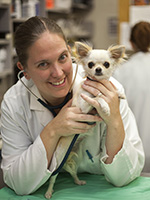
Shannon Beazley is an Assistant Professor in the Department of Small Animal Clinical Sciences at the Western College of Veterinary Medicine, University of Saskatchewan. Her research focuses on advancing veterinary anesthesiology through innovative monitoring techniques. Research Interests: Dr. Beazley specializes in pain management optimization and electrical impedance tomography applications for respiratory assessment in animals. Her work bridges clinical practice with technological innovation to improve anesthetic safety and physiological monitoring in equine and small animal medicine. Research Trends: Her recent publications (2020-2023) demonstrate a consistent focus on respiratory monitoring methodologies, including capnography validation, impedance tomography, and blood pressure measurement techniques. These studies frequently utilize rabbit and equine models to evaluate anesthetic protocols and equipment accuracy under varied physiological conditions.
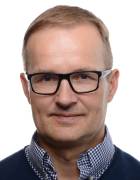
Prof. Henning Wackerhage is an Associate Professor of Sports Biology at the TUM School of Medicine and Health, Technical University of Munich (TUM). His research focuses on the molecular mechanisms of exercise, including how physical activity influences performance, fitness, and health. Key areas of investigation include the effects of exercise on thermogenic adipose tissue, blood metabolome/proteome dynamics, and Hippo pathway proteins' role in exercise adaptation. He also explores aerosol emission during exercise and its implications for infection risk. Wackerhage holds a doctorate from the German Sport University in Cologne, where he studied muscle metabolism using 31 P NMR. He previously held academic positions at the University of Central Lancashire, University of Dundee, and University of Aberdeen in Scotland. His current work integrates molecular biology, physiology, and clinical research to address questions at the intersection of exercise, cancer biology, and metabolic health. Research interests include muscle hypertrophy's metabolic reprogramming, aerosol emission during exercise, and the Hippo/YAP pathway's role in muscle adaptation and disease. Notable projects involve analyzing exercise-conditioned sera effects on cancer cells and developing FAIR-compliant data standards for biomedical research. Recent publications highlight his work on hypertrophy-induced metabolic shifts, aerosol particle emission dynamics, and the interplay between exercise and cancer cell behavior. His research group, Exercise Biology, emphasizes translational approaches to translate molecular insights into practical health and performance strategies. Wackerhage's lab also investigates aging-related muscle loss (sarcopenia) and evidence-based training plans for athletic performance optimization. Collaborative efforts include systematic reviews of marathon training strategies and metabolomic profiling of elite athletes.
Céderick Landry is an Assistant Professor of Mechanical Engineering at Université de Sherbrooke , Canada, since 2023. His research integrates mechatronics, artificial intelligence, and cardiovascular physiology to develop non-invasive, data-driven solutions for cardiovascular monitoring and intervention optimization. Education: PhD, Mechanical Engineering – University of Waterloo (2021) Post-doctorate – University of Pittsburgh (2023) MSc, Mechanical Engineering – Université de Sherbrooke (2017) BEng, Mechanical Engineering – Université de Sherbrooke (2014) Research Focus: Dr. Landry’s work centers on the intersection of biomedical engineering and machine learning , with a strong emphasis on cuffless blood pressure monitoring . He develops wearable and smartphone-based systems that leverage oscillometric , viscoelastic modeling , and deep reinforcement learning to monitor and control cardiovascular parameters in real time. His research spans arterial stiffness , signal processing , system identification , and clinical translation , with applications in hypertension detection , elderly fall prevention , and intermittent pneumatic compression therapy . Scientific Awards & Honors: NSERC Postdoctoral Fellowship (2024) NSERC Alexander Graham Bell CGS-Doctoral Award (2021) FRQNT Scholarships – A7, B2, B1 (2020–2017) University of Waterloo President’s Graduate Scholarship (2021) Multiple best paper and presentation awards at IEEE EMBC, BHI, and BSN conferences Grants & Funding: NSERC Discovery Grant – Principal Investigator (2024–2029, $152,500) University Startup Funds – Université de Sherbrooke (2023–2025, $70,000) CdRV Startup Funds – Centre de recherche sur le vieillissement (2024–2026, $25,000) CIHR Co-investigator – FemTech urinary incontinence app (2024–2025, $149,489) Labs & Teams: Dr. Landry leads a research group at Université de Sherbrooke focused on cardiovascular technologies and non-invasive diagnostics . He collaborates with MITACS , CRCHUS , 3IT , and international partners including University of Pittsburgh and Georgia Tech .
Mike Chiasson is a Professor at the Faculty of Management at the University of British Columbia's Kelowna campus. He joined UBC in 2014 after previously serving as a Professor of Information Systems at Lancaster University's Management School and as an Associate Professor at the Haskayne School of Business, University of Calgary (1999-2006). His educational background includes a Post Doctoral Fellowship at the Institute for Health Promotion Research at UBC, a Ph.D. in Management Information Systems from UBC Faculty of Commerce, and a B.Com. (with Distinction) in Finance/Accounting from the University of Alberta, Faculty of Business. Dr. Chiasson's research examines how social context affects and is affected by information systems development and implementation, using a range of social theories. His work spans system development (public policy, user involvement, agile development, outsourcing), effects of IT (entrepreneurial capabilities, diffusion and infusion, organizational change, client-patient outcomes), and specific IT applications (enterprise resource planning, eHealth, electronic health records) within medical, legal, entrepreneurial, and governmental settings. His empirical work mixes quantitative and qualitative data with a strong emphasis on participant observation, contributing to social theory (ANT, Habermas, pragmatism, structuration theory, entrepreneurial opportunities), action research, and research methods. Analysis of his recent publications shows a continued focus on information systems, digital innovation, and healthcare applications of technology, with increasing attention to philosophical foundations of IS research, critical realism, and systems of innovation frameworks. Outstanding Reviewer Award, Emerald Literati Network Award of Excellence, 2012 Visiting Shidler Fellow, University of Hawaii at Manoa, 2012 MISQ Reviewer of the Year, 2006 AIM Innovation Fellow, 2007-2009 Multiple prestigious fellowships from NSERC, SSHRC, and other organizations Dr. Chiasson has secured significant research funding throughout his career, including Future Fund Grants, SSHRC Doctoral Fellowships, and NSERC Postdoctoral Fellowships. His work bridges academic research with practical applications in healthcare, government, and business settings, with a particular emphasis on understanding how technology implementation interacts with social contexts.
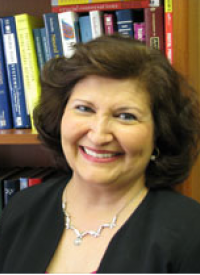
Patricia Nava is a Professor in the Department of Electrical and Computer Engineering at the University of Texas at El Paso (UTEP), with affiliations in Computational Science. Her work bridges theoretical and applied domains across Artificial Intelligence, Deep Learning, Digital Design, and Computer Architecture. Primary Research Areas: AI, Deep Learning, Computer Architecture, STEM Education Key Collaborations: UTEP Distributed Computing Lab, H-PIPE (High-Performance Computing Pipeline) project Her research explores Deep Learning Networks through analogies to biological systems, focusing on their implementation via programmable hardware. She has pioneered educational strategies in engineering pedagogy, particularly for Signals and Systems instruction, while maintaining a strong technical focus on neural network algorithms and hardware acceleration. Recent publications highlight her dual emphasis on STEM student success (e.g., graduate transition pathways) and technical innovations such as GPU clusters , quantized neural networks , and multi-core architectures . Her work spans biomedical applications like asthma classification and respiratory impedance modeling, demonstrating interdisciplinary breadth. Featured Scientific Support: $1M grant to increase graduate engineering participation She contributes to distributed computing infrastructure through projects like the Virgo 3-GPU upgrade and has developed fuzzy logic systems for sleep-stage and asthma classification. Her educational initiatives focus on transfer student integration and diversity in engineering.
Prof. dr. Hans Kooistra is a Professor of Internal Medicine of Companion Animals at the Department of Clinical Sciences of Companion Animals, Faculty of Veterinary Medicine, Utrecht University. His expertise centers on endocrinology, particularly in dogs and cats, with over 180 peer-reviewed publications. He holds board certifications from ECVIM-CA and the Royal Netherlands Veterinary Association. Key roles include teaching in veterinary curricula and leading research in endocrinology and reproduction. Awards include the 2010 FECAVA lecture and research recognition for polyuria diagnostics in dogs. Educations: DVM from Utrecht University (1990), PhD in Adenohypophyseal function (2000). Committees: European Society of Veterinary Endocrinology (President 2007-2009), editorial roles in Domestic Animal Endocrinology and Journal of Feline Medicine and Surgery. Research Focus: Investigates endocrine disorders in companion animals, with emphasis on pituitary diseases, diabetes, and reproductive endocrinology. Recent studies include insulin-producing beta-cell differentiation in dogs and novel treatments for feline diabetes. Awards: Recognized for contributions to veterinary endocrinology through FECAVA and diagnostic innovations in canine medicine. Labs/Teams: Active in the Department’s clinical and research programs, collaborating on comparative endocrinology and veterinary therapeutics.
Dr. Carl Whitfield is a Dame Kathleen Ollerenshaw Fellow in Applied Mathematics at the University of Manchester's Department of Mathematics. He specializes in computational modeling of lung structure and function, particularly focusing on cystic fibrosis. His research integrates multi-scale modeling of respiratory biomechanics and fluid dynamics with patient-specific simulations to improve disease detection and treatment optimization. Whitfield holds a PhD in Modelling Spontaneous Motion and Deformation of Active Droplets from the University of Sheffield (2015) and a Master of Physics from the same institution (2012). Current Role: Dame Kathleen Ollerenshaw Fellow, Applied Mathematics Research Themes: Respiratory Physiology, Biomechanics, Fluid Mechanics, Computational Modelling Collaborations: Prof. Oliver Jensen (Manchester), Prof. Jim Wild (Sheffield), Prof. Ian Hall (Epidemiology) His research interests span computational modeling, biological fluid mechanics, and inverse problems, with applications to respiratory medicine and soft matter physics. Whitfield has contributed to pandemic response through modeling asymptomatic testing and workplace transmission dynamics during the SARS-CoV-2 pandemic. He leads the Mathematical Epidemiology Group and contributes to multi-modal studies on pregnancy and stillbirth prevention. Whitfield's recent work emphasizes the non-local effects of airway constrictions on inhaled particle deposition and the role of surfactant in viscoplastic fluid instabilities. His publications explore both fundamental fluid dynamics and translational medicine, reflecting his interdisciplinary approach to solving complex biomedical problems. Key Achievements: Developed patient-specific lung models for CF drug delivery optimization Funding: Active roles in projects including Digital Futures and Christabel Pankhurst Institute initiatives
Stephen Fowler, MD FRCP, is a Clinical Professor at the University of Manchester, specializing in Respiratory Medicine with roles in research, teaching, and clinical practice. He leads the Respiratory Research Group and serves as an Honorary Consultant at Wythenshawe Hospital. His research focuses on breath analysis for respiratory diseases, asthma, and critical care applications, funded by grants like NIHR and Marie Curie. He holds an MD from the University of Manchester and is a Fellow of the Royal College of Physicians. Education: BSc (Med Sci) from St Andrews (1992), MB ChB from Manchester (1995), MRCP (1999), and FRCP (2015). His clinical work involves severe asthma and breathlessness management, complementing his research on exhaled breath profiling and metabolomics. Research interests include breath analysis for diseases like asthma, COPD, and IPF, alongside clinical trials on asthma management. Key collaborations involve Manchester Institute of Biotechnology and Philips Research. Awards include FRCP recognition. Teaching roles include Postgraduate Tutor for the Division of Infection, Immunity and Respiratory Medicine, and undergraduate clinical lead for Manchester Medical School. He has contributed to over 228 publications, focusing on asthma, breathomics, and critical care innovations.
Dr. William Anderson is a researcher affiliated with the School of Medicine's Department of Respiratory Medicine. His work focuses on advancing clinical understanding of COPD, asthma, and pharmacotherapeutic interventions. Key areas include beta-blocker efficacy in COPD patients, inhaled corticosteroid dosing strategies, small airway dysfunction, and biomarker-driven lung cancer screening. His research integrates clinical trials, pharmacogenomics, and advanced diagnostic techniques like impulse oscillometry. Recent studies investigate left ventricular hypertrophy's impact on COPD prognosis and genotype-guided asthma management. Dr. Anderson has contributed to over 30 peer-reviewed publications since 2009, emphasizing translational research between preclinical models and clinical practice. Education details are not explicitly stated in the provided text. His research portfolio includes randomized controlled trials evaluating drug efficacy (e.g., bisoprolol vs celiprolol in COPD, autoantibody-based lung cancer screening), pharmacokinetic studies of inhaled medications, and explorations of β2-adrenergic receptor polymorphisms' effects on asthma control. Collaborative studies with cardiovascular specialists address cardiopulmonary comorbidities in COPD patients. Current efforts focus on improving COPD management through better understanding of dynamic hyperinflation mechanisms and domiciliary safety protocols. No scientific awards are listed in the provided information. His work involves multidisciplinary teams addressing unmet needs in small airways disease and corticosteroid optimization. Ongoing projects include refining inhaled corticosteroid particle size formulations and evaluating real-world outcomes of long-acting bronchodilator use in COPD.
Peter is a Clinical Research Nurse and Industry Fellow affiliated with the School of Public Health at The University of Queensland. His work focuses on maternal and child health, environmental influences on respiratory diseases, and clinical trial methodologies. Research interests include environmental health impacts on neurodevelopment, prenatal programming of cognitive outcomes, and the role of maternal nutrition and exposure in childhood respiratory conditions. His recent publications explore socioeconomic adversity, chemical migration from food packaging, AI-driven lung imaging, and zoonotic disease epidemiology. His work spans clinical trials, biomarker analysis, and environmental risk assessment, with collaborations across public health, pediatrics, and toxicology domains.
Jann Mortensen serves as a Clinical Professor at the Department of Clinical Medicine, Faculty of Health and Medical Sciences, University of Copenhagen. His primary specialization is within Clinical Physiology and Nuclear Medicine, with his office located at Blegdamsvej 3, 2200 København N. With an extensive publication record totaling 176 research outputs, Professor Mortensen maintains an active research profile in pulmonary medicine and nuclear imaging techniques. His research interests span pulmonary physiology, nuclear medicine applications, lung cancer diagnostics, COPD management, and respiratory function testing. Professor Mortensen's work demonstrates particular expertise in diffusion capacity measurements, ventilation/perfusion imaging, and the application of nuclear medicine techniques to respiratory conditions. His recent publications indicate a strong focus on innovative diagnostic approaches and longitudinal studies of respiratory function. Analysis of his recent publications shows a consistent emphasis on clinical applications of pulmonary function testing, with significant contributions to understanding lung cancer diagnostics, COPD rehabilitation, and post-COVID respiratory complications. His work frequently employs advanced imaging techniques including SPECT and PET/CT, demonstrating expertise at the intersection of nuclear medicine and respiratory physiology. Professor Mortensen collaborates extensively with researchers across multiple institutions, as evidenced by his numerous multi-author publications. His work appears in high-impact journals across respiratory medicine, oncology, and nuclear medicine specialties. While specific grant information isn't detailed in the provided text, his extensive publication record suggests successful research funding. His laboratory work appears to focus on clinical pulmonary physiology testing and nuclear medicine imaging, with particular emphasis on developing and refining diagnostic techniques for respiratory conditions. Professor Mortensen's research group likely includes both clinical and technical staff working on pulmonary function testing protocols and nuclear medicine applications.