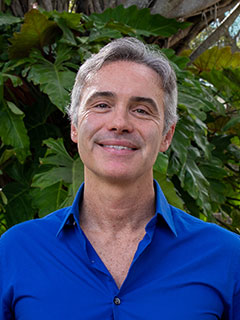
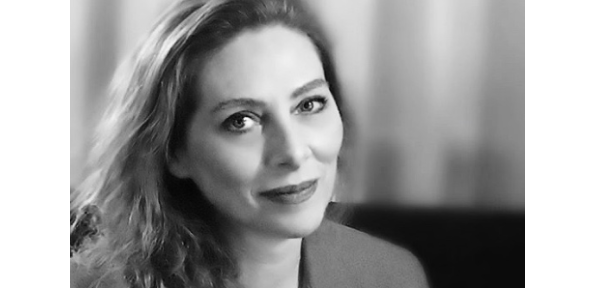
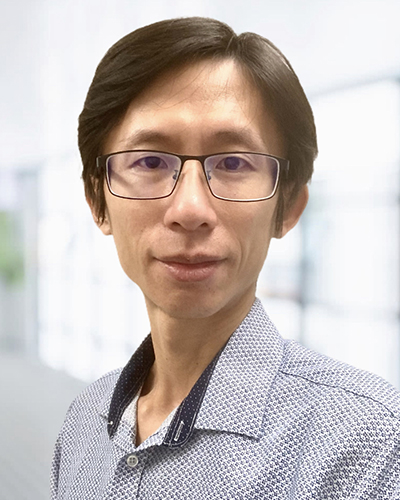
Andrew Lynch serves as Professor and Associate Dean for Program Development in the Department of Modern Languages & Literatures within the College of Arts and Sciences at the University of Miami. His academic leadership extends beyond teaching responsibilities to include significant administrative contributions to program development across the institution. Lynch's research interests center on sociolinguistics with particular focus on Spanish language dynamics in Miami, heritage language socialization, bilingualism, and language ideology. His work examines how language functions within specific social contexts, especially in workplace environments where Spanish heritage speakers navigate linguistic demands. He investigates the complex interplay between language, identity, and social structures in postmodern urban settings, with special attention to the Cuban diaspora experience in South Florida. His publication record reveals consistent scholarly engagement with heritage language education, Spanish language variation, and the sociolinguistic landscape of global cities. Lynch's research demonstrates how language practices in Miami reflect broader patterns of linguistic adaptation and resistance within diasporic communities. His work often addresses the tension between linguistic heritage and social integration, examining how language ideologies shape educational practices and community identity. Lynch's scholarly contributions span multiple formats, including single-authored books, co-authored publications, handbook chapters, and journal articles in both English and Spanish. His work frequently appears in high-impact sociolinguistics and language education journals, reflecting his interdisciplinary approach that bridges theoretical linguistics with practical educational implications.
Dr. Doyle D. Calhoun serves as University Assistant Professor of Francophone Postcolonial Studies within the Department of French at the Faculty of Modern and Medieval Languages and Linguistics, University of Cambridge, where he is also a Fellow of Peterhouse College. His scholarly profile spans African and Caribbean literary studies, cinema analysis, and historical sociolinguistics with a focus on resistance narratives. His educational trajectory includes a Ph.D. in French from Yale University (2022), an M.A. in Linguistics from KU Leuven, and undergraduate studies in Linguistics and French Literature at Boston College. Additional academic development occurred through residencies at Fondation Camargo (Cassis) and Bibliothèque Marmottan (Paris). Calhoun’s research centers on Francophone postcolonial resistance, particularly suicidal acts against French colonialism as documented in The Suicide Archive (2024). His work excavates silenced histories of Atlantic slavery, abolition movements, and Négritude philosophy through literary and cinematic archives, emphasizing Senegalese and Caribbean contexts. He explores how contemporary writers reconstruct erased narratives of enslaved resistance through transmedia practices. His recent publications reveal a methodological convergence between literary analysis, historical recovery, and decolonial theory. Articles frequently address archival silences in colonial documentation while examining how contemporary artists reimagine resistance through linguistic innovation, cinematic storytelling, and embodied protest. Key thematic clusters include the weaponization of silence, subversive uses of missionary linguistics, and the politics of memory in postcolonial contexts. 2024 Malcolm Bowie Prize (Society for French Studies) 2024 William R. Parker Prize (Modern Language Association) 2021 Ralph Cohen Prize (New Literary History) 2016 Vivien Law Prize (Henry Sweet Society) Calhoun actively mentors graduate students in African/Caribbean literatures and cinema studies, with current projects including Africa after 1848 and Florence . His grant history features academic residencies at Fondation Camargo and Bibliothèque Marmottan, alongside a 2021 scholarship from the latter institution. Public engagement includes the 2025 La Noire de... film symposium and contributions to Los Angeles Review of Books and Salon . He contributes to the Cambridge Language Collective and Polyglossia Magazine while organizing events through Peterhouse. His 2025 podcast appearances on Stegi Radio and New Books Network demonstrate active knowledge dissemination beyond traditional academic channels.
Dr Aaron D. Hornkohl is an Associate Professor in Hebrew and Bye-Fellow at Girton College, University of Cambridge. He serves as Director of Studies in Asian and Middle Eastern Studies at Girton and Homerton Colleges. His academic background includes a BA from Biola University, MA from The Hebrew University of Jerusalem, and PhD (2012) on the linguistic analysis of the Book of Jeremiah. His research focuses on ancient Hebrew philology, linguistic periodization, and exegesis, with a particular interest in the diachronic development of Hebrew and textual criticism of biblical manuscripts. Teaching responsibilities include courses on ancient and modern Hebrew literature, language history, and Middle Eastern culture. He co-organizes initiatives like the Sutton Trust Summer School and leads AHRC-funded research on critical editions of Hebrew texts, including the Kaufmann MS of the Mishna. Recent publications explore Tiberian reading traditions, Masoretic vocalization, and linguistic features in Qumran manuscripts. Research projects include Grammar of Biblical Hebrew Books (2024) and Studies in the Masoretic Tradition (2022). His work bridges linguistic analysis with historical context, addressing questions of language evolution and textual authenticity in Hebrew biblical and rabbinic corpora.
Professor Helena Sanson is a Full Professor of Italian, History of Linguistics, and Women's Studies at the University of Cambridge , where she is also a Fellow of Clare College and serves as Postgraduate Teaching and Examining Officer for the Italian Section. She joined Cambridge in 2005 after teaching at University College London (1998-2003) following her British Academy Postdoctoral Fellowship. PhD from University of Reading (2002) Her interdisciplinary research focuses on the intersection of Italian linguistic history , literary culture , and gender studies from the Renaissance to post-Unification period. Particular emphasis includes women's contributions to linguistic thought , conduct literature analysis , and female roles in translation networks . Her work examines how women navigated language standardization, educational access, and literary production across social strata. Recent projects include Leverhulme-funded research on women's linguistic experiences in 18th-19th century Italy and co-edited volumes on transnational travelers' accounts and early modern female education . She founded the Women and Gender in Italy (1500-1900) book series and the journal Women Language Literature in Italy . Scientific awards include: British Academy Postdoctoral Fellowship Leverhulme Research Fellowship Philip Leverhulme Prize CRASSH Early Career Fellowship Isaac Newton Trust grant Senior Visiting Fellowship at University of Bologna She supervises graduate research in topics spanning women's writing , linguistic thought , translation history , and cultural marginalization in 16th-20th century Italy. Her work bridges philology, literary criticism, and social history through rigorous textual analysis.
Shannon Barrios is an Associate Professor in the Department of Linguistics at the University of Utah, where she has served since 2022. She co-directs the Speech Acquisition Lab and specializes in second language acquisition, phonetics/phonology, and psycholinguistics. Her research explores how adult learners develop perceptual and lexical representations of novel phonological contrasts, with a focus on cross-language speech perception, orthographic effects, and social factors in input processing. BA, Spanish (SUNY Geneseo, 2004) MA, Linguistics (Syracuse University, 2007) PhD, Linguistics (University of Maryland, 2013) Her research interests span adult second language acquisition , phonolexical development , and accent bias . She investigates how learners process phonological contrasts, the role of orthography in speech perception, and the influence of social roles (e.g., teachers vs. peers) on language learning. Her work combines behavioral experiments, ERP/MEG neuroimaging, and computational modeling. Barrios’ recent publications (2024–2020) focus on representational fuzziness , talker variability , and lexical contrast mechanisms . Her 2024 Languages paper proposes a factorial typology for evaluating auditory word recognition scenarios, while her 2024 JASA Express study highlights individual listener variation in cross-language speech perception. Earlier works examine allophone acquisition, orthographic input effects, and neural correlates of phonological mapping. She has received two teaching awards from the University of Maryland (2013). Her teaching portfolio includes undergraduate and graduate courses in phonetics , psycholinguistics , and second language acquisition theory . She also leads workshops on research ethics, mentee development, and academic literacies.
Chung-Lin Martin Yang is an Assistant Professor (Instructional Track) in the Department of Brain and Cognitive Sciences at the University of Rochester, School of Arts & Sciences. His research focuses on psycho- and neurolinguistics, speech perception/production, word recognition, word learning, evolution of human cognition, and second language acquisition. His work investigates how orthography influences second language phonological encoding, the role of Broca’s area in non-linguistic sequence learning, and neural correlates of emotional processing in early childhood. He has published extensively on topics such as bilingual phonological processing, individual differences in language learning, and the impact of orthographic depth on lexical representation. Notable research themes include the interplay between orthographic cues and phonological encoding in Mandarin and English, as well as neurodevelopmental aspects of emotional and linguistic processing in children. His contributions bridge cognitive neuroscience, psycholinguistics, and educational linguistics. Dr. Yang holds a PhD in Cognitive Science and teaches courses related to language acquisition and cognitive mechanisms. His lab explores experimental methods to understand how linguistic and cognitive systems interact during learning and perception.
Orwin Martin is an Associate Professor of Somali Language and Literature at the University of Naples 'L'Orientale', Department of Asia, Africa and Mediterranean. He holds a First Class Honors degree in Arabic and Amharic from SOAS (1986) and a PhD in Somali Phonology (1994). Previously, he served as Senior Lecturer at SOAS (2008–2020) and held various administrative roles including Head of Department (2011–2014). His research focuses on Somali poetry's linguistic and aesthetic dimensions, including meter analysis, Arabic influences, and literary translation. He has published extensively on Somali poets like Hadraawi and Weedhsame, and collaborates with international institutions like the Poetry Translation Centre. Teaching spans Somali language at all levels, comparative literature, and translation studies. He has organized conferences, including the 2018 Somali Studies Congress in Hargeysa, and contributed to academic roles such as editorial boards for African Languages and Cultures and the Journal of Somali Studies. Awards include a certificate from Hargeisa Youth Development Association for outreach work.
Professor Laura Ashe is a leading scholar in medieval English literature and culture (c. 1000–1550), holding the David Woods Kemper Family Fellowship at Worcester College, Oxford. Her work bridges literary analysis with historical and philosophical inquiry, focusing on the intersections of medieval ethics, subjectivity, and literary innovation. She is particularly noted for her studies on Chaucer, the development of romance genres, and the cultural impacts of medieval conquests. Her research explores multilingual literary traditions in post-Conquest England, the invention of fiction, and the evolution of chivalric ideals. Key projects include Chaucer's Ethical Philosophy (2025) and co-edited volumes like Conquests in Eleventh-Century England (2020). She has held prestigious fellowships including the Morton Bloomfield Visiting Fellowship at Harvard (2016). Public engagement includes the Penguin Classics volume Early Fiction in England (2015) and contributions to interdisciplinary histories like Penguin Monarchs: Richard II (2016). Current projects include a major study on the history of love across medieval and early modern periods. Awarded the Philip Leverhulme Prize (2009) and Leverhulme Research Fellowship (2015), her work appears in top journals like Studies in the Age of Chaucer and Journal of English and Germanic Philology . She co-edits New Medieval Literatures , fostering scholarly collaboration in the field.
Abigail C. Cohn is a Professor of Linguistics at Cornell University, affiliated with the College of Arts and Sciences and the Southeast Asia Program. Her research bridges phonetics, phonology, and sociolinguistics, with a focus on Austronesian languages of Indonesia and language shift dynamics. She investigates the interplay between abstract sound patterns (phonology) and their physical realization (phonetics), emphasizing laboratory phonology methods. Her work on Indonesian sociolinguistics examines how young Indonesians' shift to using Indonesian as a first language impacts local languages' structural integrity. Dr. Cohn's Fulbright Senior Research Scholarship (2012-2013) supported her project at Unika Atma Jaya on language contact in Indonesia, analyzing Sundanese-Indonesian interactions. She co-edited The Oxford Handbook of Laboratory Phonology and serves as co-editor-in-chief of Linguistics Vanguard . Her teaching spans foundational and advanced courses like Phonology I and II, guiding students in independent research and honors theses. Her research methodologies include experimental phonetics, sociolinguistic surveys, and corpus analysis. Current projects address language endangerment in majority-spoken languages and the role of multilingualism in structural language change. Awards: Fulbright Senior Research Scholar (2012-2013) Key Projects: Language Contact in Indonesia, Indonesian Language Shift Dynamics Editorial Roles: Co-Editor-in-Chief, Linguistics Vanguard ; Co-Editor, Oxford Handbook of Laboratory Phonology
Haley De Korne is a Professor at the University of Oslo's Institute for Literature, Area Studies and European Languages within the Faculty of Humanities. Her academic work spans the intersections of linguistics, education, and anthropology, focusing on multilingual education contexts with particular attention to minoritized and indigenous languages. Dr. De Korne holds a PhD in Educational Linguistics from the University of Pennsylvania, an MA in Applied Linguistics from the University of Victoria, and a BA (Hons) in Combined Social Sciences from Durham University. Her academic journey reflects a strong foundation across multiple disciplines that inform her interdisciplinary approach to language research. PhD Educational Linguistics, University of Pennsylvania, USA MA Applied Linguistics, University of Victoria, Canada BA Hons Combined Social Sciences, Durham University, UK Her research interests focus on critical language awareness among teachers, social change imaginaries in multilingual regions, and pedagogies for language reclamation. She specializes in minoritized languages in education, multilingual education policy and pedagogy, language politics, indigenous language reclamation & revitalization, and language ideologies, with specific expertise in Isthmus Zapotec (Mexico) and Anishinaabemowin (US & Canada). Her methodological approach combines ethnography and interactional sociolinguistics within linguistic anthropology. Analysis of Dr. De Korne's recent publications reveals a consistent focus on language revitalization, particularly examining how educational contexts can support or hinder minoritized language maintenance. Her work increasingly addresses global North-South perspectives on language education, with attention to place-based pedagogy and critical language awareness. A significant thread throughout her research examines translanguaging practices and how they challenge traditional monolingual approaches to language education. Her scholarship demonstrates strong community engagement, particularly with Zapotec-speaking communities in Mexico. Dr. De Korne serves on the editorial board of Multilingua - Journal of Cross-cultural and Interlanguage Communication (2023-2025) and is an active member of the Norwegian Academy for Young Researchers (2021-2025). She also chairs the American Association of Applied Linguistics Committee for Online Education and Outreach Webinar subcommittee. Member, Norwegian Academy for Young Researchers (2021-2025) Editorial board member, Multilingua Journal (2023-2025) Chair, AAAL Committee for Online Education and Outreach (2023) Partner, Multilingualism in Transitions Research Project (2021-2025) Affiliated researcher, MultiNor Research Group At the University of Oslo, Dr. De Korne teaches courses including MULTI 4150 Project-based research in multilingualism, NOAS 4102 Additional language learning in socio-cognitive and sociocultural perspectives, and several linguistics courses on language acquisition, multilingualism, and research methods. She also leads PhD courses on communication in multilingual workplaces and revitalization of indigenous and minority languages. Her current research projects include FOSTERLANG (Indigenous language resilience), Language and culture maintenance in Wilamowice, and Linguistics and Sustainability.
Robert McColl Millar is a Professor at the University of Aberdeen specializing in historical linguistics and Scots language studies. His research examines language contact phenomena, dialectological variation, and sociolinguistic dynamics within Scottish linguistic communities. His primary research domains include: Historical development of Scots in relation to English and Gaelic Dialectology of Scottish regional varieties (particularly Doric and fishing community dialects) Language policy and standardization efforts for Scots Lexical variation and attrition in endangered dialects Sociolinguistic aspects of language identity and nationalism Historical sociolinguistics of Scotland Language contact-induced change Analysis of Millar's recent publications (2024-2016) reveals three dominant research trajectories: (1) Scots Language Documentation through dialect surveys, lexical studies, and orthographic analysis; (2) Language Contact Mechanisms examining borrowing, interference, and structural change in historical English; (3) Sociopolitical Dimensions exploring Scots' relationship with Scottish identity, nationalism, and language policy. His work consistently bridges theoretical linguistics with practical language planning concerns. No scientific awards are documented in the available sources. While student advising details remain unreported, his publications indicate extensive collaboration with research forums like the Forum for Research on the Languages of Scotland and Ulster. Grant funding specifics are not publicly itemized, though his edited volumes suggest institutional and conference-level support. No dedicated laboratories or research teams are specified in current public materials.
Osman Kabadayı is an Associate Professor at Kırşehir Ahi Evran University's Faculty of Arts and Sciences, Department of Turkish Language and Literature. Born in 1981, he completed his education at Kırıkkale University (BA, 2003), Erciyes University (MA non-thesis, 2004), Kırıkkale University (MA thesis, 2007), and earned his PhD from Gazi University in 2020. His international experience includes a five-year position at Abay Kazakh National Pedagogical University and research at the Kazakh Academy of Sciences. His research focuses on North-Western (Kipchak) Turkish Dialects and Literatures , with emphasis on historical linguistics, Kazakh language evolution, manuscript studies, and Turkic cultural heritage. He employs comparative methods to analyze linguistic features across Turkic languages, particularly examining lexical development and grammatical structures in historical contexts. Secondary interests include folklore documentation, orthographic reforms, and digital preservation of Turkic manuscripts. Publications demonstrate strong focus on Kazakh philology (45% of recent works), historical linguistics (30%), and manuscript studies (25%), with recurring examination of equestrian terminology, funerary inscriptions, and Islamic texts. Research consistently bridges ancient Turkic traditions with contemporary linguistic phenomena. Awards & Recognition: Science Encouragement Award (Kırşehir Ahi Evran University, 2023) Certificate of Appreciation from Kazakh Embassy (2021) Plaque for academic service (Ahi Evran University, 2010) Academic Leadership: Advises six PhD students on topics including Kazakh philology and linguistic anthropology. Secured multiple grants: Archaeographic Research in Kazakhstan (2025) Turkic Renaissance intellectual history project (2021-2022) National Library of Kazakhstan manuscript cataloging (2018-2019) Co-authored 6-volume Common Turkic History (2018-2019)
Cindy Schneider is a Senior Lecturer in Linguistics at the University of New England (UNE), based in the School of Humanities, Arts, and Social Sciences. She specializes in language documentation, sociolinguistics, and applied linguistics, with a focus on Pacific languages. Her research explores language policy, literacy practices, and the intersection of language and law. Education: Cindy holds a BS in Business/Marketing (Delaware), GrDip Linguistics (UNE), MA in Linguistics (Oregon), PhD in Linguistics (UNE), and LLB (UNE). Research Interests span language documentation (Pacific languages), sociolinguistic policy, vernacular literacy, language and legal systems, and mutual intelligibility between related language varieties. She has extensive fieldwork experience in Vanuatu, Papua New Guinea, and Kenya. Publications include a monograph on the grammar of Abma (Vanuatu) and numerous articles on linguistic intelligibility, courtroom language dynamics, and language planning. Recent research focuses on language policy in multilingual courtrooms and language vitality in Pacific Island communities. Supervised over 20 graduate students in topics like language ecology, legal linguistics, and literacy practices. Recipient of multiple teaching commendations for courses such as LING244 (Language and the Law). Consultant for linguistic analyses in consumer law and authorship disputes. Community Engagement includes developing literacy resources in Suru Kavian and other Pacific languages, and organizing orthography workshops for Indigenous communities.
Jon Andoni Duñabeitia is a Full Professor at the School of Languages and Education of Universidad Nebrija in Madrid. He serves as Director of the Centro de Investigación Nebrija en Cognición (CINC) and the International Chair in Cognitive Health . With an h-index of 43 (Scopus), he has published 170+ articles across psycholinguistics, multilingualism, cognitive training, and virtual reality applications in education. His research examines how language processing interacts with cognitive load, emotional modulation, and technological innovation. Principal Investigator for 8+ projects funded by Spanish Government, Basque Government, BBVA Foundation Associate Editor and Editorial Board Member of high-impact journals Recognized among Spain's top 3% scientists across all disciplines Recent publications span topics including: Second-language reading dynamics in VR environments Multilingual cognitive interactions in neurological conditions Emoji/typographic effects on word processing Computerized cognitive assessment and training systems He actively contributes to scientific meetings as invited speaker across Europe, Asia, and Americas. His work bridges basic research in psycholinguistics with applied technologies for cognitive health.
Assoc. Prof. Hana Vančová, PhD., is a dedicated academic at Trnava University's Faculty of Education, where she has served as an Associate Professor in the Department of English Language and Literature since 2013 (promoted from Assistant Professor following her 2022 habilitation). Currently Deputy Head of Department for Education, she oversees curriculum development and serves as study advisor for single-subject and combined English language teacher education programs at bachelor's, master's, and doctoral levels. Her institutional commitment spans over a decade with full-time employment since 2013. Education: 2004–2009: Master of Arts (Mgr.) in English Language and Literature – Slovak Language and Literature, Faculty of Education, Trnava University 2009–2012: Doctor of Philosophy (PhD.) in Pedagogy, Faculty of Education, Trnava University 2019: Professional Development: "Teaching languages in the digital era: the best apps, web platforms and ICT solutions for learning languages", Institute for Training, Employability and Mobile Learning Hana Vančová's scholarly work centers on English pronunciation pedagogy , with pioneering research in technology-enhanced instruction . Her primary domains include phonetics and phonology , lexicology , and digital language learning tools , investigating how AI, mobile applications, and multimedia resources optimize pronunciation acquisition. She bridges theoretical linguistics with practical classroom applications through ergonomic educational design, emphasizing learner-centered methodologies that address sociolinguistic factors like accent identity and intelligibility. Her habilitation thesis established her as a key innovator in pronunciation technology. Analysis of Vančová's publication trajectory (2014-2024) reveals a decisive shift from foundational studies on Slovak learners' pronunciation errors toward cutting-edge research on AI-driven pronunciation training. Her recent work explores karaoke-based methods and ethical AI implementation in CALL (Computer-Assisted Language Learning), highlighting human-AI interaction dynamics. The consistent thread is her commitment to making pronunciation instruction accessible through technological innovation, with publications increasingly addressing inclusivity, ethical considerations, and ergonomic design in digital language learning environments. While no specific scientific awards are documented beyond her academic promotion, Vančová's habilitation procedure—evaluated by an international committee including scholars from Poland, Czech Republic, and Slovakia—represents significant scholarly recognition. Her work has received 36 citations (14 foreign, 22 domestic) as of 2021. As study advisor for English language teacher training programs, Vančová mentors students across bachelor's, master's, and doctoral studies, guiding curriculum development for profile subjects in phonetics, lexicology, and digital language education. She maintains structured consultation hours (Wednesdays 10:00-11:30, study advising 11:30-13:00 via MS Teams) and demonstrates sustained research productivity through monographs, textbooks, and peer-reviewed articles. Though specific grant funding isn't detailed, her habilitation thesis exemplifies capacity for substantial scholarly projects with practical pedagogical impact. No dedicated laboratories or formal research teams are documented; Vančová's academic activities operate within the Department of English Language and Literature framework, focusing on individual research initiatives and departmental leadership in educational technology integration.