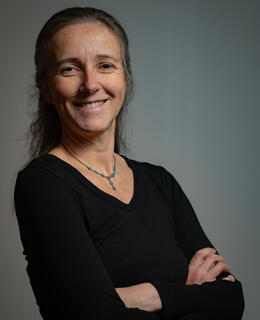
Denis Fougerouse is a Senior Lecturer at Curtin University’s School of Earth and Planetary Sciences (EPS), specializing in structural and economic geology with a focus on nanogeoscience and advanced characterization techniques. He leads research using atom probe tomography (APT) to study mineral interfaces, fluid dynamics, and critical metal distribution. His work spans asteroid mineralogy (e.g., Ryugu samples), ore genesis, and nuclear geology (e.g., Chernobyl zircon re-equilibration). Fougerouse is a key member of Curtin’s Geoscience Atom Probe Facility, advancing applications of APT in geosciences. Research interests include gold remobilization mechanisms, sulfide chemistry, and shock metamorphism. He has contributed to landmark studies on pyrite microtextures, xenotime geochronology, and nanoparticle transport in gold deposits. Fougerouse’s awards include the 2024 Mineralogical Society of America Award for pioneering nanoscale mineral analysis. His interdisciplinary collaborations span planetary science, environmental geochemistry, and materials science, reflecting his role at the forefront of geoscience innovation.
Angelo Peccerillo is a distinguished Full Professor of Petrology at the University of Perugia, Italy, with an extensive academic career spanning multiple Italian universities. He previously served as Full Professor of Petrology at the Universities of Calabria (1993-1997) and Messina (1985-1993), and as Associate Professor of Volcanology (1982-1985) and Assistant Professor (1971-1982) at the University of Florence. He earned his Laurea Degree in Geology from the University of Florence in 1970 and has been a member of Academia Europaea since his election. Peccerillo's research focuses on the petrology and geochemistry of magmatic processes, with particular expertise in igneous petrology, geochemistry, volcanology, orogenic volcanism, and continental rift magmatism. His scholarly work has established him as a leading expert in understanding the complex relationships between mantle processes, crustal interactions, and volcanic activity in the Mediterranean region and beyond. His research methodology integrates petrological, geochemical, and geophysical approaches to develop comprehensive models of magmatic systems. Analysis of Peccerillo's recent publications reveals a consistent focus on magmatic processes across diverse geological settings. His work spans from detailed studies of specific volcanic systems like the Aeolian Islands and Ethiopian Rift to broader investigations of mantle structure and geodynamic processes in the Mediterranean region. A recurring theme is the integration of multiple analytical approaches to model magma plumbing systems, understand mantle composition, and elucidate the geodynamic evolution of volcanic regions, particularly examining the relationships between deep and shallow mantle processes. Antonio Feltrinelli Price 2006 for Earth Sciences, awarded by the National Academy of Lincei, Italy Professor Peccerillo has supervised numerous MSc and PhD students both at his home institution and abroad. His editorial leadership includes serving as Chief Editor of the "European Journal of Mineralogy" from 2006 to 2008 and membership on the editorial boards of several prestigious journals including "Lithos," "Journal of Volcanology and Geothermal Research," "Geological Society of Italy Bulletin," and "Open Mineralogy Journal." He has been actively involved in research evaluation, serving on national and international panels for organizations such as NSF, ESF, CNR, MIUR, and NATO. Peccerillo maintains strong international scientific connections through visiting positions at institutions like the Australian National University, University of Gottingen, and University of Paris XI at Orsay. His leadership extends to professional organizations, having served as President of the Italian Petrology Group and currently as a Member of Academia Europaea. His administrative experience includes serving as Department Head and Coordinator of PhD programs at the Universities of Messina, Cosenza, and Perugia.
Nicole M. Gasparini is an Associate Professor in Tulane University's Department of Earth and Environmental Sciences, School of Science & Engineering. She holds a Ph.D. from MIT (2003) and researches fluvial/tectonic geomorphology, landscape evolution modeling, and climate-erosion interactions using tools like Landlab. Her work investigates sediment transport, river network evolution, and human impacts on landscapes. Research integrates field data with numerical models to quantify erosion processes across diverse environments. Publications demonstrate expertise in geomorphic model development, particularly through contributions to the Landlab toolkit. Recent articles focus on climatic controls on erosion, fault geomorphology, and uncertainty quantification in earth-surface models. Awards: Marguerite T. Williams Award for contributions to geosciences and advocacy against harassment in STEM Leads collaborative projects on landscape response to climate change and mentors students/postdocs in geomorphology and computational modeling.
John H. Shaw is the Harry C. Dudley Professor of Structural and Economic Geology and Professor of Environmental Science & Engineering at Harvard University's School of Engineering and Applied Sciences (SEAS). He specializes in structural geology, earthquake hazards, and geomechanics, with a focus on thrust fault systems, fault-related folding, and seismic risk assessment in regions like California and China. His research integrates field observations, 3D modeling, and geomechanical simulations to understand fault dynamics and their implications for societal safety. Shaw's work emphasizes quantitative analysis of fault geometry, slip rates, and rupture processes. Key projects include modeling ground deformation during earthquakes, assessing seismic hazards in fold-thrust belts, and investigating reservoir-induced seismicity. He leads the Structural Geology & Earth Resources Group and contributes to collaborative initiatives like the Southern California Earthquake Center (SCEC). His articles highlight advancements in fault system modeling, including 3D structural reconstructions, distinct element method applications, and coupling geomechanical models with fluid flow simulations. Recent studies focus on the Wilmington blind-thrust fault beneath Los Angeles, the Ventura fault system, and tectonic evolution of the Canadian Rockies and Qaidam Basin. Shaw's research also addresses interdisciplinary challenges such as stochastic velocity modeling for earthquake ground motion prediction and developing open-source tools like the SCEC Unified Community Velocity Model (UCVM). His work bridges fundamental structural geology with applied seismic hazard mitigation strategies.
Dr. Ernst Willingshofer is an Associate Professor of Tectonics in the Department of Earth Sciences at Utrecht University's Faculty of Geosciences. His research focuses on the coupling of deep crustal and upper mantle processes with surface deformation, particularly in collision zones and rift systems. He employs field studies and physical analogue modelling to investigate lithospheric rheology, strain localization, and tectonic evolution. Research Interests: Willingshofer's work spans tectonics, lithosphere deformation, and structural geology. Key themes include the influence of rheological stratification on strain partitioning, analogue modelling of orogenic systems, and dynamics of basins and orogens. His research has applications in understanding Alpine, Mediterranean, and global tectonic processes. Articles Trend: Recent publications (2021–2024) emphasize analogue modelling innovations, strain partitioning mechanisms, and tectonic evolution of collision zones. Subduction initiation, passive margin dynamics, and intracontinental deformation are recurring themes, with strong focus on Mediterranean and Alpine geology. Teaching & Advising: Coordinates BSc courses ( Deformation and Metamorphism of the Crust , Pyrenean Fieldwork ) and MSc courses ( Modelling Crust and Lithosphere Deformation , Dynamics of Basins and Orogens ). Supervises MSc, BSc, and guided research projects. Laboratory: Leads the Earth Simulation Lab, specializing in analogue modelling of tectonic processes.
Dr. Julie Fosdick is an Associate Professor in the Department of Earth Sciences at the University of Connecticut. She directs the Basin Analysis and Helium Thermochronology Laboratory and serves as Undergraduate Research Coordinator. Her educational background includes: PhD and MS in Geological & Environmental Sciences (Stanford University) BS in Geological Sciences (UC Santa Barbara, high honors) She completed an NSF Earth Science Postdoctoral Fellowship at the University of Arizona. Fosdick's research reconstructs: mountain-building and erosion processes through: Detrital thermochronology of orogenic systems Sedimentary basin analysis Tectonic-sedimentation interactions Paleotopography evolution Her NSF CAREER Award supports studies of sediment recycling in Argentina's Sierras Pampeanas. Current investigations examine: Post-glacial landscape evolution in Arctic Canada Andean hinterland tectonic development San Andreas Fault dynamics through Neogene deposits Greenland paleoclimate from subglacial sediments Her lab employs multi-method geochronology and thermal history modeling. Fieldwork spans global locations including: Argentine Andes Alaskan Range Greenland ice sheet California fault systems She maintains active collaborations across geoscience disciplines.
apl. Prof. Dr. habil. Thomas Seifert is an extraordinary professor in the Professorship for Mineral Deposits and Petrology at the Faculty of Geosciences, Geotechnics and Mining of Technische Universität Bergakademie Freiberg. His academic career spans over three decades with significant contributions to economic geology and mineral deposit research. Since 2011, he has served as an apl. Professor for Geology and Metallogeny of mineral resource deposits, and since 2012 has been in charge of the Professorship for Lagerstättenlehre (mineral deposit science) and Petrology at TUBAF. Seifert's research focuses on metallogeny of Sn-W-Mo-Li-In polymetallic deposits, hydrothermal Au and Ag polymetallic mineralization, Archaean Lithium-Cesium-Tantalum pegmatites, petrology of lamprophyres and related rocks, and Large Igneous Provinces. His work bridges theoretical understanding with practical mineral exploration, particularly for critical raw materials essential for modern technology. His extensive field experience includes research in Germany, Australia, Zimbabwe, Russia, China, Canada, and the United States. His recent publications demonstrate a strong emphasis on critical metal exploration, particularly tin, lithium, indium, and other strategic elements. His research combines detailed mineralogical, geochemical, and geochronological studies to understand the formation processes of economically important deposits. The articles reveal his expertise in both European Variscan deposits and Archaean cratonic settings, with particular attention to the Erzgebirge region of Germany and comparable deposits worldwide. Seifert has received the Julius-Weisbach-Preis in 2009, recognizing his contributions to geoscience. He maintains active memberships in key professional societies including the Society of Economic Geologists (since 1996), International Association for the Genesis of Ore Deposits (since 1993), and Deutsche Gesellschaft für Geowissenschaften (since 2002). His collaborative research extends across international boundaries, working with institutions in Australia, Zimbabwe, Czech Republic, Sweden, and other countries. His work on iron oxide-apatite deposits, critical metal enrichment in skarn systems, and Ni-Cu-PGE sulfide mineralization demonstrates the breadth of his research interests and their relevance to modern mineral exploration challenges.
Professor Alex Copley holds the position of Professor of Tectonics at the Department of Earth Sciences, University of Cambridge. His research focuses on understanding Earth's crustal deformation, tectonic forces, and earthquake dynamics across scales from microcrystalline to continental. He employs integrated approaches combining field geology, geophysical data, numerical modeling, and petrological analysis. His work addresses key questions on earthquake controls, tectonic force origins, and crustal material properties, with global field projects spanning Asia, the Middle East, Europe, Africa, and South America. Research interests include: Earthquake mechanics and seismic hazard mitigation Continental tectonics and mountain belt evolution Crustal rheology and lithospheric dynamics Metamorphic petrology and continental collision processes Large-scale controls on critical mineral distributions Recent publications highlight studies on fault mechanics in Iran, Himalayan shortening, and the thermal evolution of mountain ranges. His work bridges fundamental geoscience with societal applications, including earthquake resilience and tectonic influences on resource formation. Affiliations include Bullard Laboratories and collaborations with global institutions. No formal awards are listed in the provided text, though his research has been published in high-impact journals like Nature and Geophysical Research Letters .
György Hetényi is an Associate Professor at the Institute of Earth Sciences, University of Lausanne, specializing in large-scale geophysics. His research focuses on mountain-building processes, earthquake dynamics, and tectonic deformation of the Himalayas and Alps. He leads the AlpArray project, deploying the largest academic seismic network in Europe. Since 2015, he has held an SNSF Assistant Professorship, advancing to his current role in 2020. Education: Bachelor's in Geophysics at Eötvös University (Budapest) Master's and PhD at École Normale Supérieure (Paris), studying Himalayan deformation Research Interests: Combining seismic and gravity data to model crustal structures, numerical modeling of orogenic processes, and educational seismology initiatives in Nepal. Active in field campaigns across Bhutan, Nepal, and the Ivrea-Verbano Zone. Publications: Over 48 peer-reviewed articles since 2007, emphasizing crustal imaging, seismic tomography, and Himalayan tectonics. Recent work includes participatory gravity modeling challenges and pan-Alpine gravity database development. Awards: Prize of the Chancellery of the Universities of Paris (2007) for doctoral research on Himalayan deformation. Teaching & Outreach: Developed the 'Geophysics Across Scales for Geologists' module in the UNIL-UNIGE program. Co-leads the Nepal School Seismology Network, integrating low-cost seismic education tools. Grants & Projects: AlpArray, DIVE (scientific drilling in Ivrea Zone), and seismic hazard assessments in Bhutan. Collaborates with international networks like ICDP and European seismic consortia. Labs/Teams: Part of the Institute of Earth Sciences (UNIL) and leads the OROG3NY project on mountain-building dynamics.
Prof. Dr. Frederik Tilmann is a leading seismologist at the GFZ German Research Centre for Geosciences (Section 2.4 Seismology) and a professor at the Freie Universität Berlin . His work focuses on seismic waveform analysis to understand geodynamic processes in subduction zones and continental collisions. Current affiliations: Head of Seismology Section, GFZ Potsdam University Professor, Freie Universität Berlin Research interests include: Earthquake source characterization Seismic tomography methods Mantle dynamics and lithospheric deformation Machine learning applications in seismic data analysis Volcano-seismic monitoring Ocean bottom seismology techniques Recent publications highlight advancements in: Full waveform inversion for mantle dynamics Machine learning for seismic phase picking Anisotropy studies in Alpine and Himalayan regions Subduction zone microseismicity analysis Volcano-induced landslide detection Scientific awards include: Feodor-Lynen Fellowship (Humboldt Foundation) Trinity Hall College Staff Fellowship Multiple citations in high-impact journals Collaborative work spans global seismic infrastructure projects like SMART cables, the Collaborative Seismic Earth Model, and the AlpArray network. His methodology innovations in shear wave splitting and depth phase picking have become standards in computational seismology.
David A. Foster is a Professor in the Department of Geological Sciences at the University of Florida, affiliated with the College of Liberal Arts and Sciences. His research integrates thermochronology, structural geology, and petrology to investigate tectonic and magmatic processes, with a recent focus on enhanced weathering of basaltic rocks for carbon sequestration. He leads the Thermochronology Lab, providing analytical services for mineral separation, Ar/Ar dating, and thermal modeling. Research interests span: Tectonics & Geodynamics : Orogenic collapse, terrane accretion, and supercontinent cycles. Thermochronology : Application of temperature-sensitive isotopic systems to crustal evolution. Surface Processes : Links between tectonic uplift, erosion, and carbon capture via rock weathering. His publications emphasize regional tectonics (e.g., Andes, Appalachians, Cordillera), utilizing geochronology, isotope geochemistry, and structural analysis. Recent work explores collisional orogens, basin provenance, and magmatic arcs, with recurring themes of extensional collapse and paleogeographic reconstructions. Educational contributions include co-authoring the comprehensive textbook Geology of National Parks , now in its 8th edition, which synthesizes geological features of U.S. national parks in the context of plate tectonics and landscape formation.
Dr. Attila Balázs is a Senior Researcher and Lecturer at ETH Zurich's Institute of Geophysics, affiliated with the Department of Earth and Planetary Sciences. His research integrates numerical modeling with geological data to investigate tectonic-surface process interactions, focusing on orogen-basin systems and continental deformation. Key contributions include studies on back-arc basins, transform faults, and the Tibetan Plateau's uplift mechanisms. He holds the 2020 Flinn-Hart Award and an ETH Zurich Postdoctoral Fellowship. His work emphasizes geodynamic processes such as mantle delamination, slab dynamics, and crustal deformation patterns. Balázs collaborates with the Geophysical Fluid Dynamics Group and maintains an active research portfolio spanning field observations, seismic analysis, and 3D numerical simulations. Research Foci: Tectonic modeling, basin evolution, mantle dynamics, and crustal rheology Key Regions: Pannonian Basin, Tibetan Plateau, Adriatic Sea, Himalayas His articles highlight interdisciplinary approaches to understanding continental and oceanic tectonics, with recent emphasis on transform fault mechanics, triple junction dynamics, and the interplay between tectonics and climate.
Marcus Christl is a Lecturer at the ETH Zürich Department of Physics and Head of the Laboratory of Ion Beam Physics (LIP) . His academic profile focuses on Accelerator Mass Spectrometry (AMS) , cosmogenic nuclide dating, and environmental applications of isotope geochemistry. Office: HPK H 33, Otto-Stern-Weg 5, 8093 Zürich, Switzerland Phone: +41 44 633 38 84 / +41 44 633 65 07 Email: mchristl@phys.ethz.ch ORCID: 0000-0002-3131-6652 Dr. Christl teaches courses in Accelerator Mass Spectrometry and Quaternary Dating Methods , including: 402-0180-00L Ethics and Scientific Integrity for Doctoral Students in Physics 402-0620-00L Current Topics in Accelerator Mass Spectrometry and Its Applications 402-0621-00L Introduction to Accelerator Mass Spectrometry His research spans multiple disciplines through cosmogenic isotope analysis: Climate Science : Using 10 Be and 14 C records to reconstruct solar activity cycles and climate fluctuations over millennial timescales Geochronology : Developing novel dating techniques using 36 Cl/ 10 Be ratios for ice cores and landscape features Geomorphology : Quantifying erosion dynamics in diverse environments from the Alpine foreland to South African pediments Oceanography : Tracing Atlantic water transport patterns using 129 I– 236 U dual tracers Radiochemistry : Advancing methods for nuclear forensics and environmental pollutant analysis Recent publications reveal trends in: Refining AMS systems for analyzing transuranic elements Quantifying landscape evolution through multi-isotope approaches Understanding ocean circulation pathways using artificial radionuclides Investigating soil dynamics in glaciated and tropical environments Correlating cosmogenic production with sea level and climate changes
Gideon Rosenbaum is Professor in Structural Geology and Tectonics at the University of Queensland's School of the Environment. His research focuses on geodynamic processes at convergent plate margins. BSc Hebrew University (1997) PhD Monash University (2004) Research examines tectonic evolution of orogenic belts using field geology, geochronology, and geophysical data. Current projects investigate arc curvature development, subduction zone segmentation, and continental assembly mechanisms. Recent publications demonstrate advanced applications in geochronology and structural analysis, particularly in Australian and Mediterranean terrains. Work increasingly incorporates geochemical proxies for tectonic reconstruction.
Eva Enkelmann is an Associate Professor at the University of Calgary's Department of Earth, Energy, and Environment. She leads research on orogenic systems evolution using geo- and thermochronology methods. Educational Background: PhD Geology, TU Bergakademie Freiberg, 2005 MSc Geology and Paleontology, University of Freiberg, 2001 Her research examines mountain belt evolution across spatial scales, focusing on interactions between tectonic forces and surface processes. She specializes in multi-method dating of mineral grains and thermochronologic method development. Current projects include geothermal potential assessment in the Liard Basin (NWT), Cu-porphyry exploration in British Columbia, and rock exhumation studies in Yukon. Recent publications focus on methodological advances in detrital thermochronology, including laser ablation (U-Th-Sm)/He dating, zircon triple-dating, and novel data analysis techniques for complex thermal histories. Scientific Awards: Fellow, Geological Society of America (2022) Outstanding Achievements Award, Faculty of Science, University of Calgary (2023) She teaches courses on global tectonics, structural geology, and field methods, including the Canadian Cordillera Field School.