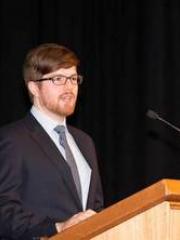
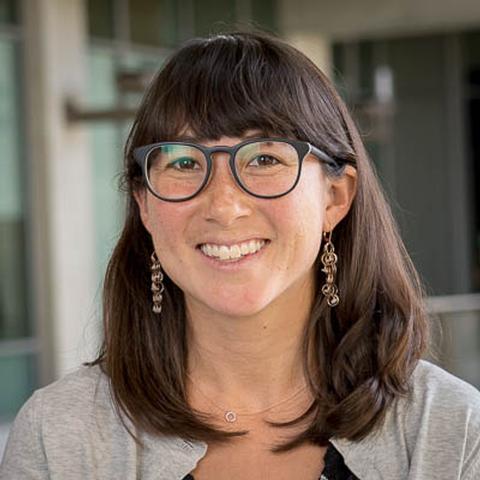
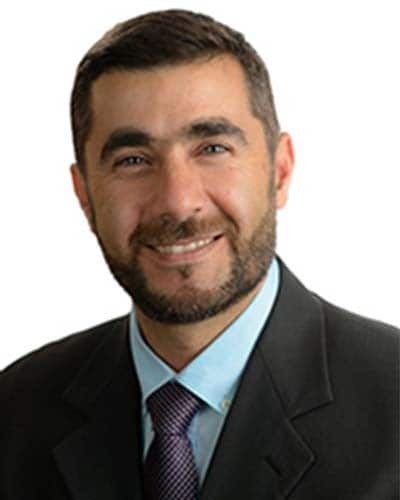
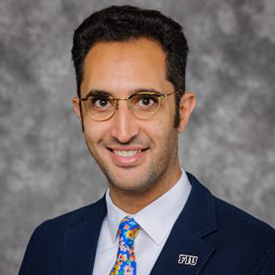
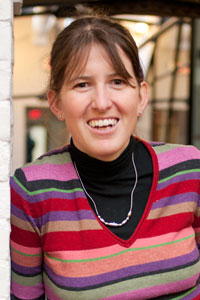
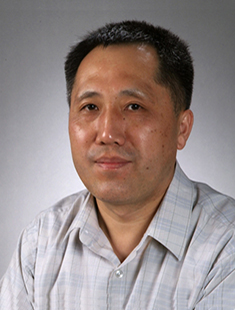
Professor Hendrik Dietz holds the Chair of Biomolecular Nanotechnology at the Technical University of Munich (TUM) , affiliated with the TUM School of Natural Sciences and the Munich Institute of Robotics and Machine Intelligence . His research focuses on constructing synthetic molecular devices and machines through DNA origami and self-assembly principles. Research Themes DNA origami for programmable nanodevices Self-assembly inspired by natural molecular systems Molecular visualization with cryo-EM Applications in medicine and synthetic biology Key Article Trends : Dietz's work explores DNA-based rotary motors, virus-trapping shells, and bio-inspired vesicle production. His recent articles highlight integrations of DNA origami with electrochemical sensing, deep learning, and transmembrane transport systems. Scientific Awards ERC Consolidator Grant (2016) Gottfried Wilhelm Leibniz Prize (2015) Hoechst Lecturer Scholarship (2012) Arnold Sommerfeld Award (2010) ERC Starting Grant (2010) Collaborations and Grants : He receives funding from the Deutsche Forschungsgemeinschaft (DFG) via the Excellence Clusters CIPSM and NIM, SFB863, and the Leibniz Prize program, as well as the European Research Council. Dietz collaborates with institutions like Harvard Medical School and the Max Planck School Matter to Life.
Prof. dr. Martin van Hecke is a group leader at the FOM Institute AMOLF in Amsterdam and a professor of physics at Leiden University. He obtained his PhD in theoretical physics from Leiden University in 1996 and has since led interdisciplinary research at the intersection of experiments, simulations, and theory in soft matter and mechanical metamaterials. Professor of Physics, Leiden University Part-time Group Leader, AMOLF PI of the 'Designer Matter' and 'Modern Mechanics' initiatives His research focuses on harnessing disorder and frustration in materials to design systems where complex behavior emerges, particularly in mechanical metamaterials capable of storing and processing information. Key areas include pattern formation, origami-inspired design, jamming, and the inverse problem in material science. Notable scientific awards include the Vici grant (2011) and the ERC-Advanced grant (2021). His group at AMOLF actively trains PhD students such as Bernat Dura Faulí, Colin Meulblok, and Margot Teunisse, while pioneering collaborations in programmable materials and soft robotics. Selected publications highlight his work on emergent memory , geometric control , non-Abelian mechanics , and information processing in materials . His research infrastructure leverages the AMOLF NanoLab and Transmission Electron Microscope (TEM) facilities.
Kris Dorsey is an Associate Professor at Northeastern University, holding dual appointments in the Department of Electrical and Computer Engineering (College of Engineering) and the Department of Physical Therapy, Movement, and Rehabilitation Sciences (Bouvé College of Health Sciences). She also serves as an MLK Visiting Associate Professor at MIT’s Media Lab. Her research focuses on soft robotics, wearable medical devices, and multifunctional materials. Dr. Dorsey earned her Ph.D. in Electrical and Computer Engineering from Carnegie Mellon University and a B.S. from Olin College. Education: Ph.D., Electrical and Computer Engineering, Carnegie Mellon University, 2013 B.S., Electrical and Computer Engineering, Olin College Her research interests include designing reconfigurable soft sensors for medical and robotic applications, with a focus on integrating flexible electronics and active materials. Notable projects include the PARSES (Programmable and Reconfigurable Soft Engineered Systems) group, which explores soft robotics and wearable technologies for healthcare and industrial use. Key Awards: NSF CAREER Award (2019) Japan-America Frontiers of Engineering Participant (2023) Journal of Micromechanics and Microengineering Emerging Leader (2022) Emerging Leader Abie Award (2022) Dr. Dorsey’s work emphasizes interdisciplinary collaboration, bridging engineering, healthcare, and materials science. She mentors students in Northeastern’s undergraduate research programs and leads initiatives funded by NSF and industry partnerships.
John H. Reif is a Professor of Computer Science at Duke University, with secondary appointments in the Thomas Lord Department of Mechanical Engineering and Materials Science (since 2024) and the Department of Electrical and Computer Engineering (since 2016). His research spans DNA computing , molecular assembly , robot motion planning , and quantum computation , focusing on programmable biomolecular systems and parallel algorithms. Education: Ph.D. in Applied Mathematics, Harvard University (1977) M.S. in Applied Mathematics, Harvard University (1975) B.S. in Applied Mathematics and Computer Science, Tufts University (1973) His recent publications emphasize DNA strand displacement , molecular-scale learning systems , and 3D DNA nanostructures , with applications in diagnostics, data storage, and nanofabrication. Articles highlight innovations in error-resilient DNA circuits, programmable self-assembly, and algorithmic modeling of molecular processes. Scientific Awards: Fellow of the American Association for the Advancement of Science (AAAS) Fellow of the Association for Computing Machinery (ACM) Fellow of the Institute of Electrical and Electronics Engineers (IEEE) He has supervised numerous Ph.D. students and postdoctoral researchers , including Rajiv Nagipogu (adaptive molecular systems) and Xin Song ( Daniel Fu , DNA computation on cell membranes). His work is funded by grants from the Defense Advanced Research Projects Agency (DARPA) and the National Science Foundation (NSF) , with recent focus on molecular-scale AI and DNA polymerase reaction networks. Reif co-founded Domus Diagnostics , developing affordable infectious disease testing solutions. He served as General CoChairman of FNANO24 and contributes to teaching courses like Computational Complexity and Molecular Assembly and Computation .
Associate Professor Joe Gattas is affiliated with the University of Queensland's School of Civil Engineering , where he leads the Folded Structures research group. His work bridges origami-inspired engineering , computational building design , and advanced manufacturing , with a focus on lightweight/modular structures and timber engineering . Education: BEng (2009) and PhD (2013) from the University of Queensland and University of Oxford, respectively. Research interests emphasize digital fabrication , hybrid materials , and structural innovation . His recent publications highlight trends in timber-CFRP composites , self-shaping structures , and value chain optimization for sustainable timber use. Scientific awards include the prestigious John Monash Scholarship . He actively supervises PhD and Master’s students in projects related to timber composites , structural optimization , and low-cost housing . Joe contributes to ARC Research Hub initiatives , co-leading Manufacturing Innovation and Value Chain Innovation nodes, and develops open-source tools like TimberTracker to visualize timber supply-demand dynamics.
Laura Treers is an Assistant Professor in the Department of Mechanical Engineering at the University of Vermont (UVM), affiliated with the UVM CREATE Center. She holds a PhD from UC Berkeley (2023) and a B.S. from MIT (2018). Prior to UVM, she was a postdoctoral scientist at Georgia Tech in Physics and Biological Sciences. Her research focuses on robotic mobility in complex terrains, combining robotics, physics, and biomechanics. The Interact Lab at UVM explores terramechanics, experimental robotics, and complex terrains, with key interests in granular media modeling, mechanism design, and 'robophysics' principles. Her work bridges robotics, biology, and environmental systems. Her academic awards include the 2023 Outstanding Graduate Student Instructor Award, 2019 National Defense Science Fellowship, and MIT's Thomas Sheridan Prize. She teaches courses like Control Systems (ME 3320A) and Mechatronics (ME 2990). Committed to equity in STEM, she mentors underrepresented students in robotics and science outreach programs. Key research themes include collective behavior in robotic and biological systems, granular material manipulation, and field robotics applications. Her lab's projects emphasize interdisciplinary innovation, leveraging biological insights to enhance robotic performance in unstructured environments.
Tania Morimoto is an Associate Professor in the Department of Mechanical and Aerospace Engineering at the University of California San Diego. Her research focuses on the design and control of flexible and soft robots for medical and exploration applications, including personalized surgical robots and intuitive human-in-the-loop interfaces. She leads efforts in haptic device development for education, notably creating the Hapkit and H3Kit systems used in STEM labs globally. She holds a B.S. in Mechanical Engineering from MIT, and M.S. and Ph.D. from Stanford University's CHARM Lab. Her work bridges robotics, haptics, and medical engineering, with key innovations in continuum robot design, wireless sensing, and surgical teleoperation systems. Key research areas include soft robotics for minimally invasive surgery, wearable haptic devices, and scalable pneumatic control systems. Her team has developed novel methods for patient-specific robot design using preoperative medical imaging, along with virtual reality interfaces for surgical planning. Notable achievements include the NSF CAREER Award (2022) for work on handheld continuum robots, and contributions to wireless force sensing technologies. Her educational initiatives have expanded access to hands-on robotics learning through low-cost hardware kits adapted for remote instruction.
Professor Ali Abbas is a leading academic and researcher in chemical engineering and sustainable systems, currently serving as Professor and Acting Head of the School of Chemical and Biomolecular Engineering at the University of Sydney. He also directs the Waste Transformation Research Hub and serves as Deputy Director for Industry, Innovation & Commercialisation at Sydney Nano. His research focuses on advancing circular economy principles, waste-to-value technologies, and sustainable energy solutions, with expertise in carbon capture, biomass gasification, nanotechnology, and materials science. He recently became Australia’s first Chief Circular Engineer at Circular Australia, driving national transition to a circular economy by 2030. Professor Abbas has pioneered innovations in solar-powered carbon capture systems, phase change material applications, and bio-based materials. He collaborates closely with industry and government to integrate circular economy principles into infrastructure and industrial processes. His work emphasizes eliminating waste, maximizing material reuse, and regenerating natural systems through interdisciplinary approaches combining chemical engineering, materials science, and policy frameworks. Key roles: Chief Circular Engineer (Circular Australia), Acting Head of School (University of Sydney), Director of Waste Transformation Research Hub Research themes: Circular economy frameworks, carbon neutral energy systems, sustainable materials, waste valorization Notable projects: Solar-driven carbon capture, biomass gasification systems, DNA origami nanomaterials, recycled construction materials His interdisciplinary approach bridges academia, industry, and policy to address global challenges in sustainability, with a focus on scalable solutions for decarbonization and resource efficiency.
Mohamed ElZomor, Ph.D., is an Associate Professor and Graduate Program Director in the Department of Civil Engineering at Florida International University (FIU). His research focuses on sustainability of the built environment, disaster resilience, social sustainability, engineering education, and equitable infrastructure development. He actively integrates innovative pedagogical approaches to address challenges in construction management and workforce development. His work emphasizes curriculum development for disaster resilience, mental health in STEM education, and leveraging disruptive technologies for efficient disaster response. He advocates for infrastructure equity through frameworks like the Envision rating system and explores origami-based solutions for temporary post-disaster housing. ElZomor also investigates barriers and drivers for sustainable practices in construction and promotes inclusive education for underrepresented populations in engineering fields. Key research interests include: sustainable construction practices, social sustainability (health & wellbeing), education pedagogy reforms, disaster preparedness, and integrating AI/robotics into construction curricula. His projects often bridge academia and industry to foster real-world applications of sustainable and resilient infrastructure concepts. Notable contributions include developing frameworks for front-end planning in infrastructure projects, analyzing post-disaster reconstruction challenges, and promoting minority student success through targeted communication and skill-building programs. He emphasizes interdisciplinary approaches to address global challenges such as climate change and urban inequities.
Chenxiang Lin is an Associate Professor in the Department of Cell Biology and Biomedical Engineering at Yale School of Medicine. He holds a PhD from Arizona State University (2009) and a BS from Peking University (2004), with a postdoctoral fellowship at Harvard Medical School (2012). His research focuses on biophysics, nanotechnology, and membrane biology, particularly using DNA origami to engineer synthetic systems for studying cellular processes like nuclear transport and membrane dynamics. Lin is also the Associate Director of Yale’s Nanobiology Institute. Education : PhD, Arizona State University, 2009 BS, Peking University, 2004 Research Fellowship, Harvard Medical School, 2012 Research Interests : Lin’s lab develops DNA-based nanodevices to study molecular mechanisms in cells. Key areas include: Engineering synthetic nuclear pore complexes using DNA origami Investigating lipid flow and membrane tension dynamics Designing programmable nanopores and biosensors Exploring HIV-1 nuclear entry mechanisms Awards : Odyssey Award (2020) National Institutes of Health Director’s New Innovator Award (2014) Lab Activities : His lab is located at the West Campus Integrative Science & Technology Center. Current projects include modeling viral entry pathways and developing nanoscale tools for biomedical applications.
DAI Jiansheng is a Chair Professor at Southern University of Science and Technology (SUSTech) and Director of the Robotics Research Institute. He is a Fellow of the Royal Academy of Engineering (FREng), Fellow of the Academia Europaea, and holds multiple fellowships including IEEE, ASME, RSA, and IMechE. As Editor-in-Chief of the international journal Robotica, he has established himself as a leading authority in mechanisms and robotics research. His educational background includes a PhD from the University of Salford (1989-1993), a Master's degree from Shanghai Jiao Tong University (1982-1984), and a Bachelor's degree from the same institution (1978-1982). His academic journey has taken him from postdoctoral work at Salford University to research positions at Unilever Liverpool Research Centre before becoming a faculty member at the University of Sunderland and ultimately King's College London, where he served as Reader and then Chair Professor from 2007 until his current position at SUSTech. Professor Dai's research spans theoretical kinematics, screw theory, Lie algebra, and their applications to metamorphic and reconfigurable mechanisms. His pioneering work bridges the gap between versatile but expensive robots and efficient but non-flexible machines. His research interests include origami-inspired robotics, rehabilitation robotics for ankle treatment, soft robotics, and industrial applications in packaging and manufacturing. His theoretical framework has enabled significant advances in reconfigurable parallel mechanisms and metamorphic robotics. His extensive publication record shows a clear progression from fundamental theoretical work on screw algebra and Lie groups to practical applications in rehabilitation, manufacturing, and soft robotics. Recent publications demonstrate increasing focus on soft robotics, variable stiffness actuators, and continuum robots with Shape Memory Alloy applications, while maintaining strong theoretical foundations in screw theory and kinematic analysis of metamorphic mechanisms. ASME Mechanisms and Robotics Award (2015) ASME Machine Design Award (2020) IFToMM Excellence Award (2023) Tianjin Municipal Natural Science First Prize (2021) Crossley Award (2018) AT Yang Award in Theoretical Kinematics (2019) Professor Dai has supervised over 50 PhD students who now hold faculty positions at world-leading universities including University College London, Queen Mary University London, Purdue University, and Wollongong University. His research has been supported by numerous grants enabling the establishment of advanced robotics laboratories and international collaborations. He founded the IEEE Triennial International Conference on Reconfigurable Mechanisms and Robots (ReMAR), creating a major platform for international scholarly exchange in this specialized field. His research group maintains strong industry partnerships with companies including Cambridge Consultants, Goldman Sachs, and Amazon. The Robotics Research Institute he directs at SUSTech serves as a hub for interdisciplinary research, bringing together experts in mechanical engineering, computer science, biomedical engineering, and materials science. The institute focuses on both fundamental theoretical advances in mechanism design and practical applications in healthcare, manufacturing, and service robotics, with particular emphasis on metamorphic and reconfigurable systems that can adapt to multiple tasks.
Katia Bertoldi is the William and Ami Kuan Danoff Professor of Applied Mechanics at Harvard University's John A. Paulson School of Engineering and Applied Sciences . She leads the Bertoldi Group: Solid Mechanics , focusing on mechanical metamaterials, multistable systems, and soft robotics. Her work integrates applied mathematics, materials science, and nonlinear dynamics to design architected materials with programmable properties. Research interests include: Mechanical metamaterials with tunable properties Multistable structures for energy absorption and reprogrammability Soft robotics leveraging origami/kirigami principles Machine learning-driven design of complex materials Recent work emphasizes reprogrammable systems (e.g., magnetic and thermal actuation) and textile-based metamaterials for wearable applications. Her team collaborates across disciplines, addressing challenges in biomedical devices, robotics, and sustainable manufacturing. Key contributions include: Developing metafluids with programmable shell instabilities Designing inflatable origami actuators for meter-scale reconfigurable structures Creating knitted fabrics with tunable mechanical responses Her lab explores energy-efficient actuators, adaptive fluid networks, and AI-driven material discovery, aiming to bridge theory and real-world applications.
Andreas Peil is a Researcher and Project Leader of the RISC project ('Hybrid DNA Nanomotors') at the 2nd Physics Institute of the University of Stuttgart. His work focuses on the intersection of nanotechnology, biophysics, and materials science, particularly in DNA-based nanomaterials and their applications in diagnostics, therapeutics, and optoelectronics. He leads research on DNA origami architectures, dynamic nanoscale systems, and plasmonic materials. His recent projects include the development of transformable plasmonic helices and modular rotary nanodevices. Peil’s research interests span DNA nanomotors, photonic nanomaterials, and lipid membrane modulation using DNA origami networks. He has contributed to advancements in gold nanoparticle-mediated nanoarchitectures and enzymatic functionalization of polyketide biosynthesis pathways. His work frequently appears in high-impact journals like Angewandte Chemie and Small . While no scientific awards are explicitly listed, his publications reflect innovation in biomimetic systems and nanomechanical designs. He advises students in experimental nanotechnology and collaborates on grants related to hybrid nanomaterials. His lab focuses on translating fundamental research into applied technologies for diagnostics and drug delivery systems.
Jeong-Hyun Cho is an Associate Professor in the Department of Electrical and Computer Engineering at the University of Minnesota. He leads the 3D Micro and Nano Engineering Science Group , focusing on nanoscale self-assembly, graphene-based metamaterials, and energy storage systems. His lab develops innovative 3D fabrication techniques using electron beam manipulation and microwave-driven assembly. Education: Ph.D. in Engineering Science, Washington State University (2007) M.S. in Engineering, Washington State University (2004) B.S. in Control and Instrument Engineering, HoSeo University (2001) Research Interests: Dr. Cho's work bridges nanomaterials, plasmonics, and microengineering. Key themes include: Dynamic 3D self-assembly of nanostructures using polymers, graphene, and silicon Terahertz metamaterials for sensing and optical confinement Li-Ion battery innovations via nanowire stabilization Electron-beam nanomanipulation for reconfigurable devices Publication Trends: His recent articles (2020-2024) emphasize multifunctional 3D nanostructures , with recurring themes in graphene plasmonics, reversible self-assembly, and terahertz applications. Earlier work (2017-2019) established foundational methods in nanoscale origami and plasmonic field enhancement. Scientific Awards: NSF CAREER Award (2015) for 3D graphene research 6× Materials Research Society Best Poster Awards (2011-2024) Russell J. Penrose Excellence in Teaching Award (2024) Los Alamos National Laboratory Achievement Award (2011) Advising & Grants: Mentors PhD/MS students in nanofabrication; notable advisees include Dr. Chunhui Dai (UC Berkeley). Secured NSF funding for CAREER: Fabricating Free-Standing 3D Graphene (2015-2020). Lab & Team: Directs a multidisciplinary team developing 3D nanodevices. Collaborations include national labs (Los Alamos) and industry partners. The lab specializes in in-situ nanoscale monitoring and plasmon-enhanced sensing platforms.
Qi Zheng is a Professor at Texas A&M University's Department of Epidemiology & Biostatistics, with research interests in Mathematical Modeling of Biological Processes, Applied Stochastic Processes, Application of Computer Algebra, and Estimation of Microbial Mutation Rates. He holds a PhD in Statistics (1993) and a BA in Mathematics (1982) from Zhejiang University. Education: PhD in Statistics from Texas A&M University (1993), BA in Mathematics from Zhejiang University (1982) Research Interests: Mathematical Modeling of Biological Processes, Applied Stochastic Processes, Application of Computer Algebra, Estimation of Microbial Mutation Rates Teaching Interests: Biostatistics, Categorical and Longitudinal Data Analysis, Statistical Computing Contact: qzheng@tamu.edu | Phone: 979.436.9398 Recent publications focus on swarm robotics, mixed-reality interfaces, and reconfigurable robotic mechanisms. Key themes include entropy-based consensus algorithms for artificial swarms, adaptable sensorimotor systems for human-swarm interaction, and innovative designs for multiterrain locomotion and robotic grasping. These works bridge theoretical stochastic modeling with practical applications in robotics and computational systems.