
Francisco Criado is a researcher with significant contributions to computational geometry, discrete mathematics, and applied algorithm design. His work spans theoretical and applied domains, including convex optimization, Voronoi diagrams, and geometric modeling in gas dynamics and earthquake decision-making frameworks. Collaborators : Francisco Santos, Sebastian Pokutta, Michael Joswig Key Venues : Discrete & Computational Geometry , Foundations of Computational Mathematics , NeurIPS Research Interests focus on geometric algorithms, polyhedral complexes, and applications of fuzzy logic. His 2025 papers explore convex hulls, zonotopes, and tropical geometry, while earlier works address gas dynamics and decision-making models. Article Trends reveal expertise in high-dimensional geometry, combinatorial optimization, and numerical methods. He frequently employs randomized and linear convergence algorithms in 2022–2025. Advising and Grants : No explicit data provided, but his extensive co-authorship network suggests collaborative research leadership.
جستوجوی استاد و پژوهشگر
استاد راهنما، استاد دانشگاه یا پژوهشگر مناسب برای مسیر پژوهشیتان را پیدا کنید و با او ارتباط بگیرید.
نمایش ۱۸۱-۱۹۲ از ۱۹۲ استاد راهنما
اطلاعات این پروفایلها از صفحات عمومی دانشگاهها جمعآوری شده و ممکن است بهروز نباشد.
- Macroeconomics
- Risk Analysis
- Economic Policy
- +۴ مورد دیگر
Prof. Mario Menegatti is a full Professor ("Professore di I fascia") at the Department of Economic and Business Sciences, University of Parma. He has been teaching Macroeconomics and Advanced Macroeconomics courses in the First Cycle Degree in Economics and Management for over a decade, with appointments confirmed through the academic year 2025/2026. Macroeconomics (2014-2025) Advanced Macroeconomics (2015-2025) His research spans multiple economics subfields including: Risk analysis and decision theory Precautionary saving under multiple risks Behavioral economics and uncertainty modeling Environmental risk impacts on consumption Fiscal policy and public investment under uncertainty Retail economics and consumer behavior Recent publications explore topics such as: Time risk discounting preferences Interaction between prevention and health economics Variability in punishment and crime deterrence Convenience drivers in online grocery retailing Optimal prevention and cure strategies under uncertainty His work connects theoretical developments with practical applications, covering both financial and environmental risk domains. His research appears in journals covering economics, risk analysis, and public policy, with a particular focus on understanding how individuals and institutions make decisions under complex risk environments.
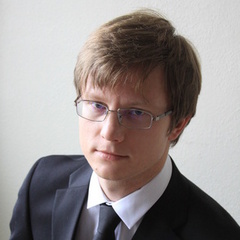
Denis Chetverikov is a Professor of Economics at the University of California, Los Angeles (UCLA). His research focuses on econometric theory, with emphasis on high-dimensional models, empirical process theory, bootstrap methods, and applications to asset pricing and policy analysis. He has published in top journals such as Econometrica , Review of Economic Studies , and Annals of Statistics . Education: PhD from the Massachusetts Institute of Technology (MIT). His work bridges theoretical econometrics and computational methods, addressing challenges in modern data analysis. Key contributions include advancements in nonparametric estimation, rank-based inference, and regularization techniques for high-dimensional datasets. Research trends in his articles emphasize methodological innovations for handling complex economic data structures, including factor models, quantile regression, and robust inference frameworks. He has developed statistical software tools like the csranks R package for rank-based analysis. His grants and lab affiliations (if any) are not explicitly detailed in the provided text.
Tolulope Rhoda Fadina serves as an Assistant Professor in the Department of Mathematics at the University of Illinois Urbana-Champaign, focusing on quantitative risk management and mathematical finance. Her work bridges theoretical frameworks with practical applications in insurance and financial risk assessment. Her research spans Risk Measures , Value at Risk , Expected Shortfall , and Quantile Mathematics , with emphasis on uncertainty modeling and multivariate risk structures. Key contributions include minimalist axiomatizations of quantiles and frameworks for risk measurement under parameter uncertainty, addressing critical gaps in reinsurance optimization and dependence modeling. Analysis of her 2019-2025 publications reveals consistent innovation in foundational risk theory, with high-impact work in journals like Finance and Stochastics and Insurance: Mathematics and Economics . Her research integrates probability theory, operations research, and actuarial science to solve complex financial uncertainty problems. No scientific awards were documented in the available profile. Student advising activities and research grant details were not specified in the provided materials. Collaboration networks indicate international research partnerships, but no dedicated laboratory or team affiliations were mentioned.

Liyuan Linمشاهده پروفایل
مدرس ارشد
Liyuan Lin is a Senior Lecturer in the Department of Econometrics & Business Statistics at Monash University's Faculty of Business and Economics. He holds a PhD in Actuarial Science from the University of Waterloo, awarded in 2024. His academic work centers on advanced risk modeling and actuarial theory. Research Interests: Actuarial Science Quantitative Risk Management Dependence and Risk Aggregation Stochastic Control Risk Measures and Diversification Reinsurance Strategy and Market Competition His recent publications, appearing in top journals such as Management Science , Mathematics of Operations Research , and Scandinavian Actuarial Journal , reflect a strong focus on theoretical and applied aspects of risk modeling. Key themes include diversification measurement, optimal reinsurance under competition, calibration of risk models, and structural dependence in multivariate settings. His work often involves deep mathematical analysis and collaboration with leading scholars in actuarial mathematics. Scientific Awards: No awards listed in the provided text. Advising and Grants: There is no explicit information available regarding student supervision, grant funding, or advisory roles. However, given his active publication record and position as a Senior Lecturer, it is likely that he mentors students and participates in research projects, though specifics are not disclosed in the source material. Labs and Research Teams: No specific lab or research group is mentioned. However, his collaborations suggest active participation in the broader actuarial and quantitative risk research network, particularly with researchers at institutions connected to the University of Waterloo and international actuarial research centers.

Luca Daniel is a Professor at the Massachusetts Institute of Technology (MIT), affiliated with the Research Laboratory of Electronics (RLE) and the Department of Electrical Engineering and Computer Science. His research focuses on computational modeling, simulation, and design of complex systems, with applications in electronics, biomedical engineering, and machine learning. He leads the Computational Prototyping Group, which develops algorithms and software for model order reduction, integral equation solvers, and uncertainty quantification. Professor Daniel holds a Ph.D. from the University of California, Berkeley (2003), and has authored numerous influential papers in top conferences and journals. His work has been recognized with awards such as the APS Best Paper Award (2023), EPEPS Best Conference Paper Award (2020), and the ACM Outstanding Ph.D. Dissertation Award in EDA (2016). His research interests include electromagnetic simulation, biomedical systems, stochastic methods, and machine learning robustness. He has advised over 20 PhD students and developed open-source tools like FastMaxwell and CAPLET for electromagnetic analysis. His teaching spans courses on modeling, simulation, signals and systems, and numerical methods.
Julia Kowalski serves as Professor and Chair of the Department of Methods of Model-Based Development in Computational Engineering at RWTH Aachen University's Faculty of Mechanical Engineering. She holds dual appointments on the Steering Committees for the university's Profile Areas in Production Engineering (ProdE) and Modeling & Simulation Sciences, operating from the Collective Building of Mechanical Engineering in Aachen, Germany. Her research integrates computational engineering with geohazard prediction and cryorobotics, developing advanced numerical methods for multiphysics problems including ice-penetration probes, landslide susceptibility mapping, and wind-energy systems. She pioneers machine learning applications that bridge physical models with engineering design while championing FAIR data principles across cryosphere and geohazard research domains. Current projects focus on model coupling techniques for environmental flows and space exploration technologies. Analysis of her 15 most recent publications reveals dominant trends in surrogate modeling for geotechnical stability, cryorobotic exploration systems, and FAIR data frameworks for environmental science. Her work consistently bridges machine learning with physical modeling across renewable energy, planetary science, and natural hazard mitigation through international collaborations like the TRIPLE project. Scientific awards are not documented in provided materials, though her leadership in DLR-funded space exploration initiatives and editorial roles in topical collections indicates significant recognition. As department chair, she oversees graduate advising and research direction within her computational engineering group, with active grant funding evidenced by German Space Agency collaborations and multi-institutional projects targeting geohazard prediction and cryosphere exploration. Her work demonstrates strong industry-academia-government partnerships. Kowalski leads the Methods of Model-Based Development research group, which operates as an integrated lab for numerical simulation, model coupling, and data-driven engineering solutions. Future work focuses on enhancing uncertainty quantification in geohazard models, advancing cryorobotic technologies for extraterrestrial environments, and developing robust frameworks for FAIR geoscientific data.
David Moens is Full Professor and Chair of the Department of Mechanical Engineering at KU Leuven's Faculty of Engineering Technology. He leads the Mecha(tro)nic System Dynamics (LMSD) research group at De Nayer Campus, where his research focuses on reliability engineering, structural dynamics, and computational mechanics. Moens serves in multiple leadership roles including membership in the university's Research Policy Council and heads Subdivision 10 of the De Nayer Campus. His research integrates computational mechanics with uncertainty quantification methods to address challenges in mechanical system reliability. Primary research domains include: Non-deterministic numerical analysis techniques for structural systems Fatigue and lifetime prediction methodologies Spatial uncertainty quantification in composite materials Physics-informed machine learning for engineering applications Robust design optimization under uncertainty Moens' recent publications demonstrate strong emphasis on computational uncertainty frameworks with applications spanning composite pressure vessels, manufacturing process twins, and neural network uncertainty estimation. Research consistently intersects finite element analysis, experimental validation, and emerging machine learning techniques to solve reliability challenges in mechanical systems. He leads significant research initiatives including RISQ (Random and Interval Spatial Uncertainty Quantification, 2025-2027) and projects on hydrogen storage vessel reliability (2024-2028). As primary supervisor for multiple PhD candidates, Moens actively contributes to academic training through courses including Reliability of Mechanical Systems, Dynamic Behavior of Machines, and Design for Safety and Reliability.

Mehrdad Naderi is a Lecturer in Statistics at the Department of Mathematics, Physics, and Electrical Engineering , Northumbria University . His academic journey includes a PhD in Mathematical Statistics from Shahid Bahonar University of Kerman (2017) and postdoctoral research at National Chung Hsing University (Taiwan), Ferdowsi University of Mashhad (Iran), and University of Pretoria (South Africa). Education: PhD in Mathematical Statistics, Shahid Bahonar University of Kerman (2017) His research focuses on applied statistical inference with emphasis on classification , cluster analysis , factor analysis , finite mixture models , and EM algorithm for robust estimation. He has contributed to multivariate and matrix-variate analysis, particularly in handling outliers and asymmetrical data structures. Recent work includes three-way data clustering using matrix-variate normal distributions and robust Bayesian inference for censored mixture models. His publications demonstrate expertise in distribution theory, statistical computation, and applications to financial data, environmental modeling, and astrophysics. Current collaborations span multiple institutions, focusing on heavy-tailed distributions and computational methods for complex data structures.
Clélia de Mulatierمشاهده پروفایل
استادیار
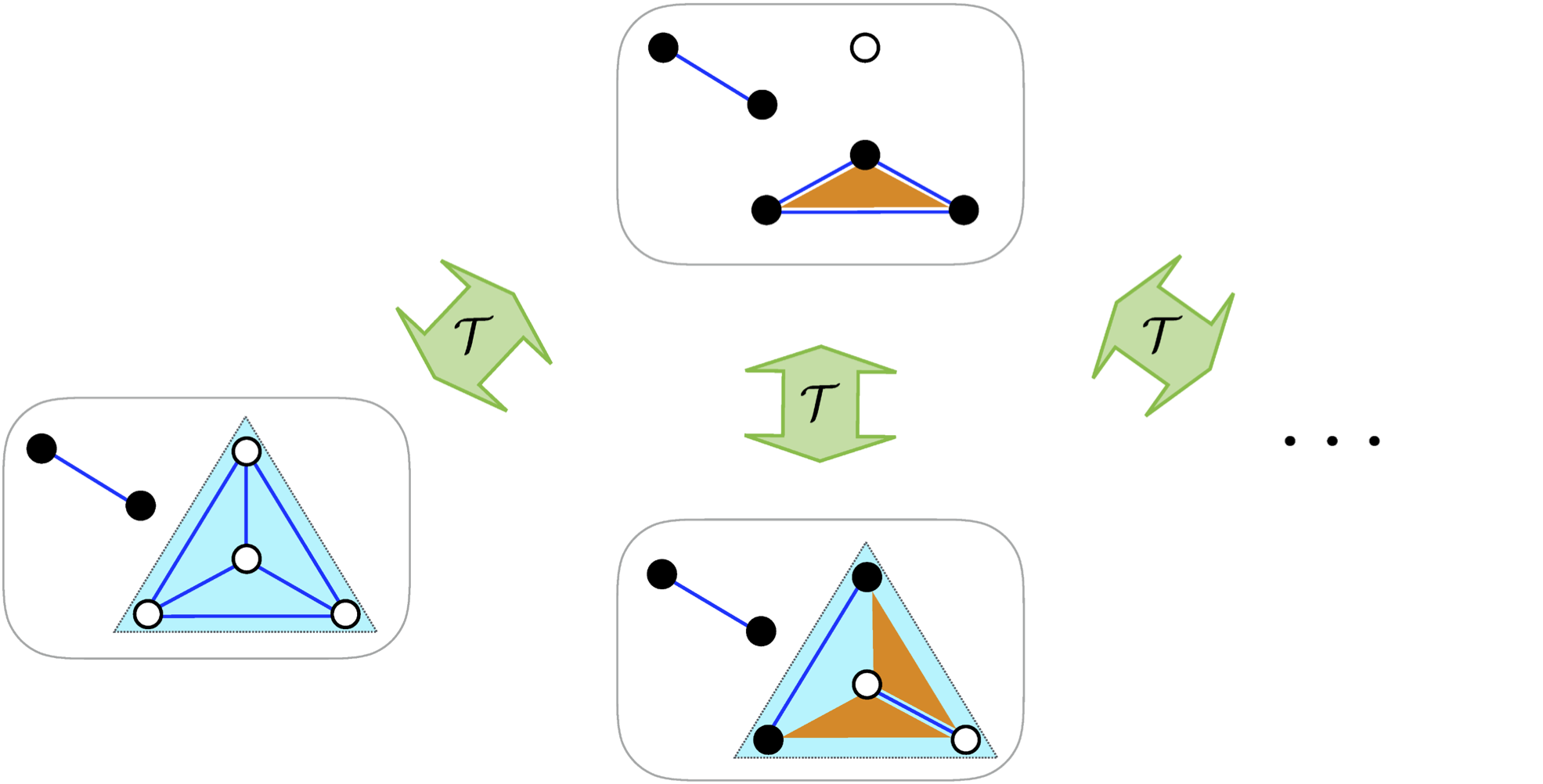
Clélia de Mulatier is an Assistant Professor at the University of Amsterdam , affiliated with both the Institute for Theoretical Physics and the Informatics Institute . She leads research at the intersection of statistical physics, information theory, and computer science , focusing on theoretical and numerical methods for complex systems . Her work spans collaborations with experimentalists in neuroscience and biology , and she actively participates in educational programs across multiple Dutch universities. Research Labs : Computational Soft Matter Lab, Computational Science Lab Affiliations : Dutch Institute for Emergent Phenomena (DIEP), Netherlands Platform Complex Systems (NPCS) Her research develops minimally complex spin models for high-order data analysis , applying exact Bayesian model selection to uncover hidden variable communities in binary datasets. This work has produced open-source tools like MinCompSpin and MinCompSpin_Greedy for different system sizes. Publications demonstrate expertise in tensor networks for dimensional reduction , epidemic modeling , and branching random walks in confined environments . Teaching includes Python programming , complex systems theory , and statistical inference for physics students across multiple institutions. She serves as program committee member for International Conference on Computational Science and organizes academic discussions through initiatives like Behind the CV: story from a Physicist .

Ioannis Konstantaras is an Associate Professor at the Department of Business Administration, University of Macedonia, Thessaloniki, Greece, holding this position since July 2016. He contributes to the Master in International Business, Master in Business Administration, and Master in Business Analytics and Data Science programs. His academic qualifications include: B.Sc. in Mathematics from Aristotelian University of Thessaloniki (1999) M.Sc. in Statistics & Operations Research from University of Ioannina (2001) Ph.D. in Operations Research from University of Ioannina (2006) Konstantaras specializes in mathematical modeling and optimization of inventory systems for supply and reverse logistics chains. His research addresses production planning, deteriorating items, imperfect quality products, and recovery processes through operations research methodologies. He develops analytical models for optimizing decision-making in complex logistics environments. His publication record (2010-2014) shows concentrated research on inventory models for deteriorating items, lot-sizing in recovery systems, and pricing strategies for reverse logistics. Key contributions include extensions to Economic Order Quantity models, optimization of two-warehouse systems, and integration of inspection learning effects in quality control. He serves as Co-Editor for the International Journal of Systems Science: Operations & Logistics since January 2014 and has reviewed for numerous international journals. Konstantaras led the research program "Logistics Management: Quantitative Methods for Inventory Management" funded by the ARCHIMEDES program under EPAYAEK II. No publicly available information lists his doctoral advisees.
Professor Nick Chater serves as Professor of Behavioural Science within the Behavioural Sciences Group at Warwick Business School (WBS), University of Warwick. His academic profile spans cognitive science, behavioral economics, and decision-making psychology, with significant contributions to understanding the fundamental mechanisms of human thought and behavior. Chater's research interests encompass cognitive science, behavioral economics, and the psychology of decision-making. He has pioneered work challenging traditional views of deep, unconscious mental processes, most notably through his influential 2018 book "The Mind is Flat: The Remarkable Shallowness of the Improvising Brain." His research program investigates how people process information, make decisions under uncertainty, and develop language and social coordination mechanisms. Key themes include the role of noise in cognition, Bayesian approaches to modeling human thought, and the application of behavioral insights to public policy design. Chater's extensive publication record reveals a strong trend toward interdisciplinary integration of computational modeling with empirical research. His recent work demonstrates consistent engagement with cutting-edge developments across cognitive science, particularly in Bayesian cognitive modeling and behavioral public policy. The S-Frame agenda for behavioral public policy research represents a systematic approach to translating behavioral insights into policy design. His collaborative network spans psychology, economics, linguistics, and artificial intelligence, reflecting the interdisciplinary nature of modern cognitive science. As an educator, Chater teaches "Behavioural Sciences for the Manager" for Executive MBA programs and "Judgement and Decision Making" for various MSc programs at Warwick Business School. His teaching focuses on applying behavioral science principles to business contexts, helping students understand how cognitive biases and heuristics influence managerial decision-making. His work on coordination in dynamic interactions and moral cognition provides valuable insights for understanding organizational behavior and team dynamics.