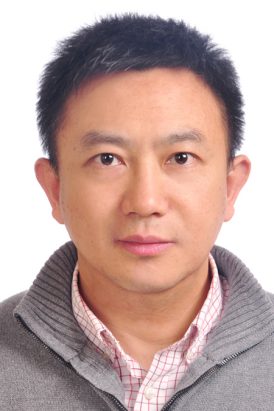
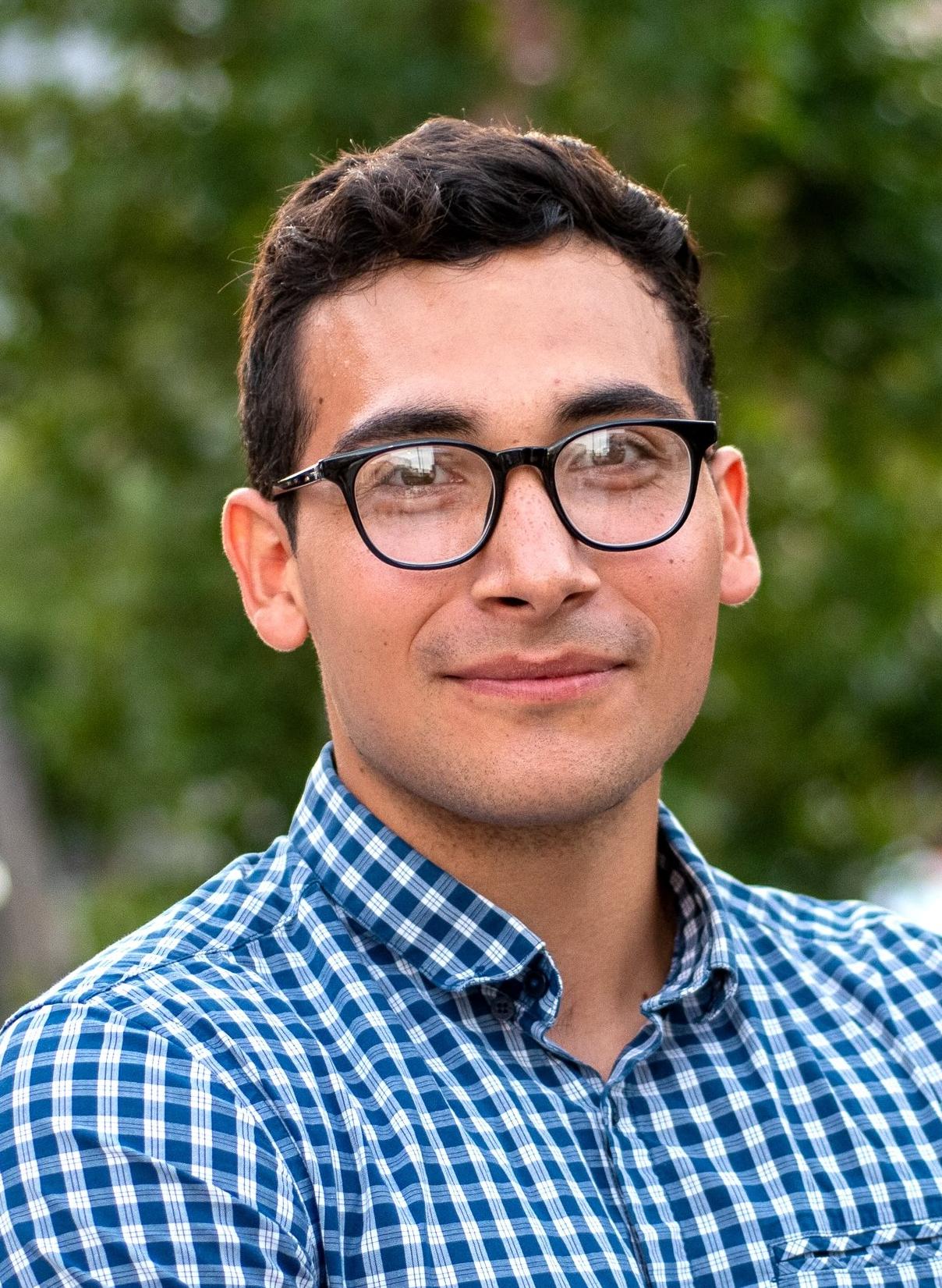
Liping Liu is a Professor in the Department of Management at The University of Akron's College of Business. He holds a Ph.D. in Business from the University of Kansas (1995), Master of Engineering in Systems Engineering (1991), and dual bachelor's degrees in Applied Mathematics (1986) and River Dynamics (1987). Ph.D., University of Kansas MS, Huazhong University of Science and Technology B.E., Wuhan University BS, Huazhong University of Science and Technology His research spans Artificial Intelligence , Electronic Business , Systems Analysis , Data Quality , and Belief Function Theory . He pioneered coarse utility theory and linear belief functions , now taught in top Ph.D. programs across multiple disciplines. Key trends in his publications include Belief Function Applications (2012-2024), Medical Data Systems (2003-2015), and Decision Theory (2004-2014). Recent works focus on Gamma Belief Functions (2024) and computational improvements in linear belief function operations (2019-2016). Scientific contributions recognized via: Microsoft Azure Educator Grant (2014-2016) Inclusion in Who's Who in America (2010-2013) and Who's Who in the World (2011-2013) As an editor and committee member for major conferences (INFORMS, AMCIS, Belief Functions conferences), he bridges academic research with practical systems implementation in e-business and healthcare domains.
Ji Zhu is the Susan A. Murphy Collegiate Professor of Statistics at the University of Michigan, Department of Statistics. He holds affiliations with the Michigan Institute for Data Science (MIDAS) and the Michigan Integrated Center for Health Analytics and Medical Prediction (MiCHAMP). His research focuses on statistical machine learning, network analysis, and health science applications. Education: B.Sc. in Physics (Peking University, 1996), M.Sc. and Ph.D. in Statistics (Stanford University, 2000 and 2003). Notable awards include the NSF CAREER Award (2008), Fellowships from the ASA (2013) and IMS (2015), and recognition as a Web of Science Highly Cited Researcher (2014–2020). Research interests span statistical methodologies for networks, survival analysis, and high-dimensional data. He co-authored influential papers on community detection, network cross-validation, and latent space models. Current editorial roles include Editor-in-Chief of the Annals of Applied Statistics and Action Editor for the Journal of Machine Learning Research. Advising: Supervised over 50 students and postdocs, many now in academia and industry. Notable former advisees include Tianxi Li (University of Minnesota), Yuan Zhang (Ohio State University), and Weijing Tang (Carnegie Mellon University). Labs/Teams: Active in interdisciplinary projects at MIDAS and MiCHAMP, focusing on healthcare analytics and predictive modeling for diseases like hepatitis and cardiovascular outcomes.
Anna Levina is an Assistant Professor for Computational Neuroscience at the University of Tübingen , affiliated with the Department of Computer Science under the Faculty of Science. Her research focuses on the self-organization of neuronal activity, critical dynamics in neural networks, and the excitation/inhibition balance in cortical circuits. Current positions: Assistant Professor (since 2018), Group Leader (2017-2018), Equality Officer (Computer Science) Previous roles: IST Fellow (2015-2017), Associated Researcher (2011-2015), Postdoc/PI (2011-2015), Postdoc (2008-2011) Her research integrates mathematical modeling , statistical physics , and computational neuroscience to study criticality phenomena, neural avalanches, and adaptive network dynamics. Key interests include: Self-organized criticality in neural systems Excitation/Inhibition balance mechanisms Network topology and dynamics Timescale analysis in neural processing Stochastic modeling of neural activity Recent publications reveal trends in understanding critical dynamics across biological and artificial networks, with applications to memory systems, sensorimotor integration, and disease modeling. She has received recognition as an IST Fellow .
Lucas Janson is an Associate Professor of Statistics and Affiliate in Computer Science at Harvard University. He leads the Harvard Statistical Consulting Service, supervising PhD students advising hundreds of researchers annually. His research focuses on high-dimensional inference, statistical machine learning, and applications in genetics, political science, and climatology. He teaches courses such as Statistical Inference I, Reinforcement Learning, and Statistical Machine Learning. His work bridges theoretical advancements with practical applications, including contributions to robotics motion planning and microbiome data analysis. Key research areas include variable importance inference, safe reinforcement learning, compositional data analysis, and robust paleoclimate reconstructions. His methodologies are implemented in software packages like Floodgate, EigenPrism, and Fast Marching Tree (FMT*). He advises a dynamic group of PhD students and has mentored alumni now in academia and industry roles. Notable contributions include the development of model-X knockoffs for controlled variable selection, conditional randomization tests, and optimization algorithms for adaptive control systems. His work emphasizes statistical rigor while addressing real-world challenges in healthcare, environmental science, and robotics.
Bryon Aragam is an Associate Professor of Econometrics and Statistics and Robert H. Topel Faculty Scholar at the University of Chicago Booth School of Business. His research focuses on the intersection of causality, statistical machine learning, and probabilistic modeling, with particular emphasis on applications to artificial intelligence systems including large language models like ChatGPT and generative models like DALL-E. Dr. Aragam completed his PhD in Statistics and a Masters in Applied Mathematics at UCLA, where he was an NSF graduate research fellow. Prior to joining the University of Chicago, he was a project scientist and postdoctoral researcher in the Machine Learning Department at Carnegie Mellon University. Research Focus: Causal structure learning in probabilistic generative models Key Areas: Causal machine learning, deep generative models, latent variable models, statistical learning theory Applications: AI interpretability, ethics, and fairness in artificial intelligence systems Teaching: Business Statistics, Econometrics and Statistics Colloquium His recent publications demonstrate a strong theoretical foundation combined with practical applications, particularly in understanding and improving AI systems. His work spans causal discovery, graphical models, deep learning, and latent variable modeling, with particular attention to the theoretical properties of these methods and their applications to real-world AI challenges. The research shows a progression toward increasingly complex problems in causal representation learning and AI interpretability. Scientific Awards: Robert H. Topel Faculty Scholar NSF Graduate Research Fellow Dr. Aragam's work has been published in top statistics and machine learning venues including the Annals of Statistics, Neural Information Processing Systems (NeurIPS), the International Conference on Machine Learning (ICML), and the Journal of Machine Learning Research (JMLR). His research group publishes broadly across both statistical and machine learning communities, demonstrating the interdisciplinary nature of his work at the intersection of statistics, machine learning, and causal inference. As a data science consultant for technology and marketing firms, Dr. Aragam has applied his expertise to problems in survey design, customer retention, logistics, and ranking, bridging the gap between theoretical research and practical applications.
Christina Lee Yu is an Assistant Professor at Cornell University in the School of Operations Research and Information Engineering (ORIE). She holds a PhD and MS in Electrical Engineering and Computer Science from MIT (2017, 2013) and a BS in Computer Science from Caltech (2011). Her research focuses on algorithm design, high-dimensional statistics, causal inference in networks, and reinforcement learning. She is also an Amazon Scholar and has received prestigious awards, including the NSF CAREER Award and Intel Rising Stars Award. Her work is supported by grants from the NSF and Air Force Office of Scientific Research. Education: PhD in EECS, MIT (2017) MS in EECS, MIT (2013) BS in Computer Science, Caltech (2011) Research Interests: Algorithm design and analysis Inference over networks and causal inference Sequential decision making under uncertainty Online learning and reinforcement learning High-dimensional statistics Awards and Honors: NSF CAREER Award (2024) ACM SIGMETRICS Rising Stars Award (2024) Intel® Rising Stars Award (2021) JPMorgan Faculty Research Award (2021) Simons Institute Research Fellow (2020) INFORMS Dantzig Dissertation Award Honorable Mention (2018) Grants and Funding: National Science Foundation (NSF) CAREER Grant Air Force Office of Scientific Research Grant Advising: PhD Students: Sean Sinclair, Tyler Sam, Xumei Xi Collaborators: Mayleen Cortez, Matthew Eichhorn Labs and Collaborations: Member of ORIE, Statistics, CAM, and CS graduate fields at Cornell Amazon Visiting Academic in Fulfillment Optimization (2025)
Rafał Latała is a distinguished Professor at the Institute of Mathematics, Faculty of Mathematics, Informatics and Mechanics, University of Warsaw, where he has held a full professorship since 2013. He is also a Corresponding Member of the Polish Academy of Sciences since 2016 and an AMS Fellow since 2013. His academic career spans over 25 years at the University of Warsaw, progressing from Instructor (1994-1997) to Assistant Professor (1997-2003), Associate Professor (2003-2012), and finally to his current position as Professor. Additionally, he held a part-time professorship at the Institute of Mathematics of the Polish Academy of Sciences from 2009-2012. His educational background includes a PhD in Mathematics from the University of Warsaw (1997) with a dissertation on estimation of moments of sums of independent random variables under the supervision of Professor Stanisław Kwapien, a Habilitation degree in Mathematics (2002), and the title of Professor awarded by the President of Poland (2009). He completed his MSc in Mathematics at the University of Warsaw in 1994. Latała's research focuses on the intersection of probability theory and geometric analysis, with particular expertise in convex geometry, functional analysis, asymptotic geometric analysis, and the theory of log-concave measures. His work bridges theoretical mathematics with applications in high-dimensional statistics and random matrix theory. He has made significant contributions to understanding moment inequalities, concentration phenomena, and the geometric structure of high-dimensional random objects. His recent work demonstrates increasing sophistication in handling complex relationships between different norms of random vectors and matrices. His publication record shows a consistent focus on probabilistic methods in geometric settings, with recent articles demonstrating advanced techniques for analyzing random matrices, log-concave measures, and canonical processes. The research trajectory reveals increasingly sophisticated methods for bounding norms and moments in high-dimensional spaces, with applications spanning theoretical mathematics to statistical learning theory. Kolmogorov Lecture 2024 Prize of the Foundation for Polish Science in mathematics, physics, and engineering sciences 2023 Orlicz Lecture 2023 Institute of Mathematics of the Polish Academy of Sciences Prize 2014 AMS Fellow since 2013 Foundation for Polish Science Grant Mistrz 2007-2011 Prime Minister Award for Habilitation Thesis 2003 Invited Speaker at International Congress of Mathematicians 2002 Latała has supervised five PhD students to completion (Rafal Meller, Marta Strzelecka, Jakub Wojtaszczyk, Radoslaw Adamczak, and Rafal Lochowski) and four MSc students (Maciej Bartczak, Dariusz Matlak, Tomasz Tkocz, and Marcin Lis). His editorial service includes positions at Probability Surveys (2024-26), The Annals of Probability (2015-20), and Studia Mathematica (2006-present). He has organized numerous international conferences including the High Dimensional Probability X conference in 2023 and served on various professional committees including the Central Commission for Academic Degrees and Titles.
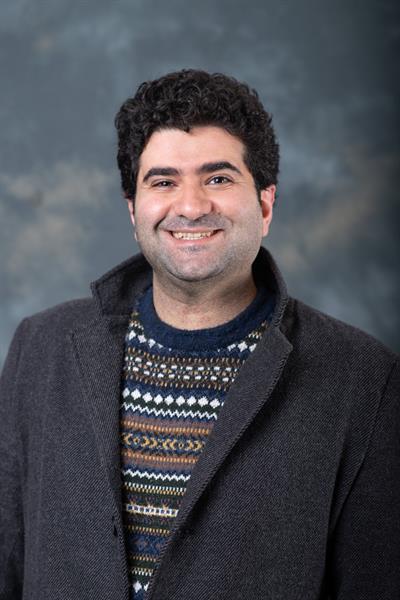
Saeed Mehraban is an Assistant Professor of Computer Science at Tufts University's School of Engineering and an Assistant Professor in the Department of Physics & Astronomy within the School of Arts and Sciences. He joined Tufts University in June 2022 as an Assistant Professor after serving as a Visiting Assistant Professor from June 2021 to May 2022. Prior to his position at Tufts, he was an IQIM Postdoctoral Scholar at the California Institute of Technology and a research fellow at the Simons Institute for the Theory of Computing during spring 2020. Doctor of Philosophy in Electrical Engineering and Computer Science from MIT (2019) Master of Science from MIT (2015) B.Sc. in Physics from Sharif University of Technology, Iran (2013) B.Sc. in Electrical Engineering from Sharif University of Technology, Iran (2013) Saeed Mehraban's research focuses on quantum computation and information, exploring the profound connections between computer science and physics. His work particularly addresses quantum computational complexity and continuous variable systems. A significant portion of his recent research concerns delineating the boundary between classical and quantum computing in noisy intermediate-scale quantum devices. His research bridges theoretical computer science with quantum physics, examining fundamental questions about what quantum computers can and cannot efficiently solve, with particular emphasis on mathematical foundations and computational complexity aspects of quantum information processing. Mehraban's publication record demonstrates a strong focus on quantum computing theory, with particular emphasis on quantum complexity, quantum algorithms, and the mathematical foundations of quantum information. His recent work (2021-2023) has explored topics like unitary t-designs, holomorphic representations of quantum computations, and quantum-inspired identities. Earlier publications (2015-2020) examined computational complexity in quantum theories, approximation algorithms for matrix problems, and connections between classical algorithms and quantum many-body systems. His research consistently sits at the intersection of theoretical computer science and quantum physics, addressing fundamental questions about computational advantages of quantum systems. Gold Medalist, National Physics Olympiad (2007) Bronze Medalist, National Astronomy Olympiad (2005) Identified as Exceptional Talent by the Iranian Educational System (2004) Mehraban teaches dissertation research courses at Tufts University, indicating his involvement in mentoring graduate students. His teaching activities include specialized courses in quantum information science, quantum computer science, and quantum complexity theory. His professional activities show invitations to speak at prestigious institutions including Microsoft Research Station Q, Mila Institute in Quebec, and the Simons Institute, suggesting recognition of his research contributions. His postdoctoral work at Caltech's Institute for Quantum Information and Matter (IQIM) demonstrates his connection to leading quantum research groups. While specific lab affiliations at Tufts aren't explicitly detailed in the provided information, Mehraban's teaching of specialized quantum courses and his research profile suggest he likely contributes to quantum computing research initiatives at Tufts University. His background at Caltech's IQIM and involvement with the Simons Institute's Quantum Wave in Computing Program indicate strong connections to the broader quantum information science community.
Prof. Dr. Sandra Transchel is a Full Professor of Supply Chain and Operations Management at Kühne Logistics University (KLU) in Hamburg, Germany. She has held this position since 2019, previously serving as Associate Professor (2011-2019) and Dean of Programs (2014-2015). Her academic journey includes appointments as Assistant Professor at Pennsylvania State University (2008-2011) and Visiting Assistant Professor at Tuck School of Business at Dartmouth (2011). Education includes: PhD in Business Administration, University of Mannheim (2008) Diploma in Business Mathematics, Otto-von-Guericke University Magdeburg (2004) Her research integrates supply chain management, inventory control, and revenue management with a strong focus on retail operations optimization and food supply chain sustainability . Key investigations examine perishable inventory systems, demand-supply synchronization, and substitution behavior. Current projects address food waste reduction through contract-based coordination in fresh food supply chains and development of urban food production networks (FabCity). Publications demonstrate consistent focus on inventory optimization under uncertainty, with recent work extending into pandemic impacts on humanitarian logistics and perishable inventory systems with lead-time variability. Research consistently bridges theoretical models with retail/manufacturing applications. Teaching includes Decision Analysis, Inventory and Warehouse Management, and Warehousing and Intralogistics across BSc, MBA, and MSc programs at KLU.
Sergey Fomel is a Professor of Geophysics at the University of Texas at Austin, holding the Wallace E. Pratt Professorship and serving as Director of the Texas Consortium for Computational Seismology (TCCS). He is affiliated with the Jackson School of Geosciences, Bureau of Economic Geology, and the Oden Institute for Computational Engineering and Sciences. His research focuses on seismic data analysis, computational seismology, and machine learning applications in geophysics. He leads the Madagascar software project for open-source geophysical data analysis. Dr. Fomel earned his Ph.D. in Geophysics from Stanford University in 2001. He has held leadership roles in the Society of Exploration Geophysicists (SEG), including Vice President, Publications (2017–2019) and Distinguished Lecturer (2020). His awards include honorary memberships in SEG and the Geophysical Society of Houston (GSH). Recent research emphasizes deep learning for seismic inversion, noise reduction, and fault segmentation. His work addresses challenges in geophysical data processing, including adaptive algorithms, wave propagation modeling, and CO2 monitoring. Fomel's contributions span both theoretical and applied domains, bridging computational methods with practical geoscience applications. Education: Ph.D. in Geophysics, Stanford University (2001) Affiliations: Jackson School of Geosciences, Bureau of Economic Geology, Oden Institute Labs/Teams: Texas Consortium for Computational Seismology (TCCS), Madagascar Project
Moïse Blanchard is an Assistant Professor and Tennenbaum Early Career Professor at the H. Milton Stewart School of Industrial and Systems Engineering at Georgia Institute of Technology, having joined in August 2025. Previously, he was a Postdoctoral Fellow at Columbia University Data Science Institute. His academic journey includes a Ph.D. in Operations Research from MIT (2024), and M.Sc. and B.Sc. degrees in Applied Mathematics from École Polytechnique. Blanchard's research focuses on the intersection of machine learning theory, statistics, and optimization. His work addresses fundamental questions in universal learning, online algorithms, and convex optimization under memory constraints. His research program explores learnability under minimal assumptions, query complexity/memory tradeoffs, and decision-making in adversarial environments. This work has significant implications for theoretical computer science, operations research, and statistical learning theory. His publications reveal a strong emphasis on foundational aspects of learning theory and optimization. Recent work demonstrates expertise in universal learning frameworks, memory-constrained optimization, and probabilistic analysis of combinatorial problems. His research often bridges theoretical computer science with practical optimization challenges, particularly in contexts where traditional i.i.d. assumptions don't hold. Columbia DSI postdoctoral fellowship, 2024 INFORMS Transportation Science & Logistics (TSL) best student paper award, 2023 Air Force Office of Scientific Research Grant (AFOSR), with Prof. Patrick Jaillet, 2023 COLT 2022 Best student paper runner-up Bronze medal, Alibaba Global Mathematics Competition, 2022 Blanchard has received significant research funding including an Air Force Office of Scientific Research Grant. His work has been recognized with multiple prestigious awards, including the INFORMS TSL best student paper award for his research on the k-Traveling Salesman Problem. His extensive publication record in top venues demonstrates a strong research trajectory with impactful contributions to theoretical machine learning and optimization.
Ralph Bailey is an Associate Professor in Economics at the University of Birmingham , affiliated with the Birmingham Business School and Department of Economics . His work bridges quantitative methods and philosophy of research and enquiry , with methodological contributions to econometrics and mathematical economics. Education : BSc (Durham), MA (Lancaster), MSocSc (Birmingham) His publications focus on statistical modeling, time series analysis, and theoretical economics, including works on deunionization impacts , ARMA processes , and public good provision under ambiguity . Recent studies explore earnings dispersion, near-integration in regression, and macroeconomic sustainability frameworks. Contact : r.w.bailey@bham.ac.uk
Martin Brisfors is a part-time researcher at KTH Royal Institute of Technology since 2019 and a PhD student in the Department of Electrical Engineering and Computer Science (EECS) since 2022. He is affiliated with the Division of Electronics and Embedded Systems and works in Kista. His research focuses on hardware security and side-channel attacks, with a particular emphasis on cryptographic implementations and countermeasure design. His work spans topics such as post-quantum cryptography (e.g., CRYSTALS-Kyber), AES vulnerability analysis, and the application of deep learning in side-channel attacks. He has contributed to evaluating the efficacy of countermeasures like clock randomization and duplication, uncovering fundamental flaws in their implementation. Brisfors has collaborated on courses such as Hardware Security (IL1333) and Hardware Security (FIL3030) , demonstrating his involvement in both research and education. His publications (2019–2024) reflect a consistent focus on advancing hardware security through empirical analysis and novel attack methodologies.
Yannis Kevrekidis is a Professor at Princeton University with a distinguished career in computational mathematics and chemical engineering. He is currently a Hans Fischer Senior Fellow at the Technical University of Munich (TUM-IAS) and has held visiting positions at institutions like the Zuse Institute Berlin and Caltech. Education : National Technical University of Athens (Chemical Engineering) University of Minnesota (PhD in dynamical systems) Research Interests : Equation-Free and Variable-Free Modeling Complex Systems Dynamics Multiscale Computation Integration of Machine Learning with Scientific Computing Pattern Formation & Instability Analysis Key Article Trends : Advanced data-driven modeling of dynamical systems Manifold learning for reaction coordinates Projective integration methods Coarse-grained modeling across disciplines Applications in epidemiology, neuroscience, and fluid dynamics Scientific Awards : Guggenheim Fellowship Humboldt Research Award Computing in Chemical Engineering Award (AIChE) Bodossaki Academic Award Allan P. Colburn Award Collaborations : Extensive international collaborations with institutions in Germany, Austria, and the UK Key role in the Complex Systems Modeling and Computation focus group at TUM-IAS
Adam M. Rosen is a Professor of Economics at Duke University's Department of Economics, where he has served since 2019. Previously, he held academic roles at University College London (UCL), including Associate Professor (2013–2016) and Assistant Professor (2006–2013). He is an affiliated researcher with the Centre for Microdata Methods and Practice (CeMMAP) and the Institute for Fiscal Studies (IFS). His research focuses on econometric theory and applications, particularly in instrumental variable methods, partial identification, and structural models. Rosen earned his Ph.D. in Economics from Northwestern University (2006) and a B.A. in Economics and Mathematics with Computer Science from Cornell University (1999). His work has been published in top journals such as the Review of Economic Studies, Econometrica, and the Journal of Econometrics. He has received numerous awards, including Fellow of the Journal of Econometrics (2024) and the Best Associate Editor Award (2024). Rosen's research interests span econometric theory, partial identification, instrumental variables, and applied microeconometrics. His recent work includes advancements in IV methods for Tobit models, discrete choice models, and counterfactual analysis. He has advised over a dozen PhD students and contributes actively to professional service, including editorial roles at the Journal of Econometrics and Econometrics Journal. He has held grants from the European Research Council and ESRC, among others, and his teaching spans advanced econometrics courses at both UCL and Duke. His affiliations with CeMMAP and IFS reflect his commitment to advancing microdata methods and policy analysis.