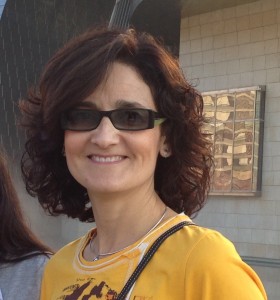
Luiz Greca is a Postdoctoral Researcher at Aalto University's Bioproducts and Biosystems department, specializing in sustainable materials and nanocellulosic systems. He is affiliated with the Wood Material Science research group, focusing on eco-friendly material design and applications. His research spans supramolecular adhesion of nanocelluloses controlled self-assembly of biobased materials sustainable food packaging humidity-dependent mechanical response biomass management in arid regions chitin-based pulps with emphasis on environmental impact and material performance. Article trends highlight his work on cellulose nanocrystals, nanofibrillated cellulose, and protein-based systems for sustainable construction, packaging, and biomedical applications. Collaborative studies with researchers like Orlando J. Rojas and Blaise L. Tardy demonstrate cross-disciplinary engagement.
María Mercedes Velázquez Salicio is a full professor in the Department of Chemical Physics at the University of Salamanca since 2011. Her research focuses on colloid and interface chemistry, nanoparticle films, and advanced materials like graphene. She has led projects on self-assembled surfactant/polymer systems and participated in industry collaborations (e.g., Grupo Antolín) for graphene-based technologies. Education: PhD in Chemistry from the University of Salamanca (postdoc at the Centre for Structural Chemistry, Lisbon, 1987–1990). Prior roles include Associate Professor (1991–2011) and visiting positions at Universidad Complutense de Madrid. Key research areas include Langmuir-Blodgett film fabrication, CO₂ capture using graphene-based hybrids, and photoluminescence properties of nanomaterials. Her work bridges fundamental colloid science with applied nanotechnology for electronics and environmental applications. Recent projects involve synthesizing chemical graphene from nanofibers (GRAnPHTEC) and developing graphene-silver hybrids for automotive devices (DINNAMIC project). Publications emphasize structural characterization (Raman spectroscopy, neutron reflectivity) and functionalization of 2D materials. No scientific awards explicitly mentioned, but her sustained contributions reflect significant academic impact.
Liang Han is a Research Assistant Professor at the Shenzhen Grubbs Institute, Southern University of Science and Technology, specializing in the self-assembly and functionalization of polymers. He received his Ph.D. in Organic Chemistry from Jilin University in 2015 and a B.S. in Chemistry from the same institution in 2010. Research Focus: His work centers on ordered self-assembly of conjugated block copolymers, creating hierarchical nanostructures for optoelectronic applications (e.g., tunneling devices, solar cells) and developing thermally stable fluorescent materials for biomedical imaging. Key themes include π–π interactions, molecular design, and morphology control. Scientific Contributions: Liang has published in high-impact journals like Nature Communications and ACS Energy Letters , addressing challenges in organic electronics and solar energy. His research spans synthesis of novel fluorophores, self-assembled micelles, and chlorinated polymer dots for cellular imaging. 2018: Best Poster Award, 11th National Symposium on Electronic Process in Organic Solids 2012: Best Poster Award, 9th National Symposium on Electronic Process in Organic Solids Collaborations: Frequently collaborates with Feng He, Yue Zhao, and other researchers at SUSTech, focusing on organic optoelectronic materials and devices. His publications highlight interdisciplinary work in chemistry, materials science, and biomedical engineering.
Martin Cramer Pedersen is an Associate Professor at the Niels Bohr Institute, University of Copenhagen, affiliated with the Biocomplexity department and the Solid State Physics group. His research spans interdisciplinary topics at the intersection of biophysics, materials science, and computational biology. Specializes in structural characterization using small-angle scattering (SAXS/SANS) Develops computational methods for analyzing complex biological and soft matter systems Investigates active matter dynamics, membrane-bound protein interactions, and colloidal self-assembly Recent publications highlight his work on: Hyperbolic order in curved materials α-synuclein aggregation mechanisms Active particle-induced porous gel structures Advanced scattering data analysis tutorials Casein micelle structural heterogeneity Nematic order collapse on frictional substrates His collaborative research involves institutions across Europe and Australia, with applications in biophysics, nanotechnology, and soft matter physics.
Dr. Frank Smallenburg is a Researcher at the Debye Institute for Nanomaterials Science within the Faculty of Science at Utrecht University . His research focuses on Soft Condensed Matter , particularly in computational studies of colloidal systems, quasicrystals, and phase transitions. Department: Department of Physics Email: f.smallenburg@uu.nl Research Interests include: Self-assembly of colloidal particles Thermodynamics of quasicrystals Machine learning in materials science Defect analysis in crystal structures Simulation techniques for glassy dynamics Recent Publications span computational physics, soft matter, and materials science, emphasizing: Machine learning for many-body interactions Defect-stabilized soft-matter quasicrystals Statistical mechanics of crystal nuclei Entropy-driven colloidal cluster formation Event-driven simulations for phase transitions
Dr. Sangwoo Lee is an experimental polymer scientist and engineer at Rensselaer Polytechnic Institute (RPI), serving as an Associate Professor in the Department of Chemical and Biological Engineering since 2021. He also holds an adjunct position at Seoul National University. His research focuses on polymer thermodynamics, self-assembly physics, and practical applications like polymer recycling. Lee earned a B.S. in Chemical Engineering from Seoul National University (2003), a Ph.D. from the University of Minnesota (2011), and completed a postdoctoral fellowship there (2011–2013). His work has been recognized with awards including the 2015 ACS Petroleum Research Fund Doctoral New Investigator Grant and the 2014 Cozzarelli Prize from PNAS. Education: B.S., Seoul National University (2003) Ph.D., University of Minnesota (2011) Postdoctoral Associate, University of Minnesota (2011–2013) Lee's research spans fundamental polymer science and applied material engineering. Key interests include block copolymer self-assembly, phase behavior modulation, and sustainable polymer recycling. His lab explores novel morphologies like Frank-Kasper phases and develops methods for controlled polymer degradation. Recent work addresses challenges in nanoscale phase separation and material toughness enhancement through rubber-toughened networks. Publications highlight advancements in understanding polytypism in block copolymers, superacid-mediated polystyrene degradation, and colloidal crystal formation. His studies bridge thermodynamic principles with practical material design, aiming to address global sustainability challenges through innovative polymer systems. Awards: 2015 ACS Doctoral New Investigator Grant 2014 PNAS Cozzarelli Prize 2013 Quadrant Award Finalist 2011 University of Minnesota Best Dissertation Award Lee advises students in polymer science and collaborates globally on material innovation. His Lee Research Group focuses on translating fundamental discoveries into real-world solutions, with ongoing projects on polymer upcycling and next-generation membrane technologies.
Patrick Underhill is a Professor in the Department of Chemical and Biological Engineering at Rensselaer Polytechnic Institute (RPI), where he has been since 2008. His research integrates theoretical, computational, and experimental approaches to address challenges in materials science, biophysics, and fluid dynamics. Key focuses include advanced material design, protein manipulation, and the study of complex fluid systems. Education & Background: After completing a postdoctoral fellowship at the University of Wisconsin-Madison, Underhill joined RPI, where he has since established the Underhill Research Lab. His work emphasizes interdisciplinary collaboration, combining engineering principles with biological and physical sciences. Research Interests: Underhill’s research spans Non-Newtonian fluid modeling, polymer membrane design, colloidal interactions, active matter systems, and computational methods for soft matter systems. His recent work explores protein dynamics in microgravity and machine learning applications for material optimization. Lab & Collaborations: The Underhill Research Lab (https://underhillresearchlab.com) focuses on experimental and theoretical studies of complex fluids and soft materials. Notable projects include developing “structure-by-design” polymer membranes and analyzing colloidal self-assembly. Grants & Advising: While specific grant details are not listed, his research is supported by grants addressing topics like interfacial rheology and active matter. He advises graduate students in chemical and biological engineering, though no named advisees are listed here.
Bernd Stühn is a Professor in the Department of Physics, specializing in advanced materials and soft matter systems. His research focuses on polymer physics, nanotechnology, and the structural characterization of complex materials using techniques like X-ray scattering and neutron spectroscopy. Key research areas include the synthesis and self-assembly of block copolymers, nanotube fabrication via ion-track technology, and the study of magnetic nanoparticle systems. He has extensively investigated confinement effects on polymer dynamics, phase behavior of water/PEG mixtures, and the development of redox-responsive materials. His work combines experimental approaches (e.g., small-angle X-ray scattering, dielectric spectroscopy) with theoretical modeling to understand structure-property relationships in nanocomposites, colloidal systems, and confined environments. Over 15 years of publications reflect a sustained focus on advancing materials science through interdisciplinary methodologies.
Professor Prashant Valluri is a Personal Chair in Fluid Dynamics at the University of Edinburgh's School of Engineering, where he also serves as Director of Discipline and Head of Graduate School (since 2018). His research focuses on developing mathematical models for complex multiphase flow patterns to address industrial challenges including oil-gas transport, slurry transport, distillation, absorption, thermal management of microdevices, and biological problems such as cerebral temperature regulation and lung function. Professor Valluri earned his PhD in Chemical Engineering from Imperial College London in 2004 with a thesis on "Multiphase fluid dynamics in structured packings" and holds a Bachelor of Technology (Distinction) in Chemical Engineering from Dr. BA Technological University, Lonere, India (1998). He is an active member of several professional organizations including the American Association for Advancement of Science, American Physical Society, and Indian Society for Surface Science Technologists. His research expertise spans multiphase and single-phase fluid dynamics , transport phenomena , stability theory and turbulence , and biological fluid dynamics . Professor Valluri has developed several open-source computational tools including the Two Phase Level Set (TPLS) Solver for high-resolution DNS of multiphase flows, the Vascular Porous (VaPor) Solver for simulating biological temperatures, and the Gerris Immersed Solid Solver (GISS) for solid-fluid flow simulations. His work has significant applications in industrial cleaning, oil-gas transport, thermal management of microdevices, and cerebral temperature regulation. Professor Valluri's recent research publications demonstrate a strong focus on multiphase flows, droplet dynamics, boiling heat transfer, and computational fluid dynamics. His work combines theoretical modeling with high-performance computing to solve complex fluid dynamics problems across various scales, from microdevices to industrial applications. The research shows particular strength in Direct Numerical Simulation (DNS) techniques applied to multiphase systems. Member of American Association for Advancement of Science Member of American Physical Society Member of Indian Society for Surface Science Technologists Associate Member of IChemE Invited JSPS Fellow at Kyushu University (2018) Extraordinary Professor at University of Pretoria (2019) Professor Valluri has supervised numerous PhD students to completion, including Dr. Pedro J Sáenz (2014), Dr. Pei Shui (2015), Dr. Patrick Schmidt (2017), Dr. Stephen Blowers (2018), and several others through 2021. He has secured significant research funding for projects including ACoolTPS (Advanced Cooling of high power microsystems using Two-Phase Flows Systems) and ThermaSMART (Smart Thermal Management Of High-power Microprocessors Using Phase-change). His research group, the Institute for Multiscale Thermofluids, focuses on Multiphase Flows and Transport Phenomena. Professor Valluri leads the Multiphase Flows and Transport Phenomena Special Interest Group of the UK Fluids Network and has established extensive international collaborations with institutions including Imperial College London, University College Dublin, Université de Lyon, Université Pierre et Marie Curie, MIT, Stanford University, and Kyushu University.
Chengjie Luo is a researcher in the Department of Applied Physics at Eindhoven University of Technology, specializing in Non-Equilibrium Soft Matter and machine learning applications to materials science. His work focuses on structural properties of amorphous materials and dynamic correlations in glass-forming systems. Research Interests Application of supervised learning to classify glass states and particle behavior Theoretical frameworks for glass-forming liquid dynamics Size-dependent packing mechanisms in binary metallic glasses Structural emergence in supercooled liquids via first-principles modeling Research Trends His publications (2023-2024) reveal integration of machine learning with condensed matter physics, particularly in glass transition and structural property analysis . Studies employ molecular dynamics and density functional theory to explore non-equilibrium soft matter systems. Collaborations & Media Collaborates with researchers like L.M.C. Janssen and C. Storm. Media coverage (2023) highlights his work on supercooled liquid complexity and glass-forming dynamics .
Oriane Bonhomme is an Assistant Professor at Université Claude Bernard Lyon 1 , affiliated with the Institut Lumière Matière (ILM) and its Optique Non-Linéaire Et Interfaces (ONLI) team. Her research focuses on molecular-scale analysis of soft matter systems, particularly soap films and interfaces, using advanced non-linear optical techniques like Second Harmonic Generation (SHG) and Rayleigh scattering. She leads the ANR SOLSTICE project on soap film stability and collaborates on the PROGENY FET OPEN project studying electronic soap films. Teaching : Institut Universitaire de Technologie de Lyon (Department of Mechanical and Manufacturing Engineering) Key Techniques : QM/MM polarizable embedding, SHG diagnostics, electrokinetic modeling Her work intersects non-linear optics , surface science , and soft matter physics , with recent publications analyzing surfactant behavior under electric fields, hyperpolarizability fluctuations in water, and nanoscale diagnostics of liquid interfaces. She actively recruits postdoctoral researchers for projects involving molecular-scale stability and optical probing of complex systems. Scientific Awards : ANR SOLSTICE Project funding FET OPEN Project PROGENY Contact: oriane.bonhomme@univ-lyon1.fr
Dr. Hanieh Mianehrow is a postdoctoral researcher and Maria Skłodowska-Curie postdoctoral fellow at the Max Planck Institute of Colloids and Interfaces. She focuses on molecular dynamics simulations and experimental studies of cellulose-hemicellulose interactions, structural coloration in plants, and bio-inspired nanocomposite materials within the Department of Sustainable and Bio-inspired Materials led by Prof. Silvia Vignolini. Bachelor’s/Master’s in Polymer Engineering, Tehran, Iran PhD in Fiber and Polymer Science, KTH Royal Institute of Technology, Stockholm Her research explores the molecular mechanisms behind structural colors in fruits like Margaritaria nobilis, using molecular dynamics (MD) simulations to analyze xylan-cellulose interactions. She also investigates bio-nanocomposites of cellulose and graphene oxide, with applications in sustainable materials and mechanical reinforcement. Dr. Mianehrow’s publications focus on moisture effects in cellulose-graphene nanocomposites, interface engineering, and structural coloration. These works span nanotechnology, materials science, and computational modeling. Maria Skłodowska-Curie Postdoctoral Fellowship At the Max Planck Institute, she integrates advanced simulation techniques with experimental characterization to unravel the self-assembly processes in plant cell walls, aiming to develop novel bio-inspired materials with tailored optical and mechanical properties.
Dr. Chin Ken Wong is an Adjunct Lecturer and postdoctoral researcher in the School of Chemistry at UNSW Sydney. His work focuses on advanced polymer self-assembly techniques for creating complex nanostructures. Current postdoc at UNSW Sydney Alexander von Humboldt Fellow (2019-2020) PhD in Chemistry from UNSW (2018) Research Interests: Specializes in block copolymer self-assembly, with expertise in: Polymersome shape transformation Hierarchical self-assembly across nm-to-μm scales Inverted solution polymer morphologies (cubosomes/hexosomes) Scalable nanoparticle manufacturing Soft matter electron microscopy (cryo-TEM, cryo-ET) Topological defect analysis in polymer systems Recent Publications demonstrate innovative approaches to creating Janus structures, multicompartment micelles, and topologically controlled nanomaterials. Scientific Awards: Alexander von Humboldt Fellowship (2019-2020) EXMAC International Postdoc Travel Grant (2018) Multiple Australian Centre for Nanomedicine Seed Funding awards (2018, 2016) Australian Synchrotron Competitive Beamtime Funding (2016) Available for collaborations and peer review requests in polymer self-assembly and nanomaterials research. Contact: c.kenwong@unsw.edu.au . Location: SEB Level 7, UNSW Sydney.
Professor Gregory Warr is a faculty member at the Faculty of Science , The University of Sydney , affiliated with the Sydney Nano Institute . His research investigates the behavior of amphiphilic compounds in ionic liquids, deep eutectic solvents, and colloidal systems using advanced techniques like neutron/x-ray scattering, rheology, and atomic force microscopy. Education: B.Sc. (Hons) - 1981, University of Melbourne Ph.D. - 1986, University of Melbourne Current research examines ionic liquids as extraordinary solvents, self-healing lubricants , bio-inspired materials , and exobiology applications . Collaborations include institutions in Japan (Tokyo University of Science) and the UK (Rutherford Appleton Laboratory). Recent publications analyze interfacial dynamics, electrode interactions, and nanostructural transformations in ionic liquids. Key subfields include polymer-surfactant hybrid systems , potential-dependent lubricity , and biomimetic material design . He supervises PhD candidates Rachna KURIAN and Karun Mishra MISHRA, focusing on thermoresponsive polymers and proteoglycan mimicry in hydrogels.
María Dolores Merchán Moreno is an Associate Professor in the Physical Chemistry Department at the University of Salamanca, a position she has held since 1999. Her academic career spans over two decades, focusing on colloid and interface chemistry. Her educational background includes a PhD in Chemistry from the University of Salamanca, where her doctoral thesis on Thermoprogrammed desorption in solution led to two patents. She furthered her expertise through postdoctoral research at the Institute of Catalysis and Petrochemistry (CSIC) for one year and at the University of New Hampshire's Chemical Engineering department for six months. Dr. Merchán's research centers on the stability, structure, and properties of 2D and 3D self-assemblies involving surfactants, polymers, and nanoparticles. Her work bridges fundamental interfacial science with applications in nanomaterials, including carbon-based nanoparticles for antibacterial uses, graphene oxide for CO2 capture, and quantum dot films for photoluminescence studies. Analysis of her recent publications reveals a strong focus on advanced nanomaterials characterization and application. Key trends include the development of nanoparticle-based antibacterial agents, optimization of graphene oxide hybrids for environmental remediation, and the use of Langmuir-Blodgett techniques for precise nanofilm fabrication. Scientific Awards: No major scientific awards, prizes, or fellowships are documented in the provided information. She has secured research funding through multiple projects from Spain's Ministry of Education and Science and Ministry of Science and Innovation, supporting her work in colloid and interface chemistry. Collaborating extensively with researchers like María Mercedes Velázquez and David López-Díaz, she contributes to a dynamic research group at the University of Salamanca. Her laboratory work involves interfacial characterization techniques and nanomaterials synthesis, with particular emphasis on air-water interface studies using Langmuir troughs and advanced spectroscopic methods.