Amy Bruckman is a Regents’ Professor and Senior Associate Chair in the School of Interactive Computing at Georgia Institute of Technology. As a Fellow of The ACM and member of the SIGCHI Academy , she contributes to social computing research focusing on online collaboration, cross-cultural understanding, and content moderation. Her 2022 book "Should You Believe Wikipedia? Online Communities and the Construction of Knowledge" explores digital knowledge creation. Education: Ph.D. from MIT Media Lab (1997), B.A. in Physics from Harvard (1987) Research Affiliations: GVU Center, IRI People and Technology Her work addresses social computing challenges including: AI ethics in human-AI interaction Algorithmic bias in content moderation Epistemic justice in online communities Comparative platform analysis (Reddit, Discord, TikTok) Grassroots technology movements Recent publications examine: AI support tools for online counseling Community-driven research frameworks Racial bias mitigation in toxic language detection Designing teachable social media experiences Human trafficking intervention ethics Scientific recognition includes: ACM Fellowship SIGCHI Academy membership She has contributed to: Georgia Tech's Computing Education initiatives Research ethics frameworks for Human-Computer Interaction
Marita Dale is a Senior Lecturer in the Discipline of Physiotherapy at the University of Sydney and an Early Career Researcher affiliated with the Charles Perkins Centre. She specializes in cardiorespiratory physiotherapy, focusing on exercise interventions for chronic respiratory and cardiac diseases, particularly asbestos-related and dust-related conditions. Her work emphasizes improving accessibility to pulmonary rehabilitation services and leveraging mHealth technologies for patient care. Education: PhD in Physiotherapy (2016, University of Sydney). Her research interests include optimizing pulmonary rehabilitation through mobile health platforms, such as the m-PR™ app, and investigating pediatric burn injury rehabilitation, including orthosis use and scar prevention. She also explores multimorbidity management and simulation-based learning in healthcare education. Recent studies have highlighted her contributions to COPD care protocols, telehealth implementation during the pandemic, and qualitative analyses of patient experiences. Major awards: Sydney School of Health Sciences Teaching Citation (2022), Ashurst Prize for Outstanding Oral Presentation (2015), Helga Pettitt FHS Postgraduate Study Award (2010). Marita supervises Honours, Masters, and PhD students, including Mitchell Taylor on airway clearance in bronchiectasis. Her teaching spans undergraduate and postgraduate programs in cardiopulmonary and musculoskeletal physiotherapy. She collaborates on projects like the Lung Support Service, a nationwide text message program for chronic respiratory patients during the pandemic, and contributed to the commercialization of the Perx-R app for pulmonary rehab. Labs/teams: Active member of the Charles Perkins Centre, focusing on interdisciplinary chronic disease research and healthcare innovation.
Professor John Zeleznikow is an Honorary Associate at La Trobe University's Law School, with a distinguished career spanning 49 years across multiple institutions including the University of Edinburgh and Victoria Business School. His research focuses on AI applications in legal decision-making, dispute resolution, and autonomous vehicle technology. He has secured over $8M in research grants and supervised 20 PhD graduates. Key projects include the Split-Up system (used in high-profile divorce cases like Prince Charles and Lady Di) and Family-Winner software, which won an ABC TV innovation award. His work bridges law, technology, and ethics, with publications in leading journals like the Harvard Negotiation Law Review and Artificial Intelligence and Law . Recent research explores AI-driven online dispute resolution (ODR), autonomous vehicle regulation, and the ethical implications of technology in legal systems. He advocates for transparent, user-centric legal tech solutions to enhance access to justice and improve decision-making processes.
Sean Welleck is an Assistant Professor at Carnegie Mellon University's School of Computer Science, specifically within the Language Technologies Institute (LTI). He leads the L3 Lab and serves as an advisor for the AI for Math Fund. His academic journey includes a PhD from New York University under Kyunghyun Cho and postdoctoral positions at the Allen Institute for Artificial Intelligence and the University of Washington with Yejin Choi. Dr. Welleck's educational background shows a strong foundation in computer science. He earned his PhD in Computer Science from New York University, where he worked under the mentorship of Kyunghyun Cho and Zheng Zhang. Prior to this, he completed his MSE and BSE in Computer Science from the University of Pennsylvania, demonstrating a long-standing commitment to the field. Dr. Welleck's research focuses on bridging informal and formal reasoning with AI, with particular emphasis on developing learning, inference, and evaluation algorithms for large language models. His work spans multiple cutting-edge areas including mathematical reasoning , code generation , inference algorithms , and AI reasoning agents . A significant portion of his recent work involves combining AI with formal methods for mathematics, where he has developed frameworks like Llemma (an open-source language model for mathematical reasoning) and meta-generation (for inference-time algorithms). His research is characterized by a strong theoretical foundation coupled with practical applications that push the boundaries of what AI systems can achieve in formal reasoning domains. Analysis of Dr. Welleck's recent publications reveals a clear research trajectory focused on enhancing language models' capabilities in formal reasoning and mathematical problem-solving. His work demonstrates an evolution from foundational research in neural text generation to increasingly sophisticated approaches that integrate formal methods with deep learning. Key trends include the development of inference-time algorithms that improve model performance without additional training, frameworks for mathematical reasoning that connect informal and formal proofs, and novel evaluation methodologies for language models. His publications consistently appear in top-tier conferences including NeurIPS, ICLR, ICML, and ACL, reflecting the high impact of his contributions to the field. Dr. Welleck's scientific achievements have been recognized with several prestigious awards: NAACL 2025 Best Paper Award ICLR 2025 Oral Presentation (Top 2%) ICLR 2025 Spotlight Presentation (Top 5%) NeurIPS 2021 Outstanding Paper Award (Top 0.1%) for MAUVE NVIDIA AI Labs Pioneering Research Award (2017 and 2018) As an educator and mentor, Dr. Welleck actively guides the next generation of AI researchers. He currently advises multiple PhD students including Pranjal Aggarwal, Weihua Du, Andre He, and Seungone Kim (some co-advised with other faculty), along with MS students Riyaz Ahuja, Jiewen Hu, Qinyue Tan, and Thomas Zhu, and undergraduate Tate Rowney. At CMU, he teaches advanced courses such as Neural Code Generation and Advanced NLP, and has previously taught at New York University and the University of Washington. His commitment to education extends to creating resources like the Thesis Review Podcast and developing tutorials on neural theorem proving that have been presented at major conferences. Dr. Welleck leads the L3 Lab at CMU, which focuses on the intersection of language, learning, and logic. The lab brings together students and researchers to tackle challenging problems in AI reasoning, with particular emphasis on mathematical reasoning and code generation. Recent initiatives include the development of Llemma, an open-source language model specialized for mathematical reasoning, and work on inference-time algorithms that enable language models to improve their performance through additional computation during inference rather than through additional training.
Thad Starner is a Professor in the College of Computing at Georgia Institute of Technology and Technical Lead/Manager on Google's Glass. He directs the Contextual Computing Group (CCG), co-founded the Animal Computer Interaction Lab, and contributes to Georgia Tech's Ubicomp Group and Brainlab. A wearable computing pioneer since 1993, he has over 500 publications and 80 issued U.S. patents. Coined 'augmented reality' in 1990 Developed CopyCat for ASL learning in deaf children Invented Passive Haptic Learning for skill acquisition His research spans wearable interfaces for Deaf-hearing communication, dolphin interaction systems (CHAT), dog-handler communication (FIDO), and brain-computer interfaces for ALS patients. Current projects focus on optical aging simulation, XR input methods, and animal behavior telemetry. Recent publications (2023-2025) explore AR display ergonomics, AI-augmented reasoning, sign language recognition, and animal-computer interaction. His work has been featured in 60 Minutes, BBC, National Geographic, and Time Magazine. CHI Academy (2017) Lemelson-MIT Prize finalist White House Champions of Change finalist He advises graduate students in wearable systems and teaches AI and prototyping courses. His lab developed the Perceptive Workbench for gesture tracking and created early Eigenfaces research for face recognition.
Yang Liu is an incoming Assistant Professor at Florida State University (Fall 2025) and currently a Senior Research Associate and Affiliated Lecturer in the Department of Computer Science and Technology at the University of Cambridge. She holds a B.E. in Software Engineering from Xi’an Jiaotong University (2016) and a Ph.D. in Computer Science from City University of Hong Kong (2020), advised by Prof. Zhenjiang Li. Her research focuses on intelligent mobile/wearable sensing technologies, combining AI and signal processing to advance applications in human-computer interaction (HCI), smart health, and IoT. She has received notable awards such as the 2024 N2Women Rising Star Award and the 2021 ACM SIGBED Doctoral Thesis Award. Research interests span mobile systems, AI-driven wearable sensing, privacy in human interactions, and healthcare monitoring. Key projects include RespEar (earable-based respiratory monitoring), SmarTeeth (toothbrushing tracking), and WearIoT (privacy-aware wearable systems). She mentors students in areas like biomedical signal processing and secure wearable systems. Teaching includes Mobile/Wearable Systems courses at Cambridge and previously at City University of Hong Kong. Education: B.E. Software Engineering, Xi’an Jiaotong University (2016) Ph.D. Computer Science, City University of Hong Kong (2020) Grants & Services: Organizing roles in ACM SIGCOMM, IEEE ICPADS, and multiple conference TPCs. Invited talks at Columbia University, Purdue University, and others. Her work bridges mobile computing with health applications, addressing both technological innovation and societal impacts through over 30 peer-reviewed publications and industry collaborations.
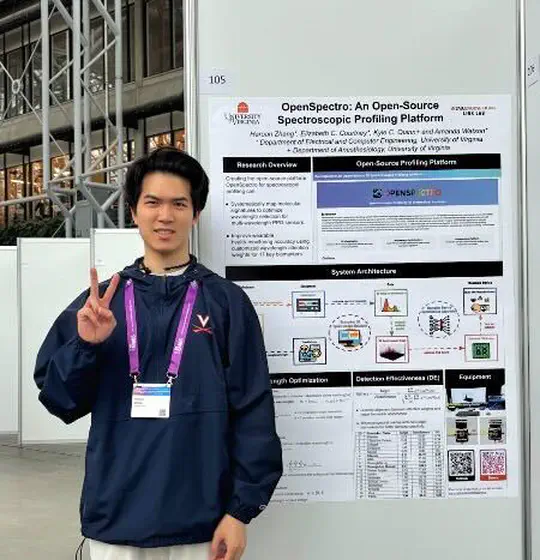
Amanda Watson is an Assistant Professor in Electrical and Computer Engineering at the University of Virginia, with joint appointments in Computer Science. She leads the Watson Research Lab within the UVA Link Lab, a multidisciplinary center for Cyber-Physical Systems (CPS) and Internet of Medical Things (IoMT) research. Her work bridges wearable technology with healthcare and athletic performance applications, focusing on noninvasive monitoring, physiological signal analysis, and safety-critical medical devices. She is also the cofounder and CEO of Luminosity Wearables, commercializing a noninvasive continuous glucose monitor. Education: PhD in Computer Science (2020) - College of William & Mary MSc in Computer Science (2016) - College of William & Mary Bachelors in Computer Science and Mathematics (2014) - Drury University Her research spans multiple domains including: Wearable spectroscopy for nutrition and skin health Machine learning for drug overdose and fall risk detection Biomechanical monitoring in sports medicine Wearable support for visual and neurological impairments IoMT device integration and analytics Recent publications (2024-2025) show strong emphasis on calibration-free physiological monitoring systems, with technical contributions in spectral analysis , multi-wavelength sensing , and rapid prototyping for healthcare wearables. Applications range from maternal health to gerontological social isolation detection. Lab and Team: The Watson Research Lab at UVA develops wearable solutions for clinical and athletic contexts, with ongoing collaborations in the PRECISE Center at University of Pennsylvania and LENS lab at William & Mary alumni network. She works with multidisciplinary teams including engineers, clinicians, and data scientists.
Michael Wessely is a Tenure Track Assistant Professor at the Department of Computer Science, Aarhus University (AU), Denmark. His research focuses on innovative human-computer interaction technologies, particularly in oral user interfaces and multi-material fabrication. Research Highlights: Development of intraoral pH sensors (BIOral), customizable oral interfaces (MouthIO), and programmable light sources (PortaChrome). Key Collaborations: Works with interdisciplinary teams including biomedical engineers (Y. Song, H. Xu) and HCI experts (S. Mueller, E. Hoggan). Recent Impact: 2024 publications demonstrate expertise in 3D printing and integrated sensing systems. In 2023, he received recognition for ChromaNails - a reprogrammable nail polish interface technology.
Professor Peter Asaro is an Associate Professor at The New School's School of Media Studies, specializing in the philosophy of science, technology, and media. His work focuses on artificial intelligence, robotics, and the ethical, legal, and social implications of autonomous systems. He serves as Co-Founder and Co-Chair of the International Committee for Robot Arms Control (ICRAC) and has held research positions at Princeton University, Rutgers University, Umeå University, and the Austrian Academy of Sciences. Education: PhD, MCS, MA, BA His research spans military robotics, AI ethics, surveillance, and the societal impacts of automation. He has contributed to influential publications in journals like IEEE Technology & Society and Robot Law , with a focus on lethal robotics, legal liability, and privacy. Recent work includes critiques of predictive policing algorithms and autonomous weapons systems. Notable awards include the 2010 SXSW Web Interactive Awards for Technical Achievement and Best of Show for his contributions to Apple’s Siri and Microsoft’s Bing math query interfaces. He is currently writing a book on robotics and ethical intersections. Scientific Awards: 2010 SXSW Web Interactive Award for Technical Achievement 2010 SXSW Web Interactive Award for Best of Show Asaro leads funded projects like the Oral History of Robotics (IEEE & NEH) and Regulating Autonomous Artificial Agents (Future of Life Institute). He also contributes to public discourse on technology through his blog and affiliation with 4TU.Ethics and ICRAC.
Robin J. S. Sloan is a Professor of Game Design and Culture at Abertay University, based in the Faculty of Design, Informatics and Business within the Department of Games and Arts. He is a Research Leader for the Faculty and leads the Art and Design research portfolio for the Research Excellence Framework (REF). Sloan also plays a key role in the Abertay Game Lab, a practice-research collective focused on games innovation. Education: PhD in Computer Animation (Emotional Avatars), Abertay University, 2011 PGCE in Higher Education Teaching, 2010 BA (Hons) in Computer Arts, 2005 His research lies at the intersection of game design, digital art, and cultural studies, with a focus on practice-based research exploring media archaeology, technological nostalgia, and the aesthetics of retro gaming. He investigates imbalance, frustration, and the use of retro elements to critique contemporary politics and culture. His work extends to game accessibility, inclusive design, and game production studies. The 15 most recent publications reflect a strong trend in critical game design, feminist pedagogy, international collaboration (particularly UK-China), and the cultural and psychological dimensions of gaming. His work combines theoretical rigor with creative practice, evident in both academic outputs and digital artifacts. Scientific Awards and Recognition: Senior Fellow of the Higher Education Academy (SFHEA) Member, AHRC Peer Review College Member, UKRI Talent Peer Review College Sloan has supervised nine postgraduate research students to completion and is currently accepting PhD proposals in game design, game art, fan cultures, and computer arts. He has secured over £5.97 million in research funding from bodies including AHRC, EU Commission, Wellcome Trust, and British Academy. His leadership in projects such as InGAME and Living Histories of Sugar underscores his impact on both academic and industry-facing research. He is actively involved in public engagement through lectures, exhibitions, and outreach events, and contributes to the academic community as an editorial board member for the Journal of Gaming and Virtual Worlds and as an external examiner for multiple institutions.
Francisco Benigno Yus Ramos is a full professor at the University of Alicante, Spain, specializing in Pragmatics. He holds a PhD in English Philology and focuses on applying Relevance Theory to media discourses, conversational analysis, and Internet-mediated communication. His work spans interdisciplinary areas including humor, irony, and digital communication. Doctor of Philosophy and Letters (English Philology) - University of Alicante (1995) Graduate in Philosophy and Letters (English Philology) - University of Alicante (1993) Bachelor of Arts (English Philology) - University of Granada (1987) Diploma in Teaching (English Philology) - University of Granada (1984) His research applies Relevance Theory to diverse contexts such as alternative comics, mass media, and digital communication. Key areas include conversational cooperation, gender discourse, written-oral interfaces, and the pragmatic analysis of humor and irony in online environments. He has pioneered the concept of Cyberpragmatics to explain digital communication dynamics. Recent publications highlight his focus on digital communication trends, including books on Cyberpragmatics (2001, 2011), Smartphone Communication (2021), and Emoji Pragmatics (2025). His work bridges theoretical pragmatics with real-world applications in social media, mobile technology, and multimedia discourse. Scientific Activities: Editor-in-chief of the journal Internet Pragmatics (John Benjamins). Current director of the Department of English Philology at the University of Alicante and member of research groups Professional and Academic English (IPA) and Irony and Humor in Spanish (GRIALE) .
Clément Pit-Claudel is an Assistant Professor at École Polytechnique Fédérale de Lausanne (EPFL), leading the SYSTEMF lab focused on programming languages, formal methods, and systems engineering. His work bridges mathematical formalisms with practical system development to achieve full assurance in critical software and hardware. PhD in Computer Science from MIT (2016) William A. Martin Memorial Thesis Award recipient Former Senior Applied Scientist at Amazon AWS Teaching accolades including the Frederick C. Hennie III Teaching Award Research spans three axes: extensible proof-producing compilers for performance-critical systems, verified hardware compilation with cycle-accurate semantics, and interactive theorem prover tooling for democratizing verification technology. Key projects include Kôika for hardware verification, Alectryon for Coq proof visualization, and Fiat for correct-by-construction program synthesis. Recent publications address JavaScript regex verification (ICFP 2024), cryptographic server integration (PLDI 2024), and hardware simulation optimization (ASPLOS 2021). Articles demonstrate expertise in functional-to-imperative translation, domain-specific compiler extensions, and hardware-software co-verification. Scientific contributions recognized through: Distinguished artifact award (SLE 2020) MIT William A. Martin Thesis Award Frederick C. Hennie III Teaching Award Teaching philosophy emphasizes hands-on lab instruction , oral assessment , and automated tooling . Courses taught include Software Construction (undergraduate) and Interactive Theorem Proving (graduate) at EPFL. Research service includes program committee roles at Dafny, POPL, and SPLASH conferences.
Kristina Eriksson-Backa is Professor at the School of Business and Economics, Faculty of Social Sciences, Business and Economics, and Law. Recognized through numerous publications, her research focuses on health information systems and vulnerable populations. Research interests center on health information literacy, e-health adoption among seniors, and healthcare access for immigrant communities. Significant work examines how information behavior affects health outcomes in marginalized groups. Publications demonstrate strong focus on digital health equity across diverse populations. Recent studies analyze EHR system design for seniors, health information practices in diabetes management, and refugee health-seeking behaviors across Nordic countries. Consistent themes include technology adoption barriers and cross-cultural health communication. Editorial and examination activities include doctoral dissertation pre-examination and conference organization. Research leadership includes ongoing studies on health information vulnerability through international collaborations.
Dr Judith Aston is an Associate Professor and Wallscourt Fellow in Film & Digital Arts at the University of the West of England (UWE), affiliated with the ACE - Film and Journalism department. She specializes in interactive documentary, live cinema, and immersive/experimental filmmaking. Her research focuses on narrative approaches in filmmaking, ethnographic practices, and multi-perspectival thinking to address global challenges like climate emergency and social justice. She leads interdisciplinary projects, such as the AHRC Impact project 'Building Healthy Communities' and co-curates i-Docs symposia. Qualifications include a PhD in Anthropology, Film, and Interaction Design from the Royal College of Art, alongside MA Cantab and professional certifications (FRSA, FRAI, SFHEA). She holds editorial roles in journals like the Journal of Visual Anthropology and advises organizations like the BBC and Open Society Foundation. Her research explores polyphonic documentary practices, applying Bakhtin’s theories to collaborative storytelling. Notable projects include 'The Russian Winter' (immersive performance) and 'Voices from the Blue Nile' (interactive documentary). She actively seeks PhD students to advance multi-perspectival narratives.
Liv Valmestad is an academic librarian, artist, and art historian at the University of Manitoba 's School of Art and Faculty of Architecture . As the Art Librarian since 1997 and former Head of Arts and Humanities Division (2020-23), she bridges librarianship with contemporary visual practice through her research on Nordic landscapes and public art. Her international exhibitions and publications reflect her interdisciplinary approach. Education : B.F.A. (1986), MA (Art History, 1990), MIS (1992), Postgraduate Fine Arts (1987), and Oral History Certificate (2018) Research interests span public art documentation, digital humanities, and Nordic landscape representation. Recent publications like Embracing Messiness (2023) demonstrate her focus on creative pedagogy and art-technology intersections. Her 2020 In Between (s)p(l)ACES exhibition explores identity through geographical affect. Scientific recognition includes the UMFA Merit Award (2021), Carl R. Nelson Jr. Award as an instructor, and Melva J. Dwyer Book Award (2009). She actively contributes to art education through grants from Winnipeg Arts Council , Manitoba Arts Council , and University of Manitoba Creative Works programs.