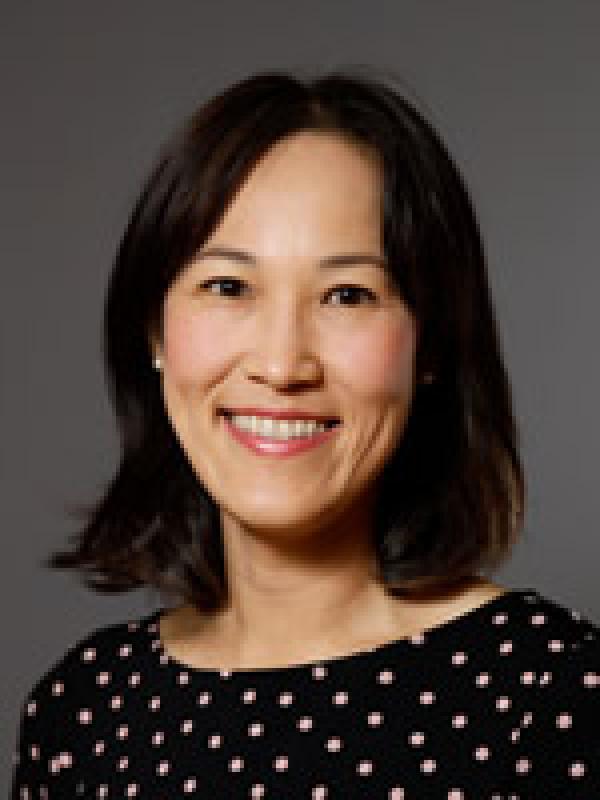
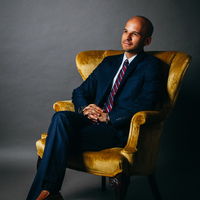
Dr. Nienke Smit is an Assistant Professor in the Department of Education at Utrecht University's Faculty of Social and Behavioural Sciences. Her research focuses on scaffolding processes, adaptive teaching, and classroom observational research from a complex dynamic systems perspective. Specializes in teacher-student interaction Expert in adaptive instruction and observational methods Collaborates with Data Science department Develops tools for classroom observation Research interests include language learning and teaching , judgment and decision-making in education , and professional development of teachers . She leads projects like Eye Get It (joint attention in classrooms) and a replication study on adaptive instruction effectiveness. Her work applies dynamic systems theory to second language development and foreign language pedagogy. Recent publications address translanguaging in multilingual classrooms, replication studies , and process-oriented research . She teaches at Utrecht's Graduate School of Teaching and works on initiatives to reduce teacher shortages through improved training programs.
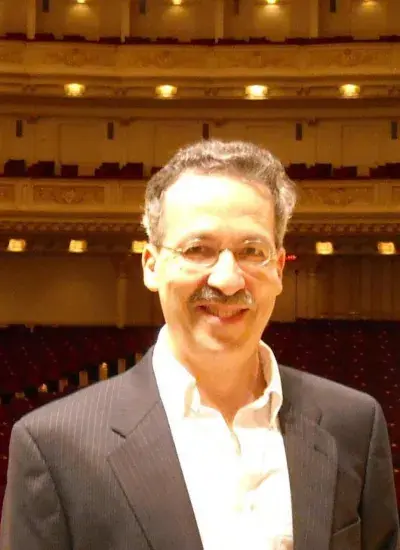
Brendan O'Connor is an Associate Professor in the Manning College of Information and Computer Sciences (CICS) at the University of Massachusetts Amherst. His research focuses on computational social science and natural language processing (NLP), particularly exploring how social factors influence language technologies and using text analysis to understand societal trends. His work includes studies on racial bias in NLP, political event analysis, and social media linguistics. He holds a PhD in Machine Learning from Carnegie Mellon University (2014) and dual MS/BS in Symbolic Systems from Stanford University (2006). Education: PhD in Machine Learning, Carnegie Mellon University (2014) MS in Symbolic Systems, Stanford University (2006) BS in Symbolic Systems, Stanford University (2006) Research interests span AI ethics, social media analysis, and computational methods for studying language and society. Notably, he investigates racial disparities in NLP systems, linguistic variation in African American English, and event detection in news and social media. His work has been recognized with NSF CAREER and Google Faculty awards, and his research has been cited thousands of times. His lab, the Statistical Social Language Analysis Lab, develops tools for analyzing large-scale text data. He is affiliated with the Center for Data Science, Center for Intelligent Information Retrieval, and Computational Social Science Institute. Recent projects include analyzing global news coverage of critical events and developing frameworks for zero-shot argument explication. Awards and Honors: NSF CAREER Award Google Faculty Research Award Best Paper Award Advising and Grants: O'Connor has advised projects on social media polling representativeness and demographic analysis. His grants include collaborative research on sociopolitical event extraction and bias mitigation in AI systems. He has also contributed to platforms like Rookie for news archive exploration and ezCoref for coreference resolution. Labs/Teams: Leads the Statistical Social Language Analysis Lab and collaborates with the UMass NLP Group and Harvard Institute for Quantitative Social Science. His work bridges NLP with social science methodologies, emphasizing transparency in algorithms and causal inference using text data.
James S. Kim is a Professor of Education at Harvard University's Graduate School of Education, where he conducts policy-relevant research focused on improving literacy outcomes for low-income students and struggling readers. With an Ed.D. from Harvard University (2002), he leads the READS Lab (Research Enhances Adaptations Designed for Scale in Literacy), a research team that partners with school districts to solve literacy challenges through evidence-based interventions. Dr. Kim's research centers on understanding how building students' domain knowledge and reading engagement can foster long-term improvements in reading comprehension. His work emphasizes experimental design and evidence-based interventions, with a particular focus on addressing educational inequality. His research interests include early education, education policy, evidence-based intervention, human development, inequality and education gaps, informal and out-of-school learning, language and literacy development, and teachers and teaching. Kim's most significant contribution is the Model of Reading Engagement (MORE), a spiraled and sustained content literacy intervention co-developed with schoolteachers that has been shown to improve first to third-grade students' reading comprehension in science, English language arts, and math. Notably, research on MORE meets WWC (What Works Clearinghouse) standards without reservation, and long-term follow-up suggests the intervention's impact persists through fourth grade. His publications reveal a consistent focus on content literacy, domain knowledge development, and transfer effects in reading comprehension. Research on MORE meets WWC standards without reservation Long-term effects of MORE persist through fourth grade Commitment to Open Science principles (open data, open materials, preregistration) As a servant leader, Kim builds long-term partnerships with school districts to implement literacy interventions at scale. His READS Lab promotes open science practices while developing practical solutions to literacy challenges. His research on summer reading interventions, parental text messaging, and classroom-based content literacy approaches demonstrates his commitment to translating research into practice. Kim's current work includes scaling the MORE intervention to improve reading comprehension for high-needs students in moderate to high poverty schools through a Department of Education-funded project (2024-2028).
Hector Rivera is an Associate Professor in the Department of Educational Psychology at Texas A&M University’s College of Education and Human Development. His research focuses on bilingual education, educational resilience, classroom learning environments, and community development, particularly for English Language Learners (ELLs). He has advised doctoral students such as Bizhu He and Lileana Rios-Ledezma. His work bridges sociocultural perspectives with practical interventions to support underrepresented groups, including refugees and minority students. Awards include the 2015 Outstanding New Faculty Award from CEHD. Key research initiatives include the Eco-Resilience NPD program (2016-2021), funded by the US Department of Education, aimed at connecting multiple environments to support ELL success. Other projects address teacher performance evaluation and STEM pathways for Hispanics. Rivera has held leadership roles like Chair of the Climate Committee in EPSY (2016) and Co-Chair of the NABE Special Interest Group (2015). Publications span topics like parental involvement in bilingual education, teacher empowerment, and the impact of learning environments on student resilience. His work often emphasizes culturally responsive practices and systemic equity in education.
Sible Andringa is Professor of Second Language Pedagogy at the University of Amsterdam's Faculty of Humanities, officially inaugurated on June 16, 2023. Dr. Andringa serves as Academic Director of the Institute for Dutch Language Education (INTT), Coordinator of the Language Learning, Literacy and Multilingualism research group, and Coordinator of the Master's program in Dutch as a Second Language and Multilingualism. Dr. Andringa's research focuses on second language acquisition and bilingualism, specifically investigating the added value of explicit instruction, how input distribution affects language learning outcomes, and the role of awareness in language learning trajectories. Key ongoing projects include the Meta-LLL project examining how literacy shapes language learning, the SLA4All initiative for reproducing SLA research with non-academic samples, and the OASIS project creating accessible research summaries for practitioners. Previously, Dr. Andringa led Project MIND studying bilingual daycare effects and contributed to the Stilis project on listening proficiency. As General Editor of the Dutch Journal of Applied Linguistics (DuJAL), Dr. Andringa promotes open science principles in language research. Recent publications demonstrate a focus on addressing sampling biases in SLA research, open access publishing ethics, and practical applications of language acquisition research for educational settings. Academic Director, Institute for Dutch Language Education (INTT) Coordinator, Language Learning, Literacy and Multilingualism research group Coordinator, Master's program Dutch as a Second Language and Multilingualism General Editor, Dutch Journal of Applied Linguistics (DuJAL) Member, Mastery Team for Modern Foreign Languages Member, OASIS project team Member, IRIS database advisory group Dr. Andringa supervises PhD candidates including Kyra Hanekamp and Darlene Keydeniers, particularly in research related to bilingual daycare environments and language development. The research program has received funding from the Dutch ministry of Social Affairs for Project MIND and continues to secure support for ongoing projects examining language learning mechanisms. Dr. Andringa leads the Language Learning, Literacy, and Multilingualism research group which investigates language and literacy acquisition across the lifespan, with emphasis on how language skills are learned, maintained, and used in educational contexts. The group meets weekly to discuss projects, plans, funding opportunities, and research topics while promoting collaboration, methodological innovation, and open science principles.
Sadam Issa serves as Associate Professor of Arabic Studies within Michigan State University's Department of Linguistics, Languages, and Cultures (College of Arts & Letters). He teaches comprehensive Arabic language sequences from first-year through fourth-year levels, alongside specialized courses in Arabic society, literature, media, and Levantine dialects, while directing MSU's Arabic Study Abroad Program in Amman, Jordan. As a certified Oral Proficiency Interviewer (ACTFL), he actively advances language assessment standards. His research integrates discourse analysis, sociolinguistics, and visual rhetoric with language pedagogy, prominently featuring Arabic political cartoons—currently the subject of a book project—and comics-based instructional methods. Investigations span classroom anxiety, technology-enhanced learning, politeness strategies in Jordanian advertisements, and revolutionary folk music, revealing consistent focus on sociocultural dimensions of Arabic communication. Recent publications demonstrate interdisciplinary convergence: visual media (political cartoons/comics) increasingly informs language education research, while sociolinguistic analyses of Arabic media evolve toward comparative cultural studies, particularly regarding conflict representation and religious discourse. Scientific recognition includes: Open Educational Resources (OER) Leadership Awards (Michigan State University, 2021) Honor Instruction Award (Michigan State University, 2021) Fulbright Foreign Language Teaching Assistant (U.S. Department of State, 2006-2007) Issa pioneers curriculum innovation through OER textbooks for first/second-semester Arabic and hybrid learning models, receiving institutional awards for educational leadership. His study abroad program and OPI certification underscore commitment to experiential learning and proficiency-based assessment.
Arild Michel Bakken is an Associate Professor at the National Centre for Reading Education and Research, Faculty of Arts and Education, University of Stavanger, Norway, a position he has held since 2018. Previously, he taught French and Norwegian in Belgium (2016–2018) and was a Research Fellow in French Literature at the University of Oslo (2015–2016). Education: PhD in French Literature (co-tutelle), University of Paris-Sorbonne and University of Oslo (2015) MA in French Literature, University of Paris-Sorbonne (2010) BA in Modern Literature, Paul Valéry University (2006) His research spans literacy education, AI applications in learning, and reading assessment technologies. He leads major projects including the Erasmus+-funded AILIT (developing AI platforms for literacy) and the NRC-supported Adaptvurder (adaptive reading tests). His work integrates recommender systems, machine translation, and psychometric modeling to enhance educational outcomes. Bakken’s publications transition from early expertise in Mallarmé’s poetry (using hermeneutic/rhetorical frameworks) to contemporary focus on literacy technology. Recent articles emphasize adaptive assessments, AI-driven pedagogy, and equitable educational tools. He contributes to national education initiatives as a developer of reading screening tests for Norway’s Directorate of Education and is active in Stavanger AI Lab . He also edits the Nordic Journal of Literacy Research and conducts professional workshops for teachers.
Becky Huang is a Professor in the Department of Teaching and Learning at The Ohio State University, housed within the College of Arts and Sciences. She holds affiliations with the Center for Languages, Literatures and Cultures and serves on multiple editorial boards, including Language Assessment Quarterly and Language Testing. Additionally, she co-founded the International Language Testing Association’s (ILTA) Language Assessment for Young Learners special interest group and participates in award committees for the American Educational Research Association (AERA). Dr. Huang earned a PhD and MA in Educational Psychology from UCLA (2009 and 2006), an MEd from Harvard University (2002), followed by postdoctoral fellowships at Educational Testing Service (2010–2012) and Harvard University (2009–2010). Her research focuses on promoting language and literacy outcomes for multilingual students, spanning applied linguistics, psychology, and education. Key areas include assessing multilingual learners’ language proficiency, examining socioeconomic factors influencing language development, and designing equitable educational interventions. Her grants include leadership roles in projects such as the NIH-funded study on pandemic impacts on young dual language learners (2021–2022) and the Institute of Education Sciences-supported inquiry-based reading intervention (2020–2024). Notably, she contributed to the U.S. Department of Education Title VI grant for Chinese immersion teacher training (2022–2026) and co-led the ILTA’s Language Assessment for Young Learners initiative. She also advocates for education equity through collaborations with non-profit organizations. Her work emphasizes bridging theory and practice, particularly in creating assessments that fairly evaluate multilingual students’ abilities and addressing disparities faced by minoritized learners. She explores how language skills influence content-area learning (e.g., math, science) and the role of teachers in bilingual students’ outcomes.
Jack Mostow is a Research Professor affiliated with the Human-Computer Interaction Institute at Carnegie Mellon University. His work focuses on educational technology, artificial intelligence, and natural language processing. He is renowned for developing Project LISTEN's automated reading tutor that listens to children's oral reading, integrating speech recognition and machine learning to improve literacy. His research addresses challenges in child literacy, automated assessment, and the application of AI in education. Key contributions include advancing speech recognition accuracy for children’s voices, designing adaptive tutoring systems, and exploring EEG and visual features to gauge learning states. He has contributed to global education initiatives, such as the XPRIZE field study, and developed tools for iterative improvement of intelligent tutoring systems. His work emphasizes scalable educational technologies for under-resourced regions and data-driven approaches to enhance learning outcomes. Mostow’s publications span over two decades, addressing topics like reinforcement learning for instructional policies, semi-supervised affect perception, and difficulty-controllable question generation. His research bridges AI, education, and human-computer interaction, aiming to create systems that adapt to learners’ needs while advancing computational methods for educational analytics.
Joanna Jurewicz serves as Professor at the University of Warsaw's Faculty of Oriental Studies within the Department of South Asian Studies. Elected to Academia Europaea in 2002 following her habilitation, she maintains active scholarly engagement in Vedic studies and cognitive linguistics. Her institutional affiliation spans decades, rooted in Warsaw's Indological tradition since her 1990 doctorate. Her research centers on cognitive-linguistic analysis of the Ṛgveda, examining metaphorical structures, conceptual formation in archaic thought, and philosophical continuities into Upaniṣadic literature. Key contributions include deconstructing Vedic concepts of self (ātmán), desire (kāma), and cosmic order through frameworks like "fire cognition" and spatial metaphors. This interdisciplinary approach bridges linguistics, philosophy, and religious studies to reveal systematic cognitive patterns in ancient Indian thought. Jurewicz's publication trajectory shows consistent focus on Ṛgvedic semantics since the 1990s, evolving toward comprehensive analyses of Indian philosophical development. Her work demonstrates methodological innovation through cognitive linguistics applied to classical texts, influencing contemporary Indological scholarship across Central and Eastern Europe. Prime Minister Award for outstanding academic achievements (2010) for 'Fire and Cognition in the Ṛgveda' Member of Academia Europaea (2002) Her editorial leadership includes co-editing significant volumes like 'Symbolism of Meadows and Pastures in Ancient Beliefs' and 'Cultural Conditions of Development in Asia and Africa.' Jurewicz actively participates in commemorative academic projects, such as the 50th Anniversary of Indological Studies at Warsaw University (2003/2004), where she contributed analyses of ritual language and hydraulic metaphors. Her scholarly network extends across European Indological conferences, evidenced by collaborations with institutions like the Polish Semiotic Society and University of Warsaw Press.
Dr. Dustin Crowther is an Associate Professor in the Department of Second Language Studies at the University of Hawaii at Manoa. He holds a PhD from Michigan State University and currently serves as Director of the Center for Academic Spoken English (CASE), an initiative supporting non-native English speakers in academic oral communication. His primary research focuses on second language speech comprehensibility, global Englishes pedagogy, and listener perception dynamics. Dr. Crowther has held editorial roles for TESOL Quarterly (2019-2024) and will become Editor of the Journal of Second Language Pronunciation in 2025. Dr. Crowther's expertise includes L2 pronunciation instruction, program development in SLA, and methodological practices in second language research. He co-authored Shaping Learners' Pronunciation: Teaching the Connected Speech of North American English (2022) and co-edited Investigating World Englishes: Research Methodology and Practical Applications (2019). His research appears in top-tier journals like Applied Linguistics , Language Learning , and TESOL Quarterly . Education: PhD, Michigan State University Professional Roles: Editor ( Journal of Second Language Pronunciation ), Director (CASE), Affiliate Faculty in Linguistics His work bridges SLA research with pedagogical applications, emphasizing global Englishes' role in multilingual academic contexts. Dr. Crowther collaborates with international scholars through the CASE initiative and has developed innovative assessment methodologies for L2 speaking tasks.
Elvis Wagner is an Associate Professor in the Department of Teaching and Learning at Temple University's College of Education and Human Development, specializing in second language oral communicative competence and listening comprehension assessment. His research examines how L2 listeners process spontaneous spoken language versus scripted classroom materials. Research interests include: Assessment methodologies for language proficiency Bilingual/bicultural education dynamics Language comprehension and development in second language acquisition Authentic spoken text applications in testing His publication trends reveal sustained focus on language testing innovation (2020-2025), with 5 of 7 recent articles addressing L2 listening comprehension, pandemic-era testing adaptations, and technology-driven assessment tools like the Duolingo English Test. Key journals include Language Assessment Quarterly and Journal of Asia TEFL. Scientific recognition includes: International Language Testing Association's 'Best Article in Language Testing' award (2008) for 'Video Listening Tests: What are They Measuring?' Dr. Wagner actively advises TESOL and world languages students while teaching courses spanning undergraduate methods (MGSE 4427/4428) to graduate assessment (TESL 8636). His work demonstrates significant grant activity in language testing validation and pandemic-responsive assessment design, though specific grants aren't detailed in the source text. Current research addresses evolving challenges in language assessment, including AI-driven testing platforms and cross-cultural validation of listening comprehension metrics.
Zabitgil Gülseren, Özlem is an academic at Istanbul Sabahattin Zaim University specializing in English Language Teaching (ELT) and Second Language Acquisition . Her work focuses on integrating technology into language instruction, analyzing learner anxiety, and evaluating pedagogical methods. Research Themes : Technology-enhanced learning, vocabulary acquisition, formative assessment. Key Collaborations : Co-authored studies with Sıla Selver Akar, Enes Atay, and others. Article Trends : Recent works (2024) examine authentic video-based vocabulary instruction, while 2022–2020 studies explore online collaborative writing, digital storytelling, and formative assessment practices. Earlier works (2015–2019) analyze anxiety, gender factors in strategy use, and classical teaching methods. Advising and Grants : Supervised research on topics like digital tools in ELT and L1 usage in classrooms. No specific grant details provided in the text.
Daniel Usera is a Clinical Associate Professor in the Department of Marketing at the College of Business, University of Texas at Arlington. He teaches advanced business communication, persuasion, and public speaking to undergraduate, MBA, and PhD students. Previously, he served as Executive Assistant Professor at Texas A&M University's MBA Programs from 2020 to 2023, demonstrating a strong trajectory in business education. Education: PhD in Communication Studies, University of Iowa (2014) MA in Communication Studies, University of Iowa (2011) BA in Communication and Political Science, Washburn University (2008) Daniel's research centers on persuasion, professional presence, and public speaking. He has developed a theoretical framework on team presentations, exploring formats, Q&A management, and room dynamics. His work also investigates audience engagement techniques and digital communication, particularly on LinkedIn. He is passionate about integrating theory with practice in corporate training and academic settings. His recent publications show a strong trend in business and professional communication, particularly in team-based speaking scenarios and digital engagement. He has introduced a five-format model for team presentations and extended it to Q&A and spatial dynamics, contributing significantly to pedagogical frameworks in oral communication. Scientific Awards: Top Paper Award, Association of Business Communication - Southwest (March 20, 2025) Daniel actively advises on doctoral research, as seen in his role on Zahra Babahzehda’s comprehensive exams committee. He has secured research funding for his project "What do people post on LinkedIn? And what works?" at UTA, indicating active grant involvement. He frequently serves as a guest speaker across campus, including at the EDGE Center, Office of Undergraduate Research, and CRTLE, promoting teaching excellence and communication skills. He is involved in several key university initiatives, including chairing the Hospitality BBA Program Launch Committee and the Hospitality Director Search Committee. He also leads the Maverick Elevator Pitch & Networking Night Committee, demonstrating leadership in program development and student engagement.
Dorota Piekarczyk is a full Professor at the University of Marie Curie-Skłodowska (UMCS) in Lublin, Poland, affiliated with the Faculty of Languages, Literatures and Cultures. She has served since 2002 and held the position of Deputy Director at the Institute of Polish Philology from 2013-2019. Her research focuses on the intersections of language and cognition, particularly through semantic analysis , pragmatic frameworks , and linguistic worldview studies. She specializes in paratextual elements of publications, examining how covers, blurbs, and series information shape reader expectations and societal knowledge reception. The 2020 monograph on book covers represents her most comprehensive work on paratextual analysis. Her recent publications (2020-2019) investigate paratextual persuasion techniques popular culture integration in science communication publisher-reader dynamics while maintaining long-term contributions to floral categorization studies and cognitive schemata in texts. Scientific achievements include 2014 Prime Minister's Award for 'Metafory metatekstowe' ORCID: 0000-0002-8859-7897 648 total ministerial points across 12 publications