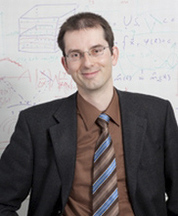
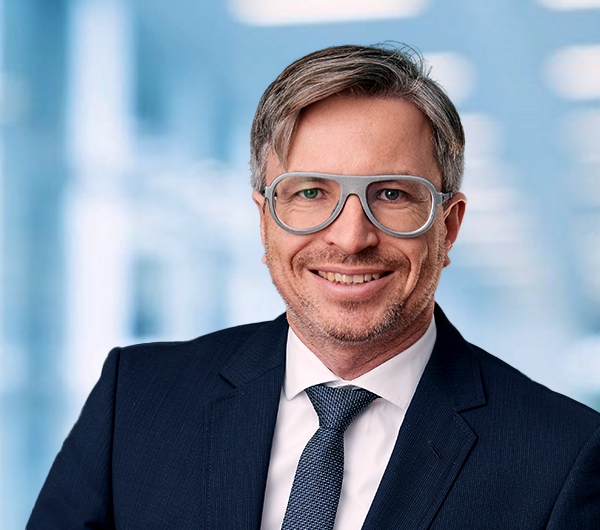
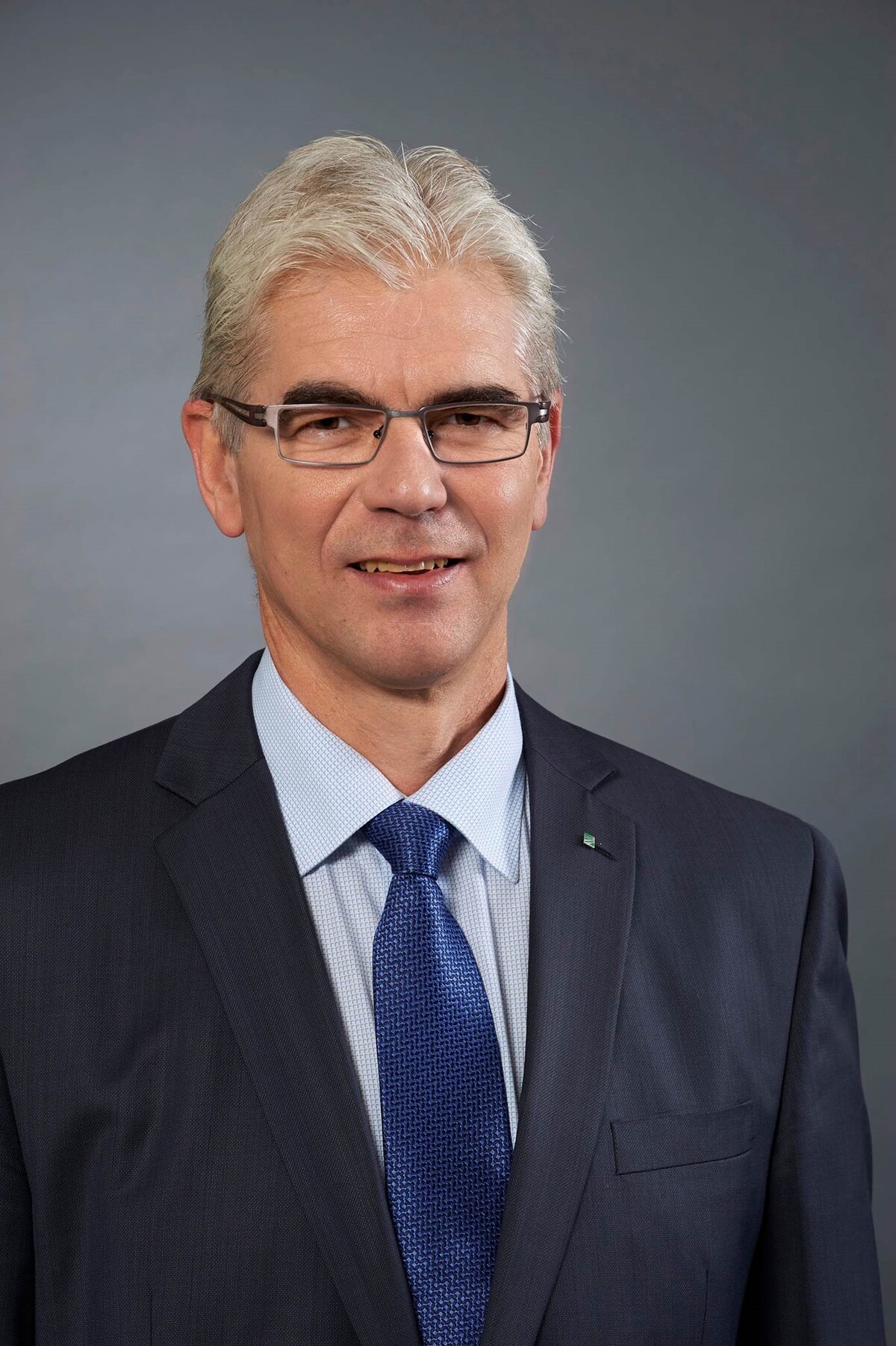
Juri Sidorenko is a researcher affiliated with the Fraunhofer Institute of Optronics, System Technologies and Image Exploitation IOSB in Ettlingen, Germany, and the Institute of Astronomical and Physical Geodesy at the Technical University of Munich. His research focuses on Time of Arrival measurement models and non-convex optimization techniques for localization systems. His work combines mathematical optimization with geodetic principles to solve positioning challenges in indoor and outdoor environments, particularly addressing the problem of local minima in quadratic optimization systems. His research has significant implications for self-calibration systems where reference station positions are unknown. Dr. Sidorenko's scholarly contributions include analytical proofs and numerical validations demonstrating how adding an extra dimension to objective functions can transform local minima into saddle points, substantially improving optimization reliability in positioning applications.
Prof. Dr.-Ing. Michael Heizmann is a Professor of Mechatronic Measuring Systems and Head of the Institute for Industrial Information Technology (IIIT) at the Karlsruhe Institute of Technology (KIT). He holds a joint appointment with the Fraunhofer Institute for Optronics, System Technologies and Image Exploitation (IOSB) under the Berlin Model. His research focuses on advanced measurement technologies, image processing, and automation systems. He leads the Technical Committee 8.12 'Image Processing in Measurement and Automation Technology' at the Gesellschaft für Automation und angewandte Informatik (GMA) and chairs several advisory boards, including the Department 8 'Optical Technologies' at GMA and the cooperative doctoral program in 'Design and Architecture of Embedded Systems' (EAES). Education: Studied Mechanical Engineering at Karlsruhe University (TH), earned his PhD in 2004 at the Institute for Measurement and Control Technology. Professional history includes establishing the 'Variable Image Acquisition and Processing' research group at KIT and Fraunhofer IOSB, leading the 'Measurement, Control, and Diagnostic Systems' division at Fraunhofer IOSB, and serving as a W3 Research Professor at HS Karlsruhe before joining KIT in 2016. He actively organizes and participates in major industry conferences such as the GMA/ITG Conference on Sensors and Measurement Systems, European Machine Vision Forum, and Automation conferences. His roles include chairing the Bachelor Examination Board for ETIT and advising at Fraunhofer IOSB. Current activities span sensor fusion, industrial vision systems, and cyber-physical systems.
Carsten Röcker serves as Professor for Human-Technology Interaction at TH OWL University of Applied Sciences and Arts and holds a leadership position on the Executive Board of the Institute Industrial IT (inIT). His institutional affiliations include the Fraunhofer Institute of Optronics, System Technologies and Image Exploitation (IOSB-INA) as Scientific Advisor, InnoZent OWL as Board Member, and the Graduate Institute OWL. He maintains active roles in the Graduate School for Applied Research in North Rhine-Westphalia and the International Graduate School on Intelligent Systems in Automation Technology. His research spans intelligent assistance systems, human-computer interaction, and technology acceptance, with particular emphasis on industrial applications. Key focus areas include inclusive design for disadvantaged workers , augmented reality in manufacturing , and AI-mediated communication frameworks . His work bridges theoretical foundations in psychology and social sciences with practical industrial implementations, evidenced by numerous publications on projection-based AR systems, cognitive assistance for assembly tasks, and ethical considerations in workplace technology. Röcker's scholarly contributions include over 150 publications and editorial work on 8 books. His research demonstrates consistent focus on Human-centered design for industrial automation Inclusive technologies for cognitively disabled workers Psychological well-being in technology-mediated workplaces Advanced interaction paradigms using AR/VR His extensive service includes reviewing for major funding agencies (Australian Research Council, Academy of Finland), journals (ACM Transactions, Personal and Ubiquitous Computing), and over 50 international conferences annually. He has organized numerous workshops on assistive environments and healthcare applications since 2009. As an educator, Röcker supervises graduate research through TH OWL's programs and contributes to the International Graduate School on Intelligent Systems. His technical leadership extends to directing the Human-Computer Interaction research group and co-leading the ProErgo and NextPlace research clusters focused on human-centered industrial systems.
Prof. Marc Eichhorn holds a professorship at the Institute of Theoretical Electrical Engineering and System Optimization (ITE) within the Karlsruhe Institute of Technology (KIT). His expertise lies in Optronics, Theoretical Electrical Engineering, and System Optimization. He is affiliated with the Department of Electrical Engineering and Information Technology (ETIT), contributing to research and innovation in his field. Contact: Phone +49 721 608-45674 | Fax +49 721 608-42623 | Office Hours: By appointment via ITE secretariat. Location: Building 30.33, D-76131 Karlsruhe.
Thomas Rauschenbach is a Professor at the Fraunhofer Institute for Optronics, System Technologies, and Image Evaluation IOSB . His research focuses on interdisciplinary applications in systems engineering and optronics, with an emphasis on image processing technologies. As a senior academic affiliated with Fraunhofer-Gesellschaft, he contributes to advanced research in technical disciplines. His work spans engineering methodologies and applied image analysis systems, though specific publications or projects are not detailed in this profile.
Dr. rer. nat. Jan Burke is a researcher at the Fraunhofer-Institut für Optronik, Systemtechnik und Bildauswertung (IOSB), part of the Fraunhofer-Gesellschaft. Her work spans interdisciplinary domains including optronics, systems engineering, and image processing. Contact: jan.burke@iosb.fraunhofer.de
Jürgen Beyerer is a Professor affiliated with the Fraunhofer-Gesellschaft , specifically the Institute of Optronics, System Technologies, and Image Evaluation (IOSB). His research focuses broadly on Optronics, Systems Engineering, and Image Evaluation. Contact: juergen.beyerer@iosb.fraunhofer.de
Prof. Cornelius Frithjof Hahlweg is a Professor of Electrical Engineering and Deputy Director of the Engineering Department at bbw Hochschule - University of Applied Sciences in Berlin. He holds a degree in Electrical Engineering (1992–1998) and has extensive experience as a Development Engineer. Since 2001, he has been a lecturer at HSU Hamburg and joined bbw Hochschule in 2009. His research focuses on optical metrology, signal processing, and related fields such as optronics and material sciences. He is affiliated with the fib Research Institute and contributes to projects like ReTraNetz-BB. His work integrates theoretical and applied engineering principles, emphasizing stability and control engineering. Despite no explicitly listed publications in the provided text, his academic roles and research interests highlight his contributions to engineering and interdisciplinary sciences. Affiliations: bbw Hochschule, fib Research Institute Key Roles: Professor (Electrical Engineering), Deputy Director (Engineering Dept.)
Jürgen Beyerer is a Professor at Karlsruhe Institute of Technology (KIT) and Director of the Fraunhofer Institute of Optronics, System Technologies and Image Exploitation IOSB. His work focuses on autonomous systems for hostile environments, particularly in robotics, artificial intelligence, and image processing. He leads the ROBDEKON competence center, which develops technologies for decontamination and underwater exploration.