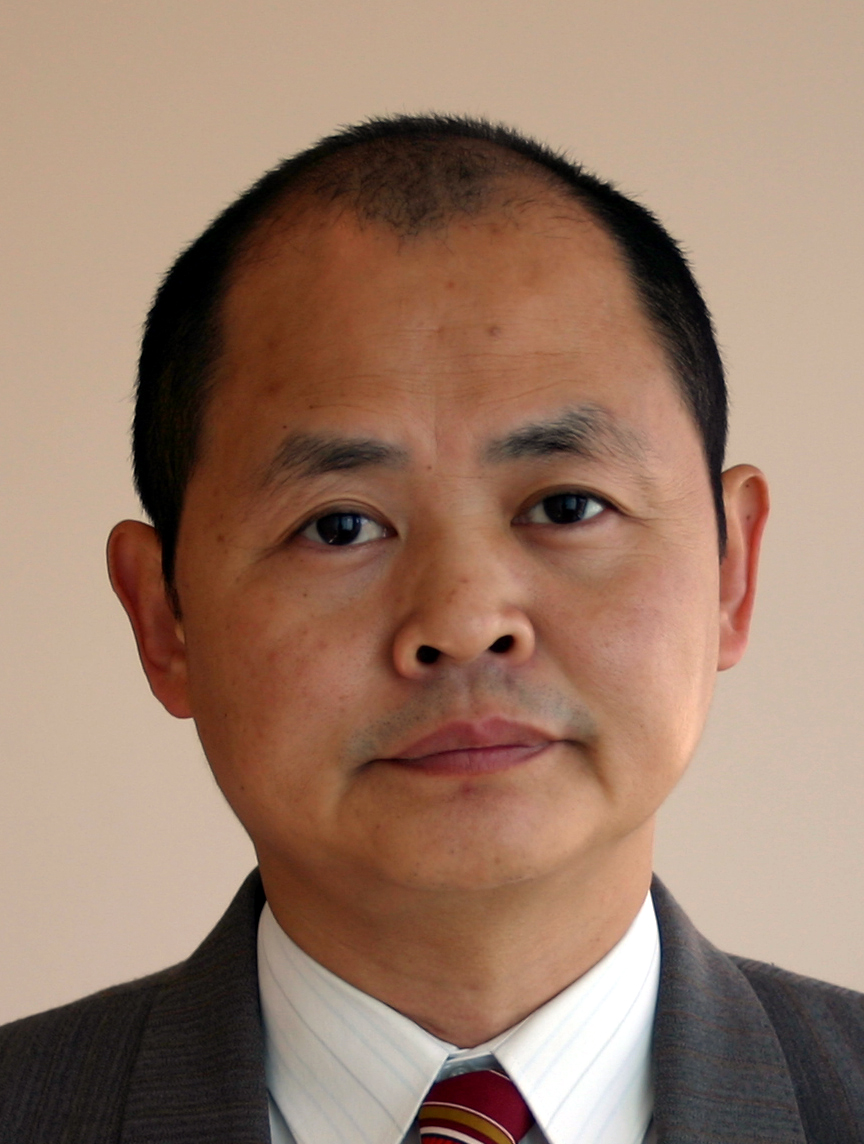
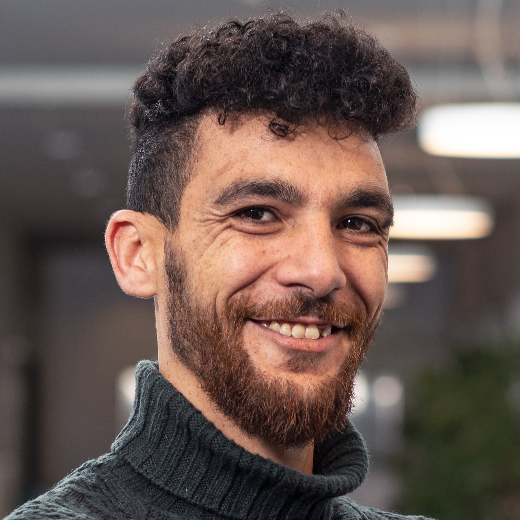
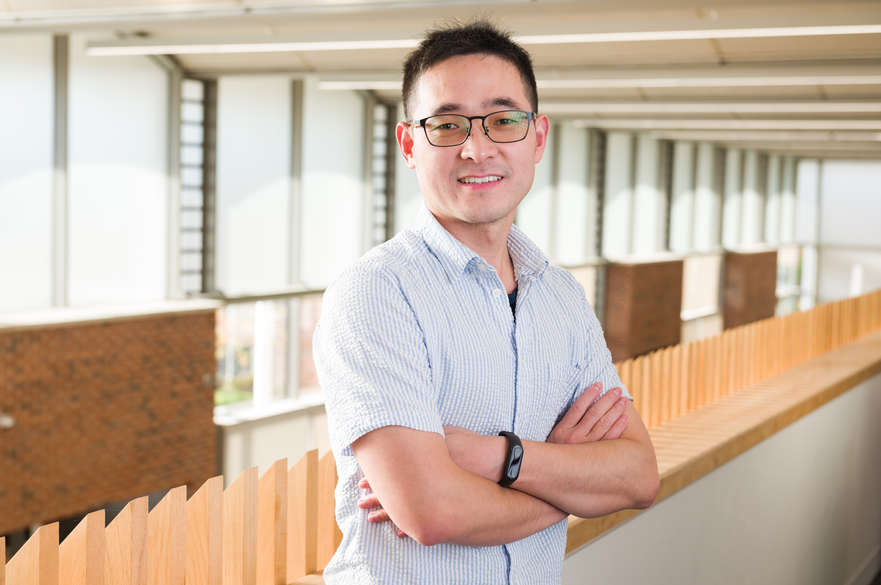
Jean-Daniel Penot is a Researcher at CESI's Research and Innovation Department , with expertise in additive manufacturing, materials science, and industrial integration. His work bridges advanced manufacturing technologies with environmental sustainability and educational innovation. Doctorate in Materials Physics (2010) Engineering Degree in Physics (2007) Research Master in Optoelectronics (2007) Penot's research spans Additive Manufacturing and its applications in automotive, nuclear, and construction sectors. He focuses on Laser-Material Interaction , Machine Learning for process optimization, and Sustainable Engineering through life cycle assessments and geopolymer applications. His recent publications emphasize BIM , AM Modular Plants , and Defect Analysis in 3D-printed metals. Penot leads France Additive initiatives and contributes to International Standards as a board member. Penot supervises PhD students including Maryam Houhou and Amal Khabouchi , with a focus on Industrial Security and Energy Transitions . His projects integrate Thermal Comfort , Ultrasonic Inspection , and Quality Assurance in additive manufacturing systems.
Professor Gang-Ding Peng is a leading academic in photonics and optical communications at the School of Electrical Engineering and Telecommunications , University of New South Wales (UNSW). With over three decades of experience, his research focuses on silica and polymer optical fibers, fiber lasers, sensors, and photonic signal processing. Education: B.Sc. in Physics (1982, Fudan University), M.Sc. in Applied Physics (1984), Ph.D. in Electronic Engineering (1987, both Shanghai Jiao Tong University) Career: Lecturer at Shanghai Jiao Tong (1987-1988), Postdoctoral Fellow at Australian National University (1988-1991), UNSW Faculty since 1991, Queen Elizabeth II Fellow (1992-1996) Research Interests: Specialized in specialty optical fibers, nonlinear optics, and photonic devices. His work spans: Silica and polymer fiber amplifiers/lasers Electro-optic and liquid-crystal-doped fibers Multi-core fiber Bragg grating systems Photonic crystal fiber sensing 3D-printed optical components Quantum and neuromorphic photonic applications Scientific Awards: Queen Elizabeth II Fellowship (1992-1996) Fellow and Life Member of OSA & SPIE Supervision: Active mentor in Bi/Er co-doped fibers, 3D-printed optical fibers, and fiber sensing technologies.
Vivian E Ferry is an Associate Professor in the Department of Chemical Engineering and Materials Science at the University of Minnesota's College of Science and Engineering. Her research focuses on advanced materials for energy applications, particularly in solar energy conversion and nanophotonic phenomena. She maintains an active research program with numerous ongoing projects and substantial publication output spanning over 15 years. Her research interests center on Solar Energy , Photovoltaics , Plasmonics , and Nanomaterials , with particular expertise in quantum dots, thin film technology, and metamaterials. Dr. Ferry's work bridges fundamental materials science with practical applications in renewable energy technologies, exploring light-matter interactions at the nanoscale to enhance solar energy harvesting and conversion efficiency. Analysis of her recent publications (2023-2025) reveals a strong focus on chiral optical phenomena, luminescent solar concentrators, metal-insulator transitions in oxide materials, and machine learning applications for spectroscopic analysis. Her work demonstrates a consistent trajectory toward increasingly sophisticated nanoscale optical engineering with practical applications in sustainable energy systems. Dr. Ferry has secured significant research funding from diverse sources including the National Science Foundation, Microsoft Corporation, and industry partners like First Solar. Her current projects include: OLED Cavity Tuning in Commercial Devices for Display Applications (2023-2025) Chiroptical properties of patterned nanocrystal solids (2021-2026) IRG-2: Mesoscale Network Materials (2020-2026) Modeling CdTe solar cells (2021-2022) She actively collaborates with researchers across disciplines, as evidenced by her participation in multi-investigator projects and numerous co-authored publications. Her research group produces both fundamental scientific insights and practical technological advancements in materials for renewable energy applications.
Dr. Soufiane Krik is a postdoctoral researcher at the Free University of Bolzano , affiliated with the Faculty of Engineering . His work focuses on sensing technologies , particularly developing flexible and sustainable electronic components via advanced printing methods. His research bridges materials science , nanotechnology , and green electronics . Education: Ph.D. in Physics, University of Ferrara (2021) M.Sc. in Physics and New Technologies, University of Casablanca (Physics Department) Dr. Krik's research spans chemiresistive gas sensors , Density Functional Theory (DFT) simulations , and biodegradable substrates for flexible electronics. Recent work explores Agave silk fibers , cellulose-based thermal sensors , and transient zinc sensors for biomedical applications. His publications (2018–2025) highlight expertise in metal oxide sensors , quantum dot functionalization , and environmentally friendly materials . He investigates oxygen vacancy dynamics , conjugated polymers , and biomaterial integration for next-generation sensors.
Lei Xu is an Associate Professor at the Department of Engineering, School of Science & Technology, Nottingham Trent University. He leads research in the Advanced Optics and Photonics Group (www.aoplab.com) and serves as Associate Editor for Nonlinear Optics in Frontiers in Photonics . PhD in Optics (2014), Nankai University, China Postdoctoral experience at Australian National University, University of New South Wales His research spans multiple areas of nanophotonics and meta-devices, including: Energy harvesting via resonant meta-optical systems (solar cell enhancement, infrared imaging) Flat optical devices using metasurfaces for advanced nanotechnology Bio-photonics applications in diagnostics and wearable sensors Tunable meta-devices for precision light manipulation Recent publications focus on high-Q resonators, quasi-BIC states, and nonlinear frequency generation in dielectric platforms. He contributes to editorial boards of journals like ACS Nano and Nano Letters .
Anna Fontcuberta i Morral is a Full Professor and President at École Polytechnique Fédérale de Lausanne (EPFL), holding appointments in the Laboratory of Semiconductor Materials (LMSC) within the School of Engineering, as well as in the EDMX teaching unit. She maintains active research leadership while serving in administrative roles at the highest level of the institution. Her educational background includes: PhD in Materials Science, École Polytechnique (1998-2001) Diplôme d'Etudes Approfondis in Materials Science at Université Paris XI (1997-1998) BA in Physics at Universitat de Barcelona (1993-1997) Postdoctoral Scholar at California Institute of Technology under Professor Harry A. Atwater (2001-2002) Professor Fontcuberta i Morral's research program focuses on semiconductor nanostructures, particularly nanowires, with applications spanning fundamental physics to technological implementations. Her work bridges materials science, quantum physics, and device engineering, with significant contributions to understanding growth mechanisms, structural properties, and electronic characteristics of various semiconductor systems. She has pioneered research on nanowire-based solar cells that can potentially exceed traditional efficiency limits, as well as quantum phenomena in nanowire heterostructures. Analysis of her recent publications reveals a strategic expansion of research scope from fundamental nanowire properties to practical applications in photovoltaics, quantum computing, and optoelectronics. Her 2024-2025 publications demonstrate growing interest in germanium nanowires for quantum processors, zinc phosphide for sustainable photovoltaics, and 2D materials like WSe2, while maintaining strong contributions to the core understanding of III-V semiconductor nanostructures. Scientific recognition includes: Marie Curie Excellence Grant (2005-2010) Research counselor at the Swiss National Science Foundation since 2016 Section Editor and founder of a publications section Professor Fontcuberta i Morral has supervised over 40 PhD students who have gone on to successful careers in academia (including tenure-track positions at TU Delft, ETH Zurich, and University of Basel) and industry (including positions at IBM, Sensirion, and startup companies). Her research has been consistently funded by major agencies including the Swiss National Science Foundation and European programs. She leads the Laboratory of Semiconductor Materials, which focuses on the synthesis, characterization, and application of semiconductor nanostructures for next-generation electronic, photonic, and energy conversion devices.
Xin Xie is a Schmidt AI in Science Postdoctoral Fellow affiliated with the Michigan Institute for Data & AI in Society (MIDAS) at the University of Michigan. Their research bridges topological photonics, deep learning, and quantum electrodynamics, focusing on designing novel states via topological optical structures and investigating light-matter interactions in 2D semiconductor materials. Education: Ph.D. in Physics, Institute of Physics, Chinese Academy of Sciences (2022) B.S. in Physics, Zhejiang University (2015) Research interests center on topological photonics , leveraging deep learning to engineer optical structures and explore quantum phenomena like exciton-polariton transport and strong light-matter coupling . Their work integrates machine learning with quantum electrodynamics for applications in nanophotonics and quantum devices. Recent publications highlight advancements in 2D photonic crystals , cavity Floquet engineering , and topological corner states , emphasizing their interdisciplinary approach combining theoretical physics , materials science , and AI-driven optimization . Scientific Awards: Schmidt AI in Science Postdoctoral Fellowship Michigan Data Science Fellowship Postdoctoral Affiliates Program Xin collaborates with mentors across multiple disciplines: Gongjun Xu (Statistics, Psychology), Hui Deng (Physics, EECS), and Yang Chen (Statistics). Contact via xiexin@umich.edu .
Dr. Adam Craig is a Senior Research Associate at the Department of Physics, Lancaster University, where he has worked since 2006. His research focuses on infrared III-Sb detectors and LEDs using molecular beam epitaxy and numerical modeling. Research Groups: Quantum Nanotechnology His expertise spans avalanche photodiodes (SPADs), barrier infrared detectors, and resonant cavity enhanced photodetectors and LEDs. His work addresses lattice-mismatched growth challenges and device performance optimization in mid-wave and long-wave infrared regimes. Recent publications highlight advancements in type-II superlattice nBn detectors, room-temperature avalanche photodiodes, and GaSb-based resonant cavity designs. Trends emphasize material compatibility, quantum efficiency, and noise reduction in optoelectronic devices.
Professor Stewart Clark is a Professor in the Department of Physics at Durham University, where he serves as Head of the Condensed Matter Section. His academic career spans several decades with numerous publications in computational physics and materials science. He teaches Level 1: Modern Physics courses at the university and maintains active research collaborations across multiple institutions. Professor Clark's research focuses on computational approaches to understanding materials at the atomic level. His work primarily involves first-principles calculations and computer simulations of solid state, liquid, and molecular systems. He has made significant contributions to density functional perturbation theory , structural and vibrational properties calculations, and the development of techniques for excited electronic states . His research leverages high performance computing for large-scale simulations of complex materials systems. Analysis of Professor Clark's recent publications reveals a strong focus on advanced materials research in condensed matter physics. His work frequently employs computational methods to investigate electronic structures , magnetic properties , and phase transitions in quantum materials, perovskites, and two-dimensional systems. There's particular emphasis on materials behavior under extreme conditions such as high pressure, with applications spanning electronics, energy storage, and quantum technologies. As Head of the Condensed Matter Section, Professor Clark oversees research activities and likely mentors junior faculty and research staff. His extensive publication record spanning multiple decades suggests successful acquisition of research funding from various sources to support his computational physics research program. His work bridges theoretical physics and materials science, contributing to fundamental understanding of material properties with potential technological applications. Professor Clark's research likely involves computational laboratories with access to high-performance computing resources. His work demonstrates strong interdisciplinary connections between physics, chemistry, and materials science, with collaborations spanning multiple institutions as evidenced by his co-authored publications.
Alán Aspuru-Guzik is a Professor in the Department of Chemistry at the University of Toronto, with a cross-appointment in the Department of Computer Science. His research focuses on interdisciplinary approaches at the intersection of theoretical chemistry, quantum computing, and artificial intelligence. He leads the development of self-driving laboratories and materials acceleration platforms, combining robotics, AI, and quantum chemistry for accelerated molecular discovery. His mission is to advance technologies like quantum computing, machine learning, and automation to discover new chemicals and materials beneficial to society. The group collaborates across disciplines, including computer science, physics, and applied mathematics. Key research areas include quantum algorithms for molecular simulation, energy materials, and biophysical systems. Notable projects involve creating autonomous laboratories that integrate experimental and computational methods. While no awards are explicitly listed in the provided texts, his work has attracted significant academic and industrial attention. His team operates from the Lash Miller Chemical Laboratories in downtown Toronto.
Canek Fuentes-Hernandez is Associate Professor of Electrical and Computer Engineering at Northeastern University, leading the electronic Surfaces and Organic Interfaces Laboratory (eSOIL). His research pioneers flexible optoelectronics using earth-abundant materials. Research develops skin-like photodetectors, self-powered sensing surfaces, and recyclable solar cells. Innovations include elastomeric organic photodiodes with mechanical compliance matching human skin and computational photodetectors for activity recognition. Publications demonstrate breakthroughs in low-noise detection, with Science papers on large-area photodiodes capable of detecting faint light. Recent work explores depth-sensing surfaces and contact engineering for next-generation organic photovoltaics. Teaching includes courses on organic electronics and capstone design. Recognized through PEAK Experiences Awards for undergraduate researchers mentored in his laboratory.
Glib Baryshnikov is an Associate Professor and Docent at Linköping University, affiliated with the Department of Science and Technology (ITN). His research focuses on organic electronics, materials chemistry, and optoelectronic materials, particularly in thermally activated delayed fluorescence (TADF) systems and photonic applications. He is part of the Laboratory of Organic Electronics (LOE) and has contributed to advancements in OLED and QLED materials, nanoparticle-based theranostics, and chiral TADF molecules for biomedical imaging. Recent work includes developing host materials for TADF emitters, dual-emission carbon dots, and defect-passivating hole-transporting materials for perovskite QLEDs. His team expanded the Norrköping campus chemistry lab in 2024, doubling its size to 500 m². Collaborations span international research groups, evidenced by co-authorships on 2025 publications in RSC Advances , Advanced Materials , and Journal of Physical Chemistry C . Key research themes include molecular design for light-emitting materials, energy transfer mechanisms in organic semiconductors, and applications in biomedical sensing and renewable energy systems.
Prof. Ferdinand Grozema is a Full Professor at Delft University of Technology, Faculty of Applied Sciences, Department of Chemical Engineering. His research focuses on the dynamics of charges and excited states using ultrafast spectroscopy, microwave conductivity techniques, computational chemistry, and materials synthesis. Research Interests: Charge transport in molecular wires, DNA charge transfer, quantum interference effects, singlet exciton fission, and photochemical upconversion. Teaching: Leads courses in Numerical Methods for Chemical Engineers and Computational Materials Science at TU Delft. Group Leadership: Head of the Grozema Group, supervising PhD students like María C. Gélvez-Rueda and Damla Inan. Publication Trends: Recent work emphasizes perovskite materials, molecular electronics, and charge/exciton dynamics. Keywords from 15 most recent articles include Materials Science , Computational Chemistry , and Ultrafast Spectroscopy , with subtopics like 2D Perovskites , Quantum Interference , and Exciton Spin Dynamics .
Matthew Cole is a Senior Lecturer in the Department of Electronic & Electrical Engineering at the University of Bath. His research focuses on nanomaterials, particularly 1D and 2D materials synthesized via CVD, flexible electronics, and electron emission technologies. He leads projects in areas like 2D nanomaterials integration and graphene-enhanced materials through initiatives such as G2lass (Graphene Enhanced GlaFlake). Cole holds a Doctor of Engineering from the University of Cambridge and a Master of Engineering from the University of Oxford. Education: PhD in Nanoelectronics (Cambridge, 2011), MEng in Electronic Engineering (Oxford, 2008) His research interests span nanomaterial growth, biosensors, and novel electronics architectures. Key projects include developing advanced X-ray sources using nano field-emitting cathodes and optimizing terahertz radiation systems. Cole has contributed to over 80 peer-reviewed publications and serves as a grant reviewer for organizations like the Engineering and Physical Sciences Research Council (EPSRC). He leads multiple funded projects, including EPSRC Doctoral Training Partnerships and industry collaborations. His work aligns with UN Sustainable Development Goals related to innovation and infrastructure. Cole is also an external PhD examiner at Imperial College London and the Commonwealth Scholarship Council. Labs/Teams: Centre for Nanoscience and Nanotechnology, Electronics Materials, Circuits & Systems Research Unit (EMaCS), and the Centre for Integrated Materials, Processes & Structures (IMPS).
Dr. Imran Avci is an Associate Professor at the Faculty of Science, Department of Biophotonics and Medical Imaging, and holds a joint appointment at LaserLaB - Biophotonics and Microscopy at Vrije Universiteit Amsterdam. He specializes in advanced optical systems and photonic technologies. Affiliations: Faculty of Science, LaserLaB Amsterdam Research interests: Biophotonics, medical imaging, optical waveguides, photonic integrated circuits, and sensor technologies He currently teaches two courses: 'Innovatieproject diagnostiek & gezondheid' and 'Optica en optisch waarnemen' in the academic year 2024-2025. His work contributes to UN Sustainable Development Goals related to health and innovation. He founded Rapid Photonics in Amsterdam (2024-present) as an ancillary activity.