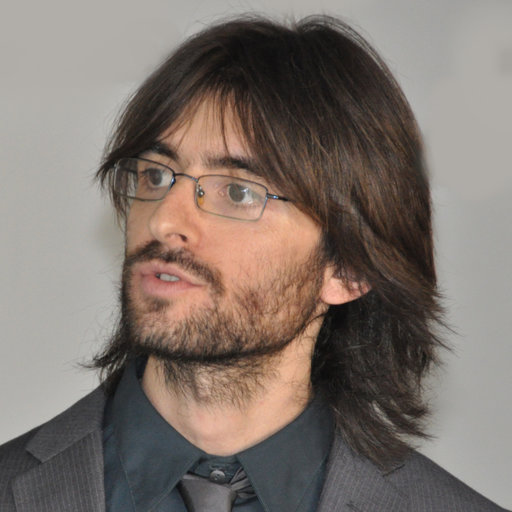
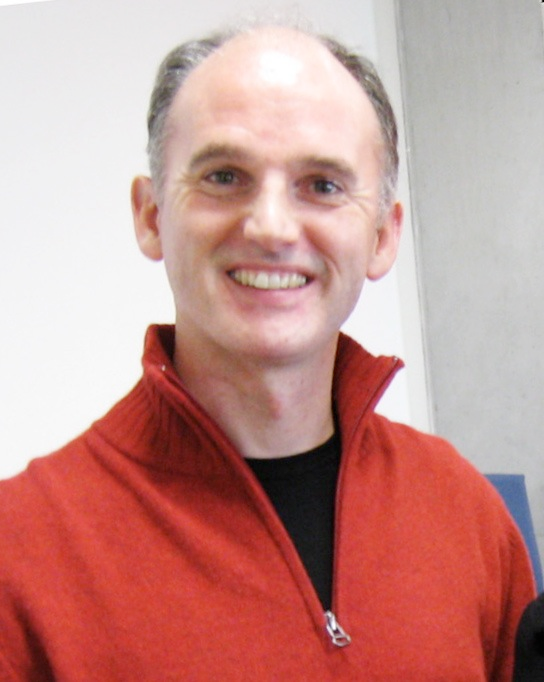
Matteo Cagnoni is a Researcher at the Department of Electronics and Telecommunications (DET) of Politecnico di Torino . His research focuses on Density Functional Theory , Quantum Chemistry , and Thermoelectric Materials for Solar Cells . He is actively involved in the European Union’s MIRACLE project , developing photonic meta-concrete for radiative cooling solutions. Research Interests: Development of cement-based radiative coolers for solar cell thermal management Computational discovery of intermediate-band solar cell materials Electronic properties of semiconductors and insulators Teaching: Electronic transport in crystalline and organic semiconductors Advanced experimental physics Scientific Contributions: Matteo has published extensively on radiative cooling, perovskite/silicon tandem solar cells, and thermoelectric materials. His work spans journals like Nature Communications , Advanced Functional Materials , and Progress in Photovoltaics , with a focus on simulation engineering , photonic devices , and energy-efficient materials . Labs & Collaborations: He works within the Microwave and Optoelectronics Group (MOG) at DET, collaborating with international institutions on EU-funded projects.
Daniele Ielmini is a Professor at the Department of Electronics, Information and Bioengineering at Politecnico di Milano, Italy, where he leads research in non-volatile memory technologies and neuromorphic computing. He received his Laurea (with merit) and Ph.D. in Nuclear Engineering from Politecnico di Milano in 1995 and 2000, respectively, and has held visiting positions at Intel Corporation (2006), Stanford University (2006), and the University of Illinois at Urbana-Champaign (2010). His research focuses on the modeling and characterization of non-volatile memories, including nanocrystal memory, charge trap memory, phase change memory (PCM), resistive switching memory (RRAM), and spin-transfer torque magnetic memory (STT-MRAM). He has co-edited the book 'Resistive switching – from fundamental redox-processes to device applications' and published over 300 papers with more than 10,000 citations and an H-index of 69 (Scopus, September 2023). Prof. Ielmini's recent publications demonstrate a strong trend toward in-memory computing and neuromorphic applications, with particular emphasis on closed-loop analog computing architectures, reservoir computing with 2D materials, and hardware security implementations using emerging memory technologies. His work bridges fundamental device physics with practical computing applications, especially for energy-efficient AI acceleration. Intel Outstanding Researcher Award (2013) ERC Consolidator Grant (2014) IEEE-EDS Paul Rappaport Award (2015) Fellow of the IEEE Prof. Ielmini leads multiple ERC-funded projects including SHANNON (Secure Hardware with Advanced Nonvolatile memories), NEURO2D (neuromorphic systems based on reservoir computing in MoS2), and ANIMATE (closed-loop in-memory computing). His research group includes post-doctoral researchers, PhD students, and M.Sc. students working on various aspects of emerging memory technologies and their applications. He serves as Associate Editor for IEEE Trans. Nanotechnology and Semiconductor Science and Technology (IOP), and has served in several Technical Subcommittees of international conferences including IEEE-IEDM, IEEE-IRPS, and IEEE-ISCAS. His laboratory at Politecnico di Milano is equipped with advanced semiconductor device testing equipment including probe-stations, semiconductor parameter analyzers, high-speed waveform generators, and other specialized instruments for nano-electronic research. The lab collaborates with major semiconductor companies including Micron Technology Inc. and STMicroelectronics, as well as participating in national and international research projects.
Dr. Emanuele Marino is a Researcher in the Department of Physics and Chemistry at the University of Palermo , affiliated with the School of Basic and Applied Sciences . His work bridges quantum physics and nanotechnology, focusing on nanocrystal superparticles, photonic materials, and fluctuation-driven assembly processes. Current research areas include quantum dot lasing, Casimir effects, and 3D nanoparticle superlattices Teaches courses like Modern Physics Laboratory (2024, School of Basic and Applied Sciences) and Physics II (Polytechnic School) Recent publications highlight trends in: Tunable photonic properties via nanocrystal emulsion systems Quantum-excitonic coupling in heterostructures Critical Casimir forces for nanoparticle control Dynamic phase transformations in colloidal superlattices Microlaser fabrication and chirality engineering Based in the Emilio Segrè Physics and Chemistry Department , he conducts experimental and theoretical studies from nanoscale fabrication to quantum optical phenomena.
Cosimo Lacava is an Assistant Professor at the University of Pavia, Department of Industrial and Information Engineering. He works in the Integrated Photonics Laboratory (Floor F) and specializes in silicon photonics, integrated optics, and nonlinear optics for optical communications applications. His research focuses on developing advanced photonic integrated circuits for next-generation optical networks and signal processing systems. Dr. Lacava's primary research interests include: Silicon and silicon nitride photonic devices (design, fabrication and testing) Integrated electro-optic devices for telecommunications applications Design of highly spectral-efficient optical networks enabled by advanced modulation formats Digital signal processing (DSP) for telecommunication and data communication applications Nonlinear optics for all optical signal processing His recent publication record demonstrates significant contributions to integrated photonics, particularly in wavelength conversion technologies, nonlinear signal processing, and silicon nitride platforms. The research shows a clear progression from fundamental studies of nonlinear optical properties to practical implementations of photonic integrated circuits for optical communications systems. His work bridges theoretical understanding with practical device development for real-world applications. Dr. Lacava received his education at the University of Pavia, graduating with honors in Electronic Engineering in 2011 and completing his PhD in Optoelectronics and Electronic Engineering in 2014. Prior to his current position, he worked as a Senior Research Fellow at the Optoelectronics Research Centre, University of Southampton, and as a Postdoctoral researcher at the Quantum Electronics Laboratory at the University of Pavia working on the 'Fabulous' European Project. As an educator, he teaches Physics 1 for civil and environmental engineering students. His laboratory work in the Integrated Photonics Laboratory focuses on developing and testing photonic integrated circuits with applications spanning optical communications, signal processing, and emerging quantum information systems.
Lorenzo Pavesi is a Full Professor of Experimental Physics at the Department of Physics, University of Trento (Italy), where he leads the Nanoscience Laboratory with 25 members. His academic career spans over 30 years, including roles as Assistant Professor (1990), Associate Professor (1999), and Full Professor (2002). He founded semiconductor optoelectronics research at the university and established photonics laboratories focused on growth and advanced treatment of materials. Research Focus: Silicon photonics, quantum optics, nonlinear optics, optical sensors, and neuromorphic computing. Leadership: IEEE Italian Chapter on Nanotechnology founder, editorial board member for Frontiers in Physics , ETRI Journal , and Sensors . His work bridges photonics and electronics, with recent advancements in integrated quantum photonics and neuromorphic systems. He has managed numerous national and international projects, holds 9 patents, authored over 500 papers, and edited 15+ books. Awards include the Cavaliere title (2001), IEEE Distinguished Speaker (2010-2011), and fellowships from IEEE, SPIE, and SIF.
Alice Sciortino is a Researcher at the Department of Physics and Chemistry - Emilio Segrè within the School of Science at the University of Palermo. Her position code PHYS-03/A indicates a research-focused academic track in the Italian university system. She maintains regular office hours on Tuesdays from 11:30 to 12:30 through the university's student portal system. Her research centers on advanced photonic nanomaterials with particular expertise in carbon nanodots , quantum dot superstructures , and metal-organic frameworks . Key research themes include: Nanoscale light emission and lasing phenomena Design of optical sensors for environmental and biomedical applications Photocatalytic systems for environmental remediation Hybrid nanomaterial interfaces for energy transfer Ultrafast photophysical characterization of nanomaterials Analysis of her recent publications (2023-2025) reveals a strong trajectory toward multifunctional nanoplatforms combining optical, magnetic, and catalytic properties. Her work increasingly bridges fundamental photophysics with practical applications in environmental monitoring and biomedicine, particularly in heavy metal detection (Hg²⁺, Ni²⁺) and tissue engineering. The publication record shows consistent high-output research with frequent collaborations across Italian institutions. While no formal scientific awards are documented in the provided materials, her extensive publication record in high-impact journals demonstrates significant scholarly contributions to nanophotonics and materials science. Dr. Sciortino's research program appears to focus on experimental nanomaterials development with strong emphasis on optical characterization techniques. Her work on carbon dot-MOF hybrids and quantum dot superparticles suggests leadership in designing next-generation photonic nanomaterials with tunable properties. The consistent funding evident from her publication output likely supports laboratory infrastructure for nanomaterials synthesis and advanced optical spectroscopy.
Mirko Lobino is an Associate Professor at the University of Trento, affiliated with the Department of Industrial Engineering. His work bridges theoretical concepts and practical applications in quantum optics, photonics, and material science. Teaches Fisica 1 (PARI) and Fisica 2 Co-teaches Physics and Thermodynamics of Materials with Alberto Quaranta and Francesco Parrino Research interests focus on quantum information science, laser physics, and graphene-based materials for strain sensing. He develops programmable photonic circuits for quantum computing and investigates thermodynamic principles in material transformations. Recent publications highlight advancements in photon number detection, quantum system control, and squeezed light generation for quantum networks. His work involves collaborations with the Department of Mathematics and integrates ion traps, photonic waveguides, and machine learning for quantum technologies. He explores applications in wearable sensors, electrochemical biosensing, and high-temperature electronics.
Dr. Soufiane Krik is a postdoctoral researcher at the Free University of Bolzano , affiliated with the Faculty of Engineering . His work focuses on sensing technologies , particularly developing flexible and sustainable electronic components via advanced printing methods. His research bridges materials science , nanotechnology , and green electronics . Education: Ph.D. in Physics, University of Ferrara (2021) M.Sc. in Physics and New Technologies, University of Casablanca (Physics Department) Dr. Krik's research spans chemiresistive gas sensors , Density Functional Theory (DFT) simulations , and biodegradable substrates for flexible electronics. Recent work explores Agave silk fibers , cellulose-based thermal sensors , and transient zinc sensors for biomedical applications. His publications (2018–2025) highlight expertise in metal oxide sensors , quantum dot functionalization , and environmentally friendly materials . He investigates oxygen vacancy dynamics , conjugated polymers , and biomaterial integration for next-generation sensors.
Marco Cannas is a Full Professor at the Department of Physics and Chemistry of the University of Palermo. His research focuses on advanced materials science, including 2D materials (MoS₂), metal-organic frameworks (MOFs), optical fibers, and nanocomposites. He investigates optoelectronic properties, defect engineering, and applications in photonics, environmental sensing, and energy materials. His work spans synthesis techniques like sulfurization, thermal treatments, and colloidal approaches. Cannas' studies often employ advanced characterization methods such as Raman spectroscopy, transient absorption, and atomic resolution microscopy. Education & Affiliations: University of Palermo - Department of Physics and Chemistry Active roles in materials physics research groups Research Interests: Nanomaterials synthesis and characterization (e.g., carbon dots, quantum dots) Radiation effects on semiconductor materials (SiC, optical fibers) MOF-based sensors and photocatalytic systems 2D material heterojunctions for optoelectronics Key Contributions: Developed tunable luminescent materials for sensing and optoelectronics Advanced understanding of MoS₂ doping and strain effects Studied radiation-induced defects in optical fibers for aerospace applications Labs/Teams: Active in the University's Materials Physics and Photonics laboratories, collaborating on EU-funded projects.
Mariagrazia Graziano is an Associate Professor at the Department of Applied Science and Technology (DISAT) at Politecnico di Torino, where she also serves as Director of the Teaching and Language Lab (TLLab). Her academic career spans multiple institutions, including her involvement with doctoral colleges at the University of Palermo for 'Technologies and Methods for University Education' from 2022-2025. Her research interests are at the forefront of nanotechnology and quantum computing, focusing on areas including: Molecular field-coupled nanocomputing Logic-in-memory computing architectures Quantum hardware design and optimization Single-molecule devices for logic and memory applications Nanomagnetism and spintronics Micro-for-Nano (M4N) Systems for Single Molecule Sensors Dr. Graziano's work bridges fundamental physics with practical applications in electronics, with particular emphasis on next-generation computing paradigms that address the memory-wall problem and explore alternatives to traditional von Neumann architectures. Her research has significant implications for fields ranging from molecular electronics to quantum information processing. Her recent publications demonstrate a strong focus on molecular field-coupled nanocomputing, quantum optimization techniques, and single-molecule device modeling. These works reveal a consistent research trajectory toward developing novel computing architectures that leverage quantum effects and molecular-scale phenomena to overcome limitations of conventional semiconductor technology. Dr. Graziano has received notable recognition including the prestigious Marie Curie Intra-European Fellowship for Career Development from the European Commission (2014). She serves as Associate Editor for FRONTIERS IN ELECTRONICS (since 2022) and JOURNAL OF COMPUTATIONAL ELECTRONICS (since 2019), and has participated in program committees for major conferences including the IEEE Design Automation and Test Conference Europe. As an advisor, Dr. Graziano mentors numerous PhD students working on cutting-edge research in quantum computing, molecular electronics, and nanotechnology. Her supervision spans multiple doctoral programs at Politecnico di Torino, with students exploring topics from quantum algorithms for urban traffic optimization to single-molecule junctions for next-generation electronics. Additionally, she leads several research projects including TENS (Toward Excellence in Nanocharacterisation of single-molecule Sensors) and previously served as Scientific Leader for the Quantum Computing e Quantum Networking project. Dr. Graziano is actively involved in the VLSILAB research group, where she contributes to advancing the state-of-the-art in electronic design and nanoscale computing technologies. Her work on patents, particularly the 'Device for Realizing Boolean Logic Functions XOR XNOR Inside Racetrack Memory,' demonstrates her commitment to translating theoretical research into practical technological innovations.
Andrea Cappelli is a Full Professor at the Department of Biotechnology, Chemistry and Pharmacy within the University of Siena . He teaches courses in Technology, Socio-economics, and Pharmaceutical Law as part of the 4-year Pharmaceutical Chemistry and Technology program. His research focuses on pharmaceutical chemistry , medicinal chemistry , and biochemistry , with a particular emphasis on organic synthesis , photochemistry , and drug delivery systems . Recent publications highlight his work in synthesis of dual enzyme inhibitors , lysine-targeted covalent ligands , and light-responsive molecular switches . His studies often involve photophysical analysis , macrocyclic compound development , and biomimetic material design . Andrea Cappelli is actively engaged in molecular modeling and structure-activity relationship investigations for therapeutic applications.
Federica Cappelluti is an Associate Professor in the Department of Electronics and Telecommunications (DET) at Politecnico di Torino (Polytechnic University of Turin) . She serves as the Director of the Open Science Study Center , a Member of the Coordinating Committee of the Polito for Social Affairs , and a Scientific Advisor for the European Open Science Cloud (EOSC) Association . Her academic roles include leadership in Non-commercial collaborative agreements (Italian Computing and Data Infrastructure, Italian Association for Open Science) Research projects funded by EU and national grants (FEDRA, CLAIRE, Skills4EOSC, MIRACLE, TFQD) Research Interests: Federica specializes in Nanophotonics , Optoelectronics , Photovoltaics , and Semiconductor Device Modeling . Her work focuses on Radiative cooling for solar cells Perovskite/silicon tandem solar cells High-speed semiconductor devices Applied photonics for energy efficiency Article Trends: Recent publications highlight her innovations in Photovoltaic radiative cooling using cement-based materials 3-terminal tandem solar cell architectures Quantum dot and intermediate band solar cell engineering Thermal management of multi-junction cells Modeling and simulation of photonic devices Cost-effective photovoltaic materials Scientific Awards: She holds an International Patent for Cement composites for radiative cooling (co-inventor with Matteo Cagnoni) Advising and Grants: Federica supervises PhD students in Artificial Intelligence (Giacomo Fantino) Electrical, Electronics, and Communications Engineering (Antonio Fronteddu, Pietro Testa) Completed PhD research (Gemma Giliberti: 3-Terminal Perovskite/Silicon Tandems) She leads competitive projects including FEDRA : FAIR data lake for research assessment CLAIRE : Perovskite/silicon solar cells MIRACLE : Photonic Metaconcrete for energy savings Labs and Teams: She collaborates with the Microwave and Optoelectronics Group (MOG) at DET and contributes to the PhotoNext Interdepartmental Center for applied photonics. Her work intersects with Nexa Center for Internet & Society in open science initiatives.
Maurizio COSSI is a Professor at the Università degli Studi del Piemonte Orientale Amedeo Avogadro , Department of Science and Technological Innovation. His research focuses on advanced materials for environmental applications and optoelectronics. Density Functional Theory Adsorption Polarizable Continuum Model Organic Optoelectronics Catalysis Recent projects include RODEO (NextGenerationEU-funded research on organic photovoltaics) and WITCHeS (MUR-funded work on cellulose-based biorefineries). His publications analyze methane storage systems, sensor technologies, and catalytic processes. He leads research on nanoporous materials for energy applications, with grants from institutions like MIUR and Fondazione Cariplo. His collaborations span environmental monitoring, molecular modeling, and surface chemistry.
Andrea Rubino is a Fixed-term Assistant Professor at the Department of Applied Science and Technology (DISAT) of Politecnico di Torino. His research focuses on materials chemistry, nanotechnology, and optoelectronics with emphasis on metal oxide nanoparticles, 2D materials, and organic charge-transfer compounds. He contributes to bachelor-level teaching in Chemistry and Aerospace Engineering. Research interests include: Development of scalable nanomaterial synthesis techniques Covalent hybrid materials for energy storage Photoinduced charge transfer mechanisms Stability of solution-processed optical materials Functionalization of 2D transition metal dichalcogenides He serves as Scientific Manager for the PNRR-funded PEROVSKAP project (2025-2028) focused on perovskite materials. Publications demonstrate expertise in optoelectronic material characterization and application development.
James Douglas Brown is an Adjunct Professor at the University of Düsseldorf and Salzburg Universities, specializing in interdisciplinary research spanning cultural management and advanced photovoltaic technologies. He holds a BA in English Language and Literature and an MSc in Cultural Management and Policy, with extensive experience in arts management and higher education administration. His current academic roles include teaching cultural management courses while simultaneously conducting pioneering research in perovskite solar cell technology. Affiliations: University of Düsseldorf (Primary), University of Salzburg (Adjunct) Research Themes: Flexible photovoltaics, lead-free solar materials, indoor energy harvesting, bio-photoelectrochemical systems His research focuses on advancing perovskite-based solar cells with particular emphasis on flexibility, environmental stability, and applications in low-light environments. Recent breakthroughs include developing air-stable antimony-based materials and bio-hybrid systems merging semiconductor technology with biological interfaces. Key contributions include over 30 peer-reviewed publications since 2015, with a focus on scalable fabrication methods, device durability, and commercialization pathways for next-generation photovoltaic technologies. His work bridges material science, electrical engineering, and biological applications, reflecting a unique interdisciplinary approach.