
Prof. Dr. Oliver Paul is a Full Professor at the Department of Microsystems Engineering (IMTEK), University of Freiburg, since 1998. He previously held roles such as Dean of Studies (1999–2002), Director of IMTEK (2006–2008), and Dean of the Faculty of Engineering (2016–2018). His research focuses on Microsystems for biomedical applications, MEMS technology, sensor systems, and advanced fabrication techniques. Key projects include the Excellence Cluster BrainLinks-BrainTools (2012–2017) and the Institute for Brain-Machine Interfacing Technology (IMBIT, 2015–present). Paul’s education includes a Diploma in Physics (1986, ETH Zurich) and a PhD in Solid-State Physics (1990, ETH Zurich). He has supervised numerous PhD students and postdocs, contributing to topics like neural probes, energy harvesting, and sensor calibration. His teaching spans courses in MEMS, semiconductors, and quantum mechanics. He co-founded Sensirion (1998) and Atlas Neuroengineering (2012), and holds editorial roles in journals like Sensors and Actuators A and IOP Journal of Micromechanics and Microengineering. His research interests include multisensory system calibration, biohybrid microsystems, and MEMS-based tools for neuroscience. Notable contributions include silicon neural probes, advanced microneedles, and telemetric smart orthodontic brackets. He has led large collaborative projects involving academia and industry, emphasizing interdisciplinary innovation in microsystems and biomedical engineering.
جستجوی استاد راهنمای دانشگاهی
برای مسیر پژوهشیتان، استاد راهنما، استاد دانشگاه و پژوهشگر مناسب را پیدا کنید و با آنها ارتباط بگیرید.
نمایش ۱۶-۳۰ از ۶۲۴ استاد راهنما
اطلاعات پروفایلها از صفحات عمومی دانشگاهها گرفته شده و ممکن است بهروز نباشد.
Frank Hennrichمشاهده پروفایل
پژوهشگر
Dr. Frank Hennrich is a Project Leader at the Institute of Nanotechnology (INT), Karlsruhe Institute of Technology (KIT), Germany, within the Research Unit for Physical Chemistry of Nanoscale Systems. His research focuses on the synthesis, separation, and functionalization of carbon nanotubes and related nanomaterials. His primary research interests include nanomaterials, particularly carbon nanotubes and fullerenes, with an emphasis on their physical chemistry, spectroscopic characterization, and optoelectronic properties. His work spans synthesis, separation techniques, defect engineering, and applications in photonics and electronics. Recent publications highlight investigations into electroluminescence from quantum-defect-engineered nanotubes, ion mobility of metalated complexes and superatoms, and advanced separation methods for nanotubes. The trend in his recent publications shows a strong focus on the fundamental physical and chemical properties of low-dimensional carbon materials. His work integrates advanced spectroscopic and separation techniques such as trapped ion mobility spectrometry, Raman spectroscopy, and dielectrophoresis to understand and manipulate nanotube chirality, electronic type, and defect states. There is a clear trajectory toward optoelectronic applications, particularly in quantum light sources and integrated photonic devices operating in the telecom band. Dr. Hennrich has not been mentioned to have received any specific scientific awards in the provided text. He has collaborated extensively with leading researchers such as R. Krupke, M. M. Kappes, P. Weis, and others across numerous publications, indicating a strong network in the nanomaterials research community. While no specific grants are listed, his sustained publication record in high-impact journals suggests ongoing research funding. He has contributed significantly to the development of methods for sorting and functionalizing carbon nanotubes, which are foundational for their technological applications. His research is conducted within the Institute of Nanotechnology at KIT, a prominent institution for nanomaterials research, where he leads a group focused on the physical chemistry of nanoscale systems, particularly carbon-based nanostructures.
- Nanomaterials
- Carbon Nanotubes
- Fullerenes
- +۷ مورد دیگر
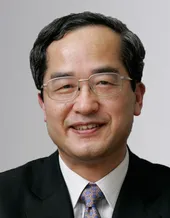
Yasuhiko Arakawa is a Professor at the Research Center for Advanced Science and Technology and Director of the Institute for Nano Quantum Information Electronics at the University of Tokyo. He holds the Hans Fischer Senior Fellowship at the TUM Institute for Advanced Study (TUM-IAS) since 2008, hosted by Gerhard Abstreiter, with a focus on Nano Photonics. His academic journey includes B.S., M.S., and Ph.D. degrees in Electrical Engineering from the University of Tokyo (1975–1980). Dr. Arakawa’s research has revolutionized semiconductor quantum dot lasers, including their theoretical prediction and high-performance demonstration. His contributions also include advancements in single photon emitters at telecom wavelengths and high-temperature semiconductor devices. He has led national projects for METI and MEXT and organized major conferences like the 1998 IEEE Semiconductor Laser Conference and the 2005 International Quantum Electronics Conference. His work spans photonics, nanotechnology, and optoelectronics, with notable publications in Applied Physics Letters , Physical Review B , and IEEE Photonics Technology Letters . Awards include the Fujiwara Prize (2007), IEEE William Streifer Award (2004), and IBM Science Award. Arakawa’s affiliations include leadership roles in quantum information science and collaborations with institutions like TUM-IAS. His labs and research groups focus on nanophotonics, semiconductor nanostructures, and quantum device engineering, advancing fields from optical communications to quantum computing.

Professor Jana Zaumseil is a distinguished academic at Heidelberg University, holding the position of Professor for Applied Physical Chemistry at the Faculty of Chemistry and Earth Sciences since 2014. She also maintains a co-opted position with the Faculty of Physics and Astronomy since 2016. Currently serving as Executive Director of the Institute for Physical Chemistry and Spokesperson for the DFG Research Training Group GRK 2948, she leads the Zaumseil research group (also known as the Nanomaterials for Optoelectronics group) at Heidelberg University's Institute for Physical Chemistry. Her educational background includes a PhD in Physics from the University of Cambridge (2003-2007) with a Gates Cambridge Trust Scholarship, and a Diplom (equivalent to M.Sc.) in Chemistry from the University of Leipzig (1997-2022). Prior to her position at Heidelberg, she served as Professor for Nanoelectronics at Friedrich-Alexander-Universität Erlangen-Nürnberg (2009-2014), and completed postdoctoral work at Argonne National Laboratory (2007-2009) following an internship at Bell Laboratories (2002-2003). Zaumseil's research program focuses on the optical and electronic properties of carbon-based nanomaterials, particularly single-walled carbon nanotubes (SWCNTs) and organic semiconductors. Her group specializes in processing, functionalization, characterization and application of these unconventional semiconductors for optoelectronic devices and sensors. They investigate charge transport and light-matter interaction using a wide range of experimental techniques including synthesis, optical spectroscopy, atomic force microscopy, device fabrication, and electrical/optical device characterization. Their work bridges fundamental understanding with potential applications in sensing, imaging, circuits, and energy conversion. Analysis of her recent publications reveals a strong trend toward defect engineering in carbon nanotubes, particularly creating and optimizing luminescent sp 3 defects for near-infrared applications. Her research increasingly integrates fundamental studies of charge transport with practical device applications, especially in neuromorphic computing, biosensors, and thermoelectrics. The interdisciplinary nature of her work is evident in the combination of chemistry, physics, and materials science approaches across her publication record. Dan Maydan Prize for Nanoscience and Nanotechnology (2024) Jahrespreis der Universität Heidelberg (2023) ERC Consolidator Grant (2019) ERC Starting Grant (2012) Alfried-Krupp-Award for Young University Professors (2010) Professor Zaumseil has secured substantial research funding including multiple ERC grants and leads several major collaborative projects such as the ERC Advanced Grant SCALE-NT, Collaborative Research Center SFB 1249, Cluster of Excellence 3D Matter Made to Order, and Research Training Group GRK 2948. She has mentored numerous doctoral and master's students, with her group recently receiving recognition including a Student Poster Presentation Award for Niklas Herrmann. As Dean of the Faculty of Chemistry and Earth Science (2019-2021) and current Vice Dean (2021-), she has played significant leadership roles within the university structure. The Zaumseil research group operates within Heidelberg University's Institute for Physical Chemistry, utilizing advanced facilities for nanomaterial synthesis, optical spectroscopy, and device characterization. The group participates in several major collaborative initiatives including the Cluster of Excellence 3D Matter Made to Order and the Collaborative Research Center SFB 1249, reflecting its integration within Heidelberg's broader research ecosystem focused on molecular systems and materials science.
- Nanomaterials
- Optoelectronics
- Carbon Nanotubes
- +۵ مورد دیگر

Gregor Kieslichمشاهده پروفایل
استاد پژوهش
Gregor Kieslich is a Research Professor at the Technical University of Munich's School of Natural Sciences, Department of Chemistry. His laboratory explores molecular and solid-state chemistry at the Catalysis Research Centre. Research focuses on structure-property relationships in functional materials including metal-organic frameworks, molecular perovskites, and hybrid systems. The group develops design principles for advanced materials with tailored electronic, mechanical, and ionic transport properties through crystal engineering approaches. Recent publications emphasize materials for energy applications, with consistent focus on structural dynamics under external stimuli. Articles frequently investigate ion transport mechanisms, framework flexibility, and defect engineering using computational and experimental methods. No specific awards or laboratory details are documented in the provided information.
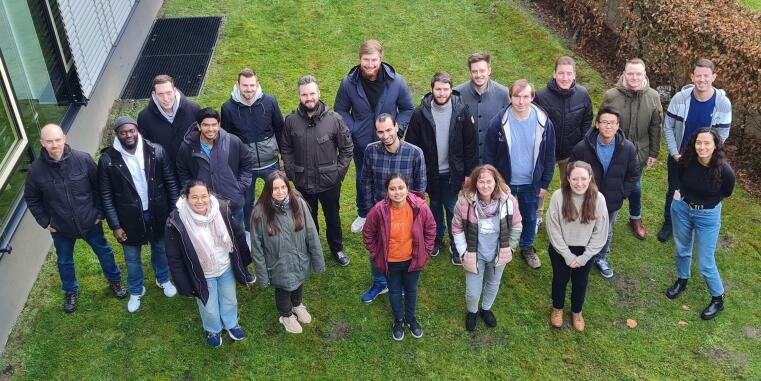
Prof. Cristian A. Strassert is a Professor of Chemistry at the University of Münster, leading the Strassert Lab focused on Coordination Chemistry and Functional Imaging. His research integrates synthesis, characterization, and application of luminescent materials, with particular emphasis on transition metal complexes (Pt, Re, Zn) for biomedical and optoelectronic applications. Key areas include photophysics, aggregation-induced emission, and hybrid materials for sensing and imaging. Affiliations: CeNTech, CiMIC, SoN Research Centers. Collaborations: Global partnerships with institutions like BAM, University of Bielefeld, Tsinghua University, and Ramon Llull University. Research interests span luminescent probes, nanomaterials, and functional polymers, with over 150 interdisciplinary publications. Notable achievements include the Goldener Brendel Award 2021 from the Chemistry Student Council. Publications emphasize design of phosphorescent Pt(II) complexes for bioimaging, photocytotoxicity studies, and hybrid nanomaterials. His work bridges chemistry with biomedical and materials science, driving innovations in optical sensors and therapeutic agents.
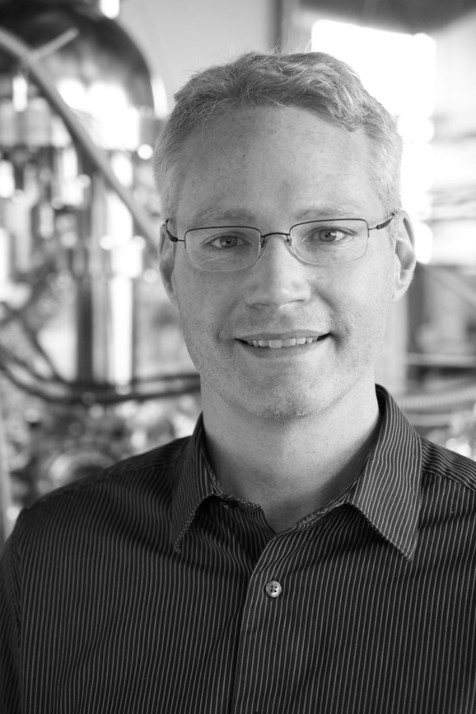
Prof. Ian D. Sharp is a Professor and Head of the Functional Semiconductors and Catalysts Group at the Walter Schottky Institute, Technical University of Munich (TUM). His research focuses on synthesizing and characterizing semiconductors and catalysts for renewable energy applications, particularly solar fuel production and photocatalytic systems. He leads a multidisciplinary team investigating material interfaces, charge carrier dynamics, and advanced deposition techniques like atomic layer deposition (ALD) and molecular beam epitaxy (MBE). Research Interests: His work centers on developing materials for efficient photochemical conversion, including nitride/oxynitride thin films, nanostructured catalysts, and heterostructured materials. Key areas include optimizing semiconductor interfaces for water splitting, enhancing charge collection efficiency, and studying defect properties using advanced spectroscopic and microscopic tools. Publications: Recent work emphasizes stable photoelectrodes, chiral perovskite heterostructures, and functional nanoarchitectures. His group's contributions span energy materials, nanotechnology, and sustainable chemistry, with a focus on bridging fundamental science and practical applications. Awards: ERC Consolidator Grant (2019) Grants: Active funding for solar fuels research and materials engineering. Advising: Mentors ~20 PhD and Master's students in experimental and theoretical projects. Labs/Teams: Oversees state-of-the-art facilities for thin film deposition, characterization (e.g., in situ spectroscopy), and nanofabrication. Collaborates with institutions like EPFL, National Taiwan University, and Lawrence Berkeley National Lab.
- Semiconductors
- Catalysis
- Renewable Energy
- +۳ مورد دیگر
Professor Brigitte Voit leads the Macromolecular Chemistry division at the Leibniz Institute for Polymer Research Dresden (IPF) and holds the chair for 'Organic Chemistry of Polymers' in the Faculty of Mathematics and Natural Sciences / Faculty of Chemistry and Food Chemistry at Technische Universität Dresden. She is actively involved in interdisciplinary collaborations with the Center for Advancing Electronics Dresden (cfaed), Centre for Regenerative Therapies Dresden (CRTD), and the Dresden International Graduate School for Biomedicine and Bioengineering (DIGS-BB) through the DRESDEN-concept initiative. Additionally, she serves as chairwoman of the Materialforschungsverbund Dresden (MFD). Academic Affiliation: Technische Universität Dresden Research Focus: Synthesis of multifunctional polymers, dendritic polymers, bioactive materials, responsive hydrogels, radical ring-opening polymerization Research Trends: Her recent publications highlight advancements in bioinspired polymer systems, including polymersome membranes for synthetic cells, light-driven enzymatic control, hierarchical biomimetic structures, and tunable hydrogels. These works reflect her expertise in integrating polymer chemistry with biomedicine and sustainable materials. Interdisciplinary Roles: Involvement in cfaed, CRTD, DIGS-BB, and DRESDEN-concept Leadership: Former Scientific Director at IPF (2002-2022), current department head Publications demonstrate her group's focus on responsive and bioactive polymer architectures, with applications in drug delivery, bioelectronics, and sustainable materials.
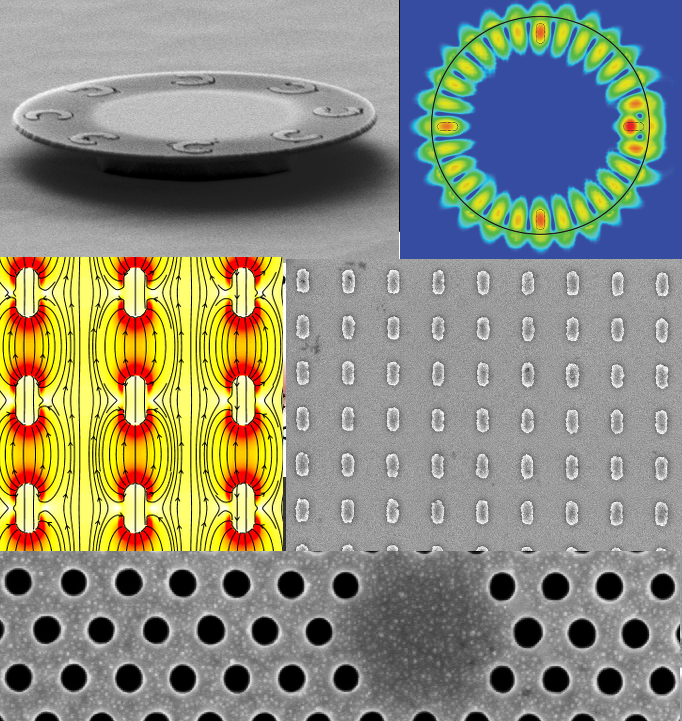
Prof. Dr. Cedrik Meier is a faculty member at the University of Paderborn , affiliated with the Faculty of Natural Sciences and serving as the head of the Department of Physics . He holds the academic rank of Professor and chairs the Audit Committee. Education: Diplom in Physik, Ruhr-Universität Bochum (1998) Dr. rer. nat. in Experimentalphysik, Ruhr-Universität Bochum (2001) Habilitation, Universität Duisburg-Essen (2007) His research focuses on Nanophotonics , Plasmonics , Metamaterials , and Nonlinear Optics . The work involves developing novel photonic devices using nanofabrication techniques and materials like zinc oxide (ZnO) and silicon metasurfaces . Recent publications highlight advancements in third harmonic generation , correlated photon sources , and nonlinear optical effects in nanostructured materials. Key projects include TRR 142 (Tailor-Made Nonlinear Photonics) and studies on quantum dot positioning and liquid crystal-tunable devices . Scientific Awards: Golden Chalk for teaching physics (2016) Junge Kolleg, NRW Academy of Sciences (2007) Gottschalk-Diederich Baedeker Prize (2007) NanoFutur Award (2006) DFG Postdoc Fellowship (2003) Evangelical Study Association Villigst Scholarship (1998) He has led research groups at multiple institutions and currently oversees the Nanophotonics & Nanomaterials working group. His teaching includes Experimental Physics D and Lab Projects .
- Nanophotonics
- Plasmonics
- Metamaterials
- +۳ مورد دیگر
Beate Paulus is a Professor for Theoretical Chemistry at the Freie Universität Berlin , affiliated with the Chemistry and Biochemistry college and the Chemistry department. Her research focuses on advanced quantum chemical methodologies and applications to 2D materials, spintronics, and catalysis. Current affiliation: Freie Universität Berlin Key research areas: Quantum Chemistry, Density Functional Theory, 2D Materials, Spintronics, Electrocatalysis Her work spans computational modeling of electronic structures, magnetic properties, and chemical reactions using Density Functional Theory (DFT) with specialized corrections. She investigates systems like MoS2 , graphene heterostructures , and transition metal complexes , aiming to understand and optimize properties for energy applications, biosensors, and nanoelectronics. Recent publications highlight her contributions to quantum mechanical fluorine tunnelling , spin-selective transport in doped nanoribbons , and surface functionalization strategies for 2D materials. Her group also explores mechanically interlocked molecules and redox-responsive polymers with potential biomedical applications. Beate Paulus leads the Paulus Group , which actively publishes in high-impact journals and collaborates on interdisciplinary projects involving experimental and theoretical approaches.
Alexander Vahlمشاهده پروفایل
پژوهشگر
Dr.-Ing Alexander Vahl is a Researcher at the Technical Faculty of Kiel University, leading the subgroup Nanoparticles for Nanocomposites . He specializes in advanced materials science, focusing on nanoparticle synthesis, functional thin films, and neuromorphic engineering. His research bridges nanotechnology with applications in memristive systems and plasmonics, emphasizing strain-invariant conductors and photocatalytic growth mechanisms. Key projects include developing self-assembled nano-object networks for brain-inspired computing and optimizing gas aggregation cluster sources for novel material fabrication. His work spans disciplines such as memristive switching, plasmonic metasurfaces, and bio-inspired electronics. Notable contributions include studies on silver/polymer nanofluids, ITO-TiO₂ heterojunctions, and multicomponent nanoparticle synthesis. Vahl collaborates with the Chair for Functional Nanotechnology, leveraging interdisciplinary expertise to advance materials innovation. His articles highlight advancements in neuromorphic systems, photocatalytic deposition, and thin-film technologies. The research emphasizes scalability and real-world applications, such as energy-efficient sensors and hybrid zinc batteries. Vahl’s subgroup webpage and extensive publications reflect a commitment to pushing boundaries in nanomaterials engineering.

Dr. Salih Veziroglu is a post-doctoral researcher and subgroup leader at the Chair for Multicomponent Materials at Kiel University, under Prof. Franz Faupel. His research focuses on functional metal-oxide micro-/nanostructures, including thin films and particles, for applications in energy, self-cleaning surfaces, and sensing technologies. Notably, he has pioneered photocatalytic methods to create conductive metal patterns on titanium dioxide substrates, mimicking axon growth and enabling advanced biomedical and electronic systems. Veziroglu earned his doctoral degree in Materials Science from Kiel University in 2020, supported by Federal State Funding. His work integrates nanomaterial synthesis, surface functionalization, and interdisciplinary applications. Key areas include 3D porous cerium oxide networks for catalysis, superhydrophobic coatings, and biomedical materials like algae-incorporated polylactide acid patches for tissue engineering. His research highlights include strain-invariant all-organic conductors developed with Prof. Adelung's team, and novel methods for gold deposition on titanium dioxide using light-driven processes. These innovations address challenges in energy storage, environmental remediation, and medical device coatings. Veziroglu’s subgroup actively explores gas-phase synthesis techniques, plasma treatments for biofilm decontamination, and material design for high-performance applications. Publications span topics like additive manufacturing of titanium alloys, photocatalytic nanoparticle synthesis, and biomedical coatings. His work emphasizes practical solutions for sustainability and healthcare, driven by advanced material chemistry.
Rudolf Bratschitsch is a Professor at the Physics Institute of the University of Münster, where he leads an active research group focused on ultrafast phenomena in solid-state nanosystems. His research spans multiple cutting-edge areas of condensed matter physics and nanotechnology with strong connections to international collaborators. His primary research interests include: Ultrafast quantum optics with solid state nanosystems Ultrafast magnetism and THz spectroscopy Ultrafast (magneto-)plasmonics Ultrafast spintronics Two-dimensional materials and transition metal dichalcogenides Spin-wave dynamics and magnonics Bratschitsch's recent publications demonstrate significant contributions to understanding exciton dynamics in 2D materials, spin-wave propagation in magnetic insulators like yttrium iron garnet (YIG), and quantum optical phenomena in hexagonal boron nitride. His work bridges fundamental physics with potential applications in quantum information processing and advanced optical technologies. His group has received substantial funding, including the Collaborative Research Center CRC 1459 'Intelligent Matter' which was extended for four years by the German Science Foundation in December 2024. They have also organized international conferences such as EDISON22 on Electron Dynamics in Semiconductors, Optoelectronics and Nanostructures. Bratschitsch mentors numerous students: PhD Students: Jannis Bensmann, Akhilesh Dubey, Vedhanth Senthiappan Vellaiappan Uthayasurian Master Students: Janne Oskar Becker, Ahmad El Kadri, Pabin Rai, Devika Sivankutty, Richard Sliwka Bachelor Students: Paul Großerhode, Sven Niehues His group has won several awards, including a poster prize for Master's student Janne Becker at the Münster Nanofabrication Facility Day 2024, highlighting the quality of research and training provided.
Christoph T. Koch is a Professor of Physics at Humboldt-Universität zu Berlin, where he has held the W3 Chair since 2015. Previously, he held a similar position at Ulm University (2011–2015), supported by the Carl Zeiss Foundation. His research focuses on advanced electron microscopy techniques, including quantitative transmission electron microscopy (TEM), electron holography, and strain mapping. He leads the AG Strukturforschung/Elektronenmikroskopie group, advancing materials science through innovations in imaging and spectroscopy. Education: B.Sc./M.Sc. in Physics at Heidelberg University (1996–1998), followed by an exchange at Arizona State University (1997–1998). PhD in Physics from Arizona State University (2002, advisor: Prof. John C.H. Spence). Postdoctoral research at the Max Planck Institute for Metals Research, Stuttgart (2002–2011). Research interests include: Electron diffraction and phase retrieval Nanometer-scale strain and defect analysis Electron energy-loss spectroscopy (EELS) for plasmonics and bandgap mapping Development of FAIR data infrastructure for materials science Leadership: Managed the Department of Physics at Humboldt University (2020–2024). Collaborates widely, with key co-authors including P.A. van Aken, W. Sigle, and C. Felser. His work bridges experimental microscopy and computational modeling, addressing challenges in semiconductors, ceramics, and 2D materials. Notable contributions include pioneering methods for 3D reconstruction via electron ptychography, dynamic electron diffraction analysis, and strain mapping in advanced CMOS technologies. Current efforts emphasize real-time imaging and AI-driven data analysis in materials research.

Prof. Dr. Bettina V. Lotsch is Director of the Nanochemistry Department at the Max Planck Institute for Solid State Research (Stuttgart) and Honorary Professor at Ludwig-Maximilians-Universität München's Faculty for Chemistry and Pharmacy. She holds a prestigious Leibniz Prize (2025) and leads research in nanochemistry, materials science, and energy conversion technologies. Her multidisciplinary research focuses on developing multifunctional materials through solid-state and nanochemistry approaches, with emphasis on covalent organic frameworks, photonic nanostructures, and solid electrolytes for energy applications. Current projects explore solar batteries, electrocatalysis, and quantum materials. Prof. Lotsch has received numerous international honors including Baker Lectureship (Cornell), Materials Lectureship (Warwick), and EU-40 Materials Prize. She coordinates a large research team of >20 doctoral students and postdocs working on solid-state electrolytes, COF photocatalysis, and 2D material design. Education: PhD (summa cum laude) from LMU Munich, postdoctoral training at University of Toronto with G.A. Ozin, and visiting studies at University of Oxford. Research Leadership: Manages laboratories at both Max Planck Institute (Stuttgart) and LMU Munich (Chemistry Department) with specialized facilities for materials synthesis and characterization.